Asia/Singapore Wednesday, 22nd April 2026
Page 721

The case for employee visibility during bleisure travel

0

Bleisure travel, or travel which combines work and leisure, has become commonplace as part of many an organisation’s job benefits. This has presented a conundrum that many organisations have found difficult to navigate.

While organisations now broadly understand and exercise duty of care for their staff, does this duty extend to employees who add on leisure time to their business trips (bleisure)? If it does, should organisations continue to exercise the same level of vigilance – including maintaining a degree of visibility over a business traveller’s itinerary?

The workforce of today accepts the blurring of boundaries between work and other life domains

A study in 2016 conducted by Carlson Wagonlit Travel, found that 20% of 1.9 million business travellers surveyed included time for leisure in their work trips (1). As the figure demonstrates, the workforce of today accepts the blurring of boundaries between work and other life domains. Will the same workforce also accept that there could be some concerns over compromised privacy as part of efforts to ensure their safety?

There are several factors for employers to assess – the risk level of the recreational activities or destination, the risk tolerance and work culture of the organisation, the awareness of the staff on the organisation’s duty of care obligations, and policies concerning the period when responsibility is firmly passed over to the individual traveller.

Problems posed by lack of employee visibility
When business ends and leisure begins during overseas assignments is often the time when communication and accountability between the employer and employee becomes increasingly sparse. Bleisure trips contain an aspect of adventure or exploration; employees are much less likely to structure their leisure itineraries, and may even switch hotels or turn off their corporate phones to minimise roaming fees.

This is likely to come with a change in the level of risk that employees expect compared to the business portion of the trip, and also in their level of vigilance against potential risks.

According to the Ipsos MORI Global Business Resilience Trends Watch 2018 survey, 44% of organisations surveyed found it challenging to communicate with employees during a crisis, and 39% found it challenging to track employee travel.

Imagine how these challenges could be compounded during bleisure trips (2).

Should an incident occur during any trip – bleisure or otherwise – it is critical that within an hour of the incident or what is referred to as the “golden hour”, employers are able to identify and assess who is affected, so that the appropriate security and medical help can be arranged and delivered swiftly.

Disasters, whether natural or man-made, can be unpredictable and while emergency response capabilities in disaster-prone countries have improved, having employee visibility adds another significant safeguard for both employer and employee.

Simple measures for employee visibility
The topic of employee visibility can be an uncomfortable one, as questions are raised about GPS tracking or by-the-hour updates. However, this paints an incomplete picture of what employee visibility means. Rather, it is ensuring that the necessary preparation and communication channels are in place to mitigate all potential risks in any environment.

The first step for business travellers is as simple as taking precautions like updating oneself on the latest security, medical travel and cultural conditions in their destinations before and during travel, which enables them to take the necessary actions to alert their company in the event of a crises. They can also share their location though a secure platform to ensure that their whereabouts are known to the company. Both these efforts can be achieved through the International SOS Assistance App. Managers are able to quickly access reports on the whereabouts of their travelling staff and decide on the most appropriate course of action, in consultation with travel risk management partners.

The second step is establishing a mode of communication that is available when needed. Communication platforms like the International SOS’ TravelTracker Incident Support allows travellers to be contacted quickly and reliably, and provides them and their employers with peace of mind. Business travellers who will benefit from an immediate channel for communication include those who experience minor incidents, sudden illnesses, or major catastrophes resulting in displacement or injury.

The responsibility of companies which have employees going on bleisure travel extends beyond simply approving such travel requests. The responsibilities and potential risks that comes with this type of travel must be taken into account.

The key lies in employees and employers determining where their respective responsibilities begin and end in such situations, and in setting up clear protocols of what each party can and should do in the event of a crisis or emergency. If this can be achieved, then the phenomenon of bleisure travel may not create significant disruption for employers and employees alike in the years ahead.


Aditya Luthra is the security director – security solutions, Asia, International SOS & Control Risks. He leads client engagements around Asia and Australasia, developing bespoke solutions in support of organisations and managing their travel risk mitigation strategies, policies and procedures.


Age no barrier for this hotel chief

0

What is your background with Marriott?
I’ve been with the company for 14 years now. I started my career at the JW Marriott and Ritz-Carlton in Kuala Lumpur, Malaysia, moving to Phuket in Thailand, and now here in Siem Reap. The company takes care of its associates, and I have been blessed to be nurtured and developed. Hence, I continue to grow with Marriott.

You have taken up a senior role at such a young age. What challenges did this involve and how did you overcome them?
I have always been one of the youngest in any of the roles I have undertaken. In the very beginning, I found it challenging to manage those who were older than me, but I quickly learnt that age did not matter. If you lead by example and are always willing to guide and share knowledge, people will look up to you and age does not become a barrier.

Why did you take up the role of general manager at this property?
It was the opportunity to open the first Marriott hotel in the entire country. As well, Cambodia has always fascinated me: its history, growth and potential. There was no question that this role would fully challenge and fulfill me.

How has the journey with Courtyard by Marriott Siem Reap Resort been for you?
It has been the most exciting, fulfilling experience I could have had. Not many general managers get to open a hotel in their career and I am very fortunate to be able to be a part of this. Being involved in the construction phase and lovingly putting every piece of the puzzle together, and seeing how the hotel and the team has come together today has been incredible.

What makes Siem Reap a competitive regional destination for business events?
It offers extreme value, and unique, unspoilt locations for any business event sector. Its accessibility from neighbouring countries and wide range of hotels offering conference facilities and event spaces also make it an attractive destination. Business events in Siem Reap has steadily been growing when it officially emerged as a viable sector of the country’s tourism market. Siem Reap’s commitment to the sector is visible in the continued development of hotels’ conference facilities and event venues, including the opening of this hotel – the first brand from Marriott International.

Which source markets are you keeping your eye on?
China, Hong Kong, Singapore, Japan and South Korea are our key markets as they are big on business events and there are many direct flights to Siem Reap from these countries. As well, we are looking at getting more European, Australian and American visitors in 2019.

With so many business event offerings coming out in Siem Reap, how will Courtyard by Marriott stand out from the crowd?
We are designed from the ground up for the business traveller. One of the reasons Marriott and the Courtyard brand have been so successful is that we have an unrelenting focus on understanding the customer, their needs, and designing product and service solutions that exceed their expectations. We have unique event spaces, like our rooftop bar with views of Angkor Wat on the horizon, as well as a ballroom with natural daylight and all of the latest technologies.

How is it built for the modern traveller?
The new resort is based on several core needs of the traveller: the desire for a quality product that they can count on to deliver consistently stylish and functional room design that helps them make the most of their time on the road, and F&B outlets adapted to local demand.

Our business support systems include modern technology, ample work space in the room, a meeting facility that helps them be productive, and attentive, respectful service that makes them feel welcome and supported. This is all delivered at an exceptional value.

ICCA welcomes new president, sets new terms for future CEO

0

The International Congress and Convention Association (ICCA), which kicked off its 57th congress in Dubai on Sunday, has welcomed ExCel London’s executive director James Rees as its new president, succeeding outgoing Nina Freysen-Pretorius who completes her term this year.

Rees takes on ICCA presidency

An ICCA board director and vice president, Rees was elected over two other long-timer contenders: Eric Bakermans, director marketing meetings and conventions at Netherlands Board of Tourism and Conventions, and Juan Jose Garcia, chief marketing officer of Bco Congress Spain.

As the association’s new chief, Rees will favour events and services adapted for every region. “A one-size-fits-all approach will no longer allow ICCA to grow its global influence. By providing each regional office with the flexibility to adapt its services, in line with the strategic plan, ICCA will deliver enhanced benefits to its members,” he said.

Freysen-Pretorius: limited-term contract for future ICCA CEOs

Meanwhile, Freysen-Pretorius has revealed a new approach to ICCA’s future CEO engagement, which will now be limited to a three-year term contract that is renewable based on performance and board approval.

ICCA is expected to have a new CEO by April 2019, having tapped Brussels-based European Affairs Recruitment Specialist (EARS) to assist in selecting and evaluating candidates, with closing date for application on January 15.

Freysen-Pretorious reported before the General Assembly that ending former CEO Martin Sirk’s 16-year tenure was “not a decision that happened overnight made by any one individual but rather the outcome of several concerns that the board had over an extended period”.

She explained that ICCA’s growth in a global environment of constant change and disruption forced the board to ask where will it be in the next decade and whether its mission and vision are still appropriate. The board’s eventual unanimous decision was that Sirk was not the right person to activate and implement ICCA’s vision and objectives.

The skills of the CEO of an organisation the size of ICCA “necessitates a strong understanding of financial management, controls and reporting to be in place always for us to continue our growth and thrive,” remarked Freysen-Pretorius.

“We need leadership that can implement an operational structure that is supported by proper checks and balances while maintaining the ICCA family style ethos. Our business model and approach has to be reevaluated for future growth,” she added.

Freysen-Pretorious told TTGmice that Sirk’s termination has financial implications. “The CEO contract stipulated that ICCA had to give 12 months’ notice and in addition would be liable for another 12 months of severance pay under the Dutch labour law,” she said.

SingEx named operator for Singapore Expo

0
Singapore Expo

The Singapore Tourism Board (STB) has announced the appointment of SingEx Venues (SingEx) as the operator for the Singapore Expo Convention & Exhibition Centre (Singapore Expo) for up to 10 years starting January 2019.

SingEx Venues continues to manage the Singapore Expo Convention & Exhibition Centre

As the incumbent operator SingEx’s management contract is due to expire at the end of 2018, a Request for Proposal (RFP) was published on the government procurement portal, GeBIZ, in December 2017.

STB received three submissions at the close of the RFP. All three proposals were evaluated on criteria such as business strategy, track record and ability to market and operate the Singapore Expo as a leading business events venue.

According to an STB statement, the winning proposal demonstrated “a strong understanding of Singapore’s MICE industry and outlined a comprehensive plan to grow the MICE segment in relation to Singapore Expo”.

PACIFICO Yokohama paints a clearer picture of its expansion

0

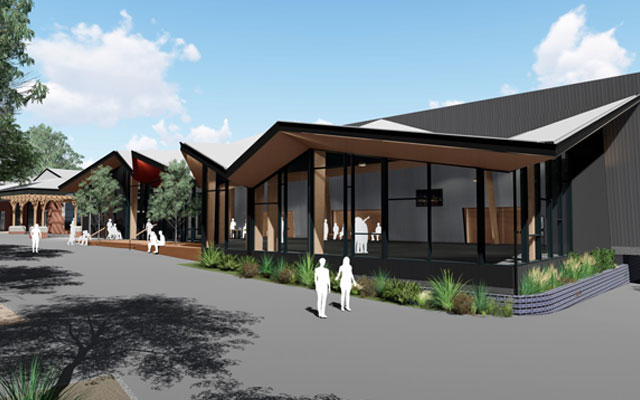
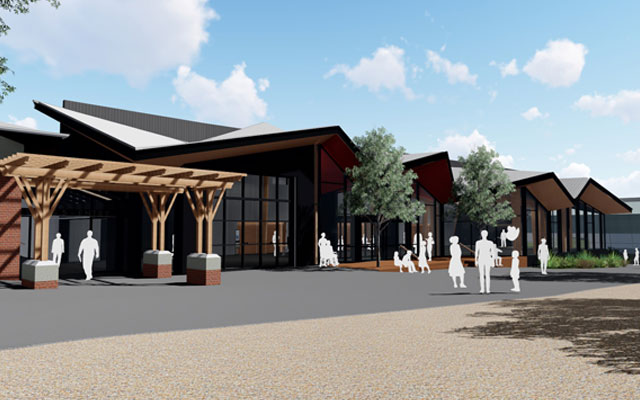
More details of PACIFICO Yokohama’s North expansion are out as construction progresses and brings it closer to its end-March 2020 launch.

Artist’s impression of the upcoming PACIFICO North

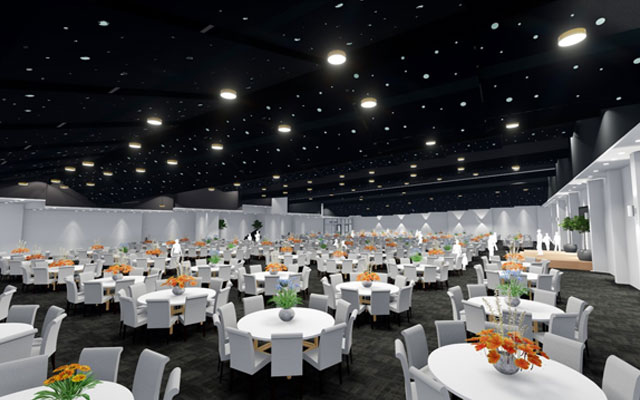
The venue’s new wing will feature 42 meeting rooms and one of Japan’s largest multi-purpose halls. The 6,337m2 column-free and carpeted hall can accommodate some 6,000 pax and be divided into eight sections.

“The multi-purpose hall can be used for exhibitions or corporate banquets, and can be divided into rooms for conferences,” Makoto Batori, executive director, sales promotion department, PACIFICO Yokohama, told TTGmice.

Batori sees the North expansion as a much needed solution to the rising demand for event venues in the Japanese city.

He said: “Yokohama’s specialty is in conferences – particularly medical conferences – and we realised the strong point of this centre. With this expansion, we will raise Yokohama’s brand not only among exhibitions, but also conventions.”

Besides exhibitions and conventions, Batori pointed to corporate incentive events with banquet requirements as the next target segment for the centre.

He said much of such demand came from Asian markets like Singapore and Hong Kong.

PACIFICO Yokohama has begun sales campaigns in Asia, starting with its inaugural attendance at ITB Asia in October.

“We will send more staff to Singapore next year to research on corporate companies and incentive events. Singapore is an important market for us,” said Batori.

Upon completion, PACIFICO North will sport an outdoor pedestrian deck connecting its second-floor main entrance to the Exhibition Hall and Annex Hall of PACIFICO Yokohama. The facilities can be jointly used for large-scale events.

MEHK casts spotlight on Old Town Central for business events

0

Meetings and Exhibitions Hong Kong, a division of the Hong Kong Tourism Board (HKTB), has launched the Old Town Central (OTC) MICE Guide in an effort to direct business event planners’ attention to venues and activities in the century-old district.

Old Town Central has a variety of appealing activities that planners can weave into their event programmes

The Guide, which contains recommendations by top planners from four strategic markets across the region, offers four product and information categories: teambuilding ideas, dining venues, event venues, and the ‘Choose your own adventure’ themed suggestions to get planners started.

It is available in print and digital versions, with the latter accessible at www.mehongkong.com/otc.

“This goes beyond product development and takes a holistic experiential approach to create an all-in-one MICE solution, tailored for meeting and incentive groups, to create an engaging and authentic Hong Kong experience in Old Town Central,” said Kenneth Wong, general manager of HKTB’s MICE and Cruise Division, in a press statement.

Tantalising experiences

0
Corporate groups can indulge in traditional performances and venues in Yogyakarta

Yogyakarta may not have large convention facilities to boast of like her more popular sister MICE cities, but her heritage and culture have proven to be formidable lures for corporate event planners in search of memorable destination experiences.

Corporate groups can indulge in traditional performances and venues in Yogyakarta

I Gusti Putu Yaktianuraga (Bagus), managing director of Werkudara Nirwana Sakti, a major event and travel management company in Yogyakarta, told TTGmice: “People may only know of Borobudur and Prambanan, but there are actually 52 temples in and around Yogyakarta and Central Java. These are our strong assets. Heritage and culture are our competitive edge in courting business events. Therefore, all our events feature local content built on Javanese cultural values and wisdom.”

Three of Yogyakarta’s most popular heritage sites are business event-friendly. Prambanan, Borobudur and Ratu Boko Palace have a combined collection of 19 event venues, ranging from a 60-seat indoor space to a sprawling outdoor area for up to 10,000 people at a standing cocktail reception.

Some of these venues have been utilised for public events. The Prambanan Temple Gardens, for example, hosts the annual Prambanan Jazz Festival which has featured international music greats like Shakatak, Shane Filan and Diana Krall.

Roswita, head of events division, Taman Wisata Candi Borobudur, Prambanan and Ratu Boko Management, noted that there are even more spaces around the temples which are suitable for small and medium-sized gatherings.

As well, there has been a recent rise in efforts to promote the smaller and less-known temples in the destination for corporate activities.

For instance, corporate teambuilding groups could start the day with breakfast at Candi Sambisari, a Hindu temple in Kalasan, followed by a bicycle trail along small villages to Candi Plaosan in Bugisan near Prambanan. Stops at a tofu or tempeh cracker factory could offer CSR opportunities.

Another option which would suit a corporate incentive programme is a visit to Candi Banyunibo followed by a sunset dinner at the nearby Ratu Boko Palace.
The only downside to using smaller temples is space limitations.

To resolve this, Werkudara Nirwana Sakti ropes in the local community for support. Around Candi Plaosan and Candi Banyunibo, for example, are open spaces belonging to the local community.

“We’d hire the space, set up tables, lighting and stage, and use the temple as backdrop. We’d involve the locals by having them to prepare drinks such as coconut juice (from coconut harvested from their trees) and home-cooked favourites such as soto (soup) and pecel (salad),” said Bagus.

Events planned at Candi Banyunibo could utilise an area for traditional archery managed by the locals.

Such community involvement helps sustain the livelihood of the locals. For example, renovation and promotion of Sojiwan Temple have transformed the area into a tourism village over the last couple of years.

Warjono, board member of the tourism village, said: “When the government started renovating Sojiwan Temple in 2004, we formed a tourism awareness group to identify our potential. We now have andong horse carts and gerobak ox carts to provide visitors with traditional transport, bicycles for rent, and local delicacies produced in home industries.”
UNESCO assistance in 2015, followed by support from the local government and universities, encouraged the local batik industry to thrive. Local designs depicting reliefs from Sojiwan Temple are a hit now.

Today, the village is capable of hosting a corporate dining event for up to 200 delegates at its Pendopo Hall, with entertainment provided by locals who play the gamelan and meals cooked to strict standards by local families.

Beyond temples, Yogyakarta dangles a plethora of other heritage sites that make interesting additions to corporate programmes.

The labyrinth of small lanes inside Kotagede, the capital of Mataram Sultanate in the 16th century, is perfect for Amazing Race-type teambuilding games which give participants a valuable history lesson.

There are also a number of traditional houses with joglo halls that are open for lunch and dinner.

Shinta Noor Kumala, coordinator of the Kotagede Heritage Trail, said: “When house owners realise that their homes are admired by foreigners for their traditional architecture and heritage value, they would want to keep and preserve their houses. This is one way we help to conserve Kotagede and our home, and empower our people.”

Yogyakarta’s unique venue options extend to museums such as Sonobudoyo and Affandi Museum, traditional markets such as Pasar Ngasem, and more.

Yurry Apreto, director of GM Production Indonesia, said meetings in Yogyakarta need not be saturated with cultural activities in order to offer a sense of place. It could be as simple as sitting on the floor to meet in lesehan-style.

To further develop the destination for business events, industry players hope the regional government will continue to develop new products, improve facilities and infrastructure, and step up promotions.

Yurry said: “We are facing competition from (other Indonesian cities like) Belitung and Mandalika, and need to keep attracting new and returning business events.”

Grand Hyatt Melbourne welcomes new executive chef

0

Dane Clouston has joined Grand Hyatt Melbourne in Australia as its newest executive chef.

He moved to Grand Hyatt Melbourne after serving six years at Park Hyatt Melbourne as executive chef.

Clouston’s culinary career began when he left his home town of New Plymouth, New Zealand, to study cooking in Adelaide. He then moved to Melbourne, where he met Melbourne chef Teage Ezard, (restaurants EZARD and Gingerboy) and in 2000, began working in the EZARD kitchen.

In 2004, the Kiwi went on to Hong Kong to open Opia with restauranteur Yenn Wong at the JIA Hotel. Later in 2008, Clouston moved to The Puli Hotel & Spa Shanghai as the opening executive chef. After four years in that post, he returned to Australia to join the Hyatt group.

Hong Kong’s Ocean Park gets a luxury Marriott property

0

Located at Ocean Park Hong Kong and just minutes from the city, Marriott’s first-ever city resort hotel has opened with 471 keys.

Hong Kong Ocean Park Marriott Hotel is split into three towers – The Pier Wing, Marina Wing and Club Wing. All guestrooms, spread across three categories, are located in The Pier Wing and Marina Wing. The Club Wing houses the executive M Club, which is scheduled to open early next year.

Event planners can avail Hong Kong island’s largest pillar-less ballroom – at 1,200m2 – and five other meeting spaces.

There are four restaurants on-site: The Pier Lounge and Bar for modern dining and cocktails; Marina Kitchen, an all-day dining and international buffet featuring live cooking stations; Canton Bistro for Cantonese specialties; and the Prohibition Grill House & Cocktail Bar for an American steakhouse concept.

Recreational amenities on-site include a large lagoon pool, gym, and Harnn Heritage Spa.

Hotel guests are also entitled to exclusive Ocean Park benefits, such as special opening and seasonal offers.

Most women love their exhibitions job but gender inequality persists: UFI study

0

A staggering eighty two per cent of more than 200 respondents from around the world, mostly women, who participated in the Women in the exhibitions industry research, conducted by UFI, the Global Association of the Exhibition Industry, and its media partner m+a, claimed to be happy with their jobs in the exhibition industry.

Results of the Women in the exhibitions industry research was unveiled at the 85th UFI Global Congress in St. Petersburg

Results of the study, which aims to provide insights into the perception of women’s and men’s skills in the workplace, the potential for advancement for women within the industry and details of the different female career drivers, was released at the 85th UFI Global Congress in St. Petersburg, Russia this week.

Good communication skills, empathy and strong organisational skills are among the many soft skills held by women and valued by the exhibitions industry

The study found that women were identified as having soft skills such as good communication skills and empathy. Women were also judged as having strong organisational skills, with the capacity to multi-task. Despite these soft skills, women lagged behind men when it came to networking.

Meanwhile, all respondents, both women and men, assigned self-confidence, technical know-how and power-related skills to men.

A darker discovery of the study was that more than half of the female respondents did not feel treated equally in terms of salary and career opportunities, and more than one third felt that they were held back from having more responsibility.

Most of the respondents felt that the industry would benefit from more female leaders and 61 per cent already see active support for women, although only 49 per cent think that quotas are the way to go.

Women, contrarily to men, often have to choose between their career and private life, which is also seen as one of the major negative career factors, with career breaks taken due to maternity leave (78 per cent) and institutional discrimination (68 per cent).

Gwen Kaufmann of Deutscher Fachverlag (Germany) who led the project, said in a press statement: “Women clearly make up the majority of the workforce in the trade fair industry, but they only represent a minority of the leadership. Both men and women agree that women can deliver diversity with a more creative approach when it comes to solving problems, helping the industry to prosper.”

Sonia Thomas, UFI’s COO, added: “Men and women have different skills, and are complementary, so the optimum is a mix of both sexes. We all must consider how to increase female representation at the senior level by making the path to the top a little easier for women.”

UFI will continue to work on the topic following the initial release of the research results. The full result can be downloaded at www.ufi.org/research.

Reviews

The Ritz-Carlton, Bangkok

The newly-opened Ritz-Carlton, Bangkok anchors the One Bangkok development with cosmopolitan elegance. Featuring the city's largest ballroom and a spectacular new penthouse suite, it delivers exceptional hardware and deeply authentic, soulful service for business and leisure travellers alike

Mama Shelter Zurich

Behind the imposing, Brutalist concrete that defines Zurich’s Oerlikon district lies a surprising secret. While its exterior honours the neighbourhood’s industrial roots, stepping inside Mama Shelter reveals a vibrant, neon-soaked world that is a far cry from its rigid shell

Hyatt Regency Kuala Lumpur at KL Midtown

A polished urban retreat designed for business travellers, Hyatt Regency Kuala Lumpur at KL Midtown combines thoughtful design, seamless service, and exceptional facilities.