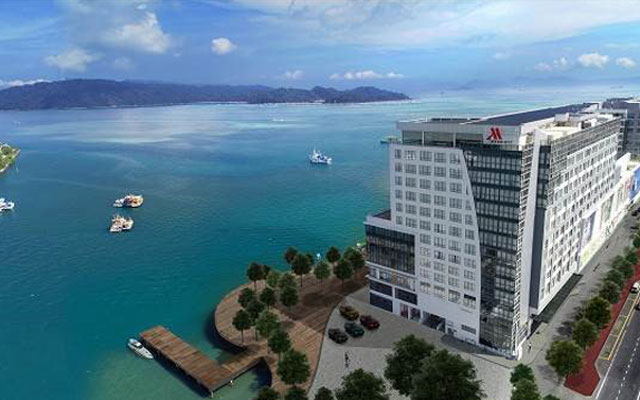
The Kota Kinabalu Marriott Hotel in Sabah, has opened along Jalan Tun Fuad Stephens on the Malaysian city’s waterfront.
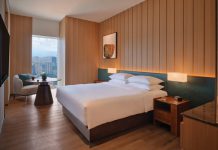
The property offers 332 guestrooms and suites decked out in a contemporary design that pays homage to the rich heritage of Borneo’s Kadazandusun tribe.
Kota Kinabalu Marriott
Recreational facilities include an outdoor infinity pool with views of the South China Sea, a 24-hour gym, and a spa. There are also five F&B options, ranging from the Japanese teppanyaki dining room to the rooftop bar.
The property has also been designed to meet the needs of Malaysia’s growing business events market, offering some 1,300m2 of versatile event space. Function space include five rooms, and a Grand Ballroom that can accommodate up to 650 guests.
Angsana Laguna Phuket in Thailand has updated its Meet For More Package.
From now until October 31, 2018, groups that book with the resort will be entitled to five complimentary room upgrades to Laguna Premier and/or Angsana One Bedroom Loft, as well as complimentary early check-in for VIPs and extended check-out time till 15.00 for up to five rooms. All group sizes are welcome, but the minimum booking has to be 10 rooms and up.
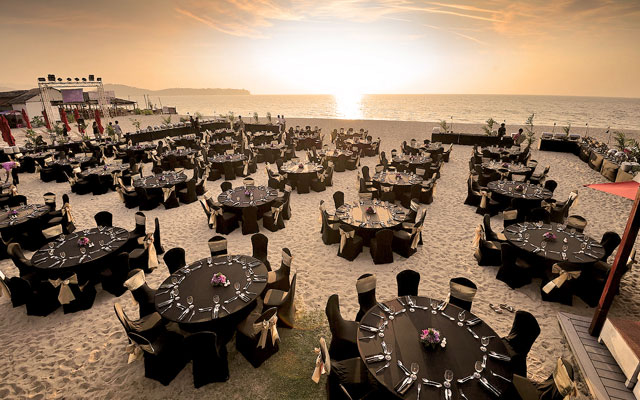
An outdoor event arrangement on the beach at the Angsana Laguna Phuket
A welcome amenity will be provided to every delegate upon arrival at their room, along with complimentary Wi-Fi access, and laundry and room drop services.
In addition, groups will receive a 15 per cent discount off food prices at all hotel-operated restaurants, and a one-time set dinner or buffet dinner that includes regular soft drinks, coffee and tea. The package also includes full-day meeting room usage and round-trip airport transfers for every delegate.
These benefits are enhanced with other essential incentive and business event elements, comprising the complimentary boardroom for use as secretariat room with laser printer, and an extra of a function room for set up and rehearsal one day prior to the event.
Other extras include a complimentary teambuilding session, or a CSR activity.
The beachfront Angsana Laguna Phuket has a range of both indoor and outdoor facilities comprising 10 meeting rooms, a 358m2 ballroom for up to 400 guests theatre-style, and a 40m-long beachfront area which can accommodate up to 4,000 guests.
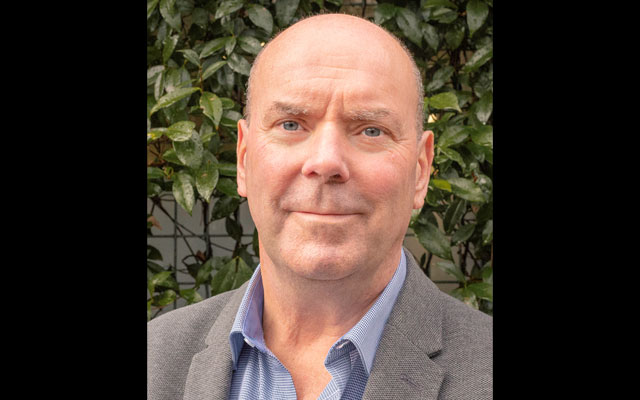
Graham Perry has been appointed managing director of Best Western Hotels & Resorts, Australasia.
The appointment follows Best Western International (BWI) taking management control of the brand on June 1 from the Motel Federation of Australia.
His first few weeks have been spent bedding down the operational transition as BWI moves to a property direct relationship with hotels and resorts in Australia and New Zealand.
Perry’s immediate goals are to boost the level of services Best Western provides properties such as increasing revenue management capabilities and growing Best Western Rewards.
He was most recently CEO of inland NSW, while previous roles include CEO See Australia, CEO Traveland, managing director classifieds at Fairfax Media, and managing director Utell International.
The expanding business events industry in Asia-Pacific has created an employee’s market where salary alone will not attract and retain quality staff.
In Malaysia, industry employers are realising that this talent crunch is exacerbated by opportunities for staff to build their career overseas.
Retaining millennials is more difficult in today’s workforce
To attract and retain talents – particularly the millennials – employers have discovered that the key is providing employees with opportunities for continuous training and skills enhancement from within the organisation, job empowerment through decentralisation of responsibilities, as well as career growth.
In an effort to tackle the talent crunch, the Malaysia International Trade & Exhibition Centre (MITEC) launched its Continuing Personal Development (CPD) programme for full-time staff in May. All qualified staff were given a budget for internal and external training, as well as overseas job exposure.
A unique aspect of CPD is the staff’s freedom to choose programmes they feel would advance their career. Their attendance will also contribute to their job performance appraisal.
Rohizat Baharum, director of human resource at MITEC, told TTGmice that more than 50 per cent of full-time staff at the venue are millennials aged under 35.
While Rohizat acknowledges the benefits of providing staff training – that it “helps retain staff and improves motivation and skill sets” – he was also quick to point out its limitations as a solution to retain millennial staff.
Rohizat said: “Retaining millennials is the most challenging as they don’t like to stay long within an organisation, preferring instead to move on after a few years. Moreover, training initiatives provided by employers is something that millennials regard as a given.”
Mona Abdul Manap, founder and CEO of Malaysian PCO Place Borneo, said companies hoping to retain staff must “keep the team motivated and interested in the job”.
Mona, who is herself a millennial, elaborated: “This includes empowering them in decision-making and allowing them to lead projects.”
A fun work culture is also needed, she opined, and offered an example of how Place Borneo does it – management meetings and strategic planning sessions are held away from the office.
She said: “In January, we went to a resort in Lundu (Kuching, Sarawak) where we held a strategic planning session for the next three years. We also hold weekly yoga sessions outdoors for staff. It helps with team bonding and curbs stress.”
All but one of her 11 full-time staff are under 35 years old. Mona said these efforts are needed as “it is difficult to get good talents in Sarawak. Many graduates who did event management courses eventually opted for government jobs, or a career outside the industry”.
The state government of Sarawak addresses the talent shortage through the Graduate Enhancement Training Sarawak programme, where diploma and degree graduates are provided with a 12-month internship with the private sector to acquire industry related skills. They are paid a monthly allowance by the government.
Place Borneo has converted three interns to full-time positions through this programme.
At Luxury Tours Malaysia, flexible work hours and a relaxed dress code are tricks to keeping its young staff happy The DMC has 75 per cent of employees aged under 35.
Its director Arokia Das said: “We also offer overseas sales trip opportunities. There are career advancement opportunities for those who are good in their work and interact well with clients.”
The Malaysian Association of Convention and Exhibition Organisers and Suppliers (MACEOS) does its part by working, over the past three years, with universities offering event management courses to provide internship opportunities to students.
Francis Teo, honorary secretary at MACEOS, remarked: “The manpower shortage will become more acute in the coming years with more hotels and convention centres opening in Malaysia, along with rising demand for Malaysian talents from regional destinations.”
Matthew Smith has been appointed general manager of Destination Asia in Singapore, succeeding Bob Guy who retires after eight years as managing director of the DMC in the Lion City.
Smith brings with him 18 years of experience in the travel industry and a developed network in meeting & events and DMC activities.
From left: Matthew Smith and Bob Guy
Alongside the management of daily operations, he will also drive forward new initiatives to further develop key sectors of meeting and events, luxury FIT travel and cruise.
Guy had set up the Singapore office in October 2010 alongside James Reed and Gill Guy, growing the company from an initial five staff to 34 travel specialists.
He will continue in his role as managing director of Destination Asia in Malaysia until the end of the 2018.
The Penang Convention & Exhibition Bureau (PCEB) has unveiled details for its inaugural Penang International Travel Exchange (PITE) later this year, where 150 Indian buyers will be the first to be hosted.
PITE 2018 will be held over five days, from September 4-8. One of the key components of PITE is the B2B session for Malaysian business events and tourism suppliers to showcase their products and services to Indian buyers. The exchange will also comprise site inspections, education workshops and networking events.
Ashwin: PITE’s aim is to bring in more business events to Penang
“The first edition of PITE will see Penang hosting India’s leading travel product, the Global Panorama Showcase (GPS), where it will be conducting its first Educational Destination Workshop-International (EDWIN) in Malaysia at PITE,” said Ashwin Gunasekeran, CEO of PCEB.
“PITE 2018 marks another significance for Penang as it is co-organised by Apollo Conferences, Penang’s first homebased PCO. One of PCEB’s mission was to advocate the setting up of Penang-based PCOs. With the support of a PCO based in Penang, Team Penang’s capability to bring in more business events is strengthened,” said Ashwin.
PITE is a homegrown initiative to further promote Penang as a business events and leisure destination in the region, where every year, select buyers from around the world will be brought to Penang to experience the destination.
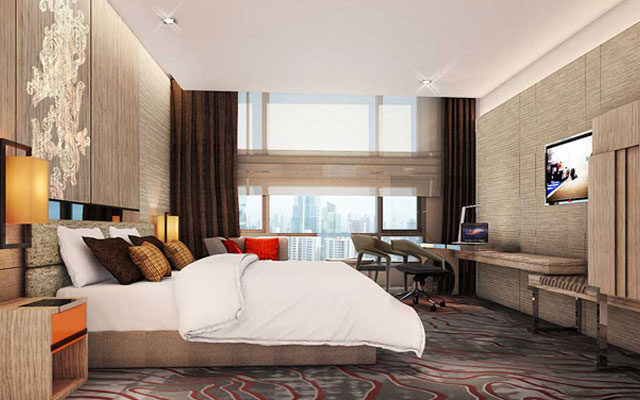
A rendering of a guestroom in the upcoming Hotel Nikko Bangkok, opening in 4Q
Anticipating a tourism arrival slump right after the 2019 Rugby World Cup and 2020 Summer Olympics, Japanese company Okura Nikko Hotel Management is stepping up sales and marketing efforts in the key South-east Asian markets of Malaysia and Singapore to stimulate stronger corporate demand and interest in properties located away from the big Japanese cities.
The company held roadshows last week in Malaysia and Singapore, which drew in more corporate buyers from Asia-Pacific headquarters of multinational companies than in previous years, shared Keith Yeak, director of sales with Okura Nikko Hotel Management.
A rendering of a guestroom in the upcoming Hotel Nikko Bangkok, slated to open later this year
“We are also encouraging more corporate bookers and planners to consider our properties away from the big Japanese cities. We are working with local tourism authorities to come up with ways to create corporate demand,” Yeak told TTGmice in an interview.
“It is easier to push leisure traffic to smaller Japanese destinations like Nara and Seto Inland Sea but for corporate meetings and incentives, accessibility matters. We have to be persistent in knocking on corporate doors and in emphasising the appeal of these destinations for incentives and pre/post-meeting programmes,” he added.
Yeak explained that doing so could help alleviate congestion in the big cities when the two major sporting events come to town, as well as “build up corporate interest in more destinations across Japan to keep business coming after the travel peak”.
Alongside these efforts, Okura Nikko Hotel Management is also gearing up for several openings in Asia between late this year and 2021. Two hotels that will come online first are Hotel Nikko Bangkok, scheduled for this November, and Hotel Okura Manila, slated to open either end of this year or early next year.
Hotel Nikko Bangkok will sit in Thonglor and offer 301 guestrooms and suites, as well as some meeting rooms. Hotel Okura Manila, a 191-key property, will be part of Resorts World Manila, located a short distance from Ninoy Aquino International Airport.
Other upcoming openings in Asia include The Okura Prestige Saigon, Hotel Nikko Hai Phong, another Okura in Manila, and The Okura Prestige Taichung.
Chizu Nakashiro, director of sales, international sales office, said: “The destinations selected for Okura openings are frequented by Japanese business travellers, and the company hopes to have hotels there to cater to these people.”
Future network growth will centre on Asian business hubs, Nakashiro added, as the company is determined to grow its corporate business segment.
Capsule hotel brand Cube has proven popular with groups of meeting and conference professionals, and this revelation comes just as the company opened its second property in Singapore’s Kampong Glam district within three conserved shophouses.
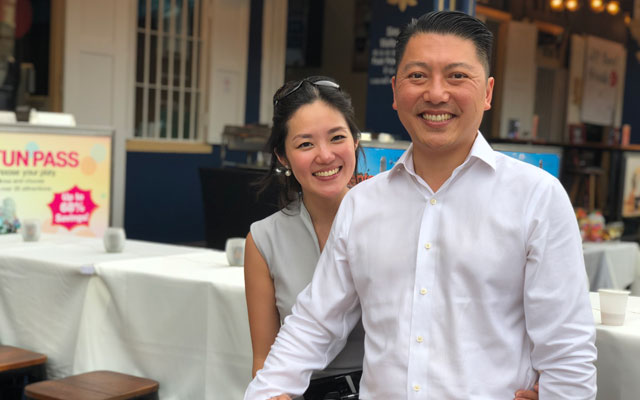
Sonia Anya Tay, co-founder and chief operating officer of Cube Boutique Capsule Hotels, observed that the new hotel has been drawing business groups that meet in the nearby Suntec Exhibition and Convention Centre. For instance, corporates make up some 10 to 15 per cent of the hotel’s guests.
Cube’s founders Sonia Anya Tay and Benedict Choa
Tay elaborated: “We attract a new breed of independent and IT-savvy business travellers who value comfort without sacrificing the essential features of business travel – powerful Wi-Fi, security, privacy, breakfast, clean bathrooms, 24/7 reception and housekeeping – at very affordable prices.”
Currently, the hotel is mainly distributed through OTA channels, and actively reaches out to be listed in international conferences and events directories in Singapore. Tay shared that the hotel is “also looking to expanding towards the SME corporate markets”.
Cube Boutique Capsule Hotel at Kampong Glam offers 56 capsule beds – a mix of singles and queens – in configurations of private group rooms and dormitories. Each dormitory consists of 18 capsule beds.
Each capsule moderates its own temperature and air-flow; is solidly insulated to reduce ambient noise; and is equipped with a universal electrical outlet, safe, vanity area, bedside light, garment space and a digital locker drawer.
Cube’s founders plan to open another capsule hotel in Chinatown with a family concept by this year-end, and the company also has overseas projects in the pipeline.
People often have a romantic view of business travel – flying business class, five-star hotels, lobster dinners, piling up the points, cutting epic deals. And sure, it has its perks! But ask anyone who travels more than three or four times a year, and they’ll tell you it can be stressful too.
For many travellers, the stress begins long before they board the plane. Getting approvals, for example, can be a soul-cleaving experience.
Obtaining approval can be a tedious process, during which airfares have the tendency to rise which results in overall increased costs
Most companies demand employees seek approval before booking. And in theory, this makes sense. Companies don’t want employees booking trips willy-nilly, racking up costs.
But pre-trip approval processes have become so onerous that the booking experience is about as streamlined as a Lego bulldozer.
This applies across Asia. In India and China, travellers can require four or five levels of approval before booking. Even in Singapore, that beacon of efficiency, travellers may require two or three. So, they typically wait around three days – sometimes even a week – before booking.
As mortals wait, airfares rise.
In Asia, business trips are usually booked two to four weeks in advance. Waiting three days bumps airfares up four per cent on average. A week? Seven per cent.
Worse, if the fare goes up in the interim, it can be back to square one – the company’s travel policy might require the traveller to restart the entire approval process all over again.
You might ask: “Isn’t the ability to hold a booking one of the benefits of using a travel management company?”
And the answer is yes – but only for certain fares. It doesn’t apply to cheaper fares, which are ticketed instantly. Consider China, where approximately half of all airline seats are ticketed instantly, and these are around 30 per cent cheaper than the flexible seats.
It seems absurd to waste your travellers’ time – while costing the company money. Particularly since a whopping 98 per cent of trips are approved in the end. For domestic travel, approval rates are even higher.
What to do?
Start by identifying which trips require approval. Then set thresholds. For example, you can modify your policy to auto-approve any flights under US$500. And for flights over US$500, if fares increase only 10-12 per cent while you’re waiting for approval, you’re good to go.
Next, consider post-trip instead of pre-trip travel approval. Since almost all trips get approved anyway, just trust your employees to do the right thing. Deal with issues when they file their expenses after the trip.
And of course, use technology. Some apps send push notifications when a trip needs approval. This can cuts approval times massively (emails tend to molder in inboxes). Technology can also auto-approve trips if the approver doesn’t approve them in time.
We’ve worked with our clients to find savings of up to five per cent. That might seem piffling, but when you’re spending US$5 million a year on flights – not uncommon for mid-to-large sized companies in Asia – that’s a quarter of a million dollars. Plus you have happier and more productive travellers. Result!
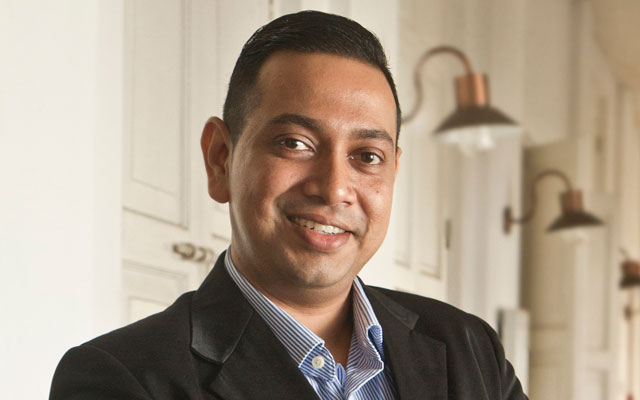
Akshay is responsible for leading CWT’s national and multinational sales teams in Asia Pacific. Based out of Singapore, his role is to help clients maximise the benefits of setting up managed travel programs in APAC or globally.
Since joining CWT in 2010 Akshay has worked extensively with major clients in the Energy & Resources, Professional Services, Banking and Automotive sectors in Europe and Asia Pacific. In his most recent role, he headed up the company’s consulting arm, CWT Solutions Group, helping clients in Asia Pacific identify savings opportunities and optimise their travel programs.
His expertise lies in air sourcing, category management, consolidation of travel programmes and partnerships, and optimal supplier sourcing arrangements.
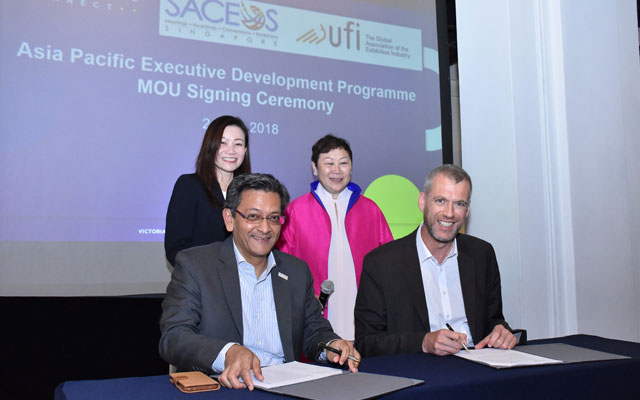
From left: (Seated) SACEOS' Aloysius Arlando, and UFI's Kai Hattendorf. From left: (Standing) Singapore Tourism Board's Melissa Ow, and SACEOS' Janet Tan-Collis
SACEOS and UFI, the Global Association of the Exhibition Industry, have signed a Memorandum of Understanding (MoU), where both associations will be collaborating to jointly develop an Asia Pacific Executive Development Programme.
The programme, aimed at training and developing skills relevant for exhibition professionals in the region, will bear an industry-first recognised certification.
From left: (Seated) SACEOS’ Aloysius Arlando, and UFI’s Kai Hattendorf. From left: (Standing) Singapore Tourism Board’s Melissa Ow, and SACEOS’ Janet Tan-Collis
The MoU was signed at the recently-concluded Singapore MICE Forum 2018, and both associations aim to announce the launch at the the upcoming UFI Asia Pacific Congress 2019 in Japan.
Aloysius Arlando, president-elect, SACEOS, said in a statement: “Our collaboration with UFI will allow us to collaborate on education, talent development, and peer to peer exchanges – working on the foundation of professional training in exhibition. This enhanced skills development will help Singapore’s MICE professionals in skills elevation and job opportunities.”
Kai Hattendorf, managing director/CEO, UFI added that the collaboration will allow both associations to connect and serve the exhibition industry by tapping on research, and nurturing more industry professionals in Asia and globally.
The newly-opened Ritz-Carlton, Bangkok anchors the One Bangkok development with cosmopolitan elegance. Featuring the city's largest ballroom and a spectacular new penthouse suite, it delivers exceptional hardware and deeply authentic, soulful service for business and leisure travellers alike
Behind the imposing, Brutalist concrete that defines Zurich’s Oerlikon district lies a surprising secret. While its exterior honours the neighbourhood’s industrial roots, stepping inside Mama Shelter reveals a vibrant, neon-soaked world that is a far cry from its rigid shell
A polished urban retreat designed for business travellers, Hyatt Regency Kuala Lumpur at KL Midtown combines thoughtful design, seamless service, and exceptional facilities.







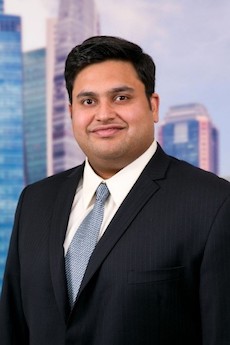 Akshay is responsible for leading CWT’s national and multinational sales teams in Asia Pacific. Based out of Singapore, his role is to help clients maximise the benefits of setting up managed travel programs in APAC or globally.