Korean Air has completed the first phase of its lounge renewal project at Incheon International Airport, reopening the redesigned Miler Club and Prestige East (Right) Lounge on August 18 and launching two new Prestige Garden Lounges following the airport’s recent expansion.
The renewal programme forms part of the airline’s infrastructure investment ahead of its integration with Asiana Airlines.
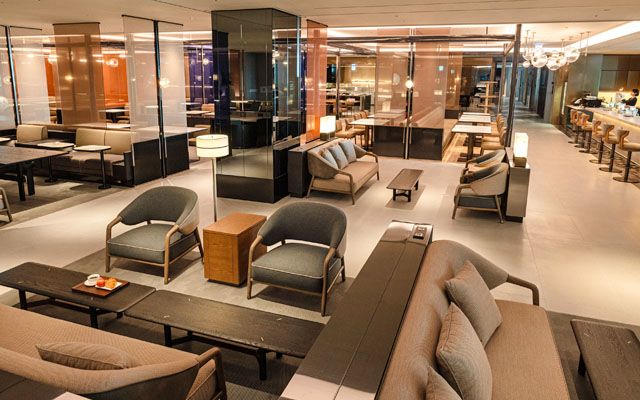
Korean Air’s upgraded Miler Club, pictured, and Prestige East Lounges at Incheon feature new dining, wellness and work areas
The redesigned lounges include separate areas for dining, relaxation, work and wellness. Facilities include open kitchens where chefs prepare dishes on-site, buffet options with Korean and Western selections, a bakery, salad bar, cocktail service, and barista-prepared coffee. Menus will rotate quarterly. Other amenities include a wellness area with massage chairs, a technology zone, meeting space, shower facilities and private powder rooms.
The interiors combine modern materials with traditional Korean design elements. The Miler Club and Prestige East Lounge feature Hanok-inspired structures alongside a colour scheme of gold, charcoal, black and ivory, reflecting Korean Air’s premium cabin style.
The Prestige Garden East Lounge overlooks a Korean-style outdoor garden, while the Prestige Garden West Lounge faces a Western-style garden. Both provide F&B service.
Further renovations are scheduled for completion in 2026, including the First Class Lounge, Prestige East (Left) Lounge and Prestige West Lounge. First Class passengers will temporarily use the Miler Club during this period.
Korean Air’s lounge space at Incheon will expand from 5,105m² to 12,270m², with seating capacity rising from 898 to 1,566.
BCD Travel announced has appointed Danielle Russom as managing director for Australia and Singapore.
In her new Sydney-based role, Russom’s mandate includes accelerating growth and deepening BCD’s market presence in Australia, while continuing to strengthen the company’s footprint in Singapore.
With more than 20 years of experience in commercial leadership across the Asia-Pacific region, Russom brings a wealth of expertise in business growth, client management and team development.
Prior to this role, she served as vice president of GBT Select APAC.
Macau began 2025 on a strong note, recording 413 business events in the first quarter, an increase of 77 events year-on-year. These gatherings attracted 188,000 participants and attendees, marking a 3.7 per cent rise compared to the same period last year.
In February 2025, Macau’s Commerce and Investment Promotion Institute (IPIM) made its first foray into the Middle East. Seeking new markets, IPIM carried out investment and business events promotion activities in Dubai, UAE, and Riyadh, participating in two Middle East Market Tourism and MICE Destination Promotion and Networking Seminars organised by Macao Government Tourism Office (MGTO).
The Londoner, Macau; photo by Aliona_25/shutterstock
MGTO also organised “Macao Tourism + MICE Product Updates Seminar & Travel Mart” from April to July 2025 in major Asia-Pacific cities. An MGTO spokesperson stated that South-east Asian cities also remain a key target market.
For 2H2025, Macau’s business events industry is relatively upbeat despite geopolitical uncertainties.
Bruno Simões, the founder of DOC DMC Macau, anticipates a robust last quarter, similar to what he experienced in 2024. “Despite some volatility in the first half of the year, I expect confidence to return as companies seek to maximise their annual budgets.
As such, Simões is “actively pursuing events” such as a major sports event, which is a “fast-growing segment in Macau”. The company is also hosting a conference focusing on business opportunities in Portuguese-speaking countries, aligning with its role as a bridge between China and Lusophone markets.
Meanwhile, Sands China has enhanced its meeting offerings with the launch of The Londoner Grand – a Luxury Collection Hotel on June 8, 2025.
“When we converted Sands Cotai Central into The Londoner Macao, it truly became a ‘resort within a resort’ complex. This means we can now offer a more exclusive and intimate meetings experience than you might ordinarily find at The Venetian,” explained Sands China’s vice president of sales, Stephanie Tanpure.
The Londoner Macao boasts five hotels, where The Venetian and The Parisian each have only one.
“The Londoner property’s focus on luxury MICE offerings has been significantly intensified. We’re now collaborating with many of our retail brands and welcoming numerous C-suite MICE groups, often comprising 15 to 25 high-level executives, for luxury event or meeting programmes,” she revealed.
The company’s eyes are on the Saudi Arabia market, which is primarily a “high-net-worth market”.
“There is a niche for C-suite events, where our properties are well-suited to support that calibre of traveller. And Hong Kong has also recently started direct flights into the region, which is obviously a key gateway for us,” Tanpure explained.
To better market the new property, the group will be attending ILTM Asia Pacific in Singapore, and ILTM Cannes. A mega fam trip in 1Q2026 is also in the works, Tanpure told TTGmice.
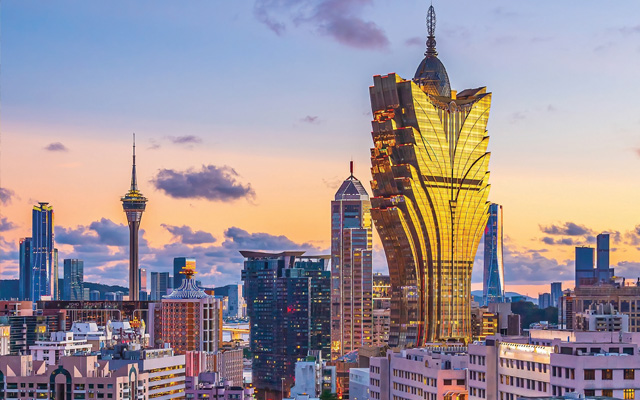
Macau’s striking skyline; photo by f11photo/shutterstock
“About 300 international luxury MICE planners will be invited with a concentration of longhaul markets like UK, US, Europe and the Middle East,” she said.
The St. Regis Macao’s general manager, Stuart-Wayne Douglas, added: “Macau is actively targeting the longhaul MICE market, particularly from the Middle East.
The destination is simultaneously enhancing its Muslim-friendly credentials through initiatives such as the Halal Horizons Pavilion, which features certified products and prayer facilities, as well as industry training programmes.”
Future efforts will include fam trips for trade professionals and media, Arabic-language digital campaigns, and continued development of Halal-compliant services.
“These initiatives aim to position Macau as a competitive, culturally-sensitive business events destination for high-value Middle Eastern travellers, while also appealing to Muslim markets in South-east Asia and China. Such efforts align with Macau’s broader strategy to diversify its visitor base beyond gaming and traditional source markets,” Douglas indicated.
The property is strengthening its luxury business events positioning by hosting exclusive wellness events with brands like Lululemon, targeting high-net-worth travellers and corporate clients.
“These curated experiences – combining fitness, mindfulness, and networking– enhance the hotel’s appeal for premium leisure stays, corporate retreats, and incentive travel,” he stated.
Tanpure further observed that international longhaul markets have also returned.
Sands Resorts Macao will welcome its largest US group since before the pandemic from August 24-27, the 2025 Million Dollar Round Table Global Conference. Following this, several groups from Australia are expected, with additional incentive groups from the US and Europe anticipated later this year.
“I believe that from this summer, following the Million Dollar Round Table conference, we’re on an upward trajectory to welcome significantly more of our international business back to both Hong Kong and Macau,” she opined.
Within Asia-Pacific, groups from South Korea and Japan are also returning.
She added: “People are wanting to get back and hold global events (as opposed to regional events during Covid due to travel restrictions), and we’re seeing some RFPs coming in for 2027 and 2028. – additional reporting by Rachel AJ Lee
Logan: exploring new and different ways to deliver what is important for Asia-Pacific members
GBTA is hedging its bets on Asia-Pacific, spurred by strong and increasing appetite among business travel professionals in the region wanting to be part of a professional community, to learn and to be heard.
The US-based association is tapping the momentum of its successful Asia-Pacific (APAC) conference, held in Singapore in May, by collaborating with its APAC regional and local GBTA advisory boards such as those recently established in India, China and Australia.
Logan: exploring new and different ways to deliver what is important for Asia-Pacific members
While tariff-related disruptions to net exports are likely to act as a drag on businesses, Catherine Logan, regional senior vice president, EMEA and APAC, is optimistic that China – “the second-largest business travel market in the world” – is poised to continue to be a major driver of growth for the sector.
China represents 61 per cent of APAC’s spending, and GBTA’s recently-published Business Travel Index Outlook report shows China’s growth is expected to moderate from five per cent in 2024 to 4.6 per cent in 2025, and 4.4 per cent in 2026.
However, Logan believes policy measures China introduced in March 2025 – aimed at boosting consumption, supporting investment and stabilising the property sector – should help offset some of the negative impacts.
“In the longer term, China’s structural shift toward domestic consumption remains central to sustaining growth momentum,” she added.
Meanwhile, GBTA will support, develop and nurture current and future volunteer members.
Logan commented: “In APAC, the foundation that Peter Koh (APAC Advisory Board chair) was instrumental in creating for GBTA members and programmes. It will continue to further evolve and grow as our advisory leaders and volunteers also continue to expand and bring their own insights and expertise.”
Koh, an industry veteran, received the Business Travel Service Award at the 2025 GBTA APAC conference and the President’s Award at GBTA Convention in Denver in July.
Other industry experts such as Sandeep Shastri, senior director, Airline Distribution, Sabre Asia-Pacific; and Kenji Soh, general manager, South-east Asia, FCM Travel; were recognised at the APAC event.
Logan continued: “We consult extensively with our advisory boards across APAC to provide business travel professionals with the skills, knowledge and networking opportunities they need to thrive, both as volunteer leaders within GBTA and in their chosen profession.”
She highlighted that “APAC is a powerhouse of growth for the business travel sector”, adding that its members across the large and diverse region have unique needs. As such, GBTA is working closely with volunteer members to “deliver localised offerings and programmes such as for education that provide them with the skills and knowledge they need to thrive”.
“Building on the strong momentum of the APAC conference in Singapore, our focus is on continuing to expand and enhance our year-round offerings to our expanding membership across the region,” Logan added.
GBTA’s re-engagement in APAC started in 2023 with the appointment of Elle Ng-Darmawan, Asia Pacific regional director, nearly eight years after the association closed its regional Bangkok office in March 2015.
Singapore-headquartered events management company Unearthed Productions (UP) recently launched its new regional brand UPGroup Asia, as well as a new MICE Venue Search Platform, at CatchUP 2025, its annual industry gathering.
“This year’s CatchUP is about marking a new phase for the company and bringing our network together to share that vision. Through our regional brand UPGroup Asia, we now operate in Singapore, Thailand, Indonesia, Vietnam and Malaysia. Over the next 12 months, we will open offices in Bangkok, Jakarta and Ho Chi Minh City,” Adam Piperdy, founder and chief experience officer of UP, told TTGmice.
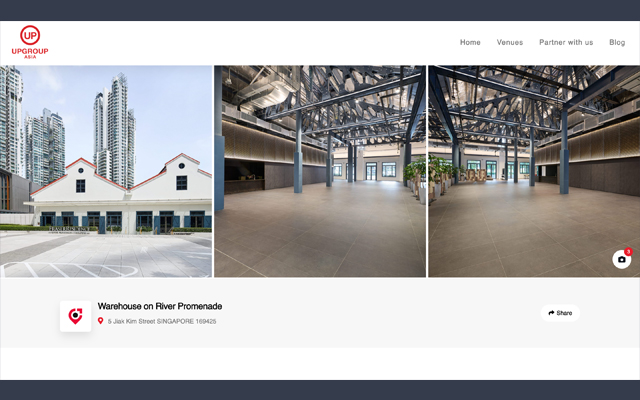
UP’s MICE Venue Search Platform
According to Piperdy, more of UP’s clients are looking to expand their events regionally, and this expansion makes it easier for them “to take their events into new territories without having to manage multiple vendors”.
With its expanded regional presence, UPGroup has also launched a new MICE Venue Search Platform. The platform aims to solve the problem of slow and fragmented venue searches in the Asia-Pacific region by bringing verified, up-to-date venue information into a single place.
“The platform offers filters designed specifically for MICE needs, such as capacity, layouts, technical capabilities, and hybrid-event readiness,” Piperdy explained.
Currently, the platform exclusively features venues managed by UPGroup Asia. Event planners can use the platform to filter listings by specific criteria, review specifications, and explore immersive media like 360-degree virtual tours. The listings also include insights from UPGroup Asia’s own production experience, helping planners understand how each space performs for different event formats.
Piperdy added: “As more events are listed and shared, the platform will also become a source of ideas and inspiration for how venues can be used in creative ways. It’s a win-win, serving as a lead generation tool for the venues we manage.”
Bolt, the European mobility platform, has officially launched Bolt Business in Malaysia.
The new service is designed to help companies of all sizes simplify and manage employee travel with a centralised platform.
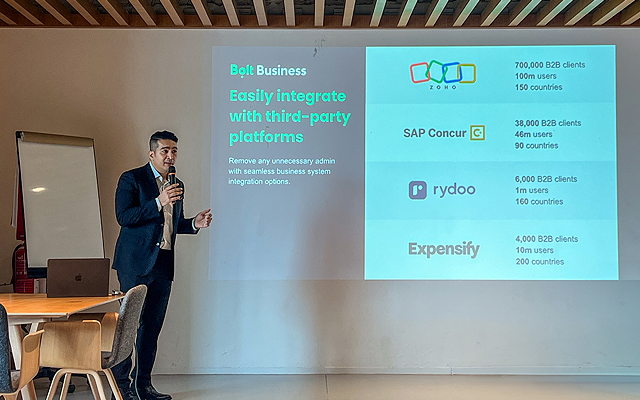
The launch of Bolt Business
The Bolt Business solution eliminates the need for manual claims and paperwork. It provides companies with a dashboard to set ride limits, track usage, and access real-time reports. According to a press release, this allows finance and HR teams to streamline expense management and make data-driven decisions.
Afzan Lutfi, general manager of Bolt Malaysia, said the service was created to make life easier for businesses and their employees as many “businesses still struggle with messy claims and manual processes”.
The launch follows Bolt’s expansion in the Klang Valley since late 2024, which has included new features like toll-inclusive fares and the premium Bolt Executive category.
Live Nation has announced that Tides, a new 1,500-capacity live music venue in Kowloon, is set to open soon.
Named in homage to the sea and the area’s maritime history, TIDES is located on 1/F and U1/F of the iconic, ship-shaped Whampoa complex and was designed entirely in-house by Live Nation.
A rendering of Tides’ exterior
The space is Hong Kong’s first purpose-built, mid-sized venue with fully integrated production capabilities, featuring built-in sound, lighting, and flexible staging to support touring artists. The venue also includes state-of-the-art artist support areas and a lounge for pre- and post-show gatherings.
The venue is projected to host up to 250 events annually, including concerts, brand activations, and corporate functions.
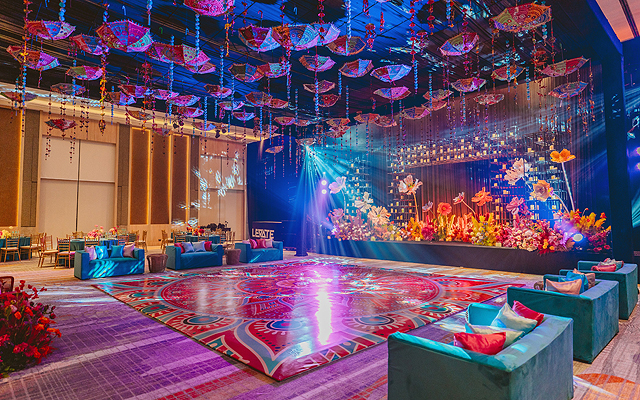
When you are tasked with planning an imaginative event, where do you find your inspiration?
Inspiration always comes from storytelling. I see every event as a living theatre set, where guests step into a world that suspends reality for a few hours. Usually the spark comes from nature, a colour palette in a sunrise, sometimes from a dream, art, or it just bubbles up from my soul.
I design events that I would want to attend, the kind that make you remember the child-like wonder that is forgotten in the business and uniformity of adult life. That is where the magic lives.
Do you find that budgets have shrunk, and demands have gotten more? What are your strategies for creating high-impact events?
I think it depends on the client, their values and expectations. There will always be clients who trust us and have budgets to allow us to do our best work, and there will always be others who love what we do but don’t understand that the level of detail we put in does have costs associated with it.
Some want champagne on a lemonade budget, and if we choose to work with them, our strategy is to focus on the elements that deliver the greatest emotional impact – lighting, performance, and bold statement pieces. We focus on the components that I believe will create the most emotional resonance, and do them really well.
I also build layered experiences: the surprise of a hidden performance, the drama of a lighting shift, the intimacy of scent in a space. Those things cost less than building a set from scratch, but they create a sense of wonder that lingers.
With so much focus on technology, how do you ensure that events still deliver that essential human connection?
Technology is a tool, but connection is the heart. A giant LED screen means nothing if that’s all there is and people feel isolated in the room. I use tech as a way to enhance emotion, not replace it.
At one of our corporate gala dinners, we wove in projection and cinematic LED visuals, but paired them with live performers, candlelight, and shared storytelling moments. The tech enhanced the real live performances and touches we had curated rather than replace them.
Guests didn’t just watch a show; they felt a collective energy ripple through the room. Connection is about those goosebump moments when humans laugh, cry, and celebrate together. Tech should serve that, not overshadow it.
How has the purpose of corporate events shifted in the last few years?
The balance has definitely shifted. Pre-2020, corporate events were heavy on sales and lead generation. Now, there is an equal, sometimes greater, emphasis on internal culture, teambuilding, and wellbeing. Employees need to feel connected, inspired, and valued, not just sold to.
I approach every brief by asking: how do you want your guests to feel? For sales-driven events, we design experiences that celebrate innovation, brand power, and client wins. For culture-driven events, we create immersive spaces that encourage play, collaboration, and pride. Both matter, and the magic is in weaving them together seamlessly.
What is one piece of advice you would provide to event organisers and corporate planners in this time and space?
Guests are hungry for meaning and memory, they may not even know this, but it is our job to show them. They want to be surprised, delighted, transported. My advice is: choose imagination over imitation. Take a risk. Build a forest inside a ballroom. Turn a staff meeting into an interactive journey. Look beyond the checklist and ask yourself ‘how can I make a memory here?” Your audience will forgive imperfections if you give them a story worth telling the next day.
Looking ahead, how do you see Australia’s events industry evolving over the next three to five years? Will you be planning overseas expansion?
Australia is stepping into an age of experiential bravery. I see the industry moving away from “cookie-cutter” events and towards immersive storytelling and sensory design. Creativity will be the differentiator. At Event Society, we are investing in partnerships with incredible performers, designers, and technologists who help us push the boundaries of what’s possible.
As for expansion, I will go wherever there are clients and companies who appreciate our approach to event design and delivery. The Asia Pacific market excites me enormously. If the right opportunity came to create a truly imaginative activation overseas, I would leap. But it would have to be the right project, one that allows us to showcase what I do best: bold, beautiful, heart-led storytelling.
Growing corporate travel in Asia-Pacific is creating a critical need for seamless ground transportation
As more businesses expand in fast-growing markets such as Vietnam, Cambodia and the Philippines, and executives hop more frequently between major hubs like Singapore and Tokyo, demand is rising for international travel programmes that ensure consistent, high-quality ground transportation.
Our inhouse data reveals growth across the region, but what else does it tell us about the challenges posed by the pace of change?
Growing corporate travel in Asia-Pacific is creating a critical need for seamless ground transportation
TBR data reveals growth in APAC corporate ground transport
The numbers speak for themselves.
Figures from UN Tourism reveal demand for travel in APAC is growing more quickly than among international peers. While international overnight tourist arrivals increased by five per cent in 1Q2025, when compared to the same period last year, APAC saw a 13 per cent jump.
Our own operations are mirroring this uptick, with in-house data pointing to a strong rise in corporate travel demand with international travellers flocking to APAC. Bookings made by our US-based clients for journeys in APAC are up 53 per cent year-on-year to June, while those from EMEA have grown by 45 per cent.
At the same time, international travel from APAC to EMEA has jumped 66 per cent year-on-year, highlighting strong outbound demand across the region.
Interestingly, this year, lead times for APAC bookings are up 28 per cent. This is a clear sign that corporate travellers are booking with greater certainty and confidence in the growing market.
Market variations and challenges to be aware of across APAC
Travel sellers must, however, be aware of challenges across APAC as the market accelerates.
While the growth appetite exists, operational challenges remain. With its immense scale, spanning multiple time zones, languages, and cultural expectations, the challenges are unique.
Navigating this landscape requires flexibility and deep local expertise.
Operators must manage a complex web of licensing and safety standards that vary not only by country, but often by region or city. From Japan’s strict emissions policies to foreign ownership restrictions in Indonesia, these local regulations can significantly influence operational decisions and strategic planning.
Traveller expectations also differ widely. In markets like Singapore and South Korea, real-time tracking and cashless payments are standard, while others still rely on paper tickets and cash. Cost sensitivity varies, too, with some travellers prioritising value, while others are happy to pay a premium for seamless corporate journeys.
Ground transport providers must also navigate a patchwork of urban and rural networks, where legacy systems coexist alongside modern transit hubs. This adds layers of complexity to route planning, vehicle maintenance, and fleet deployment, demanding operational agility and local know-how to deliver consistent service across diverse environments.
Hiring the right international ground transport provider helps travel sellers confidently navigate APAC’s complexities, ensuring a reliable and tailored service that can handle the diverse needs of both the region and its travellers.
Craig Chambers is group CEO at TBR Global Chauffeuring, where he leads the company’s global strategy and oversees its continued growth.
His priorities include driving sustainable growth by strengthening TBR’s global presence and client relationships, upholding the highest standards in service, safety, and corporate responsibility, and empowering teams to deliver seamless, technology-driven solutions for high-stakes travel needs.
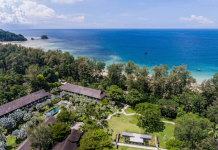
The Khao Lak Marriott Beach Resort & Spa in Phuket has introduced a new collection of indoor and outdoor event spaces, blending modern facilities with the natural beauty of the Andaman coast.
The resort’s expanded offerings include a total of 767m2 of adaptable space. The centrepiece is the Andaman Grand Ballroom, a 513m2, pillarless venue with six-meter ceilings and a 346-inch LED screen. The ballroom can host up to 530 guests or be divided into three smaller spaces for breakout sessions. For more intimate gatherings, the resort offers five Similan Meeting Rooms, which can accommodate 20 to 120 guests.
Andaman Grand Ballroom
For planners looking to host events outdoors, the resort has leveraged its stunning natural surroundings. The Beachfront Lawn and Oceanfront Venues can host up to 1,200 guests, offering a unique backdrop for conferences or teambuilding activities with the Andaman Sea as a focal point.
Additionally, the Garden Lawn, which can accommodate up to 700 guests, provides a lush setting for networking events, complete with live cooking stations and custom menus from Goji Kitchen & Bar.
Just 10 minutes from Phuket International Airport on the serene northern coast, this 178-key, Bill Bensley-designed resort offers delegates a quiet, tropical paradise steeped in Phuket’s tin-mining heritage
The newly-opened Ritz-Carlton, Bangkok anchors the One Bangkok development with cosmopolitan elegance. Featuring the city's largest ballroom and a spectacular new penthouse suite, it delivers exceptional hardware and deeply authentic, soulful service for business and leisure travellers alike
Behind the imposing, Brutalist concrete that defines Zurich’s Oerlikon district lies a surprising secret. While its exterior honours the neighbourhood’s industrial roots, stepping inside Mama Shelter reveals a vibrant, neon-soaked world that is a far cry from its rigid shell



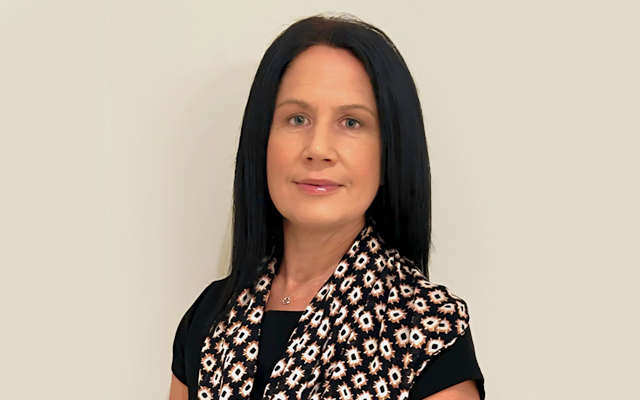





 Craig Chambers is group CEO at TBR Global Chauffeuring, where he leads the company’s global strategy and oversees its continued growth.