Riding on the success of the Pyeongchang Winter Olympics, the province of Gangwon in South Korea is packing its calendar with a multitude of business events and infrastructure developments in coming years.
Chung Man Ho, vice governor of the Gangwon Provincial Government, told TTGmice on the sidelines of the PATA Annual Summit that the province has secured international events such as the World Dance Association Assembly in August, the International Solid Iron Forum in 2019, and the International Environmental Symposium in 2020.
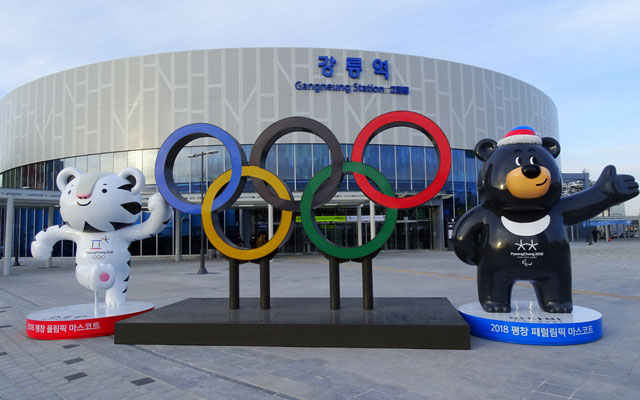
Gangneung KTX station opened ahead of the 2018 Pyeongchang Winter Olympic Games, and is part of the improvement in Gangwon province’s infrastructure
“Aside from that, we have also applied to host many international events going forward,” revealed Chung.
As well, the province is also looking to make the Pyeongchang Olympic Forum – launched this year – an annual affair.
He elaborated: “Thanks to the Pyeongchang Winter Olympics, Gangwon was able to learn how to successfully run international events by building our capacity and ability.”
He shared that 2.4 trillion Korean won (US$2.2 billion) was spent on the Pyeongchang Winter Olympics, and of that,1.5 trillion Korean won was channelled into social overhaul capital – which included the construction of highways and cleaning up of streets – which “had a huge benefit for Gangwon as a whole”.
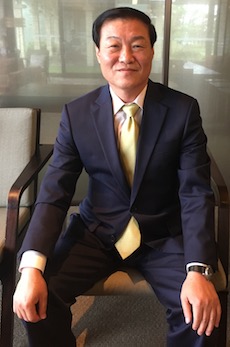
Chung: province has learnt how to handle large-scale events, and is working to attract more
The province’s transportation has also “improved dramatically”, and there are now more accommodation facilities available, such as the Lakai Sandpine Resort where the PATA Annual Summit was held.
Chung further revealed that Gangwon is working on expanding tourism infrastructure, including facilities in the mountainous regions, a marine tourist complex on the east coast, and Legoland Korea in Chuncheon – all to support an anticipated influx of visitors.
Of the 100 million visitors Gangwon sees annually, three million are foreigners, noted Chung. The province hopes to grow this figure to four million this year, and five million by 2020.
However, with the help of the upcoming international events, Chung is confident that arrival numbers will grow “beyond expectations”.
Global DMC Partners, the largest global network of DMCs, has selected five new partners to serve 11 destinations across four continents, two of which are in Asia-Pacific.
The partnerships were forged with ID Events Australia, Palomino Hospitality (India, Maldives, Bhutan, Nepal and Sri Lanka), as well as BE Agency (Netherlands), MCC Destination Management (Toronto, Niagara Falls, Ottawa), and Nashology Events (Nashville).
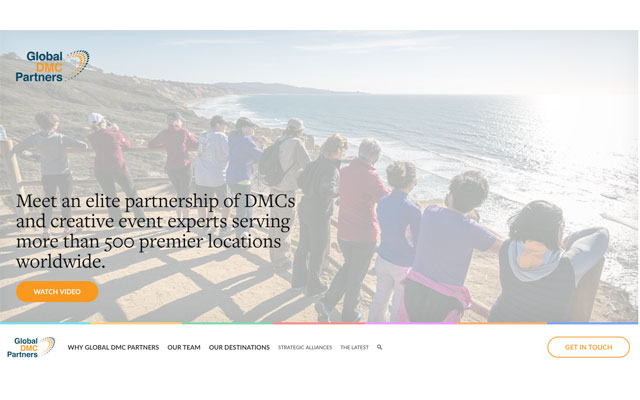
A screenshot from the Global DMC Partners website
While these destinations have been accessible to Global DMC Partners before, an increase in demand for these destinations have urged the group to consider the DMCs for full-time partnership. Potential partners are assessed on strict criteria to ensure the network comprises of elite DMCs with the greatest local connections, creative expertise, and proven financial stability.
Catherine Chaulet, president of Global DMC Partners, said: “Our promise is to always deliver one-of-a-kind experiences under a singular standard of excellence. As the industry leader and the most widespread network of DMCs around the world, we remain focused on forming partnerships with only the most reputable and creative DMCs.”
The network’s Global Standardization Program and ongoing client evaluations help each DMC maintain the quality in service levels. In addition, the network ensures that members have access to continued education and best practice sharing
Corporate travel management company, Reed & Mackay has opened offices in Singapore to be closer to its growing client base across the Asia-Pacific (APAC) region.
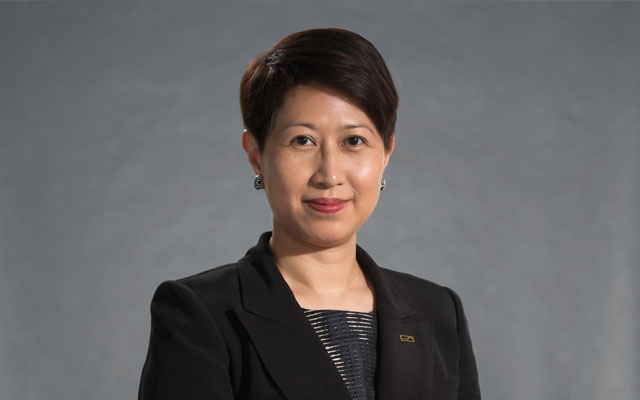
Leading the new market for Reed & Mackay is Vivian Hsiao-Yee Choo, who recently joined the business as senior vice president – Asia region.
Choo
Choo joins Reed & Mackay with extensive experience of the travel management market including leading business development for global TMCs across APAC.
Choo commented: “Our industry is ever changing and at Reed & Mackay we combine tradition and innovation to provide an extraordinary experience for our clients. I am delighted to be part of the Reed & Mackay family and am very excited to work with our industry partners to deliver our value proposition in the Asia region.”
In addition to their wholly-owned presence across EMEA, APAC and the US, Reed & Mackay’s International Partnership further augments their global offering with 4,000 travel experts across more than 40 countries.
What does HKTDC do?
We are a statutory body with 50 years of experience and operate more than 40 offices worldwide. HKTDC is tasked to create opportunities for Hong Kong’s businesses, in particular SMEs, to trade with the world – including the mainland and international markets.
Our role is to promote Hong Kong as an effective business platform, and organise international exhibitions, conferences and business missions.
What key tradeshow trends has HKTDC identified for its strategic growth?
HKTDC has refashioned some of its trade fairs into lifestyle events – which feature renowned brands and public days at selected fairs to promote directly to consumers.
High-tech elements are also driving exhibitions across industries. Increasingly, shows like the Electronics Fairs for example present popular technology like VR/AR, robotics, smart home, wearable electronics, 3D printing and much more.
In recent years, Hong Kong’s start-up ecosystem has been growing rapidly. The Startup zone was set up to tap this development and can be found in exhibitions and conferences including the Electronics Fairs, ICT Expo, Houseware Fair, Gifts & Premium Fair, Medical Devices and Supplies Fair, Eco Expo Asia, SmartBiz Expo and Asian Financial Forum.
Sourcing in small orders is also another market trend, and HKTDC has introduced the HKTDC Small Orders zone at selected trade fairs that feature suppliers’ products in minimum order quantities of between five and 1,000 pieces.
What is HKTDC’s focus in the next two to three years?
With the Hong Kong-Zhuhai-Macau Bridge and the Guangzhou-Shenzhen-Hong Kong Express Rail Link Hong Kong Section soon to be completed, Hong Kong will further enhance its connectivity to the Guangdong-Hong Kong-Macau Bay Area cities.
HKTDC trade fairs, which have long served as the preferred platform for mainland enterprises to go global, will benefit. We will adopt a cluster approach based on the sectoral strengths of individual Bay Area economies.
For example, the Henglan and Zhongshan Semiconductor Lighting Industry Association can ride on the Lighting Fair (Spring Edition) to promote their lighting products to overseas buyers. By the same token, European and US companies can also make use of HKTDC fairs to sell to the Bay Area, with a population of over 60 million people.
HKTDC is also riding on the proliferation of e-commerce. We are collaborating with renowned e-tailers, especially those targeting ASEAN and other emerging markets – where consumers have high purchasing power – to help Hong Kong exporters tap into the fast-growing global e-tailing market.
How is HKTDC capitalising on Hong Kong’s convenient entry point for international and Chinese tradeshow buyers and sellers?
Hong Kong’s close proximity to the mainland and other Asian countries makes it a premier gateway between the East and West. Ranked as the world’s freest economy, Hong Kong is the ideal springboard for enterprises to tap into the international and Chinese mainland markets.
We organise more than 30 fairs annually, including 11 of the largest marketplaces of their kind in Asia, with jewellery, gifts, watches and clocks, electronics and lighting fairs being the largest of their kind in the world.
For the 2017/18 fiscal year, HKTDC’s fairs attracted more than 39,000 exhibitors from 90 countries and regions, and over 750,000 buyers from 199 countries and regions, affirming the city’s reputation as Asia’s trade fair capital.
In the coming years, we would expect more South-east Asian buyers to make use of our trade fair platform for sourcing.
What new infrastructure will Hong Kong need to support future growth?
The supply of exhibition space is tight during peak seasons. We have taken the approach of “two shows, two venues” for our mega exhibitions. One example is the Hong Kong International Diamond, Gem & Pearl Show (IDGPS) held at AsiaWorld-Expo, and the Hong Kong International Jewellery Show (IJS) held at Hong Kong Convention and Exhibition Centre (HKCEC).
Due to the space constraint at HKCEC, since 2014, we split the Jewellery Show into two fairs, with IJS focusing on finished jewellery products and IDGPS specialising in jewellery raw materials, to ensure both shows have space for further development. Thus, we are able to put together the largest jewellery marketplace in the world hosting more than 4,550 exhibitors from 52 countries and regions, and about 87,000 buyers from 145 countries and regions in 2018.
We also convert areas like foyers and parking facilities into temporary exhibition space. Meanwhile, the Hong Kong government proposed in the 2017 Policy Address that a study on developing new convention and exhibition venues be undertaken.
What is HKTDC doing to enhance Hong Kong’s attractiveness as a business events destination?
With HKTDC’s extensive network of 48 offices globally, including 13 on the mainland, we organise buying missions from around the world to source at our fairs, offering ample opportunities for exhibitors to reach potential buyers.
We maximise connectivity between buyers and exhibitors through our trade fair platform by offering business matching, networking events, buyers’ guided tours, product demonstrations, etc.
To encourage suppliers to use the online-to-offline platform, we have enhanced the sourcing function of our tradeshow websites by launching the year-round Exhibition Online platform. It is an online extension of the physical exhibition to facilitate business discussions between suppliers and buyers beyond the fair period.
With all that HKTDC is doing, what results have you seen so far?
For Hong Kong to remain competitive, it is important to nurture start-ups and a new generation of entrepreneurs who embrace new technologies and have a global perspective.
HKTDC’s debut of the Startup zone at the Hong Kong Electronics Fair 2016 (Autumn Edition) featured 48 start-ups, which received positive response from buyers, investors, exhibitors and the media. Riding on the success, the Startup zone returned in subsequent Electronics Fairs. In the most recent Electronics Fair 2018 (Spring Edition), and the concurrent International ICT Expo, and the number of start-up exhibitors grew to more than 100.
The start-ups are enjoying the valuable opportunity to conduct market validation by presenting their concepts, products and projects to global buyers and potential investors through a series of start-up themed events.
HKTDC is also collaborating with start-up accelerators and incubators to organise Smart Launch sessions for sharing, mentoring, pitching and investment matchmaking.
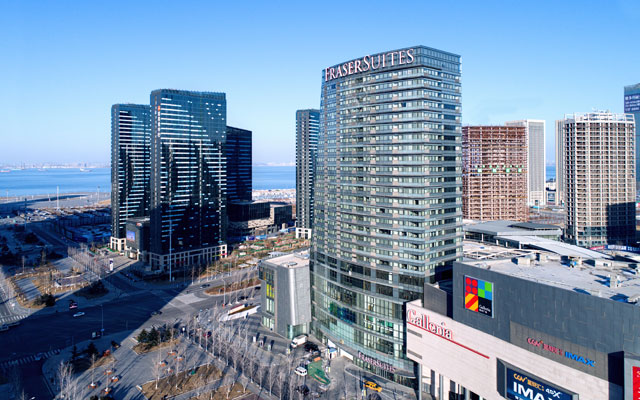
Located in Dalian’s new CBD of Donggang is Frasers Hospitality’s 16th property in China’s north-east.
Fraser Suites Dalian offers 259 fully furnished serviced apartments ranging from studios up to three-bedroom configurations, with certain rooms offering harbour views.
Fraser Suites Dalian rises above the new Donggang business district
Business amenities on-site include an executive floor with dedicated services for corporate travellers, a library lounge and meeting rooms. Meanwhile, recreational facilities include an indoor heated pool, 24-hour gym, billiards room, children’s play area and restaurant.
Acquired in 2015 for RMB481.4 million (S$100.3 million), Fraser Suites Dalian is part of the mixed-use Europark Tower development, which comprises a 100,000m2 lifestyle shopping mall, offices and luxury residential apartments, while also being within walking distance of the Dalian International Conference Centre.
“We see demand being driven not only by the inbound market but also by domestic travellers in the country. From FY2016 to FY2017, we observed a growth in the number of room nights booked by Chinese travellers, who account for almost half of all our guests in China. Given the fact that 75 percent of China’s business travel spend is domestic, we will continue to grow our footprint in first- and second-tier cities,” said Choe Peng Sum, CEO of Frasers Hospitality, in a statement.
Frasers Hospitality currently has presence in 11 cities throughout the country in Beijing, Changsha, Chengdu, Dalian, Guangzhou, Nanjing, Shanghai, Shenzhen, Tianjin, Wuhan and Wuxi. The company has another 14 properties in the pipeline, which will see it enlarging its footprint in first- and second-tier cities such as Chengdu, Nanjing, Shanghai and Wuhan, as well as opening in new cities such as Nanchang and Haikou.
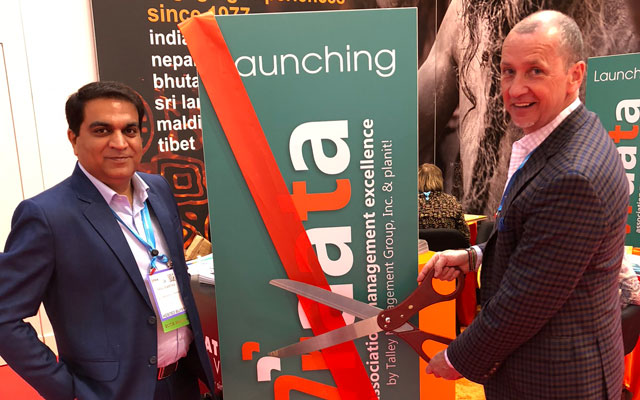
US-based Talley Management Group (TMG), a full-service association management company, and India-based DMC and Plan it! Meetings & Conferences India have jointly launched Vraata – Excellence in Association Management.
The two companies will work closely to enhance and expand association management services available to new or existing Indian associations and global organisations wishing to grow the Indian market.
From left: Plan it! India’s Anuj Wadhwa and TMG’s Gregg H Talley
“This partnership is one that will change the association management industry here in India,” said Anuj Wadhwa, chief operating officer of Plan it! and Vraata’s chief operating officer India.
“Sharing ideas and best practices from TMG with the local knowledge provided by Plan it! will allow both firms to provide all of their clients, regardless of where in the world they are, with the services and solutions they need to excel in India.”
On what Vraata’s first steps will be, Anuj said: “Our immediate plans include working with groups and individuals that have already shown interest in Vraata’s services. From there, we will continue to market our brand within the India sub-continent, North America and globally.”
He added that the goals set out for Vraata this year include branding recognition, engagement at key industry events both around the globe and domestically in India, as well as building Vraata’s client portfolio.
When asked why TMG chose India to extend its reach, Gregg H Talley, Vraata’s managing director USA, and TMG’s president and CEO, revealed to TTGmice that “two key points”.
“We are looking at the opportunities – not necessarily today, but where the opportunities are going to be in the future. India has the second largest population in the globe, a young educated workforce, a growing middle class and global corporate focus. These elements combined make for a perfect environment for associations delivering community building, continuing education, networking, professional development forums and business connections,” Talley elaborated.
Secondly, Talley pointed to the existing trust and respect between the two companies and that both “shared the same values and business ethics”, and that this was “invaluable”.
Malaysia-based event technology company Evenesis has signed a Memorandum of Understanding (MoU) with Dutch start-up Caught for the exclusive right to operate the latter’s location-based app in Malaysia.
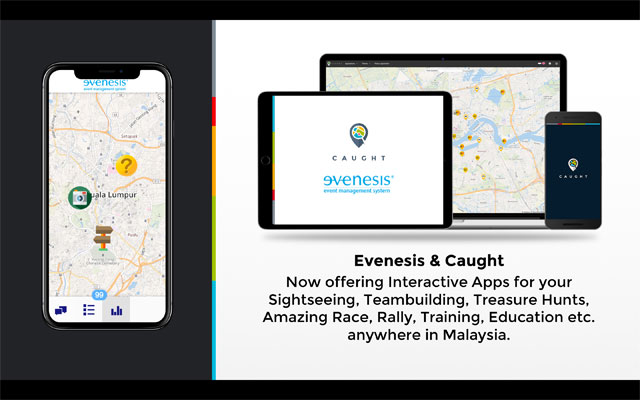
The customisable Caught app can be used for various event purposes, such as a tool in a corporate teambuilding activity for participants to complete tasks at different stations, or to take participants on a sightseeing trip.
A screenshot of how the app works on devices
Anitha Krishnan, Evenesis’ sales and marketing vice president, told TTGmice at IMEX Frankfurt that her company was drawn to Caught as “we wanted to do something different from the rest of the market.”
She elaborated on the uses of the app: “It allows the user to experience (a destination) first-hand. For instance, teambuilding participants may be instructed to take a selfie with a man in a pink shirt at Central Market.”
Using the app for such an activity also gives participants a chance to interact with locals, she opined.
Another benefit of Caught, according to Anitha, its that it uses GPS, which allows the app admin or the event planner to know the location of participants, which provides an element of safety.
Evenesis’ Anitha Krishnan and Caught’s Mark Naus at the MoU signing
For Caught, the MoU with Evenesis will allow the company to extend its reach beyond home ground.
Mark Naus, Caught’s co-founder, said: “We’re a start-up from Europe with just three people. You cannot reach the world with just three people. This is a win-win situation as it’ll be an addition to Evenesis’ portfolio, while for us it’ll be a new market we can reach.”
He added that although Caught is a product geared towards DMCs, tourism boards will be able to avail the technology as well, for example, to create a nature walking trail. The app can also be used by corporate companies, all the way up to large-scale exhibitions.
Aside from providing Caught to its corporate event clients, Evenesis will also help with the execution of itinerary and requirements, with client given full control of the app. The app can be downloaded directly to a participant’s device, where downloads are then charged by device.
“If everything goes well, we will expand it to Indonesia as we also have a branch there. We’ll look at the take-up rate before we decide on the next steps,” Anitha concluded.
The business events industry in Surabaya, Indonesia’s second biggest business city after Jakarta, reported minimum impact on business following bomb blast on May 13.
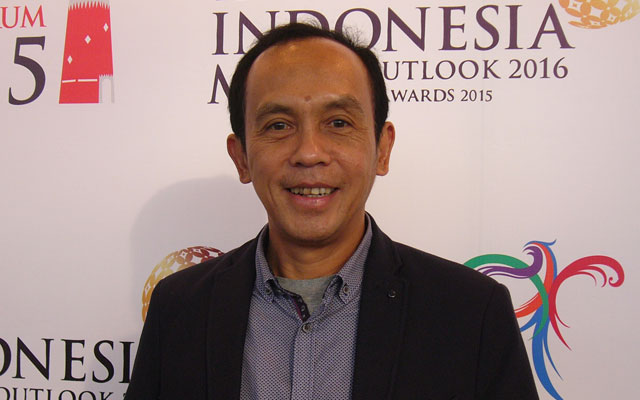
Effi Setiabudi, chairman of the Indonesian Exhibition Companies Association (ASPERAPI), told TTGmice: “We see no impact on the exhibition business. There were no B2B exhibitions when the blast took place, save for a couple of consumer shows.”
Setiabudi: bombings no impact on MICE business
Herry Siswanto, chairman of the Indonesia Hotel and Restaurant Associations (IHRA) East Java chapter, said: “For two days (May 13-14), six hotels had reported 10 FIT cancellations. But for business events, there was none. It was probably because the incident took place on Sunday, when there were not many business activities. Having said that, there were also no cancellations on the following Monday, so all’s normal.”
Budiono, director of Debindo Mitra Tama, told TTGmice that the company had two consumer exhibitions during the weekend of the tragedy – Hasanah Griya Expo 2018 and Batik Bordir & Aksesoris 2018, both at the Grand City Mall Surabaya.
To calm “panicking exhibitors, some of whom were ready to close their booths”, Budiono said his team worked with the local police to ensure the safety of exhibition participants.
While the shows went on, Budiono said visitorship was “below our expectation”.
He expects numbers to return to normal for his next exhibition in August.
“The security force was quite swift in its response. The East Java governor and mayor of Surabaya also gave their assurance to companies that the situation in Surabaya is safe. The steps taken by the government are appropriate and wise enough (to win back the confidence of businessmen,” he concluded.
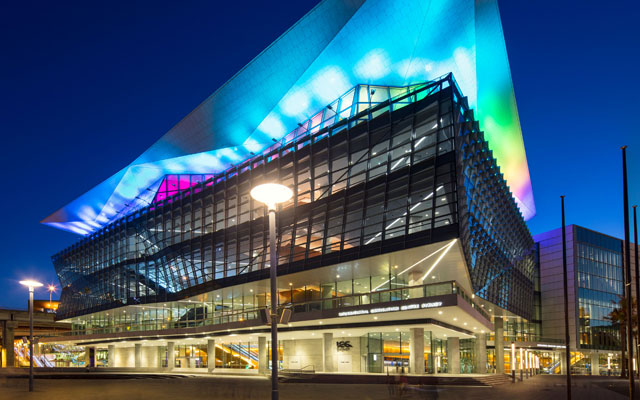
International Convention Centre Sydney’s (ICC Sydney) Feeding Your Performance (FYP) programme contributed a total of A$8.3 million (US$6.2 million) to the New South Wales (NSW) economy last year, through its food and wine purchases, as released in a report by the University of Technology Sydney.
This represents a direct investment of more than A$4.3 million in a network of more than 85 NSW producers and farmers. Overall, delegates attending events at ICC Sydney generated A$785 million in direct expenditure for the state in its first year of operation.
International Convention Centre Sydney
ICC Sydney’s FYP programme strives to feed the performance of ICC Sydney delegates and visitors, team members, and the local economy, through a New South Wales-focused supply chain, a progressive sustainability approach and an industry-first Legacy Program.
The venue’s CEO, Geoff Donaghy believes it is vitally important that convention centres measure the full impact they have on their supply chain.
“We are immensely proud to be looking beyond the borders of Sydney to feed the business performance of our suppliers, as well as the communities in which they’re located.
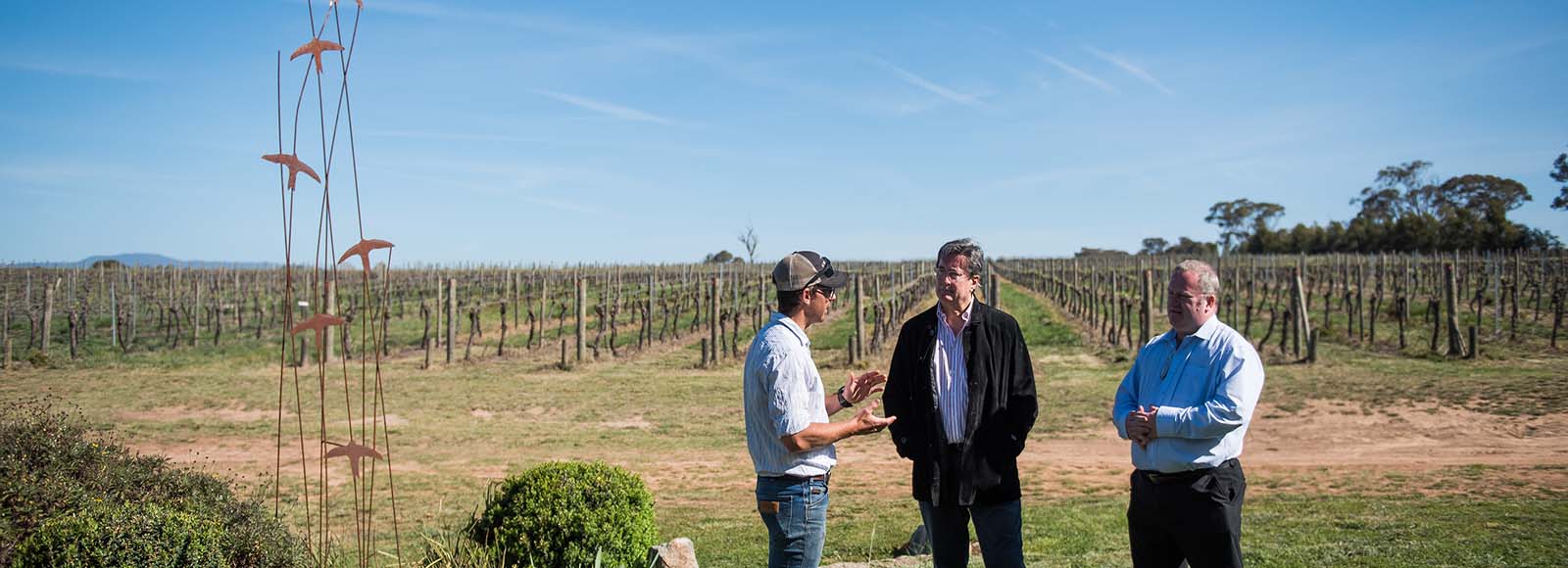
Regional producers in NSW
“As urbanisation increases, cities and their convention centres have a role to play in supporting the regional areas that feed them and support their event delivery. If our success is underpinned by delivering restaurant-quality produce, then we have an important role to play in supporting the supply chain that enables this.”
Donaghy added in the years to come, ICC Sydney will be continuously improving themselves, supporting further investment in agritourism, building job opportunities and facilitating growth within our network of suppliers and beyond.
Just 10 minutes from Phuket International Airport on the serene northern coast, this 178-key, Bill Bensley-designed resort offers delegates a quiet, tropical paradise steeped in Phuket’s tin-mining heritage
The newly-opened Ritz-Carlton, Bangkok anchors the One Bangkok development with cosmopolitan elegance. Featuring the city's largest ballroom and a spectacular new penthouse suite, it delivers exceptional hardware and deeply authentic, soulful service for business and leisure travellers alike
Behind the imposing, Brutalist concrete that defines Zurich’s Oerlikon district lies a surprising secret. While its exterior honours the neighbourhood’s industrial roots, stepping inside Mama Shelter reveals a vibrant, neon-soaked world that is a far cry from its rigid shell