The business events industry in Surabaya, Indonesia’s second biggest business city after Jakarta, reported minimum impact on business following bomb blast on May 13.
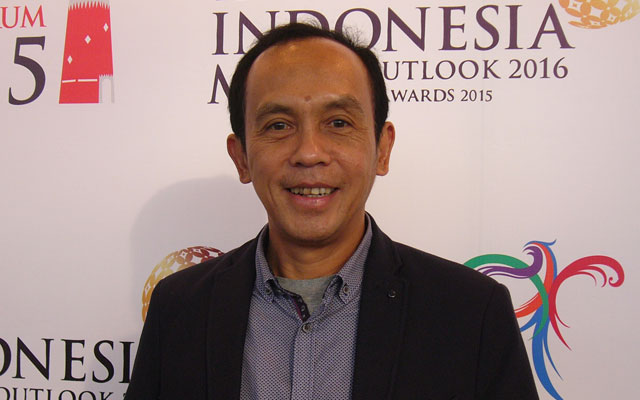
Effi Setiabudi, chairman of the Indonesian Exhibition Companies Association (ASPERAPI), told TTGmice: “We see no impact on the exhibition business. There were no B2B exhibitions when the blast took place, save for a couple of consumer shows.”
Setiabudi: bombings no impact on MICE business
Herry Siswanto, chairman of the Indonesia Hotel and Restaurant Associations (IHRA) East Java chapter, said: “For two days (May 13-14), six hotels had reported 10 FIT cancellations. But for business events, there was none. It was probably because the incident took place on Sunday, when there were not many business activities. Having said that, there were also no cancellations on the following Monday, so all’s normal.”
Budiono, director of Debindo Mitra Tama, told TTGmice that the company had two consumer exhibitions during the weekend of the tragedy – Hasanah Griya Expo 2018 and Batik Bordir & Aksesoris 2018, both at the Grand City Mall Surabaya.
To calm “panicking exhibitors, some of whom were ready to close their booths”, Budiono said his team worked with the local police to ensure the safety of exhibition participants.
While the shows went on, Budiono said visitorship was “below our expectation”.
He expects numbers to return to normal for his next exhibition in August.
“The security force was quite swift in its response. The East Java governor and mayor of Surabaya also gave their assurance to companies that the situation in Surabaya is safe. The steps taken by the government are appropriate and wise enough (to win back the confidence of businessmen,” he concluded.
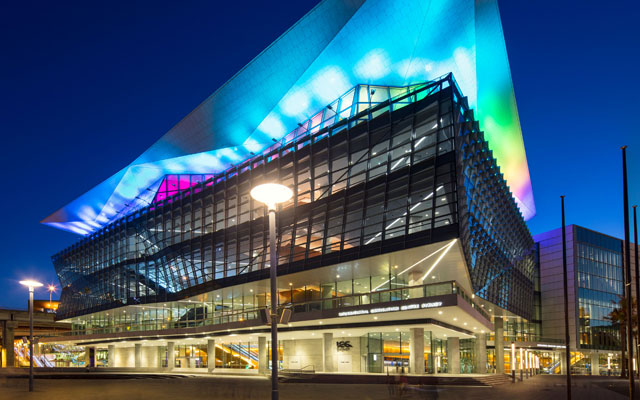
International Convention Centre Sydney’s (ICC Sydney) Feeding Your Performance (FYP) programme contributed a total of A$8.3 million (US$6.2 million) to the New South Wales (NSW) economy last year, through its food and wine purchases, as released in a report by the University of Technology Sydney.
This represents a direct investment of more than A$4.3 million in a network of more than 85 NSW producers and farmers. Overall, delegates attending events at ICC Sydney generated A$785 million in direct expenditure for the state in its first year of operation.
International Convention Centre Sydney
ICC Sydney’s FYP programme strives to feed the performance of ICC Sydney delegates and visitors, team members, and the local economy, through a New South Wales-focused supply chain, a progressive sustainability approach and an industry-first Legacy Program.
The venue’s CEO, Geoff Donaghy believes it is vitally important that convention centres measure the full impact they have on their supply chain.
“We are immensely proud to be looking beyond the borders of Sydney to feed the business performance of our suppliers, as well as the communities in which they’re located.
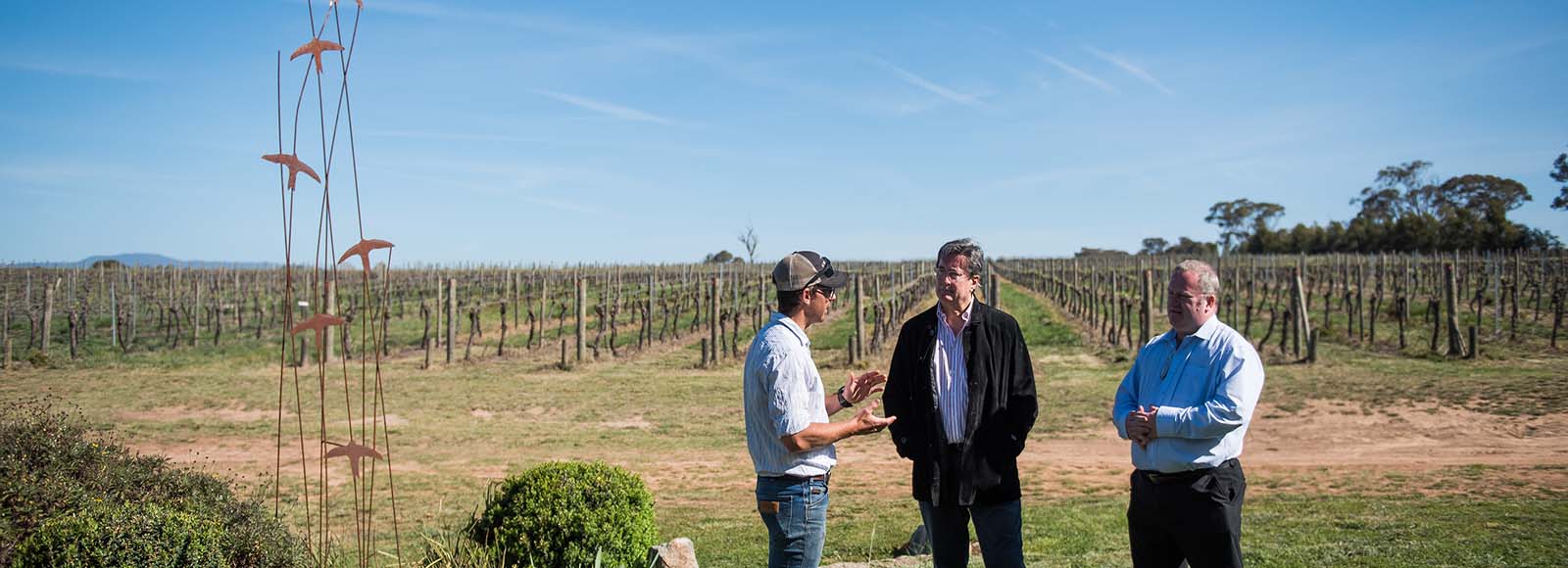
Regional producers in NSW
“As urbanisation increases, cities and their convention centres have a role to play in supporting the regional areas that feed them and support their event delivery. If our success is underpinned by delivering restaurant-quality produce, then we have an important role to play in supporting the supply chain that enables this.”
Donaghy added in the years to come, ICC Sydney will be continuously improving themselves, supporting further investment in agritourism, building job opportunities and facilitating growth within our network of suppliers and beyond.
Five years after Laguna Hospitality and Dusit International announced a joint venture to bring the Dusit Thani brand to Singapore, a projected opening date is finally in view, along with more details of the hotel’s hardware.
Speaking to TTGmice last Friday afternoon, general manager Eric Piatti revealed that Dusit Thani Laguna Singapore is on track for an opening in early-2019, with all public facilities ready for guests by then.
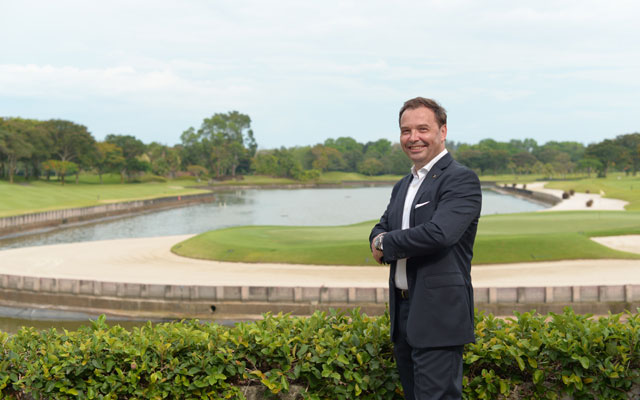
Piatti: interest surrounding the property has emerged even though no concerted marketing efforts have begun
The five-star hotel, an extension of the renowned and exclusive Laguna National Golf and Country Club in Singapore’s east, will sport a sleek, futuristic design. There will be 198 guestrooms and suites across six levels, eight luxurious two- and three-room villas to be called Golf Chalets as well as extensive dining and recreational facilities. Guests can look forward to five F&B venues, three resort pools, three tennis courts, a fitness club and a driving range.
A 650-seat pillarless ballroom, three meeting rooms, a 20-seat boardroom and two event lawns overlooking the pristine golf courses are also confirmed for Dusit Thani Laguna Singapore.
Piatti expects the hotel to draw a mix of leisure and corporate bookings but has resisted projecting which of the two would be a dominant contributor of business.
For the leisure segment, Piatti expects the hotel to attract longer staying tourists who prefer accommodation away from the busy city centre as well as staycationers – Singapore residents in search of a local vacation.
“The east coast of Singapore is a bit of a new destination and offers visitors a different view of Singapore. Here, one gets a more local angle. You can explore East Coast Park, (the heritage enclave of) Katong and the residential districts,” he said.
For the corporate segment, he believes the hotel’s proximity to Changi Airport, Singapore Expo Convention & Exhibition Centre, Changi Business Park and the aviation hub will earn it many business travellers and business events.
While the hotel has yet to kick off its marketing efforts towards end-consumers and the trade, interest has started to emerge, in particular around business event and wedding possibilities.
he move is part of the SIA group’s optimisation efforts
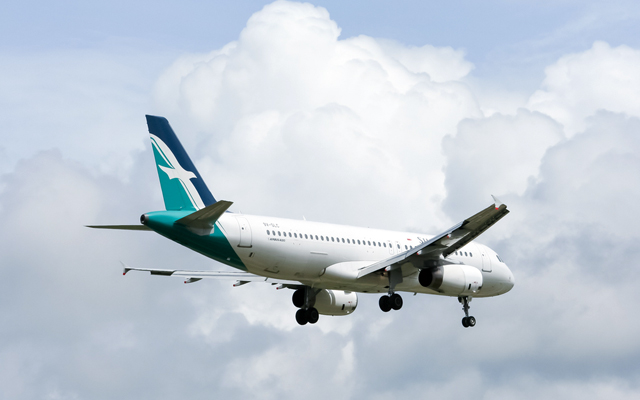
A year into its three-year transformation programme, Singapore Airlines (SIA) has announced that its regional wing SilkAir will be merged under SIA after undergoing cabin upgrades amounting to about S$100 million (US$74.5 million).
To ensure closer product and service consistency across the SIA Group’s full-service network, SilkAir will have its cabins upgraded to include new lie-flat seats in Business Class, and seat-back in-flight entertainment systems in both Business Class and Economy Class.
The move is part of the SIA group’s optimisation efforts
Aircraft cabin upgrades are expected to start in 2020, with SIA citing “lead times” required by seat suppliers.
SIA said the merger will take place after “a sufficient number of aircraft” have been fitted with the new cabin products.
Consistent with ongoing efforts to optimise the group’s network, there will also be transfers of routes and aircraft between the different airlines in the portfolio.
The development is expected to “provide more growth opportunities and prepare the group for an even stronger future”, according to SIA CEO, Goh Choon Phong.
SilkAir is the regional wing of Singapore Airlines, operating a fleet of 11 Airbus A320-family aircraft and 22 Boeing 737-800 and 737 MAX 8 aircraft. It is currently transitioning to an all-737 fleet, and serves 49 destinations in 16 countries.
The airline launched in 1989 as Tradewinds the Airline, initially focusing on holiday destinations in South-east Asia, before being renamed SilkAir in 1992. It expanded across Asia in subsequent years, evolving from a holiday resort airline to a full-fledged, full-service regional carrier.
Healthier food choices are increasingly in demand at events
Meetings, Incentives, Conferences and Events (MICE) is an important component of the hospitality and tourism industry, and drives economic development in many destinations. Generating millions in revenue annually, this dynamic sector is evolving at a tremendous pace.
Here are some of the observed trends for 2018, provided by WorldHotels.
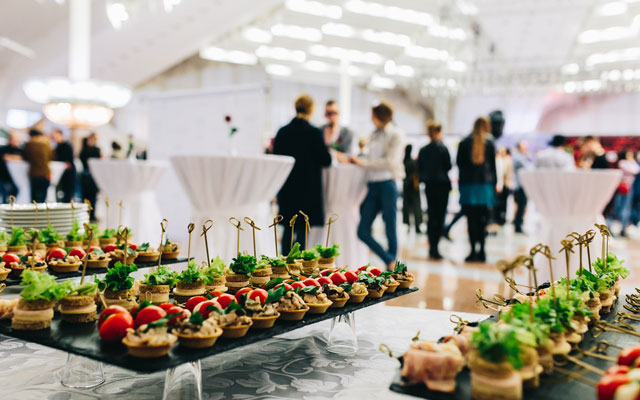
Healthier food choices are increasingly in demand at events
Virtual assistants and event apps are on the rise, among others
Gone are the days where venues are only expected to be equipped with high speed internet connection and an overhead projector. Technology, such as virtual assistants and artificial intelligence, positively impact guest experiences. The provision of virtual and augmented reality, web casting, live streaming and video conferencing is becoming increasingly important for venues to stay at the top of the game. Availability of mobile applications is also seen as a key feature, easing event registrations and offering a mode of communication, both before and after the events.
Ganessan Suppiah, WorldHotels’ regional vice president of sales, Asia Pacific, shared: “Technology helps to personalise experiences; it does not replace human interaction, but enhances it.”
Ganessan also sees an increase in virtual event attendance. Venues need to provide opportunities, for online attendance and intervention, to allow participation from within and beyond the event space. Virtual reality and 360-degree images on YouTube, Facebook and Periscope are becoming increasingly important for event promotions.
In addition, while the General Data Protection Regulation (GDPR) – which is coming into force this month – will present some challenges, there will also be opportunities to improve data quality and transparency.
Organisers’ preferences towards business meetings that offer authentic experiences A lot of organisers now look for venues that provide tranquil settings, giving rise to a demand of business meetings at locations that lie closer to nature. “Go local” is another growing trend – guests desire to be immersed in local culture; authentic travel experiences are highly sought-after.
Events are required to be more experiential as organisers yearn for unique, tailor-made experiences instead of a cookier-cutter approach; having flexible meeting spaces is near the top of every participant’s wishlist.
“Meetings should not be dull. Spa treatments, teambuilding exercises, cocktail courses… Venues that provide fun activities, alongside the serious business focus, will help to attract clients,” said Anke Ebinger, director of sales Central Europe, WorldHotels.
Engaging with a younger audience: interactivity and relevance
There is a growing need for organisers to create more interaction and involvement from the audience. Younger generations may not fancy traditional speakers; people prefer engagement to instruction. Interactive elements, greater collaboration among people and information exchange sessions are now more critical.
Anke also noticed that younger generations (Gen Y and Z) are more conscious of their well-being and health. People are opting for fresh and healthy food, instead of sweet pastries, with a strong emphasis on “brain food”.
Catering is no longer solely a venue facility, but is being regarded as a platform to impress guests. Organisers are expecting creative food showcases with novel concepts, especially when they are content-worthy for social media feeds.
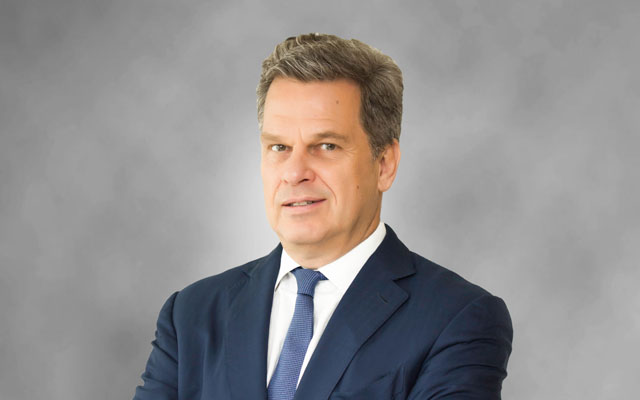
Dusit International has appointed Marc Hediger as senior vice president – development to oversee the development team’s global operations except China.
Prior to joining Dusit, Hediger was CEO of Lanson Place Hospitality Management in Hong Kong.
The Swiss national brings more than 30 years of years of development and operational experience to the table, having worked as general manager for Hyatt Hotels, spent eight years as senior vice president and director of development Shangri-La Hotels & Resorts in Hong Kong, as well as two years as senior vice president – property development – for New World Hospitality, also in Hong Kong.
Event brief
All staff members at TTG Asia Media Singapore office were recently given the chance to sail onboard the 150,000-tonne Genting Dream cruise ship over the course of a weekend.
The relatively-new boat – completed in October 2016 – is able to carry 3,400 guests and 2,000 crew. Facilities include spas, 35 F&B options, several pools, six water slides, a rope-climbing course, a mini golf area, and bowling alley. Other unique elements include the first Zouk nightclub at sea, as well as the first Johnnie Walker Bar on a ship.
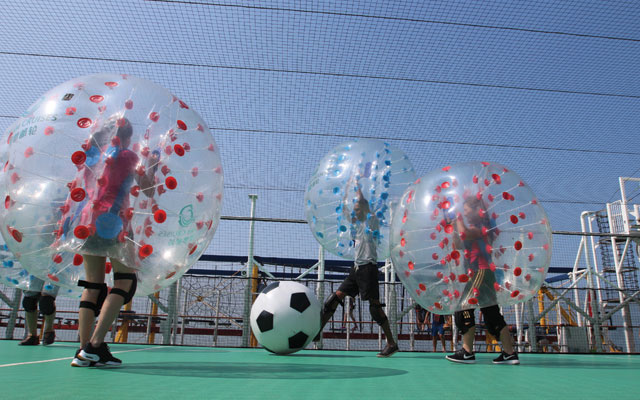
Games on top of Genting Dream
For meeting organisers or corporate events, there are numerous spaces to choose from. For example, cocktail events can be held in the 495m2 Palm Court, conferences can be conducted in the 999-seater Zodiac Theatre, while the SportsPlex facility can be used for outdoor teambuilding activities.
Challenges
A teambuilding activity was created for all staff members, and to ensure everyone would participate, a complete-the-activity sheet was given to us, where a stamp would be received for every activity we completed. We were split into five groups based on department, and had to do varied tasks together.
We were also a fairly large group, which meant that boarding and disembarking could potentially be messy, take a long time, and difficult to manage.
Another challenge was to ensure everyone was kept in the loop in case of last minute venue changes, or in the case of emergencies.
Solution
Our teambuilding activities included an hour-long Bollyrobics Dance Fitness class, Bubble Football, and Laughter Yoga, and it was heartening to see almost everyone participating enthusiastically. This allowed us to build camaraderie as we laughed, bounced and pranced our way through the various activities.
To further motivate us, Dream Cruises also sponsored prizes such as travel adaptors and suitcase organisers, that were presented upon the quickest completion of the activity card.
To ensure everyone was on the same page and we could contact each other, Dream Cruises provided the group with complimentary Wi-Fi. This allowed announcements and reminders to be sent out to all participants.
Photos could also be conveniently sent across, where we could easily relieve our uproarious antics.
The itinerary ensured that the group was constantly kept entertained, though I felt Dream Cruises did not have to fret one bit as there was an extensive list of activities and entertainment to go around. Aside from scheduled activities like archery and poolside games, there were musical performances such as Voyage of a Lover’s Dream, and a Latin ballroom dance show. In fact, our schedule was so packed, free time was hard to come by!
Boarding was surprisingly smooth, and after a 20-minute wait at the Marina Bay Cruise Centre, the crew handed us our passports and room keys, and we could immediately board the ship, leave our luggage in our cabins before we went exploring.
Checking out was also done efficiently – where our passports could be collected and bills settled the night before – and fuss-free. The group had to simply gather in one of the ship’s restaurants, and when it came to our turn to disembark, we were ushered to an exit where we had our key cards checked once more, before being allowed to cross the gangplank.
Event: TTG Cruise Away 2018 Organiser: Dream Cruises Venue: Genting Dream Date: February 9-11, 2018 Number of participants: 42
Sereena Supa’at has been appointed director of sales and marketing for Six Senses Duxton and Six Senses Maxwell.
Prior to joining Six Senses, Supa’at spent four years at Patina Capitol Singapore as director of sales and marketing.
The Singaporean has over 15 years’ experience in the luxury hospitality sector, and she has cut her teeth at hospitality companies including Patina Hotels and Resorts, Capella Singapore, St. Regis, Mandarin Oriental Hotels, The Fullerton Hotel, and Banyan Tree Hotels and Resorts.
A more efficient way to travel, a destination’s long-term planning, and good crisis management are three factors that must be considered to enable the world’s business travel and events industry to grow further.
Guevara says WTTC is working with destination authorities on long-term infrastructure plans for sustainable tourism growth
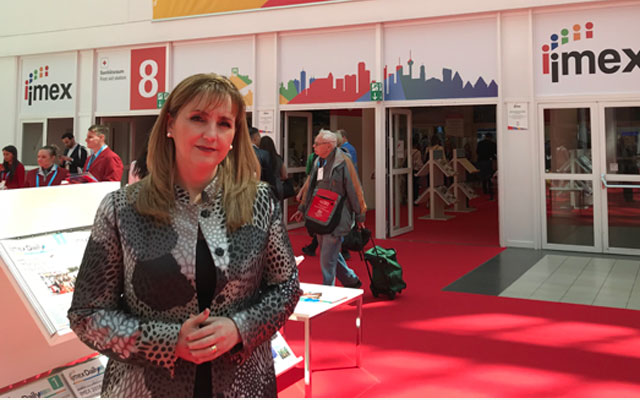
The first consideration is security and travel facilitation, opined Gloria Guevara, president & CEO World Travel & Tourism Council (WTTC) who spoke to TTGmice at IMEX Frankfurt.
She believes that if it wasn’t easy to travel to a specific destination, this would impact participation numbers at business events.
Guevara noted that in 2017 approximately four billion people had flown, according to IATA’s long-term passenger forecast. IATA predicts that over the next 20 years, passenger numbers could almost double, which means that by 2036 there could be some 7.8 billion people travelling by air.
“When you look at that growth, do you think we can grow with the existing infrastructure we have? I don’t think so,” said Guevara. “One of the things we are proposing is the use of technology – biometrics specifically – so travellers can have a better experience at the airports and ports, where they can travel faster and more efficiently.”
She strongly believes this initiative is significant as it will make the journey more seamless, and in turn the ease of travel would impact business travel positively.
Guevara also urged the need for a long-term plan for sustainable growth. WTTC is working towards this with local authorities, and on behalf of the private sector, to avoid overcrowding. This is in light of the number of international tourist arrivals forecasted to grow – according to UNWTO – from 1.2 billion to 1.8 billion by 2030.
Guevara elaborated: “Business events play a significant role here because they move thousands of people during an event. Hence, we have to make sure the destination has a long-term plan so that it can benefit from the opportunity (of the tourism influx), instead of being negatively impacted because of the volume.”
Lastly, the management of crises is another key factor, and the WTTC hopes to spend time with governments to prepare for possible disasters, as business events would be diverted should organisers or travellers not feel safe in a particular destination.
“When a destination manages a crisis well, it minimises the negative impact on business travel in a short time frame. For example, there was a situation in Las Vegas, but the local government engaged with the private sector and local community, and they were fully prepared to react to the uncertainty,” Guevara shared.
Currently, business travel is 22.5 per cent or a quarter of travel and tourism worldwide, where its contribution, both direct and indirect, is 10.4 per cent of the world’s GDP.
Stakeholders in Myanmar are keen to attract more incentive groups and exhibitions as the destination betters its tourist infrastructure and meeting facilities.
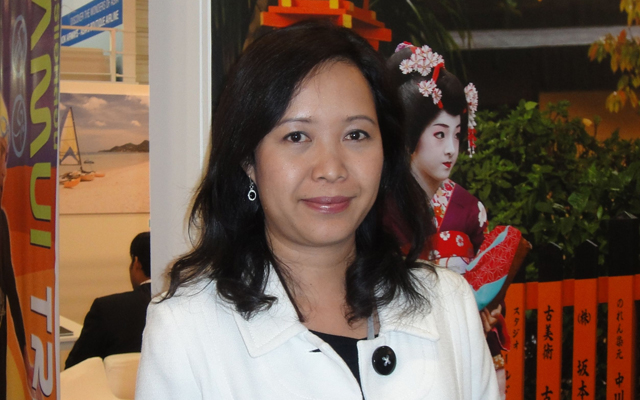
Su Su Tin, managing director of EXO Myanmar, noted interest in incentive travel is on the rise as destinations around the country open up and alternative activities away from the temples are developed.
Su: unique incentive itineraries away from the usual temples are attracting corporate interest
She said: “We can create very original itineraries and Myanmar is a good destination for incentive travel, which more clients are realising.”
The top performing longhaul markets for incentive events are the UK, France and Germany, with Singapore and Vietnam shining regionally. “This (incentive travel sector) is a huge potential market and we need to promote this more,” Tin added.
Phyoe Wai Yar Zar, managing director of Diethelm Travel Myanmar, added: “New products are being created in new areas, which, combined with the diverse landscapes, cultures and foods across Myanmar, make it an increasingly attractive destination for incentive travel.”
While there are several conference centres in the capital of Naypyitaw, the more vibrant Yangon is currently home to only two – Myanmar Convention Centre (MCC) and Tatmadaw Exhibition Hall – which are unsuitable for international exhibitions due to lack of facilities and space.
However, this looks set to change with the government announcing plans to demolish MCC and replace it with a modern centre that meets international standards by 2019.
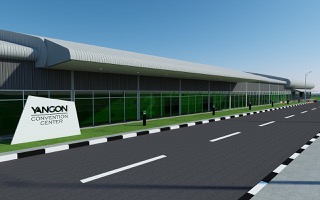
An artist’s impression of Yangon Conference Centre which will open in September
Meanwhile, the 9,600m2 Yangon Conference Centre is slated to open in September at Inya Lake Hotel as the city’s first flexible and modern event space. It will be capable of hosting large-scale conferences, exhibitions and banquets.
May Myat Mon Win, Myanmar Marketing Tourism’s (MTM) chairperson, said: “With the opening of YCC, it means we can invite international conventions and exhibitions to take place here.”
MTM will carry out promotional campaigns targeting the exhibitions segment as well as attending tradeshows focused on business events.
Just 10 minutes from Phuket International Airport on the serene northern coast, this 178-key, Bill Bensley-designed resort offers delegates a quiet, tropical paradise steeped in Phuket’s tin-mining heritage
The newly-opened Ritz-Carlton, Bangkok anchors the One Bangkok development with cosmopolitan elegance. Featuring the city's largest ballroom and a spectacular new penthouse suite, it delivers exceptional hardware and deeply authentic, soulful service for business and leisure travellers alike
Behind the imposing, Brutalist concrete that defines Zurich’s Oerlikon district lies a surprising secret. While its exterior honours the neighbourhood’s industrial roots, stepping inside Mama Shelter reveals a vibrant, neon-soaked world that is a far cry from its rigid shell