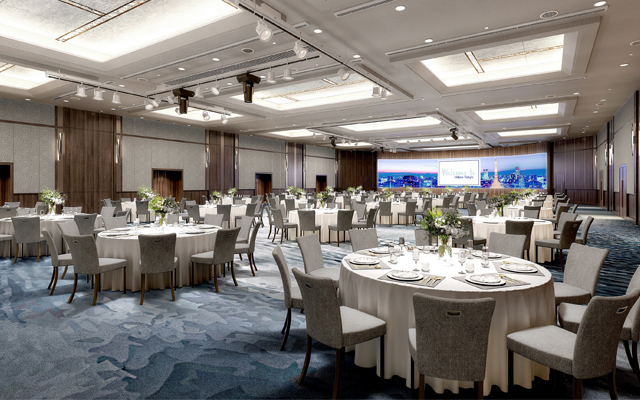
Hilton Tokyo has begun renovating its ballroom as part of a multimillion dollar phased investment in its events spaces to meet growing demand for engaging and flexible event experiences.
Upon completion, the Kiku Ballroom will have capacity for 1,000 guests and allow for partitioning into four sections. Kiku 1–3 will be suitable for up to 800 pax theatre-style and 450 pax banquet-style, while Kiku 4 will have capacity for 150 pax theatre-style or 90 pax banquet-style. The ballroom’s adjoining 490m2 pre-function area will be available for event registration, break time with refreshments, cocktail receptions, networking and exhibitions.
Kiku Ballroom
“This renovation allows us to leverage the increasing demand for MICE events from international clients. Our newly-designed meeting floor is tailored to meet the growing need for flexible spaces, empowering our skilled event team to deliver seamless events from initial enquiry to final execution,” said Felix Busch, general manager of Hilton Tokyo.
The new spaces will feature advanced hardware including a curved, state-of-the-art Barco LED Wall (15m x 3m) and a cutting-edge digital audio system, both provided by audio-visual system integrator Vega Project.
Richard Johns, managing director of Vega Project, said the tech upgrade “focuses on flexibility, ease of use and seamless integration,” adding that the addition of mobile screens will “allow spaces to be easily reconfigured for a wide variety of event formats.”
The remodel follows the completion, in 2024, of renovations on the third floor, which added 200m2 of meeting space to the hotel’s existing 1,000m2.
The Cairns Convention Centre will host the 20th International Bat Research Conference (IBRC) from August 3-8, 2025, bringing more than 400 global experts in bat research, conservation, and management to Tropical North Queensland, Australia
This major international conference, held every three years, is co-hosted by the Australian Bat Society and the Pacific Bat Conservation Network, with previous editions held in Texas and Phuket.
Cairns Convention Centre
Delegates attending IBRC 2025 will take part in a six-day programme of symposia, workshops, and networking events. Topics will include key biodiversity areas for bats, impacts of wind energy, genomic tools for conservation, bat diseases and immunity, and media engagement and mentorship opportunities.
Field trips have been planned throughout Tropical North Queensland, offering delegates the chance to observe local bat species in their natural habitats. With more than 40 species of bats in the region, locations include Rainforestation Nature Park, Tolga Bat Hospital, Cattana Wetlands Bat Walk, and Kuranda Day Trip and Bat Walk.
oneworld alliance has appointed three senior executives to its leadership team as part of its strategy to strengthen global operations and collaboration.
Stephan Nagel has been appointed vice president – global partnerships. He brings over 25 years of experience in aviation, having held roles at Qatar Airways, Air Berlin, Star Alliance and Lufthansa. In his new role, he will lead strategic partnerships across the alliance, including with member airlines, technology platforms and loyalty partners.
From left: Stephan Nagel, Chris Kelly Singley and Guido van Til
Chris Kelly Singley joins as vice president – communications and marketing. She has more than 20 years of experience in the aviation and aerospace sectors, with previous roles at JetZero, Boeing, American Airlines and Delta Air Lines. She will oversee global communications and marketing strategy, including media relations, employee engagement and stakeholder outreach.
Guido van Til has been named vice president – digital. He brings experience in digital transformation across the aviation and retail sectors, having worked with brands such as Rituals, Dyson and Air France-KLM. At oneworld, he will lead the alliance’s digital strategy and delivery, with a focus on customer experience and integrated platforms.
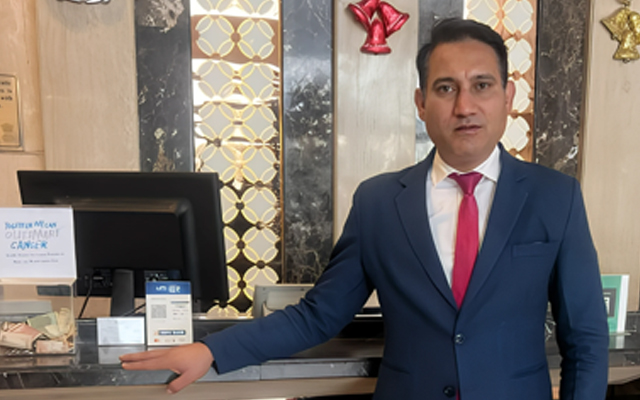
Ecko Hotels & Resorts has appointed Shekhar Chandra as general manager – operations and pre-opening.
With more than 20 years of experience in the hotel industry, he has held senior roles with companies including Royal Orchid Hotels, Wyndham Worldwide, Radisson, Hilton Hotels and Ministry of Sound.
In his new role, Chandra will be responsible for managing pre-opening and operational activities, ensuring efficiency and supporting the brand’s focus on sustainability, community engagement and technology integration.
M&I’s Richard Barnes; and Abu Dhabi Convention & Exhibition Bureau’s Moammer Mohammed Al Marzooqi
The Department of Culture and Tourism – Abu Dhabi (DCT Abu Dhabi) and Worldwide Events have signed a strategic partnership to host the M&I Expo, slated for April 14-16, 2026.
M&I, an events provider within the portfolio of Worldwide Events, will bring to Abu Dhabi the “MICE 1,000”, a curated group of the most senior, influential decision-makers in the global business events industry for three days of networking, knowledge-sharing, and business development.
M&I’s Richard Barnes; and Abu Dhabi Convention & Exhibition Bureau’s Moammer Mohammed Al Marzooqi
The event, to be hosted at Abu Dhabi National Exhibition Centre (ADNEC), will feature immersive booths, compelling branded spaces, and storytelling-driven showcases attracting global exhibitors, including tourism boards, CVB’s, major hotel brands, conference centres, DMCs, and technology providers.
The M&I Expo programme will feature one-to-one pre-scheduled meeting format alongside a fully inclusive networking programme with hosted lunches, evening socials, and keynote speakers. In addition to the exhibition programme, buyers will have the opportunity to experience Abu Dhabi firsthand; engaging with its unique venues, culture, and hospitality offering.
Hosting the M&I Expo aligns with Abu Dhabi’s Tourism Strategy 2030, which aims to establish the emirate as a global leader in culture and tourism, while serving as a catalyst for diversified economic growth.
This announcement comes as Abu Dhabi’s tourism sector continues to grow in 2025, welcoming 1.4 million overnight guests in the first quarter alone. International visitation increased compared to the same period in 2024, with strong performance from key source markets including India, China, Russia, the UK, and US.
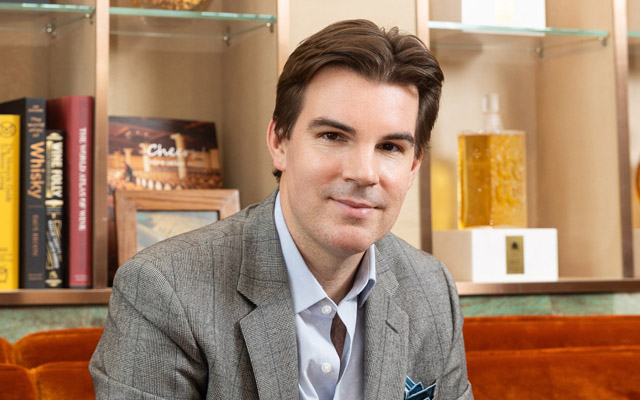
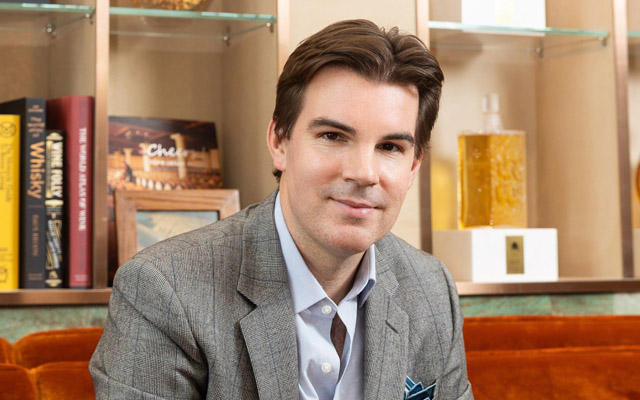
Preferred Travel Group has appointed Philipp Weghmann as chief development officer, a new role in which he will lead strategic growth and innovation across the company. He will also serve as president of Beyond Green, supporting the brand’s global expansion.
Weghmann will oversee the group’s global development, working with leadership teams to identify opportunities for brand growth and portfolio alignment. He will also manage the company’s Integrated Quality Assurance and Alliance Partner programmes.
With over 20 years in hospitality, Weghmann previously served as vice president and global brand leader for The Luxury Collection at Marriott International, leading brand strategy and growth for more than 120 hotels worldwide.
The Board of Tourism Australia has announced that managing director Phillipa Harrison will leave in August 2025 to pursue a new opportunity overseas.
Appointed managing director in 2019 and reappointed in 2024, Harrison joined Tourism Australia in 2017 as executive general manager international, overseeing international operations, global distribution, and partnerships.
Penny Fowler, chair of the Tourism Australia Board, praised Harrison’s leadership, noting that under her tenure, Australia welcomed more than eight million visitors last year for the first time in five years.
Reflecting on her time at Tourism Australia, Harrison expressed gratitude to the 300,000 tourism operators across Australia and the 200 staff worldwide who support the industry and help deliver memorable visitor experiences.
The recruitment process to appoint a new managing director will commence shortly.
AI will revolutionise business travel, as indicated by younger generations
Younger business travellers are optimistic about AI’s role in the future of corporate travel, where a March 2025 global survey by Corporate Travel Management (CTM) of over 700 Millennial and Gen Z employees found that both generations anticipate AI will positively transform travel booking and in-trip experiences.
According to CTM’s sentiment check on Millennial and Gen Z business travellers in relation to artificial intelligence (AI), 41 per cent are excited about the use of AI in travel, while 31 per cent are concerned.
Overall, Millennial and Gen Z respondents expect AI to have a positive impact on booking speed (65 per cent); choice of travel products (61 per cent); and cost of travel products and services (60 per cent)
For a generation raised on tech, Gen Z surprisingly expressed equal excitement and concern relating to the use of AI in business travel (41 per cent each), compared to a more positive outlook amongst the slightly older Millennials where two-thirds (66 per cent) are excited about its potential and just 25 per cent are concerned.
With 59 per cent of global respondents indicating they book all their own travel, the demand for intuitive, self-service technology that enables anytime, anywhere access is accelerating.
CTM’s global chief technology officer, Joel Bailey, said: “Millennial and Gen Z travellers are going to be our future business decision-makers, so they are not just influencing the future of business travel, they are defining it. Their clear preference for digital tools and confidence in the benefits of AI are shaping how we evolve our technology roadmap…”
The research also highlighted website/online booking tools (71 per cent) and mobile app (52 per cent) as the top two most popular booking channel choices among Millennial and Gen Z travellers today, reflecting preferences for user-friendly, accessible booking solutions.
While websites/online booking tools are expected to remain in pole position for booking travel in the coming two years, their usage is expected to drop by three per cent (68 per cent). Notably, the preference for using mobile apps in the coming two years increases by six per cent (58 per cent). Asia (Singapore and Hong Kong) was the only region to prioritise mobile apps as its preferred booking channel over all other tools (66 per cent) in the coming two years.
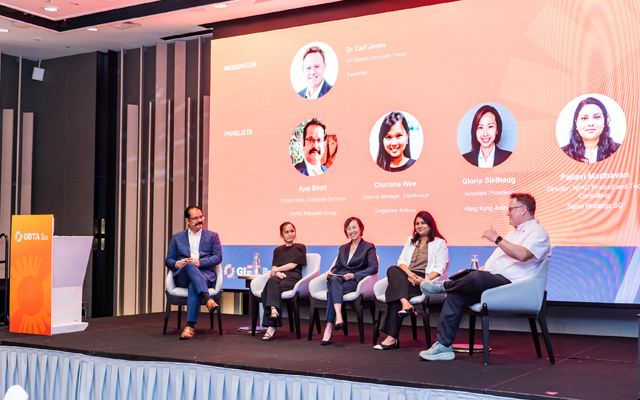
Godrej Industries Group’s Ajay Bhatt; Singapore Airlines' Charlene Wee; Hong Kong Airlines' Gloria Slethaug; Sabre Holdings' Pallavi Madhavan; and Traveloka’s Carl Jones (moderator)
Corporate travel stakeholders have made a call to buyers and sellers to get onboard NDC if they have not since IATA’s introduction more than a decade ago, adding that unfulfilled industry solutions will require a robust ecosystem and time to build it.
At the standing-room interactive breakout session – NDC and Modern Retailing: Elevating the Future of Corporate Travel in APAC – at last week’s GBTA APAC Conference in Singapore, Sabre’s Pallavi Madhavan, director, APAC products and tech consulting, reminded attendees leisure travel demand is simpler, whereas corporate travel bookings require “many changes” and “more servicing”.
Godrej Industries Group’s Ajay Bhatt; Singapore Airlines’ Charlene Wee; Hong Kong Airlines’ Gloria Slethaug; Sabre Holdings’ Pallavi Madhavan; and Traveloka’s Carl Jones (moderator)
Charlene Wee, general manager, distribution Singapore Airlines (SIA), added “corporate travel nuances differ with duty of care and back-end requirements”.
Hong Kong Airlines’ assistant president Gloria Slethaug acknowledged challenges such as solving interlining, providing PNR data for corporates and TMCs, and NDC enabling point-of-sale flexibility were very complex.
On the plus side, buyer Ajay Bhatt, group head – corporate services, Godrej Industries, noted NDC has the potential to add layers in the booking process and incorporate loyalty programmes, for example, and would like to see the gap between the leisure and corporate travel experience plugged.
He continued: “There is no option but NDC, which is still in a nascent stage of design despite being around for 10 to 12 years… and (it is important) for all stakeholders to be on it”. We (buyers) need to work with our TMCs to adopt it.”
Agreeing, Sabre and SIA said more services need to be included, there were some technical gaps, all stakeholders have to start even if NDC is not mature so that the system can continue to build to optimise aspects such as personalisation and transparency.
Describing NDC as a technical change, Wee said SIA is working with its partners to simplify the process, and noted that if the agency is not onboarded, the “TMC may not be showing but corporates are able to access it on the airline platform”.
Amid global instability in 2025, the business events industry must proactively embrace agility, designing adaptable, human-centric experiences that transform disruption into a competitive edge
As economic indicators flash warning signs and geopolitical flashpoints multiply across Asia and beyond in 2025, business travel managers and event planners face a fundamental challenge: how can we deliver high-impact business mobility in an environment where disruption has become the norm?
The stakes are substantial in today’s business landscape. Corporate travel drives organisational growth through irreplaceable human connections – forming partnerships, closing deals, and strengthening relationships that digital interactions simply cannot replicate.
Amid global instability in 2025, the business events and corporate travel industry must proactively embrace agility, designing adaptable, human-centric experiences that transform disruption into a competitive edge
Meanwhile, MICE initiatives create powerful brand experiences that resonate long after the event concludes, building loyalty and deepening engagement through shared moments. Both remain foundational to business success yet face unprecedented budget scrutiny and complex safety challenges that test even the most experienced professionals.
For event planners, this is not just about overcoming logistical hurdles. Success now hinges on creating frameworks where meaningful connection can thrive against a backdrop of uncertainty. The traditional event model – built on fixed timelines, rigid contracts, and inflexible formats – has become a liability rather than an asset. Today, resilience must be woven into every phase of planning – from concept to execution – creating experiences that can seamlessly adapt while preserving their essential human connection and brand impact.
What’s emerging is a shift from a duty of care to a duty of awareness. It is no longer sufficient to react when something goes wrong. Success now depends on proactively equipping delegates, teams, and clients with the right tools, information, and contingencies before departure or event day.
The most successful event planners now lead with:
Pre-event engagement strategies that build anticipation and clarity, while establishing contingency pathways that can be activated seamlessly when needed
On-site experiences that feel authentic, immersive, and reflective of the brand
Flexible formats that can adapt to changing circumstances without losing impact
For MICE professionals, success means developing concepts that transition effortlessly between in-person, hybrid, and virtual formats with minimal redesign. Contract negotiations must prioritise exceptional collaborative experiences over marginal cost advantages. The goal transcends simply planning an event – it’s about creating memorable experiences that drive productivity and engagement.
In volatile markets like those we are experiencing in early 2025, agility is not just beneficial – it is essential for survival. Organisations that compartmentalise risk and flexibility as separate concerns often find themselves constantly firefighting.
Instead, successful programmes embed adaptability into their DNA, treating uncertainty not as an obstacle but as a design parameter.
At ATPI, we have witnessed first-hand how companies that master this integration don’t just weather disruptions – they leverage them to create competitive advantages. They understand that in today’s landscape, the ability to pivot gracefully while maintaining quality and purpose has become the ultimate differentiator.
The organisations thriving in this uncertain environment aren’t merely managing change – they are architecting experiences that flourish because of it.
By understanding the distinct yet complementary roles of corporate travel and MICE, these companies are creating meaningful human connections that drive business forward, regardless of the challenges that arise.
Ali Hussain is the regional managing director, Asia, at ATPI, a travel and event management solutions company.
The newly-opened Ritz-Carlton, Bangkok anchors the One Bangkok development with cosmopolitan elegance. Featuring the city's largest ballroom and a spectacular new penthouse suite, it delivers exceptional hardware and deeply authentic, soulful service for business and leisure travellers alike
Behind the imposing, Brutalist concrete that defines Zurich’s Oerlikon district lies a surprising secret. While its exterior honours the neighbourhood’s industrial roots, stepping inside Mama Shelter reveals a vibrant, neon-soaked world that is a far cry from its rigid shell
A polished urban retreat designed for business travellers, Hyatt Regency Kuala Lumpur at KL Midtown combines thoughtful design, seamless service, and exceptional facilities.







 In his new role, Chandra will be responsible for managing pre-opening and operational activities, ensuring efficiency and supporting the brand’s focus on sustainability, community engagement and technology integration.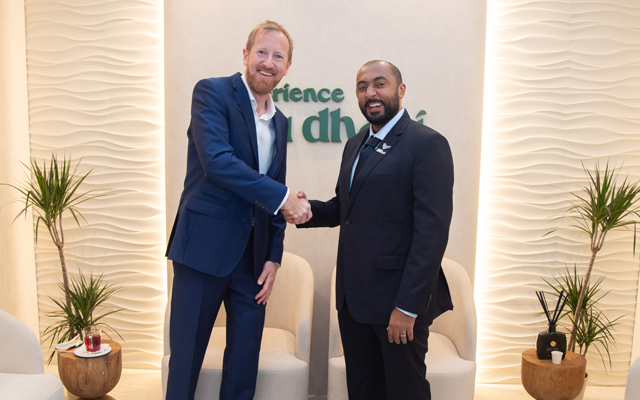
 With over 20 years in hospitality, Weghmann previously served as vice president and global brand leader for The Luxury Collection at Marriott International, leading brand strategy and growth for more than 120 hotels worldwide.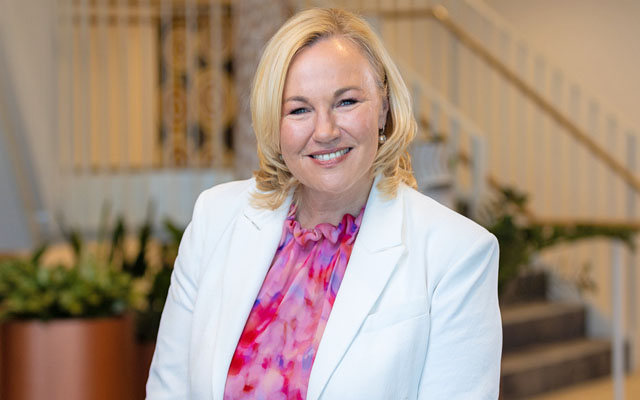
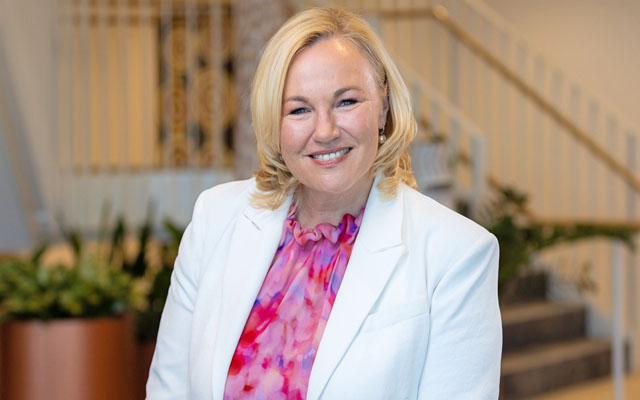 Penny Fowler, chair of the Tourism Australia Board, praised Harrison’s leadership, noting that under her tenure, Australia welcomed more than eight million visitors last year for the first time in five years.