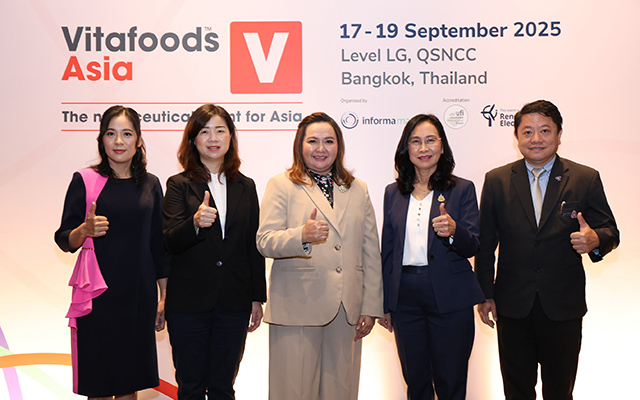
Vitafoods Asia 2025 will be held this coming September at QSNCC
Vitafoods Asia 2025, organised by Informa Markets, is set to advance Thailand’s food and nutraceutical industries from September 17 to 19 at the Queen Sirikit National Convention Center (QSNCC) in Bangkok.
The event will bring together over 650 leading brands and more than 13,000 visitors from 38 countries, connecting the entire supply chain from raw ingredients to finished products.
Vitafoods Asia 2025 will be held this coming September at QSNCC
Attendees can expect a range of features designed to foster innovation and collaboration, including over 50 expert-led seminars on topics such as personalised nutrition and healthy ageing. The New Ingredients & New Products Zone will showcase next-generation health innovations, while the “A to C (Academics to Commercial)” initiative will bridge university research with commercial applications. The event will also feature an Innovation Tour, a Tasting Bar for sampling new products, and a Vitafoods Asia 5K Run for networking.
According to Market Minds Advisory, the Asia-Pacific nutraceutical market is projected to reach US$176.5 billion by 2034, growing at a compound annual growth rate (CAGR) of eight per cent.
“The rapid growth of the food supplements and nutraceutical sector is fuelled by rising consumer health awareness, especially around non-communicable diseases like diabetes, obesity, and cardiovascular conditions,” said Rungphech Chitanuwat, regional portfolio director – ASEAN at Informa Markets.
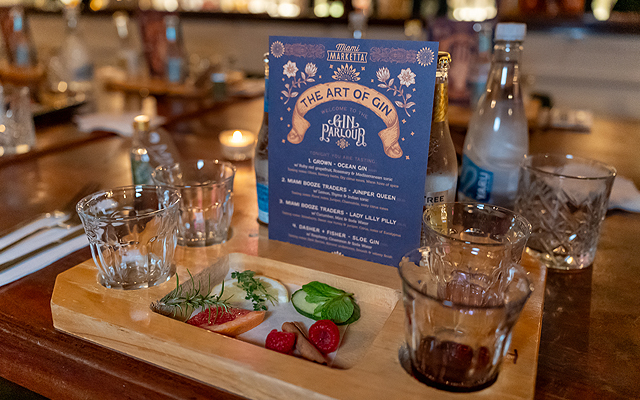
Miami Marketta, a night market and venue space in Queensland, Australia, has launched its first interactive activity: The Art of Gin Experience.
During this one-hour session, participants will dive into the world of gin, exploring native botanicals and flavour profiles. The tasting will be paired with a curated selection of international cheeses, each chosen to complement and amplify the characteristics of the gins.
Embark on a botanical journey at Miami Marketta
After the experience, guests are encouraged to stay and make Miami Marketta their base for the evening. They can enjoy live music, browse the gift shop, and choose from over 20 on-site food trucks. A self-guided art walk is also available, offering a chance to discover the unique and emotive stories behind the art at the venue and in the surrounding neighbourhood.
According to Grant Trammell, Miami Marketta’s market development manager, such interactive experiences will change seasonally. “As we edge towards Christmas, for example, I’m planning to hold gingerbread house-making classes, as well as Christmas carol sessions.”
The Art of Gin Experience is also available for corporate groups, with or without venue bookings, and costs A$120 (US$78.30) per person.
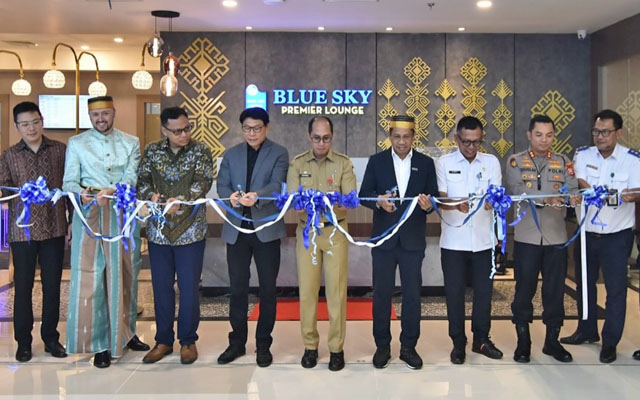
Airport Dimensions, in partnership with Blue Sky Lounge, has opened its newest facility, Blue Sky Premier Lounge, at Makassar Sultan Hasanuddin International Airport in Indonesia.
This launch follows a strategic investment in Blue Sky Group’s subsidiary Bumi Liputan Angkasa, announced in March. The expansion brings Airport Dimensions’ expertise to Indonesia, adding to its network of over 80 airport lounges worldwide. As the 17th lounge in the Asia-Pacific region, it reflects growing demand for premium airport services and supports the company’s ongoing regional expansion.
The new lounge offers premium facilities and local experiences amid growing passenger traffic at Makassar Sultan Hasanuddin International Airport; photo by Blue Sky Group
Blue Sky Premier Lounge responds to increased passenger traffic at Makassar Sultan Hasanuddin International Airport, which now handles more than one million travellers monthly. The lounge is located in the domestic terminal near security and a short walk from the gate, offering 500m² of space and seating for up to 137 guests.
The menu highlights local cuisine using regional ingredients, with an all-you-can-eat buffet featuring dishes such as Coto Makassar, Pisang Ijo, and I-ta Suki’s steamboat noodles. A live cooking station operates throughout the day, and a dedicated coffee corner serves Ippolito, Blue Sky’s in-house brand, locally roasted in Indonesia. Guests can also enjoy cold-pressed juices, unlimited Le Minerale water and soft drinks.
Service is designed to provide a seamless experience, beginning with dedicated ambassadors assisting passengers throughout the terminal and a buggy service transporting guests between the lounge and gate. The lounge offers two productivity zones with high-speed Wi-Fi, showers, restrooms, VIP private rooms available for an additional fee, separate prayer rooms for men and women, and a nursery room for families. A smoking wing is also available, equipped with air purification systems.
The lounge is accessible to all passengers regardless of airline or ticket class. Priority Pass and LoungeKey members may use the lounge, along with guests booking in advance or purchasing entry on the day, subject to availability. Entry is priced at 195,000 rupiah (US$11.90) per person, with promotional offers during the opening period.
This opening marks the eighth new lounge Airport Dimensions has launched since December, following openings at Jersey Airport, London Heathrow, Lima, Philadelphia, and San Diego. Each new lounge supports the company’s goal to meet rising traveller demand in key aviation hubs through operational expertise and strategic growth.
Errol McGlothan, president of Airport Dimensions, EMEA & APAC, commented: “This opening represents not just the expansion of our lounge network, but the strength of collaboration between two industry leaders. Together, we’ve developed a space that meets the rising demand for tourism and premium travel in Indonesia, while setting a new standard for airport lounges in the region.”
“We are excited to partner with Airport Dimensions to open the Blue Sky Premier Lounge at Makassar Sultan Hasanuddin International Airport. This lounge combines world-class comfort with local culture, offering travellers a premium experience in one of Indonesia’s fastest-growing cities,” added Linan Kurniahu, CEO of Blue Sky Group.
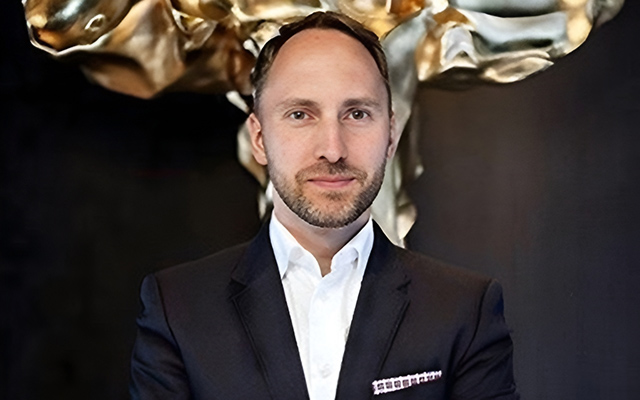
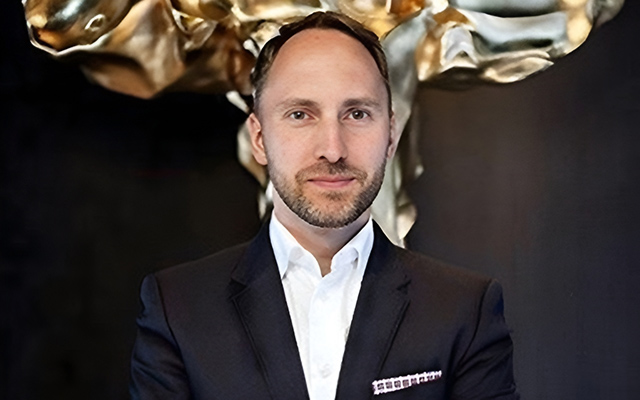
Tokyo-based hospitality group Trunk has appointed Toni Hinterstoisser as president – international, as the brand enters a new phase of global expansion. He will lead strategic planning and business development.
Hinterstoisser brings more than 30 years of experience in the development, operations and management of luxury and lifestyle hotels across Europe, North America and Asia. He was most recently vice president – Asia at citizenM Hotels, where he oversaw operations across the Asia-Pacific region.
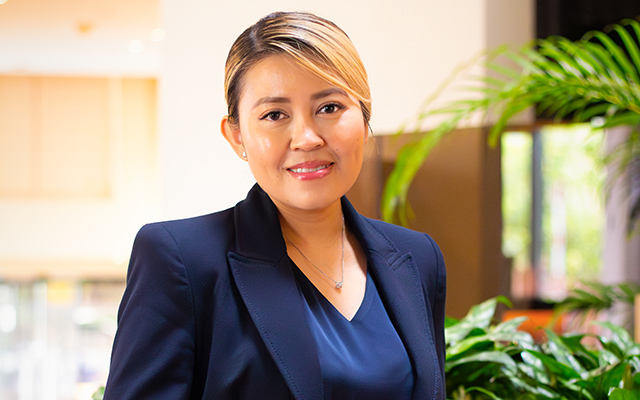
Holiday Inn Singapore Atrium has appointed Mia Jaafar as its new hotel manager.
Jaafar has over 17 years of experience in hospitality, with leadership roles across Asia, including ANA InterContinental Tokyo, Holiday Inn Express Singapore Katong and InterContinental Singapore. She is recognised for her people-focused leadership, customer-centric approach and innovative mindset.
Her vision for Holiday Inn Singapore Atrium emphasises enhancing guest experiences and creating an inclusive environment for both leisure and business travellers.
The Westin Yokohama has appointed Allen Howden as general manager.
Howden brings more than 25 years of international hospitality experience across Asia, Europe, Africa and North America. A long-standing member of Marriott International, he has held senior commercial roles at properties including W Bangkok, Swissôtel in London and Bangkok, and The Cadogan in London.
He most recently served as general manager of The St Regis Singapore.
Originally from the UK, Howden is recognised in the industry for his leadership and commitment to service.
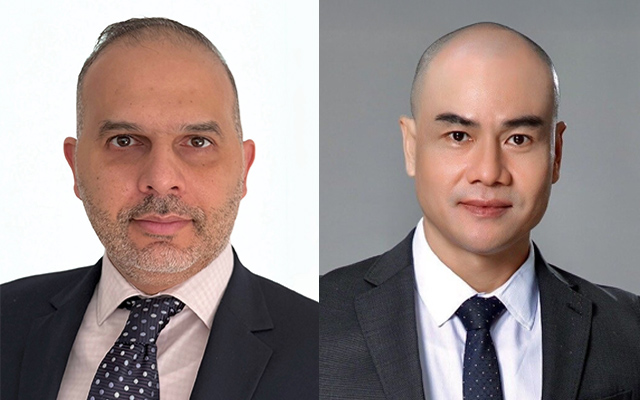
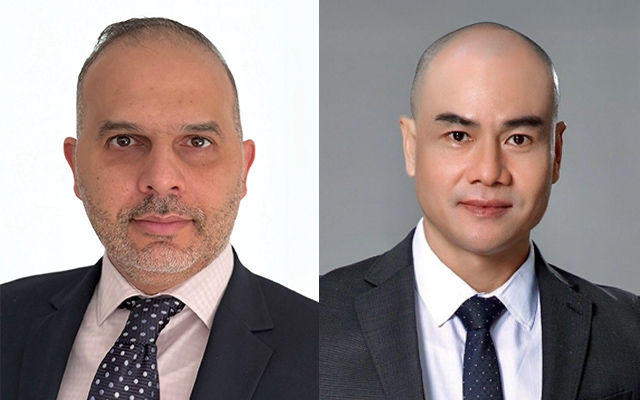
Novotel Sydney Cabramatta has made two key leadership appointments ahead of its planned opening in November: Sam Fakih as general manager, and Anthony Hoang as director of sales.
With more than 23 years of experience in the hospitality sector, Fakih previously held senior roles at IHG-branded properties, most recently serving as cluster general manager for Crowne Plaza Burwood and Holiday Inn & Suites Parramatta Marsden Street. His knowledge of the local market will support the hotel’s development in Western Sydney.
From left: Sam Fakih and Anthony Hoang
Hoang brings over 25 years of experience in hospitality sales and marketing, having held senior positions at InterContinental Sun Peninsula Resort, Holiday Inn Parramatta, Stamford Plaza Brisbane, Eastin Grand Hotel, Hanoi Hotel, Paddington Hotel Halong Bayview and Merperle Hotels & Resort. His background in revenue generation and partnership development will support the hotel as it prepares to open.
Differing pace of technology adoption, late registration patterns, and growing interest in non-capital destinations for business events are among the observations shared by industry leaders on the panel session, The next era of business events in Asia Pacific, presented during the Malaysia Business Events Week this week in Kuala Lumpur.
Florence Chua, managing director Asia-Pacific at Professional Convention Management Association (PCMA), spotlighted the growing influence of AI technology.
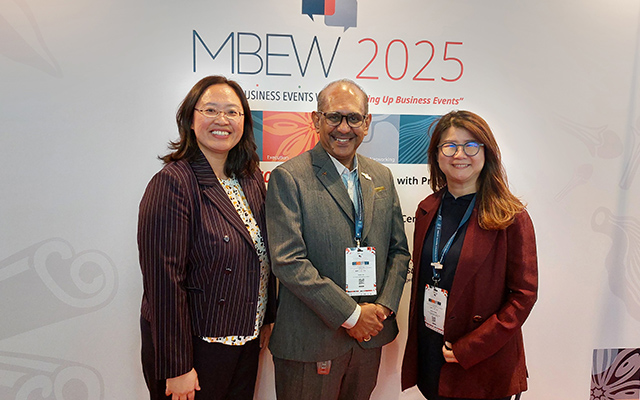
PCMA’s Florence Chua (left) and ICCA’s Waikin Wong flank session moderator, Malaysian Association of Hotels’ Isaac Mohan Raj
“AI is here to stay. We want professionals to get on the bandwagon,” she stated, adding that the business events sector is still in the early stages of uncovering its full potential.
“I always tell our members – if no one is using it, where will the use cases come from? We need to keep sharing what’s working and what’s not, so we can support each other on this journey of exploration,” she said.
Recognising the need for industry-wide training on AI application, PCMA launched the SPARK Accelerator in partnership with Gevme, an omni-channel event management platform, two years ago. The initiative offers structured learning experiences that include AI workshops, practical use case development, and implementation strategies designed to enhance organisational performance through generative AI.
Chua also highlighted the importance of managing digital adoption across a multigenerational workforce. While younger professionals tend to embrace new technologies readily, more experienced colleagues may need additional time and training to adapt.
“A willingness to learn from one another is key,” she said, pointing to the need for inclusive strategies that foster collaboration and continuous learning.
On the events logistics front, Waikin Wong, senior regional director Asia Pacific at ICCA, said shifting registration patterns are straining logistics, catering, delegate engagement, and on-site coordination.
She observed that lead times for attendee registration have significantly shortened – often to just one or two weeks prior to an event – due to a combination of factors, including geopolitical or economic uncertainty, internal leadership and strategic changes within organisations, and tighter budget controls that require organisations to hold off on finalising travel and participation decisions until the last possible moment.
On a more positive note, Wong shared observations of increasing interest among business event organisers to consider non-capital destinations for their activities. This trend is driven by improvements in air connectivity, the availability of unique experiences, and strong support from convention bureaus.
Experience Gold Coast, the organisation tasked with driving growth and opportunities for tourism, events, education, and arts and culture, has modified its strategy for the Asia-Pacific business events market, moving from a broad approach to a more focused and targeted engagement model for its signature annual event, This Is Gold Coast (TIGC).
Happening from August 4 to 7, this year’s TIGC brings together over 50 business event organisers from Australia and New Zealand, but buyers from Asia-Pacific are notably absent.
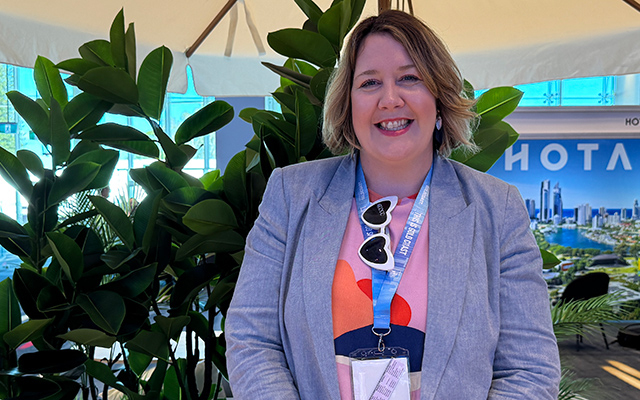
Campbell: tailored familiarisation trips for Asia-Pacific buyers yield more successful outcomes
Brooke Campbell, head of business events for Experience Gold Coast, told TTGmice that it was a deliberate move, with the intention to provide the market with destination showcase through familiarisation trips.
Campbell said that tailored familiarisation trips for Asia-Pacific buyers yielded more successful outcomes.
For instance, Experience Gold Coast is collaborating with Business Events Australia for this December’s Australia Next event to host pre- and post-familiarisation trips specifically for the China and Indonesia markets.
The organisation is also in the process of developing a cricket-focused familiarisation trip to appeal directly to a group of buyers from India.
Earlier in June 2025, a roadshow in China and Taiwan – Experience Gold Coast’s first in seven years – secured 15 promising leads with a small delegation of just three suppliers – Experience Gold Coast, Gold Coast Convention and Exhibition Centre (GCEC), and Village Roadshow Theme Parks.
Despite the temporary absence of Asia-Pacific buyers at TIGC, Campbell stressed that the region remains a strong priority.
“We do have a number of Asia-Pacific buyers who have shown interest in TIGC, and we might bring them back next year,” she added.
Beyond the new strategy, Experience Gold Coast has also changed its criteria for funding support, with financing now available for groups of at least 150 people – down from 250 – who stay for a minimum of three nights. In the last financial year, the organisation secured 80 forward events all the way to 2032.
With the 2032 Olympics looming, Experience Gold Coast is also working with the GCEC to attract sporting conferences and related associations.
Natalie Donoghue, GCEC’s business development manager, told TTGmice that the venue have had back-to-back events since mid-February, all the way to mid-December.
“For 2026, we’re almost fully booked for the same period,” added Donoghue.
While GCEC’s international events currently sits at around five per cent, Donoghue expects it to “grow over the next few years” as GCEC actively pursues several new international bids.
“The Gold Coast is a very attractive destination for corporate events and association conferences. People who approach us already know what GCEC and the Gold Coast can offer,” she said.
Donoghue added that the city’s new infrastructure – from new hotels such as the Mondrian Gold Coast to the construction of the light rail – will be major draws moving forward.
The Gold Coast and Australia are also widely recognised as “safe destinations” for business events – an advantageous perception that has led to a number of last-minute bookings, such as a 2,000-pax incentive programme from India that switched from Dubai to the Gold Coast due to instability in the Middle East, Campbell shared.
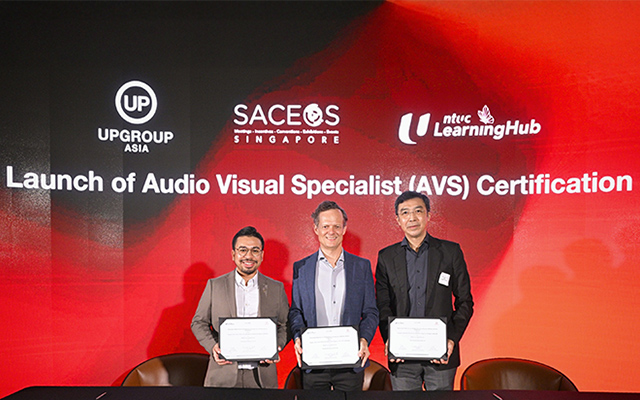
From left: Unearthed Productions’ Adam Piperdy; SACEOS’ Richard Ireland; and NTUC LHUB’s Tay Ee Learn; photo by Unearthed Productions
Audiovisual (AV) standards in Singapore’s business events industry will soon be raised through a new certification programme launched by Unearthed Productions (UP), NTUC LearningHub (NTUC LHUB), and Singapore Association of Convention & Exhibition Organisers and Suppliers (SACEOS).
The partnership agreement was signed at CatchUP 2025, the annual industry gathering hosted by UP, at Warehouse on River Promenade on July 31.
From left: Unearthed Productions’ Adam Piperdy; SACEOS’ Richard Ireland; and NTUC LHUB’s Tay Ee Learn; photo by Unearthed Productions
Developed by UP’s trainers and delivered by NTUC LHUB, WSQ Fundamentals of Audio, Visual, and Lighting Systems also has endorsement from SACEOS and Singapore Tourism Board. Eligible trainees may obtain grants under Singapore’s Workforce Skills Qualification (WSQ) framework.
“The course uses the latest and actual industry equipment, so participants get the hands-on skills that event organisers need,” said Adam Piperdy, founder and chief experience officer of UP.
Targeted at AV technicians, business events professionals, and hospitality practitioners, the 16-hour Fundamental course melds theory and practical skills such as AV system setup, troubleshooting, and safe operation.
Graduates are then eligible to take the 16-hour Advanced course.
“Upon successful completion of both courses, graduates will be Certified Audio Visual Specialist, giving them a recognised professional accreditation, akin to the Certified Meeting Professional designation for meeting professionals,” Piperdy explained.
As UP works closely with industry players, Piperdy said post-course opportunities may include internships and project-based roles at a variety of events in Singapore.
Also announced at CatchUP was a partnership with Tuan Sing Holdings for UP to be its audio, visual and lighting partner for events hosted at Warehouse on River Promenade.
CatchUP 2025 also saw the official launch of UPGroup Asia, the regional brand under UP, and a new business events venue search platform of UP-managed venues to help clients discover unique event spaces and elevate their audio, visual and lighting experiences across the region.
Just 10 minutes from Phuket International Airport on the serene northern coast, this 178-key, Bill Bensley-designed resort offers delegates a quiet, tropical paradise steeped in Phuket’s tin-mining heritage
The newly-opened Ritz-Carlton, Bangkok anchors the One Bangkok development with cosmopolitan elegance. Featuring the city's largest ballroom and a spectacular new penthouse suite, it delivers exceptional hardware and deeply authentic, soulful service for business and leisure travellers alike
Behind the imposing, Brutalist concrete that defines Zurich’s Oerlikon district lies a surprising secret. While its exterior honours the neighbourhood’s industrial roots, stepping inside Mama Shelter reveals a vibrant, neon-soaked world that is a far cry from its rigid shell




 Hinterstoisser brings more than 30 years of experience in the development, operations and management of luxury and lifestyle hotels across Europe, North America and Asia. He was most recently vice president – Asia at citizenM Hotels, where he oversaw operations across the Asia-Pacific region.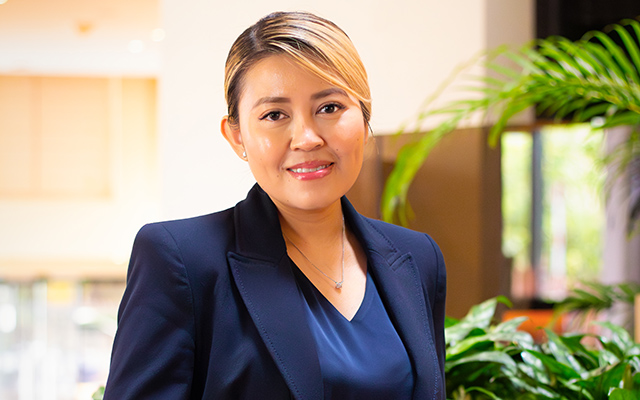
 Her vision for Holiday Inn Singapore Atrium emphasises enhancing guest experiences and creating an inclusive environment for both leisure and business travellers.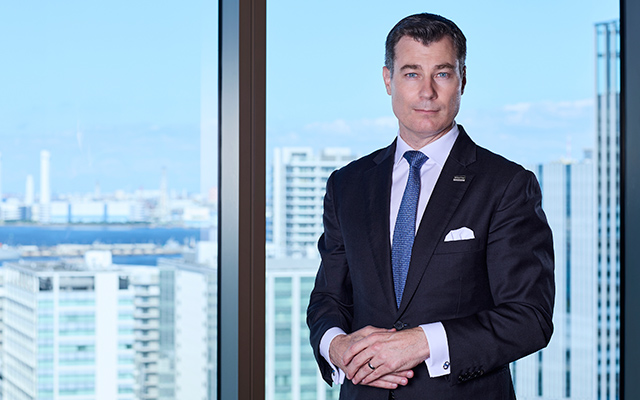
 He most recently served as general manager of The St Regis Singapore.