Sedona Suites Ho Chi Minh City’s Grand Tower has commenced operations at the Saigon Centre mixed-use development. Located in the heart of HCMC’s CBD in District 1 along Le Loi Boulevard, the Grand Tower offers 195 luxury serviced suites housed within levels 28 to 42 of Saigon Centre Tower 2.
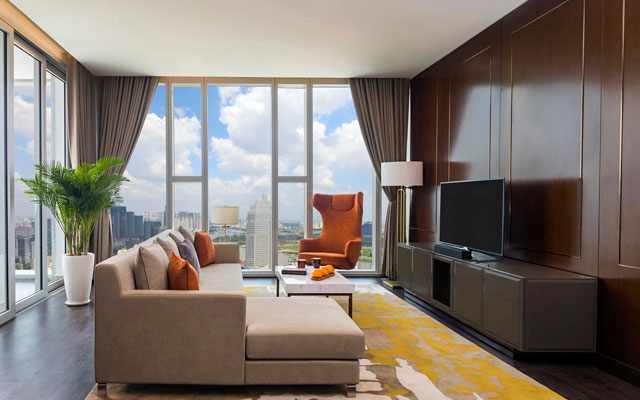
Suites are available in different configurations such as studio, one-, two- and three-bedroom. The suites also feature feature fully-equipped kitchens, as well as floor-to-ceiling windows which allow for city views.
Living room in a three-bedroom apartment
Guests will have access to amenities such as 24-hour concierge and security, laundry and dry-cleaning services, room service and airport transfers.
Additional facilities include a swimming pool, Jacuzzi, sauna, residents lounge and access to the California Centuryon fitness centre located on level six. Guests will also be able to enjoy the facilities at KLOUD, Keppel Land’s new generation serviced co-office located on level 21, at preferential rates.
Sky28, located on level 28 of the Grand Tower, offers tantalising contemporary-style South-East Asian and Vietnamese cuisine coupled with awe-inspiring views of the city skyline.
Tables Grill at Grand Hyatt Erawan Bangkok has recently received a Michelin Plates-award and has been listed in the first edition of the Michelin Bangkok guide book.
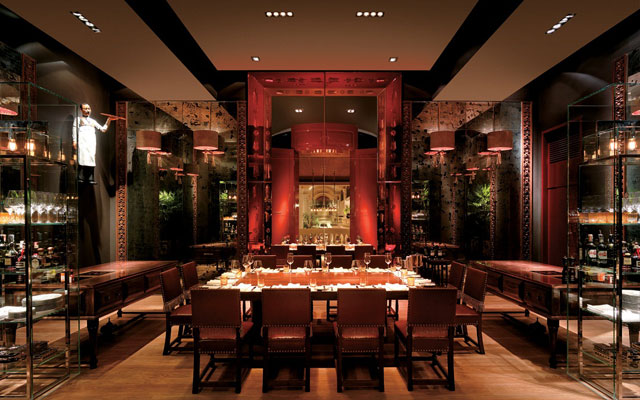
To plan a private event or corporate meeting, Tables Grill offers three different areas – the main space can accommodate up to 100 guests; private room Chamber can accommodate up to 12 for a more intimate reception; while the light-filled Cellar can fit up to 32 guests.
Tables Grill’s Chamber private dining space
For more information, please contact the hotel’s event specialist team at +662 254 1234 or email events.bangh@hyatt.com.
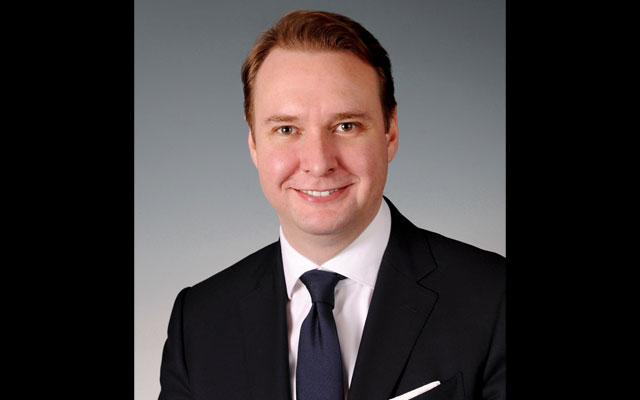
Luxury hospitality company Rosewood Hotel Group has appointed Noel Merainer as vice president – development, Asia-Pacific to lead the group’s expansion in the region.
In his new role, he will be responsible for the development of the company’s four distinct brands, including ultra-luxury Rosewood Hotels & Resorts, deluxe New World Hotels & Resorts, neighbourhood lifestyle pentahotels, and the newly launched business and lifestyle hotel brand KHOS.
Merainer has 17 years of experience in the hospitality sector, having held various positions at Marriott International for eight years including vice president, development planning and feasibility for Asia-Pacific. He was also regional director of revenue management at Shangri-La Hotels & Resorts, following six years in operations with Four Seasons Hotels & Resorts.
An auspicious start to the 13th UFI Asia-Pacific Conference 2018, which was held on March 1 and 2 at Shangri-La Hotel, Kuala Lumpur. Meanwhile, Malaysia International Trade and Exhibition Centre (MITEC), hosted a welcome reception for delegates and guests on March 1.
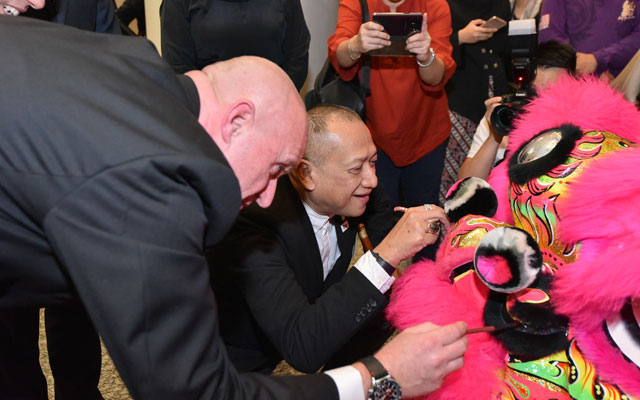
Minister of Tourism and Culture Malaysia, Mohamed Nazri Abdul Aziz, partook in the Lion Dance Eye Dotting ceremony during the Welcome Reception.
Malaysia’s hosting of the 13th UFI Asia-Pacific Conference 2018 event provided the destination with a valuable platform to showcase Kuala Lumpur and the country’s progressive business event facilities and the Ministry of Tourism and Culture Malaysia’s investment into this industry.
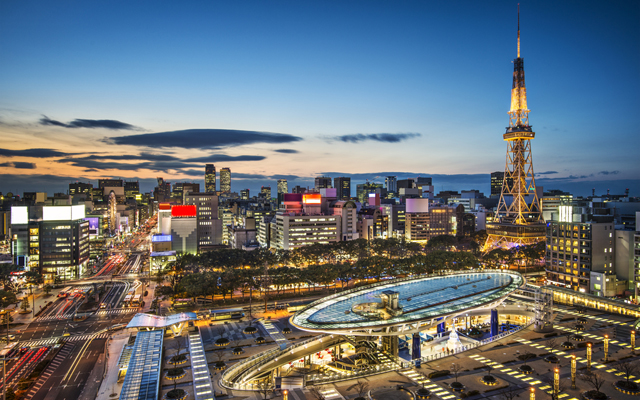
Nagoya overlooked by business event organisers; Oasis 21, one of its event spaces, in the foreground
While international associations tended to stage their events in major Japanese cities because of available facilities, convenience or simply destination reputation, the country’s regional cities are now working hard to convince planners to get off the association meeting’s equivalent of the Golden Route.
“It is unfortunate, but most people tend to go through Nagoya without stopping. But once they do stop here, they realise how much there is to see and do,” Mao Sasanabe, assistant manager of marketing for the Nagoya Convention and Visitors’ Bureau, told TTGmice yesterday on the sidelines of Meet Japan, a JNTO convention aimed at association chiefs.
Nagoya overlooked by associations; Oasis 21, one of its event facilities, in the foreground
As well as having advanced meeting facilities, the city has a castle, museums and numerous venues suitable for association events, while its history of innovative engineering – Toyota and Noritake ceramics are two local firms – makes it an attractive destination for organisations with overlapping interests.
The city hosted the RoboCup2017 tournament and is renowned for its robotics and artificial intelligence industries, which have attracted association groups in the past.
Cities that were previously considered too far off the beaten track are also reaching out to associations.
“Toyama City has excellent facilities for medium-sized conferences and our airport has direct flights to China, South Korea and Taiwan, as well as good connections to Tokyo airports,” said Sachiko Nunome, MICE coordinator for PCO Co., which works closely with the city’s convention centre.
“We believe that because many people have already been to the big cities of Japan, they will be interested in seeing other parts of the country and exploring local culture, cuisine and the countryside,” she told TTGmice.
Another regional city looking to attract more association meetings is Matsumoto, which is home to a world renowned centre of medical science, thanks to Shinshu University and Kyoritsu Hospital.
“We attract a lot of medical and science-based events because the university and hospital have a global reputation, but associations also like to come because of Matsumoto’s natural environment and the opportunities for hiking and other sports,” remarked Katsuhiro Kosaka, deputy head of the city’s convention bureau.
“We believe that promoting our unique elements will appeal to more association groups.”
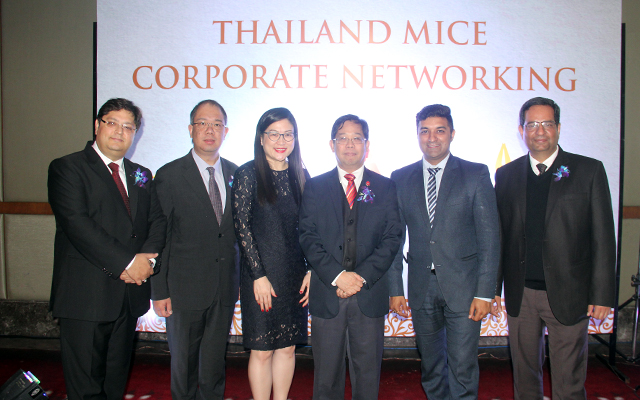
Nooch Homrossukhon (third from left) on moving beyond incentive market and bringing Indian meetings to Thailand
The Thailand Convention and Exhibition Bureau (TCEB) will run a series of roadshows in India this year in a bid to grow Thailand’s popularity among Indian business event planners, with the first for 2018 concluded recently in New Delhi.
The Thailand MICE Corporate Networking event in New Delhi was attended by 35 corporate clients, mainly from insurance, pharmaceutical, direct selling, automotive, electronics and FMCG segments. At the event TCEB introduced its new campaign, Meet By Design, which offers a tailored menu of perks and support for groups bound for Thailand.
Nooch (third from left) on moving beyond incentive market and bringing Indian meetings to Thailand
Nooch Homrossukhon, director of Meetings and Incentives, TCEB, told TTGmice: “The corporate incentive segment is the most dominant (contributor) of overall Indian MICE arrivals to Thailand. Now we want to (get more) meetings from India. To do this, we plan to focus on the new industry segments as per the Thailand government’s new economic model, Thailand 4.0.”
Thailand 4.0 aims to develop the nation as a knowledge-based economy, and in line with this, TCEB will target new high-growth industry verticals like medical technology, bio technology, robotics and embedded technology in India to driving up meeting numbers.
Last year Thailand recorded a 36 per cent increase in Indian business events. These events brought with them 32,428 Indian delegates.
“Apart from reaching out to corporate clients, we plan to engage with media planners especially in tier-two cities where we think there is a need to showcase what Thailand offers for meetings. We also want Indian corporates to meet in Thailand’s Eastern Economic Corridor,” Nooch added.
Following the New Delhi showcase, TCEB will return to India in July with a roadshow covering Mumbai and Bengaluru. It will also host seminars across India and fam trips for Indian planners.
Rohit Khanna, CEO of Travel Clinic, told TTGmice that Thailand has risen in demand for his corporate clients. “Meetings from India to Thailand are growing annually at a rate of 30 per cent. At present the demand is being driven by insurance, automobile and FMCG verticals,” he explained.
Calleja: getting the message out that JTB Philippines' MICE department also serves non-Japanese companies, and offers destinations beyond Japan too
To more effectively capture business events demand, JTB Philippines has rejigged its sector-dedicated department into two teams, one handling Japanese companies and the other non-Japanese and international companies.
While business events is top priority in JTB Philippines’ business and budget, the agency remains better known among Japanese companies in the country than non-Japanese ones, according to Maria Claribel Calleja, JTB Philippines’ MICE manager for non-Japanese companies.
Calleja: getting the message out that JTB Philippines also services non-Japanese companies, and offers destinations beyond Japan
Calleja told TTGmice that the agency wants to be better recognised in both local and international markets, as well as make known that it sells destinations beyond Japan, including South Africa and those in Europe.
Another challenge is the company’s image of being expensive due to its Japanese origins. Calleja said her team counters these associations by emphasising quality service, JTB’s 105 years of history and the reputation of its 500 offices around the world.
The Japan National Tourist Oganization is also helping JTB Philippines by endorsing it to Japanese companies and including it in marketing and promotional sorties, she added.
It seems JTB Philippines’ efforts have been paying off, as recent outbound bookings already include other countries compared with 2015-2016, when most bookings were mainly to Japan. There is also a growing clientele of non-Japanese companies.
Indonesia’s city of Solo will soon welcome a new cultural centre and events venue, named De Tjolomadoe, and buzz is building around its March 24 launch after Canadian musician and songwriter David Foster christened its concert hall with a performance earlier this week.
Standing on 6.4ha of land in Colomadu, Karanganyar Regency, the main building houses a concert hall, multi-purpose hall, cultural centre and commercial area. The site also has two outdoor venues for open air events such as carnivals, music and dance performances.
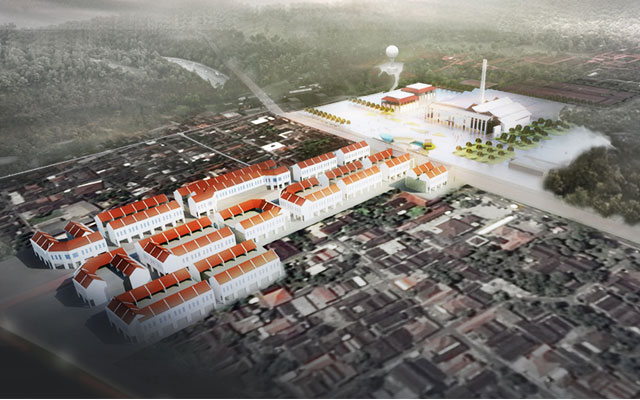
Concept art depicting the full development
This would be the first of six stages of the De Tjolomadu project, which covers a total area of 21ha. Later phases will include construction of a convention and exhibition centre, themed shopping mall, and four-star hotel.
De Tjolomadoe was reborn from a building previously occupied by a sugar factory by the same name. The factory, which was built in 1861, had been abandoned since its closure in 1998.
The development has taken up 200 billion rupiah (US$15.4 million) in investment on a 30-year BOT term with the land owner, National Plantation 9.
Linda Gustina, director of commercial and hospitality of developer PP Properti, a consortium member of Sinergi Colomadu, said: “Solo is well known for its culture and De Tjolomadoe will become a (new) cultural centre. We are inviting artists and art curators to take a role in (bringing this) attraction (to life).”
“With an international standard concert hall, Solo now not only can attract major Indonesian performers but also international artists of David Foster’s calibre, who will in turn draw visitors, at least from the neighbouring countries,” Linda said.
Preserved elements from the old factory preserved include machines, the chimney tower and even part of an old banyan tree, which serve as exhibits and windows into the past for visitors to the new attraction.
Edison Suardi, general manager construction of Sinergi Colomadu, said: “The whole building serves as a Sugar Factory Museum, where travellers can walk around and learn about its history. Although each room now has a different function, visitors can still find traces of the past. The steel planks in the repair room, for example, now become the base of the restaurant’s tables.”
Exhibitions & Trade Fairs (ETF) is launching the National Construction Equipment Convention (NCEC), said to be Australia’s first industry-owned, multi disciplinary, multi-event platform for the earth moving and infrastructure construction sector.
The result of years of development between the Construction Mining and Equipment Industry Group (CMEIG) and ETF, the inaugural NCEC will run from November 15 to 17 at Sydney Showground, Sydney Olympic Park.
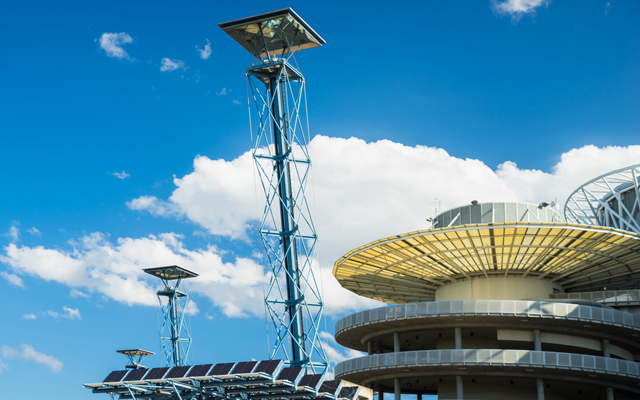
The inaugural show will take place at the Sydney Olympic Park
NCEC will occupy 6,000m2 of exhibition space and feature dynamic formats, including the Demonstration Pit, with live demonstrations and hands-on interactivity outdoors; International Pavilion, which will showcase the latest heavy equipment and technology; Tech Zone, where avant-garde technology will be showcased in an immersive and futuristic space; and a presentation theatre for collaborative audience discussions on the latest developments in industry technology.
ETF’s managing director Gary Daly added that with face-to-face business still beneficial, the mega hub will have a social programme, offering networking opportunities through an opening ceremony, business leaders breakfast and networking drinks.
Multiple association events will also be held concurrently with NCEC.
“Already we have several major brands on board, and exhibitors can look forward to meeting industry decision makers from right across Australia,” Daly shared.
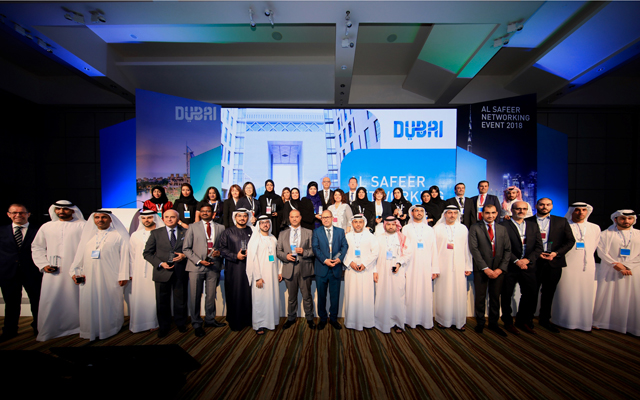
Dubai Business Events (DBE) this week recognised 26 member organisations of the Al Safeer Congress Programme for their contributions in attracting international conferences to the city.
Awards were presented at the programme’s annual appreciation ceremony held on February 27 at Park Hyatt, Dubai, which saw a gathering of over 150 ambassadors – including doctors, scientists, industry experts, business leaders and government officials from across the UAE.
Helal Saeed Almarri, director general of Dubai Tourism, said the programme has driven “tremendous results”, and expects the growing network of ambassadors to continue propelling Dubai forward as a knowledge economy.
Just 10 minutes from Phuket International Airport on the serene northern coast, this 178-key, Bill Bensley-designed resort offers delegates a quiet, tropical paradise steeped in Phuket’s tin-mining heritage
The newly-opened Ritz-Carlton, Bangkok anchors the One Bangkok development with cosmopolitan elegance. Featuring the city's largest ballroom and a spectacular new penthouse suite, it delivers exceptional hardware and deeply authentic, soulful service for business and leisure travellers alike
Behind the imposing, Brutalist concrete that defines Zurich’s Oerlikon district lies a surprising secret. While its exterior honours the neighbourhood’s industrial roots, stepping inside Mama Shelter reveals a vibrant, neon-soaked world that is a far cry from its rigid shell