Asia/Singapore Sunday, 26th April 2026
Page 819

New ‘hotelplex’ in Seoul a test for Accor

0
All that glitters is gold. This sculpture, an emblem of the complex, beckons guests to visit

Aside from the challenge of filling 1,700 new rooms in a soft market, AccorHotels’ new ‘lifestyle hotelplex’, Seoul Dragon City, is a test whether four Accor brands of different price points can co-exist without any downsides in one complex.

The brands are Grand Mercure (202 rooms), Novotel Suites (286 rooms), Novotel (621 rooms) and ibis Styles (591 rooms).

Interviewed about this in Seoul on November 1, Accor’s chairman and CEO Sebastien Bazin told TTGmice that Seoul Dragon City is a “bigger, stronger” push by the chain in co-locating brands under one roof.

All that glitters is gold. This sculpture, an emblem of the complex, beckons guests to visit

“Novotel and Ibis have shared a common lobby space, same back of the house – there’s a lot of efficiency which the clients won’t notice,” said Bazin. “Why should we limit this to only two brands when three or four will bring us even greater economies of scale?”

On the question if a Grand Mercure client would take kindly to sharing space with an ibis guest, Bazin said: “If we have clients who don’t accept differences in means, social status, colour of the skin, religion, culture, they shouldn’t be staying with us. They should accept these differences. The more they cross, the better their experiences will be. It is totally part of my strategy to mix them, as well as with the locals, as much as I can (in areas such as F&B and entertainment).”

Bazin said hotels had been “too draconian” in their thinking that a restaurant in Novotel should only be for Novotel guests, or a bar in ibis should only be for Ibis guests.

“It’s totally wrong to me. When you go to a restaurant in any place, you do not know who the person having dinner next to you is. He could be a student, an investment banker, a government official, a CEO. Why do we accept that elsewhere and not in hotel restaurants? This is precisely why we built the Sky Kingdom,” he said.

Sky Kingdom, suspended on the top between ibis Styles and Grand Mercure buildings, comprises four full floors of entertainment. Highlights include the King’s Vacation, a lounge bar that reinterprets the royal European vacation, with a range of cuisines and beverages on offer; an indoor swimming pool, Skywalk; and a performance stage.

Another is the Sky Beach, a private beach club with music and international cuisine with a setting reminiscent of the legendary beach clubs of Greece or Las Vegas.

The only downside to the hotelplex that Bazin could think of, was the possible price comparison.

“People have to understand why they pay US$20 more to be in the same facility,” he said. “Other than that, the design is superb, the location is great and, don’t be afraid of the size, 1,700 rooms. Hotels in Las Vegas have 6,000 rooms.”

Patrick Basset, Accor’s COO Upper South-east and North-east Asia, added that Seoul Dragon City was a mixed-use development with multiple market segments including MICE, long and short-stay service apartments, and is designed to be a new destination in its own right.

A site inspection led by cluster general manager of Seoul Dragon City, Jerome Stubert, shows a jaw-dropping ultra-modern complex with each hotel easily the next-gen product of its brand.

MICE facilities are equally contemporary in design and have “the highest technology possible”, said Basset. There are two grand ballrooms of 1,200m2 each, 17 meeting rooms, and 11 restaurants and bars.

The developer, KOSDAQ-listed Seobu T&D Corporation, is said to have spent some US$400 million on the construction, which represents its foray into hotel investment, said a source.

Accor started its partnership with the Ambassador Hotel Group 30 years ago managing the latter’s hotels. Since 2005, the joint venture, Accor Ambassador Korea, has been managing other people’s assets.

Seoul Dragon City takes its name from the Yongsan (Dragon Mountain) District where it is located. This is in the centre of Seoul close to major business districts such as Yeouido and Gangnam, and commercial districts including Itaewon and Myeongdong, said Accor. The complex is adjacent to malls and shopping centres, movie theatres, tourist attractions and embassies, it added.

The hotelplex is 57km from Incheon International Airport and 22km from Gimpo International Airport.

Malaysia wins hosting rights for medical congress

0

Malaysia will welcome the World Congress for Endoscopic Surgery of the Skull Base and Brain from June 10-13, 2020, marking the first time the world congress will be held outside of the US and Europe.

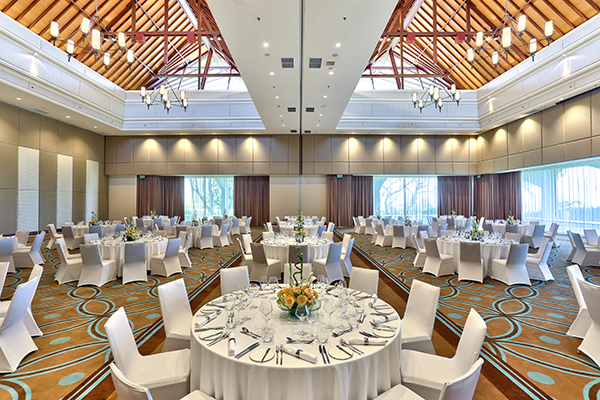
Shangri-la Hotel Kuala Lumpur is chosen as the congress venue; pictured here is the Grand Ballroom

With the rise in specialised medical research in Malaysia gaining traction, over 900 delegates from around the world and locally are scheduled to attend the four-day congress at Shangri-la Hotel Kuala Lumpur.

“With over 900 delegates set to attend the congress and generate an estimated economic impact of RM8.7 million (US$2.1 million), the congress will further strengthen our credibility as a knowledge and creative hub,” said Zulkefli Sharif, CEO of MyCEB, an agency under the Ministry of Tourism and Culture Malaysia.

A legacy of successful medical-based business events in Malaysia has been hailed as the prime reason for the winning bid put forward by Malaysia Convention & Exhibition Bureau (MyCEB), in strategic partnership with the local organiser, the Malaysian Society of Otorhinolaryngologists Head and Neck Surgeons.

The congress will act as a platform for delegates to network and identify new medical trends and breakthroughs, while the show’s conference programme also helps to provide a holistic and comprehensive view of the latest technologies, issues and opportunities in the sector.

The hosting of this event will also further strengthen the country’s aspiration to become a knowledge and creative hub by 2020. In 2016, the medical sector has attracted a record number of 10,532 delegates to the country.

Singapore secures APAC edition of industrial tech event

0

Singapore will be hosting the 2018 premiere of Industrial Transformation Asia Pacific – A HANNOVER MESSE Event, part of a MoU that was signed between the Singapore Tourism Board (STB) and Deutsche Messe.

The agreement covers the organisation of the show for three years in Singapore, the development of new content and exhibition components for the tradeshow, marketing and publicity efforts, as well as possible areas of collaboration in terms of industry knowledge exchange and new tradeshows.

As part of Singapore’s Committee on the Future Economy report, Advanced
Manufacturing was identified as a key driver of Singapore’s future economic growth.

Industrial Transformation Asia Pacific will help to catalyse the transformation of Singapore’s manufacturing sector by providing a platform for leading manufacturers and technology providers to discover the latest technologies and concepts, and to identify potential partners for co-innovation. It also brings together global leaders to share successful case studies and best practices in Asia, which can be adopted globally.

“The Committee on the Future Economy had emphasised Singapore’s
commitment to develop a globally-competitive manufacturing hub. In that regard, Deutsche Messe’s partnership with SingEx Group to stage the Asian edition of the HANNOVER MESSE in Singapore is a welcome development. The event will also be a significant boost to our business events pipeline,” said minister for trade and industry (industry) S Iswaran in a statement.

Yeo: growth support for one of Singapore’s key economic sectors

“Industrial Transformation Asia Pacific is set to be a flagship event that will support the growth of one of Singapore’s key economic sectors. It will provide networking opportunities for delegates, promote cross-industry skill sharing, and build industry thought leadership in the region,” added Lionel Yeo, STB’s chief executive.

Ascott makes landfall in Cambodia

0

The Ascott has opened its first serviced residence in Cambodia, a 75-unit property in Phnom Penh’s up-and-coming residential and retail hub of Diamond Island.

CASA Meridian Residence, said to be the first international-class serviced residence in the Cambodian capital, provides a selection of apartments located between levels 22 and 34 across two towers of CASA by Meridian mixed-use building.

Business travellers can choose from studio apartments ideal for single executives, to modern one-, two- or three-bedroom apartments that can accommodate up to six people.

Every apartment features contemporary furnishings, living and dining areas, as well as a fully-equipped kitchen. Residents can also enjoy a comprehensive range of lifestyle facilities including an infinity swimming pool and sauna, as well as business support amenities such as a conference room, meeting room, and serviced offices for rental.

Lew Yen Ping, Ascott’s country general manager for Vietnam, who oversees the company’s expansion in Cambodia, Myanmar and Laos, said in a press statement: “Ascott has built a strong brand reputation and expertise in managing world-class serviced residences over the last 30 years.

“We expect significant demand for our first property in Cambodia, as it is the first international-standard serviced residence in the country’s capital and economic hub Phnom Penh. In addition, Cambodia has achieved sustained economic progress and strong international tourist arrivals.”

Lew also shared plans for a second property in the city – Somerset Norodom Phnom Penh – due to open in 2018.

She noted that Ascott now has a presence in nine out of 10 countries in South-east Asia, which gives the company “a strong foothold in the region”.

“ASEAN member states recently signed pacts to boost transport links to make it easier for cross-border travel. With greater connectivity, business activities and investment are expected to increase, driving demand for serviced residences. We will continue to explore opportunities to grow Ascott’s presence in Cambodia and other (South-east Asian) markets to reap benefits from greater economies of scale and expand our network of properties for customers,” she said.

STO enhances Discover Seoul Pass with Pyeongchang perks

0

Seoul Tourism Organization has launched a new limited edition Discover Seoul Pass with Pyeongchang card which grants foreign travellers travel benefits in both Seoul and Gangwon province where Pyeongchang is located.

The usual Discover Seoul Pass version offers free access to 21 tourist attractions and merchant discounts only in the South Korean capital city.

Perks in Gangwon province include five per cent discount on ski classes for kids at Alpensia Resort, 4,000 won (US$4) off admission fees to Alive Heart Gangwondo Sokcho, 1,000 won and 500 won off adult and children entrance tickets respectively for Daegwallyeong Sheep Ranch, among many others.

Commenting on the new product, Seoul Tourism Organization, Tourism and MICE Division, executive director, Joon Lee, said: “The pass promotes both cities and gives tourists a reason to visit Seoul while they are here to catch the 2018 Olympics.”

With Seoul Tourism Organization banking on the games to inspire more corporate incentive and teambuilding traffic to the South Korean capital city, the limited edition pass is likely to provide extra impetus for event attendees to extend their trip to Seoul for personal leisure.

Available in 24-hour and 48-hour options, the Discover Seoul Pass with Pyeongchang card retails for 36,000 won and 49,500 won respectively. These prices come with a 10 per cent discount that is valid until March 31, 2018.

The passes are sold online and travellers can pick them up at Incheon Airport or designated stores in the city.

Lee added that the Discover Seoul Pass will be enhanced with even more perks after the 2018 Olympics, with plans to throw in additional discounts on top of what partner merchants already offer during Seoul’s key shopping festivals, such as the Seoul Summer Sale.

AccorHotels chief dismisses oversupply in South Korea

0

AccorHotels chairman and CEO Sebastien Bazin is thinking big on South Korea even as the media badgered him about the current oversupply and discounting at an event yesterday in Seoul marking 30 years of Accor’s partnership with Ambassador Hotel Group of Korea.

Although the Accor Ambassador Korea (AAK) joint venture is set to manage 32 hotels in the country by 2021, from 23 properties now, Bazin, responding to a question from TTGmice, said: “As good as 32 is, this is not big enough for me. We could afford to have 100 hotels here in the foreseeable future and this is what I aim to build with my friend and partner (referring to chairman of Ambassador Hotel Group, Jungho Suh).”

Bazin and Suh in the middle: trust, respect and admiration for what the other party does is the key to the success of Accor Ambassador Korea joint venture

To questions from the local media on the current slowdown, brought about both by new supply and frosty China-South Korea relations, Bazin urged South Korea not to underestimate its ability to attract “many, many more” visitors, including Chinese, in the future, because it has a strong economy, base of multinationals, culture and attractions.

AAK’s latest management contract, a new-build ‘hotelplex’ in Seoul dubbed ‘Seoul Dragon City’, alone adds 1,700 rooms in four Accor-branded hotels, Grand Mercure, Novotel, Novotel Suites and ibis Styles under one roof. TTGmice understands it is doing occupancies of 25 to 30 per cent with half the inventory opened since last month. The other half will come on stream in the next few months.

But Bazin is unfazed. Said Bazin: “I sensed in the last couple of months some sense of panic and people questioning the quality of hotels, number of hotels, competency of the operators. Seoul is the seventh destination (city) in the world. It is not here by accident. You have very strong economy, very strong culture, very strong education, very strong multinationals…The only way they will come to Seoul is whether hotels exist or whether sharing economy exists. Accor will do both.

“So, as much as people is suffering from China tourism ban, please accept that in any sector, you could suffer two or three years. But the future is bright, including in hospitality. And anybody who is frustrated or afraid, is making the wrong decision. My job is to build for the next 10-20 years ahead, not the next two or three years ahead.”

Bazin pointed out that Accor alone operates more than 300 hotels in Australia (including its recent Mantra Group acquisition, subject to regulatory approval) – and Australia’s population is half that of South Korea’s (over 50 million). France has 18,000 hotels; Accor has 1,600 hotels there, he said.

“Yes, in our industry, you could have in some years supply outpacing demand and you could suffer for 24-36 months. But a hotel investment lasts 40 years. Don’t ever lose faith in your 40-year investment. China will come back. China travellers will be bigger than ever before for (South) Korea. I said before, from 120 million now, it could be 200 million Chinese visitors in 20 years. The bigger decision you have to make is how to ‘mix’ Chinese guests efficiently with non-Chinese or domestic guests (due to cultural differences that may require this).”

He added: “I’ve been told about oversupply in Seoul, New York, Amsterdam, and they are all wrong. It takes time to catch up, but there’s always greater demand than supply. People forget there’s a new emerging class in every country in the world who can afford to travel. Why they can afford it? It’s the enormous increase in LCCs in Asia, Europe, the US – the price of the same travel is 30 per cent cheaper than seven years ago.”

Ambassador Hotel Group’s Suh likewise is upbeat, saying South Korea and China relations will improve. Moreover, Suh pointed out that with increased quality of life, domestic tourism will increase. As well, with Accor’s acquisition of FRHI, AAK, which has been focusing largely on midscale, will be able to expand its portfolio of luxury brands. A Fairmont Ambassador Seoul, Accor’s first luxury hotel in South Korea, will open in 2020.

“So while times may be challenging now, longhaul there is a bright future,” he said.

“Having hotels is not a problem, it’s what kind of hotels. Those without competitiveness will not survive. We, with a global hotel group, will.”

Bazin said the one lesson from the ban was the importance of not relying too heavily on any market, as South Korea has done with China. “We (AAK) realised in the last 10 months that we probably missed spending time investigating the domestic market, and we have (subsequently) been able to attract domestic Korean travellers to our hotels, which we did not pay attention to before. The lesson is don’t ever depend on one source.

  • More reports in tomorrow’s daily

Sheraton Towers Singapore targets millennial corporates

0

Millennials and Gen X groups are the new target markets for Sheraton Towers Singapore, which has given its meeting and event facilities an overhaul to attract younger corporates.

Among its multimillion dollar refurbishments are a revamped ballroom – with restrung chandeliers, improved sound systems, intelligent lighting, as well as additional projectors and screens – and new meeting rooms.

The Turquoise function room on level three

These enhancements were introduced to appeal to a younger meetings crowd, explained Shirley Wong, director of catering of Sheraton Towers.

She told TTGmice: “Our clients are getting younger, and this crowd pays attention to aesthetics and ambience. We’ve transformed our ballroom to fit that demand.”

Business from younger groups in Singapore, South-east Asia and Australia is accompanied by an increasing demand for “bespoke packages” that include “healthier food options” in meeting menus, added Wong.

She explained that in Singapore, this demand can be traced to prime minister Lee Hsien Loong’s recent push for healthier eating habits. Currently, the domestic market accounts for 60 to 70 per cent of the hotel’s events business.

To meet this trend and grow its market share, Sheraton Towers has begun sourcing for food options that are wholemeal, low-sugar and gluten-free, to include them in its customised meeting packages.

Wong added that Gen X clients are also ”exposed to a lot of ideas now and often want to implement them in their business (events)”, hence the in-house events team must keep up with their own research on unique proposals.

For example, events have shrunk from 30 to 40 ballroom tables into “smaller, more intimate and cosier” affairs, with requests for DIY activities such as flower arrangements and candle-making tutorials, she said.

Incentive spend rises at cost of fewer participants

0

The latest Society for Incentive Travel Excellence (SITE) Index 2018 survey has found that per person per incentive trip budget has risen from US$3,000 to US$4,000, a reverse from the drop and stagnation in the past few years.

However, despite the plan to spend more, 80 per cent of buyers surveyed are seeking to decrease costs and reduce the number of participants.

Kohli: more optimism in the future

SITE’s immediate past president, Rajeev Kohli, said the survey, conducted by J D Power in English, Spanish and Mandarin, was different compared to last year, as different segments – sellers, third-party suppliers and corporates – were given different questions to make the findings more targeted.

Although spend is rising, buyers are also looking for more value, said Kohli, adding that CSR is also making a comeback, and it is “not for millennials only”.

“Corporates and third-party suppliers are increasingly mentioning less expensive destinations and amenities to manage the cost of incentive travel programmes,” Kohli pointed out.

Among buyers, corporates are driving growth, and incentive travel is getting even stronger as a motivator for performance.

But business tends to stay within their respective regions, and 43 of the buyers surveyed said they were not planning a trip to Asia. One reason is that it does not align with business needs, while other reasons included distance and travel time.

Kohli noted the number one concern in 2016 was the cost of an airline ticket but the industry was seeing an improvement. He added that there was also more optimism about the world and national economies among buyers and sellers. But while the threat of terrorism remains a concern, it has decreased as well.

NSW gears up for a busy business events year ahead

0

Sydney is gearing up to host more than 40,000 conference delegates – staying 166,900 delegate days and generating an estimated A$146.2 million (US$112 million) – for the state’s economy.

Minister for tourism and major events Adam Marshall said that financial services event SIBOS, which was secured for Sydney by the NSW Government through Business Events Sydney, rounds out a huge upcoming 12 months of business meetings and conventions.

ICC Sydney lit up at night

“SIBOS will put Sydney and NSW on the world stage in the financial services sector bringing 6,000 delegates to our State and delivering up to A$37 million in visitor expenditure next year,” Marshall said.

Between now and October 2018, before ICC Sydney hosts SIBOS (October 22-25, 2018), the destination has 48 other events secured.

CEO of Business Events Sydney Lyn Lewis-Smith added that SIBOS was an event with significant strategic value for Sydney and NSW.

“This event is expected to boost the city’s FinTech capability as local industry benchmarks against the latest developments around the world. Hosting this event will enable Australia to profile the strength of the local finance and banking sector as well as disrupters such as start-ups entering or operating in this space,” said Lewis-Smith.

SIBOS draws the C-suite of the world’s finance community to discuss investment opportunities, cybersecurity and technology such as blockchain. Together they will undertake ‘cyber war games’ to share the latest defences against major hacks.

New research calls travel managers to take traveller-considerate approach

0

Spurred by new norms of hyper-connectivity, on-demand services, greater personalisation and always-on support, business people expect a simpler and more flexible experience when travelling on behalf of their employers.

According to new research from the Association of Corporate Travel Executives (ACTE), underwritten by American Express Global Business Travel (GBT), travel managers are taking a more traveller-considerate approach to developing travel policies and programmes.

Travel managers should find ways to address and adapt to the expectations of modern business travellers

The study, Managing the Modern Business Traveller, reveals how travel managers are addressing the expectations of modern business travellers to adapt and develop travel policy and to retain and improve compliance levels.

Influencing traveller behaviour is an important aspect of this: 87 per cent say they use or are considering using visual guilt, prompting users to reconsider travel purchases if a more cost-effective option is available, and 85 per cent point to peer pressure and corporate culture to guide travellers.

“Business travellers have come to expect a personalised experience when they’re on the road, but many organisations continue to take a ‘one-size-fits-all’ approach to travel policy, driving travellers to work outside the normal channels,” said Greeley Koch, executive director, ACTE.

“While travel polices absolutely need to change to take individual needs into account, travel managers can — and should — tap into the travellers’ point of view to encourage them to do the right thing. After all, managers are on the hook for not only the safety of their travellers, but also the cost of doing business,” Koch said.

However, more traditional methods of ensuring policy compliance remain prominent. An overwhelming majority (93 per cent) of travel managers say they use education, and just over three-quarters (77 per cent) mandate compliance. Other approaches include rewards and incentives, both non-monetary (20 per cent) and monetary (17 per cent).

“The needs of the business and the desires of today’s business traveller are often different, but we have to quickly rise to the challenge of finding a programme balance that supports both,” said Philip Haxne, regional director EMEA, global business consulting for American Express GBT.

“Advances in technology and the managed travel toolset make matching individual needs with the business policy more efficient, and there is great opportunity to better personalise traveller experiences, ease anxieties about safety and simultaneously encourage policy compliance.”

Travellers remain focused on quality of life
Continuing a trend seen in the first instalment of Meet the Modern Business Traveller, managers are seeing quality-of-life enquiries from travellers increase. Thirty-one per cent say they’ve experienced more enquiries about work-life balance, while 30 per cent say more travellers have asked about adding a leisure element to business trips.

This is a slightly slower rate of increase than seen in the October 2016 edition of the study, when traveller enquires about work-life balance and leisure increased 48 per cent and 42 per cent, respectively.

While the 2016 research found a more dramatic increase in usage, the trend remains clear. As a result of heightened expectations surrounding work-life balance, more business travellers are exploring non-traditional — and potentially out-of-policy — travel and accommodation methods.

Last year, 79 per cent of managers saw growth in usage of services like Uber and Lyft. This year, half (50 per cent) saw usage of non-traditional ground transport grow. The same holds true for accommodation options like Airbnb, with 20 per cent of managers seeing traveller usage increase this year, versus 40 per cent last year.

Travel managers enhance and simplify policies and tools
Travel managers are responding to the needs of modern business travellers by adjusting policies and restocking the corporate travel toolbox to keep pace.

On policy, managers are acting across the board, such as incorporating non-traditional accommodations. In 2016, just nine per cent of managers included so-called sharing economy lodging options in policy, versus 22 per cent this year.

On the tools front, apps are on the rise, with 93 per cent of managers providing or planning to provide trip information apps, 89 per cent providing apps for booking and 81 per cent offering T&E apps. This is up from 76 per cent, 67 per cent and 62 per cent in 2016, respectively.

Gaining modern business traveller perspective
With business traveller expectations evolving for the foreseeable future, travel managers must look for ways to get into the travellers’ mind and understand both their stated and unstated needs.

One key method to achieve this is leveraging internal and external data. Ninety per cent of managers say they use TMC travel and spend data, 76 per cent turn to card payments providers, 66 per cent each leverage internal systems and TMC analysis, and 60 per cent assess internal policy compliance data.

“Data can make a world of difference for the travel manager seeking to wrap their brain around a growing constellation of traveller needs and expectations. But it’s not enough to gather the data; managers must actually analyse it and translate it into action. A successful, data-driven travel programme can achieve any corporate travel executive’s core objectives: positioning their travellers for success, while also demonstrating the travel manager’s value as a business leader,” said Koch.

“It’s also important to remember that a successful travel programme can serve as an effective tool when it comes to attracting and retaining talent – a major consideration for today’s competitive business landscape. Strong programmes that contribute to employee happiness and productivity underscore the travel manager’s valuable role to the business as a whole,” added Haxne.

Reviews

The Ritz-Carlton, Bangkok

The newly-opened Ritz-Carlton, Bangkok anchors the One Bangkok development with cosmopolitan elegance. Featuring the city's largest ballroom and a spectacular new penthouse suite, it delivers exceptional hardware and deeply authentic, soulful service for business and leisure travellers alike

Mama Shelter Zurich

Behind the imposing, Brutalist concrete that defines Zurich’s Oerlikon district lies a surprising secret. While its exterior honours the neighbourhood’s industrial roots, stepping inside Mama Shelter reveals a vibrant, neon-soaked world that is a far cry from its rigid shell

Hyatt Regency Kuala Lumpur at KL Midtown

A polished urban retreat designed for business travellers, Hyatt Regency Kuala Lumpur at KL Midtown combines thoughtful design, seamless service, and exceptional facilities.