Mandarin Oriental Hotel Group has announced that it will manage a luxury hotel project – expected to open in 2018 – in the heart of Beijing.
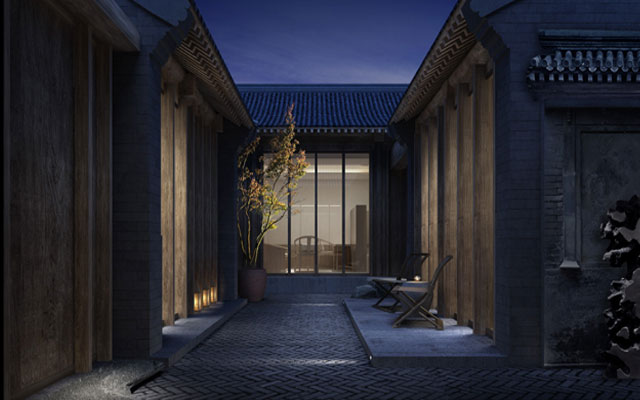
Mandarin Oriental Qianmen, Beijing, will be located within the traditional Qianmen East Hutong Quarter which is currently undergoing a process of preservation and regeneration. Hutongsdate back to the 13th century and comprise courtyard houses connected by narrow lanes and alleyways.
A rendering of Mandarin Oriental Qianmen, Beijing
Guests can expect to stay in landscaped courtyard suites and experience the traditional Beijing way of life within the labyrinth of alleys and lanes.
Facilities within the hotel will include multipurpose function rooms, indoor swimming pool, fitness centre and spa. For F&B options, there will be an all-day dining concept with a roof terrace, a Chinese restaurant, a lobby lounge, a traditional tea lounge and a Mandarin cake shop.
Business travel experts at the ongoing Malaysia Business Events Week (MBEW) are urging business event planners to embrace technology and use it to enhance their event experience.
Yusno Yunos, CEO and founder of Malaysia-based event technology specialist Evenesis – Y Us, said event technology should not be an element that only comes into the picture when there is excess budget.
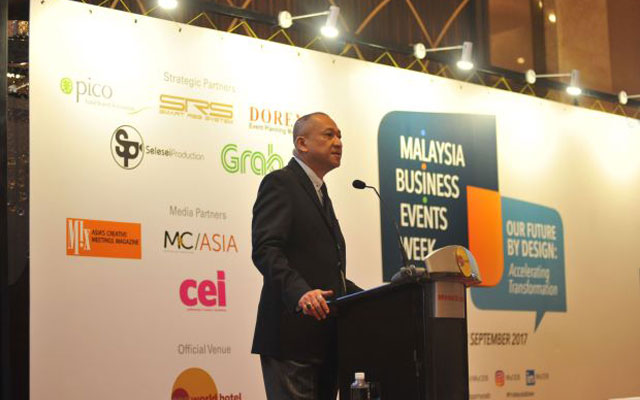
Datuk Seri Mohamed Nazri Abdul Aziz, speaking at this year’s MBEW
Sharing his experience, he said: “Government-linked companies and (non-profit) associations are somewhat open to the idea of adopting new technology in their events, but their decision (to actually implement it) is usually determined by cost. They will only implement event technology when they have additional budget.
“This attitude must change. Companies must set aside a budget for event technology if they want to create a better event that will entice people to attend.”
Yusno believes that events will move towards paperless identification for delegate registration, such as by using facial recognition software.
“This is already adopted in some countries and will become more mainstream in the future. Evenesis – Y Us is researching and developing facial recognition software which we hope to roll out by mid- 2018,” he said.
Technology could also change people’s motivation for attending a business event.
Panellist, Angeline Van Den Broecke, director of sales and marketing, Kuala Lumpur Convention Centre, said technology has made knowledge so easily accessible to delegates that their primary reason for attending conferences in the future will not be for gathering new knowledge but rather for networking opportunities.
In this changed landscape, she foresees a future “where organisers will pay delegates to attend meetings”.
Yusno opined that the “right technology is not necessarily the most expensive one” and that having people knowledgeable in event technology to plan and execute such applications are critical to success.
Also speaking on the same panel, Jan Bartscht, co-founder and managing director, Leadapreneur, urged event organisers to not fear technology, and instead embrace it, use it to innovate and improve the experiences for event attendees.
Business event players here are looking at new markets and adapting to changing needs
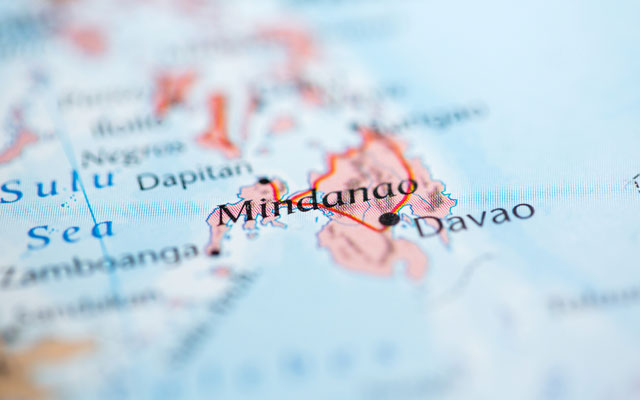
Business events players in the Philippine island of Mindanao, whose city Davao is a popular meetings and events destination, are turning to new markets and adoption new business approaches to cope with the slowdown in business this year amid the island’s martial law and continuing war in Marawi.
A business hotel in Mindanao is now pursuing the China market, whose citizens have recently been offered visa on arrival, after suffering from cancellations of business events bookings this year and up to May next year, with some of these events relocated to either Manila or the Visayas.
Business event players here are looking at new markets and adapting to changing needs
The general manager of this hotel complained that the ballroom, which used to be very busy, has got only one business event for the rest of 2017 and the hotel’s occupancy slid to 49 to 59 per cent on average.
Dottie Wurgler-Cronin, general manager of Marco Polo Davao, said working together as a cluster and cross-selling with two other Marco Polo hotels in Manila and Cebu helped.
“That’s why we see an uptrend in July-August,” she said.
Agreeing, Frank Reichenbach, general manager of Marco Polo Ortigas Manila, said: “June-July was softer, August-September strong and we picked up some business in Davao”.
For Rajah Tours, reliance on the leisure market has grown as the company sees a dip in business events demand. Company president Jojo Clemente told TTGmice that the only big groups it is handling are the Ambassador/s Tour from the US and the Canada Winter’s Escapade.
Clemente underlined the importance of establishing a perception of peace and order among business event planners and delegates who prefer low-risk destinations.
Industry leaders are thus focusing also on clear communications with source markets.
Cecilia Sanchez, CEO of international event organiser Leverage International, said: “It is really very important to communicate what’s really happening not only from the negative point of view but also from the positive point of view. Balanced reporting. There are negative things happening but there are also positive things that should be interesting to business people.”
Marisa Nallana, secretary-general of the Philippine Association of Convention/Exhibition Organizers and Suppliers (PACEOS), assured source countries: “We recognise their security and risk concerns, but the local government units are doing their best to keep their destinations safe and they are also putting together more attractions to encourage visitors.”
Meanwhile, Philippine industry players are looking forward to the country’s first nationwide business events roadmap which will be unveiled this month to address issues and challenges in positioning the country as a competitive destination, tourism undersecretary Benito Bengzon Jr. disclosed.
Part of the deliverables is an extensive business events data base that’s currently lacking and which will provide strategic direction to both the tourism department and the private sector, he said.
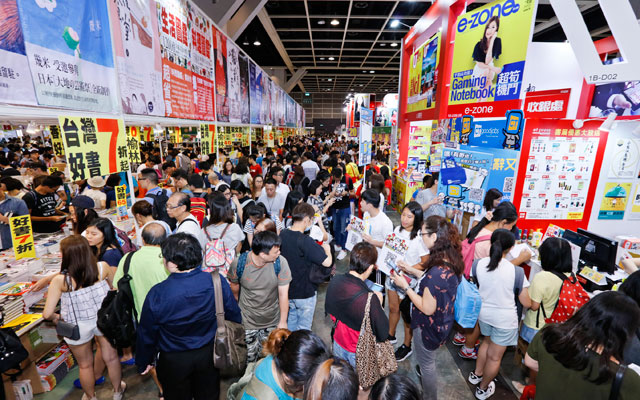
Hong Kong Convention and Exhibition Centre Management (HML) has kicked off a US$3.9 million project to rebuild the entire Wi-Fi system at the Hong Kong Convention and Exhibition Centre (HKCEC).
The new Wi-Fi network will feature the highest standard IEEE 802.11ac wave 2, as well as a new 10Gbps fibre network backbone for offering superb signal stability to meet the data demand generated by large numbers of guests simultaneously using the network. It will deploy advanced high density Wi-Fi (HD Wi-Fi) solution provided by Cisco.
HKCEC has kicked off a US$3.9 million project to rebuild the entire Wi-Fi system
The US$3.9 million project will also involve installation of 660 new Wi-Fi access points, which will support more than 20,000 mobile devices with scalability. Resilient optical fibre network infrastructure will be installed, making it possible to scale up network bandwidth requirements to meet future demand and undergo system upgrades as technology advances.
The new Wi-Fi services will continue to be available on a complimentary basis.
The new system can support Location Based Services LBS technology, allowing organisers to utilise their mobile applications for improving customer’s experience. The LBS platform also allows organisers to analyse guest behaviours, improve crowd management and enhance guest experiences.
HML will be able to provide configurable bandwidth for individual organisers or exhibitors upon request, and offer premium services (paid pass) to visitors for additional bandwidth. The captive portal feature in the new Wi-Fi system will provide customised Wi-Fi landing page to offer promotion opportunities for events.
The project is scheduled to be completed in 3Q2018. The total area covered by the network will be 125,000m2, which will include all exhibition halls and function rooms, front of house areas, entrance lobbies and concourses, organiser offices and ancillary rooms, as well as restaurants.
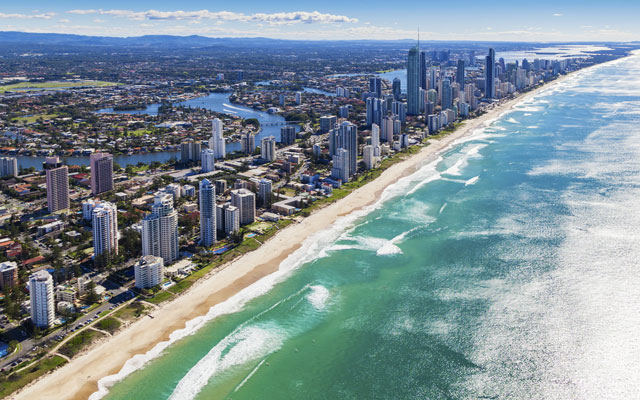
Some 1,200 representatives from AIA Thailand will descend on the Gold Coast this week for their incentive trip.
Their programme will feature a gala dinner at Movie World, while the main convention venue will be The Star Gold Coast. Accommodation for the participants will be at Hilton Surfers Paradise and Surfers Paradise Marriott Resort & Spa.
Gold Coast
According to the company’s general manager – agency distribution Thailand, Prakitti Boonyakiat, there is a real excitement building for the event.
Gold Coast Business Events’ director, Anna Case, said the city is looking forward to welcoming AIA Thailand.
“The Gold Coast has incredible appeal for incentive groups, with the perfect combination of venues, experiences and climate to inspire and motivate potential delegates with the ultimate reward,” she said.
Two decision makers from Carlson Rezidor Hotel Group talk about their latest property developments in Asia, as well as other business event-ready hotels elsewhere in APAC. By Rachel AJ Lee
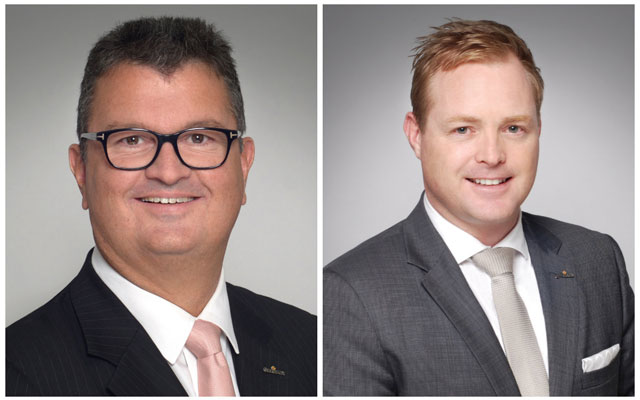
Andreas Flaig (left) and Andre de Jong
Carlson Rezidor is going to open up two properties in Vietnam. Why was the country chosen?
Andreas Flaig, executive vice president, development: As Carlson Rezidor Hotel Group expands across Asia Pacific, the growth opportunities in Vietnam are immense and we are proud to be a part of the country’s economic growth story.
The Vietnam government has made travel and tourism a national growth and development priority, resulting in significant capital being invested into infrastructure and accelerating growth. In the last few years, the potential of Phu Quoc has been backed by the favourable investment offers and improved infrastructure including the presence of an international airport now. Today, Phu Quoc sees a healthy urban population, with increased domestic and international arrivals indicating an optimistic outlook for the hospitality industry.
Radisson Blu Resort Phu Quoc will open in 4Q2017 as part of an IR and as near a convention centre. What is the hotel’s projected business mix?
AF: The hotel will be the only upper-upscale (five-star) hotel property within the integrated resort with a convention centre within. With strong domestic demand and international arrivals from intra-Asia and Europe, we are projecting estimates of about 76 per cent leisure and 20 per cent MICE comprising.
Where else in Asia is the company looking to grow into?
AF: The group is also focused on expanding our current portfolio to key markets such as China, India, Malaysia, the Maldives and Philippines. With excellent growth opportunities in the Indo-China region, the strong lead pipeline is set to see fruition in the short to mid-term period.
Let’s talk about Radisson Golf & Convention Centre Batam. Why Batam when it’s not known as a business events destination?
Andre de Jong, vice president, operations, South-east Asia & Pacific: As Indonesia seeks to double tourist numbers by 2020, the Indonesian government is turning its focus on islands near Singapore to further enhance these getaway destinations, rather than developing remote spots in the world’s largest archipelago.
In fact, the government’s marketing budget increased four fold to one trillion rupiah (S$100 million) in 2015 which was spent promoting islands such as Batam. Radisson, a key international upscale brand under Carlson Rezidor Hotel Group, is capitalising on this growth by identifying Batam as a strategic investment in this region.
The hotel’s current business mix is driven by strong demand on weekdays from both international and local corporates, and local and international leisure over the weekends. Local MICE business is currently very strong. The hotel continues to see a growing MICE business demand from Singapore as the hotel and destination gains greater awareness, popularity and reputation as an alternative MICE destination.
As a whole, how is Carlson Rezidor planning to capture more business travellers?
AJ: Asia-Pacific’s heterogeneous markets see varying needs of business travellers. Carlson Rezidor Hotel Group leverages our portfolio of brands to meet the needs, lifestyle and travel budgets of these business travellers, from the fast-emerging millennial travellers to the road warriors and those who enjoy the business luxury.
As hotel operators, it is integral that levels of service and convenience are consistent with the brand. Today’s hospitality landscape sees the need for us to streamline processes, create unique experiences and enhance loyalty programmes.
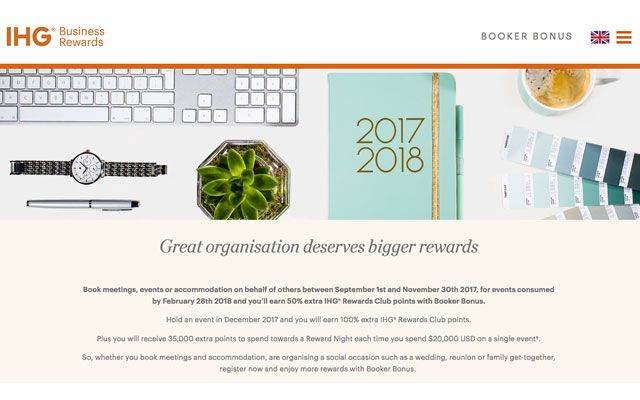
InterContinental Hotels Group (IHG) has announced its newest IHG Business Rewards promotion, Booker Bonus.
IHG Rewards Club members who book between September 1 and November 30, 2017 (for events and stays till February 28, 2018) can earn an additional 50 per cent reward points (capped at US$20,000), on top of existing reward points earned for bookings on meetings, events or accommodation. Members can double their rewards for any event held in December 2017.
Members with a minimum spend of US$20,000 will also be rewarded with 35,000 supplementary points, be it for a single event or individual booking.
In addition, members can stand a chance to win even more points by taking part in a social media contest. Members are required to upload a photo on Facebook or Instagram of neatly organised items they use on a daily basis, to demonstrate how great organisation deserves bigger rewards, with the post tagged with the hashtag #ihgbookerbonus. Members will be rewarded with 500 reward points if their photo is selected, and entrants also qualify for a monthly prize draw where they stand to win 35,000 extra points
AccorHotels debuts first ibis Styles in the US
Ibis Styles, the economy brand from AccorHotels has made its debut in the US with the opening of ibis Styles New York LaGuardia Airport.
Serving as the flagship hotel for the brand in the country, the property offers 93 rooms, each one inspired by a different New York City Subway line – green, yellow, red, and blue. Rooms will also be furnished with 26-inch HD LED televisions, desk areas, walls decorated with subway maps, and a Sweet Bed by ibis Styles.
All rates include breakfast and unlimited Wi-Fi, and there is a restaurant and bar on-site.
The Hague wins 2019 alzheimer conference
The 29th Alzheimer Europe Conference, titled Making valuable connections, will be held at The Hague’s World Forum on October 22-25, 2019.
More than 700 participants are expected to attend the conference that will be held in The Hague, the Netherlands, for the first time.
The annual Alzheimer Europe Conference will bring together people who are affected by dementia, or are living with the disease, caring for someone with the disease, or working in the field of dementia. There will be ample opportunity to share and exchange their experience and knowledge of the disease.
Fairmont Hotels and Resorts Kenya launches new campaign
Fairmont Hotels and Resorts Kenya is launching a new communications campaign which positions the group’s Kenyan properties as a three stop destination.
Guillaume Durand, group director sales & marketing, Fairmont Hotels and Resorts Kenya said: “Drawing on the unique characteristics, location, history and heritage of each hotel we aim to highlight the benefits of experiencing all three to both leisure and business travellers, including meetings, conferences and incentives. With easy transportation between properties either via small aircraft or road, guests have the opportunity to discover the best of the city, beautiful natural landscapes and the adventure of safari.”
The three properties are The Norfolk, Mount Kenya Safari Club and Mara Safari Club. The primary target markets are the UK, mainland Europe and the US, with secondary target markets Asia and Australia.
Newly-formed Myanmar Exhibition and Conferences Association (MECA) has reached out to Asian Federation of Exhibition & Convention Associations (AFECA) and International Association of Exhibitions and Events (IAEE) to spread the message that Yangon, the country’s business centre, is in dire need of infrastructure investment.
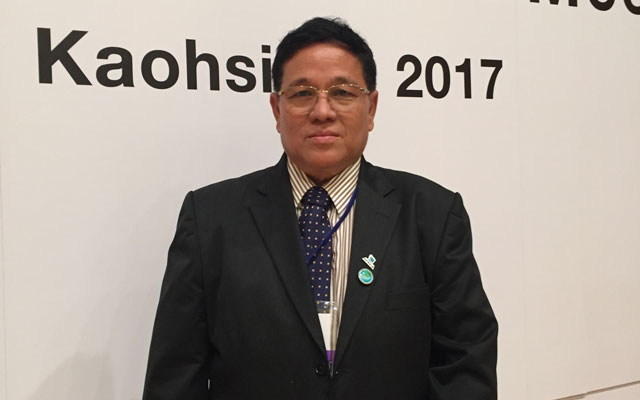
MECA president Myo Thant, who is also joint secretary-general of the Myanmar Federation of Chambers and Commerce & Industry, made the call during the AFECA-IAEE Joint Meeting held in Kaohsiung on September 5.
Myo Thant: Venue infrastructure in Yangon still very limited, foreign investment needed
Myo Thant said: “Regional and international exhibtions from countries such as Thailand, Vietnam, India and (South) Korea have been increasing year by year since 2012. The problem is venues in Yangon are limited and the largest is a 4,500m2 tented facility.
“Myanmar wants investors and developers. A new foreign investment law is (currently) being drafted to help us get the support to build venues,” he added.
Meanwhile, MECA is also looking for funding to support the association as it seeks to expand its membership – which has more than 40 members – and to develop manpower in the industry.
“We have requested help from Taiwan External Trade Development Council and Thailand Exhibition and Covention Bureau to train local organisers and educate the government to show the industry’s foreign exchange value and potential,” he said.
MECA has already applied to join AFECA, and as such Andrew Kay, chairperson, marketing/membership recruitment sub-committee, indicated that the regional body “will do something when MECA becomes a member as more and more countries want to enter Myanmar to do business”.
Malaysia agrees on green lane reciprocal travel bubble with Indonesia
Business events are the catalyst for socio-economic growth of a country, emphasised Malaysia’s tourism and culture minister, Mohamed Nazri Abdul Aziz at yesterday’s launch of the Malaysia Business Events Week 2017.
He stressed: “The impact from hosting international business events not only stretches beyond direct spending and job creation, but also amplifies the benefits beyond tourism. The legacy impact of hosting business events in Malaysia will help power Malaysia’s continued development as a knowledge and creative society.”
Business events will help Malaysia’s development as a whole
And Malaysia is making strong progress towards this end, with the first eight months of 2017 seeing 73 business events being secured for the country. These translate to approximately 60,665 delegates and RM555.5 million (US$132.1 million) in estimated economic impact.
Topping the list is the medical and pharmaceutical sector with 22 events, 20,900 delegates and RM166.5 million in estimated economic impact; followed by the education sector with nine events, 12,850 delegates and RM146.8 million; and the science and technology sector with 12 events, 5,663 delegates and RM57.1 million.
Upcoming international business events in 2018 include the World Urban Forum in February, WorldChefs Congress in July, World Library and Information Congress in August and World Cancer Congress in October.
Business events, Malaysia,According to Mohamed Nazri, China, a key source market for business events and leisure travel to Malaysia, received a boost through the government’s decision to enable eVisa applications from China last year, which resulted in a 26.7 per cent increase in Chinese tourist arrivals last year to 2.1 million.
This year, the government is targeting three million Chinese tourists. On the business events front, from 2011 to 2017, Malaysia received a total of 359 business events from China, which translate to more than 97,840 Chinese delegates who travelled to Malaysia for business events, bringing about an economic impact of RM1.339 billion.
The newly-opened Ritz-Carlton, Bangkok anchors the One Bangkok development with cosmopolitan elegance. Featuring the city's largest ballroom and a spectacular new penthouse suite, it delivers exceptional hardware and deeply authentic, soulful service for business and leisure travellers alike
Behind the imposing, Brutalist concrete that defines Zurich’s Oerlikon district lies a surprising secret. While its exterior honours the neighbourhood’s industrial roots, stepping inside Mama Shelter reveals a vibrant, neon-soaked world that is a far cry from its rigid shell
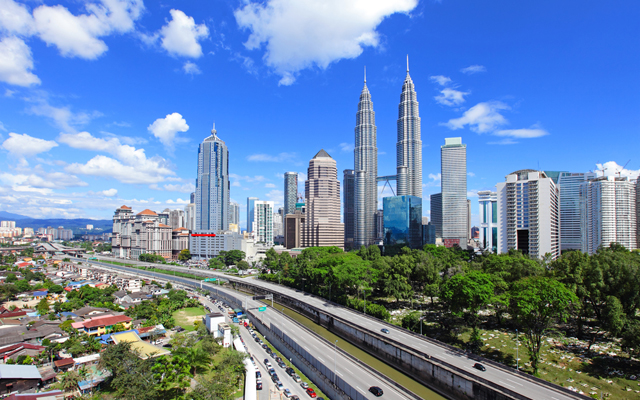
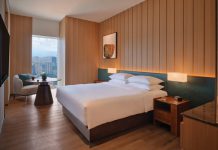
A polished urban retreat designed for business travellers, Hyatt Regency Kuala Lumpur at KL Midtown combines thoughtful design, seamless service, and exceptional facilities.