Asia/Singapore Saturday, 3rd January 2026
Page 863

Primed for performance: Kuala Lumpur

0

With a weak ringgit, affordable hotel rates and better hardware, the stars are aligned for Kuala Lumpur’s MICE sector to prosper. By S Puvaneswary

The main gateway into Malaysia, Kuala Lumpur is benefitting from a weak ringgit, affordable hotel rates and improved infrastructure which altogether are driving business events to the city, revealed inbound agents.

Inbound agent, Nanda Kumar, managing director of Hidden Asia Travel & Tours, had seen a 20 per cent increase in meetings and incentives from Indonesia during the first 10 months of 2016, up from 2015.

Kumar explained that “reasonable” rates at quality city hotels with updated hardware had helped.

“I can get agent rates of RM350 (US$78) to RM450 for a five-star international branded property in the city. Five-star rates here are similar to four-star options in Indonesia,” he said, adding that clients can also enjoy many new upscale properties and refurbished older ones that meet global standards.

Arokia Das, senior manager at Luxury Tours Malaysia, said his company witnessed strong growth in regional markets such as Indonesia and the Philippines, especially for meetings and incentives, catalysed by a weak ringgit and new products that expand pre/post-conference options.

“Kuala Lumpur City Hall and Kuala Lumpur Tourism Bureau has invested a lot in making the city more attractive to tourists, and this has helped us to promote the destination to business event organisers and to come up with creative itineraries,” Arokia said.

“For example, restaurants and bars at high elevations, such as Atmosphere 360, Marini’s on 57, Nobu Kuala Lumpur, SkyBar and Heli Lounge Bar, make excellent (venue)choices for events. Organisers are willing to pay for unique experiences and great views. These restaurants and bars are also very conveniently located in Kuala Lumpur City Centre and around Kuala Lumpur Convention Centre,” he said.

Getting around Kuala Lumpur City Centre has also gotten easier for event delegates looking to explore the city in their free time. Kuala Lumpur City Hall built covered walkways linking shopping malls in the Bukit Bintang area with its surrounds in late 2014. Shoppers can use a 4.5km sheltered elevated walkway that links Berjaya Times Square, Sungei Wang Plaza and Pavilion Kuala Lumpur.

Abdul Rahman Mohamed, general manager at Mayflower Holidays, told TTGmice: “We have seen increased demand for meetings and incentives from regional markets such as Thailand, Vietnam and Cambodia, and we think one of the reasons for choosing Kuala Lumpur is their increased buying power thanks to a weakening ringgit.

“Many organisers like to stay in the city centre because of the many shopping options available.”

China, a darling source market for many leisure and business events destinations, is also on the radar of Malaysia’s tourism industry and the country’s government has established an e-visa facility in March for Chinese passport holders to facilitate their arrival. This is a boon for Malaysia’s business event organisers, as visa processing duration has been greatly reduced from five working days to just one.

Through the e-visa, Chinese visitors can stay up to 30 days in Malaysia.

Abdul Rahman said: “This has made it hassle-free for Chinese event delegates to obtain a visa. Kuala Lumpur is always the preferred choice for the Chinese to hold their meetings and incentives because it is the main gateway and has infrastructure for large meetings with a few hundred to thousands of delegates. It also has tourist elements such as shopping, nightlife and nature-based activities like jungle treks and canopy walks.”

He added that sightseeing options outside of Kuala Lumpur, such as to Kuala Selangor, Royal Selangor Visitor Centre and Sunway Lagoon, can also be arranged easily.

Malaysia1

{Talking numbers}

1Scheduled for completion in 2018, Kuala Lumpur Convention Centre’s expansion will provide an additional 10,000m2 of flexible and multi-purpose space over three floors. The foyer areas on levels one and three will link directly to the existing facility. There will also be three levels of underground car parks with 1,500 spaces, two levels of retail and F&B outlets, a sky garden overlooking a park and a rooftop restaurant.  After expansion, the Centre will offer 30,059m2 of space, making it ideal for larger international association meetings and concurrent events.

2

Taman Tugu, designed as a lush forest reserve with more than a thousand species of tropical trees, will emerge at the back of Tugu Negara National Monument. Costing RM650 million (US$155 million) to build, the attraction will have its phase one ready by 2018. There will be camp sites, jungle treks, lakes and a water park, as well as an outdoor venue for events. Walkways have been planned to connect it to Taman Perdana Botanical Gardens and other tourist attractions in the area, including the National Museum and KL Sentral.

3Famous for being a hive of delicious street food, Jalan Alor is up for an upgrade and its new face will be unveiled in 1Q2017. New landscaping and lighting works can be expected to elevate the dining experience. Jalan Alor is very accessible, with many four- and five-star hotels within close proximity.

Dev-Pix

{Developments to Watch}

MalaysiaTalkingNumbers

The hotel connection

0

CWT’s Matt Brennan talks to Karen Yue about his role as vice president of hotel operations and why it is a critical function

Yours is a newly created position and for a division that is rather rare in a TMC. Why is it critical for CWT to have a Hotel Operations division and how will this benefit CWT’s clients and their travellers?
The landscape of business travel is changing and CWT is making bold investments in innovation and our people. Hotels are a key focus area for us and I believe there’s still a lot than can be done to improve the traveller experience in this space.

Having a dedicated Hotel Operations organisation will enable us to implement solutions faster and more systematically across the world.

CWT already has a tremendous amount of hotel content – nearly 500,000 properties around the world. The challenge is making this content available to all our clients across the globe. The Hotel Operations division will be responsible for streamlining implementation, and ensuring that the hotel content we offer our clients is available across all our booking channels, both offline and online, and across all markets.

This approach will help us provide a more consistent hotel booking experience for our clients. It will also enable us to provide better value for clients and their travellers by helping us contract the best rates and availability with hotels.

I am excited to be in a position to help CWT really focus on the dynamic hotel and accommodation needs for businesses and their travellers. In order to create a seamless and consistent experience for travellers, we will pursue a deeper understanding of the different travellers in the client’s organisation during an accelerated and specialised onboarding process. This way travellers are even more satisfied with their tailored experience, faster.

Does sharing economy accommodation suppliers sit within the care of your division? Airbnb struck a partnership deal with CWT in mid-2016. How do you balance them with your traditional hotel suppliers?
All of our accommodation supplier relationships are managed by our Hotel Supplier division.

We are in process of implementing our first pilot clients with Airbnb and this will help us understand the real appetite for these suppliers in the managed corporate travel space. A study published by CWT Solutions Group (*) indicated that just 2.5% of travellers whose travel policies allow Airbnb bookings have actually used it. We already know that the sharing economy is a key option in hotel pricing for markets in Asia-Pacific including Japan, Australia and New Zealand. Drivers include a lack of supply and prices up to 50% cheaper than a comparable hotel option.

On the other hand, traditional suppliers like hotels and serviced apartments offer a high level of service and consistency across their properties, which is difficult for sharing economy providers to match. Moreover, travellers that require assurances such as fire detection systems, deadbolt locks, safes and more, may not find these services in sharing economy property.

That said, some companies like Airbnb and Uber have launched offerings targeted specifically at business travellers that aim to address many of these concerns around safety, service and consistency.

Ultimately, the decision on whether to include services like Uber and Airbnb in a travel programme lies with the client. These services are a good fit for some travel programmes, but they may not be right for all. Whether or not the sharing economy is a good fit for any given company will depend on their company culture, their appetite for something new, and their risk management policies, among other things.

Corporate clients’ regard for sustainable meetings and events is growing, and in a recently published study on Chinese Meetings & Events Meetings & Events habits by CWT, 52.6% of respondents voted sustainable meetings and events as an important trend. How does this impact your work with hotel partners and matching them with this growing focus on green events?
When working with hotel suppliers, we can facilitate a request for a summary of their green initiatives to share with our clients. This reinforces the precedence that these are important to us and our clients.

Although 52.6% of respondents surveyed voted sustainable meetings and events as an important trend, this was actually the lowest ranking element. This is an indication that the meetings and events industry in China is in an early phase of its development, where consolidation of spend and suppliers, as well as adoption of technology, remain the top priorities.

For Meetings & Events clients, consolidation of meeting spend is at the top of the list. There is a stronger focus on knowing the suppliers you are working with, which in a lot of cases includes a screening process by a third party. Working with a reduced number of suppliers makes this process easier and more cost effective.

How do you foresee hotel consumption performing in the various global regions in 2017, with macroeconomic considerations in mind, and how do you expect hotel partners to respond in terms of corporate rates and offers?
We are seeing relatively low, inconsistent and in some cases fragile economic growth. Hotel rates globally will grow slowly, with the biggest impact in the Americas where rates are expected to increase by 4% (*). Mega hotel mergers are grabbing headlines, but their impact on prices likely won’t be felt until 2018. Hotel services such as room service, laundry and security remain important to corporate travellers. Traditional hotels, therefore, remain an attractive option for business travellers, despite the sharing economy options.

(*) 2017 Global Travel Price Outlook, July 2016
(**) The sharing economy: Here to stay. Now what?


Hilton Singapore unveils two refurbished spaces

0

Hilton Singapore has had its two meeting spaces – the pre-function space and ballroom on the third floor – refurbished by FBEYE International.

Boasting 280m2, the pre-function space’s ceiling has been painted white to complement the chandelier. The pre-function space is also equipped with customised cabinets that can be transformed into an open-concept coffee or beverage counter, a full bar, and display/merchandising opportunities.

As well, the new 631.5m2 ballroom has been refurbished and has the capacity to accommodate 550 guests banquet style. Sporting dark timber walls, the ballroom’s four chandeliers were made from hand-blown glass rods with intertwined crystals lit up by hundreds of LED lights. The ballroom also features movable walls – that allows the space to be converted into three smaller rooms – as well as advanced AV and IT capabilities.

New leadership at SACEOS

0

SACEOS has made two executive appointments, with Shirlena Soh named executive director starting today, and Anita Tan director of events and sales effective November 21.

As executive director, Soh will be responsible for growing the association’s financials and keeping them sustainable, in addition to providing the leadership to build and manage the secretariat.

Soh was most recently director of business development and operations for Human Genome Organisation International.

Meanwhile, Tan will be responsible for the marketing and promotions of SACEOS events including the Singapore MICE Forum and 1-2-1 Asia Business Meet.

A travel industry veteran, Tan was previously head of travel at AIG and chief operating officer at NATAS.

AIME launches 10 new programmes for buyers

0

The Asia-Pacific Incentives and Meetings Expo (AIME) has launched 10 Melbourne city experiences, an addition to the 2017 Hosted Buyer programme.

Each tour will visit three locations, and hosted buyers can choose from a range of Melbourne experiences such as going behind the scenes at Luna Park, flying in a helicopter to view the city’s iconic landmarks, or exploring the Melbourne Cricket Ground on a custom tour of the arena.

Melbourne Convention Bureau has partnered with a selection of venues, accommodation and attractions across the broad business events sector, emphasising unique products and services that best showcase Melbourne to event organisers through these 10 tours.

AIME will be held February 21-22, 2017. Hosted buyers attending AIME 2017 will be able to experience industry-leading education programmes, peer-to-peer networking sessions, appointments with event suppliers from across the globe, as well as complimentary travel and luxury accommodation.

Anthony Wong recognised by ICCA for his contributions to MICE industry

0

Anthony Wong, group managing director of Malaysia-based Asian Overland Services Tourism & Hospitality Group, was presented with ICCA’s Moises Shuster award from ICCA president Nina Freysen-Pretorius during the recent 55th ICCA Congress in Kuching, Malaysia.

Named after one of ICCA’s founders, this prestigious award is ICCA’s highest honour. It is given to an individual who has contributed to ICCA’s development, as well as achieved great success during their own career in the international meetings industry.

Companies should include mid-level performing staff in travel incentives

0

While corporate companies typically reward their top tier performing employees with incentives, they should not neglect the rest of their staff, said David Litteken, vice president, BI Worldwide Asia Pacific, an events and engagement specialist.

Speaking to TTGmice e-Weekly at the sidelines of the ICESAP Conference last week, Litteken said: “Traditionally companies have quarterly travel programmes to motivate their top performers – which ranges from the top five to 15 per cent. However, this structure of just recognising the top performers is chiefly a tool to retain top talent, and it does not guarantee top revenue growth.


David Litteken

“If you are rewarding just the top 10 per cent, there will be at least 60 per cent of the staff who may see that this travel opportunity is not within their reach and they will just shut down. We need to urge corporates to tap into the mind in the middle,” he added.

Litteken suggested curating tiered groups where short-term travel incentives can be organised for varying performers, or travel incentives be provided for first-year staff.

“For example, your rising star who just started may be in the bottom low performing group or buried in the middle performing. You don’t want to lose them, so call them up early and motivate them,” he said.

When asked if this could mean additional expenses for companies, Litteken said the investment “would mean incremental revenue, which can then fund this additional budget. It may even exceed the ROI”.

However, a corporate services provider who wished to remain anonymous said companies were still likely to be more conservative and stick to just motivating the top-tier performers.

He said: “Top performers are still their biggest priority.”

Litteken concluded: “I am not suggesting that corporates turn their incentive travel programmes upside down but I think they can use a methodical approach, try out different structures and modify them.”

PCEB lays out its two-year action plan

0

The newly formed Penang Convention And Exhibition Bureau (PCEB) has laid out its two-year plan for 2017 and 2018 in a bid to attract more business events to the state.

Its CEO, Ashwin Gunasekeran, shared that PCEB will continue to use its three-year brand campaign, Experiences Unfiltered, that was conceptualised in 2016.

Gunasekeran added that in 2017, PCEB will also look into attracting more meetings and incentives from China and India by jointly participating in roadshows organised by MyCEB in China, as well as organising its own calls to metro cities in India.

The second edition of the state’s Meetings Planners Guide will also be published next year and it will include new sections such as listings of business events suppliers and restaurants, in addition to existing sections on hotels, unique spaces and convention centres.

The bureau also identified international conferences and meetings in the medical, electronics and science industries as its core interest, in hopes that these events and experts in attendance will help to develop local expertise and knowledge.

Currently, the state has close to 400 multinational companies in the electronic sector in Penang, and the state is also the top destination in Malaysia for medical tourism – approximately 60 per cent of the nation’s medical tourism receipts is derived from Penang.

Soon-to-open Setia SPICE expected to boost Penang’s MICE competitiveness

0

More details of Penang’s largest convention and exhibition venue has been revealed as its opening draws closer.

The RM350 million (US$78.78 million) Setia Subterranean Penang International Convention and Exhibition Centre (Setia SPICE), which will open in March 2017, will be the first solar hybrid convention centre in the world, have a seven-acre park on the rooftop which will house a spice garden and a playground for children with special needs, a 4,546m2 pillar-less ballroom that can accommodate 8,000 people in theatre style and be sectioned into four smaller halls, among other features.


Setia SPICE

Setia SPICE is part of an integrated project which includes the refurbished Penang International Sports Arena – now known as Setia SPICE Arena – with capacity for 10,000 people in theatre seating and can be used for plenary sessions, the Setia SPICE Aquatic Centre, and the Setia SPICE Canopy recreational area. By 2019, a four-star business class hotel with 453 keys will join the mix.

Koe Peng Kang, executive vice president of S P Setia, believes that the green credentials of Setia SPICE will give the complex an advantage in courting international clients who have a strict CSR policy and prefer to work with like-minded suppliers.

Senior manager, Yeoh Kheng Ho, said Setia SPICE, is looking at a business mix of 80 per cent local and 20 per cent international business in its first year of operations.

Ahead of its opening, the complex already has a stream of bookings, comprising annual dinners, weddings, small local conferences and meetings, said Yeoh. Two large international conferences are also in the bag, one of which is for over 8,000 people in May.

With this dedicated centre complemented by 2,000 rooms within a 10km radius, Penang Convention and Exhibition Bureau will be able to bid for large conventions that require many breakout rooms, said its CEO, Ashwin Gunasekeran.

Hooi Lai Ngoh, honorary secretary of the Malaysian Thoracic Society and Malaysian Medical Association Penang Branch chairman, said Penang’s newest convention centre will fulfil the need for a single venue large enough to support massive medical meetings that usually have several concurrent sessions and an exhibition component.

Tony Goh, honorary secretary for Malaysian Association of Hotels Penang Chapter, said the state needs more business-class hotels to support Setia SPICE and the projected increase in business events once the centre is operational.

Currently the state has an inventory of around 11,000 hotel rooms and an average occupancy rate of over 60 per cent.

Weak ringgit helps to boost inbound MICE business

0

Malaysian inbound MICE players and suppliers have seen a further spike in business due to the weakened ringgit in light of the US election results last month. The currency has fallen nearly seven per cent since November 9, 2016, and today, the ringgit is trading at RM4.43 against the US dollar.

Arokia Das, senior manager at Luxury Tours Malaysia, revealed on the sidelines of the recent BE@Penang that incentive travel business from India and Indonesia for 1Q2017 was at least 20 per cent better than the corresponding period in 2016. He said that many organisers had locked in the rates in November as they thought the ringgit was at its lowest.

However, he shared that forward bookings from Thailand and the Philippines were slow. For Thailand, it was because business trips are being put on hold as the country mourns the passing of its King.

Das predicts that business would pick up from these two markets in early 2017.

Koe Peng Kang, executive vice president of S P Setia, also expects the weak ringgit to encourage local organisers to keep their events on home ground due to budget constraints.

Francis Teo, head, convention centre, Setia City Convention Centre in Selangor, added that the weak ringgit has also given rise to more Malaysians joining multi-level marketing programmes to further supplement their incomes. His centre has seen an increase in direct selling events as well as insurance related ones.

When asked for his outlook for 2017, he hopes that it’ll be a better year.

Reviews

Hyatt Regency Kuala Lumpur at KL Midtown

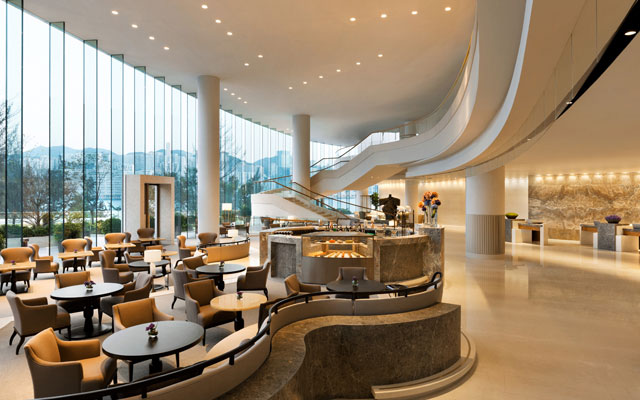
A polished urban retreat designed for business travellers, Hyatt Regency Kuala Lumpur at KL Midtown combines thoughtful design, seamless service, and exceptional facilities.


A versatile powerhouse

Arena @ Expo, a multipurpose concert hall at the Singapore Expo is a flexible space for high octane concerts and lifestyle events.

Amari Bangkok

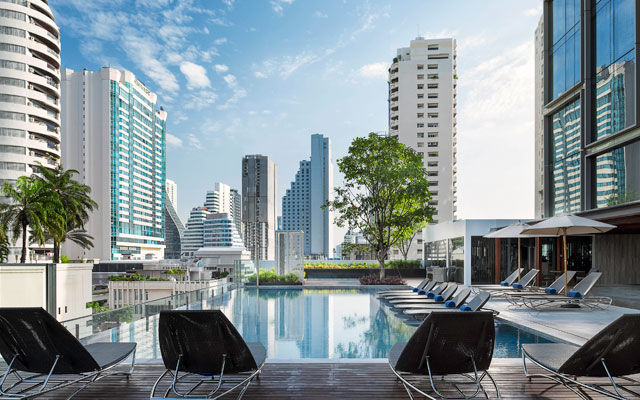
The five-star property excels in backing its expansive facilities with seamless service and personalised attention, setting the benchmark for luxury in Bangkok.