Asia/Singapore Thursday, 9th April 2026
Page 903

GCCEC wins bid for 2018 communications conference

0

gccec_day_image
Gold Coast Convention and Exhibition Centre

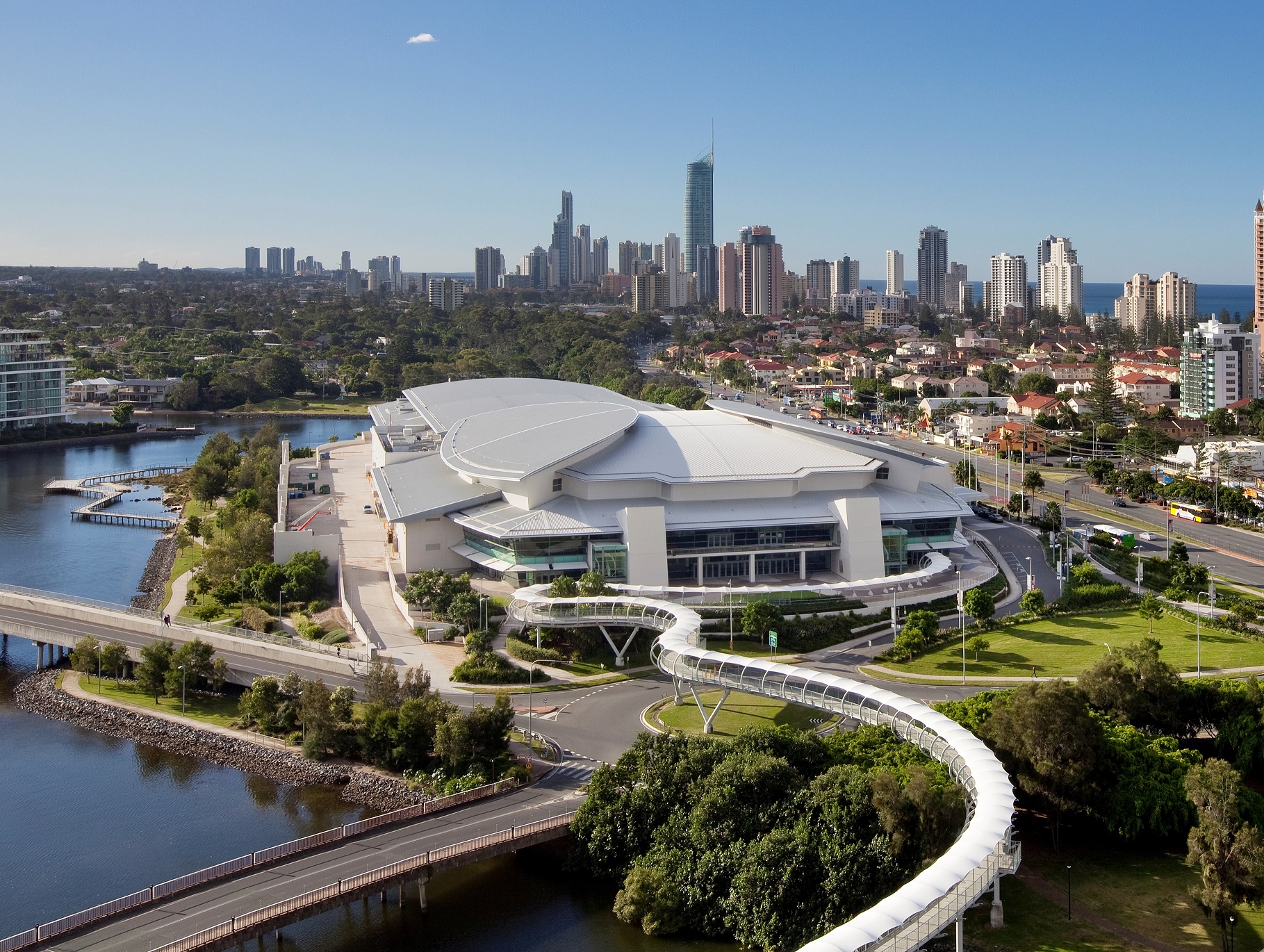
THE Gold Coast Convention and Exhibition Centre (GCCEC) has won the bid for the 2018 International Society for Augmentative and Alternative Communication (ISAAC) conference.

To be held from July 21-26, 2018, more than 1,200 delegates are expected to attend the 18thbiennial event. Themed Access All Areas, the conference will see participants discuss technology and challenges associated with augmentative and alternative communication (AAC).

ACC is a set of tools and strategies that millions use worldwide to overcome complex challenges associated with the inability to use natural speech to communicate. Those affected include various disorder sufferers, victims of stroke and traumatic brain injury, temporary medical conditions and young children who are at risk of developing communication disorders.

Ease of accessibility and mobility to and from the destination, and to the GCCEC, were paramount considerations for the Canada-headquartered society. A diverse delegation consisting of users of AAC, their families, therapists, teachers, students, doctors, researchers, organisations and companies that make communication aids meant that numerous factors were considered before awarding the bid to Gold Coast.

The accessibility and infrastructure legacy of the upcoming 2018 Commonwealth Games proved highly appealing for conference organisers. Nearby Gold Coast International Airport and the wheelchair accessibility of the Gold Coast light rail, which stops directly in front of the access-friendly GCCEC, will provide ISAAC delegates with a world-class public transport network supportive of their needs.

Lead bid organiser and president of ISAAC Australia chapter, Gayle Porter said the affordability and affinity with the destination will enable more people in the Asia-Pacific region to discover more about AAC by attending the conference.

“We hope that attracting this international conference will stimulate conversations and draw awareness for people who use ACC, who sadly are all too often relegated to age care housing facilities, because of their complex communication needs,” said Porter.

Creative tourism suppliers to headline upcoming KTO roadshow in Singapore

0

NINE winners from past years’ Tourism Venture Contest, an event by Korea Tourism Organization (KTO) to identify and encourage tourism entrepreneurship as well as incubate creative tourism products and services, will head to Singapore for the first time on November 4 for a destination showcase targeting leisure and MICE travel buyers.

A spokesperson with KTO Singapore office told TTGmice e-Weekly this unique B2B showcase, named The Korea AdVenture 2016, is her team’s first collaboration with the Tourism Venture Team.

She said: “The contest has proven to be a great success (since it began six years ago). To date, 297 shortlisted proposed projects have taken off and the start-ups have created a total number of 756 jobs.”

The nine tourism companies that will be featured along with other tourism suppliers are:
– Purecoism, which offers adventure activities in natural surroundings as well as CSR programmes;
– DMZ Spy Tour, which spotlights the Korean War and North Korean spies in the 1970s while calling at tourist spots within the DMZ zone;
– Artee Riders Club Co, which has a fleet of 20 pedi-cabs operated by young, multilingual riders who take passengers on an hour-long heritage journey through Seoul’s old alleys and to museums and the Bukchon Hanok Village;
– Wabadada Co, which specialises in eco-friendly soft adventure and leisure facilities in Gangneung, Gangwon Province and is known for pioneering South Korea’s first costal zip-line adventure;
– Hong Camp, which specialises in healing camps and workshops by weaving in psychotherapy and outdoor experiences;
– Campusstay, which had created a patented online reservations platform for empty university dormitories as an alternative form of travellers’ accommodation;
– Hanboknam, a hanbok rental provider with photography services;
– HAERA Inc., which offers traditional and modern culture programmes such as the K-pop Dance and Vocal Experience and mask-making;
– Modern Han, which manages a team of 150 traditional artists who can provide unique experiences at private events such as traditional painting demonstration, traditional-modern fusion music performances and cocktail showcase using traditional liquor.

The event will feature 20 to 25 sellers in all, and KTO Singapore office expects to see at least 250 “quality buyers” in attendance.

Davao beefs up MICE programme with numerous perks

0

kennedy-kapulong
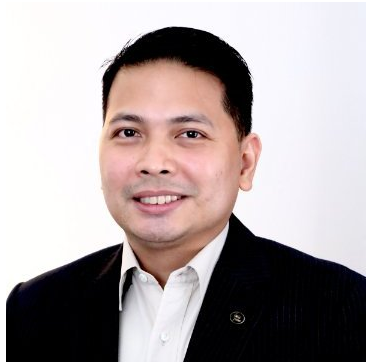
Kennedy Kapulong

DAVAO’s MICE programme will have more perks than ever starting next year. Titled Let’s Meet in Davao 2017-2018, MICE Davao chair Kennedy Kapulong said that the programme is designed to give delegates a better experience, along with discounts and incentives.

Depending on the size of the MICE group, perks include experiential travel packages from tours consortium partners; complimentary massages from the Davao Wellness Association; and complimentary or discounted meeting rooms at SMX Convention Center Davao. Moreover, for the first time, Cebu Pacific and AirAsia will be participating in the programme to offer a special MICE group rate.

Other sweeteners include hosted fam tours for inspection teams; special rates from hotels, shopping centres, restaurants and car rental agencies; in addition to the usual airport reception and welcome kits.

Kapulong said Davao is MICE-ready with over 8,000 licensed rooms, increased air links, and a convention centre that can host large events with up to 5,000 pax, among other things. He added that there are more active partners in the year 2017/2018 due to the commitment and support from both the private and public sector.

He told TTGmice e-Weekly that “the overall experience from pre-convention up to the convention dates have been tailored to provide guests and visitors a seamless and holistic experience” and that they wanted to “double the results from 2016”.

Maximising value through better-managed travel procurement

0

FOR procurement professionals, cost savings and tailoring organisation requirements according to compliance considerations have always been a priority. Yet, beyond just clinching discounts for their company, procurement professionals have started to take on more strategic roles within their businesses, one of which includes travel management.

With a broad range of responsibilities to juggle each day, procurement professionals often outsource travel management functions to travel management companies, some of which include evaluating and negotiating with travel service providers.

While these partnerships generally work well, if left unattended or managed poorly, there is a risk of standards slipping in the travel programme. According to data from a report released by HRS in early 2016, hotels are a key area where these standards may slip.

Furthermore, research by the Chartered Institute of Procurement and Supply indicates that a well-documented, well-implemented and well-monitored policy can reduce travel costs by at least 10 per cent and up to 30 per cent. With these savings in mind, procurement managers stand to maximise the value they are getting from the money spent on travel by closely monitoring the following key areas:

Finding the best value

When it comes to hotels, pricing can be confusing and inconsistent. Whenever someone books accommodation, they most probably would have gotten a different price for the same hotel by booking via another channel.

Travellers therefore often assume that open booking allows them to secure the best value for their accommodation. According to an internal survey conducted during the 2016 Corporate Travel Forum in March, 78 per cent of travellers believe that open booking provides them with better rates, while another 69 per cent do it out of habit.

However, lower rates do not necessarily equate to best value. Findings from the same survey reveal that over 50 per cent of open booking rates do not include breakfast or Wi-Fi connectivity; more than 60 per cent of open bookings are not accompanied by a flexible cancellation policy; 23 per cent involve a more tedious travel expense process; and 57 per cent of firms do not know where their travellers are, thereby compromising on duty of care.

Streamlined MICE solutions can help companies save time and costs spent on tedious research, and one way of optimising the procurement procedure is through HRS’ Intelligent Sourcing – a five step process in which we source, negotiate with and constantly refresh companies’ hotel portfolios based on their individual travel data. This provides not only the ideal value-for-money ratio, but also full transparency and predictability as compared to dynamic, volatile daily rates.

Ultimately, procurement professionals need to be convinced that their travel partner fully understands all the various rates that exist, is able to benchmark these against their data, and has the flexibility to clinch the best available rate.

Ensuring a simple payment solution

From our conversations with procurement professionals, we found that payment and expenses processes are a common source of frustration. As travel should be quick and easy to manage for both employees and procurement managers alike, time-consuming payment processes can be a serious problem, but it is one that can be avoided.

Some companies use more than one option for managing payment. For instance, some require employees to pay on personal cards or company cards and then expense back, while others use a bill-back system where the travel partner pays the hotel bill and then invoices back to the company the cost of the room as well as other additional costs.

These methods lack transparency, and can be complicated and expensive. To alleviate these pain points, procurement professionals can partner hotel specialists that offer digitised payment solutions. One example is an automated process that collects and integrates all booking, payment and invoice data, dramatically streamlining the expense process.

Moving beyond chain hotels

Many travel procurement managers are hesitant to incorporate independent hotels into their travel inventory due to security concerns and the fear of compromising on duty of care. This echoes the sentiment expressed by business travellers themselves, with 75 per cent of survey respondents saying that they prefer the safety of a chain hotel, in comparison to 21 per cent who would select independent hotels, according to a survey conducted by the Guild of Travel Management Companies in June.

However, in a market where hotel chains are becoming more consolidated and with younger travellers looking for more variety in their accommodation options, relying on a few players may not necessarily be the best strategy. In order to build market intelligence, procurement managers need to source more widely and talk to the entire market. This brings about cost savings opportunities too, given that hotel chains tend to absorb higher overhead fees when managing their brand distribution – as opposed to smaller, independent chains.

We are witnessing the slow shift towards independent hotels across Asia-Pacific, a region with a high proportion of millennial travellers. HRS data shows that the hotel market in the region already has an independent hotel supply at approximately 80 to 90 per cent.

With independent hotels slowly becoming the reality of business travel, HRS works to offer more choices with its portfolio of business-grade independent hotels.

Providing access to 180,000 independent hotel properties that fit into the framework of business travel programmes both big and small, travel managers are able to seek alternative options for their hotel programmes. So long as sourcing can be done at the same quality and consistency, there will be a time when reliability surpasses the brand as the primary decision-maker of which business hotel to stay in.

At the end of the day, procurement professionals who fully understand how to add value to their current travel programme and work with the right partners will be able to attain the best possible quality, value, payment solutions and advice for their business.

The result?

Even greater savings to their bottom line.

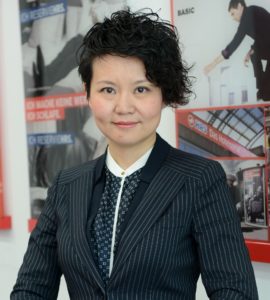
Kimi Jiang is the vice president, Asia-Pacific, of Hotel Reservation Service. HRS is a global hotel solutions provider with more than 40,000 corporate customers worldwide. Her core responsibilities include leading the organisation’s regional expansion across markets like Great China, Japan, Singapore and India. Jiang also initiated the HRS Corporate Travel Forum – an industry event for travel management in China and Japan.

This article is written by Kimi Jiang

IHG brings accommodation support to new Shanghai convention centre

0

hotel_exterior_night_shoot_%e9%85%92%e5%ba%97%e5%a4%96%e8%a7%82%e5%a4%9c%e6%99%af%e5%9b%be

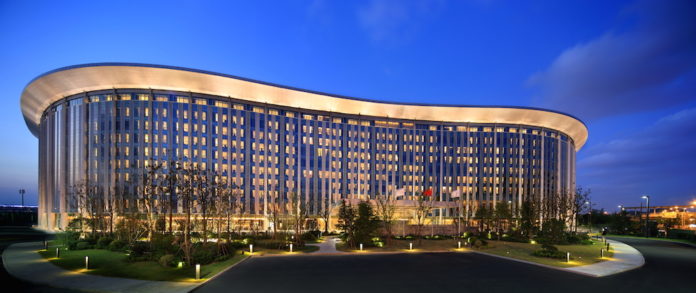
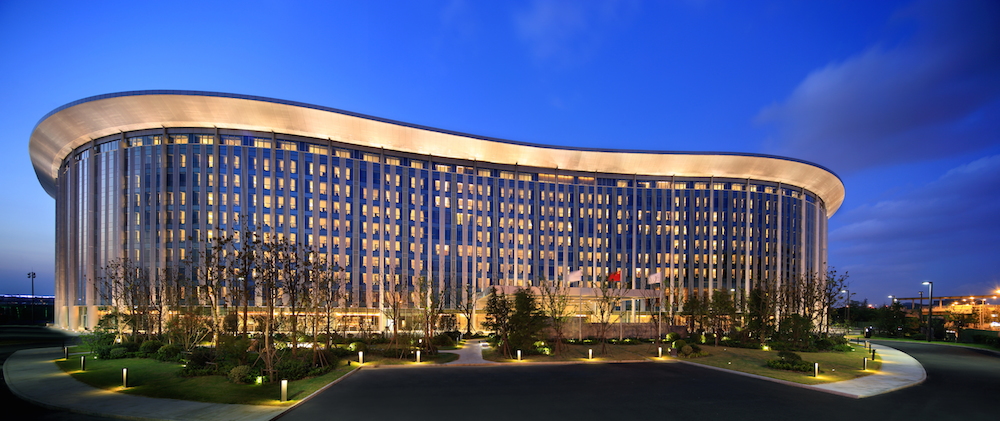
INTERCONTINENTAL Hotels Group (IHG) has opened the only luxury hotel located within National Exhibition and Convention Centre (NECC), Shanghai’s latest MICE venue.

The 536-room InterContinental Shanghai NECC boasts its own collection of events space which totals 2,200m2. These venues are suitable for high-level meetings, banquets and galas. Other facilities onsite include four F&B options.

The hotel sits five kilometres away from Hongqiao International Airport and Hongqiao Railway Station, and is a three-minute walk to Metro Line 2 on the Shanghai subway network. Nearby attractions include Qibao Ancient Town, Zhujiajiao Watertown, Hongqiao Hub and Shanghai Outlets Mall.

Bhaya’s luxury cruises flaunt new enhancements

0

halong_bay
One of Bhaya Group’s newly renovated luxury level vessels

FOLLOWING two months of renovations, Halong Bay cruise operator Bhaya Group has unveiled upgraded rooms and facilities on its two luxury-level vessels, collectively known as The Au Co.

The redesign of the ships’ 64 cabins is complemented by a revamp of onboard facilities, including a new reception area, spa, restaurant, cocktail bar, library and private cinema.

The boats are now fully-equipped to take travellers on 3D2N itineraries encompassing activities such as mountain biking on Cat Ba Island and luxury dinners in Virgin Cave. Previously, The Au Co was able to visit the more remote parts of Halong Bay for one-day excursions only.

“Every year, the twin ships undergo refurbishment lasting at least a month, but after four years in operation, we were looking to offer our passengers something different – an onboard experience that captures both traditional Vietnamese and modern luxury styles,” said Bhaya Group managing director, Ly Thuy Huynh Nhu.

bhaya_the_cabins_room
A cabin room

Guests can get the local experience onboard through taichi sessions, traditional dance performances in the evening and Vietnamese cuisine.

And to minimise engine noise and disturbance to passengers, the exhaust pipe has been moved from the top to the rear of the vessel.

Along with the refurbishments, the boats also underwent a scheduled annual maintenance for all onboard safety equipment.

[PERSPECTIVES] Maximising value through better-managed travel procurement

0

FOR procurement professionals, cost savings and tailoring organisation requirements according to compliance considerations have always been a priority. Yet, beyond just clinching discounts for their company, procurement professionals have started to take on more strategic roles within their businesses, one of which includes travel management.

With a broad range of responsibilities to juggle each day, procurement professionals often outsource travel management functions to travel management companies, some of which include evaluating and negotiating with travel service providers.

While these partnerships generally work well, if left unattended or managed poorly, there is a risk of standards slipping in the travel programme. According to data from a report released by HRS in early 2016, hotels are a key area where these standards may slip.

Furthermore, research by the Chartered Institute of Procurement and Supply indicates that a well-documented, well-implemented and well-monitored policy can reduce travel costs by at least 10 per cent and up to 30 per cent. With these savings in mind, procurement managers stand to maximise the value they are getting from the money spent on travel by closely monitoring the following key areas:

Finding the best value
When it comes to hotels, pricing can be confusing and inconsistent. Whenever someone books accommodation, they most probably would have gotten a different price for the same hotel by booking via another channel.

Travellers therefore often assume that open booking allows them to secure the best value for their accommodation. According to an internal survey conducted during the 2016 Corporate Travel Forum in March, 78 per cent of travellers believe that open booking provides them with better rates, while another 69 per cent do it out of habit.

However, lower rates do not necessarily equate to best value. Findings from the same survey reveal that over 50 per cent of open booking rates do not include breakfast or Wi-Fi connectivity; more than 60 per cent of open bookings are not accompanied by a flexible cancellation policy; 23 per cent involve a more tedious travel expense process; and 57 per cent of firms do not know where their travellers are, thereby compromising on duty of care.

Streamlined MICE solutions can help companies save time and costs spent on tedious research, and one way of optimising the procurement procedure is through HRS’ Intelligent Sourcing – a five step process in which we source, negotiate with and constantly refresh companies’ hotel portfolios based on their individual travel data. This provides not only the ideal value-for-money ratio, but also full transparency and predictability as compared to dynamic, volatile daily rates.

Ultimately, procurement professionals need to be convinced that their travel partner fully understands all the various rates that exist, is able to benchmark these against their data, and has the flexibility to clinch the best available rate.

Ensuring a simple payment solution
From our conversations with procurement professionals, we found that payment and expenses processes are a common source of frustration. As travel should be quick and easy to manage for both employees and procurement managers alike, time-consuming payment processes can be a serious problem, but it is one that can be avoided.

Some companies use more than one option for managing payment. For instance, some require employees to pay on personal cards or company cards and then expense back, while others use a bill-back system where the travel partner pays the hotel bill and then invoices back to the company the cost of the room as well as other additional costs.

These methods lack transparency, and can be complicated and expensive. To alleviate these pain points, procurement professionals can partner hotel specialists that offer digitised payment solutions. One example is an automated process that collects and integrates all booking, payment and invoice data, dramatically streamlining the expense process.

Moving beyond chain hotels
Many travel procurement managers are hesitant to incorporate independent hotels into their travel inventory due to security concerns and the fear of compromising on duty of care. This echoes the sentiment expressed by business travellers themselves, with 75 per cent of survey respondents saying that they prefer the safety of a chain hotel, in comparison to 21 per cent who would select independent hotels, according to a survey conducted by the Guild of Travel Management Companies in June.

However, in a market where hotel chains are becoming more consolidated and with younger travellers looking for more variety in their accommodation options, relying on a few players may not necessarily be the best strategy. In order to build market intelligence, procurement managers need to source more widely and talk to the entire market. This brings about cost savings opportunities too, given that hotel chains tend to absorb higher overhead fees when managing their brand distribution – as opposed to smaller, independent chains.

We are witnessing the slow shift towards independent hotels across Asia-Pacific, a region with a high proportion of millennial travellers. HRS data shows that the hotel market in the region already has an independent hotel supply at approximately 80 to 90 per cent.

With independent hotels slowly becoming the reality of business travel, HRS works to offer more choices with its portfolio of business-grade independent hotels.

Providing access to 180,000 independent hotel properties that fit into the framework of business travel programmes both big and small, travel managers are able to seek alternative options for their hotel programmes. So long as sourcing can be done at the same quality and consistency, there will be a time when reliability surpasses the brand as the primary decision-maker of which business hotel to stay in.

At the end of the day, procurement professionals who fully understand how to add value to their current travel programme and work with the right partners will be able to attain the best possible quality, value, payment solutions and advice for their business.

The result?

Even greater savings to their bottom line.


kimi_jiang_vp_apac_at_hrs

Kimi Jiang is the vice president, Asia-Pacific, of Hotel Reservation Service. HRS is a global hotel solutions provider with more than 40,000 corporate customers worldwide. Her core responsibilities include leading the organisation’s regional expansion across markets like Great China, Japan, Singapore and India. Jiang also initiated the HRS Corporate Travel Forum – an industry event for travel management in China and Japan.

By Kimi Jiang

Grand Hyatt Tokyo preps for Olympics with upgraded event spaces

0

grand-hyatt-tokyo

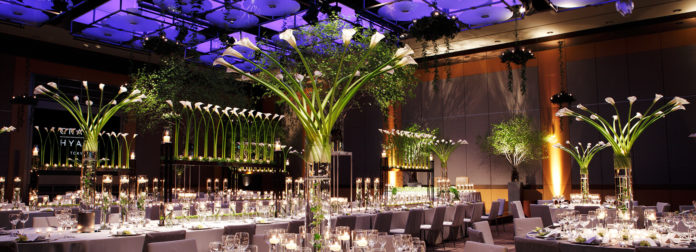
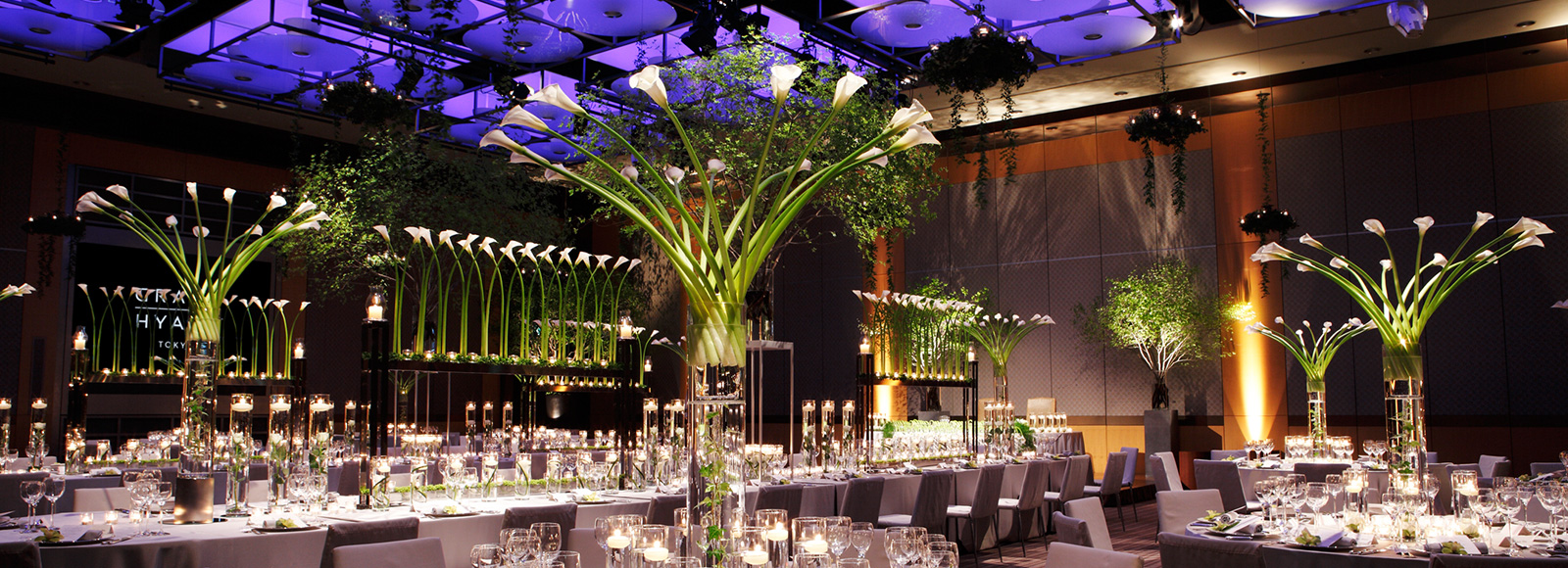
THE Grand Hyatt Tokyo, in the Roppongi district of central Tokyo, has completed a major renovation of its events venues.

Part of a broader drive by the hotel chain to enhance its MICE capabilities throughout Asia, Grand Hyatt Tokyo’s renovation focused on unifying the second floor of the hotel with a cohesive residential design, and expanding and enhancing the Thyme banquet room on the fourth floor. A Poggenpohl show kitchen was also added.

Moreover, there is now direct access to the property’s outdoor garden, while facilities have been spruced up with new technology such as SiliconCore’s high-resolution 192-inch LED display screens. This cutting-edge technology prevents day-time screen glare, making the Coriander room an ideal venue for day-time events and meetings.

“As the host country of the 2020 Olympics and Paralympics, Japan will draw attention from around the world and international visitors will continue to increase,” said Hiroyuki Yamada, director of event sales.

“This means that as we get closer to the Olympics, demand for leisure, MICE and onsite visits of corporations will increase as well,” he told TTmice e-Weekly.

“This is a great opportunity and we hope to see a positive impact on the hotel business and the overall economy.”

The Grand Hyatt Tokyo has hosted events ranging from large-scale movie premieres and financial conferences to luxury car shows and press events.

“Hyatt as a group has a tremendous commitment to MICE. In the past 13 years that we have been in the business, we have been able to consistently renovate our facilities to adapt to the trends and ever-changing demands,” Yamada said, stressing that the hotel intends to “aggressively grow MICE bookings” in the future.

“Our team travels strategically to different parts of the world to generate new business, and we work with Roppongi Hills and local organisations – such as Destination Marketing Roppongi – to achieve a common goal of increasing our MICE business on a larger scale,” he added.

Yamada concluded: “We have had a lot of interest from companies coming to Japan and we would like to establish our position as a leading hotel that can constantly offer creative, innovative and unique personal experiences.”

Asia sees rise in Western show clones

0

CONVENTION and exhibition specialists in Asia have continued to note a growing presence of western tradeshows making landfall in the region.

Executive vice president of Taiwan External Trade Development Council, Walter Yeh, said more exhibition firms from Europe and the US are branching out into Taiwan, China, India, Japan, the Philippines, Thailand, Singapore and Malaysia, encouraged by a growing number of event venues and an attractive market potential.

Rosalind Ng, managing director of Globe International Events Consultancy, told TTGmice e-Weekly that Asia is attractive as “its size is as big as the other side of the world” and its “economy is certainly more positive than Europe’s or the US’ at the moment”.

Ng said: “We have seen major international firms cloning their large-scale events in Asia. For example, international food exhibition SIAL (based in Paris) by COMEXPOSIUM Group has gone into China and the Philippines. The world’s largest building construction show in Munich BAUMA has also cloned a version in Shanghai.”

Besides cloned shows in Asia, newly launched events are coming to town too, added Ng.

China is a natural magnet for Western show owners, thanks to its massive population and strong purchasing power.

Sungoal Exhibition and Convention Co’s former executive president, Daben Mao, said western tradeshows had started to enter China since 2001, soon after the establishment of Shanghai New International Expo Center.

Mao said: “Some German organisers have been aggressively transplanting their brands into China over the past 15 years, and now run many trade fairs in the country.”

UFI’s managing director/CEO, Kai Hattendorf pointed out that Asia’s market appeal is also attracting delegates keen on making contact with partners in this part of the world. He shared that UFI’s events in Asia-Pacific draw people from all over the world.

Indonesia, which witnessed the budding of the trend two years ago, is expected to catch up with China in the next decade, remarked International Energy Credit Association’s chair, Effi Setiabudi.

“And in another 20 years, foreign show organisers may move to Vietnam,” Effi added.

Over coffee with… Marco Baccanti

0

The chief executive of Health Industries South Australia tells Karen Yue why the Adelaide BioMed City can lead the city to MICE success

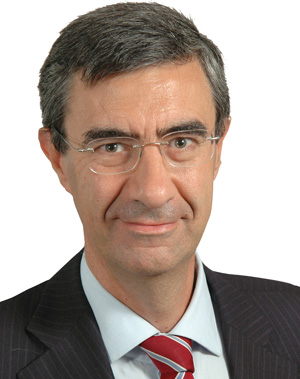
MarcoBaccantiWhy does the development of the Adelaide BioMed City precinct matter to the city’s business events sector?


Adelaide has recently improved its status as an attractive city for the biomedical sector. This is a consequence of an important government strategy (to diversify) local economic development (and) an understanding that knowledge intensive sectors (are more sustainable).

(To build a successful biomedical sector) we need an infrastructure that will achieve critical mass (by bringing) about a combination of academic and clinical research, academic training, therapy for patients and business activities, etc.

This is what the Adelaide BioMed City will do. It is an investment of A$3.6 billion (US$2.7 billion), which for the first time, gives us functions of the full value chain, starting from research at SAHMRI (South Australian Health and Medical Research Institute) and other new buildings that are under construction now.

(It gives us) what we need to raise Adelaide’s global visibility. When it comes to organising a global convention, people prefer to go to a place that is (well known) and now Adelaide is that place.

The government also established Health Industries South Australia which courts global companies that are keen to have operations in Adelaide or in South Australia for…research, clinical trials and commercial activities in Australia and the rest of Asia-Pacific, with Adelaide as the headquarters.

Adelaide scored 45 medical conventions that will be held between 2015 and 2016. Did Health Industries South Australia have a hand in that?

We were involved, in some cases, by approaching the local community of scientists and entrepreneurs. Health Industries South Australia started 1.5 years ago and the first six months was spent contacting and creating awareness among the local community about the opportunities to invest in the city.

Part of our message was this: if you intend to conduct events for your community of companies, researchers and scientists etc, now is the time to do it in Adelaide. For many, it seems like a novel thing. Even people in leadership positions did not think of Adelaide as an attractive place for conventions. That perception has changed.

How is the Adelaide BioMed City different from other biomedical cities?

This industry is multi-disciplinary. In the past, a city will have a big hospital with some clinical research facility inside, a big university and another research centre – and they are not well connected. This is a problem because research today is no longer vertically specialised. Some of the biggest innovations today are generated by  interconnections in different vertical expertise, when scientists and researchers from different disciplines come together and share knowledge.

From the infrastructure point of view, the future must drive maximum permeability between different silos. When you put all the buildings together, people will start meeting, talking and innovating.

Around the world you will find cities with far larger critical mass, but they are not located together as they are here in the Adelaide BioMed City.

What parallels are there between Adelaide BioMed City and Dubai Biotechnology City, where you once led as executive director?

They are very different environment and ecosystems. Adelaide has a strong expertise in research, while Dubai is attractive because of its position as a hub for companies looking to expand their commercial operations in the region.

The one important thing in common is that they are both city-states. For our industry which is highly regulated, this is a big advantage because investors coming into this type of environment enjoy the proximity to government leaders and the opportunity to discuss their growth strategy with the minister. This is the case in Adelaide, but not the rest of Australia.

Let’s do another comparison. Dubai is luring global associations over to open offices there for regional growth. That has resulted in a spike in association meetings in Dubai. Is Health Industries South Australia doing the same?

Yes, this is something that may happen here. Organisations that are based in Europe or the US are now wanting to grow in Asia-Pacific. In the past, they had only the option of Singapore where they can established their headquarters. Now, they have options in Australia – not just Adelaide. Being European or American, companies will feel at home in Australia because the language, culture, infrastructure, education system and legislation are the same.

But why Adelaide specifically? Before, associations looking to expand through a presence in Australia would think of Sydney and maybe Melbourne. Now, because of the Adelaide BioMed City and actions to create a critical mass (in biosciences), Adelaide is in the club of attractive cities.

And they will discover that Adelaide is far more cost-effective than Sydney for instance. Real estate is 40 to 50 per cent cheaper than Sydney, which means great savings for associations looking to rent or purchase office space. Salary in Adelaide is 30 per cent lower than in Sydney for the same type of talent but people here have a stronger purchasing power.

My answer to you is that this is already happening, we are already seeing major associations in Europe and the US chanelling their resources to Adelaide for the establishment of future headquarters.

OverCoffee

Reviews

The Ritz-Carlton, Bangkok

The newly-opened Ritz-Carlton, Bangkok anchors the One Bangkok development with cosmopolitan elegance. Featuring the city's largest ballroom and a spectacular new penthouse suite, it delivers exceptional hardware and deeply authentic, soulful service for business and leisure travellers alike

Mama Shelter Zurich

Behind the imposing, Brutalist concrete that defines Zurich’s Oerlikon district lies a surprising secret. While its exterior honours the neighbourhood’s industrial roots, stepping inside Mama Shelter reveals a vibrant, neon-soaked world that is a far cry from its rigid shell

Hyatt Regency Kuala Lumpur at KL Midtown

A polished urban retreat designed for business travellers, Hyatt Regency Kuala Lumpur at KL Midtown combines thoughtful design, seamless service, and exceptional facilities.