


SilverNeedle Hospitality has appointed Russell Durnell as general manager of NEXT Hotel Brisbane. Durnell has extensive expertise in the pre-opening, opening and managing of award-winning hotels and resorts, as well as 20 years of experience in operations, brand and marketing, industry engagement, sales and corporate relations. He joins from Palazzo Versace on the Gold Coast.
Racing against the clock
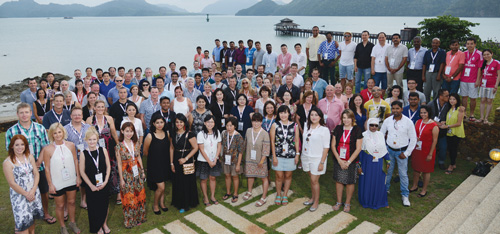

Organising an overseas incentive in six weeks isn’t as daunting when there is good ground support to ensure things run smoothly. By S Puvaneswary
Event brief
This April, the Asia-Pacific branch of global organisation Honeywell Building Solutions (HBS) organised the 2015 Circle of Excellence, an overseas incentive trip to Langkawi for its overachieving employees, who were picked from over 10 countries.
Asian Overland Services Tours & Travel (AOS) successfully bid to be the ground handler in Langkawi and helped with the meet and greet at the airport, as well as organised sightseeing tours and dinner functions.
Challenges
The first challenge was the short lead time to organise the event. Pia Harries, executive assistant at HBS, was the sole person organising and had only six weeks to put things together.
She said: “Short lead times have become typical for Honeywell, partly due to internal processes. I have organised numerous events outside of Australia in the past, so I knew the importance of roping in Malaysia Convention & Exhibition Bureau (MyCEB) as well as getting a reliable ground handler.”
Harries’ plans for the delegates to travel on the former Malaysia Airlines (MAS) had to be scrapped after two MAS tragedies, as half the delegates felt more comfortable flying on SilkAir.
She said: “This was a bit of a blow to the event timeline and budget as it meant an additional two nights hotel stay and meals in Langkawi because SilkAir only flies from Langkawi to Singapore
on Wednesday, Friday and Sunday. This change meant for the first time in over five years of running events, I had to request a budget increase. Fortunately, my senior managers understood the circumstances and were fully supportive of the change to SilkAir.”
For the pre-dinner entertainment on the third day, Harries wanted to create a ‘wow’ experience. The previous year’s incentive event in Thailand had been a real spectacle and she needed to match or exceed that. For the fire and water-themed performance by the infinity pool at Westin Langkawi Resort & Spa, she had to source for 2m-high transparent balls and look for talents who could perform inside these balls that would be floating on water. This was the first time that Wong Kee Yen, AOS’s project manager, was putting this act together and her challenge was to ensure that it went well.

Solutions
Despite the late hotel bookings, Harries described the rates she received as “very good”, attributing it to the slowing MICE market.
She added: “With my budget blown on extra room nights, MyCEB’s provision of room drop gifts, Malay dancers, Batik painting and partial sponsorship of the dinner was a great help. I could relax knowing that the entertainment on welcome night was going to be good.”
Wong said the balls had to be brought from the capital city while three synchronised swimmers, together with a coach, were brought in from Penang a day earlier to rehearse performing inside a ball. The balls were pumped with oxygen to sustain the performers within.
Key takeaways
Looking back, Harries said: “MyCEB was efficient and easy to deal with. Their reminders and timelines were of great help.”
On advice to readers, she said: “If you have any control over timelines, try and have more than six weeks to organise!”
Recalling the performances at the gala dinner, Wong said: “We never used the entertainers before. So we took extra care to check their background and references before engaging them. It was also important to have a rehearsal prior to this event.”

What a smooth operator
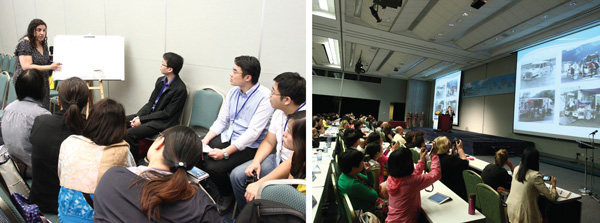
Hiring a professional conference organiser to deal with an event’s nitty-gritty is one way to ensure an effortless experience from start to finish. By Prudence Lui
Event brief
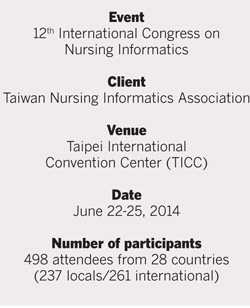
In 2010, Taiwan won the bid to host NI 2014 at the Nursing Informatics Special Interest Group’s General Assembly Meeting held at Medinfo2010 in South Africa.Staging the first-ever 12th International Congress on Nursing Informatics (NI 2014) required much preparation from the 60-member organising team. Initially a triennial occurrence, it was converted into a biennial event in 2012.
The NI 2014 programme comprised a pre-conference, conference and post-conference. A three-day think-tank forum targeted at the future development of mobile health was also included.
Challenges
The 60-member organising committee was made up of volunteers from hospitals, universities and organisations. They were nurses and were too busy to concentrate on this level of organisation.
Also, conference rooms needed to be changed merely a few months before the event to accommodate the number of people registered, which in turn, affected the budget.
But according to NI 2014’s organising committee chairman, Chang Po-lun, it was a well-planned event and there was no major challenge. The only glitch was the unexpected heavy rain which happened when the international VIPs were invited to ride the metro from the conference site to the gala dinner at Huashan Creative Park.
Chang pointed out the one regret the team had: “It (was) the heavy rain! We deployed some volunteers to guide the VIPs to the dinner venue once they stepped out of the metro station. However, (the) heavy rain made everything very difficult (and) everybody got very, very wet!”
Solutions
After asking for recommendations from the Taiwan Nursing Association which had experience in organising international conferences, the committee decided to hire Elite Professional Conference Organiser (Elite PCO) to help meet conference goals and share the workload. This way, committee members could also focus on their own work.
Since the committee didn’t know how to obtain the necessary budget, Elite PCO connected the committee with some sponsors. Around 30 per cent of the budget was sourced by Elite PCO and most of it came from the Taiwan government.
Key takeaways
It’s vital to engage a professional conference organiser as their expertise ensured a smooth running of the event from preparation to implementation.

CVBs must safeguard interest of event owners: Grimmer
CVBs need to start seeing themselves as customer representatives instead of being “official mouthpieces” lest they start losing their credibility, said Gary Grimmer, CEO of convention industry consultancy GainingEdge.
Speaking to TTGmice e-Weekly on the sidelines of the ASEAN MICE Forum on Monday, Grimmer who is the former chairman of the board of the International Association of Convention & Visitors Bureau and former chairman of the Business Events Council of Australia, said: “I think a key (credibility) issue is that most CVBs are structured to be a representative (of their destination and suppliers). When CVBs represent the suppliers, they will always be protecting the supplier’s reputation regardless of the quality of service delivery.”
Providing an example of how CVBs can embrace the role of a customer representative, Grimmer said: “If I were representing a bureau, I would encourage people to visit my website and critique the supplier’s service level. It is only then will CVBs be seen as being more transparent and credible.”
He added: “Suppliers are going to get angry when they receive bad reviews but that is the only way to force them to improve their services, or risk going out of business.”
Hugo Slimbrouck, director of strategic partnerships with Ovation Global DMC, also lamented that CVBs were “not working sufficiently together” with the DMC community which he said were the real experts on the ground.
Sharing this opinion during the opening panel session of the ASEAN MICE Forum, Slimbrouck said: “Very often CVBs would have the whole event plan drawn up on their own, then approach the DMC for sponsorship or to be part of the programme.
“But I do not wait for the CVBs (to come to me); I do the opposite. I would organise the event and then go to the CVB and tell them to do something with what I have.”
Nevertheless, Grimmer underlined the importance of CVBs, saying that “they are vital as they are our hope to developing government support”.
Citing Singapore as an example of a country with a strong CVB, he added: “I like Singapore because it is an example of a modern nation with barely any natural resources. Singapore more than anybody else understands how vitally important it is to have conventions and exhibitions (contributing to its) economy.
“Singapore in general has a reputation for great service and (the Singapore Tourism Board) can continue to encourage radical transparency and move towards engaging communication with consumers beyond providing services to meeting planners.”
Additional reporting by Mimi Hudoyo
Malaysia stands to lose Indian events with MAS’ service cuts
MALAYSIA Airlines’ decision to halve frequencies of air services between Kuala Lumpur and Delhi to daily flights since September 1 had resulted in a loss of MICE business to Malaysia, said agents interviewed.
Suneet Goenka, group managing director of Red Apple Travel in Kuala Lumpur, declared the reduced frequencies “a disaster”.
He elaborated: “It is going to be very difficult to get MICE business from northern India where companies place great value on connectivity and pricing. Many Indian companies book last minute – three to four weeks in advance – and a hybrid carrier like Malindo Air will not give airfares in advance for large groups.”
Goenka revealed that some Indian companies had already removed Malaysia from their list of preferred destinations.
He also warned that reduced capacity on scheduled airlines would lead to higher airfares on the India-Malaysia sector.
Also impacted by Malaysia Airlines’ service reduction is Hidden Asia Travel & Tours in Kuala Lumpur. Its managing director, Nanda Kumar, said: “Many corporate companies in India want their staff to arrive on the same day. Due to this requirement which cannot be fulfilled through reduced frequency, we have lost a number of potential MICE businesses to other destinations.”
However, an agent from Delhi, Rajendra Dhumma, director of Classic Travels & Tours, has downplayed the effect, saying that the weakened ringgit is enough to keep Indian clients interested in Malaysia.
He said that “Malaysia (is) an even more attractive destination” due to the currency exchange in India’s favour.
“(Moreover) many companies in India have also cut spending and will opt to send employees on (cheaper) airlines like Malindo Air,” he added.
Amit Singla, managing director of Scotch & Water Innovations, Bangalore, disagreed. “Organisers who can pay for scheduled carriers will want a direct connection for their groups. The distance from Delhi to Kuala Lumpur is too short for one stop. The suspension of the morning departures from Delhi to Kuala Lumpur will also affect onward connections from Kuala Lumpur for business travellers from India.”
Dilip Masrani, managing director of Favourite Tours & Forex Gujarat, remarked: “Malaysia will lose out to other destinations once Twentieth Century Fox World Malaysia opens in 2016. This will be a very big attraction for the Indian market and will appeal to Indian business event delegates who often travel with their spouses.
“If organisers fail to secure enough seats to Malaysia for their groups, they will simply choose another destination that can offer better connectivity and airfares.”
Big ambitions
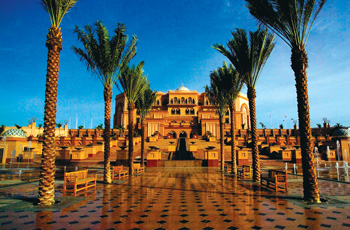
The capital of UAE wishes to continue growing its business tourism sector by offering unparallelled event spaces, upgraded leisure facilities and exceptional hotel spaces. By Feizal Samath
Abu Dhabi is rolling out efforts to entice more business travellers to the region with a host of events lined up in the next few years.
Ranked among the top 100 busiest global meetings destinations in the ICCA global city rankings, efforts are underway for Abu Dhabi, capital of the United Arab Emirates (UAE), to leapfrog into the top 50 within five years.
According to a spokesperson for Abu Dhabi Tourism and Culture Authority (TCA Abu Dhabi), authorities are adding more diverse products, driving more effective stakeholder coordination, and expanding local, regional and global marketing initiatives. However, no further details were offered when asked.
Last year, the city surpassed its 3.1 million guest target with significant growth recorded in occupancy and revenues. The exceptional 2014 performance reflects the heightened awareness of the city’s world-class tourism offering, industry officials said.
Wealthy, with deep pockets and oil reserves assured to run even after 2100, the city has witnessed a sizeable growth in business events over the last five to 10 years.
“As the capital of the UAE, Abu Dhabi is (the) centre for many businesses and governmental authorities. With its convention and conference facilities, and wide range of cultural and trade opportunities, the emirate is an attractive destination for MICE business,” says Stefan Fuchs, general manager, Jumeirah at Etihad Towers.
Official data shows that the number of events taking place in the emirate has grown steadily from a mere four in 2005, to 24 in 2013. Last year, the figure dropped slightly to 22.
“Within these events we find huge diversity, with the UAE capital hosting everything from intimate events for between 50 and 150 people to (large) gatherings,” said the TCA Abu Dhabi official.
Business tourism has been identified as a key economic driver for Abu Dhabi.
Studies commissioned by TCA Abu Dhabi and the Abu Dhabi National Exhibition Centre (ADNEC) show that the economic impact from business events in Abu Dhabi is set to rise by approximately seven per cent per annum on average up until 2020. These reports indicate that the direct economic impact is expected to reach Dhs5.1 billion (US$1.38 billion) by 2020.
The ADNEC is Abu Dhabi’s premier events venue with 133,000m2 of event space, and is located within easy reach of the international airport. The centre is also surrounded by superb hotels, including two on the ADNEC site.
Meanwhile, the Al Ain Convention Center, sited 90 minutes from Abu Dhabi, offers 20,000m2 of exhibition space and capacity for more than 7,000 delegates.
As of mid-2015, Abu Dhabi has 160 hotels and hotel apartments, making up 28,374 rooms, compared to 150 hotels and 26,001 rooms during the same period last year. Luxury hotels like Emirates Palace and Jumeirah at Etihad Towers – to name just two of many – offer world-class event venues in addition to accommodation.
Also on offer are leisure facilities like Ferrari World Abu Dhabi, Yas Waterworld and the Yas Marina Circuit – home to the Formula 1 Etihad Airways Abu Dhabi Grand Prix.
In 2014, Abu Dhabi hosted its largest incentive from China, where 14,500 resellers of Nu Skin cosmetics were in the UAE capital as part of the company’s Top Achievers programme. It was the largest incentive trip in the company’s history, and the longest and largest outbound incentive travel group in China’s direct selling industry, according to officials.
Top upcoming conferences include the World Halal Travel Summit & Exhibition – the largest-ever Halal travel event – in October 2015 with over 1,000 delegates; the Arab world’s largest international gastroenterology meeting in 2016; and the World Road Congress and the World Energy Congress in 2019.
Apart from MICE events, the UAE capital is also a draw for film production crews across the world. Authorities recently closed deals to facilitate the production of a new blockbuster Bollywood film Dishoom scheduled to film this year. Major productions filmed in Abu Dhabi in recent years include Furious 7, Star Wars: The Force Awakens, and global television programmes like BBC’s Top Gear, and The Bold and the Beautiful

{Talking Numbers}
Dubai: city of superlatives
This vibrant global hub and business epicentre is determined to attract more business travellers with a plethora of activities, entertainment options and world-class exhibitions. By Feizal Samath

Apart from hosting a multitude of international events, Dubai is paying a lot of attention to growing home-spun events in order to attract more business travellers from around the region.
The city is focusing on three key objectives: maintaining market share in existing source markets, increasing market share in markets which it has identified as having high growth potential, and increasing the number of repeat visitors by planning to allow visas with multiple entries.
Authorities say they are aiming to grow in-house exhibition and fairs like Arab Pharma and Arab Health, increase the number of visitors and make them truly international events.
With 200 nationalities among its 2.2 million population, Dubai is one of the most attractive and multicultural destinations enhanced by a wide range of facilities and entertainment options.
However not lost – in the plethora of facilities – is support for international visitors seeking active, teambuilding programmes. Since September 2014, Dubai has stepped up promotional activities such as organising regular fam tours for MICE buyers.
According to Steen Jakobsen, director, Dubai Business Events – The Official Convention Bureau: “Dubai is an ideal destination for incentive groups thanks to its robust leisure offer, year-round sunshine and fantastic vibrant calendar of concerts and sporting events.”
He said its world-class infrastructure, superb service level and professional DMCs offer excellent value for money for groups looking to reap the benefits of exciting and well-executed incentive programmes.
The many options to engage teambuilding visitors range from snow skiing at Ski Dubai – the world’s largest indoor snow park – to playing team-based camel polo at the Dubai Polo Equestrian Club.
For a more adrenaline-fuelled experience, incentive groups can do laps in supercars around the Dubai Autodrome or learn how to skydive at Skydive Dubai. Other options include treasure hunts around Downtown Dubai, home to Burj Khalifa – the world’s tallest building, and Dubai Mall, the world’s largest shopping and leisure complex.
Other activities include dolphin experiences at Atlantis The Palm Dubai or various desert-based activities such as falconry, dune bashing and desert rallying in 4WD vehicles.
Also opening soon is the IMG Worlds of Adventure, touted the world’s largest indoor theme park.Other entertainment parks slated for a late 2016 opening date are Legoland Dubai, Bollywood Parks Dubai and Motiongate Dubai.
As for hotel options, many in the three- to four-star category that are ideal for small groups will be added over the next year. Hotel room capacity in Dubai currently stands at 93,000 rooms, where some 8,000 were added to the current stock last year.
The top source markets for Dubai today are Saudi Arabia, India, the UK and China (in that order of priority). While Dubai is the most popular tourist destination in the UAE, its main competitors for international events in the Asia-Pacific and African regions are Sydney, Melbourne, Hong Kong, Singapore, Tokyo, Beijing, Johannesburg and Istanbul.
Often, Dubai works with other emirates. Last year, Dubai, together with Abu Dhabi and Sharjah, jointly hosted 14,500 resellers from Nu Skin Cosmetics China, and the event generated an economic impact worth US$80 million.
Both Dubai and Abu Dhabi will be jointly hosting EXPO 2020, which is expected to attract 25 million visitors, where 70 per cent are from outside the UAE. Another upcoming event Dubai is preparing for is the gigantic influx of 16,000 guests who are attending the Society of Petroleum Engineers Annual Technical Conference and Exhibition in September 2016.
{Talking Numbers}

{Insider}
Justin Jacob, managing director of Connect World Tours, highlights two interesting experiences that must be had in Abu Dhabi
Visit the city’s iconic landmarks
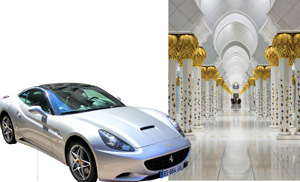
Traditional attractions that characterise Abu Dhabi’s past as well as its present include the working heritage village out on the breakwater, the dhow wharves at Mina Zayed port and the colourful local souks. The visually-stunning Sheikh Zayed Grand Mosque on the outskirts of the city is a must-visit.
Test-drive a Ferrari California
Launched in May, this test-drive experience at Ferrari World Abu Dhabi is a world’s-first for the brand.
It offers everyday folks the chance to tootle around Yas Island’s roads in a supercharged convertible that is capable of reaching speeds of 100kmh in less than four seconds. Drive the car that’s been dubbed “Most Stylish Car of the Year” and “Convertible of the Year”. Enjoy a one-on-one experience with an expert Ferrari co-pilot, or ride with a couple of friends or colleagues in the car of your dreams.
Quiet and powerful
Khao Yai, known more for its lush national park, is one destination to watch for business events, thanks to a new convention centre and local suppliers who are joining forces for promotion. By Greg Lowe
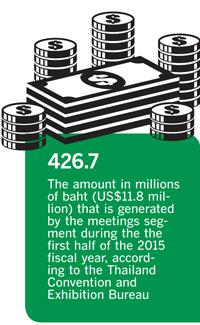
The Erawan shrine bombing in Bangkok on August 17 had sent a ripple of shock through Thailand’s tourism sector, cost the country’s tourism industry 64.3billion baht (US$1.8 billion) and 1.33 million visitors, according to an estimate shared by the Ministry of Sports and Tourism in September.
Swooping in quickly to stem losses in MICE business, the Thailand Convention and Exhibition Bureau (TCEB) implements a series of security measures to ensure event planners and their attendees are safe and feel so. These measures include 24-hour assistance services at the TCEB Counter at Suvarnabhumi Airport, police escort for large groups of event attendees between the airport and the hotel, a dedicated MICE Lane at the airport’s immigration checkpoint, expense support for the engagement of security personnel for senior executives, and extra security support for general visitors.
And to regain confidence among travellers and business event organisers, TCEB has three campaigns ready for the 2016 fiscal year, from October 2015 to September 2016.
The Visitor Promotion (ASEAN+6) campaign is aimed at building delegate numbers from the 10 ASEAN nations as well as Australia, New Zealand, China, Japan, South Korea and India.
The second campaign, Thailand Connect … Connect beyond the Capital, incentivises event planners to explore different destinations in Thailand. Perks are offered for organising events in designated MICE cities – Bangkok, Pattaya, Chiang Mai, Phuket and Khon Kaen – although the extent of support depends on the fulfilment of certain conditions, such as group travel being conducted between now and December 2016 via domestic flights operated by an airline that is a marketing associate of TCEB.
The final campaign, Thailand BIG Thanks!, is aimed at drawing mega corporate events to the country. Budget support will be offered throughout the 2016 fiscal year. Backing this campaign is TCEB’s attendance at seven international tradeshows that specialises in business events.
Groups still considering Thailand may be won over by TCEB’s recent move to promote Khao Yai as an alternative or extension to Bangkok. Reports of surges in hotel occupancy from destinations such as Chiang Mai in the immediate aftermath of the attack showed that many people still wanted to visit Thailand even if they wanted to avoid the capital. And hardware developments in Khao Yai, to which the bureau took 31 media and buyers in July as part of the Thailand CONNECT The World fam trip, are adding to its appeal.
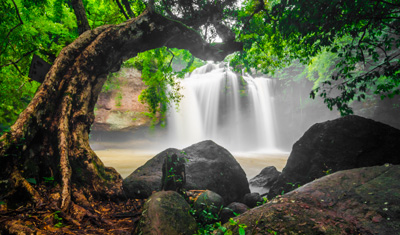
Located just over 200km northeast of Bangkok, Khao Yai is home to Thailand’s oldest national park which is part of the Dong Phayayen-Khao Yai Forest Complex, a UNESCO World Heritage Site.
There are 184 hotels with a total of 7,024 rooms, according to TCEB. While many of the properties are small, there have been some key openings recently, including th e115-key Botanica Khao Yai. This hotel is supported by its older sister property, The Greenery Resort, which has 256 keys. The two hotels provide access to six restaurants and bars, some of which can be converted into events and meetings spaces. Groups of 40 pax or more can use the custom catering services.
Kirimaya Golf Resort & Spa in the vicinity provide more accommodation and recreational options.
More importantly though, the new Khao Yai Convention Center (See Spotlight) has given the destination true power to court business events.
The full opening of Scenical World, tabled for later this year, will see the arrival of Khao Yai’s first modern integrated resort.
This development has helped put the destination on the radar for MICE groups, opined Parichat Svetasreni, director of marketing and corporate image at TCEB.
“Khao Yai, is a new destination for meetings and incentives, especially for business travellers who want to stay in a nature place. With its close proximity to Bangkok, pristine settings, great variety of accommodation options and attractions, Khao Yai is becoming an emerging destination that can cater for corporate meetings, incentives travel, teambuilding activities, and pre- or post-show tours,” Parichat added.
While more work needs to be done to promote the destination, the development of facilities and attractions – including Farm Chockchai, Scenical World, Granmonte Asoke Valley and Farm Mor Por, as well as the likes of Midwinter Green and other large-scale dining venues capable of accommodating groups – has helped bolster the area’s offering.
Khao Yai is becoming more popular, especially with the domestic market who go there predominantly for seminars, as groups increasingly seek alternatives to beachside options near Bangkok such as Pattaya, which suffers from its sleazy reputation, or Hua Hin, remarked Tony Soorangura, associate managing director of NS Travel & Tours.
“People are bored with beach destinations like Pattaya and Hua Hin so they seek out something green,” Soorangura explained, adding that declining budgets for MICE groups makes destinations reachable by road from Bangkok increasingly attractive.
“During this period of economic downturn, groups tend to have less budget so they afford flights to remote areas,” he said. “Pattaya and Khao Yai attract groups for different reasons. Pattaya can be done in two days/one night while Khao Yai normally takes three days/two nights, which is a big difference in terms of budget for MICE clients, especially for very big groups.”
Khao Yai still faces a few issues beyond the three-hour drive from Bangkok, due to its popularity with the domestic market many local shops and some attractions are only open on the weekend. And the lack of destination promotion within the international trade means that many DMCs focused on long-haul markets remain lukewarm about its potential to compete with the likes of more established MICE destinations.
Nevertheless, Christopher Cribbs, general manager at Botanica Khao Yai Resort which is part of Scenical Development, said the local trade is now collaborating more closely to promote the destination and leverage the opening of Khao Yai Convention Center.
“There’s been a change in mindset among some of the properties here,” he revealed. “Ever since Botanica Khao Yai Resort opened I have been reaching out to the other resorts and attractions that are suitable for MICE groups. There’s now a much more collaborative spirit among the trade, we all know we can do better by collaborating in our efforts to promote Khao Yai as a destination for leisure and MICE.”
{ Spotlight }
Conventional power
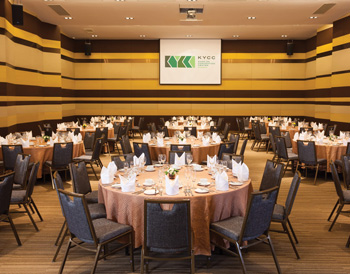 The new Khao Yai Convention Center in one fell swoop placed the destination on the country’s map for both domestic and international groups.
The facility features two standalone buildings with a combined space of about 3,200m2, in addition to another 1,600m2 in the outdoor plaza which connects the two buildings. It can accommodate a maximum of 3,080 people at one time.
There are seven rooms for meetings and banquets, ranging in size from 128m2 to 240m2 and capable of accommodating between 40 (u-shape) to 200 pax (theatre style). The outdoor plaza can be used for cocktails, coffee breaks and other activities.
The two-storey Convention Hall houses the exhibition hall and the grand ballroom.
The ballroom, located on the upper floor, features 1,560m2 of flexible space which can seat 930 guests in a classroom setting and up to 1,300 pax theatre-style. It features 7m high ceilings and state-of-the-art audiovisual equipment. Since its opening the venue has been used for a number of events including live concerts with Carabou, one of Thailand’s most famous bands.
The ballroom can also be divided into three smaller spaces.
The exhibition hall offers 960m2 of space with a maximum capacity of 600 people, with an additional 954m2 of foyer space.
Khao Yai Convention Center makes a great option for event planners looking for alternative venues away from the busy Thai capital. There is no other modern meetings facility within a few hours’ drive of Bangkok besides Pattaya.
{Talking Numbers}
{Insider}
Amanda Hyndman
General manager, Mandarin Oriental Bangkok, shares three of her favourite activities in the Thai capital city

Gallery hopping
I love the burgeoning art district of Silom and Charoenkrung and I highly recommend the regular gallery hopping nights (www.facebook.com/galleryhoppingbkk). On these nights, more than 10 galleries and art spaces stay open until at least 23.00, with special events to showcase both local and international artists. All the galleries are within walking distance or a short fun hop on motorcycle taxis or tuk-tuks.
Riverside walk
My Sunday walk starts at sunrise, with a 5km walk from Mandarin Oriental Bangkok’s Sala Rim Naam restaurant to the majestic Wat Arun temple. The route is designed to give you a view of Bangkok’s most spectacular landmarks and temples, through the city’s historic streets. Lasting 75 minutes, the walk is adorned with classic colonial style buildings, temples, wet markets and even traditional medicine souks, affording a glimpse into the cultural riches and local life along Bangkok’s fascinating canal maze. You can also discover Bangkok’s 24-hour flower market, Pak Klong Talad, located in the city’s historic quarter.
Temple tour
For a business traveller with limited time, sightseeing in the capital is not complete without a visit to the city’s majestic temples. I recommend the Grand Palace followed by Wat Pho and Wat Arun. Avoid the crowds by visiting in the afternoon. Catch the Chao Phraya Express Boat from the public pier by Saphan Taksin BTS station at 14.30, reaching the Grand Palace by 15.00. Walk around until closing time at 16.00, and then onwards to Wat Pho to make merit at the biggest sleeping Buddha. If you’re tired, have a Thai massage here.
Hong Kong on sale
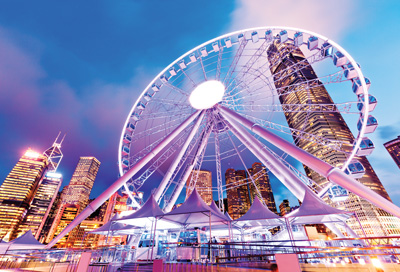
Meetings in this Asian financial hub are now cheaper, as hotels slash rates to curb falling demand, writes Prudence Lui
It has been a challenging year for Hong Kong hotels due to a worrisome combination of dwindling arrivals from China and steeper competition from neighbouring destinations like Japan.
The Holiday Inn Golden Mile, for example, has seen its MICE business falling from 2.5 per cent of total business between January and July in 2014 to just 1.6 per cent. A more significant drop was seen in the corporate meeting segment while business from the incentive segment remained flat, noted general manager Anne Busfield.
Harbour Plaza 8 Degrees Hotel in To Kwa Wan reported a 20 per cent dip in year-to-date MICE business this year, while Courtyard by Marriott Hong Kong Sha Tin saw a 30 per cent decline in business.
Hotels have reacted by slashing room rates and rolling out attractive packages for meetings and events.
The Holiday Inn Golden Mile is dangling a 20 per cent discount on its events packages. For as low as HK$1,612 (US$208) per person per day, excluding service tax, corporate groups can enjoy accommodation in a deluxe room and use of a conference room from 09.00 to 17.00.
To further sweeten the deal, the hotel is giving guests the option of a buffet breakfast for HK$120 (plus 10 per cent service tax) or an upgrade to an Executive Club Room with Executive Club Lounge access – provided a minimum of 10 rooms with 10 meeting delegates is achieved.
For the period of August to December, Courtyard by Marriott Hong Kong Sha Tin brought the price of its residential meeting package down to HK$1,288 (plus 10 per cent service tax) from HK$1,488.
Busfield said these “reasonable rates and value-adds” are a “positive step for attracting MICE business into Hong Kong”.
While average room rates at Harbour Plaza 8 Degrees Hotel had fallen 17 per cent compared in the past year, the price of its meetings packages has risen some five per cent for the summer.
General manager Christina Cheng remains positive and prefers to be “cautious on rate strategy”. She believes that 2016 will bring positive growth.
However, DMCs in Hong Kong expect to see even greater discounts going forward.
MV Destination, general manager, Clemson Lo, said: “Hotel owners have been making good money (all these years) and have been increasing rates. Hong Kong has become one of the most expensive destinations in the region. It will take time for the market to recover and I think rates will go further down for another year before returning to a reasonable level in two years’ time.”
Destination Management Company-The DMC’s managing director, Jenny May, observed that “hotels are suffering and offering special packages and deals”.
“We are seeing lower room rates, (complimentary) upgrades, reduced meeting package prices and so on. It seems that whatever you ask for, as long as it is within reason, the hotels will agree to them just to get the business,” May said.
But putting Hong Kong on sale is not an instant solution to the destination’s weakening demand.
Busfield said: “With large-scale incentives and conventions planning at least six to 12 month ahead, these promotions may not be able to address the present occupancy shortfalls in most hotels.”
May agrees, saying the attractive rates and offers are not enough to get all clients to give Hong Kong a nod.
“Nine out of ten times the client opts for another destination,” she lamented, blaming the lack of attractive experiences in Hong Kong for turning clients away to destinations like Bali, Singapore and Dubai.
She said: “There’s just nothing new to do here. What’s more, overseas visitors are put off by all the negative publicity arising from incidents like the Occupy Central protests and fights in the Legislative Council, the influx of Chinese travellers, and the number of shops now selling gold, cosmetics and milk powder. Sadly, it seems that it doesn’t matter how low the hotel rates go, clients just don’t want to come here anymore.”
{Insider}
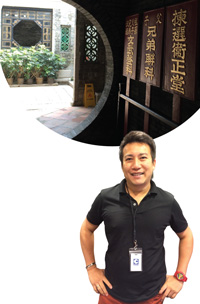 Cary Chiu, general manager of PC Tours and Travel, offers three must-try activities
Hong Kong is your restaurant
Hong Kong is a gourmet paradise that nurtures versatile and outstanding culinary outlets, so a dine-around programme is a great way to sample all its delights. Such programmes are particularly great for large groups, as delegates can be split into small teams and sent off to explore different hotspots such as Lan Kwai Fong in Central and Knutsford Terrace in Tsim Sha Tsui.
Go sight-seeing
I recommend a private tour to Ping Shan Heritage Trail in Yuen Long which takes half a day. This includes strolling to the old ancestral hall and the two-storey Old Ping Shan Police Station which has been converted into a gallery for the local Tang Clan.
Learn to cook
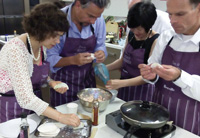
Six Senses Cooking Studio is a good place to learn how to cook Cantonese cuisine. The chef will walk participants to a local wet market to pick fresh produce, and then lead a DIY cooking class at its studio in Kwun Tong. This activity is also ideal for teambuilding.
{Spotlight}
The recent opening of The Terrace, an outdoor venue on the second floor of The Harbourview hotel in Wan Chai, was met with much excitement among event planners. New outdoor event space has been lacking for some time now in the district, and it is challenging to secure attractive venues with sea views for small groups.
The Terrace is seen as a solution to these woes, as it offers unobstructed views of the Wan Chai waterfront and is a flexible space for up to 50 guests in a theatre setup or 80 people for cocktail receptions.
The 100m2 venue is directly connected to the hotel’s existing Function Room 1 and 2, allowing event planners more space should they have larger groups.
The Terrace comes with a wood panel floor, well-knitted turf and much greenery, making it a suitable venue for garden themed parties in the day and at night.
Meanwhile, all its six function rooms on this floor were recently refurbished as part of the hotel’s plans to improve its business events product. Besides a hardware boost, the hotel has also invested in partnerships with several teambuilding companies to offer tailor-made programmes for its corporate clients.
One of the programmes on offer is an African drum course.
General manager, Harrison Leung, said: “What sets us apart from the big players is in our subtle offerings. Many venues have only four walls, but half of our space enjoys natural daylight and faces a harbour.”
The hotel is able to host teambuilding groups of 60 pax.

{Talking Numbers}
Springboard to eminence
With improved infrastructure and transport links, Kunming is flexing its muscle as China’s gateway to South Asia. By Caroline Boey
In 2012, Kunming became the permanent home of the China-South Asia Expo, an important platform for the partnership between China and South-east and South Asia.
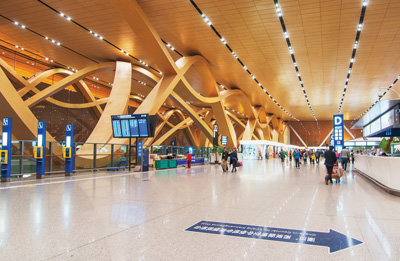
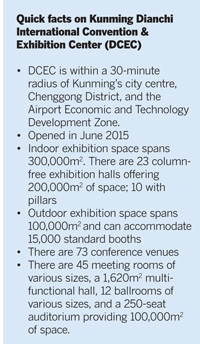
This year’s event was attended by 80,000 delegates from more than 20 countries. It occupied all 13 of the column-free exhibition halls of the new Kunming Dianchi International Convention and Exhibition Center (DCEC), which just opened in June. When DCEC is completed by mid-2016, there will be a total of 23 exhibition halls.
According to a DCEC spokesman, three large-scale events have taken place so far. From November 13-15, Kunming will host the China International Travel Mart – for the ninth time – and it will also take place at DCEC.
Apart from DCEC, the RMB37 billion (US$5.81 billion) “city-within-a city” project will be ready in three to five years and comprise offices, residences, a 1,300-room Holiday Inn opening in 2017 and a theme park.
Mu Jiansheng, director, Exhibition Department, China Council for the Promotion of International Trade Yunnan Sub-Council, said DCEC was built to serve the whole of China, and for Kunming to become the gateway to South-east and South Asia.
“There are already some 50 exhibitions each year in Kunming where the key industries are timber and motor. With the opening of DCEC, which is four times bigger than the Kunming International Convention and Exhibition Center, we can now raise the profile of smaller events and host mega events for the tobacco, sugar and alcohol industries.”
Domestic MICE groups now dominate in Kunming and they make up 80 per cent of demand.
Meanwhile, a number of MICE partnerships have been formed to boost MICE in Kunming and Yunnan. Mu said eight MoUs were inked during the 11th China Expo Forum for International Cooperation, which was held in Kunming earlier this year.
The MoUs signed were between CVBs such as the Thailand Convention and Exhibition Bureau, organisations such as the Asia Federation of Exhibition and Convention Association, SACEOS (Singapore Association of Convention and Exhibition Organisers and Suppliers) and Thai Exhibition Association, other convention and exhibition centres in China, and Hannover Milano Fairs Shanghai.
Mu added that the establishment of the Kunming Exposition Affairs Bureau in November 2013 would help forge links with international MICE events and organisations in the industry.
Yunnan Provincial Tourism Development Committee’s (YPTDC) marketing division director, Oliver Huang, reiterated that Kunming and Yunnan’s goal is to attract more MICE business. He said: “We want more direct international flights.”
As such, there are now 12 airports in Yunnan with another four under construction and being planned. This makes Yunnan the province with the most number of airports in China.
In November 2014, SriLankan Airlines started flights from Colombo to Kunming Changshui International Airport. In December 2014, China Eastern Airlines launched the first intercontinental direct flight between Kunming and Paris. More recently in June 2015, China Eastern started flights between Vancouver and Kunming, via Shanghai.
YPTDC recently asked SilkAir to consider adding direct flights between Singapore and Lijiang International Airport, in addition to the carrier’s four weekly flights to Kunming.
Jim Burton, area general manager, Yunnan Cluster, InterContinental Hotels Group (IHG), Greater China, said infrastructure in the capital is improving. Burton has been based in Kunming for the last four of his 11 years in China.
“The airport is already starting to expand. There are now two runways and another two are being planned. By the end of the year, the Metro Line No. 3 will open from the airport to the Holiday Inn Kunming City Center and the journey will take 20 minutes.
“High-speed trains from Shanghai to Kunming will (also) be introduced next year, cutting travel time from 1.5 days to eight hours, and there will also be links to Chengdu, Hangzhou and Nanchang.”
The increase in the number of international hotels in and around the city, with the addition of more IHG hotels and chains such as Accor, Angsana, Hilton and Wyndham, is expected to raise Kunming’s profile.
In April 2014, the local five-star Bank Hotel was renovated and rebranded as the Crowne Plaza Kunming City Center. The Holiday Inn Kunming City Center was also renovated and reopened in December 2014. InterContinental Kunming, located in the National Tourism Area of Dianchi, opened in 2013.
Burton said: “Four years ago, IHG only had one hotel in Yunnan. There are now seven and 10 more are in the pipeline in Kunming and elsewhere. New brands such as Hualuxe and Holiday Inn Express will (also) be introduced,” he added.
Commenting on the developments, Jennifer Salsbury, founder of International Marketing Consultancy covering Beijing, Hong Kong and Australia, said Kunming has a great opportunity for extensive multicultural links and trade exchanges being located so close to many South-east Asian countries.
“There is a great potential to link direct flights from Kunming to some of China’s leading trading partners, which would really improve access for events to be run in the city,” she added.
{Spotlight}
Major attention on minorities
MICE groups interested in the culture of Yunnan’s minority groups can spend half a day exploring the colourful and vibrant Yunnan Nationalities Village in Kunming, located near the scenic Dian Lake.
The sprawling 514ha attraction, comprising a commercial centre, performance theatre, villages, squares and large outdoor spaces, is suitable for various teambuilding activities. Situated just across from the village is the Yunnan Nationalities Museum.
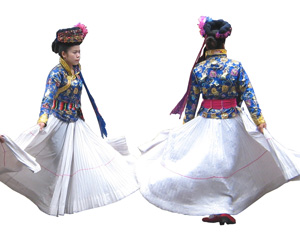
At the village, representatives from the 25 ethnic minority groups will be dressed in different colourful costumes, headwear and accessories. Their culture and customs are also depicted in static displays and live performances.
Visitors can watch Achang women make glutinous rice cakes, enjoy Mosuo singing and dancing, and play traditional games that test one’s shooting skills and throwing accuracy.
Photo opportunities abound and MICE delegates can also don minority groups’ costumes.
Rental rates to organise teambuilding activities for about 100 people are around RMB30,000 (US$4,700) for four hours.
Kunming CITS has organised many teambuilding programmes at the large Harmony Square for China-based companies.
Activities suggested by Kunming CITS include a Bamboo Pole Dance competition, a treasure hunt with a Chinese lesson thrown in, and the Big Eater Challenge – groups are given money and they have to use it to buy the most number of snacks within a given budget.
For ease of access, there is a helicopter landing field in the village, and MICE groups can use the service for transportation or sightseeing.
{Insider}
Lu Hao Shuo, deputy general manager of Kunming CITS, suggests three activities visitors can do in Kunming
A day on the green
There are more than 10 golf courses around Kunming within a 30-minute drive radius. Spring City is an award-winning golf course and Stoneforest International Country Club has a golf course designed by Brian Curley.
Tea appreciation
Yunnan is famous for its Pu’er tea. In Kunming, groups can observe a tea ceremony and learn the proper way to make tea. If visiting the southern part of the province, such as Pu’er and Xishuangbanna, they can visit plantations, workshops, factories and tea shops. There, they will learn how to pick tea leaves, process them and make tea on-site.
Join the locals
Start the day early and head to Kunming’s Cuihu Park to join local residents at the park to practise tai chi, jog or perform sword dances. Stroll along the Nine-Bend Bridge, which zigzags over the lake, and take in the lively scene.
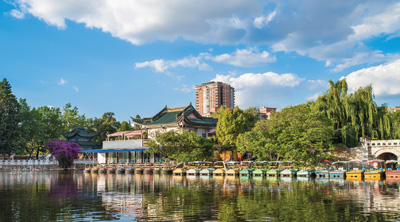
More Asian MNCs shift to global travel management system
MORE Asian multinational companies are cutting down on local TMCs in favour of a centralised global corporate travel management system for greater convenience and savings.
Singapore-based Applied Materials South East Asia awarded its travel management contract to Carlson Wagonlit Travel (CWT) in November last year and is now using a call centre in Poland.
The company’s regional travel manager of global travel services, Winnie Liew, told TTGmice e-Weekly that using CWT helped because many of her travellers head to the US where they fly on Southwest Airlines whose “best deals can’t be purchased in Asia”.
“We need a lot of non-GDS carrier content, especially for Southwest Airlines in the US,” Liew explained. “This prompted staff to buy direct from the airline’s website and as a result we lost track of our travellers.”
She added: “Furthermore, our people move from country to country so there are a lot of challenges in profiling. CWT enables us to move profiles from country to country, saving our travellers the hassle of having to fill out their profiles every time they are transferred.”
Swiss global financial services company UBS had also recently replaced 13 different relationships with its TMCs in 13 markets with two in the US and Asia-Pacific. It also set up four to five call centres across the world.
Debbie Winston, executive director, regional head of travel, Asia Pacific, commented: “We see the value of a global travel programme which offers better compliance. The online booking tools particularly drive better behaviour as the number of touches per transaction is less than 25. Disciplined bookers drive efficiency and bring savings.”
However, travel managers pointed out that content gaps in Asia-Pacific, especially in air and hotel components in China and Japan, are limiting the real potential for companies to move entirely to a centralised travel management system.
Liew said: “GDS system is different here in Asia and languages are diverse. We still have to rely on local TMCs in China and Japan. In China we use Ctrip.”
Reviews
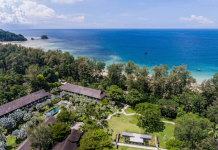
The Slate Phuket
Just 10 minutes from Phuket International Airport on the serene northern coast, this 178-key, Bill Bensley-designed resort offers delegates a quiet, tropical paradise steeped in Phuket’s tin-mining heritage
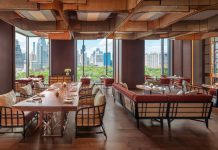
The Ritz-Carlton, Bangkok
The newly-opened Ritz-Carlton, Bangkok anchors the One Bangkok development with cosmopolitan elegance. Featuring the city's largest ballroom and a spectacular new penthouse suite, it delivers exceptional hardware and deeply authentic, soulful service for business and leisure travellers alike
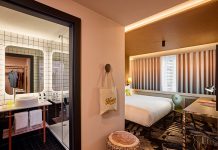
Mama Shelter Zurich
Behind the imposing, Brutalist concrete that defines Zurich’s Oerlikon district lies a surprising secret. While its exterior honours the neighbourhood’s industrial roots, stepping inside Mama Shelter reveals a vibrant, neon-soaked world that is a far cry from its rigid shell


