South Korea’s business events scene thrives as it continues to develop initiatives and infrastructure to support the sector
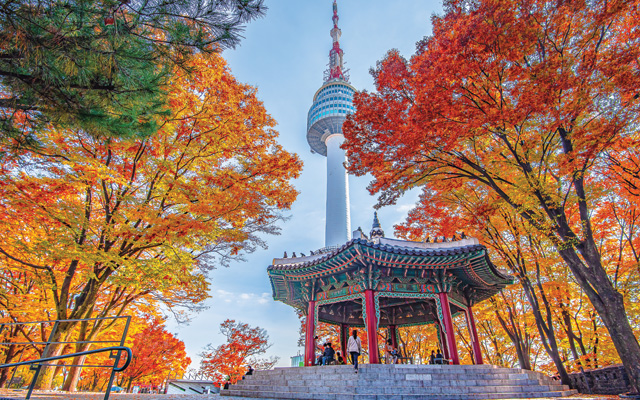
The business events scene in South Korea is seeing a period of steady growth as the government steps up efforts to attract international meetings, conferences and exhibitions.
With strong government backing, new venues, and targeted strategies for overseas markets, the country continues to sharpen its competitive edge as an attractive destination for events.
Seoul, Busan and Incheon continue to anchor the country’s business events scene, while newer destinations such as Gyeongju are introducing new programmes to attract more events.
Korea’s MICE proposition is further enhanced by its strong air connectivity, a wealth of cultural and industrial attractions, and a dedicated, market-specific approach led by the overseas offices of the Korea Tourism Organization.
Seoul: leading the pack
The country’s capital continues to rise in ranking as an events destination, ranking sixth out of 1,500 and second in Asia-Pacific as an international conference host – its highest ever – in ICCA’s Country & City Rankings 2024. It scored especially high for medical conferences, placing fourth worldwide.
Earlier this year, the Seoul government also announced an investment of 9.5 billion won (US$6.8 million) to further attract medium- to-large scale international conferences and global exhibitions.
The city is also developing dedicated business events zones. For example, the Coex Magok Lewest – comprising a convention centre featuring a 7,352m2 exhibition hall, four-star hotel, and other meetings facilities – was launched in November 2024.

This is part of a broader initiative to create three major business events districts, where each will integrate elements of shopping, culture and tourism. The planned clusters include the Magok area in the south-west, a central area covering Seoul Station, Namsan and Gwanghwamun, and a south-eastern stretch from Jamsil to Coex.
Busan: from strength to strength
Last year alone, Busan hosted several high profile international conferences such as the 45th Scientific Assembly of the Committee on Space Research (COSPAR 2024), where around 2,700 space scientists from 60 countries came to the city, and WONCA Asia Pacific Regional Conference, which drew around 1,500 participants.
Busan is taking a collaborative approach to grow its appeal as a business events destination, shared Mangil Jo, manager, Busan Tourism Organization.
Through the Busan MICE Alliance – comprising 242 member organisations including hotels, venues, planners, and suppliers – the city has created a strategy that unites local government, the business events industry, and event stakeholders.
This integrated model, the first of its kind among Korea’s regional convention bureaus, has also seen the appointment of Busan MICE Ambassadors – stakeholders figures tasked with promoting the city and supporting its bid activities.
The Busan Convention Bureau, part of the Busan Tourism Organization (BTO), operates a three-tiered support programme for organisers of international events. Conference organisers can receive assistance at the bidding, promotion, and hosting stages, while corporate meetings and incentive programmes are eligible for support during the hosting phase.
With a solid pipeline of international conferences – such as The International Federation of Library Associations and Institutions from August 10-13, 2026, and 48th annual session of UNESCO’s World Heritage Committee – alongside incentive groups, and exhibitions in the months ahead, Busan is expecting continued growth in arrivals.
New infrastructure is also set to come online in years to come, with global accessibility improved due to a new airport scheduled to open in five years, while another large convention centre is also expected to be built by 2032 in western Busan.
Gyeongju: a rising star
As host of the upcoming 2025 Asia-Pacific Economic Cooperation Summit in October, the city of Gyeongju has risen to international prominence – and is positioning itself as a competitive hub for global meetings and events.
In preparation for the summit, the city is investing in upgrading its tourism infrastructure, including hotels and meeting facilities.
One in particular is the construction of a new banquet hall designed in traditional Korean architectural style, which will host the welcome dinner and reception for APEC leaders.
After the summit, the venue will serve as a multipurpose space for corporate banquets and other high-profile events, said Deokhyun Jo, executive director, Gyeongju Hwabaek Convention and Visitors Bureau.
He added: “Gyeongju CVB aims to attract more business events by working closely with various stakeholders through the formation of a new MICE governance structure. This will help facilitate collaboration among partners to design a range of attractive incentive packages tailored to event organisers.”