UFI 2025 Medal of Honour recipient Chen Xianjin looks back on 40 years of industry leadership, sharing insights on the current state of China’s market, and how to retain the workforce of tomorrow
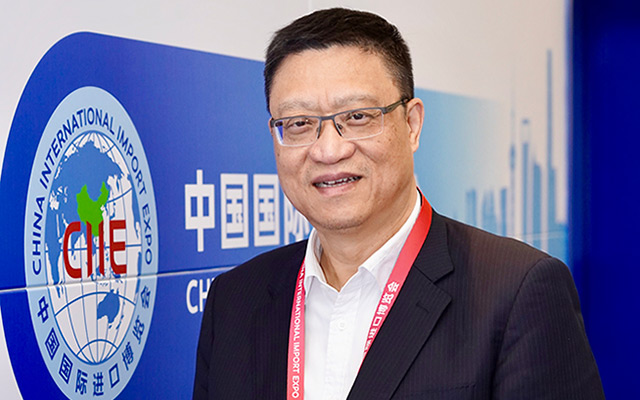
Congratulations on receiving the award. You joined Shanghai CCPIT (China Council for the Promotion of International Trade) in 1984, after graduating from university, and retired in 2016. What role do you continue to play in the exhibitions industry?
I’m honorary president of the Shanghai Exhibition and Convention Industry Association, and director of the China National Exhibition Technical Standards Commission, a professional body.
In 1984, Shanghai CCPIT established the Shanghai International Exhibition Co (SIEC), marking a pivotal year for the industry. As the city’s first state-owned company specialising in international exhibitions, SIEC’s founding set the stage for Shanghai’s development into a global event hub.
I eventually became vice-chairman of Shanghai CCPIT and spent a decade, from 2002, working on the 2010 Shanghai World Expo. Following that, I was deputy director of the Shanghai Municipal People’s Government, the local administrative agency of Shanghai, until I retired.
How has UFI helped SIEC on its exhibitions journey?
SIEC’s goal was to start organising exhibitions, co-operating with Hong Kong and international exhibition companies.
UFI also started focusing on China around 1986/7 and organised a 1.5-day training programme. At that time, Shanghai had no more than 10 domestic exhibition companies and joint ventures were limited.
Then, SIEC became the first international exhibition company in Shanghai to be admitted as a full UFI member and organised UFI-approved events such as Auto Shanghai, Die & Mould China (DMC), and China Interdye.
Today, the UFI China Chapter has more than 280 members across every province, driven by local government initiatives and financial support aimed at internationalising the industry. This growth mirrors China’s economic evolution, transitioning from manufacturing in the 1980s and retail in the 1990s to today’s focus on high-tech and AI.
What is the outlook for China’s exhibitions industry and where are the opportunities?
Post-pandemic recovery began in 2023, rebounding rapidly to reach 2019 levels within a single year. While the industry continued to expand through 2025, the rate of growth has since moderated.
The state of the industry is also not very balanced as some business sectors are doing better than others and are facing different challenges. For example, IT and AI exhibitions are developing fast but real estate is down, as are pet and wedding shows.
Chinese exhibition organisers are looking for new markets and are expanding quickly overseas to South-east Asia, the Middle East and Africa under the Belt and Road Initiative, so there are still opportunities.
How can UFI and the China Chapter work better together?
The UFI China Chapter, with more than 280 members, is the largest in Asia-Pacific and also one of the largest globally in terms of member, venue and event numbers.
It is significant UFI established a dedicated service centre in Shanghai as China remains the dominant, fastest-growing market in the region.
While UFI is planning events and training, many members who do not speak English face a challenge and will need to rely on some form of translation tool.
Members in general would also like to see improvement in the standard of exhibition and visitor matching and to learn how to make better use of data collected.
What is being done to attract, and retain, the next generation of professionals?
China is fortunate to have many schools and institutions offering programmes in exhibitions and management and there are many graduates every year.
In addition, industry associations are also offering certification at various levels and are cooperating with international organisations like UFI.
However, turnover is still high and my suggestion is for employers to do more to give opportunities to the young.