Rising fuel costs and a softening Middle Eastern market are beginning to weigh on Thailand’s business events sector, with longhaul bookings bearing the brunt of the ongoing regional conflict.
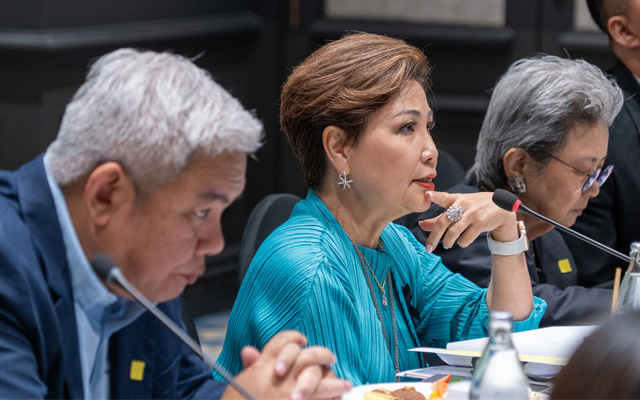
“Short-haul traffic continues to materialise, but longhaul clients are delaying their plans. They forwarded them to later this year, or the very end of this year, or early next year,” noted Prachoom Tantiprasertsuk, president of the Thailand Incentive and Convention Association (TICA).
“Clients with distant travel dates have not officially postponed indefinitely, but they are withholding deposits due to situational uncertainty,” she noted.
Prachoom highlighted significant headwinds for the upcoming May-to-October low season, a period traditionally defined by lower volumes that is now further strained by a lack of demand from primary source markets.
While Chinese arrivals remain steady, they have yet to reach the high-volume benchmarks of previous years, while the Indian market is only seeing a gradual recovery in booking pace. Most concerning is the total stagnation of the Middle Eastern market – typically a primary driver during this window – where demand has flattened to near-zero as new bookings fail to materialise.
Compounding these suppressed arrival figures are surging airfares driven by increased fuel prices. Prachoom warned that elevated flight costs are already forcing unconfirmed business to downsize or pivot to alternative destinations entirely.
“Thai MICE suppliers are adapting through a mix of market diversification, product adjustment, and tactical promotions. Additionally, there is increased flexibility in terms of pricing, programme structure, and booking conditions. Shorter programmes and more cost-efficient packages are becoming more common,” Punnaporn Wongjanpen, founder and CEO of Paula & Co. (Thailand) Co., told TTGmice.
To stimulate volume, suppliers are rolling out aggressive tactical offers, ranging from early-payment deals valid through September to “come 4 pay 3” structures and enhanced value-added incentives.
According to the Bangkok Post, Khon Kaen’s hospitality and business events sectors are facing a crisis “more severe than the pandemic”.
Nattiya Tantasook, president of the Khon Kaen Tourism and MICE Association, reported that the province has lost nearly half of its hotel reservations as the local business events calendar is wiped clean by a wave of cancellations and indefinite delays.
Attributing the downturn to the twin pressures of the global fuel crisis and the Gulf conflict, Nattiya – who also serves as acting chair of the Tourism Council of Khon Kaen – is urging financial institutions to drop the “high-risk” designation for tourism operators. This classification, she warns, is currently stifling the sector’s ability to secure the critical capital needed to navigate the slump.
In response, the private sector is convening a series of strategy meetings in early April to address the fallout across both the leisure and business events segments.
These initial sessions aim to consolidate private-sector proposals for government intervention, which will then be elevated to the state level as TICA consults with the Tourism Authority of Thailand, and the Thailand Convention and Exhibition Bureau, on crisis mitigation measures.