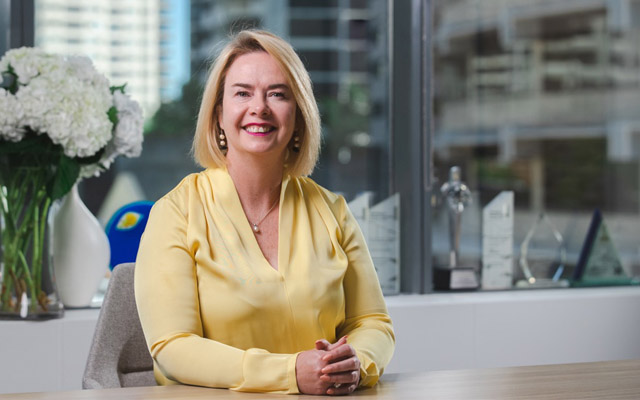
As geopolitical conflict and volatile airfares redraw the global events map, Emma Bowyer, owner and CEO of ICMS Australia, explains how pandemic-forged resilience is turning global disruption into a competitive advantage for the region
You have seen the events industry ride a rollercoaster since Covid. With the escalation of the Iran conflict, what changes have you observed in client decisions, behaviour, or event planning?
We have really put an emphasis on future-proofing since pandemic, so while it is another challenging time, we’re not caught off guard. What I am seeing is a clear trend: clients, especially large international associations, are delaying their big decisions.
Short term, some are pausing vital decisions like opening registrations or major marketing pushes because they don’t want to send messages into a period of uncertainty or have people scared off by volatile airfares. Medium term, it is about when to make a call on formats and resourcing. Long term, they are weighing what this means for their future event mix and where their delegates will realistically come from.
Hybrid remains an option, and we have all proven we can switch if we have to. But in the association world, everyone still strongly prefers in-person for networking, learning, and community-building. Practically, we are seeing a stronger focus on Asia Pacific for the short term, regionalised marketing, and some clients explicitly positioning Australia as a safe, stable destination.
How is this affecting event planners and decision makers?
It is really about risk mitigation, taking as much uncertainty as possible out of the equation for clients.
Since Covid, we have all developed a kind of resilience, and expectations of our partners are higher. Relationships with venues and suppliers were stress-tested during the pandemic, so we now lean on those who proved they could respond under pressure. There is less appetite for re-learning those lessons with untested partners.
Many of our contracts were already signed before this latest crisis, so we have important “shock absorbers” in place. We’re building in 20 to 30 per cent buffers in budgets, because we know margins are being squeezed by things like fuel costs and unexpected items.
Crucially, we are not seeing panic conversations about slashing supplier prices yet. Instead, it is about scenario planning, contingency, and using the resilience and relationships we built during Covid rather than starting from scratch.
Have recent disruptions affected international attendance and event budgets, compared to domestic events?
Yes, but it is not uniform. On the international side, we have been quite fortunate. After AIME, we signed a partnership with Singapore Airlines, so we are channelling European delegates via Asia rather than the Middle East, which reduces perceived risk and pricing volatility.
Out of North America, we have seen airfares at levels not seen for a decade, thanks to recent sales, which is encouraging for attendance. Across Asia-Pacific, including India, China, and South Korea, we are seeing strong traction, helped by the fact that many of these markets are within an eight-hour flight to Australia.
The big issue is that around 70 per cent of the cost for someone coming to Australia is in the air, not on the ground. So any shock to fuel prices or air routes hits international attendance more than domestic.
For the next six months, we are seeing some organisations send fewer delegates or tighten travel budgets, but for events further out, many are assuming conditions will stabilise and are planning accordingly.
You said some clients are “going harder” to Asia Pacific. What does that look like?
We are seeing clients reduce their presence at European meetings and redirect that investment into Asia Pacific.
One energy client, for example, recently told us to stop all work connected to events in Paris, Spain, and Germany, and instead focus our efforts for the next three months on India, China, and South Korea. They will then reassess.
More broadly, we are prioritising marketing and engagement in markets within an eight-hour flight radius. Clients are choosing to be physically present where travel feels more straightforward and where they can still grow delegate numbers and impact.
Would you say Australia and Asia-Pacific are actually benefiting from this crisis?
Absolutely. I often quote Churchill: “Never let a good crisis go to waste.” We are not trying to out-compete Europe or North America on their terms. We are running our own race in Asia Pacific.
A good example is how we co-locate. When Melbourne hosted a vasculitis conference that typically draws around 1,000 international delegates, we co-located it with the Australian and regional (Malaysian and Singaporean) groups. Instead of the usual numbers, we exceeded 1,500 delegates. Our European colleagues were surprised. We showed that when you bring the global meeting into our region, you unlock a whole new cohort of participants who rarely travel to Europe.
So yes, while there is disruption, Australia and Asia-Pacific benefit from being perceived as safe, stable, and regionally connected, and from tapping into new “global citizens” who have not previously been part of those international communities.
How is the uncertainty affecting international speakers? Are you seeing increased hesitation?
Definitely, particularly among UK and Western European speakers. North Americans, interestingly, are much less hesitant to travel to Australia right now.
We are responding by building flexibility into the system: fully flexible airfares where possible, renegotiated hotel cancellation terms for key speakers, and extending decision deadlines. For one robotics event in July, for example, we’ve agreed on a clear cut-off date of June 2, 2026, for speakers to confirm whether they will travel.
If they are unable to, we will pivot to hybrid delivery with live streaming or pre-recorded sessions. Because we have done this many times since Cpvod, it no longer feels like an emergency measure, but we still work to keep virtual content to around 25 per cent of the programme to preserve the in-person experience.
If the conflict drags on, what are the major risks for hosting international business events in Australia?
The biggest risk is commercial, not just attendance numbers. Most associations rely heavily on their flagship conferences for revenue.
If commercial partner support softens – something we’re not seeing yet, but which is a real possibility – that is when you start having difficult conversations about viability.
That could mean postponements, hybrid formats where necessary to meet professional development requirements, or in some cases, reshuffling destinations. There are already discussions in some international associations about swapping a planned Middle East congress with another confirmed destination like Melbourne, to avoid asking people to travel into a conflict zone.
So I feel deeply for organisers in the Middle East right now. They will likely be forced into virtual or heavily hybrid formats. For Australia, the risk is more about knock-on commercial and programmatic decisions within that global calendar than about safety perceptions.
With all these challenges, how do you maintain your problem-solving skills and keep a positive mindset?
Some of it comes from my background. I have an honours degree in organisational psychology, which definitely helps. But a lot of it is structured practice.
Event organisers love control, and these situations take a lot of that away. My response is to share the load. We regularly bring the whole company together, no matter the role, and lay out the challenges of the day, week or month. Then I will ask everyone to contribute ideas, which we can then assess and refine.
I also invest heavily in planning with my senior leadership team, who have been with me on average 15 years. Twice a year, we step out of the office for several days purely to work on the business, not just in it. We game out scenarios and develop response plans.
So when a crisis like this hits, we are not starting from zero. We are pulling a plan from the “filing cabinet”, adapting it with current data, and then using weekly check-ins to coach younger team members through real situations. That is how you move from coping to actively seeking opportunities, finding new markets, new formats, and new value for clients.
What is your takeaway for others in the industry navigating similar uncertainty?
Solidarity really matters. You are not the only one dealing with these problems, even if it sometimes feels lonely. There will be a time when we’re no longer talking about this conflict, just as Covid moved from dominating news to background context.
The key is to accept that crises are coming more frequently, every 18 months or so. It is a good idea to build resilience, data-driven decision making, and flexible partnerships into your standard operating model.
Spend some time on the problem, but spend much more time on the solutions. That is how you stay ready to deliver value for your clients and seize the opportunities that come with change.