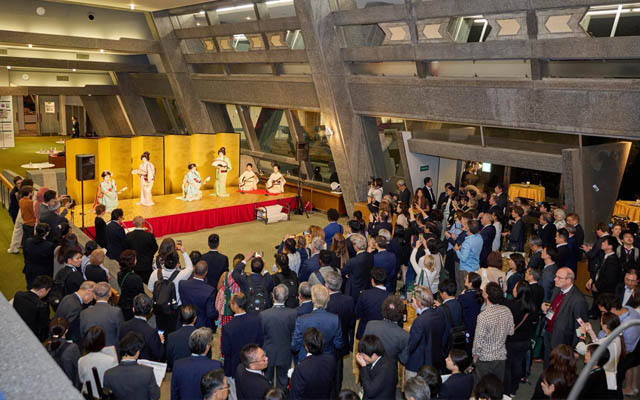
The City of Kyoto in Japan has risen the development of business events to a higher level in its core tourism policy for 2030, with an aim to ensure that these intellectual and trade gatherings support the sustainable development of the city, enrich the lives of local residents, and position Kyoto as a leading international MICE City.
One of the most telling signs of the city government’s commitment is found in the title of the new core tourism policy: Kyoto Tourism and MICE Promotion Plan 2030 – Sustainable Tourism, MICE, and Beyond FY2026 to FY2030.
While the business events sector was regarded as being part of tourism and included within past policies, this is the first time that the term, MICE, takes its own stand in the title, reflected Yasumasa Shimizu, managing director, Department of Conventions and Tourism at the Kyoto Convention & Visitors Bureau.
The tourism policy is reviewed every five years, and its latest version spells out three broad actions.
First, Kyoto will maximise business events impact by creating opportunities for interaction and learning with citizens, students, researchers, companies, etc. In addition to promoting longer stays and repeat visits, Kyoto will create business opportunities, promote innovation and startups, and encourage student participation for knowledge exchange through these gatherings.
Organisers will be encouraged to utilise highly regarded unique venues, and funding will be provided for organisers to conduct public lectures for city residents.
Second, there will be a stronger focus on attracting business events that leverage Kyoto’s strengths. The city will intensify destination marketing, enhance global networks, and support sustainable events that meet the United Nation’s Sustainable Development Goals.
Third, Kyoto will work to raise the awareness of business events and their effects. Community impacts of business events hosted in Kyoto will be recorded in advanced case studies, according to Shimizu, with plans to share them with the local community and researchers so as to foster acceptance and participation in business events.
Shimizu told TTGmice that besides a doubling of budget to support incoming business events, the CVB will also conduct a trade matchmaking event with 20 carefully selected hosted buyers next January in the city.
He explained that the sharper focus on business events development has come about due to several reasons.
The City of Kyoto recognises the positive impacts of business events, where average spend is much higher than that of leisure travellers, stay duration is longer, and there is greater curiosity about local culture and heritage. Furthermore, business events can be held during off-seasons, allowing the city to balance arrivals by directing gatherings away from the peaks of spring and autumn.
“Winter, in fact, is a great time to meet in Kyoto. Our hotels are very supportive of promoting and facilitating business events in winter. There is a lot more capacity during this season, prices are lower, and there will be financial assistance to help organisations make this choice,” said Shimizu.
To further sweeten the appeal of meeting in winter, Kyoto is working with neighbouring destinations, such as Ise-Shima, to create dual-city excursions that meeting delegates can enjoy.
Another crucial motivation for the development of business events is that it comes with the support of local residents, who “recognise the advantages of business events too, and welcome the idea of having more business delegates in the city”.
With the new and improved initiatives, the City of Kyoto hopes to raise its standing in ICCA’s city rankings. It ranks 46th in the world for the number of international meetings in ICCA’s 2025 report. The goal is to be ranked within the top 30 by 2030.