


Andrew Sjaus has joined Gold Coast Convention and Exhibition Centre as F&B manager. Sjaus previously held positions such as conference and events manager at RACV Royal Pines, banquets operations manager at Palazzo Versace and banquets manager at Holiday Inn Surfers Paradise.
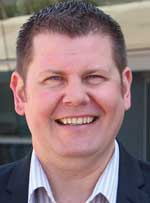
Andrew Sjaus
New executive meeting package at Hyatt Regency Hong Kong
HYATT Regency Hong Kong, Tsim Sha Tsui has rolled out a new Executive Meeting Plan for 2014.
Priced at HK$838 (US$108) per person, the package includes use of a meeting venue from 08.00 to 17.00, roll-in lunch either in the meeting room or at the Café, two themed coffee breaks with pastries, complimentary use of technology and communications equipment, complimentary meeting amenities and privileged rental of LCD projectors, video conferencing equipment and high-speed wireless Internet connection facilities.
Hyatt Regency Hong Kong, Tsim Sha Tsui offers a variety of event venues, such as a 335m² pillarless ballroom that can be divided into two smaller spaces, and five salons.
Prices are subject to a 10 per cent service charge. Terms apply.
Contact +852 3721 1863 or e-mail hongkong.tsimshatsui@hyatt.com for more information.
Saudi Arabia launches CVB
SAUDI Arabia is the latest to join a growing list of destinations keen on attracting business events, and has created the Saudi Exhibition and Convention Bureau (SECB) to spearhead efforts in the area.
The new bureau will seek to implement efficient and transparent licensing processes in the MICE industry, collect and analyse industry data, classify and enhance existing and future event venues, train and certify event organisers, implement marketing strategies, and develop related university programmes and destination awareness programmes.
SECB will be governed by a Supervisory Committee which consists of one representative each from the Ministry of Municipality and Rural Affairs, Ministry of Interior, Ministry of Commerce and Industry, Ministry of Finance, as well as two representatives from related companies nominated by the Saudi Council of Chambers.
Sultan bin Salman bin Abdul Aziz, president of the Saudi Commission for Tourism and Antiquities (SCTA), chairs the Supervisory Committee, while Tariq Al-Essa takes the role of SECB executive manager.
Prior to the formation of SECB, SCTA and the World Bank conducted several studies on the country’s MICE sector. More than 3.2 million visitors were found to have attended events held in Saudi Arabia every year, generating an economic impact of 8.6 billion riyal (US$2.3 billion).
Dockside Group gets nod for floating venue
EVENTS and hospitality firm, Dockside Group, has received approval to build an event venue on an anchored floating pontoon in the heart of Darling Harbour, Sydney.
Opening in mid-2014, the Dockside Pavilion at Darling Harbour will cater for up to 1,440 seated guests and 2,000 standing, and provide spectacular water and city views.
A partnership between Dockside Group, the Darling Harbour Alliance and the Sydney Harbour Foreshore Authority, the upcoming venue is part of the business activation strategy for the Darling Harbour precinct during the redevelopment period (TTGmice e-Weekly, December 12, 2013).
Dockside Pavilion at Darling Harbour will feature a sleek, contemporary design by world renowned fabric architect Warwick Bell of Fabric Structure Systems, the creators of globally celebrated ventures including Louis Vuitton’s 150th Anniversary Trunk and The Cloud, Auckland.
Christopher Drivas, managing director of Dockside Group, said the venue is an important component in ensuring Darling Harbour remains a dynamic and desirable precinct to visit during the redevelopment of the area.
“With capabilities to host numerous and diverse events, including conferences, business events, charity gala events, festivals and public events, the Dockside Pavilion (at Darling Harbour) will offer event organisers an exciting new option.
“We felt it was important for us as long-term tenants of Darling Harbour to support the industry and the businesses around us during this time of transition. We are looking forward to hosting many exciting and wonderful experiences,” said Drivas.
Dockside Pavilion at Darling Harbour will provide a unique venue alternative during the closure of the Sydney Convention and Exhibition Centre, filling a gap in the market for large-scale function space prior to the opening of ICC Sydney, the ICC Exhibition and Theatre in 2016.
Shangri-La weaves CSR activities into meeting offerings
A SELECTION of corporate social responsibility and sustainability initiatives are now available to meeting and event organisers who take their programmes to any Shangri-La Hotels and Resorts properties worldwide.
Initiatives offered by the new Experience It programme are designed around three categories: People & Planet, which features activities involving children from a hotel’s local outreach project and conservation activities; Green, which utilises eco-friendly amenities during events; and Be Well, which offers event delegates fresh, sustainable and local dining options and rejuvenating activities.
“Meeting organisers are asking for alternative offerings that will spark creativity and engagement and have CSR elements, so we’ve created a menu of themed breaks, teambuilding exercises and activities that will cater to this need and energise attendees,” said Mandy Chan, Shangri-La’s director of corporate events management.
“Planting coral cones in a marine sanctuary, painting a school, engaging with local farmers on an eco-tour, these are just a few of the many Experience It activities available at our hotels.”
She added: “Several clients have already incorporated Experience It activities into their meeting programmes in Beijing, Singapore and the Philippines, and we expect this to be a growing trend in 2014.”
Details on Shangri-La’s Experience It programme can be found at www.shangri-la.com.
Arun Madhok
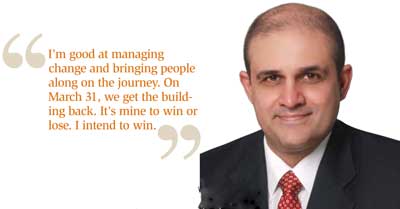
The new CEO of Suntec Singapore tells Raini Hamdi how the venue’s US$147 million upgrade will redefine the meetings business when it reopens on May 1
You joined Suntec Singapore International Convention & Exhibition Centre in 2009 as business development director, then promoted to COO, and now CEO, in a span of three years.
Yes, but don’t forget I had quite a career behind me as well. I was with British Airways (BA) for many years, where I ran the whole of Europe for the airline. Pieter Idenburg (his predecessor) was my mentor from BA and that’s how I got into this business. When he recruited me, the MICE business in Singapore was going through a change. Marina Bay Sands (MBS) and Resorts World Sentosa (RWS) were coming online and a different type of person was needed. I used to do strategic planning for BA and business change is my forte.
Did you imagine you would be CEO of Suntec?
I didn’t come with that objective. The objective was meeting the challenge of the new business, defining the new business model, learning how to be a non-monopolist.
A non-monopolist?
(Laughs) Suntec was a monopolist in Singapore. There’s the Singapore Expo of course, but we were the only large convention centre space in town and we had to reposition as the business expanded to include MBS and RWS. They were great for our business because they raised the profile of Singapore and boosted the entire business.
We started developing plans for our next-generation convention centre and here’s where I think I’m the luckiest man in town. I worked about two-and-a-half years on the design and concept, and now I get to lead it. I get to do what I’m basically good at, which is managing change, and maybe even actually change the way the convention business is being done and influence it.
How?
We’re designing for flexibility, such that we can offer the right space to the clients whenever they need it. In the past, you have a 4,000m2 exhibition hall. The client’s event is growing so a centre says “take another hall” when the client probably needs just 1,500m² more.
We are now in position to allow the space to grow with the client. Give him what he wants as opposed to what you have. That’s the essence of the modernisation programme: getting the building to be relevant to the client’s changing requirements by having a high level of convertibility, capability and technology.
Tell me more about the high level of convertibility.
A lot of our walls can move. A moving wall is not new in the convention business but having so many spaces that can be configured to the client’s requirement is quite new. We have a meeting room that has one fixed wall and three (mobile) walls. So we can remove three walls and use the room as a reception area in the morning and close it up as a break-out in the afternoon if the client wants to meet in the same space. And when it is closed, it is fully closed, i.e., it’s a proper room.
Is the building gutted out completely?
The building has been stripped bare. We’re changing a large portion of it. Level one and half of level two are retail. Level three is all new and there will be 36 meeting rooms which you can convert into various configurations for big receptions, small exhibitions or break-out rooms.
Level four and five (double height) will have four exhibition halls. We can move walls and add interesting lighting concepts so you can use the space either as an exhibition hall or, at a flick of a switch, change the lighting and create the right ambience for a a conference or dinner and dance.
Business is evolving. Before I joined Suntec, I was told if it was an exhibition or convention, it was clear it was an exhibition or convention. Now there is a merging of the two, convention with exhibition component, meeting with incentive, etc.
We are well-positioned for hybrids. We can co-locate events. There is no need for delegates to go to one hall for their exhibition and another for a conference. For an exhibition with a conference, we can now create a soundproof section for them to have the conference. Today, you see a lot of exhibitions cordon off space for the conference and the speaker competes with the sound and buzz from the exhibition.
So after the modernisation, is your convention space bigger, smaller or the same?
I have a little more space, but I could do a lot more with that space than I could before. Productivity comes in from using space as often and as efficiently as we can. It does not come from selling more space that the client does not need. We want the same customer to come back again and again. We want to be the convention and exhibition centre of choice in Singapore and Asia by having the perfect location, right space, flexibility, technology and service-oriented people.
So the client buys only the space he needs. What he’s going to get with it is next and we are going to make a big difference to competitors. Venue managers have been sort of content in just giving space, not realising we are an integral part of the entire experience and we need to add value to the client. Space can no longer be just a shell.
How will you be different?
One of the things we’re doing is something the industry has been asking for for a long time. I am surprised we didn’t have it. We’re going to offer free wireless LAN connectivity to all delegates. We’re working with renowned suppliers and telcos to allow 6,000 gadgets to be connected simultaneously and, once you connect, you can go from floor to floor without losing connectivity and having to sign in again.
We are also going to use technology to improve processes and change the way people look at the convention business. For example, clients need to know how their event is going to look. If it’s a conference, how many rows, how the chairs are arranged, how much distance to the stage, etc. (Instead of a 2D floor plan, which is the norm), we are investing in an online system which will allow, possibly for the first time in the convention and exhibition business, a client, if he so chooses, to actually take control of the configuration of his floor plan. So without any training or qualification in the area, with his sign-in code, if he does not like what we’ve planned for him, he can remove a chair from a certain row, add a chair back in or move a table to the back of the room, etc.
We’re allowing clients to visualise and modify the layout of their events, thus giving them a little more control. So when they turn up on the actual day and look at the floor plan, there are no surprises. In our business, we don’t need surprises.
How are you gearing up your staff for the new Suntec?
You’re right to point out that there are challenges when space is so modular. And while high-tech is all well and good, people are going to be the differentiator still.
Though we closed end-September and will reopen May 1, we did not lay off anyone or cut anyone’s salary. Staff are being retrained. It (a new Suntec) requires a slightly different way of running and selling. The actual service style changes. We’re lucky to have the luxury of taking staff through a longer period of training. We have 150 permanent staff now and are working towards 200 later on.
I’ve also changed my leadership team, promoted a couple of people internally. It’s a tight team of eight people. Every business goes through a cycle and you need a different team to bring the vision to reality.
In light of the change in product, we’re also looking at a rebranding exercise so that the image is also upgraded and modernised. Suntec is perceived as a leader, but we have to go out with the message that while we have all the experience, expertise and credibility, we also have a new product offering.
What sort of conventions/events would you love to clinch with the new product you have?
Our first order of business is to bring back our loyal customers who have had to move their events elsewhere as we’re closed for five months. We want to give them the first chance to experience the centre. So Tax Free World Association will be the largest exhibition to operate in the month of May when we reopen. We already have a good line-up for the month, including a conference, a consumer show and a trade show.
But of course we also want to collaborate with organisers to bring events into Singapore and offer them space/services in a compelling way, so those who might not have considered us before will do so now.
The venue did 1,600 events with 7.1 million guests last year. What’s your target for the first year after reopening?
I don’t know if these metrics mean as much as some people make them out to be. We have to watch our occupancy and the type of yield we getting but these do not necessarily correlate with the number of events held.
So we are re-evaluating our position if we want to continue to do some of the big consumer shows and we’re looking at new business such as pharmaceutical and medical events. We want more international business, but we also want the local business, including weddings and government business.
For me, the better metrics to measure success is, yes, to report profitability back to the owners/shareholders, but what’s important is getting the right mix of clients and developing long-term relationships with them. My personal objective is to work with a large customer base which will commit their events to the venue for longer terms, so as their events grow, we adjust the space to meet the growth.
How different are you to Pieter Idenburg?
Pieter is a mentor and a good friend. We have different personalities though. I’ve this thing about converting vision to reality. I leave him to tell you what he’s good at. I’m good at managing change and bringing people along on the journey. On March 31, we get the building back. It’s mine to win or lose. I intend to win.
Get connected for free at Crown hotels
ALL Crown Hotels in Melbourne and Perth will now offer free Wi-Fi Internet access to all guests.
Guests who book accommodation or a spa treatment at any of the five properties – Crown Towers, Metropol Melbourne, Metropol Perth, Promenade Melbourne and Promenade Perth – will be able to log on and enjoy complimentary access for up to two devices.
Royal Ambarrukmo Yogyakarta steps up promotional efforts overseas
HAVING reopened in 2011 after a major revamp, heritage hotel Royal Ambarrukmo Yogyakarta is now setting its sights farther, launching a Japanese language website, an Eat, Pray, Love in Jogjakarta promotional video and a new ballroom.
The hotel’s general manager, Sudarsana, said the launch of the Japanese version of www.royalambarrukmo.com is a means to reach out to the market, adding that efforts to generate business from overseas has materialised this year, with groups from Asia, the Middle East, Europe and the US.
“For next year, we have bookings from at least 40 groups,” he revealed.
The promotional video highlights the hotel’s services based on Jogjakarta’s royal tradition, while the new Kasultanan Ballroom for up to 2,000 guests for a standing reception is the biggest hotel ballroom in the city.
The hotel’s director for sales and marketing, Bagus Dewa, said: “MICE is an important market for the hotel, contributing 30 per cent of the hotel’s business. The ballroom was built not only to meet the demand for this market, but also that of the city.
“There is actually a high demand for big meeting, convention and social function (venues) here in Jogjakarta. Since the new ballroom started operation in September, it has been utilised for around 20 days per month and we have four medical and pharmaceutical company conventions for next year in the book.”
On the leisure front, the hotel’s travel agency and FIT markets contribute to 18 and 20 per cent of the business respectively, while three per cent are inbound business.
The hotel’s other facilities include The Kraton Ballroom, which can accommodate up to 1,000 pax, and 17 meeting rooms for 30-150 pax in theatre style.
Forward bookings for Bangkok shaky
MANY Asian MICE groups due to travel to Bangkok during this season have stuck to their bookings, although demand for next year has taken a beating.
Malaysia-based Rakyat Travel’s general manager, Adam Kamal, said he is handling four incentive groups to Bangkok this month and at press time, there are no cancellations.
“The protests are away from tourist areas, it has not affected flights and the Thai government has taken a softer approach this time, so incentive groups are not worried,” he explained. However, his company has not received any new bookings to Bangkok for next year.
Similarly, Panorama Tours Malaysia managing director, Richard Vuilleumier, said the company has no new MICE bookings to Bangkok for next year. His two Bangkok-bound incentive groups have diverted to Vietnam, fearful the airport might close.
Over in Singapore, Alicia Seah, marketing communications director, Dynasty Travel, said: “It is logistically more challenging for groups to cancel their plans there because they have already pre-booked meeting and accommodation venues in large quantities.” The agency currently has three corporate groups in Bangkok.
Singapore-based World Express also just handled an incentive group in Bangkok two weeks ago. Managing director, Darren Tan, said: “It is not the first time we are seeing such unrest in Bangkok and we know it is not targeted at tourists, so it is still considered safe.”
There has also been little impact on Indonesian outbound.
Panorama Tours Indonesia managing director, corporate incentive management, Vidya Hermanto, said: “I have a group scheduled for December 6. They actually wanted to move to another destination, but if they did, the hotels in Bangkok would charge cancellation fee.”
Indonesia-based Intrarep.com managing director, Elgin Agrigento, added: “MNCs are taking a wait-and-see stand…Many Indonesians know Thailand and are well informed enough to know that the rally does not affect tourist spots.”
KTO pushes secondary cities to Singapore, Hong Kong
WHILE Seoul remains popular with MICE delegates, cities like Busan, Jeju and relatively less-known Gyeongnam are wrestling for a slice of the pie too.
Gyeongnam Convention & Visitors Bureau (GNCVB) marketing director, Kim Daehwan, said the bureau will launch a new campaign, Discover the Undiscovered, in 2014 to showcase the province’s scenic coastal attractions and cultural heritage sites through fam trips and tradeshow participation.
“We will definitely not be able to pull traffic away from the main cities, so we are targeting repeat visitors,” said Kim.
Gyeongnam is well positioned to attract MICE traffic, he pointed out, with new venues such as the 136m Changwon Solar Tower, which features a 300-pax conference room, 1,000-pax outdoor plaza and 120m-high observatory with ocean views.
Currently 80 per cent of MICE traffic to Gyeongnam comes from China, said Kim, and the CVB intends to target South-east Asian markets like Singapore, Malaysia and Thailand.
Helen Shim, director of the Korea Tourism Organization (KTO) Singapore office, said Singaporean delegates are starting to cast their eyes away from Seoul, and are heading for cities like Busan and Jeju.
Shim added that the MICE infrastructure in these cities is “equally competitive” to Seoul’s. “The plus point is the lower prices; it can be even up to 50 per cent cheaper.”
Meanwhile, in Hong Kong, KTO is holding today a first-ever MICE presentation on Seoul, Busan and Jeju to woo incentives with its generous support.
A KTO Hong Kong spokesperson said: “In the last five years, the market has grown 250 per cent and we’ve recorded 142,000 incentive visitors in 2012. We want to spread the word, especially about our incentives and sponsorship for groups. After the event, we’ll assess the result and hope to run it regularly.” Out of 100 attendees, two-thirds are corporates, while the rest are DMCs and travel consultants.
Lotus Tours senior manager for MICE, pilgrimage and cruise planner, Arthur Choy, said: “KTO is reputed for its supportive policy for small groups. To us, it’s vital because it’s a value-added element for us to wow our budget-tight clients.”
Additional reporting by Prudence Lui
Reviews

The Ritz-Carlton, Bangkok
The newly-opened Ritz-Carlton, Bangkok anchors the One Bangkok development with cosmopolitan elegance. Featuring the city's largest ballroom and a spectacular new penthouse suite, it delivers exceptional hardware and deeply authentic, soulful service for business and leisure travellers alike

Mama Shelter Zurich
Behind the imposing, Brutalist concrete that defines Zurich’s Oerlikon district lies a surprising secret. While its exterior honours the neighbourhood’s industrial roots, stepping inside Mama Shelter reveals a vibrant, neon-soaked world that is a far cry from its rigid shell
Hyatt Regency Kuala Lumpur at KL Midtown
A polished urban retreat designed for business travellers, Hyatt Regency Kuala Lumpur at KL Midtown combines thoughtful design, seamless service, and exceptional facilities.


