The Philippines faces a pressing need for expansive venues to capitalise on the business events industry’s robust recovery and further accelerate its growth, according to industry leaders speaking at a forum organised by the Hotel Sales and Marketing Association (HSMA).
Currently, event organisers are inundated with bookings, and available venues are rapidly filling up, Joel Pascual, Pep Tarsus’ president and former president of the Philippine Association of Convention/Exhibition Organizers and Suppliers (PACEOS), pointed out.
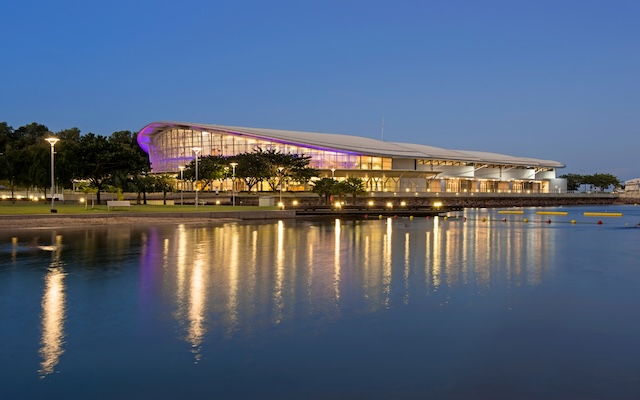
More large-scale venues like SMX Clark (pictured) are needed
Pep Tarsus, now part of Informa, took just a year to exceed 2019 levels, which was the year of its highest revenue and booking.
For example, Manila currently lacks large-scale venues, but Pascual noted that an expansion of SMX Convention Center Manila, and a proposed mega exhibition and convention centre are on the cards. These developments will bolster the city’s capacity to host international business events.
Fortunately, Agnes Pacis, vice president for commercial, SM Hotels & Conventions Corp., confirmed that SMX Manila is set to double in size with an 18,000m2 expansion, by the end of 2025 or early 2026. The expansion will be two blocks away from the current SMX Manila.
There is growing speculation that the Central Bank of the Philippines (BSP) is considering developing a 120,000m2 exhibition and convention centre within the Cultural Center of the Philippines Complex. The BSP already owns the nearby Philippine International Convention Center (PICC).
A source privy to the talks told TTGmice that “discussions are still ongoing at the highest government levels”, but added that they are not sure if PICC will be involved in any way.
Aside from Metro Manila, Pascal pointed out that large-scale venues also need to be built in other parts of the Philippines. Without the necessary infrastructure in place, it is challenging for the government to promote the country as the business events powerhouse of Asia.
Rather than aggressively marketing globally, we should prioritise internal improvements first, Pascual emphasised. Attempting to promote externally while neglecting internal issues will only disappoint the market, he added.
Asia-Pacific is leading in business travel expenditure, with a projected growth of 41.2 per cent
Fuelled by surging business travel expenditure, Asia-Pacific is also leading the way in embracing AI for travel management, and prioritising sustainable travel options.
This is according to Trip.Biz’s Corporate Travel Management Market White Paper, the corporate travel arm of Trip.com Group.
The White Paper, informed by nearly 2,000 respondents from Mainland China through online surveys, face-to-face interviews, and third-party research, dives deep into key trends and evolving behaviours shaping the business travel landscape.
Asia-Pacific is leading in business travel expenditure, with a projected growth of 41.2 per cent
Corporate travel soars, especially in Asia
Like leisure travel, business travel is on the rise. Global business travel spending maintained strong growth in the first half of 2023 and is expected to recover to US$1.5 trillion by 2024, according to a report issued by the Global Business Travel Association.
The APAC region is leading in business travel expenditure, with a projected growth of 41.2%. Specifically, business travel spending in Singapore, Thailand, and New Zealand is expected to grow by more than 75%, ranking these countries as the top three in the region. Additionally, Japan and South Korea, along with European counterparts Italy and the UK, are also experiencing rapid growth in business travel spending.
Elsewhere in Asia, China’s resurgence as the world’s largest business travel market is particularly noteworthy. Its business travel market recovered at a rate of 39.2% in 2023 and is expected to return to 2019 levels by 2024. The recovery of its outbound market has been driven by recent visa-free policies, with South-east Asia emerging as a major destination.
China is also attracting international travellers, with cities such as Hangzhou and Nanjing gaining prominence as business travel destinations. Shanghai, Beijing and Guangzhou remain among the most popular cities for business travel.
AI and ESG: transforming business travel
According to Trip.Biz’s survey, over 50% of businesses said they are likely to adopt AI technologies. Travel managers and travellers expressed hope that AI could be used in itinerary planning, process optimisation, data analysis and more to minimise human error and repetitive tasks.
Such advancements have the potential to revolutionise business travel management, and Trip.com Group has been at the forefront of this transformation, testing various “AI + tourism” applications. For instance, its intuitive AI assistant, TripGenie, can generate travel recommendations within seconds based on user prompts or questions in the app. Plans are also underway to make TripGenie available to business travellers on Trip.Biz.
AI’s impact extends beyond bookings and data gathering. It can also verify the authenticity of invoices during reimbursement, reducing administrative burdens. In the near future, AI is expected to amplify personalisation and become multimodal, though regulatory concerns remain.
Environmental, social, and governance (ESG) factors are increasingly important for businesses and investors, with lower-emission flights and hotels taking lower-carbon initiatives being key considerations for pursuing more sustainable travel, and 91.6% of business travellers are likely to choose these options. The top three business ESG measures include encouraging such choices, as well as prioritising employee welfare and advocating for paperless offices.
In 2022, Trip.Biz first published its flight carbon emission data. By the following year, this expanded to include carbon emission data for hotels, trains, and cars in selected regions, along with corporate carbon emission credit accounts, carbon budgeting and control.
Trends: the top likes and dislikes of business travellers
International business travel is seeing distinct trends in traveller preferences emerge.
For accommodation, business travellers surveyed cited flexibility and efficiency, a quiet environment and safety as their top priorities. Mid-range to high-end hotels are preferred among them.
Regarding flight bookings, direct routes are the most sought-after, even outweighing suitable flight arrival and departure times. Once onboard, travellers also highly value comfort and service quality.
Ground transportation is also evolving. Satisfaction with train and high-speed railway services is largely influenced by the overall environment, making the launch of Biz Travel’s Train Seat Selection function in 2024 especially timely. This new feature enhances travel by allowing passengers to select their seats. For car use and rental, safety remains the top priority, surpassing comfort and travel policies.
Another key trend is the rise of “special forces” business travel, reflecting a rapid, military-style approach to travel favoured by younger professionals. This corporate travel trend emphasises advanced planning, efficient itineraries, and cost minimisation. For instance, such business travellers book typically book their trips at least two weeks in advance, arrive at airports 1.5 hours before departure, and often stay only one to two days in hotels. Check-ins generally occur around 19.00, with check-outs by 08.00 indicating a preference for tighter schedules.
On the other end, bleisure travel is on the rise, with 95% of business travellers in 2023 expressing a willingness to combine business and leisure activities, a 3.7% increase from 2022. Overall, more business travellers are going further too, as more long-distance routes resume.
Business travel offers great growth opportunities in a recovering market. However, companies also face challenges such as rising costs of flights, hotels and other travel services. Employees mention issues with accommodation conditions, sleep quality, and long transport times during trips. Post-trip, managing receipts and securing reimbursements can be challenging.
1. Yot Club
Sail the scenic Gold Coast Broadwater on the stylish Yot Club catamaran that is ideal for all sorts of creative events, from vibrant luncheons and bold brand launches to sultry soirees.
Taking an event onbord is easy, as planners get their pick of audiovisual, catering, beverage and event styling packages to help bring their ideas to life. The Yot Club crew can also assist with entertainment arrangements.
The dual-deck YOT Club can accommodate 399 guests in a cocktail setting or up to 200 in a banquet layout.
2. HOTA Home of the Arts
Standing on the banks of the Nerang River in the Gold Coast, HOTA Home of the Arts is said to be the largest regional arts and entertainment centre in Australia. The HOTA precinct is massive – it comprises the HOTA Central Building, HOTA Outdoor Stage, HOTA Gallery, and the surrounding parklands and lake. Venues that welcome private hire are spread across this space.
For creative events that leverage the picturesque surroundings, consider the Lakeside Room, which opens up to the lake, the HOTA Bridge and Surfers Paradise. This versatile room comes with an outdoor terrace that provides a grand entrance for arriving guests. Another top-notch option is the HOTA Outdoor Stage, which can be transformed into an indoor/outdoor venue for product launches, welcome galas, and networking parties.
3. Topgolf Gold Coast
Golf is not always a solemn game, as high-tech driving range Topgolf Gold Coast shows. Goofy teambuilding tournaments are welcome, with a hip DJ and tropical cocktails thrown in for an extra dose of fun.
Corporate groups can hire the entire facility, which comes with three function rooms and access to all 90 hitting bays, or take up an entire floor of 30 bays. Event packages that weave in game play and F&B are available. The Topgolf Gold Coast crew will also lead fun games that will keep event guests entertained throughout the event.
4. Fire to Fork
Kiff & Culture, which specialises in immersive travel experiences and connections with local businesses and communities in Queensland, has crafted Fire to Fork, a hand-on outdoor cooking journey that conveys the concept of sustainable food sourcing and dining to an exclusive group of guests.
The feast is prepared using a traditional method – over hot coals and fire. Guests are also invited to explore local gins and rums, presented through an engaging mixology class. Fire to Fork requires four to six hours, and is ideal for groups of at least 30 people.
5. The Star Residences
Opened in late-2021, The Star Residences offer a fresh set of accommodation options at The Star Gold Coast integrated resort. There are 422 one- and two-bedroom apartments for both long- and short-stay guests. Units are sized generously, with a fully equipped kitchen and spacious living and dining room. Views of the city from floor-to-ceiling windows and the balcony are stunning, no matter the time of day.
Cathay recently concluded a six-day visit to three South-east Asia countries – Laos, Cambodia and Vietnam – with plans to enhance connectivity with South-east Asian partners to grow the Hong Kong international aviation hub.
Joining a delegation led by chief executive of the Hong Kong SAR Government John Lee Ka-chiu, Cathay Group CEO Ronald Lam toured a variety of local enterprises and major infrastructure projects in these three countries, gaining valuable insights into their latest developments while seeking out new avenues to foster synergy and strengthen ties in trade, commerce, technology and tourism between Hong Kong and the South-east Asian region.
Cathay Group signed an MoU with Cambodia Airports on July 31
On the Cambodia leg of the visit, Lam signed a memorandum of understanding (MoU) with Cambodia Airports CEO Cyril Girot to reinforce partnership between the two parties. As part of the MoU, Cathay Pacific will boost its flight frequency to Phnom Penh from five per week to daily starting from October 27, reflecting its confidence in the Cambodia market and growing customer demand.
The Cathay Group, which includes passenger airlines Cathay Pacific and HK Express, currently flies to a total of 17 South-east Asian destinations, with over 360 flights per week.
Cathay Pacific and HK Express currently operate flights to three destinations in Vietnam, including Hanoi, Ho Chi Minh City and Danang; there are plans for HK Express to launch a new route to Phu Quoc in 4Q2024.
Lam commented: “As Hong Kong’s home carrier, Cathay is committed to furthering the growth of Hong Kong as an international aviation hub and enhancing connectivity between Hong Kong and the Chinese mainland to the rest of the world. Our visit to the three South-east Asian countries attests to the immense potential we see in these dynamic regional markets.
“The completion of Hong Kong International Airport’s Three-Runway System will unlock great opportunities for us to grow for the future. We will continue to strengthen our existing routes, and deepen our network and collaboration across South-east Asia to seize these growth opportunities.”
Business Events Cairns & Great Barrier Reef’s Kirsty Boase, Tara Bennett and Natalie Johnson showcased tropical produce to 100 association and corporate buyers
Fresh business event leads from across Australia have been secured for Tropical North Queensland following the annual Business Events Cairns & Great Barrier Reef Showcase.
Tourism Tropical North Queensland’s general manager of partnerships and events, Tara Bennett, said the team was accompanied by 18 local business events suppliers to host lunch in Brisbane, breakfast in Sydney and cocktails in Melbourne.
From left: Business Events Cairns & Great Barrier Reef’s Kirsty Boase, Tara Bennett, and Natalie Johnson showcased tropical produce to 100 association and corporate buyers
“The three events gave us the opportunity to meet 100 association and corporate buyers, professional conference organisers and destination management companies,” she said.
Around 45kg of local produce was transported to each city to create a display showcasing the region’s diverse tropical food and beverage offerings. These products were then made available as delegate gifts.
Delegates were able to select their preferred gifts from a range of options including chocolate, coffee, tea, dried fruit, macadamia nuts, chilli sauces, lollies, Worcestershire sauce, spices, and dukkah.
Two new videos, targeting the association and incentive markets respectively, were also launched at each event to showcase Tropical North Queensland and its business event capabilities.
Produced as part of the Create Great content shoot, the videos are now being utilised by a PCO and are hosted on the Tourism Australia and Tourism and Events Queensland websites.
The showcase complemented ongoing in-region educationals, site inspections, and brand marketing efforts to enhance the Cairns and Great Barrier Reef’s reputation as a premier business events destination.
From providing data-driven insights to performing automated tasks, AI will continue to be a game-changer
Imagine improving your sales efficiency, identifying the most profitable business event effortlessly, and gaining valuable business intelligence to answer your strategic questions. This transformative power is available with artificial intelligence (AI) and Cvent is making accessing this power possible for the event and hospitality industries.
By leveraging smarter prospecting, natural language search, faster ‘Requests for Proposals’ (RFPs) response, and enhanced agenda creation, hotels can optimise their operations, make informed decisions, and so much more. Embracing the limitless potential of AI will enable the hotel industry to pioneer a new era of success, where intelligent technologies revolutionise operations and propel you ahead of the competition.
From providing data-driven insights to performing automated tasks, AI will continue to be a game-changer
It will enable hotels to streamline cumbersome processes, enhance customer experiences and improve collaboration between event professionals from the proposal stage right through to post-event wrap ups.
Here are the top four ways hotels can use AI to increase their event capabilities, as discussed at the leading technology event Cvent Accelerate, recently hosted in Singapore and Sydney.
Evidence-backed insights for business decisions
Historical data from a hotel can be analysed by AI systems to produce insights into booking trends, competitor pricing and current market demand. These insights can assist in identifying key areas of opportunity, pricing strategies and marketing campaigns.
This detailed level of analysis will allow hotels to understand their place in the market, identify unique offerings and set themselves apart from competitors.
Operational efficiency enhancement
Hotels are dynamic and multifaceted businesses operating in a highly competitive market. AI can be highly beneficial in reducing some of the administrative burdens, for example when putting RFPs together, the data-entry process can be automated and standardised responses can be automatically generated.
AI-driven predictive insights can provide sales teams with real-time data that can be used to enhance client conversations. The insights can be highly beneficial in positioning your hotel as a leading venue to assist in retaining and attracting new business.
Targeted marketing
Hotels can gain deep insights into customer preferences and behaviour by using AI-powered data analytics tools. For example, AI can be used to analyse the preferences of event organisers, identifying the types of events they typically host and the amenities they value most.
This will inform the building of customised packages that appeal directly to these organisers, increasing the likelihood of securing bookings. Targeted marketing enhances the guest experience and boosts conversion rates, leading to higher occupancy and revenue.
Sustainability and cost savings
The events industry is focused on reducing the environmental impact of events and need to demonstrate their commitment and results. Technology can support in tracking emissions and a hotel’s carbon footprint so businesses can make informed decisions on strategies, for example, with waste management, optimising electricity usage and tracking usage patterns.
By adopting sustainable practices, hotels can attract environmentally conscious event organisers and guests, enhancing their reputation and competitive edge. Moreover, the cost savings achieved through AI-driven efficiency measures can be reinvested into further enhancing the guest experience and expanding event offerings.
Adopting these technological advancements, will see hotels not only stay ahead in a competitive market but also create memorable and impactful environments for events that drive long-term success.
The future of the hotel industry lies in its ability to harness the power of AI, transforming challenges into opportunities and delivering unparalleled value to both guests and event organisers.
Graham Pope is the vice president of international sales, Cvent. With over 15 years of experience in the events and software-as-a-service (SaaS) space, he specialises in helping hoteliers grow their business events and transient business with technology. Before joining Cvent, Pope worked for five years as the EMEA group commercial director at GES.
Event brief
The US National Retail Federation (NRF) and global event organiser Comexposium launched NRF 2024: Retail’s Big Show Asia Pacific in Singapore to extend their reach.
American in origin but designed for a largely Asian audience, NRF 2024: Retail’s Big Show Asia Pacific presented an exhibition, conference and retail store visits.
Themed “Fast Track Your Success”, the event focused on the dynamic and evolving nature of the retail industry and its future.
“We aimed to provide a platform for knowledge exchange, networking and innovation that drives the industry forward,” said Ryf Quail, managing director, NRF 2024: Retail’s Big Show Asia Pacific, Comexposium. “The warm and favourable reception from the retail communities strongly indicates a significant demand for a pan-regional retail event.”
Event highlights
The tradeshow, with 238 exhibitors, spanned three halls. There was a heavy emphasis on automation, technology and innovative applications – unlike visual merchandising displays of two decades ago, when the Retail Industry Trade Event held sway.
Exhibitor pitches ranged from procurement, logistics, storage, point-of-sale and payment to customer service, relationship management and data analysis for sales and employee management. E-commerce solutions also figured prominently, as did RFID and AI.
The Modern Store, for instance, presented a new shopping experience with interconnected action prompts, in-store phone conversations, and check-out and Generative AI-enabled actions.
Lenovo, Nvidia, and AMD jointly showed their AI-ready platforms for retailers – from shop floor to data centre, to improve customer experience and operational efficiency.
In the NRF Innovation Lab area, 20 exhibitors and start-ups from around the world showed retail technology and applications drawing on AI, AR, data analytics and Web3.
Visenze’s e-tail multiple search and discovery, Corsight AI’s real-world facial intelligence, Zappar’s easily-accessed QR codes, including for the visually impaired, and Trollee’s AI-driven smart-cart were among the crowd-pullers.
Conference sessions and panel discussions took place in two meeting rooms on Level 3 as well as in the exhibition halls. Speakers from leading brands shared insights on the latest trends, omnichannel retailing, AI integration, sustainable practices and the customer experience.
Unlike most tradeshows, NRF offered silent conferencing within the expo hall. Attendees could hear the talks through headsets, with showfloor discussions unaffected by the talks and videos.
Simultaneous translation was available in Japanese, Chinese and Portuguese through headsets for talks in meeting rooms. Japan, China and the Americas were among the countries with the biggest presence at NRF 2024.
Retail store visits were another attraction. Groups visited the Luzerne flagship store (ceramics) on two afternoons. Hosting on different days were BHG department store, Escentials, Design Orchard and the flagship stores of Nike and Singtel.
However, while many foreign participants were glad to see a bit of Singapore outside the event venue, some found the tours long and tiring.
Summing up, Elaine Chia, CEO for Asia Pacific at Comexposium, said: “Bringing Retail’s Big Show from the US to Asia Pacific has been an exciting journey. Data shows that we have successfully delivered a world-class event and established Retail’s Big Show Asia Pacific as a must-attend occasion in the region.”
Challenges
The NRF Innovation Lab was often congested as exhibitors shared an open-plan area instead of standard booths, and some drew more visitors than others.
“Space was a challenge as we ran out of room on the expo floor quite early and several eager exhibitors could not secure a booth. Also, several activities were oversubscribed,” said Chia.
For example, exhibitor Big Idea sessions were oversubscribed by about 30 per cent, and some people had to be turned away.
Another challenge was the high volume of eleventh-hour registrations which strained the registration platform, especially on the first day.
“For 2025, we’re working closely with Marina Bay Sands to reconfigure the floor to accommodate more exhibitors. As we expect 10,000 attendees, we have started the planning process and are working closely with our partners and vendors to ensure we have the infrastructure and capacities to accommodate everyone,” added Chia.
Event NRF 2024: Retail’s Big Show Asia Pacific Organiser Comexposium and National Retail Federation, USA Venue Sands Expo and Convention Centre Date June 11-13, 2024 Attendance 8,600 participants from 52 countries
Marriott Hotel has opened the 154-key Lampung Marriott Resort & Spa, marking the brand’s debut in the Indonesian province along the southern coast of Sumatra.
Event facilities on-site include the 1,200m2 Sthana Ballroom which can accommodate up to 1,200 guests. For the Javanese, the ballroom’s ceiling design is inspired by the intricate-layered Javanese Tumpang Sari, which symbolises the sacred mountains. The ballroom is complemented by a spacious outdoor garden area.
In addition, five meeting rooms provide flexible setups that can accommodate up to 200 attendees each, from banquets to theatre arrangements. Delegates can also enjoy direct access to the garden – which overlooks the ocean – directly from the meeting rooms.
Aside from its 154 rooms and suites, the property has eight one- and two-bedroom villas.
Corporate guests can maintain their workout routines at the hotel’s 24-hour fitness centre, or choose from the extensive relaxation menu available at the Quan Spa. There is also a Kids Club for those travelling with their little ones.
Lastly, F&B options include all-day dining restaurant Hara at The Hurun serving local and international cuisines; Way Manrom, a lunch and dinner spot offering a modern twist to Indonesian classics; and the Anonna cafe for grab-and-go items or pastries.
Marriott International has appointed Jason Nuell as area vice president – Australia, New Zealand and Pacific (ANZP), where he will lead the growth and performance of the brand’s footprint in the region.
Nuell joined Marriott in 2003 as the director of Food and Beverage at the Surfer’s Paradise Marriott Resort (now JW Marriott Resort & Spa Gold Coast). His career with Marriott International has included a range of senior leadership roles across South-east Asia, China, India, the US, and Europe.
Hong Kong is experiencing a resurgence in its business events industry, with the Hong Kong Tourism Board (HKTB) reporting a significant rebound in 1H2024.
The city welcomed approximately 21 million visitors during this period, with half opting for overnight stays. Business events travellers accounted for 700,000 of these overnight visitors, marking a recovery of around 80 per cent compared to the same period in 2018, making this the fastest-growing visitor segment in Hong Kong.
Hong Kong (pictured) aims to solidify its status as a world-leading MICE destination
Each business events visitor spends an average of HK$8,000 (US$1,028), which is 20 to 30 per cent higher than the overall average spending per visitor. Additionally, they tend to stay longer, with an average of 3.7 nights compared to 3.2 nights for other visitors.
To sustain this momentum, the HKTB has been actively securing major international business events. Over 60 large-scale events, including world congresses, tradeshows, and mega meetings, have been confirmed for Hong Kong between 2024 and 2026. These events – many of which are inaugural – are expected to attract more than 180,000 visitors.
The city is diversifying its business events offerings beyond its traditional strengths in innovation and technology, medical sciences, and finance, as new sectors like aviation, architecture, and education, emerge. Notable events include the return of ACM SIGGRAPH Asia in 2025, the inaugural SmartCon 2024 and Consensus Hong Kong 2025, and the aviation-focused Super Terminal Expo 2024, Routes World 2025, and Airspace Asia Pacific 2025 and 2027.
The HKTB has outlined a five-point strategy to further boost business events tourism. This includes bidding for more international events; offering various funding schemes; tailoring specific programmes for the business events industry such as the Hong Kong Incentive Playbook, and Hong Kong Convention Ambassadors; enhancing tourist experiences ranging from sightseeing tours to complimentary museum tickets; and leveraging Hong Kong’s position as a “super-connector” between international businesses and mainland China.
The newly-opened Ritz-Carlton, Bangkok anchors the One Bangkok development with cosmopolitan elegance. Featuring the city's largest ballroom and a spectacular new penthouse suite, it delivers exceptional hardware and deeply authentic, soulful service for business and leisure travellers alike
Behind the imposing, Brutalist concrete that defines Zurich’s Oerlikon district lies a surprising secret. While its exterior honours the neighbourhood’s industrial roots, stepping inside Mama Shelter reveals a vibrant, neon-soaked world that is a far cry from its rigid shell
A polished urban retreat designed for business travellers, Hyatt Regency Kuala Lumpur at KL Midtown combines thoughtful design, seamless service, and exceptional facilities.
Cathay recently concluded a six-day visit to three South-east Asia countries – Laos, Cambodia and Vietnam – with plans to enhance connectivity with South-east Asian partners to grow the Hong Kong international aviation hub.
Joining a delegation led by chief executive of the Hong Kong SAR Government John Lee Ka-chiu, Cathay Group CEO Ronald Lam toured a variety of local enterprises and major infrastructure projects in these three countries, gaining valuable insights into their latest developments while seeking out new avenues to foster synergy and strengthen ties in trade, commerce, technology and tourism between Hong Kong and the South-east Asian region.
On the Cambodia leg of the visit, Lam signed a memorandum of understanding (MoU) with Cambodia Airports CEO Cyril Girot to reinforce partnership between the two parties. As part of the MoU, Cathay Pacific will boost its flight frequency to Phnom Penh from five per week to daily starting from October 27, reflecting its confidence in the Cambodia market and growing customer demand.
The Cathay Group, which includes passenger airlines Cathay Pacific and HK Express, currently flies to a total of 17 South-east Asian destinations, with over 360 flights per week.
Cathay Pacific and HK Express currently operate flights to three destinations in Vietnam, including Hanoi, Ho Chi Minh City and Danang; there are plans for HK Express to launch a new route to Phu Quoc in 4Q2024.
Lam commented: “As Hong Kong’s home carrier, Cathay is committed to furthering the growth of Hong Kong as an international aviation hub and enhancing connectivity between Hong Kong and the Chinese mainland to the rest of the world. Our visit to the three South-east Asian countries attests to the immense potential we see in these dynamic regional markets.
“The completion of Hong Kong International Airport’s Three-Runway System will unlock great opportunities for us to grow for the future. We will continue to strengthen our existing routes, and deepen our network and collaboration across South-east Asia to seize these growth opportunities.”