Asia/Singapore Sunday, 14th June 2026
Page 177

Planning an incentive trip to Korea? Add these unique venues to your itinerary

0

Brought to you by Korea Tourism Organization
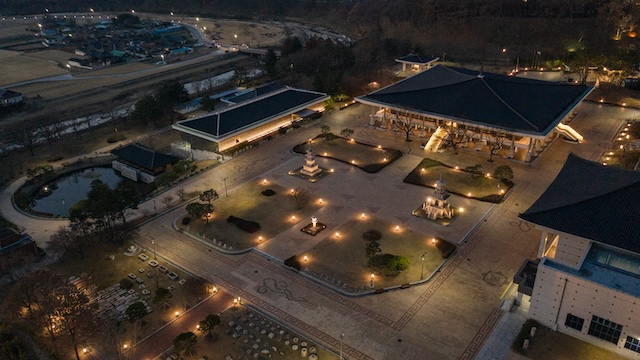
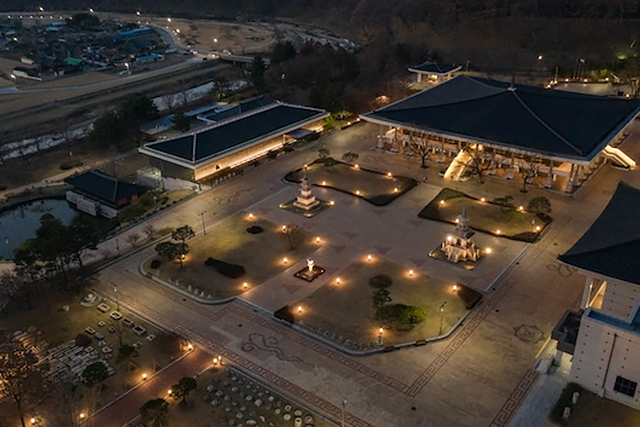
Gyeongju National Museum showcases the rich history and culture of the Silla Dynasty

The choice of venue can turn an ordinary incentive trip into an extraordinary experience. 

Korea, with its rich culture, stunning landscapes, and dynamic cities, offers a wealth of unique venues that can add a touch of magic to any incentive programme. 

From historical palaces to contemporary art spaces, the country boasts a diverse range of options — 52 unique venues, each with its own charm and is representative of the region it is located in. 

By selecting venues that authentically reflect Korea’s charm and spirit, incentive groups can create unforgettable memories and strengthen company bonds. 

Here are four unique venues to consider:  

Gyeongju National Museum, Gyeongsangbuk-do Province

Located in Gyeongju, the capital of Silla for a thousand years, the Gyeongju National Museum is Korea’s leading museum for exploring the cultural heritage of the Silla Dynasty. Here, visitors can learn about the rich history and culture of the Silla Dynasty through various educational programmes, such as a 70-year-old Gyeongju Children’s Museum School and a Children’s Museum. 

Each year, there is a different exhibition held for children to learn about the history and culture of Silla. The special exhibition hall also presents artwork recognised at the Cultural Heritage of Korea Drawing Contest, a long standing tradition.

The auditorium building can accommodate up to 110 persons.

Combine a visit here with nearby attractions, Bulguksa Temple and Seokguram Grotto, which are renowned UNESCO World Heritage Sites. These iconic symbols of Korea’s cultural and spiritual heritage showcase Buddhist architecture and artistry of the Silla kingdom.

Address: 186, Iljeong-ro, Gyeongju-si, Gyeongsangbuk-do, 38171

Key facility: Auditorium Building (indoor), 110 persons 

Clayarch Gimhae Museum, Gyeongsangnam-do Province
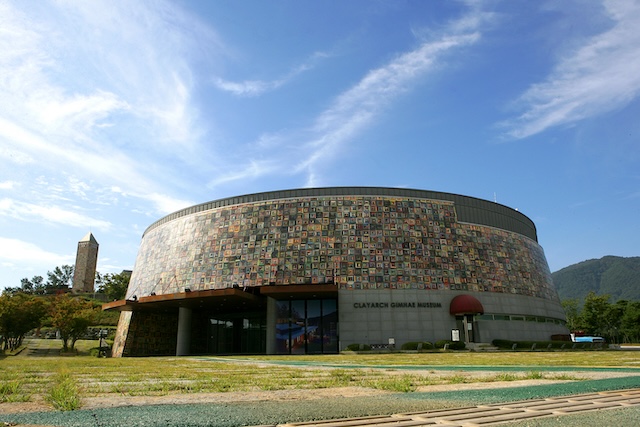
Clayarch Gimhae Museum can host large domestic and international events, exhibitions, educational classes and academic seminars

The Clayarch Gimhae Museum is located in Gimhae, the centre of the ancient Geumgwan Gaya dynasty and the birthplace of Buncheong ware. 

The museum is a cultural arts complex with various spaces and facilities, which can host large domestic and international events, exhibitions, educational classes and academic seminars. It is the world’s first museum that specialises in architectural ceramics, and has 5,000 fired painting tiles surrounding the outer wall. 

The building itself is considered to be a piece of artwork. There are the Dome House and the Cubic House, which are exhibition spaces, and Ceramics Creative Center, a residency space for domestic and international artists. 

Meanwhile, Art-Kitchen and Clay Academy provide various educational programmes with hands-on experiences. Large outdoor events and performances can be staged in two places, a large square in front of Dome House and in Picnic Park, located behind Dome House. The venue also has a media room, which is equipped with sound and lighting systems and can be used as a venue for international academic meetings and seminars.

A unique activity for groups here is Happy Clay, a healing programme that combines yoga, exhibition viewing and ceramic experience.

Up the fun factor by planning a trip to the nearby Gimhae Nakdonggang River Rail Park, which has a scenic 3km rail bike ride that runs alongside the river.

Address: 25, Buncheong-ro, Jinrye-meon, Gimhae-si, Gyeongsangnam-do

Key facility: Lawn Square (outdoor), 300 persons

Tri-Bowl, Incheon
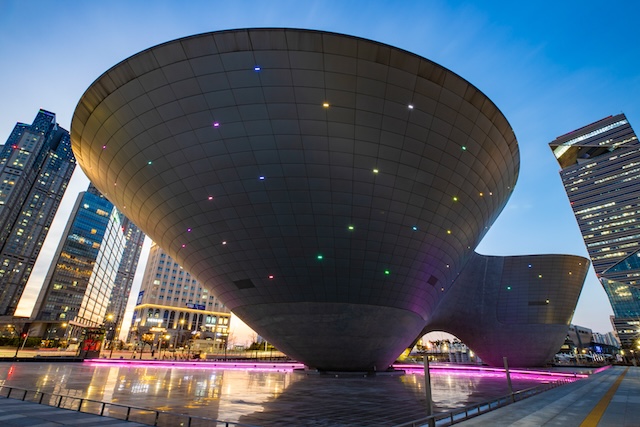
The multi-complex culture and arts centre is renowned for its distinctive architecture

Tri-Bowl in Songdo, Incheon is a multi-complex culture and arts centre renowned for its distinctive architecture. Breaking away from conventional building design, it has a curved floor made up of three bowl-shaped spaces with a flat roof. 

Visitors must cross over a bridge that spans over a pool of water to get to the building, which houses an 822m2 arena-type concert hall and 221m2 multi-purpose hall. The iconic Tri Bowl is ideal for anyone looking for a creative and inspiring venue for a wide range of events, exhibitions, and occasions. Viewing of exhibitions and performances can be pre-arranged if schedule permits.

Don’t miss out on the nearby Songdo Central Park, the first seawater park in Korea, where visitors can partake in various water activities including a water taxi ride and canoeing. There are also various arts and installations and cultural performances held regularly.

Address: 250, Incheon tower-daero, Yeonsu-gu, Incheon

Key facility: Concert hall (indoor), 300 persons

Sejahtera Forest RCE Tongyeong, Gyeongsangnam-do Province
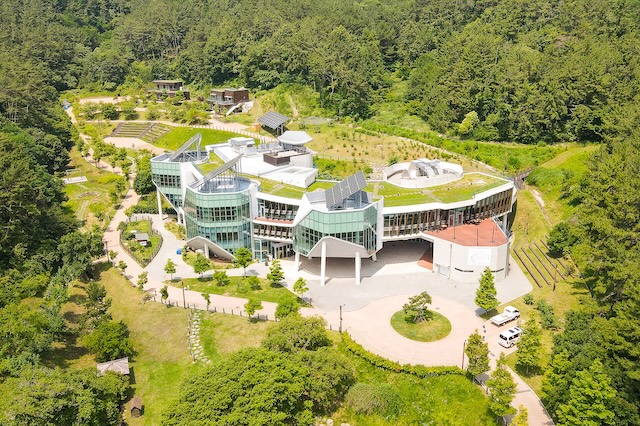
Learn how to coexist with nature in the Sejahtera Forest RCE Tongyeong, a sustainable development education centre recognised by the UN University

Designated as a sustainable development education centre by UN University, Sejahtera Forest RCE Tongyeong is a place to learn and practise the coexistence of nature and humans, humans and humans, and the present generation and future generations. 

Located in Tongyeong, a city of history and art, it offers indoor and outdoor spaces to host multi-purpose domestic and international events such as large-scale seminars and workshops.

The spaces are versatile enough for events of various sizes, from large spaces that can accommodate up to 200 people to small and medium-sized spaces. 

Outdoors, there are grass squares for recreational events and outdoor concert halls for small and medium-sized concerts and performances, some surrounded by ocean views. In addition, it has its own lodging facilities and a cafeteria with catering, ideal for one-stop events while healing in nature.

Groups can join Education for Sustainable Development programmes offered by RCE Tongyeong. The programme includes a tour of the facilities to learn about the Sejahtera Center’s sustainable development philosophy.

Combine the visit with a ride on Tongyeong Cable Car, which takes one up the 1,975m Mireuksan Mountain for panoramic views of the surrounding greenery and ocean.

Address: 116 Yongnam Haeanro, Tongyeong, Gyeongsangnamdo

Key facility: Art Hall (indoor), 200 persons

MICE support programme for corporate meetings and incentive tours

Korea Tourism Organization (KTO) has a support programme for companies organising corporate meetings and company incentive trips. 

To be eligible, the group size has to comprise at least 10 people and they must stay for at least two nights in Korea. 

The support programme is classified into five grades and the type of support offered range from providing souvenirs to convention tourist destinations. Customised support is also available for groups of 201 to 500 participants (Grade 3). 

For larger MICE group sizes of 501 to 2,000 (Grade 2) and 2,001 and above (Grade 1), they will be able to receive further support to enhance their stay in Korea. The type of support is subject to change on an annual basis. 

Looking to add unforgettable venues to your MICE itinerary? Discover other unique venues that Korea has to offer. Those interested to host MICE-related events in Korea can email sgmice@knto.or.kr to find out more and apply.

Future proofing

0

Melbourne’s business tourism landscape is rapidly evolving, driven by a resurgence in demand, aviation routes returning with a vengeance, and innovative opportunities for events.

A new regional convention centre in the pipeline is also expected to open up fresh events possibilities, potentially allowing delegates to bypass Melbourne city entirely, and redirecting economic activity to regional areas.

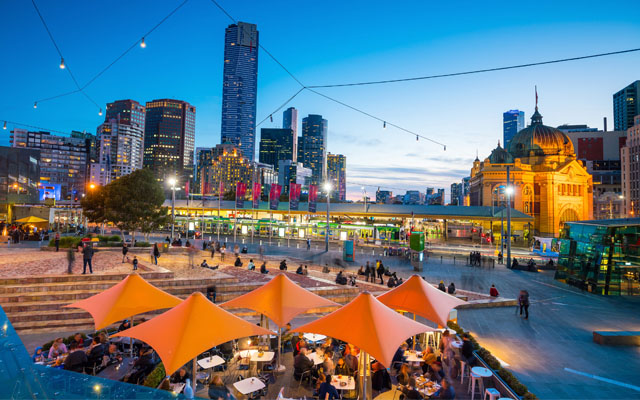
Melbourne business events sector is booming; city skyline pictured

In 2024, Melbourne expects to welcome about 85,000 international and national delegates across 130 events, including 40 international association events, or about one a week.

The Chinese market also appears to be returning, with Amway China bringing in 10,000 incentive delegates last April, marking the first time an incentive event of that scale has returned since the pandemic.

“The events sector in Melbourne is performing incredibly well, and we are getting strong demand coming out of Asia. We are seeing a really high volume of events coming through with strong attendance,” Julia Swanson, CEO of the Melbourne Convention Bureau, told TTGmice.

“Many events have been in renewables, new energy, business, sociocultural engineering, and education.

“We’ve also got the fastest growing hotel pipeline in Australia, so together with the new (regional) convention centre in Geelong opening in 2026, we have a growing capacity for events and are certainly expecting continued economic growth.”

Among the new accommodation infrastructure is a mixed-use development that will open early next year in a new part of Melbourne opposite the Melbourne Convention and Exhibition Centre (MCEC), featuring dual hotel brands in TFE Hotels and A by Adina. It will also offer an event space for 1,000 people.

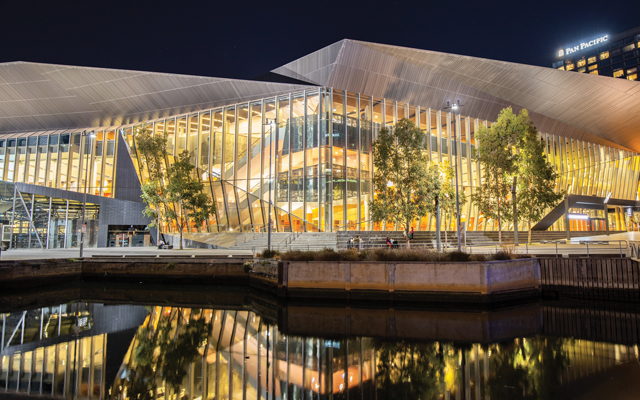
Melbourne Convention and Exhibition Centre hosts many events in a year

Another notable hotel brand to make its mark is a 62-storey luxury flagship Shangri-La, which will likely open in 2025.

“To have that ultra-premium, Asian brand in Melbourne is a huge asset, and it’s in a beautiful location with phenomenal views of the city from one direction and the heritage-listed Royal Exhibition Building on the other,” added Swanson.

Also highly anticipated is the Elysian Fields, a proposed A$1.7 billion development on a 27,000m2 site to build the world’s first futuristic luxury wellness hub combining modern health, ancient wisdom, and neuroscience, within fairly close proximity to the MCEC.

There is robust activity on the aviation front too.

“In terms of connectivity to Asia, we are seeing those last few gaps that were prevalent after Covid reopen, alongside new services. Beijing Capital Airlines is launching a new Melbourne-Hangzhou route in June. With five direct flights per week, Hangzhou will be the eighth destination in mainland China to connect to Melbourne,” said Swanson.

Vietjet Air is also now connecting Melbourne to both Hanoi and Ho Chi Minh City, and December 2023 saw non-stop flights from Mumbai via Air India commence.

Joining the party soon is South Korea’s Asiana Airlines, which will run four flights weekly between Melbourne and Seoul for a seasonal service from July to December, which Swanson expects to “really make a difference in welcoming back our Korean attendees”.

Legacy-wise, Melbourne is keeping on the front foot, continuing to innovate its events and putting new stakes in the ground. Responding to what it saw as a growing appetite to gather the brightest minds in finance, a new Asia Pacific Financial Innovation Summit was built and held in April 2024, and developed with the state government and finance professionals. Within six weeks of its announcement, it attracted 600 delegates including global financial sector heavyweights Blackstone, Apollo, and Cornell Capital.

“It’s events like that, that we are looking to do a bit differently. It didn’t exist, so we identified the gap in the market, rallied some of the talent here and their global connections, and created something new in Melbourne,” said Swanson.

In the meantime, big expansion plans are underway for regional Victoria. The new Nyaal Banyul Geelong Convention and Event Centre is expected to open in early 2026 in the state’s second-largest city, where there is already a hive of activity with government offices, Deakin University, and research centre CSIRO.

It is expected that Avalon Airport, located 15km from Geelong, will grow to accommodate more international flights, creating the potential for event delegates to enter Victoria directly and experience incentive offerings in the area, and also serving as a gateway to the Great Ocean Road for leisure trips.

“It just adds another offering to our toolkit when we are selling Melbourne and Victoria internationally,” said Swanson.

Borneo Business Connect APGH conference boosts Sarawak’s hydrogen ambitions

0
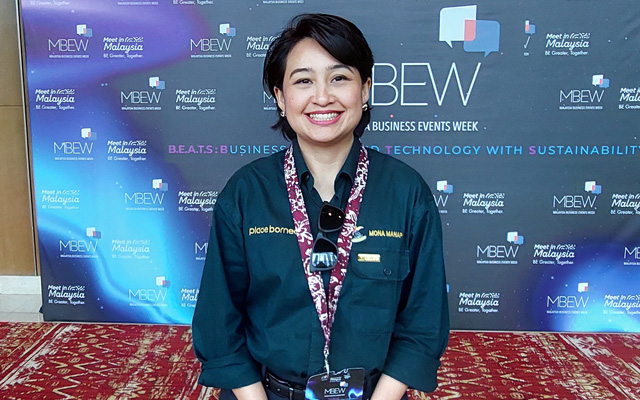
Mona: BBC is working closely with the state’s leadership to drive further investment and growth in the hydrogen energy sector

Borneo Business Connect (BBC), a newly established business events company in Malaysia, is playing a key role in advancing the hydrogen economy in Sarawak and the Asia-Pacific region.

This was evident in June 2024 when BBC hosted the inaugural Asia Pacific Green Hydrogen Conference & Exhibition (APGH) at the Borneo Convention Centre in Kuching, Sarawak.

Mona: BBC is working closely with the state’s leadership to drive further investment and growth in the hydrogen energy sector. Photo: S Puvanswary

Backed by Sarawak’s Ministry of Energy and Environmental Sustainability and supported by Business Events Sarawak, APGH provided a crucial platform for hydrogen industry players to network, share knowledge, and explore new opportunities across the region.

BBC is a joint venture between Place Borneo, a PCO based in Kuching, and DSA Exhibitions Holdings, a PEO headquartered in Kuala Lumpur.

BBC’s CEO, Mona Abdul Manap, explained to TTGmice that APGH was designed to attract investment into both Sarawak and the wider Asia-Pacific region. The inaugural event was a success, with 96 companies from 36 countries participating and over 3,200 trade visitors in attendance.

Established last year specifically to create APGH, BBC aligns its work with Sarawak’s Post-Covid Development Strategy 2030, which emphasises renewable energy development as a key part of the state’s future growth.

This comes as Sarawak is positioning itself to become the leading hydrogen hub in Asia-Pacific, with its abundant water and land resources providing a strong foundation for hydrogen production.

In his keynote address at the launch of APGH the premier of Sarawak, Abang Johari Openg, announced plans to establish a Centre of Excellence for Clean Energy in Sarawak. This centre will focus on research and development of sustainable energy solutions, not just for hydrogen but for other clean energy sources to help combat climate change.

Looking ahead, BBC plans to make APGH a biennial event, with the second edition planned for 2026.

In the interim, they will launch the Hydrogen Economy Forum (H2EF) in 1H2025, which will zero in on the hydrogen economy value chain and its key players.

Mona shared that the forum will be held in Kuching and will build on the conversations and connections made during APGH, especially among companies involved in both the upstream and downstream sectors of the hydrogen industry.

BBC also has additional clean energy initiatives that will contribute to the multi-energy systems needed for global energy security.

SFF’s MeetUp set to be Asia’s largest fintech meeting programme

0
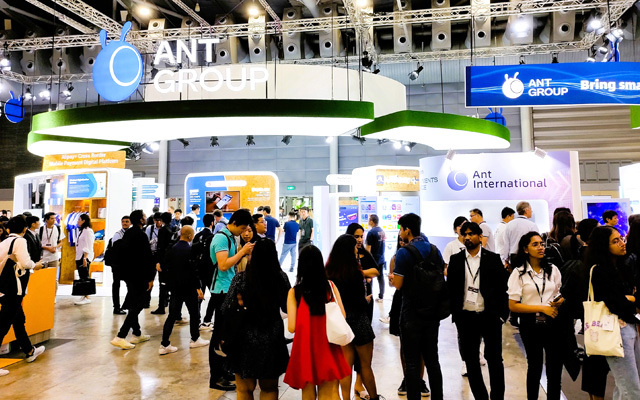
SFF 2023 exhibition. Photo: Gerardine Donough-Tan

Singapore FinTech Festival (SFF) MeetUp, a networking initiative being introduced this year at SFF, aims to foster new partnerships and drive growth opportunities.

While key topics this year include artificial intelligence and quantum computing in revolutionising financial services, and sustainable finance, the SFF MeetUp will be a first at both the event and in Asia. The scale also makes it Asia’s largest fintech meeting programme.

SFF 2023 exhibition. Photo: Gerardine Donough-Tan

“SFF MeetUp is designed to help attendees meet, collaborate and conduct business efficiently, transforming networking at the Festival with half an exhibition hall dedicated to simultaneous one-on-one meetings,” said Susan Tan, event director of SFF.

SFF MeetUp is expected to facilitate about 15,000 to 20,000 meetings throughout the Festival, where ip to 1,600 people can meet simultaneously for 20 minutes at 800 tables.

Explaining the mechanics, Tan said: “SFF MeetUp is powered by a fully digitised framework, featuring a speed-dating format with up to 25 double opt-in meetings, seamlessly integrating real-time data from registration and ticketing.

“The algorithm is designed to optimise meetings and enhance participants’ interactions across a complex, multi-sided ecosystem.”

The tech-enabled networking initiative is hosted in a unique collaboration with Personatech, a leading event tech company, and tailored specifically to the needs of SFF. It is more sophisticated than the usual B2B appointment-scheduling and meeting formats of many tradeshows and marts.

Already tried in the US, the organisers say the transformative, tech-based networking experience has proven to deliver at least five times more efficient and effective engagement opportunities for attendees.

SFF MeetUp participation is included in Delegate, Executive, MeetUp and Startup pass types. The registration, request, acceptance and appointment confirmation process runs from September 30 to October 30, 2024.

Now in its ninth year, SFF has been consistently growing and refreshing its palette. Organised by the Monetary Authority of Singapore, Elevandi and Constellar, this year’s SFF will take place at the Singapore Expo from November 6-8, 2024.

Building for Malaysia’s MICE future starts now: MBEW panel

0
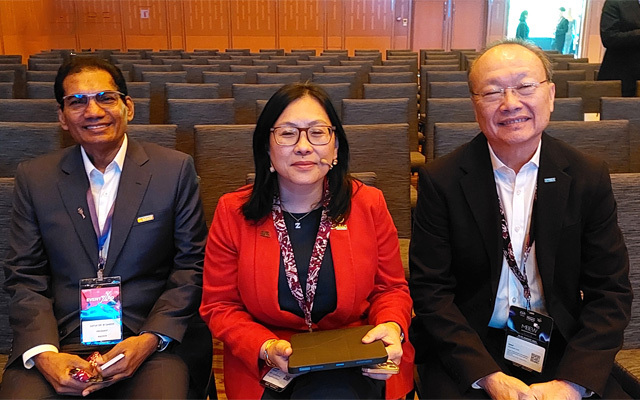
From left: MACEOS' M Gandhi; Sabah Convention Bureau’s Noredah Othman; and AFECA's Vincent Lim

Malaysia must adopt a clear, long-term strategy to strengthen its business events industry, a key driver of economic growth and nation-building.

M Gandhi, president, the Malaysian Association of Convention & Exhibition Organisers & Suppliers (MACEOS), stressed the importance of local event organisers broadening their scope beyond domestic audiences, highlighting the growth potential in nearby subregions and attracting international participants.

From left: MACEOS’ M Gandhi; Sabah Convention Bureau’s Noredah Othman; and AFECA’s Vincent Lim

“Sabah has a population of just three million,” Gandhi elaborated, “but by hosting a subregional event in Kota Kinabalu with attendees from the Philippines, Brunei, and Indonesia, organisers could tap into a market of over 80 million people.”

He added: “Similarly, holding a sub-regional event in Penang could attract participants from southern Thailand and Sumatra, Indonesia. The distance from southern Thailand to Penang is even shorter than the trip to Bangkok, which increases the event’s potential reach.”

Looking ahead, Gandhi shared that MACEOS aims to help event organisers create new subregional markets over the next five years. This will involve working with stakeholders in secondary destinations like Penang, Sabah, and Sarawak to boost their visibility through branding efforts.

In light of this, Vincent Lim, president of the Asian Federation of Exhibition and Convention Associations (AFECA) announced that the Kuala Lumpur Convention Centre will host the AFECA Convention, from November 4-6, 2024. The convention will be a platform for discussions on strengthening Asia’s business events industry, and provide Malaysian event professionals the opportunity to engage in meaningful networking.

Lim also emphasised the need for long-term planning to grow Malaysia’s B2B business events sector by investing in larger convention and exhibition venues, especially in Kuala Lumpur.

He stressed that leaders should start thinking of building larger venues with capacities between 180,000 to 200,000m2 now, as these projects can take five to 10 years to complete.

Lim pointed out that without enough space for international events, Malaysia might miss out on opportunities. “Homegrown exhibitions could also scale more effectively if there were adequate exhibition spaces,” he added.

Both Gandhi and Lim were speakers at the Malaysia Business Events Week’s panel session entitled Advancing Business Events in the Next Frontier, with Noredah Othman, CEO of Sabah Convention Bureau as the moderator.

Stars align for 32 sick children at Five Chef’s Dinner

0
These chefs came together to make a significant difference in the lives of sick children

A star-studded culinary event brought together some of Melbourne’s top chefs to raise funds for seriously ill children.

Held at the Melbourne Convention and Exhibition Centre (MCEC), the Starlight Five Chef’s Dinner showcased the talents of renowned chefs like Benjamin Cooper (Chin Chin), Guy Grossi (Grossi), Jacqui Challinor (Nomad) and Josep Espuga (pt Leo Estate), Alejandro Saravia (Victoria by Farmer’s Daughters), and Peter Haycroft (MCEC).

These chefs came together to make a significant difference in the lives of sick children

The dinner, sponsored by MCEC, featured a five-course degustation curated by the chefs, highlighting the best of Victorian produce. Guests were treated to a culinary journey that showcased the individual styles and flavours of each chef, while highlighting some of Victoria’s best producers including Infinity Blue, Sher Wagyu, Salt Kitchen Charcuterie and Aurum Poultry.

Inspired by champagne and caviar, the MCEC team also served canapes of butter-poached lobster macarons with Yarra Valley caviar and beach herbs alongside mushroom arancini with porcini cream and pickled celeriac.

Beyond the exquisite food, the event raised over A$540,000 (US$363,855) for the Starlight Children Foundation. This money will go towards granting life-changing wishes for 32 seriously ill children and their families.

Natalie O’Brien, chief executive of MCEC, expressed her pride in the event and its impact on the community.

“The Starlight Five Chef’s Dinner is a wonderful opportunity to support our local community while sharing what makes Melbourne the ultimate food lovers destination,” she said.

ICC Sydney’s Geoff Donaghy bids farewell

0

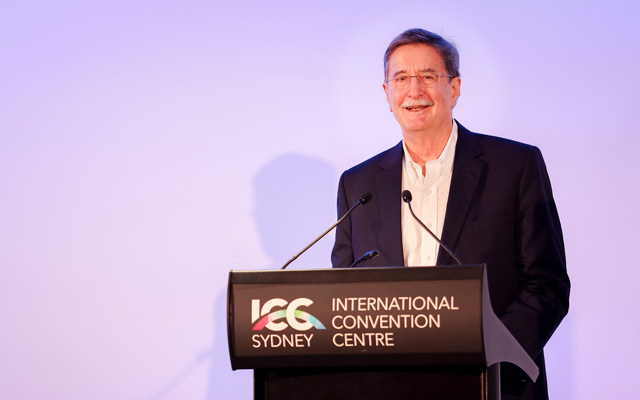
After an extraordinary 30-year career at ASM Global, Geoff Donaghy will step down from his full-time role as CEO of ICC Sydney and group director – Convention Centres, ASM Global (APAC) this month.

ICC Sydney’s team has honoured Donaghy’s legacy by creating the ‘Geoff Donaghy Leadership Award’ category in the internal Extraordinaires Awards programme.

Donaghy started his career as a school teacher who then moved to the tourism sector through airline and then hotel industry roles, before being appointed general manager of the Tourism Tropical North Queensland (tourism and convention) bureau in 1989.

He joined today’s ASM Global in 1994 to open the Cairns Convention Centre, before moving to Brisbane to lead the opening of Suncorp Stadum as CEO in June 2023.

Under his direction,Donaghy curated the team that would eventually open International Convention Centre Sydney (ICC Sydney) in December 2016.

Under his stewardship, ICC Sydney’s team delivered over 3,665 events that attracted 6.4 million visitors who contributed A$3.9 billion (US$2.6 million) in economic benefit to the local economy to date. Across his time at the helm of ICC Sydney, he and his team have received 95 industry awards, achieved an average delegate satisfaction rating of 97.4 per cent and 98.2 per cent client satisfaction rating.

ICC Sydney was the first convention centre to release a Reconciliation Action Plan and a Disability Inclusion Action Plan, reach Silver Tier status in Pride in Diversity’s Australian Workplace Equality Index, among other leading campaigns such as its Feeding your Performance philosophy and client Legacy Program.

Former Live Nation executive Meagan Walker moves to ASM Global

0

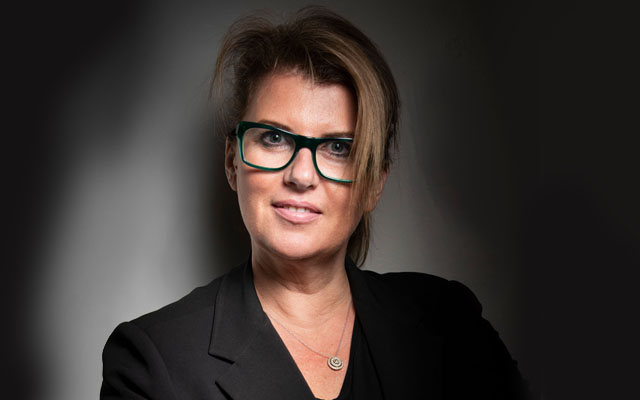
Chairman and chief executive of ASM Global (APAC), Harvey Lister, has appointed Meagan Walker as group director of arena operations, replacing Tim Worton, who announced his retirement earlier this year.

Walker joins ASM Global on October 10 from her current role with Live Nation. In her new role, she will lead the ASM Global arena network in Australia while supporting other arena venues in the region with a focus on event acquisition, operational planning for best practice patron experience and event delivery.

Walker is a venue management professional and entertainment industry specialist, who has held senior management roles with some of Australia’s high-profile venues including Melbourne’s Rod Laver Arena, Margaret Court Arena, John Cain Arena and Palais Theatre.

She has also been involved with the Venue Management School for 13 years and the Leadership Institute since its inception and serves as a board member of the Venue Management Association.

Photo of the day: Malaysia Business Events Week 2024 kicks off

0

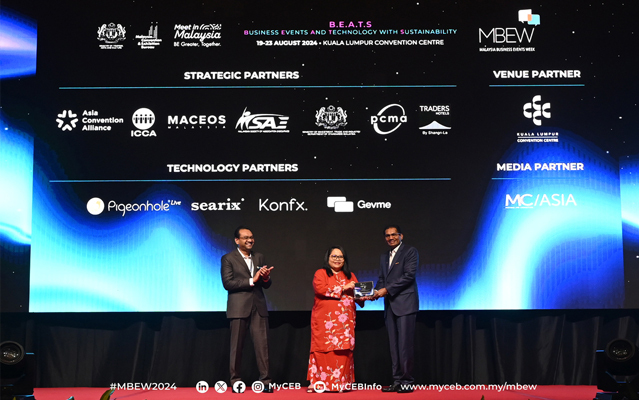
The Malaysia Business Events Week 2024 (MBEW2024) officially kicked off today, drawing around 300 local and international delegates to Kuala Lumpur.

Held at the Kuala Lumpur Convention Centre, the theme for the annual flagship event organised by the Malaysia Convention & Exhibition Bureau (MyCEB), is Business Events and Technology with Sustainability (BEATS).

Officiated by Yasmeen binti Yasim, deputy secretary-general (tourism) of the Ministry of Tourism, Arts and Culture Malaysia, MBEW2024 will feature expert panels, breakout sessions, and a bid workshop hosted by MyCEB. Delegates will also have the opportunity to engage with the Department of Standards Malaysia for a public consultation on Malaysian Standards on Business Events.

One of the highlights of the event was the signing of a Memorandum of Cooperation (MoC) between MyCEB and Centexs Commercial Services (CCS), where this partnership aims to enhance skills development and innovation in the business events industry in Malaysia.

The week-long event began with the Asia Convention Alliance Forum and EVENTXPO, organised by the Malaysian Association of Convention & Exhibition Organisers & Suppliers. These pre-events were exclusively for invited trade partners, including members of the Asia Convention Alliance.

New SAP Concur research reveals five challenges threatening business travel in 2024

0
Business travel is facing challenges like disruptions, cost pressures, and the need for sustainability

As global workforces grapple with the disconnect of remote working, efficient business travel is a top priority – offering access to new markets, insights, and development opportunities.

However, it comes with complications, such as the threat of disruption, reluctance to travel, sustainability concerns, and access to travel opportunities.

Companies and travellers must redefine flexibility and harness it to achieve their respective objectives

These findings were revealed by new SAP Concur research of 3,750 travellers and 600 travel managers across global markets. This includes 850 respondents from the Asia-Pacific (APAC) countries of Australia, New Zealand, Japan, Korea, India, Singapore and Malaysia.

“The research suggests that APAC organisations need to better balance fluid and sometimes conflicting corporate and employee travel needs, stem employee reluctance to travel due to work-life balance concerns, and accommodate growing demands for sustainable travel,” said Sushant Jain, chief revenue officer, Asia Pacific & Japan, spend management, SAP.

“Measures businesses could take include improving the flexibility of their travel policies, and better harnessing emerging technology like AI to obtain data-based insights to streamline workflows, minimise disruption, cut cost and raise boost employee satisfaction.”

To ensure smooth running and maximise their investments in business travel, business leaders must understand its friction points.

The top takeaways from the new research include:

The threat of disruption
About 86% of APAC travellers have been forced to make last-minute changes in the past year because of unexpected delays, cancellations or the need to re-route.

Travellers have had enough of losing out on their personal time and critical career connections. About 82% opt to add ‘booking buffers’ to the start or end of their journey, or both, incorporating extra time to counteract unexpected schedule changes. This frustrating cycle discourages business travel altogether. To reduce traveller stress, organisations should consider allowing travellers extra turnaround time for each booking, private connecting transport, and adding features to travel management tools to allow easy rebooking when disruptions take place.

Reluctance to travel
APAC business travellers cite safety (42%) or political or social (36%) concerns about the destination as the most common reasons that would cause them to decline a business trip.

The trend of combining leisure and business, or bleisure, has gained popularity among business travellers, but recent cost-saving measures by companies threaten this balance. More than 28% of APAC companies are reducing the ability for employees to work remotely, while travelling for pleasure or combining personal travel with business trips.

While a majority (72%) of APAC business travellers stated that travel is critical for their career advancement, 22% of employees would decline a business trip if they could not extend it for personal travel, and 26% would also refuse if they couldn’t make adjustments outside of company policy.

The toss-up between sustainability and costs
Over a quarter (28%) of APAC business travellers are willing to decline a business trip due to the environmental impact or the inability to choose sustainable options, while a further 28% claim their company has cut back on paying more on sustainable travel options over the past 12 months.

Around 31% of APAC travellers say their company prioritises sustainable travel options, but one in three travel managers globally face difficulty booking travel as they are expected to provide more sustainable travel options without an adequate travel budget.

Unequal access to travel opportunities
Almost three-quarters (72%) of APAC business travellers say that travel is critical for their career advancement – but the same proportion feel they have not received equal opportunity to travel compared to their colleagues.

Staff cite reasons for unequal access such as their level of seniority (22%), age (18%) and gender (10%).

The need for AI solutions and education
Most APAC travellers (95%) are open to using AI-enabled options when arranging travel, but there is a prevailing “wait and see” attitude. Only 6% are comfortable using AI-enabled options currently.

As much as 90% of APAC business travellers want more company support, including assurances for personal data protection, potential biases, and protection from repercussions if AI-assisted bookings contravene company policy.

“While leaders won’t be able to solve travel disruption overnight, they can make it more manageable for staff,” said Jain. “By introducing measures to improve travel flexibility, training opportunities and next-generation technologies, APAC organisations can adapt to a challenging market and future-proof their business travel posture for the long term.”

The full new SAP Concur research with all the findings is available here. The APAC addendum is here.

Reviews

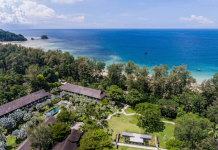
The Slate Phuket

Just 10 minutes from Phuket International Airport on the serene northern coast, this 178-key, Bill Bensley-designed resort offers delegates a quiet, tropical paradise steeped in Phuket’s tin-mining heritage

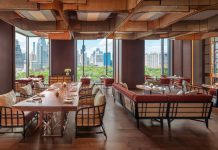
The Ritz-Carlton, Bangkok

The newly-opened Ritz-Carlton, Bangkok anchors the One Bangkok development with cosmopolitan elegance. Featuring the city's largest ballroom and a spectacular new penthouse suite, it delivers exceptional hardware and deeply authentic, soulful service for business and leisure travellers alike

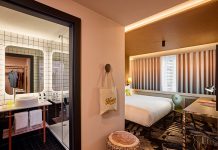
Mama Shelter Zurich

Behind the imposing, Brutalist concrete that defines Zurich’s Oerlikon district lies a surprising secret. While its exterior honours the neighbourhood’s industrial roots, stepping inside Mama Shelter reveals a vibrant, neon-soaked world that is a far cry from its rigid shell