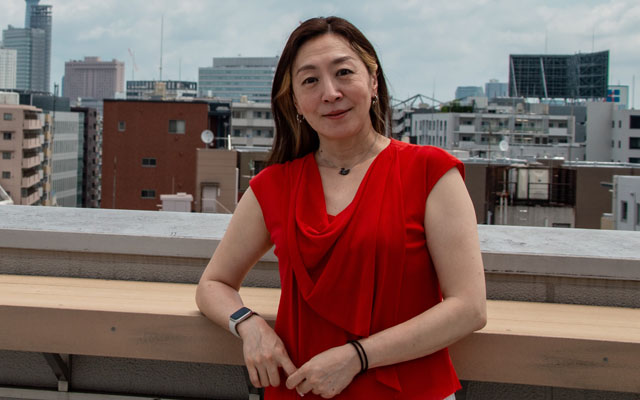
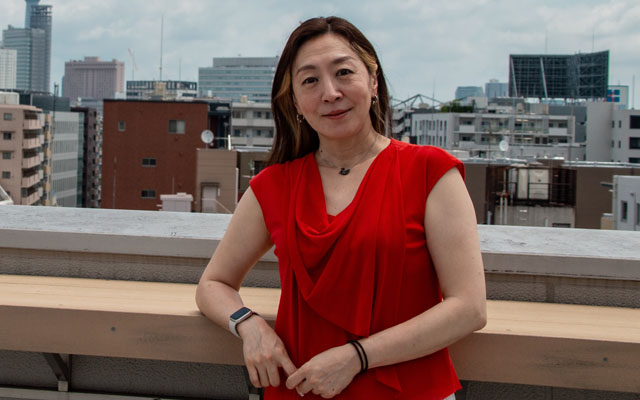
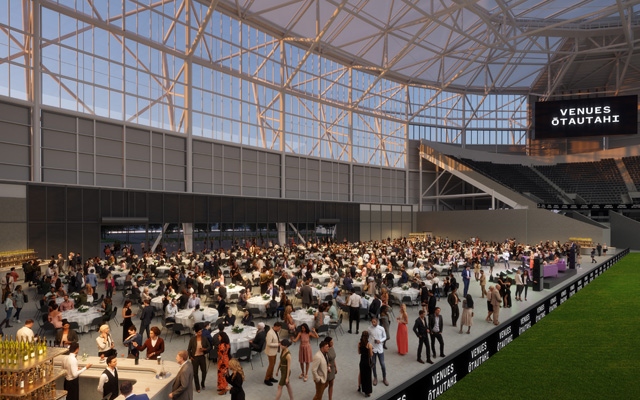
The Global Startup Program in action. Photo: Tokyo Metropolitan Government
The Tokyo Metropolitan Government has kicked off the Showcase Program of Sustainable High City Tech Tokyo (SusHi Tech Tokyo), an event expected to attract more than 500,000 domestic and international visitors.
Designed to showcase Tokyo-originated innovations for solving problems faced by urban areas globally, such as sustainability, energy and mobility, SusHi Tech Tokyo will run until May 26, 2024. In addition to the Showcase Program, which offers a model for urban living in the future by fusing nature and convenience, the event features a Global Startup Program and a City Leaders Program.
The Global Startup Program in action. Photo: Tokyo Metropolitan Government
The Showcase Program showcases life in Tokyo in 2050 through a range of interactive exhibits and demonstrations including cutting-edge mobility options for all abilities and state of the art technologies in renewable energy, environmental improvement and resource recycling. Visitors can also watch a flying vehicle on select days.
Keisuke Saito, director of policy research at the policy division office of the governor at Tokyo Metropolitan Government, told TTGmice that the Showcase Program, held in Odaiba and the capital’s waterfront area, is expected to attract many international tourists.
As part of SusHi Tech Tokyo, a Global Startup Program was held from May 15-16. The largest startup event in Asia, the event welcomed 40,000 participants, 4,000 representatives of startups and 400 exhibitors. Meanwhile, the City Leaders Program brought together experts from five continents to discuss problems and solutions from May 15-17.
Both programmes were designed to showcase Tokyo as a leading global business events destination, an important goal for the Japanese government which aims for Japan to become the top business events destination in Asia by 2030.
Delegates at the Australian Disability Network IMPACT Conference
The Melbourne Convention and Exhibition Centre (MCEC) marked Global Accessibility Awareness Day (May 16) with a series of new collaborations and initiatives aimed at enhancing accessibility, inclusivity, and overall event experience.
These efforts, part of the venue’s Positive Impact Guide, come in response to growing demands for more welcoming and inclusive events. The recent Australian Disability Network IMPACT Conference further underscored MCEC’s commitment to inclusivity, showcasing their efforts in creating an engaging and inviting environment for all participants.
Delegates at the Australian Disability Network IMPACT Conference
The event featured accessible technology, Auslan interpreters, sensory rooms and accommodations for assistance animals, ensuring an inclusive experience for all participants. The catering options included tray service as well as table service, with a wide range of menu selections available at every station. For presenters with mobility needs, ramps leading up to the stages equipped with handles on each side allowed easy access.
Travellers Aid, a recent addition to MCEC’s Positive Impact Guide, operated a buggy service for attendees with mobility needs, ensuring everyone could easily travel to and from the conference.
MCEC also recently hosted the International Society for Autism Research Annual Meeting secured by the Melbourne Convention Bureau. At the event, one in 10 conference attendees identified as autistic.
To reduce sensory overload, stage lighting for keynote speakers was adjusted, meeting rooms were furnished with all black chairs, and hand dryers in the bathrooms have been switched off to minimise noise. There is also enough room for attendees to stand and walk at the back of the rooms without disrupting the session. A low sensory space was also available, offering a quiet and comfortable environment for attendees to take a break . A designated networking space for autistic researchers was also provided, allowing for more comfortable and inclusive interactions.
Prior to the event, MCEC team members also participated in an education workshop to understand how they can best support autistic attendees and ensure a positive experience for all.
Moving forward, MCEC is collaborating with Travellers Aid at the upcoming Accessible and Inclusive Tourism Conference, hosted by the Victorian Tourism Industry Council in August 2024, to provide a buggy service, motorised wheelchairs and personal care support for attendees.
PATA paid recognition to three tourism professionals and industry leaders, whose work has contributed to the overall development of Asia Pacific tourism and beyond, at the recent PATA Annual Summit 2024.
The PATA Life Membership was presented to Darren Ng, managing director, TTG Asia Media. As PATA’s highest individual honour, the award serves to recognise individuals for their leadership and dedication to the association.
(From left) PATA’s Peter Simone; AsiaChina’s Soon-Hwa Wong; OAG’s Mayur Patel; ECI Travel World’s Elizabeth M Chin; TTG Asia Media’s Darren Ng; and PATA’s Noor Ahmad Hamid
Ng served as the chairman of the PATA Singapore Chapter from 2008 to 2016 and is currently an advisor to the chapter. He has also been a council and advisory member of PATA, serving as an Industry council member, proxy member, and board member between 1990 and 2023. Currently, he holds a position on the Supervisory Board of PATA.
The PATA Award of Merit was presented to Elizabeth M Chin, executive director, PATA New York Chapter. This award is reserved for individuals who have consistently contributed to PATA and the PATA chapter network over an extended period of time.
Chin has played a pivotal role in the success of the PATA New York Chapter and supported numerous workings of the association as a whole. She began her professional journey as a corporate auditor, followed by over 25 years of diverse experiences across various industries, ranging from food service to entertainment. In 1986, Chin founded and has since served as the owner of ECI Travel World, providing travel experiences tailored to exploring destinations worldwide.
Mayur Patel, head of Asia, OAG, was presented with the PATA Chairman’s Award, reserved for individuals who have shown support, loyalty and dedication to the association and industry during their tenure.
Prior to joining OAG, Patel was with Amadeus. He also spent over seven years at IATA, in a variety of roles focused on aviation data solutions and services.
Meanwhile, PATA has appointed Soon-Hwa Wong, CEO of AsiaChina, its Ambassador for Greater China. He will work towards achieving the goals of PATA, facilitating collaboration among stakeholders in the travel and tourism industry, and enhancing the presence of PATA in Greater China.
PATA CEO Noor Ahmad Hamid said: “PATA congratulates all four individuals on this sincere acknowledgement of their passion and leadership in ensuring the responsible development of travel and tourism in Asia Pacific and beyond. With their guidance, the association continues to grow and serve its purpose in supporting the industry. Their tireless efforts should inspire all of us as fellow tourism professionals to fulfil our roles in driving tourism forward.”
The Ritz-Carlton Hong Kong recently held a half-day corporate fair in its Diamond Ballroom, where the event showcased the hotel’s event space, as well as featured eight vendors and their latest products and services that can enhance conference experiences.
Approximately 200 corporate professionals and event planners tried their hand at virtual reality-based teambuilding activities, AI-enhanced photo booths, and customised live printing on luggage tags. They also learnt about an onsite event registration system with tracking capabilities, as well as explored Sky100, the hotel’s partner venue situated on the 100th floor, the city’s highest event space.
Attendees crafting their luggage tag
The Ritz-Carlton Hong Kong’s acting general manager, Anas Bencheqroun, said that this is the “first-ever initiative” in the industry.
“We considered what the market needs and how we can assist. In addition to showcasing our hotel services and meeting facilities, we also collaborate with third-party suppliers. This allows event planners to gain a comprehensive understanding of our hotel’s meeting capabilities and the latest corporate products available,” he elaborated.
Bencheqroun emphasised that the hotel aims to be a one-stop shop for clients, and offer unique experiences planners might not have considered in the first place.
“We will soon host another corporate fair focused on external catering. We began extending our services beyond the hotel three years ago, bringing our operations to corporate offices and museums,” he shared.
The Ritz-Carlton Hong Kong also demonstrated its commitment to sustainability, integrating green practices into corporate events. For instance, the hotel partners with green vendor Plant Plant to recycle used wooden pallets into PAFCAL, a soil alternative made from sponge and ground matter. These non-soil plants are used in event floral arrangements and can be taken home by guests, reducing waste.
Bencheqroun also highlighted the importance of Environmental, Social, and Governance (ESG) factors in corporate decision-making.
“Companies are increasingly choosing destinations based on ESG initiatives. Our non-soil plants, which can be customised and taken away after events, position us as a leader in green innovation within the hospitality industry.”
Taipei (pictured) wants to become better known in the longhaul market
The newly-built Taipei Dome – a multipurpose stadium in Xinyi District – recently opened its doors, adding to Taipei’s portfolio of mega event venues, and boosting business activities within the District.
Cheng Peng-Ching, section assistant, tourism development division with Taipei’s Department of Information and Tourism, told TTGmice during an interview at IMEX Frankfurt that the government has plans to market the venue for large exhibitions, as well as other cultural activities.
Taipei (pictured) wants to become better known in the longhaul market
Sogo City, a mixed-use retail area, is scheduled to start operations next to the dome in May, while a cinema is slated to open by end 2024. There will also be a 20-storey InterContinental hotel featuring 400 keys, and facilities such as restaurants, meeting spaces, and a swimming pool.
“There is so much potential for business events around the Taipei Dome, and the Taipei city government will continuously expand its business events infrastructure, providing more choices to event planners,” Cheng added.
New luxury hotels such as a Park Hyatt and Andaz, located within a 10-minute driving radius of the Taipei Dome and The Sky Taipei skyscraper, are also scheduled to come online by end 2024 or in early 2025.
For now, the Taipei Dome will focus on attracting events from the South-east Asian market, as Asian incentives are currently its strongest business events sector. Attracting the longhaul market, buoyed by its direct air links from Europe and US, will come at a later stage.
“We’re here at IMEX Frankfurt because there are still (event organisers) who are unfamiliar with Taipei, and what we can offer. The challenge we face is not having enough exposure (on the world stage),” she pointed out.
Aviation experts weighing in on Singapore Airlines’ turbulence-related accident on Tuesday (May 21), where a 73-year-old passenger with a heart condition had died, say such fatalities are rare and that flying remains a safe way to commute over long distances.
The incident on SQ321, travelling from London to Singapore, occurred as the aircraft flew over the Irrawaddy Basin at 37,000 feet (about 11,277m) and dropped about 6,000 feet within minutes during sudden extreme turbulence, according to flight tracking data and updates from Singapore Airlines.
Pilots in flight will face turbulence associated with clear-air and convective weather, but these are rarely fatal
Thereafter, SQ321 made an emergency landing at Bangkok’s Suvarnabhumi Airport at 16.45 Singapore time.
A situation update from the airline issued early Wednesday morning stated that 79 passengers and six crew members are in Bangkok receiving medical treatment while those fit to fly have returned to Singapore on a relief flight that landed at Changi Airport at 05.05.
Speaking to Channel NewsAsia late on May 21, independent aviation analyst Alvin Lie said the intensity of turbulence experienced by SQ321 was likely “extreme” as it encountered clear-air turbulence (CAT), and that the phenomenon was rarely severe.
Stefan Wood, executive director at Air 7 Asia and pilot, who has flown in the region for the past 20 years, agrees that SQ321’s incident was unfortunate and rare, and stated that flying remains safe for travellers.
“Pilots in flight face turbulence associated with clear-air and convective weather such as thunderstorms. In the case of CAT, the aircraft can drop a couple of thousand-feet all of a sudden. Obviously, this will cause anything not buckled down to go flying,” Wood told TTG Asia in a call on May 22 morning.
Luzi Matzig, founder of Thailand-based VIP Jets, pilot, and chairman of travel and tourism firm Asian Trails Group, said “severe air turbulence can occur without warning” and injure passengers who are “on the way to or from toilets”. Injuries could be sustained when passengers are tossed against the plane’s ceiling and back onto the floor.
He stated that it would be wise for air passengers to “wear seatbelt at all times”.
Wood pointed out that the intensity of turbulence varies by aircraft size and flying altitude. Generally, larger aeroplanes are more stable while higher altitudes offer a more stable environment.
“The worst weather happens between 20,000 and 40,000 feet,” he said.
Larger passenger jets typically fly a maximum altitude of about 41,000 feet, whereas smaller private jets can go farther up to a maximum of 53,000 feet.
“To explain this simply, larger aircraft have to pressurise a larger cabin space, and it gets harder to pressurise at higher altitudes. On the other hand, smaller private jets have less cabin space to pressurise, hence it is easier to pressurise and can fly at higher altitudes,” said Wood.
Are flights more turbulent now? Social media chatter seems to paint a picture of flights encountering more frequent and intense turbulence.
Anecdotal feedback from conversations this TTG Asia reporter had with air crew during long- and mid-haul flights since the start of this year also indicated more frequent turbulence in the past year, with onboard injuries and minor accidents such as bumps and spills becoming commonplace.
An editorial authored by Yann Cabaret, CEO of SITA for Aircaft, and published in July 2023 on the SITA site, stated that climate change has resulted in a rise in extreme weather events, which have a significant impact on aviation operations, including flight delays and compromised safety of passengers and crew members.
He pointed to research published in June 2023 by the University of Reading showing a significant increase in CAT over the past four decades due to the warming climate, particularly in the US, the North Atlantic, South Atlantic, Eastern Pacific, Europe and the Middle East. CAT increases in northern Brazil and parts of the coast of Antarctica were more modest in comparison.
The study did not provide observations of CAT over Asian airspace.
Wood offered a different view: “You can talk about climate change and global warming, but my observations in flight are that it (intensity and frequency of air turbulence) has not changed. Thunderstorms build up and weather patterns come through – these things happen.”
“Aircraft weather radars are very good and should pick up on thunderstorms, allowing pilots to avoid them. However, not all weather is captured by radar, so pilots need to be situationally aware. Pilots can also spot weather conditions by looking out the front window, provided they are not in cloud, and by listening to other aircraft pilots in the region. Aircraft radar will show where other aircraft are going, and if they are going around something you cannot see yet, then you have to watch out,” Wood added.
In his post, Cabaret said CAT was “invisible and difficult to forecast ahead of a flight”, especially not by traditional onboard radar systems.
He wrote: “As different forecasts excel in specific areas, reliable and accurate weather forecasts and observations from various sources enable pilots and dispatchers to anticipate and avoid hazardous weather (including potential CAT occurrences), thereby reducing risks and improving safety.”
To achieve more accurate weather visualisation, SITA has developed solutions SITA eWAS and SITA Mission Watch to aggregate multiple weather feeds.
TTG Asia’s query to SITA about the accuracy of its weather aggregators and level of adoption of top-of-range weather visualisation technology by passenger airlines was unanswered at press time.
Cost of flying in turbulent weather Witsanu Attavanich, associate professor of economics at the Faculty of Economics at Kasetsart University in Bangkok, Thailand, told TTG Asia that the aviation industry must prepare for the potential rise in turbulence due to climate change.
Witsanu said: “Particularly in the region where the SQ321 incident occurred, over Myanmar-Thai airspace (Northern to Central Thailand and Upper Myanmar), published studies show this region is prone to weather conditions that lead to turbulence during this season – the months of March to May. During June to August, there will be less.
“Studies show that climate change leads to an increase of all forms of turbulence, and the potential economic impacts of this increase on the travel and aviation sector are manifold.”
He said turbulence could lead to increased fuel consumption, flight delays, cancellations, and even aircraft damage.
“Therefore, there may be increased fuel costs, as planes may need to carry more spare fuel to circumvent turbulence. Disruptions due to turbulence can lead to flight delays, cancellations and lost revenue. It can also damage aircraft, leading to repair costs and downtime, or contribute to passenger reluctance to fly,” he added.
The industry would also likely need to invest more money into technologies such as improved forecast models, advanced detection systems, and sensor development to better identify and circumvent turbulence, particularly CAT, he detailed.
Witsanu cited a US government study that suggested turbulence costs the country between US$150 million and US$500 million annually in economic impact. – Additional reporting by Anne Somanas
Exhibitions have transversal impact across multiple industries and economies, building communities to collaborate on solutions for global challenges
The ninth edition of Global Exhibitions Day (GED) will be held on June 5, 2024, under the theme Exhibitions are catalysts to sustainable futures.
Facilitated by UFI (The Global Association of the Exhibition Industry), the GED 2024 theme reinforces the role of exhibitions as platforms to bring people together face-to-face to connect, collaborate on global solutions aligned to the United Nations Sustainable Development Goals, and drive progress for economies worldwide.
Exhibitions have transversal impact across multiple industries and economies, building communities to collaborate on solutions for global challenges
Four key messages underpin this year’s theme, including how exhibitions drive progress, facilitate economic growth, are a sustainable way of doing business, and how it connects people.
The GED 2024 campaign is also collaborating with digital marketing partner Snöball and sustainability partner EcoMatcher to plant a “GED Forest” across the Philippines, Madagascar, and Ecuador. With every social share using Snöball, each participant will receive a tree planted in the GED Forest” provided by EcoMatcher.
UFI invites all professionals across the industry to amplify their support for GED 2024 and help grow the global GED Forest.
More resources and tools to celebrate GED 2024 can be found on the official event website, www.globalexhibitionsday.org. Some ideas on how to get involved include asking government officials for endorsement and recognition of the exhibition industry; sharing GED 2024’s theme and core messages with local media to increase awareness; organising a GED 2024 initiative and adding it to the GED World Map; or downloading the toolkit on the GED website and customise visuals using the GED logo or ‘Voices of the Industry’ card.
In conjunction with its 20th anniversary, Conrad Bali has launched a series of 20 curated experiences, such as gastronomic journeys, cultural encounters, and wellness escapes.
The experiences are in line with the hotel’s programme to support local culture, community, and conscious living, which have increasingly become event planner’s requirements when deciding on an event venue.
Conrad Bali’s 20th anniversary celebrations
According to Kevin Girard, general manager of Conrad Bali, most of the business events the hotel handles – small- to medium-size groups of the C-suite level – are looking for venues that practise sustainable operations and support the local community.
Fortunately, with the new experiences, Conrad Bali can achieve 11 out of United Nation’s 17 Sustainable Development Goals.
Girard shared: “We have a playbook with all of the elements that explain at what level event planners would like to be involved, or how they would like to source some of the elements that are suitable and relevant to their programmes.”
For instance, he shared, one of the 20 new experiences is called Gather Responsibly, which demonstrates what carbon offset practices the resort has in place.
“This package also elaborates how we manage food waste, including its separation and donation. Guests can also participate in this process. If they wish to make a food donation through the organisation we partner with, guests also have the opportunity to cook and prepare food that will be donated to the community,” Girard explained.
Another sustainable initiative is the Echo Printing activity. Here, the hotel’s discarded linen is repurposed and transformed into cloth with unique designs and colours. These are created by applying natural plant parts from Bali, such as flowers and leaves, onto the fabric. Guests can take home their designed cloths as souvenirs, along with the cultural knowledge and experience gained from the activity.
“We also collaborate with the Mountain Mamas, a local women’s organisation, to upcycle discarded linen. The linen is sent to them and repurposed into reusable bags, with the proceeds going directly into their personal bank accounts,” Girard shared.
In another example, another meeting planner sought to give unique trophies to their winners, so the hotel collaborated with a talented local sculptor who is differently abled. Together, they created Buddha trophies crafted from local wood.
The online toolkit has been designed around industry best practices to help travel managers and suppliers implement more accessible business travel programmes
The charitable arm of the Global Business Travel Association (GBTA), GBTA Foundation, has launched the GBTA Accessibility Toolkit, a guide to help travel managers and buyers create more accessible policies and practices in their business travel programmes.
The GBTA Accessibility Toolkit contains seven modules on industry best practices around travel policy, traveller communication, supplier engagement and point-of-sale, key challenges and opportunities in accessible business travel, a glossary of terms, and industry case studies.
The online toolkit has been designed around industry best practices to help travel managers and suppliers implement more accessible business travel programmes
For many business travellers, accessibility requirements may also be hidden, such as chronic pain, neurodiversity and mental health, and 70 per cent of travel managers do not know or will usually not estimate how many of their travellers have accessibility requirements. Adding to the challenge is the business travel industry lacks universal accessibility standards, therefore leaving many companies to address the issue in an ad-hoc manner.
“Addressing accessibility challenges needs to be a priority for the business travel industry, as there is still a significant gap in understanding business traveller differences and how these translate into various needs,” said Delphine Millot, managing director of the GBTA Foundation and senior vice president for sustainability and advocacy at GBTA.
“Our GBTA Accessibility Toolkit is designed to help companies address this issue, in turn enhancing the business traveller experience, maximising the ROI of business travel, and supporting the delivery of travel services from across the supplier landscape.”
As part of the GBTA Accessibility Toolkit, the GBTA Foundation has introduced five Calls to Action aimed at creating a more accessible business travel industry. These actions urge suppliers and travel managers to perform an accessibility self-assessment to identify areas for improvement.
Additionally, travel managers should enhance their systems to transparently collect and confidentially store accessibility information from travellers. They should also establish a proactive and transparent support structure for responding to travellers who disclose their accessibility needs.
Moreover, the business travel industry should work together to develop a universal coding system that provides detailed accessibility information commonly required by travellers.
The Accessibility Toolkit is available at https://gbtafoundation.org/accessibility/.
Meeting rooms are equipped with state-of-the-art equipment and high-speed Wi-Fi
The five-star Pullman Saigon Centre has rolled out a Meeting Offer starting from just VND 890,000++ per person.
The Meeting Offer includes rental of the meeting room with floral decoration, high-speed Wi-Fi, coffee breaks featuring locally-sourced snacks and beverages, and a lunch buffet or Asian set menu with free-flow drinks.
Meeting rooms are equipped with state-of-the-art equipment and high-speed Wi-Fi
Perks also include the offer of one complimentary guest for every 20 paid attendees, as well as four hours of event pre set-up.
The offer is valid from now until September 30, 2024.
Pullman Saigon Centre’s event spaces include a 420m2 Grand Ballroom with 4.2m ceilings and a 300m2 pre-function area accommodating up to 300 guests, and five meeting rooms on the second floor with natural daylight for smaller events of around 20 to 50 people.
The newly-opened Ritz-Carlton, Bangkok anchors the One Bangkok development with cosmopolitan elegance. Featuring the city's largest ballroom and a spectacular new penthouse suite, it delivers exceptional hardware and deeply authentic, soulful service for business and leisure travellers alike
Behind the imposing, Brutalist concrete that defines Zurich’s Oerlikon district lies a surprising secret. While its exterior honours the neighbourhood’s industrial roots, stepping inside Mama Shelter reveals a vibrant, neon-soaked world that is a far cry from its rigid shell
A polished urban retreat designed for business travellers, Hyatt Regency Kuala Lumpur at KL Midtown combines thoughtful design, seamless service, and exceptional facilities.
The five-star Pullman Saigon Centre has rolled out a Meeting Offer starting from just VND 890,000++ per person.
The Meeting Offer includes rental of the meeting room with floral decoration, high-speed Wi-Fi, coffee breaks featuring locally-sourced snacks and beverages, and a lunch buffet or Asian set menu with free-flow drinks.
Perks also include the offer of one complimentary guest for every 20 paid attendees, as well as four hours of event pre set-up.
The offer is valid from now until September 30, 2024.
Pullman Saigon Centre’s event spaces include a 420m2 Grand Ballroom with 4.2m ceilings and a 300m2 pre-function area accommodating up to 300 guests, and five meeting rooms on the second floor with natural daylight for smaller events of around 20 to 50 people.