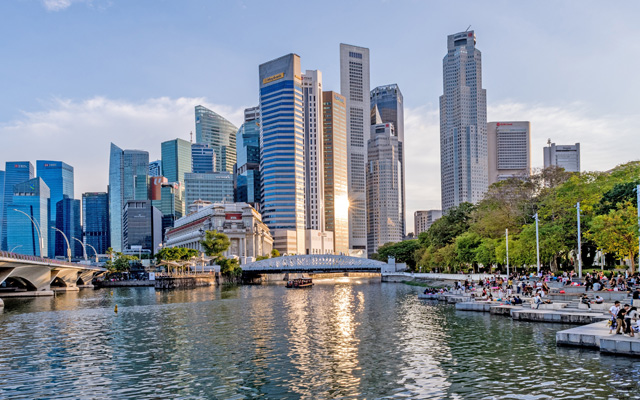
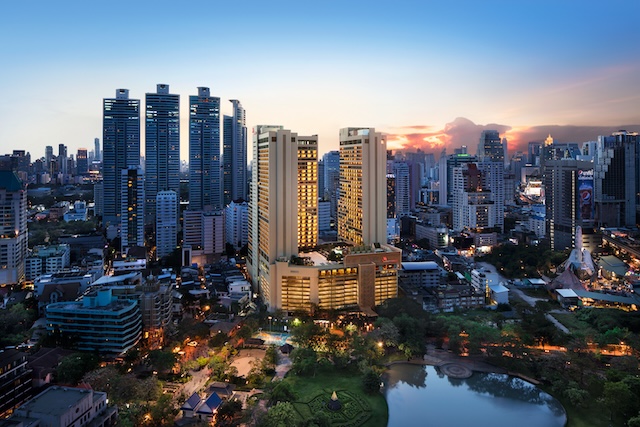
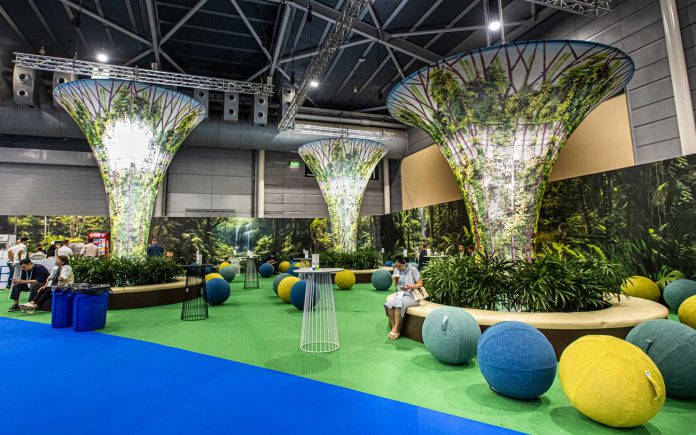
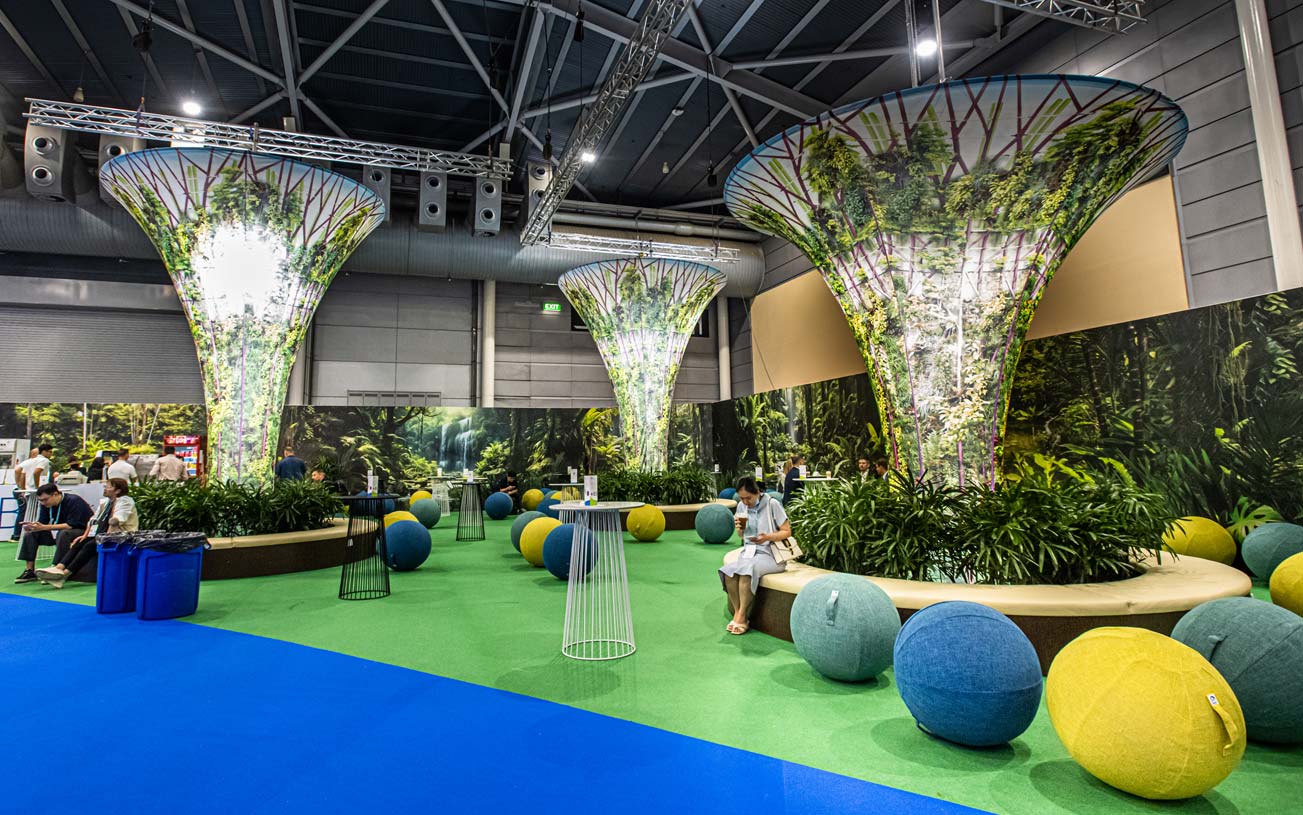
The annual rankings recognise the top-performing hotels for business events, as well as the world’s most coveted meeting destinations; Singapore pictured
Cvent has released Top Meeting Destinations and Top Meeting Hotels rankings for Asia-Pacific (APAC) for 2024, with Singapore and JW Marriott Hotel Singapore South Beach leading the respective lists.
The Top 10 cities remained mostly consistent year-over-year with Singapore retaining its #1 ranking from 2023. The sole newcomer to the Top 10 is Shanghai (#10). Bangkok (#2), Tokyo (#4), Kuala Lumpur (#7) and Phuket (#9) each improved their Top 10 rankings from 2023.
The annual rankings recognise the top-performing hotels for business events, as well as the world’s most coveted meeting destinations; Singapore pictured
As for the top meeting hotels in APAC, JW Marriot Hotel Singapore South Beach rose in the rankings to secure this year’s #1 spot, followed by Shangri-La Singapore (#2), and Hyatt Regency Sydney in #3. Newcomers to the Top 10 include Hilton Tokyo (#4), Bangkok Marriott Marquis Queen’s Park (#5), voco Orchard Singapore (#7), Hilton Kuala Lumpur (#8), and Sheraton Grand Sydney Hyde Park (#9).
For Cvent Top Meeting Destinations, Cvent evaluated 12,500+ cities worldwide listed on the Cvent Supplier Network (CSN). Activity was tracked between January 2023 and December 2023. Rankings were determined by a set of qualifying criteria, including the number of total room nights booked; the number of unique electronic request-for-proposals (RFPs) sent through the marketplace to venues within the city; the total value of the RFPs submitted; and the actual awarded value for meetings booked.
For Cvent Top Meeting Hotels, Cvent evaluated hotel properties that generated business through the CSN between January 2023 and December 2023. The properties were ranked according to various criteria, including total RFPs, awarded RFPs, total room nights, awarded room nights, major metropolitan area market share, conversion rate, and response rate.
These lists – which also include regional rankings for North America, Europe, and the Middle East & Africa – were compiled based on sourcing activity through the CSN, one of the world’s largest venue-sourcing platforms. More than US$16 billion in business events was sourced through Cvent’s online platforms in 2023.
To view all Cvent Top Meeting Destinations and Cvent Top Meeting Hotels worldwide, click here.
The Middle East leads global business travel recovery with a 112% increase in spending, surpassing pre-pandemic levels ahead of other regions
The Middle East region experienced a 112 per cent recovery in business travel spending compared to pre-pandemic levels, making it the strongest rebound among global markets, according to the 2023 Business Travel Index (BTI) outlook from the Global Business Travel Association (GBTA).
Business travel expenditure in the Middle East saw an estimated 11.2 per cent growth last year, trailing behind the global growth rate of 32.1 per cent. Nevertheless, the region surpassed its pre-Covid spending levels, achieving this milestone a year ahead of certain markets such as Western Europe, which is expected to recover fully in 2024. GBTA’s BTI only takes into account outbound spend only.
The Middle East leads global business travel recovery with a 112 per cent increase in spending, surpassing pre-pandemic levels ahead of other regions
Speaking to TTGmice on the sidelines of ATM Dubai, Catherine Logan, GBTA’s regional senior vice president EMEA & APAC, said business travel spend in the Middle East reached US$17 billion last year.
“Qatar, Israel, and Saudi Arabia have recovered the most in terms of business travel in 2023. Saudi Arabia’s business travel is expected to reach 127 per cent of the pre-Covid level by the end of 2024, making it sixth best-performing market in the world throughout the pandemic and recovery,” said Logan.
The UAE’s business travel spend represents 14.5 per cent of the Middle East’s total, reaching US$2.47 billion last year. After fully recovering to its pre-Covid spend level last year, business travel spend in the UAE is expected to grow at a modest 4.9 per cent rate this year.
Israel’s business travel spend reached US$4.4 billion last year. While Israel Is the largest business travel market in the Middle East, the BTI model does not account for the war in Gaza. Meanwhile, Saudi Arabia’s 2023 business travel spend was reported to be US$3.1 billion.
The industry verticals forecasted to grow in the Middle East in terms of business travel include the construction, financial and insurance, real estate, public administration, accommodation/food service and healthcare sectors. This forecast period is through 2027.
“The business travel in the Asia Pacific region didn’t recover to pre-pandemic levels in 2023. The wider Asian business travel market was impacted by the fact that China’s borders were closed. We expect business travel in APAC to reach pre-pandemic growth in 2024,” added Logan.
Over 800 industry professionals gathered to network, advocate, teach and learn what’s fuelling next-gen trends, spending and priorities amid a dynamic regional market
The 2024 APAC Conference hosted by the Global Business Travel Association (GBTA) took place last week at the Raffles City Convention Centre in Singapore from May 14-15, 2024.
Partnering with the WERC Regional Summit, the event welcomed over 800 attendees from 28 countries, including more than 40 exhibiting and sponsoring companies.
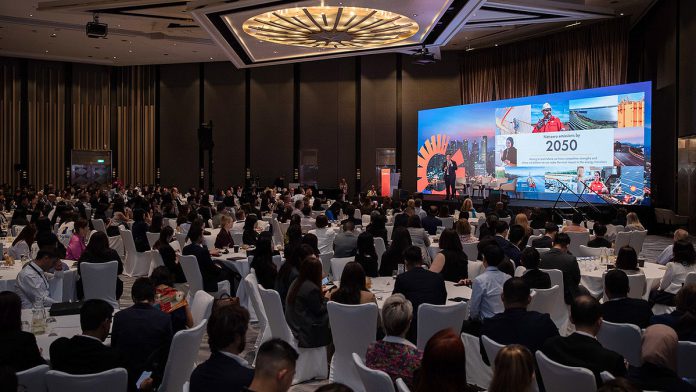
Over 800 industry professionals gathered to network, advocate, teach and learn what’s fuelling next-gen trends, spending and priorities amid a dynamic regional market
This year’s conference focused on adapting, innovating and succeeding in navigating the future of business travel. From understanding the complexities of global travel sustainability regulations to harnessing the power of technology for enhanced traveller experiences, the conference addressed these and other pressing issues facing businesses and travellers alike.
During her Main Stage presentation, Suzanne Neufang, CEO of GBTA, touched on these subject, as well as the current state of business travel and future forecasts, global and regional outlooks, the influence of change such as workplace transformation, and how broader forces, innovation and putting travellers at the centre will be key to navigating the future for the industry.
“The workplace and workforce continue to evolve as we see a shift in hybrid schedules, changing priorities and the increased desire to align with socially and environmentally conscious companies, but there’s no doubt that people want to travel for work, even if how they travel continues to change. Meeting face-to-face remains unmatched for positive outcomes and connections,” said Neufang.
GBTA insights Neufang shared specific to APAC included how the region continues to lead in global business travel spending; an ever-growing bleisure trend; and an increasing preference for business or first-class flights and upscale hotels for work trips.
In addition to GBTA leadership, representatives from notable organisations such as Google, EY, Jetstar Asia, The Ascott and Changi Airport shared insights on the latest topics and trends affecting travellers, businesses and industry professionals during the Main Stage presentations.
The APAC Conference also featured roundtable discussions and education sessions that focused on critical priorities and opportunities in the APAC business travel sector. These included business travel management fundamentals; travel programme organisational design; the role outsourcing plays; how today’s workplace culture influences business travel; choosing sustainable suppliers; nurturing safety, health and security of mobile workers; harnessing AI and technology; global trends in relocation and mobility; and sustainability integration in corporate mobility programmes, among others.
GBTA also announced a partnership with the Australia Corporate Travel Summit (ACTS), a collaboration of the Association of Travel Management Companies and Greener Airlines, for a conference and exhibition taking place in Sydney on November 13, 2024.
The joint effort will provide unique value and benefits to travel managers in the form of a bundled delegate pass and GBTA membership, as well as discounts for GBTA’s industry members.
GBTA also revealed it will host its 2025 APAC Conference again at Raffles City Convention Centre in Singapore on May 27-28, 2025.
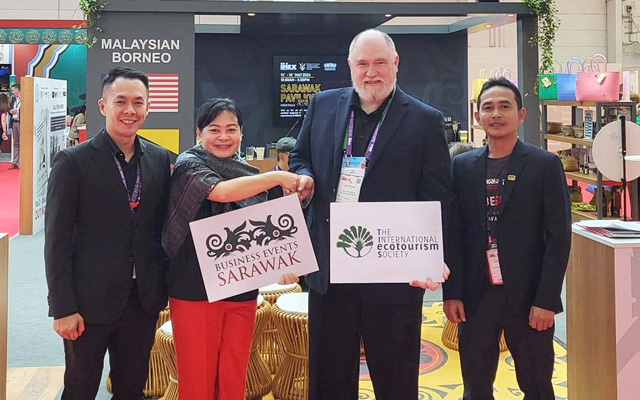
BESarawak’s Amelia Roziman (second from left), and and TIES' Jon Bruno (second from right) at IMEX Frankfurt
At last week’s IMEX Frankfurt, Business Events Sarawak (BESarawak) partnered with The International Ecotourism Society (TIES) on future ecotourism business events and developments, as well as launched a special edition of the International Journal of Business Events and Legacies (IJBEL) journal.
TIES is the oldest and largest ecotourism society in the world with 15,000 active members from over 190 countries. At the forefront of ecotourism developments, TIES provides guidelines, standards, training, technical assistance, and educational resources.
BESarawak’s Amelia Roziman (second from left), and and TIES’ Jon Bruno (second from right) at IMEX Frankfurt
According to the Post Covid-19 Development Strategy 2030, Sarawak aims to become a leading destination for ecotourism and business events in South-east Asia by prioritising responsible and sustainable practices in tourism experiences, and emphasising sustainable infrastructure to balance growth with minimal negative environmental impact.
Meanwhile, the Strategic Advisory Tripartite – of which BESarawak is a collaborator along with the Ministry of Tourism, Creative Industry and Performing Arts Sarawak and International Congress & Convention Association – launched Volume 2 Issue 2 of IJBEL, which focuses on sustainability and underscores the dedication to promoting sustainable practices within the business events industry.
IJBEL is the first international publication dedicated to business events and legacies that aims to bridge the gap between academic and non-academic communities. Curtin University Malaysia is the appointed journal manager.
IJBEL Volume 2 Issue 2 takes a comprehensive approach to sustainability, covering social, economic, and environmental aspects, and emphasises the collective role individuals and organisations can play in fostering a sustainable industry. There are nine papers within, such as The Copenhagen Legacy Lab Strategic Approach, and Shaping Destinations with Business Events: Insights into Ecosystem Dynamics.
“Adopting sustainable practices in the industry goes beyond minimising waste, reducing carbon footprints, and promoting responsible consumption. We need to examine whether our current practices promote local partnerships, create opportunities for local talents and diverse communities to contribute to the sustainability goal, and encourage leadership that celebrates diversity and inclusion. This edition is about thinking globally and acting locally for lasting change,” said Abdul Karim Rahmah Hamzah, minister for tourism, creative industry and performing arts Sarawak and patron of IJBEL.
“To make and emphasise the positive impact of what we do, we must pay attention to the finer details and recognise the significance of our actions in shaping outcomes. We hope that everyone can draw inspiration from this special edition and apply it in the future. The IJBEL Strategic Advisory Tripartite is also open to welcome more collaborators.”
“The journal is designed for universal use and contribution, serving as a valuable educational resource for everyone in the business events community, from all corners of the globe, to enhance their event quality,” emphasised Amelia Roziman, CEO of BESarawak.
“The IJBEL is now indexed with an International Standard Serial Number (ISSN) (2785-8499) and E-ISSN (2785-8855), meeting prerequisites for researchers and other academicians to cite the journal content.”
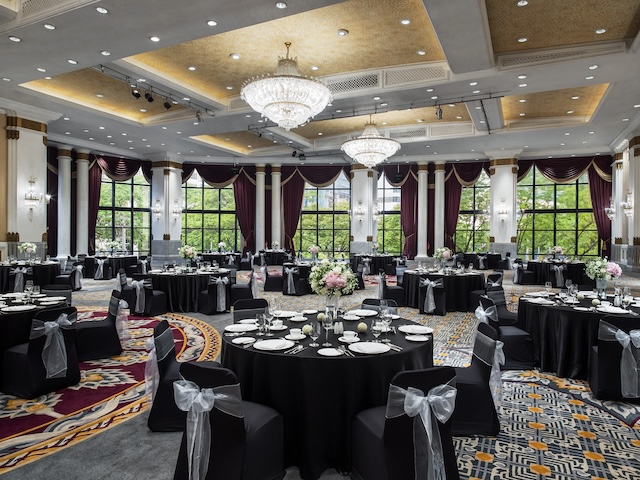
Bangkok Marriott Marquis Queen’s Park is located in downtown Bangkok near the mega malls of The EM District on Sukhumvit Road
MICE travellers to Thailand are expected to reach 23.2 million, generating over US$3.7 billion (140 billion baht) by end 2024 as the government steps up efforts to drive the industry.
According to research conducted by the Thailand Convention & Exhibition Bureau (TCEB), Thailand was the top of mind destination in Asia for MICE, and highly rated for being value for money, uniqueness, and readiness in accommodating.
To further drive the industry, TCEB has highlighted three sectors — mega events and festivals; international exhibition, and domestic MICE market — to focus on transforming Thailand into a “High Value-Added Destination”.
Bangkok continues to be the MICE hub of the country with a wide range of accommodation, venues and facilities available. Around 10,000 new hotel rooms are expected to be added this year.
One hotelier committed to creating unique meeting and event experiences is Marriott.
With a mission of “Your Vision, Our Commitment”, Marriott’s dedicated and experienced events team aims to help its clients bring their event goals to reality.
From personalised services that meet various customer needs to curated activities, right down to the smallest culinary detail, the team prioritises creating memorable experiences where guests can connect comfortably.
For groups planning meetings and events in the Thai capital, consider three of its hotels, each with its own distinct style and offerings — Bangkok Marriott Marquis Queen’s Park, Sheraton Grande Sukhumvit, or The Athenee Hotel in central Bangkok.
Bangkok Marriott Marquis Queen’s Park
Situated prominently along Sukhumvit Road in the heart of bustling Bangkok, Bangkok Marriott Marquis Queen’s Park offers convenient accessibility to key transportation hubs and renowned shopping and entertainment destinations such as Emporium, EmQuartier, and the new EmSphere, as well as direct access to the Benjasiri Park.
Boasting 1,388 rooms, the hotel stands as a premier destination for gatherings of all sizes, and is equipped with expansive convention and meeting facilities spanning over 5,000m2.
The majestic Thai Chitlada Grand Ballroom (1,201m2), serves as the flagship space, capable of hosting lavish affairs for up to 1,500 guests. Additionally, the Sala Thai ballroom (588m2), and The Great Hall (448m2), provide elegant settings for gatherings of up to 420 and 480 guests, respectively.
Complementing the grand ballrooms are more than 30 versatile breakout function rooms, ranging from 50m2 to 300m2. Whether for corporate symposiums or social gatherings, these meticulously designed spaces offer the flexibility and sophistication for events of all types.
Guests can also unwind at the trendy rooftop bar, ABar Rooftop on the 38th floor and enjoy panoramic views of the Bangkok skyline.
Sheraton Grande Sukhumvit, a Luxury Collection Hotel
The Grande Ballroom holds 380 to 500 guests depending on the type of event
For the grandest of gatherings, the luxurious Sheraton Grande Sukhumvit offers an opulent Grand Ballroom that can hold up to 500 guests for a cocktail reception, or 380 guests for a banquet.
Its other versatile and pillarless function rooms, are flooded with natural daylight and boast high ceilings, offering functionality for seamless event execution and guest satisfaction.
Further tailor event experiences with Dining in the Dark encounters, engaging team-building activities, featuring mixologist sessions and convenient treasure hunts around the hotel vicinity. Guests can also indulge in themed coffee breaks that offer a wide range of food, from authentic Thai-inspired delicacies to luxurious chocolate treats.
Known for its dining reputation, the hotel’s restaurants cater to every palate, with the Michelin Guide award winner, Rossini’s, for fine Italian cuisine, international buffet at Orchid Cafe, and fresh seafood by the poolside at The Sala, and authentic Thai cuisine at basil.
The hotel boasts a central location with direct access via a skywalk to BTS Asok and MRT Sukhumvit stations, as well as shopping and entertainment spots.
The Athenee Hotel, a Luxury Collection Hotel
With natural daylight and high ceiling, the pillarless ballroom holds up to 1,000 guests for an enjoyable event
Nestled in downtown Phloen Chit, just a 5-minute walk from the sky train station, The Athenee Hotel, a Luxury Collection Hotel offers convenient access to public transportation.
Known as an epicurean hub, the hotel boasts eight restaurants with a diverse array of culinary experiences, including French cuisine at The Allium Bangkok, authentic Thai cuisine from the four regions of Thailand at The House of Smooth Curry, classic Cantonese with modern flair at The Silk Road, or progressive Japanese Kaiseki cuisine at Kintsugi Bangkok by Jeff Ramsey.
For meetings, there are 30 function rooms of various sizes, along with an exhibition area suitable for medium-scale exhibitions of up to 6,500m2.
Large events can take place at the three pillarless ballrooms, each with a capacity of up to 1,000 attendees, while high ceilings and natural daylight add to the welcoming atmosphere.
For semi-outdoor functions, the hotel offers the picturesque Kandhavas Place, providing a pool view setting ideal for welcome cocktails accommodating up to 200 guests.
Ready to host your next meeting in Thailand? Make a booking now and let Marriott Bonvoy bring your vision to life.
Asian sellers at IMEX Frankfurt 2024 expect European interest to remain strong this year, with inbound activity driven by the buying power of the euro in Asia, good air connections, access to valuable business and membership markets, and destination allure that is unique to the region.
Eileen Quek, head of international sales at Constellar, one of Asia’s largest tradeshow and exhibition organisers and manager of Singapore Expo convention and exhibition centre, said European event organisers continue to regard Asia as a destination for their international events with interest, as Asian event suppliers and CVBs have maintained a favourable relationship with them throughout Covid disruptions.
Conference attendees want to experience the event destination and have an appetite for fun activities like whitewater rafting, notes Borneo Adventure
Asia is also an interesting region for European meetings to expand into because organisers can access a whole new segment of potential members and buyers.
“Associations that want to truly claim their international congress is global in nature will look at Asia. Singapore, especially, is a favourable destination because of its accessibility to and from so many parts of Asia-Pacific. Singapore’s visa-free arrangement for Chinese nationals is a plus too, as that facilitates attendance of Chinese attendees – a segment that many international associations want to engage with,” added Quek.
Malaysian cities have the added advantage of the current weak ringgit, which grants European event organisers stronger buying power. According to Ashwin Gunasekeran, CEO of Penang Convention & Exhibition Bureau, requests from Europe have spiked and events taking place in the Malaysian state are featuring quality pre and post events while delegates have been happy to “add on family vacations” to their business trip.
Sunway Hotels & Resorts’s director of commercial, Jeanne Chan, scored “two major leads” – both association events that are looking to take place in 2025 and 2026 – that will bring in “very, very good business” due to their duration, room requirements, and range of activities.
Still, Chan believes that more destination promotions could be done to underline the Malaysia’s ease of access, cost advantage when compared to Asia’s other popular options, and product offerings.
And for European delegates who hope to gain outstanding and meaningful experiences during their business meetings, they may find Sarawak rising to the challenge.
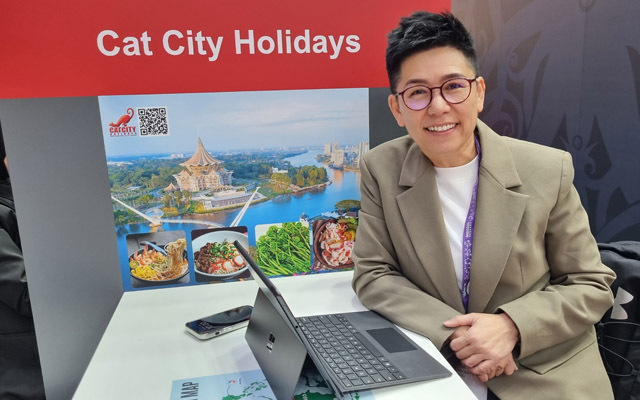
Mok Venia, managing director of Cat City Holidays, a DMC specialising in Sarawak, said the state’s unique culture, long-established responsible tourism practices, and opportunities to interact with local communities can add value to any business programme.
“These are Sarawak’s strengths. European organisers are increasingly looking for sustainable destinations and meaningful experiences for their events and participants – Sarawak can cater to this and more. Sarawak cannot give events a Ferrari convoy – it is not our style – but we can connect event delegates with the Land Dayak (indigenous groups in Sarawak) and discover how the ancient language and script of these tribes are still in use,” said Mok.
Cat City Holidays’s Mok sees a spike in European organisers looking for sustainable destinations and meaningful experiences
Borneo Adventure has taken conference groups into Sarawak’s jungles, on whitewater rafting, and to private barbecues on islands.
The tour company’s marketing representative, Michael Hawkins, told TTGmice that corporate clients “have an appetite for such activities”.
Hawkins said: “Those flying in longhaul do not want to spend all day, every day in the conference room. Meetings and events need a hook – why fly all the way to this destination to meet? Conference rooms look the same all around the world, so it is the destination experience that stands out.”
He added that the biggest growth area in tourism today is experience travel, and there are opportunities to weave insightful local experiences into the objective of the business event. Citing an example, Hawkins said Borneo Adventure is supporting a conference for midwives with field trips to Sarawak, and one of the activities is taking delegates into the local villages to interact with midwives there to understand how they do their work.
Rajeev Kohli, joint managing director of India-based Creative Travel and president of Euromic, a global association of DMCs, agrees that Asia has a lot of unique experiences that would enhance an international business event programme.
“If you want to give your attendees a once-in-a-lifetime experience, come to Asia. If you want to give them a fancy dinner after their meeting, then just go somewhere nearby,” he stated.
However, Kohli believes that Asia could do a lot better to win over European organisers by not “competing”. Instead, the region should join forces with an “Asia-first strategy” for bidding.
“I think Asia has not done a strong enough job in selling the region to the western markets. There are blockages (in getting western buyers’ attention). They often worry about having to travel so far to Asia and once there, what can they eat and what hotel quality they will have to contend with – all of which we know are the least of their event challenges,” Kohli remarked.
He encourages Asian business events stakeholders to work together to secure Europe-based international events first, and “once the event is in (the region), we can then fight for it”.
“Everyone will get their fair share; after the event is done with Singapore, it can rotate to Malaysia, Hong Kong or Thailand later on,” he said.
Sydney has secured 103 business events, expected to inject over A$507 million (US$338.7 million) into the economy by 2030.
This milestone was announced at IMEX Frankfurt by Business Events Sydney’s (BESydney) CEO Lyn Lewis-Smith.
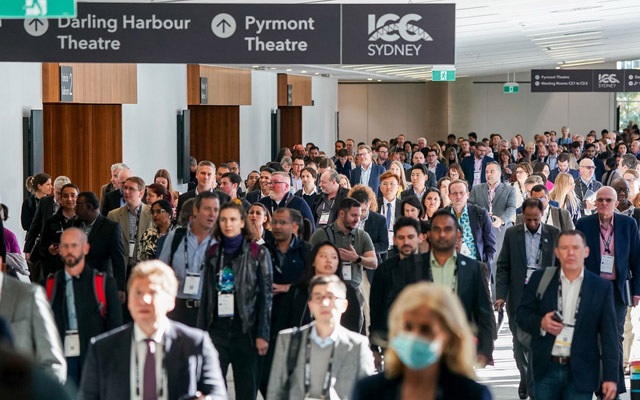
Event attendees at ICC Sydney. Photo credit: Richard O’Leary
“Our forward pipeline has grown, with these events anticipated to attract around 128,000 delegates. This influx will not only boost our local economy but also provide Australians with access to cutting-edge knowledge in AI, biodiversity, education, engineering, defense and aerospace, critical minerals, and various health and social issues,” she said.
The robust pipeline follows a successful 2023 for Sydney’s business events sector. Moreover, Sydney ranked 25th globally in the ICCA city rankings and secured sixth place in the Asia Pacific region according to ICCA, and third place according to booking technology platform Cvent.
Events in Sydney’s pipeline include the International Society of Physical and Rehabilitation Medicine World Congress in 2024 which will bring in 2,500 delegates and A$10.8 million; the International Astronautical Congress in 2025 which will bring in 4,500 delegates and A21 million; and the World Congress of Gerontology and Geriatrics in 2030 with 3,500 delegates and A$17.7 million.
Lewis-Smith also noted a strong recovery in the corporate Meetings and Incentive segment, with global corporations increasingly choosing Sydney to foster corporate culture and innovation.
A cornerstone of BESydney’s bidding strategy is the International Convention Centre Sydney (ICC Sydney). Geoff Donaghy, CEO of ICC Sydney and group director of convention centres at ASM Global (APAC), expressed pride in hosting events that drive significant social and economic impacts.
Tourism Australia echoed the sentiment, celebrating Australia’s rise in the ICCA 2023 rankings. Phillipa Harrison, managing director of Tourism Australia, emphasised the importance of the Business Events Bid Fund Program in strengthening Australia’s visitor economy and event pipeline.
“Our advancement in ICCA’s global rankings highlights the collaborative strength of our industry and the appeal of our destinations,” Harrison added.
Hong Kong has been officially selected as the host city for Routes World 2025.
Scheduled from September 24-26, 2025, the 30thRoutes edition of the event will be held at AsiaWorld-Expo, hosted by Hong Kong International Airport (HKIA) with the support of the Hong Kong Tourism Board.
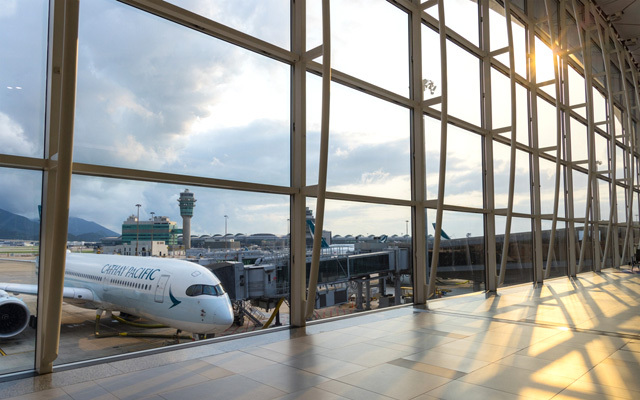
Routes World unites decision makers from airlines, airports and the destinations they serve from across the globe; Hong Kong International Airport pictured
Vivian Cheung, chief operating officer of Airport Authority Hong Kong, said in a press release: “Routes World is a prestigious international event which will bring together over 3,000 industry leaders representing airports, airlines and other key stakeholders. This aligns perfectly with our commitment to strengthening Hong Kong’s position as an international aviation hub, connecting people in this world-class metropolis that embraces business opportunities, cultural diversity and social vibrancy.”
Cheung added: “We look forward to welcoming our guests from around the globe to visit and explore Hong Kong, and we hope that through this event, more routes can be opened connecting our city with more destinations.”
Independent analysis has demonstrated that the total economic impact of a typical Routes World event can exceed more than US$590 million. This is primarily a result of new air services secured due to the profile from hosting the event.
HKIA has witnessed strong passenger growth in 2024. In March 2024, the hub handled almost 4.4 million passengers and 29,840 flight movements, representing year-on-year increases of 56.7 per cent and 48.2 per cent, respectively.
With the completion of the Three-runway System (3RS) expected by the end of 2024, HKIA’s long-term strategy focuses on attracting airlines to open new destinations and leveraging the market potential of the Greater Bay Area and Mainland China. Following the full completion of the 3RS, the airport will have more slots, allowing new markets such as the Belt and Road Initiative countries and the Middle East to connect to Hong Kong.
Steven Small, director of Routes, said: ”Half of the world’s population lives within a five-hour flight of Hong Kong International Airport. With decision makers from over 130 countries expected to attend, Hong Kong will showcase the significant infrastructure developments to the people who decide where the world’s aircraft fly.”
Collinson, a provision of airport experiences, loyalty and customer engagement solutions, and operator of LoungeKey, has expanded its partnership with Singapore Airlines (SIA).
This partnership will provide businesses in SIA’s HighFlyer programme access to LoungeKey Pass, a digital voucher that enables users access toover 1,500 airport lounges and travel experiences in over 700 airports in 145 countries. This includes experiences such as spa and sleep pods, gaming, as well as dining offerings.
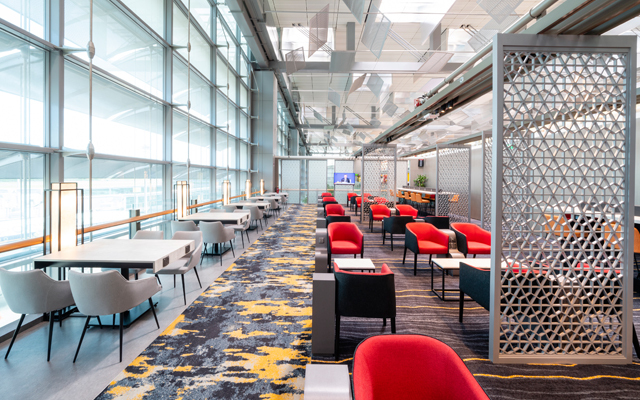
Marhaba Lounge in Changi Airport’s Terminal 3
SIA’s HighFlyer programme allows businesses to enjoy preferential airfares and earn HighFlyer points when their employees travel for work. The points can in turn be used to offset the cost of future travel, or to access rewards. With this partnership, businesses in SIA’s HighFlyer programme across all four membership tiers will be able to redeem a LoungeKey Pass for every 8,000 HighFlyer points earned on the company account.
New businesses who sign up to be part of the HighFlyer programme can also redeem a pass as a milestone reward upon meeting a threshold of nett flown expenditure. Businesses can then reward individual employees with a LoungeKey Pass via their Highflyer account, to be enjoyed during their next trip.
“Global business travel spend is expected to surpass 2019 levels this year, resulting in many employees taking to the skies on behalf of their organisations. Our research has shown that consumers today place a high-value on travel-related benefits and rewards. In turn, providing access to airport lounges and travel experiences as part of a wider corporate travel proposition is an ideal way to support the well-being of business travellers; helping them to feel supported and valued by their employer while on the road,” said Todd Handcock, global chief commercial officer and Asia Pacific president, Collinson International.
Constellar, one of Asia’s largest tradeshow and exhibition organisers and manager of Singapore Expo convention and exhibition centre, has taken a team to IMEX Frankfurt this week to highlight its festivalisation-as-a-service forte to the community of European event planners.
Elaborating on this specialisation, Khoo Yew Jin, vice president, brand & customer experience at Constellar, told TTGmice: “This is where we help organisers design, curate, and bring to life unique event experiences. From concept services like one-of-a-kind F&B zones and food trucks; unique networking areas; branded activations; alfresco spaces for open-air events, and more, we have a suite of products that are easily customisable and scalable according to the needs of each event, extending visitor experiences beyond our exhibition halls.”
Singapore Expo completed its delivery of the high-profile ITI World Symposium 2024 on May 11, a meeting of the Europe-based International Team for Implantology that was held in Asia for the first time
“We know European event planners are expected to increase budgets and are looking to hold large-scale in-person events in the coming years,” said Khoo, adding that a Cvent study also found that European event organisers included hybrid event tools, sustainability, and the ability to offer attendees a unique and unforgettable experience among their venue considerations.
“Singapore Expo has the capability to meet such demands and deliver the holistic experience needed for a successful event,” he added.
Singapore Expo offers organisers with flexible options for interconnected spaces spanning 10 halls, 32 meeting rooms and three atriums, covering 123,000m2, with additional alternative spaces providing creative event possibilities. Its outdoor atrium that stretches from Hall 4 to 6, for example, is a blank canvas for a wide range of activations, be it for networking beyond show hours or themed dining functions.
Constellar recently added the multipurpose Arena @ Expo (Hall 7) to its venue mix. Arena @ Expo has so far “generated increasing interest among European event planners and organisers”, with most complimenting its “versatility, high-quality acoustics and tech systems, and customisation capabilities”.
Khoo also expects Apex @ Expo (Hall 1) to do well with European event organisers, as it features advance technology in an immersive space that accommodates a plenary hall, broadcast studio, and a configurable screen of 54m by 5m.
Additionally, Constellar’s 18-seat K2 chef’s table, where a farm-to-table dining concept is presented in a private venue, may appeal to planners who appreciate a unique dining experience that can easily transition from meetings. The venue is flexible, with an opaque mobile wall transforming K2 from a boardroom into a dining hall with live cooking presentation.
Furthermore, with a greater focus on sustainable venues, Constellar is confident that Singapore Expo will rank high in the minds of European event organisers.
The venue is Building & Construction Authority (BCA) Green Mark Platinum-certified; is powered by on-site solar panels the size of eight football fields; and has various urban farms providing sustainable harvest to its kitchens.
“Through plastic-free packaging and eco-friendly F&B offerings, we aim to help event organisers integrate sustainability throughout their event planning process,” said Khoo.
When asked how else would Singapore Expo stand out as a venue of choice for European event planners, Khoo pointed to the Expo Advantage Program, where organisers can leverage exclusive partner privileges to enhance their event. For example, the programme’s discounted rates with local media partners will enable international event organisers to better plan and execute their event promotions in Singapore.
Through her interactions with European buyers at IMEX Frankfurt this week, Eileen Quek, head of international sales, said confidence in Singapore’s stability and support from a knowledgeable CVB team were also crucial in shaping decisions.
She said: “Singapore is still one of the top cities for European associations and event organisers. Many of them learnt through Covid that many things have changed… and some relationships with suppliers today have become less flexible. Several buyers have told me that relationships with venues and CVBs in Asia have, however, remained strong.
“And within Asia, Singapore stands out favourably because of good governance. When planning meetings three or four years in advance, organisers want to be sure that their plans will remain valid down the road, that the government, the CVB, and how things are in the destination will still be the same.”
Quek said she has seen good leads at the show, with one association head making a swift decision by the second day to bring her international congress to Singapore Expo in 2028.
Just 10 minutes from Phuket International Airport on the serene northern coast, this 178-key, Bill Bensley-designed resort offers delegates a quiet, tropical paradise steeped in Phuket’s tin-mining heritage
The newly-opened Ritz-Carlton, Bangkok anchors the One Bangkok development with cosmopolitan elegance. Featuring the city's largest ballroom and a spectacular new penthouse suite, it delivers exceptional hardware and deeply authentic, soulful service for business and leisure travellers alike
Behind the imposing, Brutalist concrete that defines Zurich’s Oerlikon district lies a surprising secret. While its exterior honours the neighbourhood’s industrial roots, stepping inside Mama Shelter reveals a vibrant, neon-soaked world that is a far cry from its rigid shell