



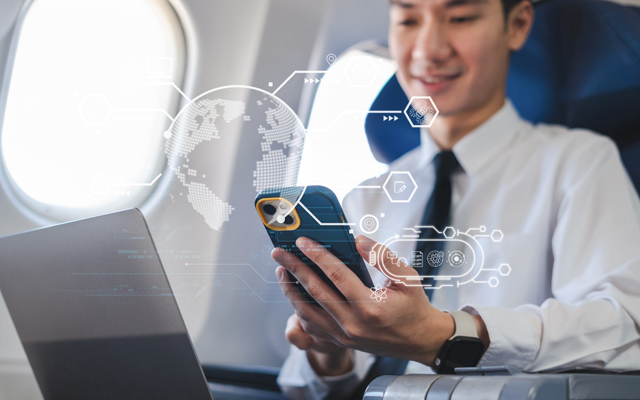
Online booking tools (OBTs), once considered a corporate travel management gamechanger, face potential obsolescence as advancing AI delivers the same frictionless experiences to business travel that consumers already enjoy in the leisure space.
A corporate travel manager (CTM) from a global management consulting and professional services firm told TTGmice that while tools like Anthropic’s Claude and TikTok Go showcase the power of AI-driven booking, these seamless experiences have yet to translate effectively into the corporate sector.
“The core barriers to progress in corporate travel are data quality, a GDS infrastructure rooted in 1980s technology, and the reluctance of entrenched industry players to accept disruption,” the CTM said.
However, major tech players are moving to bridge this gap. Global GDS provider Travelport recently announced a partnership with Cognizant and Anthropic on an AI initiative to modernise software development and travel retailing systems.
The initial focus centres on Travelport Trip Services – the platform managing bookings, exchanges, refunds, and servicing – aiming to help TMCs automate complex tasks like rebooking and disruption management.
Industry consultant Carl Jones, who brings an OTA and technology background, noted that successful AI solutions must address three key areas: a seamless corporate traveller experience with minimal clicks, a unified shop for multi-modal content (airlines, LCCs, hotels, rail, and car rentals), and real-time on-trip assistance.
Because corporate travel is inherently disruptive, Jones expects supplier-side Agentic AI capabilities to advance rapidly over the next year or two. He predicts that once content, booking, payment, and data protection gaps are resolved, travellers will simply talk to their smartphones, causing traditional OBTs to disappear.
Instead of focusing strictly on transaction fees, Jones argues CTMs must value rich content and technological capability, though he notes it will not be a one-size-fits-all transition.
“While leisure led the AI transformation, corporate travel is adopting it even faster,” Jones said.
Operational realities highlight why this shift is necessary. Adriana Nainggolan, a consultant and former CTM with 14 years of experience in software technology, pointed out that during travel disruptions, AI-enabled chatbots can step in when TMC call centers face high volumes.
“A traveller’s call can land anywhere in the TMC call centre network, and how the receiver (and subsequent receivers, if the issue isn’t resolved uses the recorded information) can lead to the right support, but this will not show up on a KPI report,” Nainggolan explained.
“With AI, it is possible to get to the right person for help quickly, but ChatGPT Enterprise has to be trained as it lacks human experience, understanding of a corporate travel policy, or knowledge of the traveller.”
Nainggolan added that allowing AI to pull external data to assist travellers introduces higher risks, though customised enterprise AI can successfully filter complex information. Furthermore, CTMs want AI-driven reporting data that captures ancillary T&E spend – such as restaurants and transport – to track policy leakage, spot business opportunities, and measure ROI.
“It’s all about the data, and using AI to enhance these processes is not cheap; (running into) the tens of thousands of dollars,” Nainggolan acknowledged.
Ultimately, technology is only part of the equation. As the management consulting CTM concluded: “The biggest lever for change is training people to redesign workflows, followed by fixing data architecture, and finally implementing the right programmes.”