Brisbane Convention & Exhibition Centre (BCEC), managed by ASM Global, has broadened the remit of its Executive Team, in the lead-up to the Brisbane 2032 Olympic and Paralympic Games.
Shaun Mitchell, director of events & customer services, takes up the role of 2IC to general manager Kym Guesdon, taking on additional responsibility for managing and optimising usage of the Centre’s space, business mix, and levels of business.
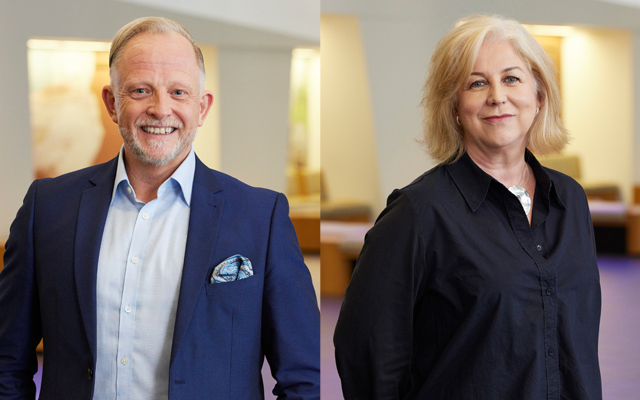
From left: Shaun Mitchell; and Alison Gardiner
Meanwhile, director of sales, Alison Gardiner will step into the expanded role of director of sales, strategy & partnerships as part of BCEC’s Growth Strategy, aimed at escalating the progress of Brisbane’s Business Events sector.
BCEC’s general manager, Kym Guesdon, said the expanded roles ensure the Centre will be well placed to leverage and maximise the opportunities of Brisbane’s status as an Olympic host city, in attracting events from around the world and creating a lasting legacy.
Hosted buyers from Asia attend Dreamtime's business meetings in Adelaide
Australia is seeing the incentives industry return as the country works through restoring aviation routes and improving accessibility issues.
Shorter lead times are noted, and while India continues to be a rising source market post-lockdown, there’s been increasing interest from the rest of the region more recently.
Hosted buyers from Asia attend Dreamtime’s business meetings in Adelaide
“The bounce back we’re seeing in the return is strong from Asia,” said Tourism Australia’s Executive General Manager of Commercial & Business Events Australia, Robin Mack.
“We just had some latest results in and interestingly, from the June quarter, China and Indonesia were returning at a faster rate for incentives and business events than the leisure side of tourism,” said Mack.
Mack qualified that the groups were smaller in size and numbers but with the help of Australia’s bid fund programme, larger incentive groups have also been won.
These include NuSkin and Perfect China bringing 3,000 delegates each to Brisbane and Perth respectively in 2024, as well as Amway which is bringing 10,000 delegates to Melbourne in 2025.
Meantime, flights to India have more than tripled since pre-pandemic with three daily flights from Melbourne and Sydney. A dedicated business events team in India is also supporting event planners with visa processing.
Additionally, South Korea now has more routes compared to three years ago, and Singapore is “close”.
“Aviation is key to our success and it’s growing back. Globally we’re now at 88 per cent (to our pre-pandemic levels) but in February or March next year we’ll be at 99 per cent,” said Mack.
Australia’s incentives market is currently at 54 per cent of its pre-COVID business but with China’s borders re-opening more recently, numbers are expected to improve soon.
“We score well for value for money, particularly for incentives and associations, based on the feedback we get from delegates,” said Mack.
Speaking to TTGmice at Dreamtime earlier this month in Adelaide – which marked the return of Tourism Australia’s signature incentives showcase – Mack added that 2023 was perfect timing to bring back the event for the first time after a pandemic hiatus.
“Last financial year we had an Asia mega fam as a prelude, if you like. We wanted Dreamtime to come back as soon as possible after that, to make sure that we could get as many people here as possible from around the world.”
“This event is so important because we have so many new stories to tell and experiences to offer firsthand for incentive planners from around the world. We’ve had unprecedented infrastructure, not just in accommodation but in extensions of art galleries, new incentive products from the Heart Reef pontoon in Queensland to the Jackson Super Yacht in Sydney and that’s replicated around the country,” he added.
Delegates attending Dreamtime gave the showcase in Adelaide plaudits, but said there were still issues to be worked through from their countries.
“The incentive market is picking up very fast in Malaysia with every corporate company now wanting travel for their staff,” said Sedunia Travel Services’ manager from Kuala Lumpur, Esther Ong.
“But at the moment, Malaysians are unable to apply for visas through an agency and without that help, about 20 per cent of qualified incentive winners will probably miss out,” she opined.
Jessica Zhang, executive general manager, marketing and strategic cooperation at China’s Bravolinks Integrated Marketing, said the appetite for incentive travel in China is building, but “would take time” as the two countries sort out flight access, visas and political differences.
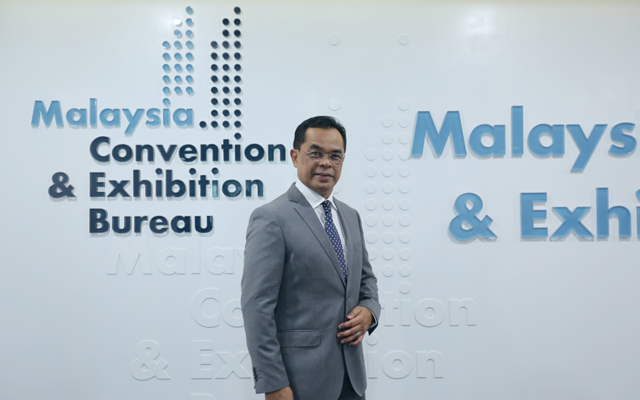
The Malaysia Convention & Exhibition Bureau (MyCEB) has appointed Azman Haji Tambi Chik as the national bureau’s new CEO.
In his new role, Azman is tasked to spearhead one of the nation’s major economic drivers, Malaysia’s business events industry.
He brings a wealth of experience and knowledge in various facets of corporate management and hails from a myriad of industries including tourism and hospitality, F&B and technology.
With a career that has spanned more than 30 years, Azman has worked with organisations such as Damansara Holdings Berhad, a Bumiptera status company listed on the main board of Bursa Malaysia. He has also led and strengthened the group corporate communications at Johor Corporation. Notably, he played a pivotal role in managing the Rangkaian Hotel Seri Malaysia, where he successfully introduced the guest satisfaction indicator to increase the profitability of the company. He has held various senior management positions and has significantly contributed to facilitating new technologies for multiple start-ups in Malaysia.
“We are in an advantageous position to driving the business events industry with industrial advancements available to us, there are abundance of opportunities out there to capitalise on as Malaysia holds a key position in navigating this industry for the region. With the destination’s resources and our expertise supported by digitalisation and technological advancements, we are ready to invest in attracting quality international events and delegates,” he expressed.
Azman also emphasised that he is keen on inculcating a culture of empowerment and diversity in the organisation and the industry, ensuring that all business events players leave a sustainable legacy in a dynamic sector.
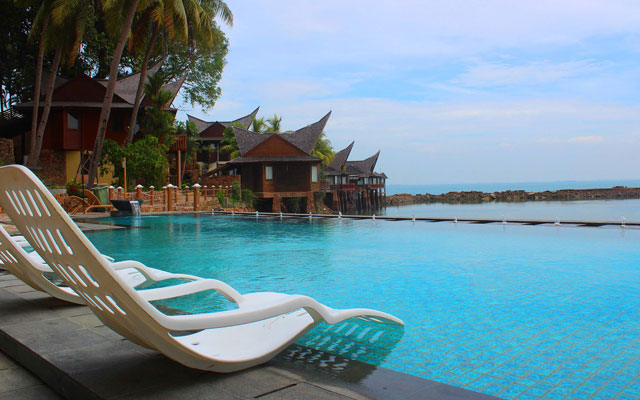
Batam View Beach Resort is reporting an increase in business events
Batam View Beach Resort in Indonesia is witnessing a shift in business post-lockdown, where meetings and events now make up more than half of its bookings. Before, leisure bookings used to dominate.
Anddy Fong, general manager of Batam View Beach Resort, told TTGmice: “The business events segment seems to be bigger and more active for our property and our Nongsa Sensation destination. We have seen several (big) events taking place here after the pandemic, like an annual dinner hosted by Excelitas Technologies Corporation and church camps.”
Batam View Beach Resort is reporting an increase in business events
The resort has also welcomed its share of association meetings this year – the ARTDO International World Conference, which happened from August 26-29, attracted more than 200 delegates from 24 countries.
Next month, the Singapore Buddhist Fellowship will organise its 2023 Year End Sutta and Meditation Retreat with Ajahn Brahmali, from December 19-25, for 160 participants.
Fong sees the wave of meetings and events as an opportunity to intensify the property’s business development in this area, and to do more to attract association meetings.
“The way I see it, the landscape has changed and the opportunity is big for business events,” he said.
Batam View Beach Resort is ready for associations, opined Fong. There are nine indoor function rooms with capacity for 25 to 200 seats theatre-style, along with various outdoor venues that can accommodate 500 to 4,000 seats theatre-style.
“For large-scale meetings we can build air-conditioned tents, giving attendees a unique experience, just as we did for ARTDO International World Conference,” he added.
There are 212 guestrooms, allowing the resort to take in 400 delegates.
Should meetings come with even more attendees, Fong said he is ready to partner with neighbouring hotels in the Nongsa area to provide accommodation for all. Hotels in the area will offer 750 additional keys.
To achieve its meetings and events ambition, the resort will engage with more DMCs and meeting planners. It is also close to completing its renovation which will result in upgraded facilities. Meeting rooms on level five will welcome guests with a new look in December this year.
Tourism New Zealand presenting their campaign to the audience and judges
The immersive If You Seek destination campaign led by Tourism New Zealand (TNZ) recently won ICCA’s Best Marketing Awards 2023 at the 62nd ICCA Congress in Bangkok last week.
If You Seek leverages emotive decision-making to charm quality visitors looking to explore on a limited budget.
Tourism New Zealand presenting their campaign to the audience and judges
“Our campaign compels the curious minded to seek out by teasing but never revealing all,” shared Leonie Ashford, TNZ’s business events manager. By emphasising unique and meaningful connections, the campaign attracted high-quality visitors, resulting in an increase in business events visitors and longer stays in communities.
TNZ was among four shortlisted organisations that built their destination campaign on meaningful objectives, under the theme, Marketing – Going Beyond the Obvious. They presented their campaigns to ICC Congress 2023 delegates earlier this week.
The other contenders were Destination Canada, Cote D’Azur, and Uppsala Convention Bureau.
Virginiie de Visscher from Destination Canada spearheaded the Canadian Business Events Sustainability Plan to propel the country as a sustainability leader in the GDS Index.
“We needed a comprehensive sustainability plan to unite 16 different destinations in the world’s second-largest country,” she shared.
To be implemented in three different phases – education & coaching, measuring & monitoring, and communication, the plan utilises GDS Index for benchmarking, and includes storytelling masterclasses for industry partners.
Meanwhile, Mariska Kesteloo, founder of Word of MICE and a former digital nomad who is now MICE ambassador for Cote D’Azur, implemented the MICE Ambassador Project 2023, an influencer marketing campaign focused on promoting Cote D’Azur in an unconventional manner. It allowed the destination to expand its social media presence.
The Meeting Hero Campaign, devised by Anna Lindstrom and Lisa Waestberg from Uppsala Convention Bureau in Sweden, encouraged local officials in the small town of 240,000 to host meetings. With creative initiatives, such as placing small but memorable souvenirs in key areas of municipality offices, it successfully reached 1,600 officials and generated six million euros (US$6.4 million) worth of municipality-hosted meetings.
“This campaign cost us 4,000 euros, and all materials used are sustainable, recyclable and reusable,” they shared.
The winner will be chosen by judges and ICCA Congress 2023 delegates on a 50:50 basis upon five weighted criteria, and announced at the closing session later today.
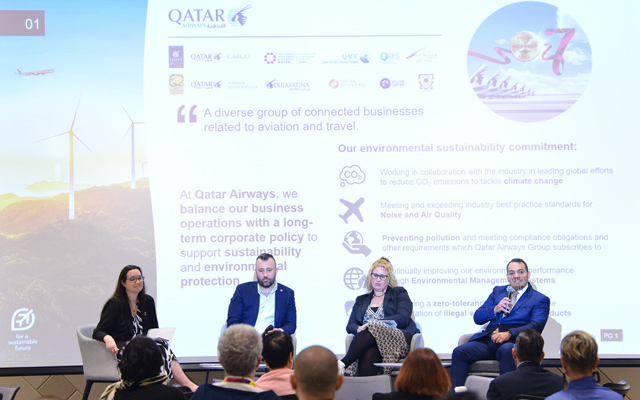
Panellists focusing on the advancements and innovations that are shaping the industry's quest to fly sustainably
Despite sustainability challenges facing airlines, corporate customers are taking bigger steps to measure their carbon footprint, setting aside budgets and addressing their “return on carbon”.
For example, SkyTeam created a sustainability challenge in 2022 with 16 partners, which increased to 22 airlines operating 72 sustainable flights in 2023, and Gea van Beek, manager, global meetings, said the initiative was open to every airline to learn and share.
Panellists discuss the advancements and innovations that are shaping the industry’s quest to fly sustainably
This information was shared at the Fly sustainably? Exploring the latest sustainability developments in Aviation session last week at 62nd ICCA Congress in Bangkok.
While travel was the biggest carbon emitter, moderator, Mariela Bazan, chief sustainability officer and senior vice president, industry advancement, Events Industry Council, said the industry needed to “change the narrative” by “having influence on the conversation with its US$1.6 trillion contribution to global GDP”.
Bradley Sutherland, senior manager, business development, Air Canada (AC), shared examples of sustainability initiatives, such as removing inflight magazines, water management, and uplifting supply from resource-challenged destinations. In addition, AC has on order 30 electric aircraft to operate short commuter flights, but noted the size and weight of batteries, the power needed to power them up, infrastructure to make sustainable aviation fuel (SAF) more available and accessible had to be a collective effort.
Carlos Mauricio Garcia Arauz, corporate affairs policy and standards manager, Qatar Airways Group, pointed out that noise, air quality and pollution prevention were other important areas to be addressed – adding that there were both “responsibly produced and bad SAF” as well as limited, inconsistent supply.
There should also be studies to find out if resources for SAF production were competing with the food needed to feed populations.
Conference win underlines Wellington's (pictured) open learning opportunities
Te Pūkenga and Massey University Te Kunenga ki Pūrehuroa have won their joint bid to host the International Council for Open and Distance Education’s (ICDE) 30th World Conference in Wellington in 2025.
The biennial event will take place at Tākina Wellington Convention & Exhibition Centre in November 2025 and attract more than 800 international leaders in the field of open and distance learning to New Zealand’s capital. The win was announced at this year’s ICDE World Conference in Costa Rica.
Conference win underlines Wellington’s (pictured) open learning opportunities
Mark Nichols, event co-chair representing Te Pūkenga and ICDE Board member, said hosting this international ICDE event will put Te Pūkenga and Massey University’s innovative work in broadening access to tertiary education on the world stage.
ICDE is the leading global membership association working towards bringing accessible, quality education to all through Open, Flexible and Distance Learning (OFDL). It is a non-profit, non-governmental organisation, with more than 320 members and partners worldwide.
ICDE celebrates its 85th anniversary this year and has organised international conferences on OFDL since its inception in 1938.
Business Events Wellington manager Irette Ferreira said the win aligns with the city’s strength in the education sector. Wellington is home to several internationally recognised universities and tertiary institutions, as well as being close to the Open Polytechnic business division of Te Pūkenga and Massey University, where Aotearoa New Zealand’s leaders in open and distance learning are based.
She added: “Hosting a conference focused on removing barriers to education also directly supports the city’s Economic Wellbeing Strategy which identifies lifelong learning and online learning as important components in the development of Wellington’s future labour market.”
The conference bid was submitted with support from Business Events Wellington and Tourism New Zealand and will be organised by PCO Conference Innovators.
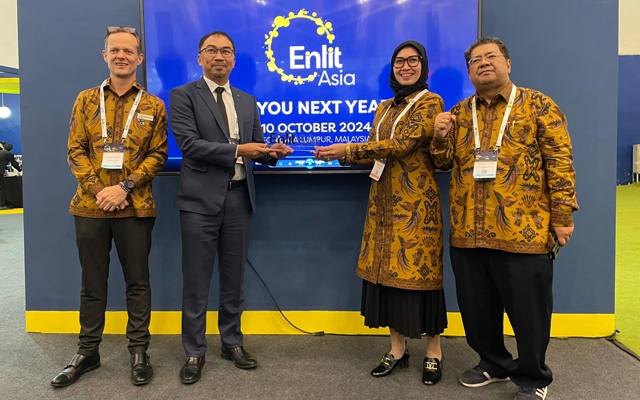
Indonesia and Malaysia strongly believe in the strength of their regional collaboration
Malaysia has set the stage for the next instalment of Enlit Asia, slated to be held from October 8-10, 2024, in Kuala Lumpur.
The handover ceremony was officially held at the Indonesia Convention Exhibition (ICE), BSD City, Jakarta, on November 14, 2023.
Indonesia and Malaysia strongly believe in the strength of their regional collaboration
Supported by Malaysia Convention & Exhibition Bureau (MyCEB), Enlit Asia 2024 is expected to draw 12,000 visitors from more than 50 countries, generating an estimated economic impact of RM134.6 million and RM 8.2 million in visitor expenditure.
Enlit Asia is an annual conference that unifies two events in the power and energy sector, POWERGEN Asia and Asian Utility Week, which has been a beacon of innovation and collaboration in the industry.
The transition also symbolises the successful ongoing collaboration and synergy between Malaysia and Indonesia in the field of business events. Apart from the handover ceremony, MyCEB’s visit to Jakarta is a follow-up from last year’s trip to further strengthen the bilateral relation between the two countries in becoming the preferred destinations for business events.
TMSS objective of building a sharing platform to facilitate technological progress, showcase domestic and international resources, and foster collaboration among industry partners was realised
The second edition of the Travel MICE Smart Show (TMSS), co-hosted by the MICE Committee of the China Association of Travel Services and Purchasing China Association, and managed by XIN MICE (Beijing), was held successfully from November 9-10, 2023.
The event aimed to advance the integration and elevation of China’s business events industry, while fostering technological advancements within the sector.
TMSS objective of building a sharing platform to facilitate technological progress, showcase domestic and international resources, and foster collaboration among industry partners was realised
There were keynote speeches, round-table forums, signing ceremonies, and resource exhibitions covering a range of topics, from industrial technology integration and achieving a new balance between parties to talent cultivation and the internationalisation of destination resources.
Strategic cooperation agreements were signed between JMIC (Joint Meetings Industry Council) and XIN MICE (Beijing); MICE Committee of China Association of Travel Services and Sanda University; TMSS organising committee and Tongxiang Puyuan Tourism; and The CCEU City Conference and Event Executive Alliance and the Shanghai Haishanghuadao Eco-Resort.
These agreements aim to leverage each party’s strengths and resources for collaboration in various areas, including awards, exhibitions, integrated education systems between the business events industry and university education, distinctive ancient town cultural tourism, intangible cultural heritage tourism, and cultural and creative industries.
AUCKLAND, NEW ZEALAND - NOVEMBER 15: Welcome during the 8th IWG World Conference on Women & Sport at Aotea Centre on November 15, 2022 in Auckland, New Zealand. (Photo by Fiona Goodall/Getty Images for WISPA)
The 8th IWG World Conference on Women & Sport integrated Māori values, content and culture into its programming
Aotearoa New Zealand’s indigenous Māori culture has always held appeal for international delegates, with cultural experiences an enriching part of an event’s agenda.
These days, the Te Ao Māori (Māori worldview) approach is being increasingly embedded in New Zealand’s conference delivery, from speakers to content, to enable more authentic and diverse events.
New Zealand’s Māori cultural experiences can constitute an enriching part of an event’s agenda
Increasing diversity of voices The inclusion of Māori culture was evident at the 8th IWG World Conference on Women & Sport held at the Aotea Centre in Auckland last November, attracting 1,850 delegates from 90 countries.
Local host WISPA (Women in Sport Aotearoa) arranged an advisory rōpū (group) He Wāhine Toa Kei Te Kokiri, which alongside Ngati Whātua Ōrākei as host iwi (tribe), guided organisers through the best way to integrate Māori values, content and culture into proceedings: from the opening traditional pōwhiri welcome, to the speakers, poi and waiata (song) in the programme activities.
Outcomes for Māori were also embedded in the conference, including a First Nations Workshop, the first indigenous-focused initiative in IWG’s 29-year history; and WISPA gave 76 scholarships to young leaders and Māori Kōhine (girls) to attend the conference, empowering the next generation.
Martin Sirk, founder of strategic consultancy Sirk Serendipity and recent visitor to New Zealand reasoned: “If a country’s appeal for events could be compared to a gift box, with solutions for the organisation’s and delegates’ business, educational and scientific objectives as the contents of the box, and the destination’s tourism and culture as the emotional wrapping paper, then New Zealand is uniquely positioned to include its cultural appeal inside the box, as well as on the wrapping paper.”
An opportunity for unique content Mātauranga Māori (Māori knowledge) is becoming an increasing point of difference for New Zealand at bidding time.
Auckland has been chosen to host WIPCE, the World Indigenous Peoples’ Conference on Education, in November 2025. It is expected to attract some 3,000 representatives to the New Zealand International Convention Centre to share strategies on culturally grounded education.
The bid was led by Auckland University of Technology’s Office of Māori Advancement and its Faculty of Māori and Indigenous Development with support from Auckland Convention Bureau and Tourism New Zealand.
Christchurch has also recently won two international conferences, both bid for by University of Canterbury (UC) academics in partnership with mana whenua (the local tribe) Ngāi Tūāhuriri, with the support of ChristchurchNZ and Tourism New Zealand.
It will host the International Association for Media and Communication Research (IAMCR) in 2024, under the conference theme, Whiria te tangata | Weave the people together: Communicative projects of decolonising, engaging, and listening, and set to bring more than 1,000 delegates to Te Pae Christchurch.
The 8th Adaptation Futures Conference in 2025 (AF2025), which is part of the United Nations World Adaptation Science Programme (WASP), is expected to gather some 1,500 top scientists, indigenous scholars and policymakers, at Te Pae Christchurch Convention Centre.
The bid acknowledged the vital role of inclusive approaches to climate-resilient development, which AF2025 will recognise by drawing on indigenous and local knowledge and special relationships with mana whenua, to advance a fairer, more liveable, and sustainable future for all.
Tourism New Zealand’s general manager, New Zealand & Business Events, Bjoern Spreitzer, said: “The authentic and transformative cultural knowledge and experiences that Aotearoa New Zealand can offer business event attendees really sets us apart as a destination. These events create excellent opportunities for knowledge sharing and positive legacies.”
Are you interested in holding a conference in New Zealand? For more details, visit businessevents.nz.com
Just 10 minutes from Phuket International Airport on the serene northern coast, this 178-key, Bill Bensley-designed resort offers delegates a quiet, tropical paradise steeped in Phuket’s tin-mining heritage
The newly-opened Ritz-Carlton, Bangkok anchors the One Bangkok development with cosmopolitan elegance. Featuring the city's largest ballroom and a spectacular new penthouse suite, it delivers exceptional hardware and deeply authentic, soulful service for business and leisure travellers alike
Behind the imposing, Brutalist concrete that defines Zurich’s Oerlikon district lies a surprising secret. While its exterior honours the neighbourhood’s industrial roots, stepping inside Mama Shelter reveals a vibrant, neon-soaked world that is a far cry from its rigid shell