Hosting the congress is an opportunity to create real change through an interdisciplinary approach to solving Australia’s conservation biology issues
The International Congress for Conservation Biology is set to take place at the Brisbane Convention & Exhibition Centre (BCEC) in 2025, showcasing Brisbane’s science excellence in conservation biology research to a global audience.
The successful bid, supported by Australia’s scientific community was led by BCEC Advocate, and former Queensland chief scientist, Professor Hugh Possingham, in partnership with the BCEC team, together with Tourism and Events Queensland, Tourism Australia and Brisbane Economic Development Agency.
Hosting the congress is an opportunity to create real change through an interdisciplinary approach to solving Australia’s conservation biology issues
Over 1,500 researchers and practitioners will attend the congress, which will shine a light on the activity in key areas such as reef restoration on The Great Barrier Reef, special planning for renewable energy and First People’s knowledge for land and sea management.
It is anticipated that many delegates will also embark on pre- and post-touring, showcasing Queensland and Australia to the rest of the world.
The five-day event is set to deliver a A$4.3 million (US$2.9 million) boost to the Queensland economy and is expected to galvanise interest among Australia’s scientific community as well as from the Asia Pacific, including New Guinea and other Pacific Island neighbours.
Among the other key legacies being proposed is providing the opportunity for delegates to offset their carbon footprint by working with the Queensland Trust for Nature to set up a designated programme enabling delegates to donate directly to a fund for creating new habitats for koalas.
BCEC general manager, Kym Guesdon, added: “This high-profile international environmental congress will enhance the city’s credentials enroute to hosting the world’s first carbon neutral and biodiversity neutral Olympic and Paralympic Games.”
UFI has recently appointed Nidhi Grelaud as programme manager for content and communities, adding a new position to the team working in the Paris headquarters for the global membership.
Her role will be to work with UFI’s marketing and communications team to create relevant content that delivers insights, thought leadership and news to and for the global exhibition and business events industry.
Grelaud will enhance UFI’s reach in building and serving industry-specific communities. She also leads the Next Generation Leadership Grant project and the Marketing Working Group.
Originally from India, Grelaud has been based in Paris for the past six years. She previously worked in the sports broadcasting industry under the Corporate Social Responsibility domain where she fulfilled the training and legacy needs around international sports events.
Auckland Airport has reaffirmed its commitment towards building an integrated domestic and international terminal, as well as developing a number of key surrounding projects such as a new Transport Hub and outlet shopping destination Mānawa Bay, all of which will amount to a significant investment of around NZ$3.9 billion (US$2.5 billion).
The terminal integration programme – a significant part of the airport’s wider 10-year-capital programme – will bring domestic travel and international travel together under the same roof for the first time since 1977, via an expansion at the eastern end of the existing international terminal building.
Mānawa Bay will feature an al fresco space
Set to open between 2028 and 2029, Carrie Hurihanganui, Auckland Airport’s chief executive, said that the new integrated terminal “will make Auckland Airport fit for the future”, and provide an improved experience for travellers.
Domestic jet to international transfer will involve a brief five-minute indoor walk, while state-of-the-art check-in facilities for both domestic and international travellers will save traveller time and reduce friction at either end of a flight. The Transport Hub on the doorstop of the international terminal will also offer links to public transportation.
Airlines will be supported by new gates and other facilities to help them speed-up turn-around processes.
The new combined terminal will add floor space across two levels to the existing international terminal building, with the wider integration programme including significant upgrades to airfield pavement and underlying utilities. Some 2,000 additional jobs will be created as a result of the project.
The airport has also set its eyes firmly on a low carbon future, and is investing heavily in sustainability.
“We have worked very closely with major airlines to understand their needs and requirements, including the investment they’re making in larger domestic aircraft, and their planned future low carbon aircraft. We are supporting airlines by installing ground power units at each gate to supply power to aircraft, helping to reduce fuel use,” elaborated Hurihanganui.
Along with ground power units for aircraft, the upgraded airfield surrounding the new combined terminal will provide charging for electric ground handling equipment and vehicles. Design and construction materials for the combined terminal will be selected to reduce the building’s carbon footprint as much as possible, alongside a focus on waste minimisation and water efficiency.
She noted: “Without the right airport infrastructure, any airline aspirations to a low carbon future will not be achieved.”
While the new combined terminal is under construction, domestic travel will continue to operate from the existing domestic terminal. Hurihanganui noted that facilities such as bathrooms, helpdesks and dwell spaces in the existing domestic terminal will also undergo an uplift to ensure travellers remain comfortable.
One of Auckland Airport’s other developments is Mānawa Bay. Currently under construction and set to be completed late 2024, Mānawa Bay will comprise 100 retail shops, an expansive al fresco space, a play zone for kids, and a dining precinct with possibly 13 F&B operators. The dining precinct will have a zero natural or LPG gas policy, which is expected to eliminate up to 57 per cent of greenhouse gas emissions from its kitchens.
Speaking at TRENZ 2023, Hurihanganui shared: “Cutting out the use of gas on site is an important step towards achieving a 5 Green Star rating for Mānawa Bay and supporting Auckland Airport’s decarbonisation pathway to achieve net zero direct carbon emissions by 2030. It is one of several initiatives that we hope will support the way future developments of this kind are planned.”
Mānawa Bay will also support the largest rooftop solar system in the country. With the ability to generate 2.3 megawatts of power, the solar array is planned to support more than 80 per cent of the shopping centre’s anticipated power usage.
After more than 30 years with the company, BCD Travel President and CEO John Snyder will step down on July 1, transitioning his responsibilities to current BORON CEO and former BCD chief financial officer Stephan Baars.
A Wisconsin native, Snyder in 1992 joined what was then called WorldTravel Advisors. In various leadership roles, he helped guide the company through periods of rapid growth, including the 2006 acquisitions in Europe that led to the creation of the BCD Travel brand and established the company as a leading player on the global stage. In the years that followed the launch of BCD, Snyder oversaw acquisitions designed to meet the needs of a growing client base.
John Snyder
Taking over from Snyder is Baars, who has three decades of executive leadership experience in the telecommunications, oil and gas production, business travel and investment sectors. In 2013, the German became chairman of the Supervisory Board for BCD Travel Germany, a role he still holds today. In 2017, Baars left BCD Travel to become CEO of BORON, the private investment company of BCD founder John Fentener van Vlissingen.
Chaiphun Thongsuthumas has been named the general manager of Centara Grand Mirage Beach Resort Pattaya.
He has been with Centara Hotels & Resorts since 1984, and has held the position of general manager at several properties throughout the country.
Prior to transferring to Centara Grand Mirage Beach Resort Pattaya, he was area general manager overseeing four resorts – Centra by Centara Maris Resort Jomtien, Centara Q Resort Rayong, Centara Chaan Talay Resort & Villas Trat, and Centara Koh Chang Tropicana Resort.
Jamie Swan is the new head of sales of The Hotel Britomart, and will lead the hotel’s business development focus, with responsibility for all market segments across accommodation as well as the continued growth of the hotels extensive meeting and events offerings.
She has a rich background of over 15 years in the aviation, travel and tourism industries in New Zealand and Australia.
Prior to joining The Hotel Britomart, Swan was client value manager with Corporate Travel Management in Auckland, New Zealand.
New Zealand’s national carrier, Air New Zealand, made several key announcements on May 10 at TRENZ 2023, which includes a significant investment in its fleet, expansion in capacity, and future marketing plans, as well as revealed more details about Skynest, the world’s first sleep pods in the sky.
The airline’s NZ$3.5 billion (US$2.2 billion) investment includes the purchase of eight new 787-9 Dreamliners and five Airbus A320neo that will be deployed on its Tasman and Pacific Island services. The investment also includes interior refurbishment of 14 Boeing 787 aircraft and installation of new Business Premier Luxe product. Work is expected to start next year.
Economy class passengers will soon be able to sleep easy on ultra-longhaul flights with the Skynest product, a six-pod configured sleep zone
It is also in final negotiations to lease another Boeing 777-300ER, which could add 3,000 more seats per week to the airline’s international network. This would bring the total 777-300 fleet to eight.
“Across our international network, capacity is back to about 91 per cent of pre-Covid (levels) and bookings are steady. We’re now at 30 routes, having returned to Bali in March,” Greg Foran, chief executive, Air New Zealand, said during a media briefing.
Within Asia, Air New Zealand’s capacity is at 117 per cent of pre-Covid levels, with Singapore a key hub, particularly for connections to India and Europe. Demand out of China is “rebuilding slowly but surely”, noted Foran, adding that Air China, an alliance partner, restarted its Beijing-Auckland route earlier this month.
Domestic flights are back to pre-Covid levels, where 15,000 seats were added every week over summer. Regional flights out of Christchurch and Auckland have also increased.
“We know it’s not just about bringing overseas visitors to New Zealand but also giving them plenty of options to explore around Aotearoa New Zealand,” Foran pointed out.
During the media briefing, the airline revealed more details about Skynest, where a prototype was available onsite at TRENZ for industry stakeholders to explore.
Located between Premium Economy and Economy, the Skynest is a six-pod configured sleep zone that will offer four-hour sessions for economy passengers to stretch out and lie down. Each passenger will be limited to one session, and each pod will feature a full-size pillow, sheets and blanket, ear plugs, a separate reading light, USB outlet, ventilation outlet, seatbelt, and lighting designed for rest.
The bedding will be changed between each session, and a 30-minute transition time will be allowed for this. The lights will gently come on at the end of each session, and crew will politely wake any passengers who sleep through this.
“We’re still working through the exact details of how the booking process will work, and we have yet to determine the price. At this stage, we are looking at around NZ$400 to NZ$500 for the four-hour period,” shared Air New Zealand’s chief customer and sales officer, Leanne Geraghty.
Geraghty added that the Skynest – designed and to be installed in Aotearoa – will be made available from September 2024 on Air New Zealand’s ultra-longhaul flights, starting with the Auckland-New York and Auckland-Chicago routes.
Air New Zealand will also be investing NZ$30 million in marketing campaigns this financial year in key markets, and continue to rebuild its offshore sales and marketing teams.
Foran added: “Our relationship with Tourism New Zealand is one of our most important marketing partnerships. Teaming up makes every dollar go further to raise destination awareness and it was great to re-sign our MoU last year to promote New Zealand offshore.”
More and more travel and tourism organisations are aligning themselves with the UN Sustainable Development Goals in recent years, particularly in Singapore, observes Nisha Abu Bakar, co-founder of World Women Tourism and a veteran strategist, practitioner, academic and corporate trainer in the industry.
In this episode of TTG Conversations: Five Questions, Nisha counts the various sustainability initiatives undertaken by Singapore government agencies, Singapore Tourism Board, Singapore Association of Convention & Exhibition Organisers & Suppliers, Sentosa Development Corporation, and more as examples of how sustainability promises are translating to actual actions.
She also discusses the need for public-private sector collaboration and top-level funding for a successful destination-wide sustainability strategy, the importance of communicating sustainable actions consciously to avoid greenwashing, training opportunities for sustainability goals, and a recommended approach to getting started on sustainability initiatives.
Australia’s Gippsland is working harder to attract even more business events, and build on the A$50 million (US$34 million) in economic benefit that it has generated in the past 18 months.
The regional destination, located an hour from Melbourne’s CBD and roughly the size of Switzerland, has its events ambition supported by Events Gippsland, a collaborative effort launched in July 2022 by six Gippsland Councils to acquire events and strategically develop home-grown events.
Lardner Park, pictured, is Gippsland’s largest conferencing and events centre
Destination Gippsland’s CEO, Terry Robinson, said: “From bed nights to branding and the myriad of social benefits, events can bring a destination to life. They work to reduce the impacts of seasonality and enhance dispersal throughout our towns and villages, growing visitation and increasing expenditure across the region.
“Events are also proven to encourage repeat visitation. Recent research in East Gippsland indicates that three-quarters of event attendees would not have gone to a destination if not for an event. An event is the main reason for 57 per cent of first-time visitors and 69 per cent of repeat visitors to visit a region.”
Prior to the official formation of Events Gippsland, a Regional Events Strategy 2020-2025 was developed. Led by Destination Gippsland, the strategy was supported by the Latrobe Valley Authority and developed in collaboration with all six Gippsland Councils.
“The strategy identified that by investing in, developing, and acquiring regional and major events as a collective, we can deliver a return of A$62:1 to the Gippsland region. With such a compelling proposition, the State Government (Latrobe Valley Authority and Regional Development Victoria) supported the activation of Phase 1 of the strategy with grant funding,” Robinson elaborated.
Soon after, an Acquisition Fund was developed to enable Events Gippsland to support Gippsland Councils with matched 1:1 funding. “The ultimate goal is to create a perpetual fund, with significant funds invested that can provide events with ongoing funding,” he said.
Events Gippsland is supported by a range of initiatives, such as an ambassador programme, the Events Volunteer Pool, and an events school to develop skills, expertise and leadership across the region.
When asked how business was for 1H2023, Craig Debnam, CEO of Lardner Park, said that it has been “amazing”, as the venue has been “booked solid almost every weekend in the last six months”. Events ranged from private corporate training to Farm World, an agricultural field day and lifestyle event that attracted over 40,000 visitors, including 500 multinational brands and exhibitors, over three days.
While the upcoming winter will be quieter, Debnam said there would be a “solid portfolio of events” in 2H2023.
Lardner Park is Gippsland’s largest conferencing and events centre, and features a 1,000-seater event centre, and two 2,500m2 pavilions overlooking rolling green pastures and hills.
Still, numerous hurdles stand in the way of being able to market a regional destination successfully.
Robinson told TTGmice: “The key challenge in marketing Gippsland to corporate groups is limited financial and human resources in comparison to Melbourne or larger regions. Looking back at the events landscape in Gippsland 18 months ago, it was also not uncommon to see competition within the region, and a duplication of effort and resources, which created costly inefficiencies.”
The Board of the World Endometriosis Society (WES) has selected Sydney to host the World Congress on Endometriosis in May 2025.
The announcement was made at the WES Congress in Edinburgh over the weekend.
Sydney’s strong global reputation for its robust health and life sciences industry and ground-breaking facilities have earned it another health-related congress (photo by Destination NSW)
Secured by the Australian Society of Endometriosis working with bidding specialists at Business Events Sydney (BESydney), the Sydney Congress will be held at the International Convention Centre Sydney. It is expected to attract more than 1,000 scientists, clinicians, researchers, and patients, and generate an estimated A$3.9million (US$2.6 million) in direct expenditure over four days.
BESydney CEO Lyn Lewis-Smith said: “Sydney was able to create an exceptional team of national representatives from across the spectrum of endometriosis research, clinical care and patient advocacy to lobby for this important event. We know that by bringing people together through events like this, delegates are provided the opportunity to contribute to ideas and solutions that will impact the lives and wellbeing of women around the globe.”
The women’s health discussion will continue on into 2026 in Sydney with the previously announced Asia and Oceania Federation of Obstetrics and Gynaecology Congress. Sydney has a strong global reputation for its robust health and life sciences industry and ground-breaking facilities such as the Westmead Health and Innovation Precinct, which continues to attract important global health events each year.
Coming up on the Sydney calendar in 2023, major health and life science events include the FDI World Dental Congress, World Conference on Family Doctors (WONCA) and the World Congress on Safety and Health at Work.
Tourism Australia Managing Director, Phillipa Harrison, said securing the 2025 World Congress on Endometriosis with the support of the Business Events Bid Fund Program, was a great outcome.
“International business events deliver significant benefits to our visitor economy and Australia looks forward to welcoming delegates to Sydney for the WES event in 2025.”
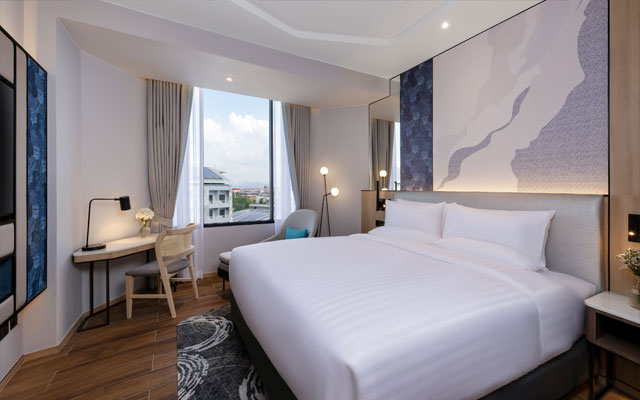
A polished urban retreat designed for business travellers, Hyatt Regency Kuala Lumpur at KL Midtown combines thoughtful design, seamless service, and exceptional facilities.
The five-star property excels in backing its expansive facilities with seamless service and personalised attention, setting the benchmark for luxury in Bangkok.
New Zealand’s national carrier, Air New Zealand, made several key announcements on May 10 at TRENZ 2023, which includes a significant investment in its fleet, expansion in capacity, and future marketing plans, as well as revealed more details about Skynest, the world’s first sleep pods in the sky.
The airline’s NZ$3.5 billion (US$2.2 billion) investment includes the purchase of eight new 787-9 Dreamliners and five Airbus A320neo that will be deployed on its Tasman and Pacific Island services. The investment also includes interior refurbishment of 14 Boeing 787 aircraft and installation of new Business Premier Luxe product. Work is expected to start next year.
It is also in final negotiations to lease another Boeing 777-300ER, which could add 3,000 more seats per week to the airline’s international network. This would bring the total 777-300 fleet to eight.
“Across our international network, capacity is back to about 91 per cent of pre-Covid (levels) and bookings are steady. We’re now at 30 routes, having returned to Bali in March,” Greg Foran, chief executive, Air New Zealand, said during a media briefing.
Within Asia, Air New Zealand’s capacity is at 117 per cent of pre-Covid levels, with Singapore a key hub, particularly for connections to India and Europe. Demand out of China is “rebuilding slowly but surely”, noted Foran, adding that Air China, an alliance partner, restarted its Beijing-Auckland route earlier this month.
Domestic flights are back to pre-Covid levels, where 15,000 seats were added every week over summer. Regional flights out of Christchurch and Auckland have also increased.
“We know it’s not just about bringing overseas visitors to New Zealand but also giving them plenty of options to explore around Aotearoa New Zealand,” Foran pointed out.
During the media briefing, the airline revealed more details about Skynest, where a prototype was available onsite at TRENZ for industry stakeholders to explore.
Located between Premium Economy and Economy, the Skynest is a six-pod configured sleep zone that will offer four-hour sessions for economy passengers to stretch out and lie down. Each passenger will be limited to one session, and each pod will feature a full-size pillow, sheets and blanket, ear plugs, a separate reading light, USB outlet, ventilation outlet, seatbelt, and lighting designed for rest.
The bedding will be changed between each session, and a 30-minute transition time will be allowed for this. The lights will gently come on at the end of each session, and crew will politely wake any passengers who sleep through this.
“We’re still working through the exact details of how the booking process will work, and we have yet to determine the price. At this stage, we are looking at around NZ$400 to NZ$500 for the four-hour period,” shared Air New Zealand’s chief customer and sales officer, Leanne Geraghty.
Geraghty added that the Skynest – designed and to be installed in Aotearoa – will be made available from September 2024 on Air New Zealand’s ultra-longhaul flights, starting with the Auckland-New York and Auckland-Chicago routes.
Air New Zealand will also be investing NZ$30 million in marketing campaigns this financial year in key markets, and continue to rebuild its offshore sales and marketing teams.
Foran added: “Our relationship with Tourism New Zealand is one of our most important marketing partnerships. Teaming up makes every dollar go further to raise destination awareness and it was great to re-sign our MoU last year to promote New Zealand offshore.”