



The time is now for the global travel industry to enact meaningful changes for the climate, according to a newly released report, The State of Climate Action in Business Travel – Global Industry Barometer 2023, from the GBTA Foundation, the charitable arm of the Global Business Travel Association (GBTA).
The report was unveiled at the 2nd GBTA Sustainability Summit held in Washington, DC.
One of the key findings is the industry’s willingness to rise to the challenge: according to the report, 92% of respondents say sustainability is a priority for their organisation (up from 89% in a 2022 GBTA report). Based on survey responses, Europe (98%) along with Asia Pacific and Latin America (both 100%) lead in saying it’s a priority, with North America (86%) slightly lagging the other regions.
“Any kind of meaningful impact begins with the knowledge that change is necessary,” said Delphine Millot, managing director of the GBTA Foundation. “Engaging business travellers and activating the point of sale to empower them to select more sustainable options will be critical − with corporate travel managers playing a leading role in driving that needed change. But to get there as an industry we must unify standards and make the investments needed to decarbonise business travel.”
Here are some of the report’s key findings based on a global survey of travel buyers and suppliers:
- Companies are investing in sustainability teams: 71% of travel buyers and suppliers say they have a sustainability team, an increase from last year (66%). While 90% of airlines have such dedicated sustainability resources, this drops to 59% for the hospitality sector, 58% for travel management companies (TMCs), 55% for ground transportation, and 50% for online booking technologies.
- It’s all about reputation – but also impact: For companies, the biggest drivers when it comes to sustainability uptake are reputation management (84%) coupled with a genuine willingness to drive a positive impact for the planet (82%).
- Travel managers are being tasked with reducing emissions for their programmes: More than half (54%) of respondents say their company has set either internal or public targets to reduce Scope 3 emissions, which include those from business travel. Another 23% are planning to set such reduction targets.
- Combining trips is seen as a tactic to maximise travel’s return on emissions: 74% of travel managers are encouraging (55%) or mandating (19%) their employees to combine multiple business trips into one.
- Travel managers are not always directly acting on the purpose of travel in their policies: 38% report they currently ask for justification for same-day business trips based on return on investment (ROI) and available alternatives.
- The fastest-growing practice will be activating the point of sale to encourage employees to select lower emission options: Only implemented by 28% of travel managers today, an additional 32% are planning to have sustainability features integrated into their online booking tool.
- Developing consistent industry-wide standards is a priority for travel buyers. Asked to pick five ways in which the industry should accelerate sustainable change (out of 10 possible), a large majority of buyers point to harmonised standards on emissions measurement, accounting, and reporting (requested by 65% of buyers). Meanwhile, 60% of buyers requested that GBTA develop harmonised sustainability questions to be used in procurement.
- A third of travel managers will soon be in the game for Sustainable Aviation Fuel (SAF) certificates: While only 18% of travel buyers currently invest in the purchase of SAF certificates, an additional 16% have plans to do so. Of the companies that purchase SAF certificates, 84% do so through airlines. Additionally, 38% say their companies are currently or expecting to purchase carbon credits to offset their business travel emissions.
- Financing the green transition continues to present the biggest challenge for both travel buyers and suppliers in decarbonising their programmes and operations, with “higher costs” ranking as the number one barrier two years in a row.
- Carbon pricing remains a niche: Only 10% of travel managers have established carbon budgets or carbon fees, but this is under consideration by another 23%.
The survey informing the report findings was distributed to the global business travel community, including GBTA members and stakeholders. It was conducted between April 17 and May 5, 2023, resulting in 863 responses from business travel professionals across North America, Europe, Latin America, Asia Pacific, Africa, and the Middle East.
To learn more and download The State of Climate Action in Business report, click here.







 He was previously resort manager of Anantara Kihavah Maldives Villas.
 With over 20 years of experience in the leisure and business hospitality industries, he was most recently general manager of Centara Mirage Resort Mui Ne, Vietnam.
 Teune’s most recent position was as director of operations at The Reykjavik Edition, Iceland.




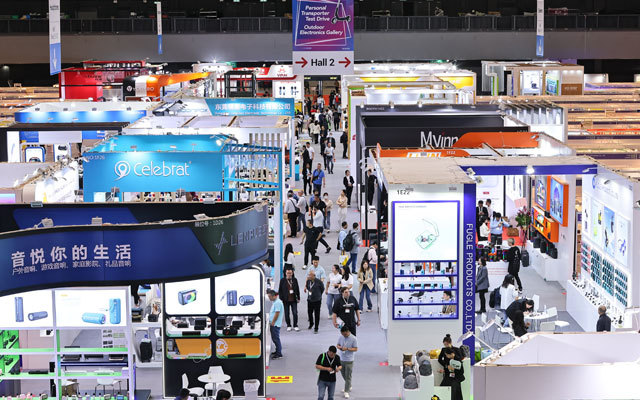
International amusement park and attractions show IAAPA Expo Asia, last held in Singapore in 2017, was “sold out” with 287 exhibitors, including 64 first-timers, taking up 7,000m2 of space at Marina Bay Sands.
The show took place from June 13-16, 2023, and hosted 47 exhibitors from North America, 83 from Europe and 150 from Asia; comprising sellers from China, Hong Kong, India, Japan, South Korea, Macau, the Philippines, Singapore, Taiwan and Thailand, according to IAAPA. China and Hong Kong made up the biggest block with 118 exhibitors and 107 were from the mainland.
June Ko, executive director and vice president, IAAPA Asia Pacific, told TTGmice that some brands which had merged since 2019 returned this year, and the association managed to bring in new buyers from new regions like Europe.
The four-day event recorded 5,330 registered attendees from 75 different countries and regions, including 3,764 qualified buyers from 2,145 companies.
Exhibitor highlights this year included entertainment design company Legacy Entertainment showcasing its “destination dining initiative” in North Jakarta which combines retail and entertainment in a sustainable way.
Described as a floating metropolis, the Batavia Pantai Indah Kapuk mega-development is billed as the world’s first overwater retail destination featuring more than 40 restaurants, retail outlets, attractions and live entertainment.
Opened in early June just ahead of the expo, a spokesperson said the project, which is the size of San Francisco, will be completed by end-2023.
On the technology front, DOF Robotics specialising in AR and VR immersive attractions gave attendees the chance to test its enhanced Hurricane VR 360 attraction and the debut of its new VR movie Homeland: Rise of Nomads.
The expo agenda included 11 EduTours, some across the causeway to Genting SkyWorlds and Gamuda Cove in Selangor, 30 EduSessions, and a Young Professionals Forum and Reception special event.
IAAPA Expo Asia 2024 is scheduled to take place in Bangkok from May 27-30.