Western Australia has officially been awarded the 22nd International Workshop on Campylobacter, Helicobacter and Related Organisms, to take place in Perth in October 2024 (CHRO 24).
The CHRO 24 Organising Committee, along with CHRO members voted in favour of Western Australia’s bid, presented by The Marshall Centre in partnership with Business Events Perth. CHRO 24 returns to Australia after 18 years.
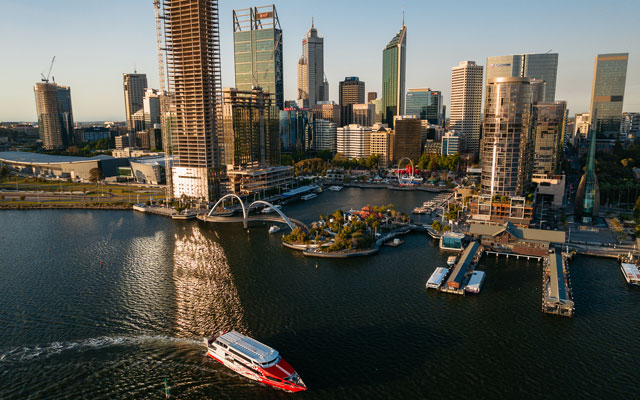
Perth CBD skyline
The workshop is set to attract 500 researchers, clinicians, and scientists from around the world to foster new collaborative, multidisciplinary interactions, and address pressing issues and solutions surrounding Campylobacter, Helicobacter, and related organisms in the Era of Meta-omics.
It will be chaired by Nobel Laureate Barry Marshall, 40 years after his first publication of Helicobacter Pylori and presenting his research at the 2nd International CHRO.
Deputy premier and minister for tourism, Roger Cook, said the event was a great opportunity to promote Western Australia to high-yield business travellers and to shine a spotlight on the state’s growing life sciences sector.
“Securing business events and conferences like CHRO 24 plays a critical role in advancing the health and medical life sciences industry, as well as supporting our state’s tourism sector,” Cook said. He added that life sciences is one of the growing sectors in Western Australia.
Business Events Perth CEO Gareth Martin said Western Australia has a strong base in medical research and is at the forefront of developing solutions with new treatments and technologies.
“The 22nd International Workshop on Campylobacter, Helicobacter and Related Organisms 2024, is a platform to showcase the research-rich state that is Western Australia.
“CHRO will contribute upwards of A$3.4 million (US$2.3 million) to the state’s economy, showcasing Perth on the global stage as a destination for continued knowledge exchange.”
Dunedin has won the International Deer Biology Congress in 2026, which will attract up to 500 cervid researchers and professionals to New Zealand.
Themed Your Deer Here, the conference will take place in February 2026 at the University of Otago, bringing together biologists, ecologists, veterinarians, geneticists, wildlife managers, conservationists, food, health, and production researchers to discuss the diverse aspects of deer management and biology from various perspectives globally.
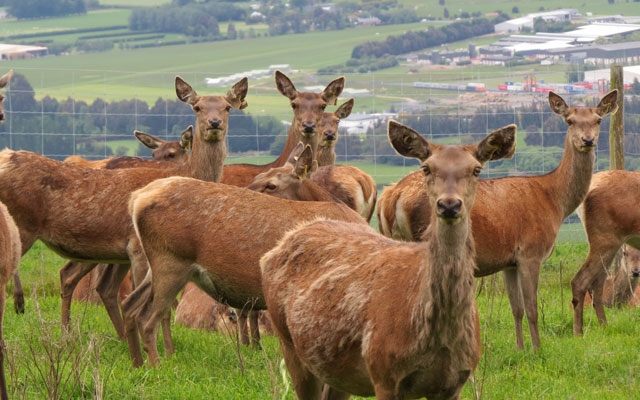
Hinds on the Invermay hill farm
Alongside plenary sessions, presentations and poster sessions, the programme will include a Field Day tour to the internationally renowned Invermay Agricultural Centre and to a local commercial deer breeding farm. Visitors will also get to explore the wildlife of Otago Peninsula.
It is the first time the event has been held in New Zealand since Dunedin hosted the inaugural event in 1983. The winning bid was led by scientist Jamie Ward from AgResearch, with support from Deer Industry New Zealand, Enterprise Dunedin, and the Tourism New Zealand Business Events team.
Ward said: “Dunedin was chosen for its iconic legacy with this Congress, its strength in Deer Science at AgResearch’s Invermay Agricultural Centre, and the strong history of scientific excellence at Otago University, as well as a fascinating history of deer introductions, diverse landscapes and uniquely accessible wildlife. To get the news of hosting this Congress not long after we celebrated the milestone of 50 years of Deer Science at Invermay makes it even more special.”
The win kicks off a bumper run for international conferences in Dunedin. In 2023, the city will host the International Foundation of Fashion and Technology in April, the International Symposium Adapted Physical Activity in July, the 9th Asia Pacific International Congress of Anatomists, and 20th Australian and New Zealand Association of Clinical Anatomists Conference 2023 in November, and the World Leisure Congress 2023 in December.
In January 2024, the city will welcome the International Human Resources Conference, and some 1,000 delegates are expected at the History of Science and Technology Congress 2025.
Euromic, the oldest DMC alliance in the industry has added two members to its ranks – Hello! Destination Management and Connect DMC.
The three countries these two DMCs add – US, Dominican Republic and Mexico – bring the number of destinations around the globe euromic offers up to 51.
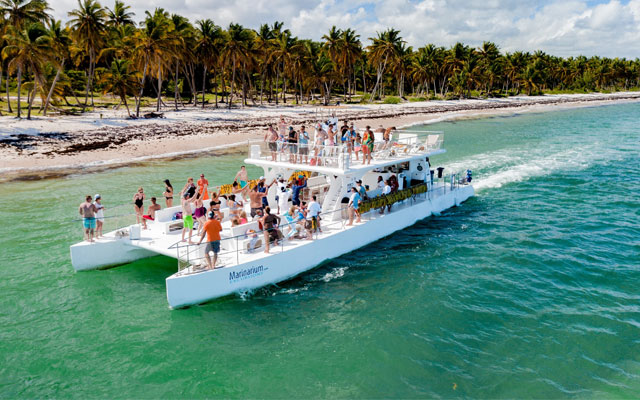
An incentive programme in the Dominican Republic
Hello! Destination Management was founded in 1986 with its headquarters in Orlando, Florida. Offering incentive group travel programmes and experiences, the DMC currently operates in over 50 popular meeting destinations with 13 offices including Orlando, Las Vegas, New York, San Diego, Nashville, Miami, and Washington DC. It is euromic’s first US member.
Paul Mears III, Hello! Destination Management’s president and CEO, commented: “This is a great way for us to learn new ways of thinking, expose our team to new expectations, and serve new clients with the guidance of experienced partners. I am confident that our expertise and footprint in the US make us the perfect partner for euromic and its members.”
Established in 1999, Connect DMC adds two more destinations to euromic’s portfolio – Dominican Republic and Mexico. It has fully-owned and operated offices in Punta Cana, and offers destination logistics, sustainability solutions and corporate event services.
Ben Sauvage, Connect DMC’s CEO, said: “In our time in this field, we have developed a deep understanding of the importance of sustainability and are continuously seeking out new and innovative ideas. We believe that our industry expertise and commitment to progress will be a valuable addition to the group, and we look forward to growing together with euromic with our upcoming expansion within Mexico and the Dominican Republic.”
Victoria’s Pentridge entertainment and dining precinct has undergone a billion-dollar metamorphosis and its newest tenant, Chapter Place, offers nine indoor and alfresco event spaces, and high-end conference facilities.
Set for an official opening in autumn this year, the nine on-site venues that have been repurposed for modern-day events and conferencing include a tranquil Reflection Garden bordered by 170-year-old Bluestone walls; a former cell block framed beautifully by 10-metre-high arched ceilings and aptly named The Long Hall; and a converted chapel with stunning arched leadlight windows.
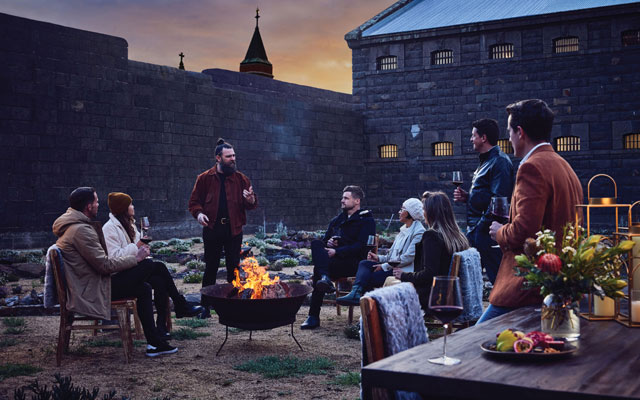
Campfire in the Reflection Garden
For venue general manager, Jesse Kornoff, the combination of venue, service, food, and signature experiences are where the transformation of Pentridge from Victorian prison into a modern-day lifestyle space comes to light.
He said: “Our Reflection Garden – complete with a campfire to combat Melbourne’s changeable weather – is the perfect spot for pre-dinner drinks, teambuilding events, or an early morning wellness session, while the Long Hall is a showstopper for cocktail events, and (the) Olivine wine bar (can be used) for more intimate affairs.”
Chapter Place sits alongside the brand-new 106-room Adina Apartment Hotel Pentridge Melbourne for large groups, and other anchor tenants including Olivine wine bar and North & Common bistro in B Division, a freshly imagined former wing of the 170-year-old historic prison.
Kornoff added that Chapter Place does not shy away from what the site once was, referring to The Real Underbelly conferencing experience led by one of Pentridge’s original prison guards.
“Clients can (also) learn how to roll truffles with Coburg’s own Koko Black during a 1.5-hour Masterclass; learn how to use a throwing wheel with local potter, Pink Ember; there’s a drinking class for people with a drawing problem; or Time Travel with a wine journey, led by our Sommelier, Liinaa Berry,” he said.
When the conferencing and eventing are done, visitors can step outside Pentridge’s perimeter and immerse themselves in a world of artists, artisans, bars, restaurants, galleries, studios, breweries, distilleries, and wineries.
Chapter Place Delegate Day Packages start from A$95 (US$86) per person.
With the opening of numerous new business events facilities, a rapid uptick in both hybrid and in-person events and the return of face-to-face business meetings overseas, 2022 was a busy year for Fukuoka Convention & Visitors Bureau (FCVB).
In the past 12 months, staff have been stepping up efforts to promote Fukuoka as a destination for the new wave of international events, first via online meetings and through fam trips, and from mid-2022, at in-person events such as IT&CM Asia in Bangkok and IBTM World in Barcelona.
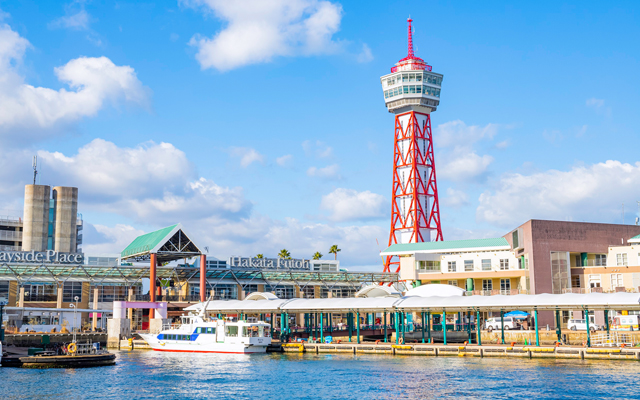
Hakata Port Tower (pictured) is free of charge to visit and offers fantastic views across Fukuoka City
They have also been redeveloping the city’s unique venue and unique experience programmes while updating sustainability offerings for event organisers. Sustainably made eco bags are now available for incentive group attendees, while 2023 will see the launch of a new activity booklet designed for overseas event planners.
To facilitate event hosting, the FCVB joined the Hybrid City Alliance in August 2021 “to increase cooperation, share information and strengthen our city’s links with other international bureaus,” said Kenneth Macphie, spokesperson for the FCVB.
Throughout 2022, the FCVB provided subsidies to help organisers hold events in the city. Incentive groups, as well as organisers of hybrid meetings and conferences in Fukuoka were all able to access financial support for their events.
Recent city development has allowed Fukuoka to improve its business events offering.
Two new large-scale venues, the Marine Messe Fukuoka Hall B, and Hakata International Exhibition Hall & Conference Center, opened in spring 2021.
Located at the Fukuoka International Congress Center, the pillarless 5,000m2 Hall B is equipped with ceiling suspension apparatus and lighting control. Meanwhile, the Hakata venue boasts an exhibition area, a multipurpose hall, several smaller meeting rooms.
Looking at specific markets, Macphie noted the FCVB is building on long-term demand in Fukuoka’s business events offering, particularly corporate events and incentives, from Asia Pacific countries.
Staff have long been focusing their marketing and sales activities on travel agents running large-scale events but, in 2022, have expanded their efforts to also “speak directly to corporate buyers to encourage future large (incentive) groups to visit the city,” he said.
This comes as interest has been growing in recent years, thanks to the city’s easy access from many parts of the region, as well as its improving range of facilities.
Fukuoka also announced the Tenjin Big Bang Project, an initiative capitalising on the relaxation of regulations on the height of buildings in Tenjin, its downtown area.
About 30 old buildings in the area are set to be redeveloped in the coming years, which will see “huge investment and redevelopment of the commercial centre of Fukuoka,” noted Macphie, who added that the project has already resulted in the launch of modern business events hardware.
These forthcoming new builds include The Ritz-Carlton, scheduled to open in spring 2023.
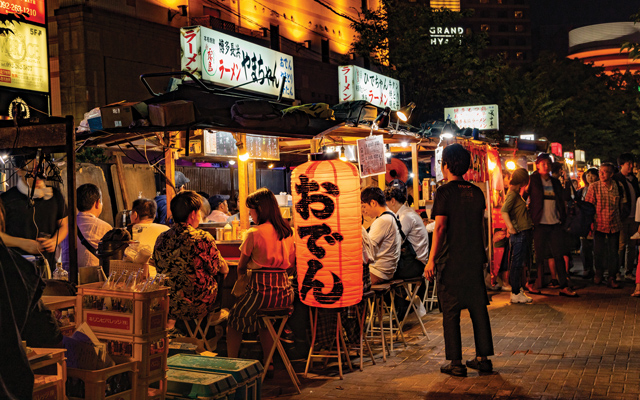
There are dozens of yatai (street food stores) scattered across Fukuoka
Other infrastructure improvements include JR Kyushu’s September 2022 launch of a new bullet train line linking Saga and Nagasaki Prefectures, which will improve access between Fukuoka and Nagasaki. The new Nishi Kyushu Shinkansen line will shorten travel times between the two cities, allowing event organisers to easily incorporate trips to other parts of Kyushu into their Fukuoka itineraries.
“For event participants coming to Fukuoka City from overseas, it is now even easier to experience the fabulous history and countryside around Kyushu,” said Macphie.
The FCVB has also begun increasing its promotion of Fukuoka as a gastro-tourism destination following the city’s listing as a gourmet destination in travel guidebook Lonely Planet’s Best in Travel 2023 list. Fukuoka was the only Japanese destination to be named in the “Eat” category, helping it stand out as particularly attractive for gastro-tourism group tours.
Due to the “rapid return of domestic exhibitions” to Fukuoka, the FCVB is working to bring more international exhibitions to the city, as well as large “symbolic events” such as those centring around the arts, culture and sports, Macphie shared.
Langkawi will soon have a fresh attraction to draw travellers – the Dream Forest Langkawi, an integrated tourist destination comprising Dream Forest Immersive Park and Dream Forest Book Village.
Built at a cost of around 20 million ringgit (US$4.5 million), the project is conceptualised and developed by Enfiniti Group and led by creative powerhouse Tiara Jacquelina.
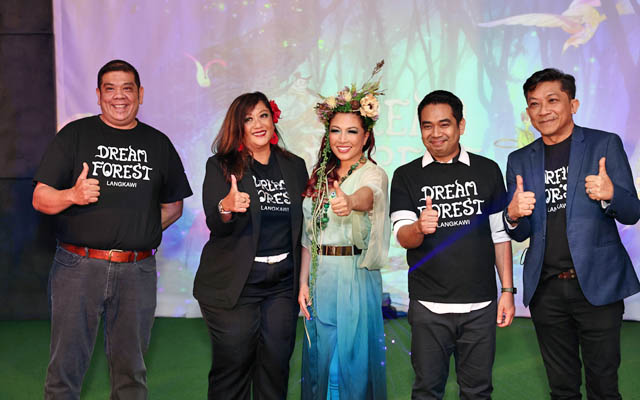
Tiara Jacquelina (centre) and her team at the preview of Dream Forest Langkawi
The first phase of the project, Dream Forest Immersive Park, is set to open in May at the foot of Gunung Raya mountain. It will feature a multi-sensory, immersive evening walk through a 1.2km trail in Langkawi’s lush rainforest, where local stories and legends of the island come alive through soundscape, illuminations and projection mapping on the trees and the ground. Some spaces are also interactive.
During the day, visitors can take nature walks and at night, the forest transforms into a 6.39 hectare-wide natural theatrical space.
At a recent press conference, Tiara said the project was four years in the making.
“It started in 2019 as a very different project, designed to be experienced as separate stories told through various mediums of technology in individual pavilions,” she said.
“This was part of a plan to revitalise and reinvigorate the beautiful, former Kampung Buku of Langkawi. We even had plans for a spectacular nightly performance in an outdoor theatre.
“By 2020, it was very clear that the tourism industry and attractions like the one we were creating needed to adapt to a new normal in tandem with Industrial Revolution 4.0. The world was changing, the way people travelled and consumed entertainment was changing.”
Realising this, Enfiniti Group had to rethink the concept and how the visitor’s journey could be enhanced through the use of technology and automation, while being responsible and respectful to the natural forest landscape.
The second phase, Dream Forest Book Village, will house an events space, F&B and retail outlets as well as picnic spots. There will also be regularly curated cultural-based pocket performances of music, dance and poetry readings around the gardens or at the 120-seat amphitheatre.
Queensland’s Gold Coast is being thrust into the literal limelight as developments in the city’s screen industry pick up speed, with at least two reputable industry gatherings secured recently.
In January, the Gold Coast was announced as host city for the next three editions of the Australian Academy of Cinema and Television Arts Awards, regarded as the Australian version of the Academy Awards.
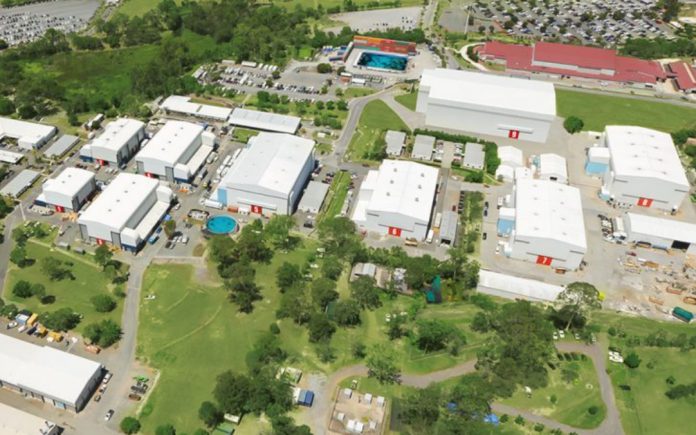
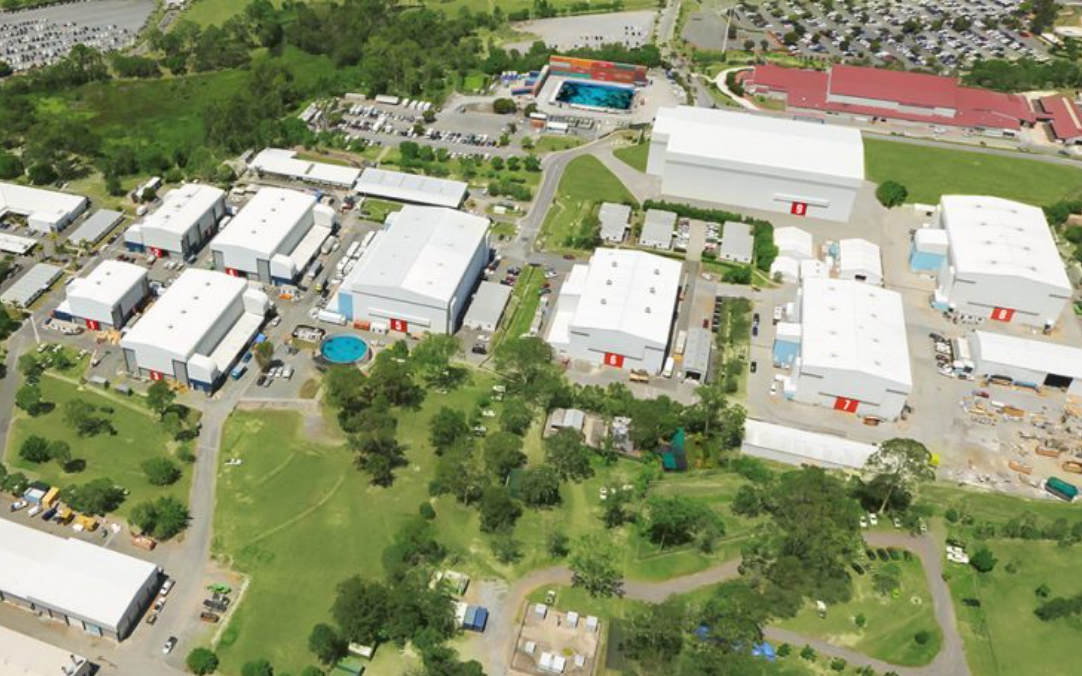
The Village Roadshow Studios investment has boosted the Gold Coast’s standing in the movie-making industry (photo credit: villageroadshowstudios.com.au)
According to a press statement from the Australian Academy of Cinema and Television Arts (AACTA), the wins will see AACTA president Russell Crowe, vice president Nicole Kidman and ambassador Cate Blanchett leading a lineup of talent on the Gold Coast, generating A$3.4 million (US$2.3 million) for the visitor economy.
AACTA will also develop several initiatives, including the expansion of its ScreenFest programme, which will be presented on the Gold Coast in the lead-up to the AACTA Awards in February 2024. ScreenFest will feature a range of screen culture and creative development activities covering all aspects of film, television and digital content creation, including workshops, skills and employment seminars, masterclasses, and showcases of local and international work. These will sit alongside programmes that support and amplify First Nations storytelling.
Another win for Destination Gold Coast, business events stakeholders and the local screen industry is the three-year contract to host Screen Forever, a business event that brings together local and international screen industry leaders across all genres and disciplines. The Gold Coast successfully delivered the 2022 edition in March, and will welcome the next edition this May.
Karen Bolinger, the interim CEO of Destination Gold Coast, said the screen industry development brings more than just star power to the Gold Coast.
“It leads to job creation, knowledge exchange in the space of film production, innovation and talent, and attracts investors and entrepreneurs in this industry,” said Bolinger during her meeting with TTGmice at AIME 2023.
Destination Gold Coast’s head of business events, Selina Sinclair, added that few knew about the ongoing “massive screen development that is going on here”.
“Baz Luhrmann relocated his production company HQ to the Gold Coast to make his Elvis biopic. Village Roadshow, which has also made big investments in the Gold Coast, operates the Village Roadshow Studios in Oxenford. That is one of the largest studio lots in the Southern Hemisphere,” detailed Sinclair.
“Many of these studios are a product of the 2018 Commonwealth Games on the Gold Coast – sporting infrastructure that has been converted for other uses,” she added.
It is estimated that Village Roadshow Studios alone has attracted about A$3.6 billion worth of film, reaffirming the city’s position as a movie-making heavyweight. Big-name movies to film in the city include Thor: Ragnarok; Pirates of the Caribbean: Dead Men Tell No Tales; San Andreas; and The Shallows.
Bolinger: the Gold Coast is a magnet for screen businesses and talents
The big screen development resonates with Destination Gold Coast’s new brand, The imagination capital of Australia, which was unveiled in 2022 to spotlight the strength of the city’s health, innovation, education, screen and arts, and sports industries.
“There tends to be a one-dimensional view of the Gold Coast, as a place for sun, sand and surf. But the Gold Coast is not one dimensional,” asserted Bolinger.
Event owners that have to answer to stakeholders demanding “different outcomes from their events” will discover many positive aspects of the Gold Coast that will spur commercial achievements.
To emphasise the power and presence of the Gold Coast’s intelligent community, Destination Gold Coast launched a new ebook, The Imagination Collective, at AIME 2023. It comprises stories about the people, the industries and the growing pool of knowledge in the city.
The Next Generation Leadership grant programme is in its seventh year
UFI, the Global Association of the Exhibition Industry, is inviting talented industry professionals from around the world to apply for the 2023 edition of its Next Generation Leadership grant programme.
The goal of the UFI Next Generation Leadership (NGL) Grant is to foster next-generation leaders in the exhibition industry and promote talented professionals who demonstrate clear initiative in driving change and innovation in their area of activity.
The Next Generation Leadership grant programme is in its seventh year
NGL Grant applicants are asked to focus on a mission that tackles a critical topic facing the exhibition industry. This year, the mission calls for applicants to write a new blueprint on how to operate events that help industries evolve, and help businesses to trade and learn.
The NGL Grant will be awarded to up to five winners, who will be picked by an international jury chaired by UFI president Michael Duck. The winners will work with the team at the UFI headquarters in Paris and receive support from the NGL alumni community, as well as present their findings in a special session at the 90th UFI Global Congress taking place from November 1-4, 2023 in Las Vegas, US. The grant covers the travel and accommodation needed to attend the event, as well as to attend the UFI European Conference in Maastricht, The Netherlands from June 13-14, 2023.
This grant is open to anyone who works full-time in the exhibition industry for no longer than 10 years. It will begin in May 2023 and is spread over eight months, allowing the grant winners to participate while also continuing to fulfil their daily work obligations.
The Sabah Tourism Board has introduced an incentive support programme toattract more business events to the state, and continues to support the development of human capital for the business events industry through several initiatives.
Organisers who bring in a minimum of 30 national or international delegates per business event are eligible for the incentive support which is known as Sabah BE Here For You. The support is on a reimbursement basis and the maximum support per event is RM100,000 (US$21,274).
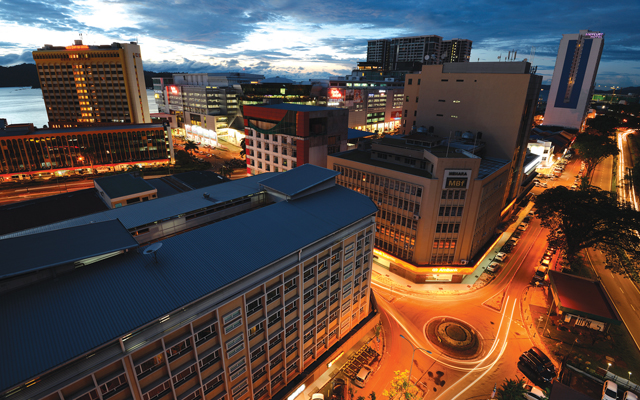
Sabah (pictured) is ready for business events
In 2022, a total of 53 events were supported, which included the 2nd Asia Parks Congress in May; 24th Family Medicine Scientific Conference in September; and the 6th World Tourism Conference in November.
Meanwhile, capability building and knowledge upgrading initiatves included a four-day Congress Certification Program 1.0 in December 2021, as well as subsiding the cost of The CCP 2.0 Advance Masterclass. Topics covered topics such as budget preparation, digital marketing application, event technology, nd digital event strategies.
Such activities also contribute to the nation’s economic recovery and growth under the 12th Malaysia Plan and the Shared Prosperity Vision 2030.
The Sabah International Convention Centre (SICC), a waterfront purpose-built conference, exhibition and entertainment facility in Kota Kinabalu, is also doing its part by hosting educational programmes for local associations to understand more about the business events industry, and equip them with the knowledge and skills needed to bid for regional and international meetings and conferences.
Elsewhere in the business events ecosystem, Borneo Trails Tours & Travel has created new incentive packages for the European market, which were promoted at World Travel Market in London last November.
The 10 to 12 day nature and culture packages combined state capital Kota Kinabalu with Sandakan, a hotspot for wildlife sightings. The company is also working with local organisations on CSR programmes in remote areas, as European clients tend to incorporate a CSR component into their itineraries.
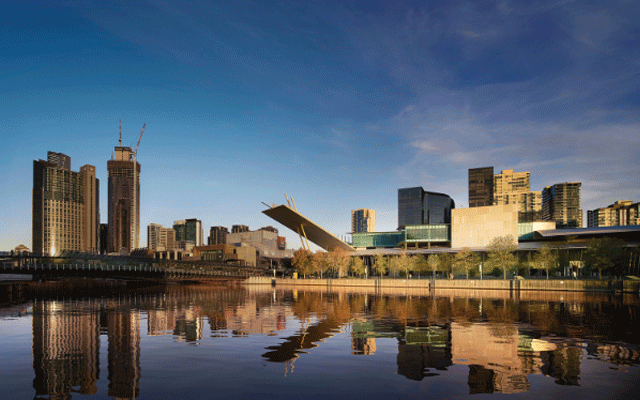
MCEC (pictured) brings both the events and aviation sectors together in this latest win
Melbourne Convention and Exhibition Centre (MCEC) and Startup Victoria have established a new partnership that connects the start-up community, experts and entrepreneurs with the events industry.
This partnership is a strategic alignment that will strengthen industry relationships, provide a forum for sharing experiences and expertise, and inform potential products and services to help shape the MCEC customer experience.
MCEC and Startup Victoria aim to foster innovation and entrepreneurship
Natalie O’Brien, CEO of MCEC, said the partnership can help MCEC progress the innovation journey it has embarked on over recent years. “We have lots of ideas to explore and we want to embed creativity, innovation and an entrepreneur mindset into our business,” O’Brien said.
“The partnership with Startup Victoria will help us navigate the large and complex start-up ecosystem and connect with people who can help us achieve our innovation goals.”
Meanwhile, Dickie Currer, head of partnerships at Startup Victoria, looks forward to connecting with “CEC’s people and community partners and tapping into the expertise and influence of its Club Melbourne ambassadors and thought leaders”.
The first Startup Victoria event to be supported by MCEC as a venue partner is the Health & Wellbeing Pitch Night. The pitch night on February 28 will showcase startups that are making the world a better place by improving health and well-being in innovative ways. Further pitch nights will be held throughout the year.
Looking forward, MCEC is preparing to host the Global Entrepreneurs Congress when it comes to Melbourne for the first time in September 2023. This event will bring together more than 2,500 delegates from 170 countries to share success stories and foster collaboration.
Just 10 minutes from Phuket International Airport on the serene northern coast, this 178-key, Bill Bensley-designed resort offers delegates a quiet, tropical paradise steeped in Phuket’s tin-mining heritage
The newly-opened Ritz-Carlton, Bangkok anchors the One Bangkok development with cosmopolitan elegance. Featuring the city's largest ballroom and a spectacular new penthouse suite, it delivers exceptional hardware and deeply authentic, soulful service for business and leisure travellers alike
Behind the imposing, Brutalist concrete that defines Zurich’s Oerlikon district lies a surprising secret. While its exterior honours the neighbourhood’s industrial roots, stepping inside Mama Shelter reveals a vibrant, neon-soaked world that is a far cry from its rigid shell