ChristchurchNZ Business Events has appointed Jeanette Henshaw to the new role of business development manager – New Zealand.
She starts in her new Auckland-based role on October 31, 2022.
Henshaw joins ChristchurchNZ from Business Events Industry Aotearoa (BEIA) where she has been responsible for delivering MEETINGS and conference events. Previously, she was with Auckland Convention Bureau for six years as marketing and business events services manager.
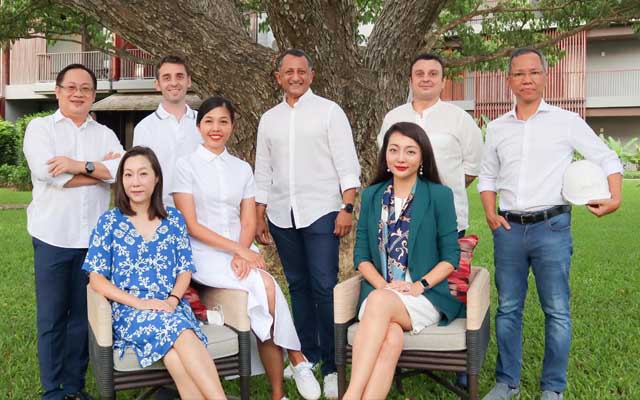
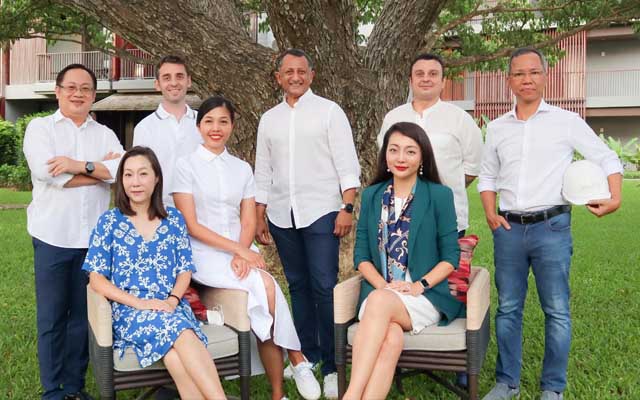
Andaz Pattaya Jomtien Beach in Thailand has announced the executive management team ahead of its grand opening in 4Q2022.
Back row from left: Thanate Likhittumrongkawin, Alexis Movio, Ranjeet Rajebhosale, Vincenzo Gatti, Kriengkrai Chongkhanpond; front row from left: Anna Rhee, Dollarpapat Sookmuang, Sunny Yu
Leading the team is Ranjeet Rajebhosale as general manager, who has amassed 28 years of experience in the hospitality industry. He was previously general manager of Hyatt Regency Liberation Square Chongqing, China.
Anna Rhee is executive assistant manager – rooms, and has been with Hyatt for more than 23 years. Her most recent position was with Hyatt Regency Nha Trang in Vietnam where she served on the pre-opening team.
New director of sales & marketing Sunny Yu joins the team after over a decade with IHG where she held roles in loyalty marketing, global sales effectiveness and commercial marketing. In addition, she is in her fifth year serving as president of the Thailand Chapter of Hospitality Sales & Marketing Association International.
Overseeing the hotel’s restaurants, bars and lounges is director of food & beverage Alexis Movio. A dynamic F&B professional, he has worked in some of Asia’s most luxurious hotels and resorts.
Vincenzo Gatti is the resort’s executive chef. Gatti has worked in the top kitchens of Europe and Asia for two decades, as well as in Asia. He has extensive experience of Hyatt and its brands, having worked at Park Hyatt Guangzhou, Grand Hyatt Seoul and Hyatt Regency Hua Hin in the past six years.
Thanate Likhittumrongkawin joins the team as director of finance. He has worked with brands including JW Marriott and W Hotels before joining Hyatt Regency Phuket.
Dollarpapat Sookmuang is the director of human resources, and joins Andaz Pattaya Jomtien Beach from Park Hyatt Maldives, while Kriengkrai Chongkhanpond, director of engineering, most recently worked on the launch of Hyatt Regency Koh Samui.
As one of Thailand Convention and Exhibition Bureau’s (TCEB) 10 MICE Cities, Chiang Mai already has the goods for all types of events, but continuously adds and improves its business events infrastructure of hotels and conference centres.
The situation has become even better with the arrival of two new properties, according to Vorapong Muchaotai, deputy managing director of DMC Event Thailand.
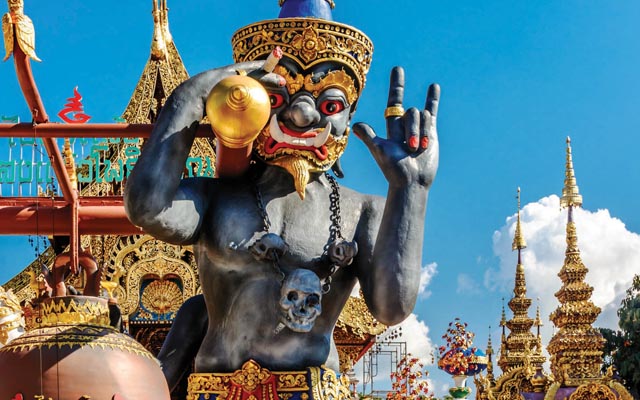
There are more than 300 temples in Chiang Mai; a temple guardian pictured
“Meliá Chiang Mai, which opened in June 2022, (offers several meeting options) while The InterContinental Chiang Mai Mae Ping, on target for its launch in 1Q2023, will provide expansive meeting areas suitable for events,” he said.
Vipasiri Napawongdee, cluster director of marketing communications at Meliá Koh Samui & Chiang Mai, revealed that Meliá Chiang Mai’s Yi Peng Grand Ballroom can seat up to 300 guests, which helped in its selection as an official hotel for the Asia-Pacific Economic Cooperation conference (APEC) 2022.
To help event planners improve their sustainability ethos, EcoTouch Meetings by Meliá is a programme that raises awareness about the responsible use of resources. All materials are from recycled sources, such as notebooks, pens, markers, flipcharts and coasters. Glass jars instead of plastic bottles are also used, as well as energy-saving lighting, and the use of computers and audiovisual equipment with low energy ratings, among other initiatives.
Located near to Meliá Chiang Mai and in the heart of the city are more options for event planners, such as the Le Meridien Chiang Mai with 1,741m2 of event space, and the Shangri-La Chiang Mai which boasts an auditorium which can accommodate up to 2,000 guests.
There is also the upcoming 306-key InterContinental Chiang Mai Mae Ping. The property is a complete makeover of the Imperial Mae Ping Hotel, which IHG took over in 2019, and will feature over 3,600m2 of outdoor and indoor convention, event and meeting spaces.
Aside from meeting capabilities, attractions delegates can explore pre- or post-meetings include the Chiang Mai Night Bazaar, Tha Pae Gate and Warorot Market.
These MICE-ready properties, as well as the destination’s ease of air connectivity, help Chiang Mai to capitalise on being a leading destination for international business events.
Vorapong pointed out: “In addition to daily flights to Singapore and Kuala Lumpur by Scoot and Air Asia, there are also charter flights from Incheon by Jeju Air bringing large groups of golfers to Chiang Mai which began in June 2022, on top of the other services.”
Already known as the gateway to northern Thailand, Chiang Mai International Airport is also the fourth busiest in the country.
“However, despite recovering nearly 50 per cent of passenger levels in July 2022 compared to the same time in 2019, the airport is not back to full capacity. Pre-pandemic the majority of arrivals were from China, Hong Kong, Macau and Taipei, whose borders have still not fully opened for travel,” he noted.
The historical iron bridge in Chiang Mai
Despite the current shortfall in arrivals, there is growing excitement around the proposed construction of a second airport for the region. The new airport is expected to be developed in Lamphun Ban Thi, approximately 25km from the existing Chiang Mai International Airport.
Chiang Mai is no stranger to large-scale events as well. The most auspicious headliner would no doubt be the APEC 2022 sessions. At the end of August 2022, more than 1,000 delegates got together at the Chiang Mai International Convention & Exhibition Centre (CMICE) for the Meeting of Ministers Responsible for Forestry, and Senior Disaster Management Officials Forum.
CMICE was also the host of FTI Expo 2022 (Federation of Thailand Industry), welcoming thousands of delegates from June 29 to July 3, July 2022. The conference was graced by Thai prime minister Prayut Chan-o-cha, who presided over the opening ceremony with a keynote speech.
This year, for the first time, Chiang Mai also hosted the Spartan Race organisation over a weekend in August, which saw more than 3,000 runners from 30 countries compete on a five-kilometre trail strewn with 20 obstacles. It generated over 300 million baht (US$8.3 million) for the city over four days.
Chuta Tharachai, TCEB’s director of the Northern Region Office, is capitalising on the smooth handling of the large-scale event to obtain the rights to organise the Spartan Race World Series, which has a fan base of two million people from 40 countries.
Commenting on the city’s recovery, Vipasiri said: “Chiang Mai is a busy city with a thriving tourism scene and is well-prepared with up-to-date infrastructure for events and conferences. Once Asia and the rest of the world embrace large-group travel and international meetings again, we are more than ready (to welcome them).”
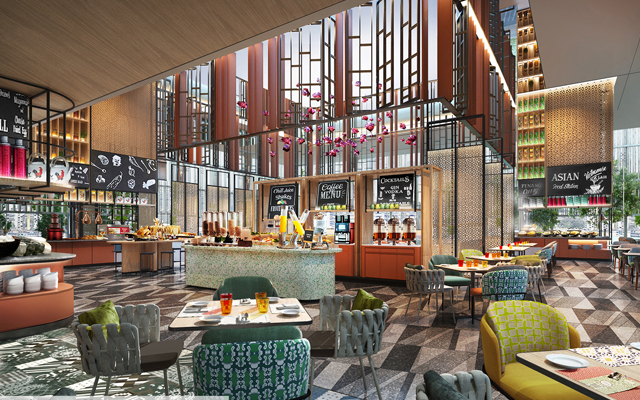
The Amaya Food Gallery offers east-meets-west cuisines, popular local fare, and Thai-infused selections in an interactive street-market-inspired setting
The Amaya Food Gallery offers east-meets-west cuisines, popular local fare, and Thai-infused selections in an interactive street-market-inspired setting
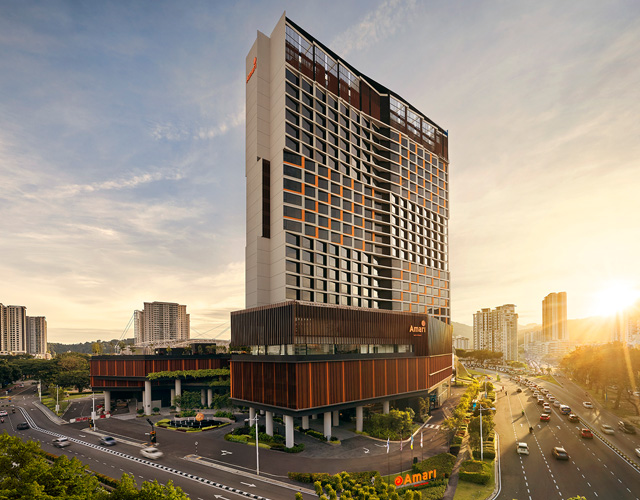
Penang saw an exciting new hospitality addition opening its doors to welcome guests recently. Bleisure hotel, Amari SPICE Penang, offers world-class integrated hospitality facilities and services in the heart of the island’s central business district and just minutes from Penang International Airport.
Directly connected to the SPICE Convention Centre, guests can gain convenient access to the world’s first hybrid solar-powered MICE venue complex. Whether they are in town for business or leisure, Amari is the ideal accommodation.
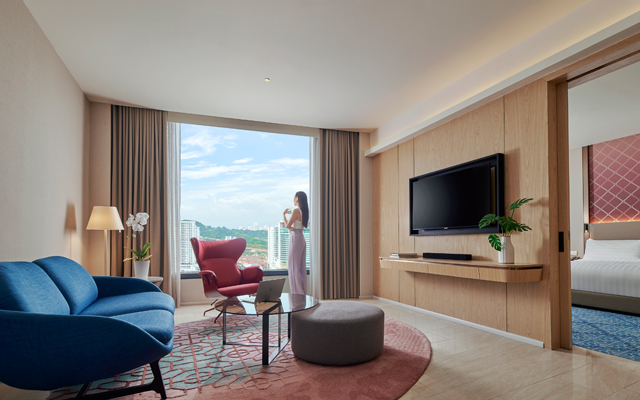
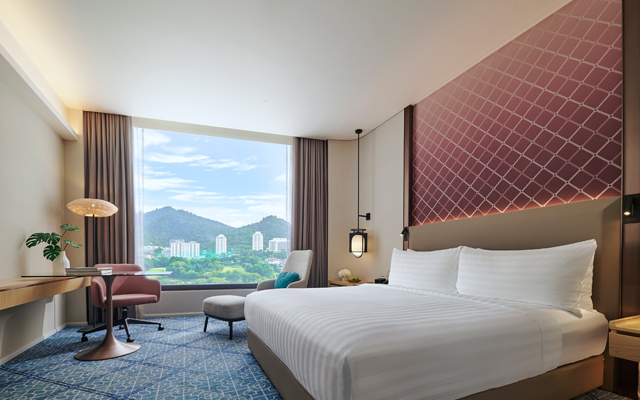
Floor-to-ceiling windows fill its 453 guest rooms and suites with warm natural light, each one well-equipped for the modern business traveller. The contemporary-designed spaces come complete with thoughtful touches – a smart workspace, smart TV and high-speed wi-fi connectivity.
Thoughtful amenities and facilities
1 of 4
The new hotel is located in the central business district and just minutes from Penang International Airport
Guest rooms come complete with a smart workspace, smart TV and high-speed wi-fi connectivity
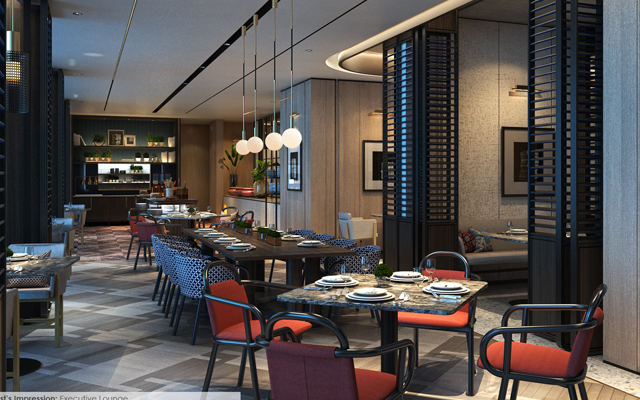
The executive lounge offers an elevated level of personalised service and complimentary offerings
Floor-to-ceiling windows fill its 453 guest rooms and suites with warm natural light
Guests staying in the executive rooms and suites will enjoy private access to the executive lounge offering an elevated level of personalised service along with complimentary daily breakfast, evening cocktails, all-day light bites and beverages, topped with stunning 180-degree views of Penang.
From small boardroom meetings of up to 10 people, annual dinners, customised events to full-day conferences, Amari sets the perfect stage with versatile rooms, seating, and stage arrangements.
The hotel even boasts a 240-square-metre pillar-less ballroom complemented with a spacious pre-function space and five function rooms.
The signature all-day dining restaurant, Amaya Food Gallery, presents east-meets-west cuisines, popular local fare, and Thai-infused selections in an interactive street-market-inspired setting with live food stations. It also includes a wine room, The Cellar and tropical garden sit-and-chill alfresco dining at Amaya Terrace, as well as Amaya Bar for sunset Happy Hour.
Cascade is a chic and cosy lobby lounge by day with light meals and afternoon teas for casual meetings. By night, it transforms into a stylish bar lounge, a perfect venue for drinks.
Besides, Penang’s latest rooftop bar overlooking the panoramic city’s skyline, D’Observatory Sky Bar, also serves up unique cocktails with local twists and tasty tapas. This spectacular vantage point is great for after-work drinks, pre-dinner aperitifs, chic evenings out and celebrations.
For sensorial holistic therapies, weary travellers can visit the Breeze Spa, a contemporary spa retreat, featuring five treatment rooms to relax and revitalise their body, mind and soul.
Fully equipped with a range of state-of-the-art cardiovascular and strength training machines, the FIT Centre allows wellness fanatics to work out after a long day at work too.
Guests can also lounge on the sun deck of the outdoor saltwater swimming pool, overlooking the beautiful roof garden, while enjoying refreshing drinks and light bites from the Aqua Bar.
Operated by ONYX Hospitality Group, one of Asia-Pacific’s leading hospitality management companies, the Amari collection of hotels and resorts brings to life a contemporary re-imagining of Thailand’s rich cultural roots, with the influences of unique localised settings amplified through architecture, design, art, cuisine and services.
Keen to check out Penang’s latest hospitality addition?
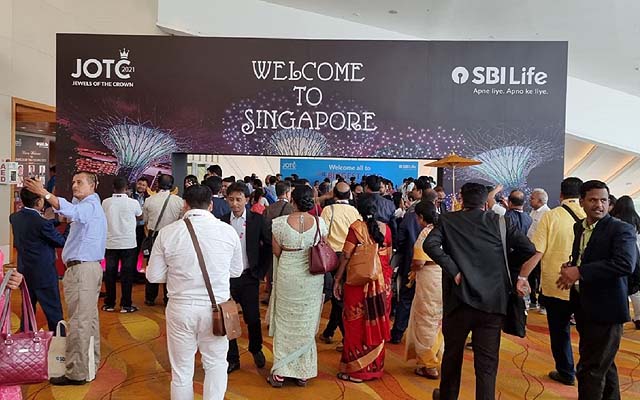
Singapore recently welcomed its largest post-lockdown incentive movement from India in September, when more than 2,400 SBI Life Insurance “Jewel of the Crown” (JOTC) top agents and partners gathered for their four-day programme.
Flying in from nine cities across India on 36 different commercial flights, this was the largest JOTC ever (1,600 pax attended the Bali incentive trip in 2019), and one of the largest incentive groups hosted in Singapore this year.
JOTC participants at Sands Grand Ballroom foyer. Photo credit: GB Srithar LinkedIn
Delegates’ itinerary included major attractions such as Universal Studios Singapore (USS), Sentosa, and Gardens by the Bay, while the awards and gala dinner was held at Sands Expo & Convention Centre.
Supported by the Business Events in Singapore scheme and Singapore Tourism Board’s (STB) India team, Akbar Travels of India and Akbar Travels Malaysia handled the trip logistics.
When asked why Singapore holds strong appeal for India’s outbound corporates, major Indian incentive tour operators SOTC Travel and Thomas Cook (India) cited Sentosa was home to many other attractions such as SkyHelix, Skypark Sentosa, Mega Adventure Park, and Ola Beach Club. The Night Safari and River Safari at Mandai, and the Singapore Flyer are also popular.
“Singapore is one of the most sought-after MICE destinations in South-east Asia thanks to its accessibility and strong connectivity from India with a choice of multiple carriers, from budget to full-service airlines,” said S D Nandakumar, president & country head – corporate tours, SOTC Travel.
“SOTC’s forward pipeline indicates a strong and growing appetite for MICE travel to Singapore. We have multiple queries with group sizes ranging from 200 to over 1,000 pax for 4Q and 2023,” he added.
Similarly, Meera Charnalia, senior vice president and head – MICE, Thomas Cook (India), has seen the outbound demand for Singapore surge “over three times”, and pointed out that the route is at “90 per cent recovery”.
She added: “We have operated a significant number of groups to Singapore ranging from 50 to 200 pax, with budgets ranging between 75,000 Indian rupees (US$911) to 150,000 Indian rupees per person and have several movements in the pipeline.”
Charnalia attributed the surge in interest to strong support from STB, as well as the ease in obtaining visas.
“The In Singapore Incentives & Rewards (INSPIRE) Global 2.0 programme is beneficial for MICE groups to Singapore as it offers several complimentary options including sightseeing, dining, thematic tours, teambuilding and retail experiences,” noted Charnalia.
With travel sentiment at an all-time high, both tour operators have also reported an uptick in cruise incentives from Singapore.
Nandakumar shared: “Our data has also revealed a surge of over 40 per cent in cruise itineraries compared to pre-pandemic levels. Cruises (are popular as they) represent a great value proposition as an all-inclusive experience.”
From left: Cvent's Anthony Lion and Will Kataria at the event
Global event and hospitality technology provider Cvent is increasing its engagement with Singapore-based millennial and Gen Z meeting planners, and educating them on the platform’s in-person and hybrid capabilities to meet their post-pandemic needs.
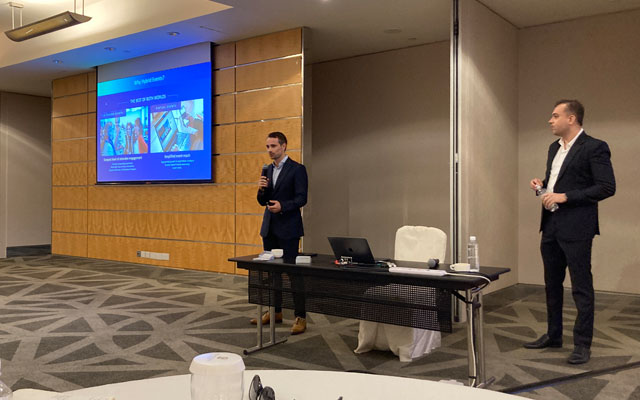
To do this, Cvent organised a lunch and learning event on October 12, which was attended by some 35 mid-level corporate buyers, as well as individuals from institutes of higher learning and digital marketing agencies.
From left: Cvent’s Anthony Lion and Will Kataria at the event
Will Kataria, senior director/general manager, Cvent Singapore, shared with TTGmice that the goal was to educate “those most directly involved in planning events” in order to connect with their stakeholders- and budget-holders as the next step.
Kataria noted meeting planners in Australia, Europe and the US, when compared with their Singapore counterparts, were more informed and less resistant to deploying technology as a strategic meetings management tool.
“To grow events, there must be acceptance and millennials and Gen Z meeting planners need to embrace technology,” he observed. Kataria also highlighted the importance of technology and data protection under GDPR (General Data Protection Regulation) and PPDA (Personal Data Protection Act) compliance.
While in-person events are back with a vengeance in Singapore, Hong Kong, Japan and several other South-east Asian countries, buyers told TTGmice that hybrid meetings to engage with customers were still important.
Simon Lalloz, events marketing manager Asia of Contentsquare, said he was looking for a hybrid solution that is less expensive than streaming to sidestep possible technical hitches. Contentsquare is a software firm which organises around 30 medium-size events annually.
Meanwhile, the meeting planner of a leading Singapore law firm, a former Cvent customer, was present at the event to obtain an update. She noted that the Cvent team, which organised a few webinars a week during the pandemic, was now moving towards physical and hybrid events to meet client needs.
At digital marketing company AMC Asia, a Cvent customer, a senior representative said he was looking for a solution on the platform that could incorporate travel information like flight details and related information.
Cvent Studio, was also highlighted that afternoon as a free user-friendly web-based tool that is part of Cvent’s virtual software. Introduced in August 2021, Cvent Studio is capable of producing broadcast-quality content to help meeting planners organise virtual and hybrid events.
CAPTION:
While there is an ever-growing awareness and commitment toward equity, survey scores indicate DEI efforts are largely in principle, but not in practice
There is widespread Diversity, Equity and Inclusion (DEI) dissatisfaction among event professionals, minority groups and women, according to Events Industry Council’s (EIC) 2022 Equity Benchmarking Study.
The study was done in partnership with its global EIC Equity Task Force which was appointed in 2020 to address systemic racism and all forms of discrimination in the business events and hospitality industry.
While there is an ever-growing awareness and commitment toward equity, survey scores indicate DEI efforts are largely in principle, but not in practice
The Equity Benchmarking Study included a series of EIC leadership focus group discussions and an AI-based chatbot survey of 1,404 event professionals across the industry.
To produce an objective assessment, the current DEI experience in the events industry was measured across four dimensions: Ownership, Accountability and Power of Influence, Delivering Change, and Sustaining Change. The global survey was conducted by Tharoor Associates and Culturelytics from September 2021 to January 2022.
It found that:
Employed event professionals (83% of all survey respondents) are significantly more dissatisfied with DEI in the industry than those who are self-employed or have alternative employment types.
61% of all surveyed event professionals identified as White and are predominant across all job grades, with minimal representation from other ethnicities, especially in senior management (15% Black) and board (6% Black) positions.
Respondents who identify as Black (16%) rated their DEI experience 11% lower across all four dimensions than respondents who identified as White.
More than 75% of respondents identified as female, and they are well represented in managerial and senior roles. Six out of 10 (61%) female respondents are in ‘Senior Management’ and ‘Board’ job grades, yet they rated their DEI experience significantly lower than male respondents (21%).
“It’s crucial that we champion inclusivity in our sector as a means to drive economic and social progress,” said Amy Calvert, EIC’s CEO. “DEI needs to be embraced by organisational leadership to be effective. Results from our 2022 Equity Benchmarking Study underscore we have a significant way to go, particularly in advancing ethnic diversity, gender inclusivity, and equity in leadership and influential positions. EIC’s Equity Acceleration Plan will enable us to measure progress as well as improve our ability to deliver impact and sustain change.”
The benchmarking study is Phase One of EIC’s Equity Acceleration Plan. Phase Two includes a leadership workshop to review the study and shape resources and deliverables for the benefit of EIC membership.
“Dismal Black and Brown representation within the events industry presents barriers to diversity and inclusion in leadership and influential positions needed to impact change,” said Jason Dunn, Sr., EIC Equity Task Force co-chair and past chairman of the National Coalition of Black Meeting Professionals.
“Dispersed power and greater ownership of roles at all levels are rooted in an authentic DEI strategy, which in turn strengthens our industry’s infrastructure and positions us to compete on a global scale. Bottom line, the events industry propels the global economy, through thoughtful high-impact events. It’s time for us to apply the same commitment, resources and metrics at an accelerated pace to intertwine DEI principles in all that we do.”
Thai exhibitors have achieved 94 leads at the recently-concluded IT&CM Asia in September, which will bring an estimated 10,360 overseas attendees to Thailand, and generate around 683 million baht (US$17.9 million baht) in revenue.
The leads are from India, Singapore, US, Czech Republic, Germany, Poland and Belgium, and the industries represented include pharmaceutical, IT, automotive and insurance.
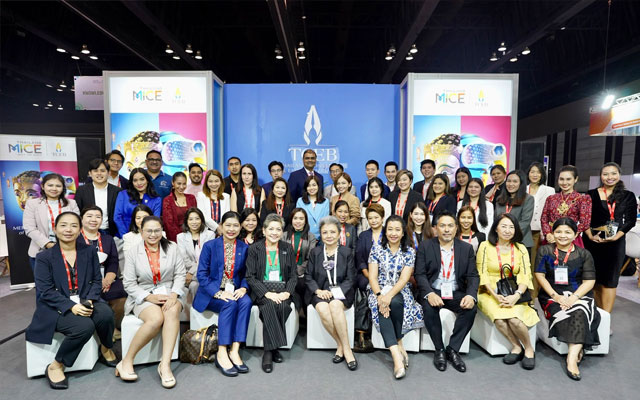
TCEB staff and Thai suppliers at IT&CM Asia
The hybrid event took place in person at the Centara Grand & Bangkok Convention Centre at CentralWorld in Bangkok from September 20-22, and was extended online for an additional six days. In total, there were around 1,000 participants on-site, and 224 buyers that joined virtually.
This year, the Thailand Convention & Exhibition Bureau-supported Thailand Pavilion housed a representative from the Thailand Incentive and Convention Association (TICA) and a total of 34 exhibitors from Bangkok, Chiang Mai, Pattaya, Phuket, Hua Hin and Khao Lak, consisting of 26 hotels, four convention centres and four DMCs.
Three MICE Cities from the north-eastern region of Thailand also participated as part of an Isan booth, and featured suppliers from Khon Kaen, Udon Thani and Nakhon Ratchasima.
At this year’s TTG Travel Awards, TCEB was also voted the Best Convention and Exhibition Bureau by readers of TTG Asia, TTG China, TTG India, TTGmice, TTG-BTmice China, TTGassociations, and TTG Asia Luxury.
TCEB president, Chiruit Isarangkun Na Ayuthaya, said: “The fact that Thailand was able to secure 94 leads during IT&CM Asia this year shows that the world is very keen to return to Thailand for MICE. Thailand remains a strong choice for overseas clients.
“The three MICE cities in the north-east are (also) expected to attract around 60 groups by the end of next year. It is proof that TCEB is on the right track in developing destinations in a different cultural and geographical region, offering more locations and generating revenue for more regions of the country”.
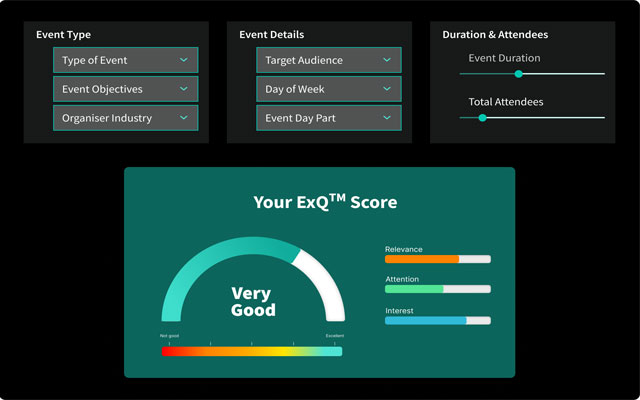
Pico X, the innovation unit of Pico Group, has expanded its data services into analytics, machine-learning and applied artificial intelligence with the release of a proprietary ExQ Experience Analytics platform to close the gap in how events and experiences are measured.
“Covid-19 (brought about more virtual events which) highlighted the urgency of understanding event performance and answering important questions about event ROI and the value of virtual versus physical events. The industry needed a more scientific approach to measuring and optimising event success to harness marketing return on investment,” stated Pico Group’s group chief digital officer, Fareeda Cassumbhoy.
Cassumbhoy: event organisers should be asking more business-critical questions on a granular level
When asked how ExQ Experience Analytics is different from its competitors, she said: “The data organisers review after their events is often a short, topline summary, sometimes in the form of survey findings conducted by a research company, or by asking people their opinions of the event.
“It is no longer enough to review such topline summaries post-event. With the metaverse and Web3 coming into the mainstream, the MICE industry needs to quickly learn how cater to the changing expectations and demands of consumers. Hence, it is important to use experience analytics as a benchmarking tool to measure the multi-layer performance.”
Beyond basic statistics and totals, such as number of attendees and which tracks were popular, ExQ Experience Analytics offers insights on the ‘whys’ and ‘hows’ of event performance. The platform uses first-party data and a proprietary algorithm to show organisers who attended their event, what content was the most engaging, and how to optimise their next event.
For Pico X, its headstart on digital transformation meant that teams had already been offering virtual and hybrid events through Virtuosity, its suite of virtual event solutions, when the pandemic hit.
But with many businesses in recovery mode, one of the challenges Cassumbhoy posits in getting organisers to take this up is “making new technology easy to adopt and profitable”, as the business events industry has entrenched business ecosystems and ways of working.
She explained: “For instance, many organisers and exhibitors are used to submitting paper forms for applications, or picking up the phone. Introducing more efficient ways of moving into exhibition halls, making and tracking online payments and status updates, means we need to establish the value that each step, feature, or proposal brings to our clients, and how it can help their businesses.
“We also find that these entrenched cultures are often the biggest hurdle to adopting new technologies, especially when it comes to measurement and evaluation. The willingness to take a hard look at the performance of marketing experiences is not something every marketer is ready to do.”
A sample of how the ExQ dashboard can look like
However, this does not deter Pico X’s determination to roll out ExQ Experience Analytics to more markets around the globe, and demonstrate its application to more event types.
Pico X has more technology products up its sleeves, and will soon introduce “a new platform with the potential to transform the exhibitor and organiser experience into something more efficient and effective than ever before”, revealed Cassumbhoy.
There are also plans to collaborate with existing digital platforms to offer data analytics as a service.
“The events industry has been and always will be crucial to doing any sort of business, because it’s about experiences. When we think about the industry as a traditional one, it’s often at our own peril. In fact, the events industry is one of the most exciting drivers of innovation, because it is the meeting point between businesses, brands and consumers, and will surely see constant change and disruption,” she concluded.
CWT’s global hotel division RoomIt has been selected by Amazon to provide comprehensive hotel category services support.
This includes sourcing, booking and rate reshopping, while helping to increase compliance to hotel policy and optimise Amazon traveller satisfaction.
A screenshot from the RoomIt website
This win means that CWT will further expand its longstanding business travel partnership with Amazon, which also encompasses global air, rail, and meetings & events solutions.
Launched in 2017, RoomIt offers more than 800,000 properties across 73,000 destinations worldwide, offering some of the best exclusively negotiated room rates across the industry.
Just 10 minutes from Phuket International Airport on the serene northern coast, this 178-key, Bill Bensley-designed resort offers delegates a quiet, tropical paradise steeped in Phuket’s tin-mining heritage
The newly-opened Ritz-Carlton, Bangkok anchors the One Bangkok development with cosmopolitan elegance. Featuring the city's largest ballroom and a spectacular new penthouse suite, it delivers exceptional hardware and deeply authentic, soulful service for business and leisure travellers alike
Behind the imposing, Brutalist concrete that defines Zurich’s Oerlikon district lies a surprising secret. While its exterior honours the neighbourhood’s industrial roots, stepping inside Mama Shelter reveals a vibrant, neon-soaked world that is a far cry from its rigid shell