Meetings amid sun, sand and sea a reality in the Maldives, says its NTO
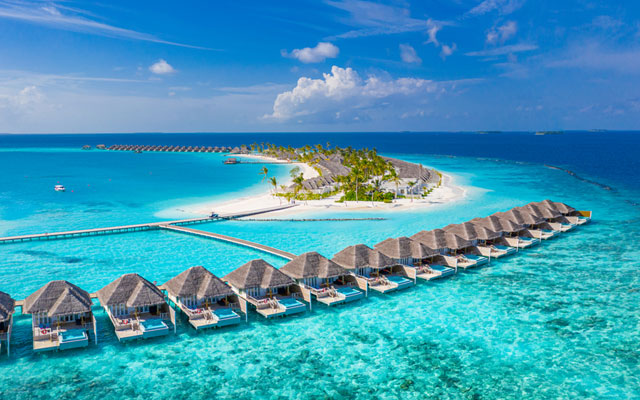
The Maldives Marketing and PR Corporation (MMPRC)’s move to change the common perception of the destination as one that is solely for honeymoons and luxury escapes is paying off.
Since its launch in October 2021, Maldives’ Redefining MICE Global campaign has been well received by meeting planners and delegates alike, shared MMPRC’s CEO and managing director, Thoyyib Mohamed, who added that “tons of media coverage and publicity” are in the bag.
Meetings amid sun, sand and sea a reality in the Maldives, says its NTO
The campaign aims to position the Maldives as a unique destination for business gatherings. Instead of focusing on event venues – something that other destinations tend to do, Thoyyib and his team are promoting natural beauty and activities, such as snorkelling with manta rays and swimming with whale sharks. The intention is to redefine the business environment and demonstrate that the Maldives has exciting venues for different types of events.
Thoyyib said: “Imagine scenic views, cocktails on the beach, and an array of stimulating experiences at luxury properties. Imagine having a teambuilding activity on a private beach or business negotiations on a liveaboard in the middle of the ocean (surrounded by) the open sky and sounds of lapping waves.”
The campaign also encourages business travellers to extend their stay in the Maldives by merging business with leisure, and shows how they can curate their own holiday experience.
Redefining MICE Global will be an ongoing project spilling into 2023, said Thoyyib.
It will join other campaigns that seek to strengthen the destination’s tourism performance. The other critical goals are to increase arrival figures for the dive tourism segment, and to encourage visitors to take part in sustainable tourism practices.
Malta Tourism Authority's Xiaolong Wu and Francesca Camilleri promoting the destination
Malta, an archipelago in the central Mediterranean between Sicily and the North African coast, is positioning itself as a fresh incentive destination, as well as a dual-city proposition with major European cities, for potential Asia-Pacific groups.
In an interview with TTGmice, Francesca Camilleri, executive, Conventions Malta, Malta Tourism Authority said the region was an “unexplored market” for the bureau.
Malta Tourism Authority’s Xiaolong Wu and Francesca Camilleri promoting the destination at ITB Asia
She believes that a teambuilding or incentive trip to Malta could be designed as an extension of a conference in Paris or Amsterdam.
“It’s easier to convert these sort of trips, as opposed to asking Asia-Pacific conference groups to hold events in Malta,” Camilleri said.
Malta Tourism Authority had earlier engaged with regional planners at ITB Asia in 2019.
When asked if any regional groups have materialised since, Camilleri said: “There was one confirmed group from Indonesia that was supposed to come to Malta in 2020, but the pandemic happened. (This time at ITB Asia 2022), we met the organiser again, and she is interested to hold an event in Malta for 2023! This is very encouraging.”
Camilleri hopes to welcome corporate groups from Singapore, Indonesia, Hong Kong, Taiwan and Malaysia in the near future, with 20 to 35 people in attendance.
She suggested that incentive groups visit Malta’s archaeological sites, temples and UNESCO-listed capital city Valletta, as well as indulge in water-based activities such as diving.
“English is one of our main languages, Malta uses euro, and it is part of the Schengen Area. We are a safe location for incentive groups,” Camilleri stressed.
Malta is home to five convention centres. The largest venue, the Mediterranean Conference Centre, previously hosted the Samsung Forum 2020 which had 3,000 delegates from all around the globe.
From international hotel chains to boutique properties, the islands offer over 11,700 rooms, ensuring that groups will have no trouble finding accommodation.
“Museums and spaces like the Upper Barrakka Gardens and even a town square can be closed off for corporate events. We are extremely flexible in allowing private events to take place all across the city,” she added.
Although Malta stands as an enticing destination, Camilleri acknowledged that the road ahead would be challenging, for corporates would need sizeable budgets to travel to Malta due to the lack of direct flights from Asia-Pacific.
Gregg: PHOTO CAPTION:
Several new initiatives were introduced, and industry connections that will benefit SITE members were spotlighted
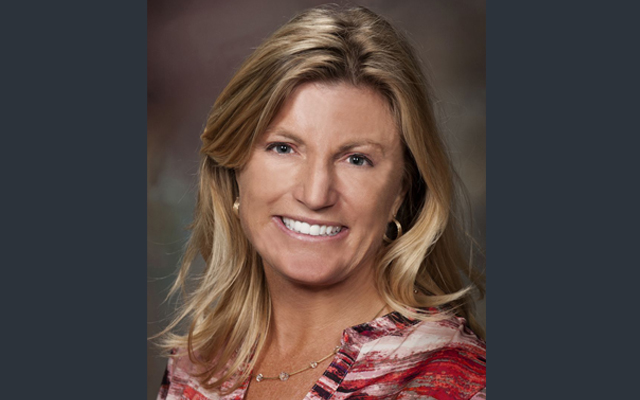
The Society for Incentive Travel Excellence (SITE) has appointed Annette Gregg, as its new CEO, serving both SITE and SITE Foundation.
She takes over from interim executive director Rebecca Wright.
Gregg joins SITE following her role as chief revenue officer with Meeting Professionals International and a career-long legacy in the business events industry working across the whole business events spectrum, from corporate end users to destination marketing organisations.
The Anam Group has appointed Laurent Myter as group general manager to lead and oversee the company’s growing number of properties.
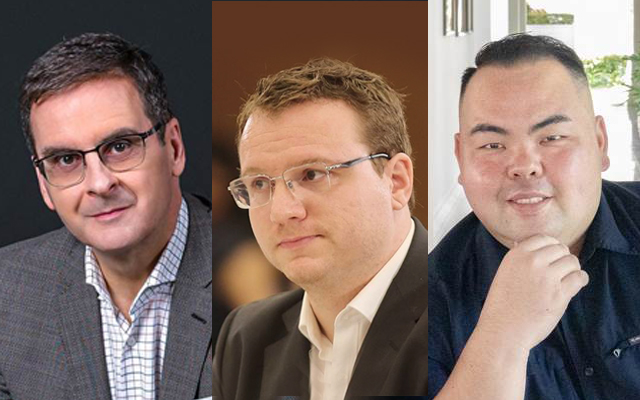
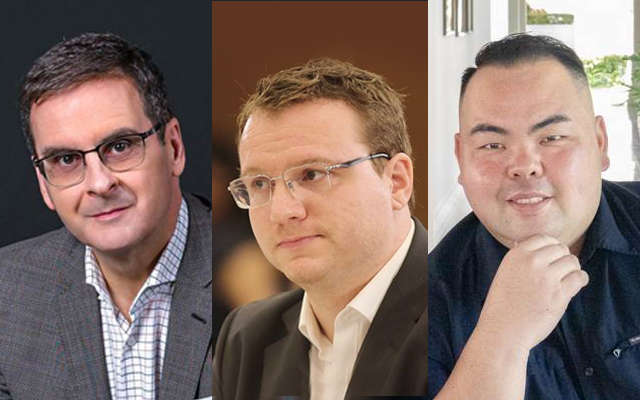
From left: Laurent Myter, Martin Koerner and Ye Chang Sheng
Myter has almost three decades’ experience managing luxury hotels and resorts, and joins the group after working at YTL Hotels for 26 years. He has also been an executive director and the president of Small Luxury Hotels of the World’s International Advisory Board of Hoteliers for three years and two years respectively.
Martin Koerner is the group commercial director and returns to the Anam Group after previously working for about four years as the group’s director of sales, marketing and distribution.
Ye Chang Sheng has been promoted to resort manager of the group’s second property, Anam Mui Ne after having worked for the group’s first resort Anam Cam Ranh since its 2017 debut.
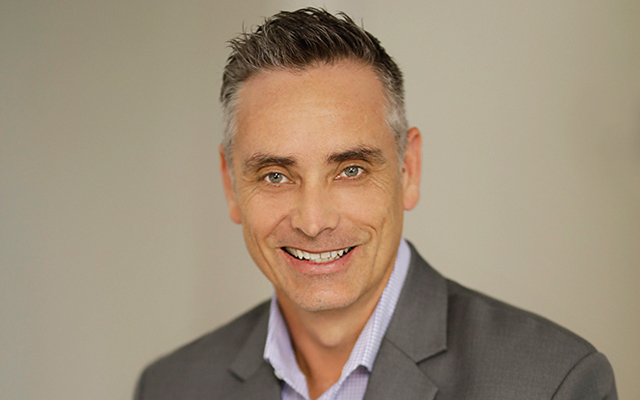
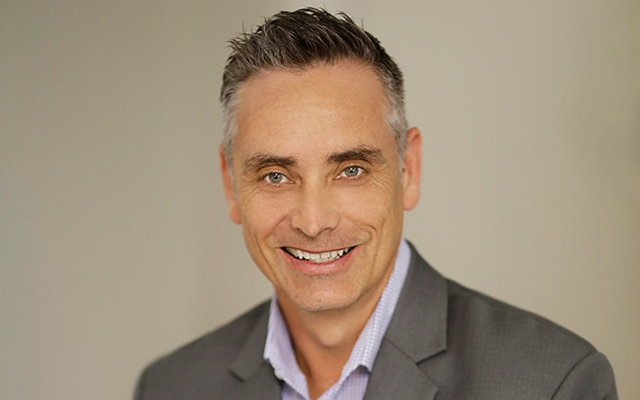
Radisson Hotel Group has appointed Lachlan Hoswell as managing director, Australasia.
With over 20 years of hospitality experience, Hoswell will be supporting his team and driving the growth of the group’s portfolio across major towns, cities and upcoming destinations across Australia and New Zealand. He will also lead operations and be responsible for all strategic initiatives in the region, working closely with key business partners to strengthen Radisson Hotel Group’s branding in-market.
Prior to joining the group, Hoswell held the position of company director, general counsel and commercial officer of Minor Hotels Australia and New Zealand.
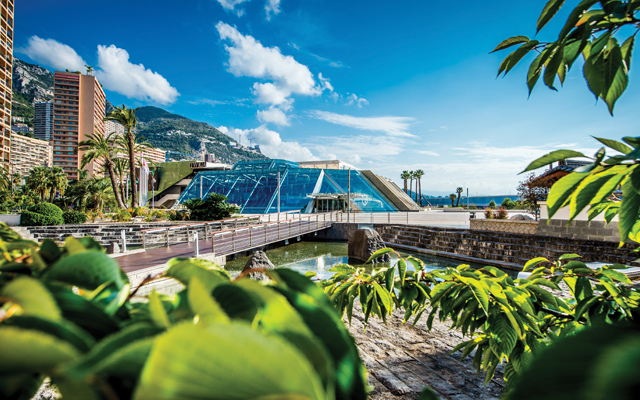
Monaco’s main markets may currently be North America and Europe due to the proximity, but that does not stop the principality in looking towards Asia Pacific with keen interest and concrete plans to further develop the inbound business events sector.
Christine Barrabino, head of Monaco Convention Bureau, told TTGmice: “The Asia-Pacific region is an important market for Monaco, particularly for incentives. Main sectors that contribute to incentives programmes from the region are automotive, insurance, banking, electronics, and MLM companies.
The Grimaldi Forum Monaco is the largest convention centre in the French Riviera
“Many countries in South-east Asia are represented, such as Singapore, Malaysia, Indonesia and Thailand. Thanks to our representative based in Singapore, we have been increasing our market share in these markets, and look forward to more business events to come. We also hope that China will follow soon.”
To this tune, the Monaco Convention Bureau launched a campaign called ReEvent in 2021, which revolves around six themes – safety, medical, green and sustainability, mobility and connectivity, value, and service. The campaign is a rallying cry and invitation to industry professionals to organise events again in Monaco.
Benoit Badufle, the Singapore-based regional director of the promotion bureau of the Principality of Monaco, told TTGmice: “We are preparing for a very ambitious multi-market fam trip for the MICE segment for end 2022, in partnership with an airline and a major tour operator active in the region.
“We have also started to reconnect in-person with key travel partners in the Asia-Pacific region, and will participate in several major tradeshows such as ILTM Asia, ITB Asia, and IT&CM Asia.”
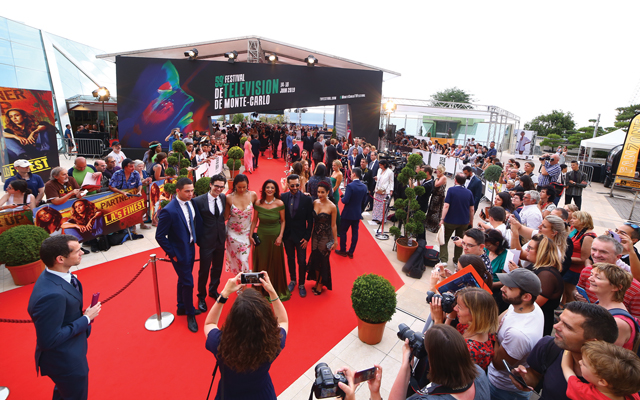
A red-carpet event organised by Monaco Mediax Events at the Grimaldi Forum
Aside from the software, Monaco’s events hardware is also being expanded.
For example, a new 60,000m2 district was carved out in between the Hôtel Hermitage Monte-Carlo and Place du Casino. Named One Monte-Carlo, a reference to its prime address, it includes a new 1,445m2 conference centre. The largest space is the 301m2 plenary room – an identical reproduction of the legendary Salle des Arts in the former Palais des Beaux-Arts – which can host up to 300 people. There is also a 154m2 amphitheatre with 80 seats.
This new conference centre doubles the space dedicated to business tourism around the Casino square, previously made up of Hotel de Paris, Monte-Carlo and Hotel Hermitage.
These recent additions build onto Monaco’s existing range of extensive meeting facilities comprising hotels like the Le Meridien Beach Plaza Hotel, Fairmont Monte-Carlo, Novotel Monte-Carlo, as well as unique venues like the Oceanographic Museum of Monaco.
Meanwhile, the Grimaldi Forum, Monaco’s flagship convention and cultural centre, is currently undergoing an expansion from 35,000m2 to 41,000m2.
Communications director of the Grimaldi Forum Monaco, Dany Rubrecht, posits that with this expansion, the venue will be “more attractive than ever” as it can host “larger events”, helping to build on Monaco’s appeal.
The new spaces include the 1,031m2 Galerie Diaghilev that can accommodate around 40 exhibition stands; the Carré and Salles du Patio which can be divided into eight meeting rooms; and the 3,980m2 Hall Pinède that can hold 1,650 pax for a sit-down dinner.
In order to take advantage Monaco’s 300 days of sunshine per year, 2,000m2 of outdoor spaces will also be created. These include the 100m2 Indigo terrace; the 585m2 Ravel terrace with a view of the open sea; and the 610m2 Parvis Émeraude, where the extension’s independent entrance will be located.
This massive undertaking sits within Mareterra, Monaco’s newest district currently under construction.
The six-hectare eco-district will offer housing, facilities, an entertainment harbour with pedestrian quays, a park, and a shaded coastal promenade. The eco-district will be powered by 1,500 solar modules that were installed on the Grimaldi Forum’s roof in 2019.
And though other international tradeshows and exhibitions have picked up, Rubrecht said: “We are fully open to Asian markets, but we don’t have recurring clients from this region yet. We once worked with a major IT company from South Korea, and hope to work with them again in the near future.”
Pierre Oudine of Raising Stones Monaco, has set his sights on the Asian market, stating that it has “great potential”.
Oudine elaborated: “Asia remains a focal point. We have just rehired some new collaborators, and we are investing again. In terms of development, Asia will once again become a priority next year.
But first, Oudine shared that DMCs like themselves have to “ride on the current wave of American, French, English and German markets” to rebuild their cash flow. The supply chain also has to be rebuilt, for “many operators have disappeared”.
Overall, Monaco’s image has not been dampened by the pandemic, as the destination handled the Covid situation well and only experienced one lockdown from March to July 2020.
For 2022, Rubrecht said that the year “got off to a good start”, as Grimaldi’s calendar is filled with more than 50 business events that will take place by end-2022.
“Monaco remains a unique destination for MICE. Our know-how, balanced with Monaco’s assets, gives us a real advantage,” opined Rubrecht.
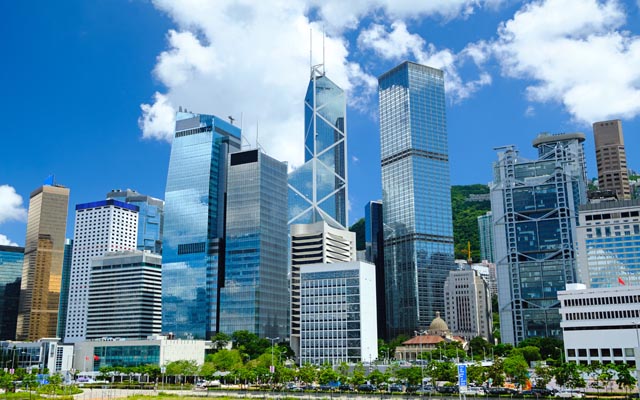
An amber code is given to an inbound visitor from overseas; Hong Kong pictured
The first Policy Address by Hong Kong chief executive John Lee today underlines the government’s commitment to tourism and business events development, with fresh funding and improved hardware to come.
HK$600 million (US$76.4 million) will be set aside for the three-year Cultural and Heritage Sites Local Tour Incentive Scheme, which encourages Hong Kong’s tourism industry players to develop suitable products.
Hong Kong’s tourism and business events industries will get financial and development support
In addition, the Hong Kong Tourism Board will launch a new round of Spend-to-Redeem Local Tours and Staycation Delights, with increased quotas to enhance domestic consumption.
Building towards a stronger tourism future, a newly-appointed secretary for culture, sports and tourism will chair the Culture Commission, which comprises industry leaders tasked to map out the Blueprint for Arts and Culture and Creative Industries Development. This document will include plans to increase the number of museums in Hong Kong to 19 and the number of seats at performance venues by about 50 per cent.
One of the first fulfillments is the East Kowloon Cultural Centre, which will proceed in phases starting next year.
Further infrastructure investments will materialise in 2024 with the completion of the Three Runway System, which will strengthen Hong Kong’s status as an international aviation hub and enhance connectivity between Hong Kong International Airport and the Greater Bay Area (GBA) cities. The SkyPier Terminal, part of the system, will be commissioned next year to provide direct transfer facilities for passengers from the GBA and streamline immigration formalities.
On the business events front, the existing Convention and Exhibition Industry Subsidy Scheme will be extended to June 30, 2023 to enable more SMEs to secure overseas events, while a new HK$1.4 billion scheme will be launched thereafter to subsidise more than 200 exhibitions planned for Hong Kong over three years.
To support Hong Kong’s ambition for more large-scale international conventions and exhibitions, the AsiaWorld-Expo Phase 2 project will proceed to result in the creation of Hong Kong’s largest indoor multipurpose performance arena with over 20,000 seats. At the same time, the Wan Chai North redevelopment project near the Hong Kong Convention and Exhibition Centre will substantially increase large-scale spaces for such trade gatherings.
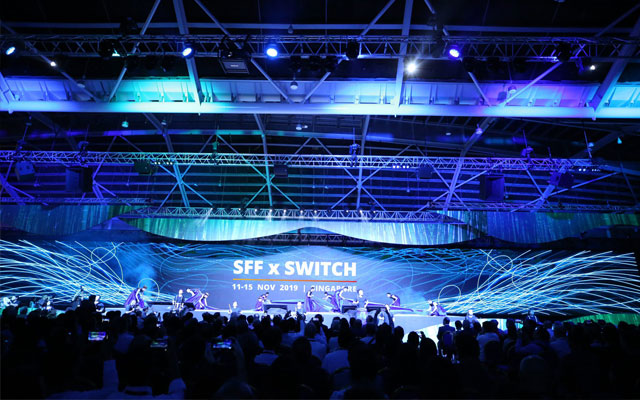
Opening act at the SFF x SWITCH Conference in 2019. Photo: SFF Facebook
The Singapore FinTech Festival (SFF) and Singapore Week of Innovation and TeCHnology (SWITCH), co-located since 2019, will be running as two separate events this year.
SFF will be held from November 2-4 at Singapore EXPO, while SWITCH is from October 25-28 at Resorts World Sentosa (RWS) Convention Centre.
Opening act at the SFF x SWITCH Conference in 2019. Photo: SFF Facebook
Organisers of the respective events, the Monetary Authority of Singapore and Elevandi, and Enterprise Singapore (EnterpriseSG), said the event was merged as SFF x SWITCH in 2019 and 2020 to synergise activities across FinTech and Deep Tech. In 2021, SFF and SWITCH ran virtual editions in the same week, with some physical components held at separate locations, pulling in about 60,000 participants from 160 countries.
“This year, the two events will be held separately within consecutive weeks, to extend the showcase of opportunities in the tech ecosystem and its emerging areas. Tech leaders and ecosystem players will be able to stretch their experience and unlock synergies between cross-cutting areas in both events across the two weeks,” they said in a joint reply to TTGmice.
The physical SFF this year aims to bring together like-minded individuals for knowledge-sharing, networking and partnerships. These include global and knowledge plenaries, a public-private strategic dialogue, and TED-talk style sharing by 50 selected founders.
Returning highlights include the exhibition, Innovation Lab Crawl, Global FinTech Hackcelerator and FinTech Awards.
Meanwhile, Cindy Ngiam, EnterpriseSG’s director SWITCH, shared: “The SWITCH 2022 flagship event continues to deepen our focus on collaboration in deep tech innovation, gathering the Global-Asia innovation ecosystem in Singapore to bring cutting-edge solutions to the world.”
The innovation-centric content will span three main stages in RWS – SWITCH Beyond, SWITCH Global, and SLINGSHOT at the SWITCH Grand Stage.
There will also be thought-leadership and market-access sessions, masterclasses, an exhibition at the Global Pavilion, as well as seven regional tech partner events that will be attending SWITCH for the first time.
Corporate travel agents and TMCs across APAC outline the new trends in the corporate travel landscape, and how they are adjusting their business models to adapt to them
An increase in bookings, a switch to low-cost carriers, and a focus on new technology are the results of a fresh survey of corporate travel agents and TMCs in Asia-Pacific, according to technology provider Sabre Corporation.
Respondents from 21 countries pointed to a growing need for the corporate travel industry to tailor service offerings for new workforce realities, such as remote and blended working arrangements, while embracing technology to capitalise on, and drive, ongoing recovery.
Corporate travel agents and TMCs across APAC outline the new trends in the corporate travel landscape, and how they are adjusting their business models to adapt to them
Key findings include:
The majority of corporate travel agents (84%) have changed their business priorities as a result of the pandemic, and are now focused on optimising costs and efficiencies, while meeting customer and business demands with fewer employees.
Four-fifths of respondents have adopted new technological solutions to manage Covid-19 related risk over the past two years. And, of those who have not, 42% plan to do so within the next two years. The most popular solutions are travel risk management tools, automated workflows and virtual payment tools.
Half of the agents said a rise in internal corporate travel, to bring remote workers together, will create recovery opportunities, while 45% said emerging corporate travel markets are important for growth.
There is strong optimism in the market, with 82% saying they expect a return to pre-pandemic corporate travel levels, and 15% expecting a boom greater than pre-Covid-19, within the next 12 months.
More than two-thirds of respondents have seen an increase in bookings in the three months to August. Most are reporting an increase of not more than 30% but there’s a notable 14% with an increase of more than 50%.
Meanwhile, 55% say company Covid-19-related travel restrictions are easing, and 38% say total travel spend is increasing.
Cost remains a key consideration. More than two-thirds have seen a moderate or significant increase in bookings with low-cost carriers. The trend is most prevalent in North Asia where there’s been a 42% switch from full-service carriers to LCCs.
Corporate travellers also place a high priority on information, flexibility, and hygiene. However, companies are also turning their attention to sustainability as one of the key personalization priorities for corporate travel.
IBTM World’s Knowledge Programme will include a packed schedule of sessions on connections, business, careers, brands and experiences; IBTM 2021 pictured
Salesforce event lead Gareth Kelly has been confirmed as the first keynote speaker for IBTM World 2022, taking place at Fira, Barcelona, later this year from November 29 to December 1.
As senior director and head of strategic events Europe, the Middle East and Africa (EMEA), Kelly is also responsible for overseeing EMEA at its Dreamforce event. The 2022 event welcomed 150,000 attendees, both in person and on its digital platform Salesforce+, representing over 100 countries, and showcased innovations that turned its audience of attendees into fans.
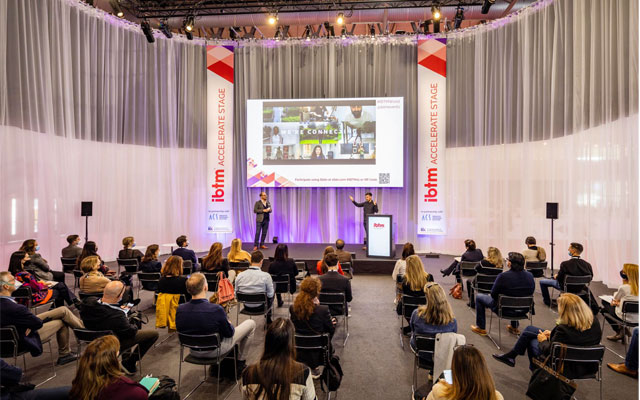
IBTM World’s Knowledge Programme will include a packed schedule of sessions on connections, business, careers, brands and experiences; IBTM 2021 pictured
During his session, Kelly will explore how Salesforce uses its events to bring better business results and create meaningful cultural experiences for businesses.
Additional expert speakers confirmed for IBTM World include Tom Roach, vice president brand strategy at Jellyfish, who will present a talk entitled In a World of Change, what won’t? The 7 Principles of Effective Brand-Building Creativity. During his segment, Roach will address that although marketers are fascinated with change and the technology that is driving it, there is something more important that never changes: the human brain – the hardware that all this new technology runs on.
Next, Despoina Zachariadou, lead immersive UX Designer, creative technologist VR/AR, and creative director at Jack Morton Worldwide will give the lowdown on the metaverse and why it matters.
Adolfo Pahissa Lopez, who leads the experience design team as head of creativity for technology trend forecasters at NTT DATA Europe & LATAM, will then investigate why it is vital to adapt and meet the expectations of Gen Z in order to survive and thrive in today’s market.
On IBTM World’s Accelerate Stage, which showcases interactive discussion, new ideas and inspirational short talks, Grant Dudson, creative director at Chorus, will be present to discuss event technology past and future.
Just 10 minutes from Phuket International Airport on the serene northern coast, this 178-key, Bill Bensley-designed resort offers delegates a quiet, tropical paradise steeped in Phuket’s tin-mining heritage
The newly-opened Ritz-Carlton, Bangkok anchors the One Bangkok development with cosmopolitan elegance. Featuring the city's largest ballroom and a spectacular new penthouse suite, it delivers exceptional hardware and deeply authentic, soulful service for business and leisure travellers alike
Behind the imposing, Brutalist concrete that defines Zurich’s Oerlikon district lies a surprising secret. While its exterior honours the neighbourhood’s industrial roots, stepping inside Mama Shelter reveals a vibrant, neon-soaked world that is a far cry from its rigid shell





 Prior to joining the group, Hoswell held the position of company director, general counsel and commercial officer of Minor Hotels Australia and New Zealand.