Asia/Singapore Tuesday, 13th January 2026
Page 418

Large-scale events in Singapore face strong upwind

0
Without clarity on endemic plans, large-scale organisers in Singapore will continue to have many hurdles to cross

Before the pandemic, Singapore was the place to meet for regional business, regularly welcoming large-scale tradeshows and exhibitions numbering in the thousands to its shores.

But after close to two years of border closures, due to slow reopenings, ongoing stringent restrictions, and ever-changing rules and regulations, the light at the end of the tunnel is not shining as brightly as it is supposed to.

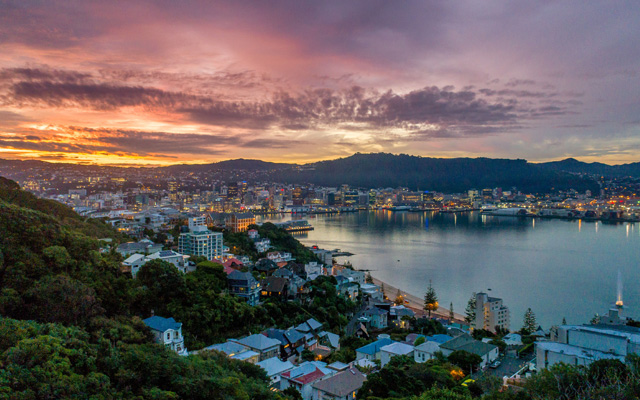
Without clarity on endemic plans, large-scale organisers in Singapore will continue to have many hurdles to cross; Singapore CBD pictured

Potential exits
While larger countries such as Indonesia and China can sustain large-scale events buoyed by its local population, Singapore’s large-scale events sector was hit harder as it is still dependent on foreign delegates and visitors, many of whom are currently not allowed to enter the city-state without a costly quarantine.

At press time, capacity for business events is capped at 1,000 attendees at any one time, if all have been vaccinated. Speakers can also be unmasked.

But for organisers of larger-scale events such as exhibitions, where crowds of between 3,000 to 8,000 people were the norm pre-Covid, the current capacity ceiling is prohibitive.

Kenny Yong, founder and group CEO of Fireworks Trade Media, posited: “Singapore’s domestic market is not attractive enough to exhibitors. Exhibitors join shows in Singapore hoping to reach the region. But if rules stay in place, expos that target the regional audience may feel the heat. The bigger shows in Singapore are mostly regional, especially industrial ones like in the fields of oil and gas, and maritime.”

Managing director, Clarion Events Asia, Richard Ireland, agreed: “Other parts of the world have gone from many restrictions to no restrictions in a very short period of time.”

For instance, domestic tradeshows in China, the US, the UK, and parts of Europe have made a comeback, and are beginning to operate at scale. China, given the scale and depth of the domestic market, is operating between 70 to 90 per cent of pre-pandemic scale.

“Given the size of the domestic market, Singapore needs international attendees, and any restrictions on international travel makes recovery challenging. South-east Asia has been slower to reopen, and the cross-border participation of shows in South-east Asia, and especially Singapore, make this situation even more challenging,” Ireland said.

Yong further pointed out that Singapore’s overly cautious stance could mean she might lose out to other “more daring countries” like Malaysia, Indonesia and soon, Thailand, which are taking a “more calculated approach” towards large-scale events.

A potential competitor to Singapore’s global MICE city status is Dubai, which has reopened borders to business events when its population was 75.2 per cent fully-vaccinated – as opposed to Singapore’s current 80 per cent. An oil and gas event, supposedly meant for Singapore, was moved to Dubai as a result, Yong said.

Yong fears that more organisers may follow suit, especially industrial shows that are dependent on regional visitors. “I see more organisers moving out of Singapore and building bigger events in the region like Indonesia, Thailand and Philippines where the market size is a lot bigger,” he added.

Resetting demand
With Singapore’s slower reopening pace, it brings to question whether business events will still find the city-state an attractive place to meet, and remain top-of-mind when compared with regional options that are fully open for business.

Poh Chi Chuan, executive director, exhibitions & conferences, Singapore Tourism Board (STB), expressed confidence in the city-state’s position as an “important gateway for event organisers and businesses to access the region”.

He related that in recent months, the Singapore government has been actively green-lighting pilot shows such as Bloomberg New Economy Forum and gamescon Asia 2021.

The high-profile Joint Leadership Summit also recently demonstrated Singapore’s persistent appeal for top-level meetings. Supported by STB and co-supported by Singapore Association for Convention & Exhibition Organisers & Suppliers, the event brought key industry leaders from global associations like Association of Event Organisers, Society for Independent Show Organizers and UFI, the Global Association of the Exhibition Industry together to work on an action plan for the safe reopening of the business events industry in the region.

These events build towards the government’s aim of gradually restarting conferences and exhibitions to support Singapore’s hospitality and travel industry, and help Singapore maintain its status as a hub city.

These pilots leave Ireland hopeful that relevant data would be released to facilitate “learning points factored into protocols”, and result in restrictions being removed and audience caps expanded.

Both Ireland, and Dylan Sharma, the co-founder and director of Tricom Events, have also pointed to the recent expansion of Vaccinated Travel Lanes (VTLs) as encouraging and positive signs that Singapore is opening up.

“While the daily number of travellers remain modest, we are confident that these will increase when (the scheme) proves to be safe and secure. (It would also bode well) when more VTLs are added, and are able to operate at higher capacity,” said Ireland.

Sharma stated: “The VTLs with a number of key markets signals a strong commitment by the Singapore government to opening up our borders and economy. This gives a strong confidence boost to the MICE industry here.”

Other grounds for optimism, Sharma added, was an acknowledgement by the Covid multi-ministry taskforce that “large-scale events pose a low risk as a transmission cluster”, inherently attributed to existing Safe Management Measures practiced by event organisers.

Moving forward, Sharma shared that landmark events like the Shangri-La Dialogue have announced plans for a fully in-person event in June 2022, following its cancellation in May 2021.

Poh also pointed out that there is a “strong pipeline of events for 2021 and beyond”. These include the Industrial Transformation Asia Pacific, Milken Institute Asia Summit, and Singapore International Agri-Food Week. Recently, four MoUs were inked to launch and anchor new events in Singapore, such as SILMO Singapore, and the Asia CEO Summit @ Singapore.

“These commitments are a timely boost to our MICE industry and are testament to our strength as a launch pad for regional expansion,” opined Poh.

Calculated optimism
While STB remains confident in the long-term prospects of Singapore’s tourism and business events sectors, industry players see a long road to recovery, with room for improvement.

When asked what support the exhibition industry needs now, Ireland said: “A clear roadmap of reopening, and what data points will support the reopening”. (When it comes to) exhibitions, these timelines are critical to organise the sales, operations and marketing.”

Ireland added: “The last 22 months have been a very difficult period for many. As an exhibition organiser, we are looking and planning for a more positive 2022 and are hopeful that the pace and scale of reopening will help facilitate this.”

Yong said: “We need more clarity. We can’t plan anything in Singapore now as the regulations are still very fluid. This is the main challenge all organisers are facing now when they commit to running a show in Singapore.”

On STB’s part, Poh said the business events sector can expect continued guidance and support, as well as efforts to “build new capabilities and reimagine the future of MICE events”.

“STB will work closely with our industry partners to rebuild and recover together. The virus will continue to evolve, and so will our approach,” concluded Poh.

Thailand ready to welcome travellers back from November

0
Krabi is one of the 17 designated tourist locations; the Viewpoint on Phi Phi Island, Krabi, pictured

Thailand has relaxed its quarantine free entry requirements by air for travellers from 45 countries and one territory, effective November 1, 2021, onwards.

This easing of restrictions come as Thailand sees an improving rate of recovery, a stable infection situation, and a higher vaccination rate.

Krabi is one of the 17 designated tourist locations; the Viewpoint on Phi Phi Island, Krabi, pictured

Those that have made the list include far-flung countries such as Denmark, Germany, and the US; as well as Asia Pacific countries such as Singapore, South Korea, and China.

Travellers from these destinations must possess proof of entry registration, proof of full vaccination, negative test result, insurance
covering the treatment in line with the required criteria, and proof of accommodation payment as required by the Center for COVID 19 Situation Administration.

Seventeen provinces have currently been designated as pilot tourism destinations. They include popular tourist destinations such as Bangkok, Phuket, Krabi, Hua Hin, and Chiang Mai.

Venues, establishments or activities conducted in these pilot tourism destinations have to close adhere to the terms, conditions, regulations and disease control measures set up by the area’s authorities.

In these pilot tourism destinations, maximum attendance for activities has also been capped at 500, and must comply with all safety and health measures.

The future of experiential events

0
XXX

The term hybrid has been more than a helpful catch-all, as it conveys an idea full of hope and holds the promise of an in-person future in whatever better state of events came next, opined Anna Patterson, vice president & managing director at George P Johnson (Singapore) Experience Marketing, in her presentation at ITB Asia Virtual 2021.

She noted that “offline things moved online (while) outside things moved in”, thus blurring the boundaries of interaction.

Events of the future will have to consider perspectives of both in-person and remote audiences

“While many things about the future remain elusive and uncertain, one thing is for sure: the new world will not play by the old rules anymore,” she said.

“So, how do you plan for the future when the future is up in the air? A solid and down to earth approach is a great place to start.”

Identify the big picture
Patterson suggested that event planners and producers take a fundamental approach that puts human experience at the core.

She said: “Clients are coming to us, whether in the events or travel industry, to ensure that they can better understand how humans make the difference. As industry professionals, it is up to us to show clients how digital and physical realities do not just coexist, but combine together to create otherwise impossible things.”

To see the big picture, Patterson said one has to understand where their brand stands in the “grand scheme of things” – something which will provide “essential context to make better decisions and take smarter actions” in their events.

“Once you have found your place, you are ready to move on to your why,” she said.

Set sights on event purpose
In explaining the need for brands, businesses and events to stay rooted in their purpose, Patterson related how figure skaters find their balance.

“Figure skaters were taught to find a spot to set their sights on while they were spinning. As long as their focus remained locked in, the skater could keep from getting dizzy no matter how ‘spinny’ things got. For brands, businesses and events, a good reason can have similar grounding effects. If you find your purpose, you can move on and out from there,” she said.

However, in defining the event’s purpose, event planners and producers must put their audience first.

“Of all the channels to consider, your attendee really is the only one that matters. Great experiences use human centricity to connect every what with every why,” she said.

Unify event models
Patterson noted common structures between physical and digital event models, and added that there were many ways that a hybrid event could come together.

She elaborated: “Not all events are hybrid, some of the old things will not be coming back from their online homes. Conversely, when face-to-face returns, there will be plenty of demand for in-person-only events. How do you make that relationship work depends on your brand, your audience and the purpose of your event.”

She suggested that event models could be unified through design and delivery, and reminded her session attendees that the event platform “does not equal the experience; it enables it”.

She recommended that events be imagined from the perspectives of both in-person and remote audiences, and have experiences designed for different times and spaces.

“When we use tools like green screen, motion graphics, broadcast techniques and scripting, these are for the individuals. These experiences will feel very much singular as technology and reality coalesce. For the audience near and far, the distance between in-person and remote will gradually disappear,” she remarked.

She pointed to award shows and professional broadcasts in sports as great sources of inspiration for hybrid events.

Patterson: event organisers should take an approach that puts human experience at the core

Maximise both mediums
Patterson urged events planners and producers to understand the different characteristics of physical and digital media.

For example, a digital medium enables scale, has the breadth and reach, and allows for passive absorption and personalisation, among other attributes. On the other hand, the physical medium enables engagement, has depth and resonance, and allows for active participation and social exchanges, among other attributes.

She said usage should overlap and play up the advantages of both media.

Patterson said: “When we connect, we have to connect with the intentional moments. So when you consider both perspectives and experiences, bring the journeys together to provide an amazing moment of unity.

“We are moving to a new generation of events. Digital and physical realities will not just coexist, but combine to create otherwise impossible things. The new world of experiential is more social, more personal, more local and yet more global, more ambient and yet more in the moment than ever before.

“Without limitation, imagination will be the only constraint.”

An ongoing journey
Patterson emphasised that “connectivity is imperative”, and underlined how “digital and physical experiences will be more interconnected”.

“Audiences and journeys will be woven together in-person and remote. Data is the common golden thread, and stitching it all together will require new roles and new skillsets,” she said.

She also highlighted the need for organisations to recognise that “life-cycle marketing is here to stay” and that companies and brands must be “omnipresent” by prioritising big technology that enables continuous audience engagement.

“I believe we are at the precipice of a new generation of hybrid events. As upside-down as this may feel to all of us, standing still is not an option,” she concluded.

IAPCO and AIPC establish strategic partnership

0
The best way to grow as an industry is to learn from each other

The International Association of Convention Centres (AIPC), and the International Association of Professional Congress Organizers (IAPCO), have signed a Memorandum of Understanding that will focus on research, visibility, and education.

When it comes to research, IAPCO and AIPC will conduct a joint yearly research activity, the results of which are of benefit to the members of both organisations. The first activity will be on the different aspects of hybrid events and the results will be shared with the IAPCO and AIPC members by the time IBTM World takes place.

The best way to grow as an industry is to learn from each other

As for visibility and education, IAPCO and AIPC will create different forums, allowing the exchange of knowledge on specific topics of interest to the member associations. Both organisations will also leverage existing communication channels to facilitate that exchange.

Ori Lahav, President of IAPCO said: “Having clear understanding and an appreciation of stakeholders’ objectives will remain of utmost importance as IAPCO members continue to drive economic recovery of cities and knowledge-exchange between communities.

“The strategic collaboration with AIPC will further enhance the value of services PCOs and Convention Centres deliver to their clients. Research will provide the needs assessment; education will provide us with the tools and visibility across our networks and our own communities will strengthen relationships and drive results. We are thrilled to establish such a valuable partnership with AIPC.”

MCEC reopens under new Roadmap

0
The MCEC team

The Melbourne Convention and Exhibition Centre (MCEC) is set to reopen from November 5, 2021, with greater capacities than initially expected.

Under the updated Phase C of the Victorian Government Roadmap, fixed-seated indoor events can soon proceed at 75 per cent capacity to a maximum of 1,000 attendees, while standing and non-fixed-seated indoor events are limited by one person per four square metres density requirement (up to a maximum of 5,000).

MCEC already has events in the pipeline and are raring to go

For indoor events, face coverings must also be worn at all times, and no dance floors are allowed. A Covid Check-in Marshall will also be appointed.

Outdoor events can proceed with up to 5,000 attendees and a density limit of one person per two square metres. All attendees and people working on events must be fully vaccinated.

Under the new arrangements, events heading to the venue this November include the annual Starlight Children’s Foundation fundraising dinner, new immersive digital art gallery THE LUME Melbourne, and the return of in-person end-of-year celebrations for school leavers.

MCEC chief executive, Peter King, said the “future is certainly bright”, and he is excited to see the venue welcoming customers and visitors back through the doors.

“MCEC is recognised as an important contributor to the State of Victoria, and we are proud to have robust COVIDSafe practices in place ensuring we’re ready and able to host events of all sizes safely,” King said.

When Victoria transitions to Phase D at 90 per cent double dose vaccination – anticipated to be November 25, 2021, onwards – events may proceed with no attendee caps or density limits for the fully vaccinated subject to COVIDSafe measures. However, capacity limits may also apply depending on the level of vaccination at the event. This is subject to review and approval of MCEC’s Venue Specific COVIDSafe plan.

Resorts World Sentosa rolls out Eco-MICE packages

0
RWS launched Eco-MICE packages that provide guests with meals served in sustainable packaging

Resorts World Sentosa (RWS) has ramped up its sustainability drive with the launch of its Eco-MICE packages to meet the increasing demand for sustainable events.

Among its green initiatives are providing guests with meals served in sustainable packaging, and meetings and events will feature reusable pens and recycled paper.

Such packages can cater to the increasing demand for sustainable events

To encourage the use of public transport for lower carbon emissions, all guaranteed delegates on this package will receive a complimentary EZ-Link card with S$5 (US$3.70) stored value. Unserved food will also be donated to the Food Bank to reduce food waste.

In addition, food grinders and a biodigester have been installed in its kitchens to significantly reduce the amount of food waste that heads to landfills. Furthermore, all MICE venues at RWS have been retrofitted with energy-efficient LED lighting and motion-activated lighting in washrooms, with plans to upgrade air conditioning chillers to improve efficiency.

Theo Ocks, vice president, MICE and Corporate Sales, RWS, said: “Our Eco MICE packages mark RWS’s commitment to further our sustainability goals. With the ongoing global effort to push environmental sustainability, RWS will continue to establish gold standards in sustainable MICE industry practices.”

RWS’ sustainability commitment also extends to its Responsible Sourcing Strategies. The integrated resort has ceased provision of single-use plastic straws, ceased sales of single-use plastic water bottles, as well as initiated phased reduction of single-use plastic tableware like sauce dishes, plastic cups and plastic takeaway bowls since 2018.

Reusable or other sustainable alternatives have been offered in place of plastic options and this approximately reduced 130 tons of plastic from packaging waste per year.

Where possible, RWS also sources seafood and vegetable from local suppliers, in alignment with Singapore’s 30 by 30 Green Plan, as well as drives adoption of various products with sustainability-related certifications.

Go with the flow

0

Event brief
Ozwater’21 followed a very challenging couple of years for the water sector due to droughts, fires, floods and Covid-19. As part of its national rotation, Ozwater was originally scheduled to take place in Adelaide in May 2020, however Covid-19 restrictions forced last year’s event to move to a fully online format.

With the support of principal sponsor, SA Water, the South Australian Government and Team Adelaide destination partners, the Adelaide Convention Bureau and Adelaide Convention Centre, the event was eventually rescheduled to return to Adelaide in May 2021 at the Adelaide Convention Centre (ACC), representing the first time the industry had been able to gather under one roof in two years.

It was critical for both the Australian Water Association and the water industry at large that the event returned to a face-to-face format in 2021, not only in terms of financial sustainability, but to allow the industry to share, connect and inspire.

Event highlights
Ozwater’21 was a record event by all measures, demonstrating a strong appetite and support for the return of face-to-face events. It was the world’s largest water conference in 2021, and at the time of the event, represented Australia’s largest conference since the pandemic started.

The live, face-to-face conference at the ACC was complemented by an online programme to extend the event’s reach to offsite delegates.

This virtual component attracted over 85 individuals and four hubs, including international members from across New Zealand, Europe and South-east Asia. In addition to the conference programme, Ozwater’21 had an 8,338m2 trade exhibition, featuring 160 exhibitors, along with the announcement of the Australian Water Award winners.

From a destination perspective, Ozwater’21 reinforced South Australia as a safe destination for business events, along with the ACC’s capabilities, flexibility and expertise in delivering safe events. Confidence in the destination is evident not only the Australian Water Association’s decision to proceed with the event, but also in the event’s record in-person attendance.

“Ozwater’21 highlighted the value of business events to our state’s recovery. In addition to injecting A$5.7 million (US$4.3 million) into the local economy, Ozwater’21 provided South Australia with the opportunity to showcase its strengths within the water industry. The event’s significant exhibition component meant the opportunities for trade and investments were vast, which resulted in the strong economic tail and lasting legacy for both the Australian Water Association and the water industry at large,” said Damien Kitto, CEO at Adelaide Convention Bureau.

Challenges
From a logistics and event planning perspective, the event was required to stay flexible and adapt to the government’s guidelines right up to its opening. At the time of the event, no state border restrictions were in place limiting delegate travel into South Australia, and density requirements stood at three people per four square metres, which enabled the event to run in a similar fashion to what it would have prior to the pandemic.

Covid Safe measures across the venue included the South Australian Government’s official QR code check-in for contact tracing, and the increased frequency of cleaning and sanitising public areas.

Food service during breaks and lunches was via staff-serviced buffets. Given the size of Ozwater’21, this required the ACC team to set up three large catering stations spaced across the exhibition floor to aid service speed, promote physical distancing and reduce wait times.

As a water industry event, a requirement of Ozwater’21 was that delegates were served tap water only. To accommodate this with strict serving requirements, four water stations were set up within the venue, with staff individually serving delegates water in 100 per cent compostable biocups. In addition to this, SA Water received special approval from SA Health to bring in their water caravan ‘Miss Isla’ featuring fruit-infused water stations.

In addition, the exhibition build took place over four days and was supervised by Exhibition Floor Managers and Covid Marshals to ensure it was completed in accordance with the venue’s Covid Safe Management Plan. Covid Safe information detailing requirements and expectations was emailed to all exhibitors in advance.

“This year’s Ozwater was our largest in Adelaide and the biggest water event in the world since Covid began. It was fantastic to safely bring together over 2,500 attendees from across the country and over 100 people online to reimagine our water future,” said Corinne Cheeseman, CEO at Australian Water Association.

Event Ozwater’21
Organiser Australian Water Association
Venue Adelaide Convention Centre
Date May 4-6, 2021
Attendance 2,500 in-person, 100 online

Philippines dangles cash subventions to entice MICE groups

0
The Philippines is pulling out all the stops to lure business events back to its shores; Manila Bay pictured

The Philippines’ Tourism Promotions Board (TPB) has beefed up its incentive packages and privileges, and for the first time, is offering financial assistance of up to one million pesos (US$19,700) for incentive groups and exhibitions.

In the past, cash subventions were very minimal, TPB’s chief operating officer Maria Anthonette Velasco-Allones told TTGmice. Previously, common business events incentives included technical advice, assistance on event planning, provision of brochures, and VIP tokens.

The Philippines is pulling out all the stops to lure business events back to its shores; Manila Bay pictured

With this announcement, all business events sectors will now have access to more perks.

For meetings and conventions, TPB will assist with digital promotions for the event, F&B costs, venue rental, hotel accommodation for foreign buyers, and provide a half-day city tour. Similarly, for exhibitions, F&B for VIPs, hotel accommodation for foreign buyers, and a half-day city tour are new additions.

For incentive groups, additions include giveaways for all participants, cultural entertainment, and F&B for one of the receptions.

Such perks and more were detailed in TPB’s enhanced MICE Plus Programme. Moreover, perks do not apply just to face-to-face events, but can also be applied towards virtual and hybrid local and international business events.

A campaign for business events, will be launched after the Department of Tourism, TPB and PACEOS (Philippine Association of Conference/Exhibition Organizers and Suppliers) are through with revisiting the MICE Roadmap 2020-2030, Allones further revealed. Meantime, a safety protocol campaign for business events has already been initiated.

She also noted that not a single Covid-19 infection was detected at all hybrid events TPB has been supporting, starting from PHITEX 2020 in Bohol, and PHITEX 2021 in Clark, showing that it is possible to hold events safely during a pandemic.

Earlier in October, Boracay formed a MICE Alliance, and is being positioned ​as a sustainable tropical paradise for business events. Its launching pad will be the hosting of MICECON at the end of the month

China’s Greenland pursues APAC expansion with new regional hub in Singapore

0

Greenland Hotel and Tourism Group (GHTG), the hotel and tourism arm of China-based Greenland Group, has picked Singapore as its springboard for regional expansion with the launch of its overseas operations centre (OOC) in the city-state earlier this month.

The centre will serve as the group’s Asia-Pacific hub for providing hotel advisory and management services to real estate entities in the hospitality segment.

Lau: Singapore chosen as Greenland’s APAC hub due to its close proximity to the company’s priority markets

“Singapore is known to be a regional hub with connectivity to the rest of the world that appeals to many multinational companies; it offers a complete range of financial and legal services and has sophisticated infrastructure that will certainly facilitate regional and international travel,” said William Lau, general manager of the OOC, on the reason for choosing to set up base in Singapore.

He cited the Republic’s close proximity to the company’s three priority markets of Indonesia, Thailand and Vietnam, as well as the presence of many major asset owners, developers and potential partners in Singapore as other key factors.

Lau said that as vaccination rates accelerate and restrictions ease, now is an “opportune time to pursue new hospitality and tourism opportunities in the region”.

He noted that pipeline data from Tophotelprojects showed that in South-east Asia alone, both 2021 and 2022 will see 121 new hotels open; with another 88 properties lined up for 2023, and 238 projects already on the books for 2024 and beyond.

This significant expected growth of hotel assets will lead to an oversupply, resulting in a highly competitive market and increased demand for hotel management services like GHTG, explained Lau.

He said that property owners and developers can not only tap into the group’s expertise in full life-cycle asset management, but also its “one core, two wings” developmental model, where its core hotel business is supported by its tourism and exhibition wings.

This will enable them to gear up for quicker recovery, and to optimise real estate yield and value by driving tourists and exhibition traffic to properties, he added.

The group, which operates more than 50 hotels in 60 cities across the world, aims to grow its regional footprint by launching its three signature brands – the luxury-focused Primus, upscale business brand Qube, and lifestyle brand Q-Box.

Lau said the company’s growth pipeline focuses on key gateway cities with an initial focus on its priority markets, and an aim to expand to 15 gateway cities by 2024. The group is also set to open two properties in the region come 1Q2022 – the Q-Box Hotel Johor Bahru in Malaysia and Qube Hotel Tasmania in Australia.

In addition, the group also specialises in advising on the integration of hotel assets into “Hotel+” destination concepts, and managing such micro-destinations, given its experience operating hotels within integrated complexes in various cities across China.

With the pandemic causing long-lasting shifts to travel patterns, Lau stressed that hospitality and tourism businesses will need to innovate and rethink their offerings, such as creating micro-leisure/holiday destinations.

“As demand for domestic travel increases, both for leisure and for work, demand for ‘Hotel+’ experiences will also intensify,” said Lau. “Businesses will need to pivot towards creating ‘Hotel+’ micro-destinations to cater to evolving demands.” He cited examples such as the integration of business events offerings or a leisure park with hotel assets.

Lau added that the group’s advisory services on managing such micro-destinations “will enable businesses to tap into the anticipated rebound of tourism, maximising the value of their land and emerging stronger from the pandemic”.

MyCEB and BESarawak combine MICE forces

0
XX

The Malaysia Convention & Exhibition Bureau (MyCEB) and Business Events Sarawak (BESarawak) have forged the biggest business events collaboration in Malaysia for Meet in Malaysia @ Sarawak roadshow, in conjunction with the launch of Kuching as a member of the Hybrid City Alliance.

The Meet in Malaysia campaign is MyCEB’s brainchild aimed at engaging with the national business events industry and supporting its recovery efforts. For starters, MyCEB recently joined Hybrid City Alliance — a partnership launched in December 2020 to offer solutions for national and international events taking place across multiple cities. The partnership includes Kuching, represented by BESarawak, and positions the city as one of four knowledge capitals in the country for regional and international hybrid events.

Stakeholders have firmly put forth that MICE is an activity that will contribute to the economic transformation of Malaysia and the world

The inclusion of Kuching in the Alliance is expected to create new value proposition for business events planners and increase Sarawak’s destination appeal. Meanwhile, joining the Hybrid City Alliance is a strong point for the Sarawak Government as the Post Covid Development Strategy (PCDS) 2030 pinpoints digital transformation as an enabler to expedite economic growth, social development, and environmental sustainability.

Sarawak’s chief minister, Abang Abdul Rahman Zohari Abang Haji Openg, said at the launch: “Hybrid events are a key example of how Sarawak’s business events are proceeding with digital transformation. The new world today requires us to adopt methods that will increase productivity and efficiency, and create a conducive enabling environment.

“While we accelerate our digital capabilities, there is still an emphasis on the importance of face-to-face meetings. Hybrid events will enhance the event experience and engagement, allowing greater reach to disseminate knowledge and create new regional and cross-continental partnerships while supporting the state government’s efforts under PCDS.”

Agreeing on the importance of face-to-face meetings, Malaysia’s minister of tourism, arts and culture, Nancy Shukri, said: “Sarawak has been seen as an elusive business events destinations with unique attributes in Malaysia. I am pleased to see MyCEB collaborated well with the state government in bidding for international conferences.

“Since 2010 until 2020, MyCEB has supported 86 events for Sarawak, bringing in over 40,000 delegates which have contributed RM457.0 million (US$80 million) in estimated economic impact. Under the Meet in Malaysia campaign since its launch on July 24, 2020, the campaign has supported four events that will be held in Sarawak, expecting 2,600 delegates and contributing to RM26.9 million in estimated economic impact”,

To date, Sarawak has secured 105 business events worth approximately RM332.1 million in total economic impact, RM20 million in tax revenue and 26,354 jobs.

BESarawak’s incentivised packages are suitable for hybrid, physical, and homegrown events and can be combined with MyCEB’s support packages to double the resources and ensure the success of business events hosted in Sarawak.

Reviews

Mama Shelter Zurich

Behind the imposing, Brutalist concrete that defines Zurich’s Oerlikon district lies a surprising secret. While its exterior honours the neighbourhood’s industrial roots, stepping inside Mama Shelter reveals a vibrant, neon-soaked world that is a far cry from its rigid shell

Hyatt Regency Kuala Lumpur at KL Midtown

A polished urban retreat designed for business travellers, Hyatt Regency Kuala Lumpur at KL Midtown combines thoughtful design, seamless service, and exceptional facilities.

A versatile powerhouse

Arena @ Expo, a multipurpose concert hall at the Singapore Expo is a flexible space for high octane concerts and lifestyle events.