
MEA looks forward to welcoming mentees and mentors from across Australia
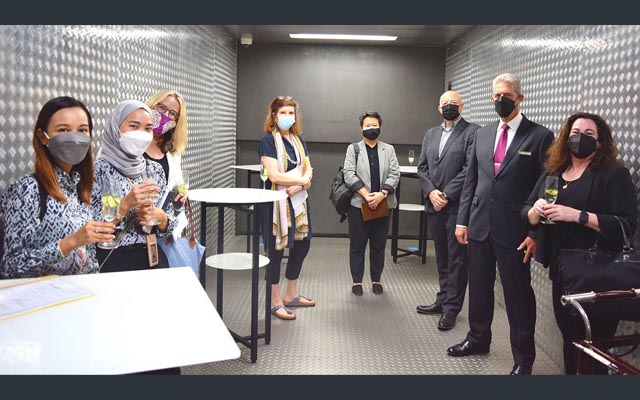
Meetings & Events Australia (MEA) has unveiled the 2022 MEA Mentor Program, which will connect event professionals across the country to share and enhance skills, expertise and career progression prospects.
Designed to assist the industry’s up and comers growth as event professionals, mentees will be matched with industry stalwart mentors who’ll provide counsel and learning opportunities over a three-month period.
MEA looks forward to welcoming mentees and mentors from across Australia
An online hosted platform will again be used this year to ensure a premium level of interaction, tracking and valuable resources is provided for participants. The programme is supported by Tourism Australi
Robin Mack, executive general manager, commercial & Business Events Australia at Tourism Australia, said: “Business Events Australia is proud to once again be the major partner of the MEA Mentor Program for 2022.
With Australia reopening its borders to quarantine-free travel from February 21, it is critical to continue to support the future development of our industry, to ensure Australia continues to deliver high calibre business events and remains a competitive business events destination internationally.”
Eligibility to participate as a mentee is restricted to MEA members (either Corporate or Individual). The programme will run from April 2022 to June 2022. Events sector professionals interested in being either a mentee or mentor should email an expression of interest to MEA via cwatson@mea.org.au before March 21, 2022.
COVID-19 testing continues to be an important measure to allow the resumption of safe travel within Asia Pacific and beyond
TruTrip and Collinson have inked a deal that will enable TruTrip’s corporate customers to seamlessly and securely book a range of pre-departure Covid-19 travel tests.
The partnership makes RT-PCR and Rapid Antigen tests even more accessible for business travellers using TruTrip services from Singapore, Malaysia, Indonesia, Hong Kong, South Korea and the UK.
Covid-19 testing continues to be an important measure to allow the resumption of safe travel
TruTrip customers can now book a Covid-19 travel test securely through Collinson’s website using a unique promotional code at their preferred in-city clinic from a given list of testing facilities. Upon completion of their test, customers will automatically receive notification of their PCR test results within 36 hours, and usually within an hour for Rapid Antigen tests; which if negative, can then be used for travel.
The announcement follows on from recent Collinson research, conducted in partnership with CAPA – Centre for Aviation, which revealed that over half of respondents (54 pre cent) expect robust COVID-19 testing protocols will remain key to reopening borders until the end of 2022 in Asia Pacific, with a further 26 per cent expecting this until the end of 2023. The research featured the opinions of a group of over 400 C-Suite and senior managerial level travel experts globally.
The metaverse is the next opportunity in events technology
The past two years have been a crazy ride for the business events industry, with event organisers having to revamp business models overnight, marketers having to pivot their event marketing strategies in a blink of an eye, and event attendees not being able to have the intimacy of face-to-face engagement.
With that though, the event industry has evolved and innovated. Where previously there were challenges around building enough online functionality and capabilities for sponsors, organisers and attendees to have the same experience and audience engagement as a physical event, technology has truly enabled the industry for the past two years.
The metaverse is the next big opportunity in events technology
So how will technology shape the events industry in 2022?
Hybrid events become the norm, virtual events as a tool for marketers to generate leads
Before Covid-19, events were mostly physical events, and in 2020, events shifted to fully-online events. In the year ahead, we will see that hybrid events, which refer to events that are held concurrently online and offline, will become the norm.
With the objective of events being to serve both attendees and partners, it’s important that both get an ROI even for hybrid events. In a recent survey of over 3,000 event organisers globally, Markeletic found that 86 per cent of B2B organisations see positive returns from hybrid events, seven months after the event date. WIth hybrid events providing both physical and online touchpoints for attendees and partners, there will also be greater attendee satisfaction for events (an 81 per cent contributor to satisfaction as voted on in the survey for Markeletic).
We will see events no longer limited by geographical boundaries, and businesses, attendees and of course event organisers will be able to gain increased value from hybrid events. From greater capabilities for lead generation and greater data on attendees, event organisers and sponsors will undoubtedly be able to not just populate sales pipelines but also understand areas that need to be optimised to improve attendee awareness, attraction and acquisition.
AR & VR take centerstage
The past few years have seen greater adoption and innovation around augmented reality (AR) and virtual reality (VR), but the real boost in this space came when Facebook announced their plans to go all-in on the metaverse. Make no mistake, these are not new technologies, but they have been given a new breath of life because of the metaverse.
We’ll also start to see more utilisation of AR and VR for events in 2022, providing more immersive experiences for attendees and more engagement opportunities for sponsors and partners.
The metaverse will permeate the events industry
By now, you would have at least an inkling of the concept of the metaverse. For one, it’s the future version of the Internet, but fundamentally, these are 3D and virtually integrated spaces through AR and VR as touched on above.
With touted to become a US$800 billion industry in 2024, this is something that should not be ignored. As of now, the likes of Epic Games and Roblox have already hosted concerts within their metaverses, while Unity is looking to provide live sports content and tools for the metaverse.
Several ways that businesses can dip into the metaverse include virtual stores, employee training material, customisation of products, and more. Other opportunities include interactive advertising opportunities for sponsors, gamification, visual-audio immersion and shopability.
Increased virtual networking opportunities at events
In the year ahead, we would already be hyper-familiar with online communication, with remote working becoming almost the norm for a majority of people. We will also see this applied to virtual events, at a much deeper level.
From joining discussion tables and online video networking to virtual networking lounges and even networking in the metaverse – the amount of innovative opportunities for event platforms has never been greater.
Event data analytics will get more intricate and at a deeper level
Data helps us keep pace with our customers’ wants, needs and intentions. In the year ahead, online event platforms will have even deeper capabilities to provide event organisers with robust analytics. We will also see more marketers start to implement trackable attribution to online and hybrid events, as this part of marketing attribution traditionally fell into a manual black hole.
From attendance to session watch times and audience engagement, event organisers will have even more data around which they can optimise and improve subsequent event flows, audience engagement, audience acquisition and more.
The rise of NFTs for events
Another highly-anticipated opportunity for the event tech industry is the use of NFTs in events. Think about it. Pop stars can create exclusive content and issue them as NFTs to attendees or put it up for an exclusive auction for the attendees. Art exhibitions in the form of hybrid events can implement NFTs for authentication or digital art. Ticketing can come in the form of NFTs for greater authentication. The opportunities are endless!
Businesses and marketers will also need to think of the best ways to implement NFTs across their products and offerings. Once that is done, the shift to implementing NFTs in online events will be a much smoother process.
Increased investments in event technology
With the above trends, we will definitely see more investments in event technology and peripheral technology. Today’s landscape for events is already highly-promising. From automated business matching and virtual gift bags to automatic captioning and live translations, the opportunities for a business to easily scale their events has never been greater.
However, it’s highly important for businesses to know the type of features and capabilities that they are looking for from an events platform and build a long-term strategy around running events. This will undoubtedly ensure a strong short-term and long-term return on investment.
Personalisation for event attendees
Today, personalisation happens every second. From Spotify recommendations to Netflix suggestions, you are being analysed and more relevant content is being delivered to you. How this personalisation applies to the events industry can come in the form of recommendations of sessions to watch or which booth to visit.With personalisation comes improved attendee experience, conversion rates and even lead generation.
As we head into the new year, one thing is for certain: events, as we knew back in 2019, will never be the same. With online merging with offline, opportunities will present themselves to businesses. As the pandemic persists, event professionals have to embrace hybrid and virtual ecosystems, champion diversity, prioritise health and safety, and create event experiences that keep attendees engaged and coming back for more.
One of the latest event spaces to open in Perth is The Raft, an open-air boarding platform permanently moored on the Swan River.
To access The Raft, patrons have to arrive at Barrack St Jetty No.5 prior to boarding the tender vessel. The 40-person tender transports patrons to and from The Raft (a 15-minute return journey). The tender will disembark Barrack St Jetty No.5 every 15 minutes or on an as-need basis throughout the event.
The Raft
1 of 8
The 445m2 floating event space can cater for a maximum of 250 patrons standing or 150 seated. The event space can also accommodate mobility aids and wheelchairs, and is suitable for all weather conditions thanks to the retractable roof and blinds.
From the floating platform, guests will be able to take in vistas of Perth City, Elizabeth Quay and Kings Park.
The fully-licensed venue has no option to BYO beverages or food (except cakes), as head chef Oliver Buenviaje offers curated menus featuring fresh, local produce according to all tastes and budget sizes.
Drink options start at A$60 (US$43.40) per pax for three hours, and includes a selection of sparkling, reds, whites, softs and craft beers from across Australia. From January to October, the minimum spend is A$5,000.
Optional services include the hire of DJ equipment, party lights, festoon lighting, furniture and linen hire, as well as a set up and pack up fee.
The Raft’s prices start at A$2,500 for three hours rental from Mondays to Thursdays during the lower season of May to October.
Contact events@theraftperth.com.au for more information.
TTG Conversations: Five Questions with Liz Ortiguera, PATA
Vaccine inequity is an issue for all humanity and for global recovery, including that of the tourism industry, and the imbalance in a vaccinated global population leaves the world vulnerable to new variants, says Liz Ortiguera, CEO of PATA.
In this episode of TTG Conversations: Five Questions, Ortiguera explains why the travel and tourism industry needs to back the fight against vaccine inequity and how PATA is leading the effort, and offers examples of how industry players have contributed to vaccination efforts.
The value and outputs of meeting in-person mean face-to-face meetings remain crucial but the trend towards smaller hub-and-spoke format meetings with in-person regional groups connected virtually is here to stay, according to IACC’s (International Association of Conference Centers) Meeting Room of the Future Report 2022.
According to the report, 84% of executives surveyed stated that they see higher team productivity when their employees are meeting in-person, and 78% of respondents are planning on attending an equal number of in-person meetings or more when Covid-19 is nearing its end.
The report covers the trends and factors affecting future demand for the external meeting venues
However, the nature of in-person meetings has altered significantly, with caution related to travel driving more regional meetings, where they were once larger, possibly national or global meetings. Interviewees said that they were comfortable in staging multi-location meetings, where there are live hubs connected together using technology.
The pandemic has brought to the fore the value and importance of human interaction, with this ranking the highest of seven factors when considering attending an in-person meeting, above expanding your network, scheduling and cost of attending. Collaboration with colleagues is also highly ranked, where respondents cited teambuilding, training and problem-solving as the main reasons for bringing people together. On the flipside, status and update meetings are widely regarded as subjects that can be delivered entirely virtually.
The study pinpointed five factors that meeting bookers will be looking for in successful business events in the future: more collaboration between meeting participants; the high quality of technology; a valuable way of communication; and venues to recommend new innovative ideas. Moreover, clients are looking for venues that share the same values as their own corporations.
Mark Cooper, CEO of IACC commented: “While the pandemic has shown the ease of attending online meetings, it’s clear from our report that significant value is placed on face-to-face gatherings.
“However, the likelihood is that organisations will be more strategic about how and why they bring their teams together. It’s clear that venues need to be investing both in their onsite offer, as well as in ensuring they have the appropriate meeting technology to seamlessly connect companies requiring a hybrid meeting model.
“To deliver against the needs of meeting planners going forward, venues need to consider their ethical and environmental credentials to ensure that they are up to scrutiny and are clearly showcased to potential clients,” Cooper advised. Such issues are increasingly important decision-making factors for meeting bookers, particularly management of food waste and having a strong diversity programme in place.”
Health and wellness factors are also increasingly important, for example the ability for attendees to gather outside to walk and talk.
One respondent noted: “Having outdoor meeting possibilities can have many benefits on the work environment and the ambience between colleagues.”
IACC’s Meeting Room of the Future reveals the insights from meeting professionals, venues and industry experts from three different continents. Starting in April 2022, IACC will publish a quarterly barometer report, which will bring together insights from several experts and organisations to demonstrate what follows for the continued recovery of the smaller conference, meetings and training market globally.
Within The Ritz-Carlton, Millenia Singapore is The Commonwealth, a fresh meetings and events concept designed by renowned New York-based interior designer, Tony Chi.
Taking its inspiration from Singapore’s legacy from a small trading port to a global trade hub, the reimagined space on level two of the hotel features eight brand new meeting venues.
The Commonwealth
1 of 4
The Bar
North Pavilion
South Pavilion
Overlooking the Stella Atrium, The Gallery acts as a welcome space to The Commonwealth. The space is equipped with two hospitality desks, and a 75-inch LED screen in The Gallery enables the convenience of displaying company branding, videos and information relevant to the event.
Outfitted in Japanese Tamo wood with trellised ceilings and custom wall panelling, The North, South and Central Pavilions each feature two private pantries that can offer meals and refreshments in a self-contained meeting and dining environment.
At 137m2, The North Pavilion is the largest venue and it boasts a 126-inch LED video wall, and a wall-mounted projector with a 110-inch motorised projection screen. It can accommodate up to 100 persons for a banquet and up to 140 persons for a lecture.
The Central Pavilion (72m2) and South Pavilion (77m2) are each equipped with a 110-inch LED video wall. Event technology in all rooms can be discreetly concealed or revealed as needed.
Intimate granite-floor Courtyards separating each Pavilion may be used as pre-function or registration areas, or for breaks, and can be accessed directly through opening door panels from the Pavilions.
The complete alignment of the three Pavilions and Courtyards means that the entire space offers the versatility of combining all three into one larger venue, or for each to function as separate spaces for smaller events.
Other meeting spaces include the Read, Cavanagh and Anderson rooms, named after the heritage bridges of Singapore and the men who helped build this island nation. Each feature a 96-inch LED screen, a private pantry, and discreet event technology.
Dining options are elevated with sophistication at The Hall, which encompasses a show kitchen, food stations and a bar in various adaptable formats. Sliding Tamo wood screens subtly hide this space, partially or fully, when not in use.
Lastly, a private cocoon suited for high-level meetings, The Boardroom is furnished with an adjoining bar, 85-inch LED screen, and acrylic tortoise-shell boardroom table complete with leather armchairs.
Mack: Business events have always been a critical part of Australia’s visitor economy and pre-pandemic
Business Events Australia is working to rebuild business events demand from Singapore, as well as the greater Asia-Pacific region, through conversion-driving activities that tap into the short- and mid-term business.
Among the activities is the Business Events Australia Asia Showcase 2022, which will be held from March 8 to 11 this year. The hybrid event will bring together key customers from the South and South-east Asia and Greater China markets in their respective locations, and provide them with the opportunity to meet virtually with Australian industry representatives and learn more about the destination’s business events offerings.
Mack: business events will remain a critical part of Australia’s visitor economy
Meanwhile, Melbourne Skyfarm, when completed in mid-2022, will feature a sustainable café, education programmes, conference facilities and event spaces. Guests will be able to enjoy a post-meeting tour of the working farm, visit the rooftop orchard and herb gardens, and sample produce.
Robin Mack, executive general manager of commercial & business events Australia, Tourism Australia, said a fam trip would be organised in the near future for qualified planners and media based in South and South-east Asia.
“Business events have always been a critical part of Australia’s visitor economy, and pre-pandemic demand from Singapore was strong. In 2019, Australia welcomed 74,000 business events visitors from Singapore who spent a total of A$270 million (US$193.6 million),” said Mack.
With China’s borders still closed, Mack said Tourism Australia’s business events strategy will focus on “international markets offering the best potential return on investment”.
These include the US and the UK/Europe for both incentive travel and association meetings, while New Zealand, South Asia, and South-east Asia will be targeted for incentive travel traffic.
However, the tourism board is not giving up on China.
Mack said: “In China, Australia continues to be perceived as an aspirational longhaul destination and benefits from being the closest Western destination to China in terms of proximity. We are witnessing pent-up demand for Australia with enquiries for travel from 2023 onwards.”
Overall, Mack has good cause for optimism, for findings from Tourism Australia’s Business Events Consumer Demand Project in 2021 revealed that a majority of decision-makers across the association and incentive travel sectors have indicated that the number of events held post-lockdown will be the same or greater, and the available budget will also increase.
This is because Australia is “still seen as a highly desirable destination that has a strong reputation for excellent business events facilities, world-class beauty and natural environments, a range of accommodation options and local attractions, clean cities, good infrastructure and an appealing climate”, Mack said. These attributes give Australia a competitive edge against other business events cities in the world.
From left: Collinson's Francis Chong, AETOS Holdings's Alfred Fox, and Crisis24's Richard Hancock at the signing ceremony
AETOS, Collinson and Crisis24, have signed a strategic partnership agreement to provide AETOS Assist, an end-to-end integrated security and travel risk management service to businesses.
Under the agreement, all three companies will harness their combined expertise to provide corporate clients with a complete global risk mitigation service and support, enabling them to effectively assess, mitigate and manage risks amid the continually evolving threat environment.
From left: Collinson’s Francis Chong, AETOS Holdings’s Alfred Fox, and Crisis24’s Richard Hancock at the signing ceremony
From pre-travel risk assessment, real-time security intelligence and people tracking through to crisis management, emergency evacuations and global medical assistance, AETOS Assist will provide specialised support and 24/7/365 peace of mind for business travellers and expatriates.
Their medical solution will also include seamless and secure Covid-related travel tests and assistance, to help organisations fulfil their duty of care, manage the current pandemic and safeguard workforce health.
Francis Chong, vice president, Collinson Assistance, Asia Pacific, Collinson said: “With corporate travel becoming even more complex during the Covid-19 pandemic, we are dedicated to helping companies better protect and support their employees wherever they operate. Additionally, with the new ISO 31030 Standard moving travel risk management onto the C-Suite agenda, this partnership will ensure businesses can safeguard their most valuable assets – their employees.”
Edwina Fitzsimon has joined ChristchurchNZ Business Events as business development manager for Australia.
Based in Melbourne, Fitzsimon will represent Ōtautahi Christchurch and the Canterbury region of the South Island to help Australian clients plan and book conferences, events or incentive programmes.
With 21 years of experience in hotels and tourism, specialising in business events sales management, Fitzsimon has looked after the Australia market for Auckland Convention Bureau for the past six years.
The newly-opened Ritz-Carlton, Bangkok anchors the One Bangkok development with cosmopolitan elegance. Featuring the city's largest ballroom and a spectacular new penthouse suite, it delivers exceptional hardware and deeply authentic, soulful service for business and leisure travellers alike
Behind the imposing, Brutalist concrete that defines Zurich’s Oerlikon district lies a surprising secret. While its exterior honours the neighbourhood’s industrial roots, stepping inside Mama Shelter reveals a vibrant, neon-soaked world that is a far cry from its rigid shell
A polished urban retreat designed for business travellers, Hyatt Regency Kuala Lumpur at KL Midtown combines thoughtful design, seamless service, and exceptional facilities.