One of Australia’s top hydrogen conferences, the Australian Hydrogen Conference (West), will be addressing the future of Australia’s hydrogen industry in Western Australia this year.
Bringing together the hydrogen sector’s most eminent energy leaders to explore the latest emerging projects, challenges and opportunities to shape the future of this rapidly expanding industry, the Australian Hydrogen Conference (West) will see 440 delegates visit Perth for the two-day event in November 2022.
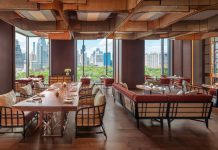
The conference is a valuable opportunity to promote Perth’s (pictured) leading expertise in the field
The conference is expected to directly generate upwards of A$560,000 (US$403,000) for the West Australian economy, boosting local jobs and supporting the recovery of the business events industry.
Minister for the hydrogen industry, Alannah MacTiernan said Western Australia was becoming globally recognised for its significant renewable hydrogen potential.
“Since the State Government’s Renewable Hydrogen Conference in 2018, a local renewable hydrogen industry is turning from vision to reality here in Western Australia,” MacTiernan said.
The Australian Hydrogen Conference is known for featuring high-profile keynote speakers, with Angus Taylor, minister for industry, energy and emissions reduction, and former prime minister Malcolm Turnbull joining MacTiernan to present at the 2021 conference in Sydney.
Run by Sydney-based events company Informa, the Australian Hydrogen Conference (West) is complemented by its east coast counterpart, which will next be hosted in Adelaide.
Business Events Perth CEO Gareth Martin said that Western Australia’s growing strengths in the hydrogen sector were significant and contributed to the State being chosen as the destination for the 2022 event.
“Western Australia’s energy industry is moving towards more renewable energy sources, and as a result we’re making big strides in the field of hydrogen; in 2019, the WA Government launched the Renewable Hydrogen Strategy, which sets out the State’s approach to becoming a significant producer, exporter and user of renewable hydrogen energy,” Martin said.
“Bringing together the top experts in this field in Western Australia will lead to new innovations and emerging projects that will continue to strengthen WA’s commitment to transition into a sustainable energy State.”
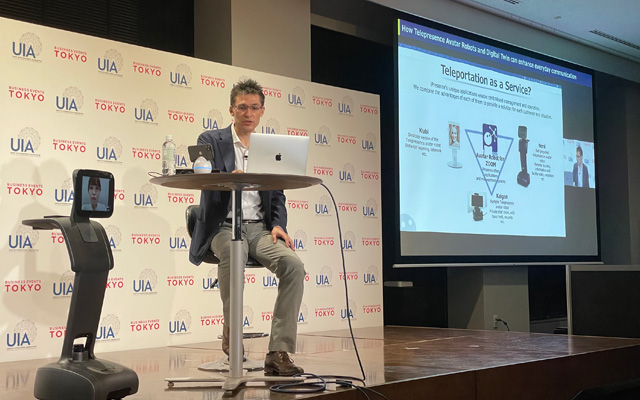
An in-person presenter, as well as an overseas presenter dialling in via iPresence. Photo: Kathryn Wortley
An in-person presenter, as well as an overseas presenter dialling in via iPresence. Photo: Kathryn Wortley
Event brief
In October 2021, Tokyo played host to the inaugural UIA Asia-Pacific Round Table, a non-profit, independent research institute documenting the current and historical work of international non-governmental organisations and intergovernmental organisations. The association is the world’s oldest and largest source of information on global civil society.
Organised annually, the Round Tables are intended to provide an opportunity for members of the association to learn through networking and practice while meeting fellow members. Through keynote speeches, presentations, panel discussions and networking, attendees gain experience and knowledge to help them run their organisations better.
The 9th Asia-Pacific Round Table, in 2021, was held in Japan for the first time. More than 70 overseas attendees from 29 countries and domestic participants based across Japan took part virtually, while some 40 local association executives and industry partners joined in person.
Destination partner, Tokyo Convention & Visitors Bureau (TCVB), welcomed the delegates and supported the in-person and online aspects of the meeting. Services provided to attendees included educational content via virtual cultural experiences, networking opportunities and easy access to the online platform, all as part of efforts to offer an engaging and rewarding experience for all delegates.
Event highlights
The event saw the pre-launch use of Panasonic’s Anshin Gate, a system that, in one motion, checks a guest’s temperature and sanitises their hands and feet. Other technology tracked attendees’ movements and gauged congestion in the foyer using a series of cameras. During designated break times, in-person attendees could mix or get drinks in the foyer without crowds or lines forming.
Telepresence avatar robots provided by Japanese firm iPresence allowed presenters to have a more physical presence on stage than if they were joining remotely, as they were able to interact with in-person attendees during breaks. This technology is designed to “provide more complete interactivity to remote participants, creating truly hybrid experiences”, said Chris Christophers, founder and CEO of iPresence.
Online delegates joined the event via OnAIR, a dedicated virtual conferencing platform for speakers and attendees. From the portal app, attendees could visit the Auditorium or Virtual Exhibition, access the programme, receive live support or join the meeting hub for calls, chats or scheduled meetings. The Australian-made system allowed delegates to watch presentations and workshops in real-time and submit questions and comments. It also hosted content provided by TCVB.
The TCVB-produced content focused on videos introducing Japan, including one presenting nihon buyo, a Japanese classical dance; one showing how and why sushi is beloved in Tokyo, with insight from a fourth-generation sushi chef; one introducing iaido, the martial art of the sword; and one called “Tokyo in a Day,” which showcased five of the capital’s neighbourhoods.
At a virtual green teatime session transmitted live from Tokyo, delegates could also learn about green tea, one of the most consumed beverages in Japan. Among the topics covered by the host were why green tea is so healthy, how to brew the perfect cup, and where to enjoy green tea across Japan once international travel resumes.
Kazuko Toda, senior director of the business events team at TCVB, expressed hope that all delegates would be engaged and interested in the online Japanese cultural experience about “the magic of green tea, which has long been the centre of our culture” and the online exhibitions, which featured details on Tokyo’s meeting venues, cultural experiences and must-see spots.
Challenges
Given the 15-year history of holding Round Tables in-person, some virtual attendees were saddened not to be able to attend physically and Europe-based speakers had to deal with time differences, but the event was a resounding success.
Kana Nomoto, director of sales of the business events team at TCVB, said her team had “explored the best ways to make the event fruitful for everyone”, and the video content was prepared so delegates could “get a feel of the city”.
In closing the event, Cyril Ritchie, UIA president, thanked TCVB for delivering on its brief – to provide a safe, inspiring and engaging event that conveyed the culture of the host city and country – even amid the challenges of the pandemic.
Event UIA Asia-Pacific Round Table Organisers UIA and Tokyo Convention & Visitors Bureau Venue Congres Square Nihonbashi, Tokyo Date October 21–22, 2021 Attendance 70 online and 40 in-person
The Events Industry Council (EIC) has announced the election of its 2022 Board of Directors.
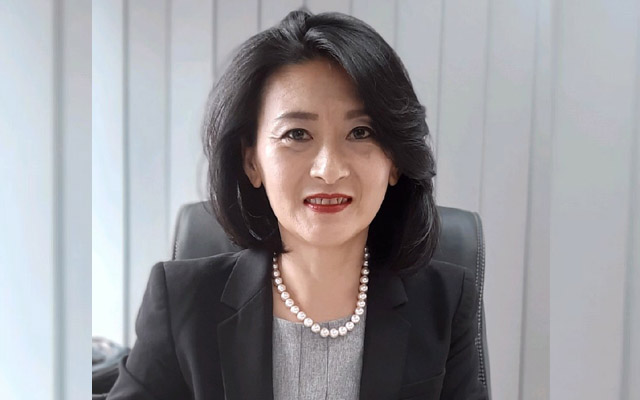
Cathy Breden, executive vice president and chief operating officer at IAEE (International Association of Exhibitions and Events), and CEO of CEIR (Center for Exhibition Industry Research) has transitioned to become the chair of the EIC, having held the role of chair-elect in 2021.
Cathy Breden
In her new position, Breden will be a key representative of the association and support EIC’s CEO, Amy Calvert, and EIC’s standing committees and task forces as they create and implement new research and products to support the global events industry in its recovery.
She will also ensure that EIC progresses towards its Vision 2025 and will have a key focus on growing EIC’s membership internationally where there is an opportunity to implement its education, certification, and accreditation programmes.
Breden will be supported by incoming chair-elect, Sherrif Karamat, president and CEO at PCMA. Karamat has a wealth of knowledge of the global business and events sector and is a respected voice in the industry. Under his leadership, PCMA has become a key player in positioning the industry as a driver for socio-economic change.
Also nominated to the 2022 board are:
Jason Dunn Sr, immediate past chairman, NCBMP (National Coalition of Black Meeting Professionals)
Jennifer Glynn, SITE (Society for Incentive Travel Excellence) 2020 President
Stephanie Harris, president, The Incentive Research Foundation
Brad Mayne – president and chief executive, IAVM (International Association of Venue Managers)
Finally, Mark Cooper, CEO, IACC (International Association of Conference Centres); Senthil Gopinath, CEO, ICCA (International Congress and Convention Association); and Ana María Viscasillas, vice president, board of directors, COCAL (Federación de Entidades Organizadoras de Congresos y Afines de Latino América), will continue their terms as board of directors.
The EIC board is comprised of nominated members of the overall EIC that consists of more than 30 organisations in the events industry. These leaders are the governing body for the overall council with fiscal responsibility and strategic direction for all EIC programmes.
Sabah International Convention Centre (SICC) has appointed Isabelle Chai as director of sales, events & marketing.
Chai has been tasked with driving SICC’s revenues through the implementation of sales activities and strategies, identifying new market and growth opportunities, as well as catalysing the branding and communications effort.
With almost 30 years of experience in international luxury hospitality experience, Chai’s sales & marketing career has been honed at hotels such as Kota Kinabalu Marriott Hotel, PODZzz Suites & Semporna Dream Villa, JW Marriott Beijing, The Ritz Carlton Beijing, Shangri-La Hotel Doha, Shangri-La Hotel Hambantota Sri Lanka, Sutera Harbour Resort, Hotel JenTanglin Singapore, Shangri-La’s Barr Al Jissah Resort & Spa Muscat Oman and Shangri-La’s Tanjung Aru Resort & Spa Sabah.
Most recently, Chai was a negotiator with PropNex Realty, where she developed strategies and plans for prospecting clients.
SICC is the latest addition to business events venues in Malaysia, and the largest in Borneo. The six-hectare multifunctional venue offers a total of 153,197m2 meeting, conference, entertainment and exhibition facilities.
Located within the Future Park Rangsit complex in Bangkok, Thailand, the new-build, 226-key Novotel Bangkok Future Park Rangsit is now open.
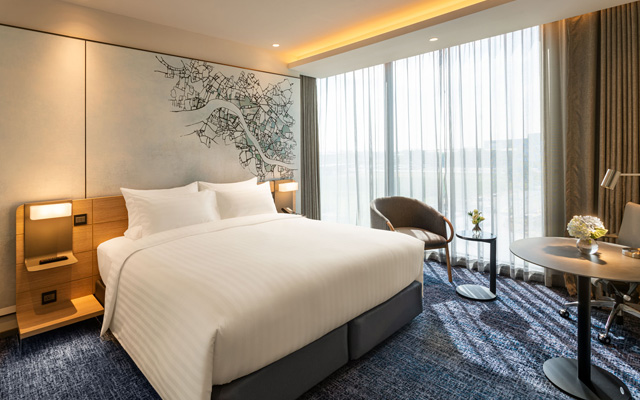
The 226 rooms and suites come in eight different configurations, but all living spaces offer Novotel’s signature Live N Dream bed, 55-inch LED TVs, coffee and tea facilities, daybed, and workspace. Guests staying at the Executive Rooms and Suites can enjoy exclusive access to the Premier Lounge.
Good for large-scale conferences and weddings, the hotel’s two ballrooms offer spacious layouts, which can also be divided into multiple venues to suit the size and style of each occasion. There are also three meeting rooms, ideal for medium corporate and social events, training, and seminars. Conveniently located on the lobby floor, all meeting and event spaces boast natural daylight, state-of-the-art audio-visual technology, full-size LED screens, and complimentary Wi-Fi.
Other facilities on-site include a gym, outdoor swimming pool, kids’ pool, as well as three restaurants – a Sports Bar, the all-day dining Food Exchange, and Alberto’s Pizzeria.
The hotel is within a five-minute walk from Future Park, one of the region’s largest shopping malls, connecting guests with cinema, boutiques, and a wide range of entertainment options.
Cross-border coordination on travel protocols needed to promote tourism recovery, say stakeholders
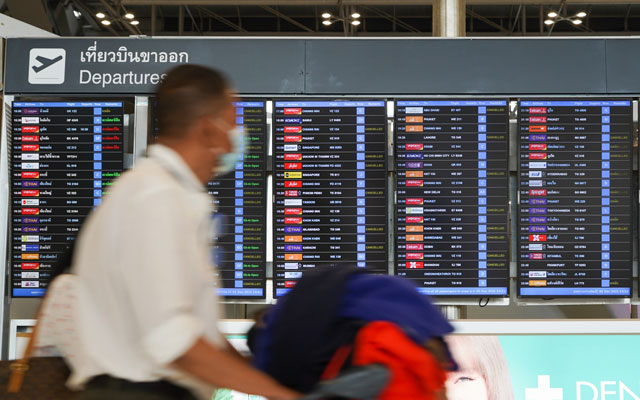
Tourism stakeholders reiterated the urgent need for a coordinated approach to cross-border travel in order to support a stable travel and tourism recovery.
Speaking at Booking.com’s inaugural roundtable, The Travel Edit: Embracing the Unpredictable on January 18 in Singapore, Campbell Wilson, CEO of Scoot, called for a common list of vaccines recognised across all countries as well as unanimous usage of a single QR code across borders.
Cross-border coordination on travel protocols needed to promote tourism recovery, say stakeholders
Wilson said these should be available at the very least, despite a near “impossible task” for governments to agree on Covid-19 responses.
Fellow speaker, Kerry Healy, chief commercial officer, South-east Asia, Japan and South Korea at Accor, expressed frustration over differing state of border openings within South-east Asia, and emphasised the need for “harmony” in regulations.
Wilson added that government agencies, associations, medical community and economic divisions should work together to ease the administrative process to make regional travel less cumbersome.
Remaining flexible is top of the list in the Business Travel Trends for 2022 report
Travel management company BCD Travel has identified eight trends that will resonate with travel managers and travellers in 2022, which sees the sector refocusing its priorities due to the pandemic.
“With new Covid variants emerging, it’s not clear when business travel will return to pre-pandemic levels, but it’s high time companies start thinking about how to future fit their travel programmes,” said Jorge Cruz, executive vice president for global sales & marketing at BCD Travel.
“Crucial tasks for travel managers include measuring the value of travel, demonstrating the quality of its outcome, and proving to internal stakeholders that it’s worthwhile. The key is not to simply reduce travel spend, but to increase the effectiveness of that travel towards meeting the company’s goals.”
Travel managers need to remain flexible and adaptable during this period of uncertainty
1. The value of business travel is a moving target
Coming out of a sustained period with little or no travel, companies are reviewing the value of sending employees on business trips. Employees value travel for the opportunities presented by in-person meetings with colleagues, clients and business partners. But travel programmes need to adjust to the new ways of working created by the pandemic, including finding the right balance between virtual and in-person meetings.
2. Environmentally sustainable travel gains traction
The 2021 COP26 UN Climate Change Conference put climate change and sustainability firmly in the global spotlight. As more countries and non-governmental organizations, such as IATA (International Air Transport Association), make commitments toward a net-zero carbon future, the pressure grows for everyone. Companies are engaging with sustainability, and travel managers are exploring ways to reduce their program’s carbon footprint. BCD’s consulting arm, Advito, can help companies accurately report on business travel emissions across air, hotel, car and rail.
3. New worker expectations demand policy changes
Gone are the times of rigid employment policies for office-based workers. The transition to remote settings is rapidly changing the way we work and travel. Companies need to adjust workplace policies to the needs of digital nomads and hybrid employees, firmly placing them on the people risk management agenda.
4. People risk management goes beyond business travel
An increase in remote and hybrid working demands companies extend their duty of care to employees whenever they are away from the office, and not just when they’re on a business trip. Forward-thinking companies are moving from travel risk management to people risk management. They recognise the shift from keeping their travellers safe to keeping all employees safe, no matter where they are.
5. A broader set of risks must be factored in
The risks associated with a global pandemic have dominated people’s minds for almost two years. But as travel returns, it’s important to recognise the other risks to which travel managers and their travellers may be exposed, such as extreme weather events, terrorism, economic risks and cybersecurity breaches. Companies must evaluate their travel risk management programme to ensure their employees’ safety and security on the road.
6. Cybersecurity essentials are vital
Cyber threats continue to grow, as does their potential impact. Many travel managers already recognise the importance of cybersecurity, placing it at the forefront of their TMC relationship. But they also need to protect their company and travellers from active cyber threats. The first step is to recognise cybersecurity as a daily risk to travel and take responsibility for tackling it. Prevention, or minimising the impact, will pay dividends over simply responding to cyber incidents after the damage has been done. Second, as employees are often the weakest point in a company’s defense, it’s highly recommended that travellers receive proper security training and follow the right precautions when taking a business trip.
7. Globalisation reset is underway
Globalisation has brought incredible benefits over the last 20 to 30 years. But political unrest, changing consumer values and costs and supply-chain issues are forcing a rethink. Companies are shifting from a consolidated to a more diversified approach toward supply, production and consumption and looking at ways of bringing production back closer to the point of consumption. Business travel patterns may shift as a result. As the reset unfolds, travel managers can have the best of both worlds by selecting travel suppliers with global networks underpinned by local operations that provide the support and expertise tailored to the specific needs of employees in each market.
8. Fintech is in focus
BCD’s travel buyer survey revealed payment and expense to be among some of the biggest pain points when managing business travel end-to-end. Adopting fintech-based solutions can help simplify, digitize and automate corporate travel payment, reconciliation and invoice management. Travellers, travel managers and finance teams can mutually enjoy the benefits of a frictionless, digital payment experience, from trip booking and payment through reconciliation.
To learn more, the full report – entitled Business Travel Trends for 2022 – can be downloaded here.
This win significantly exudes Malaysia’s tenacity to successfully secure bids to shore, further escalating Malaysia’s position as a top business events hub in Asia, particularly in the field of medical and health congresses.
The Malaysian Society of Colorectal Surgeons, in collaboration Malaysia Convention & Exhibition Bureau (MyCEB) has won the bid to host the 20th Congress of Asia Pacific Federation of Coloproctology & 14th Asian Society of Stoma Rehabilitation Congress in March 2025.
Held in Sabah, the in-person conference will explore the advancements and breakthroughs in the field of coloproctology and stoma care.
This win exudes Malaysia’s tenacity to secure bids in the field of medical and health congresses
Abdul Khani Daud, CEO of MyCEB, expressed his pride in Malaysia being chosen as the host country, and hopes that the congress will lead to networking, as well as innovation and research in the medical field.
“As the incoming President of the Malaysian Society of Colorectal Surgeons (2023 – 2025) and organising chair of the congress in 2025, I look forward to showcasing the advances in medical science and state-of-the-art facilities that Malaysia has to offer to overseas delegates.
“Winning a bid of an international congress is not easy and winning it for the second time is even more challenging,” said Luqman Mazlan, organising chair.
stainability and a focus on vegetarian, vegan and gluten friendly options has been really important in the development of this menu
The Melbourne Convention and Exhibition Centre (MCEC) has unveiled a new menu for 2022, which will feature Victoria’s finest fresh seasonal produce.
From grab-and-go gourmet to sophisticated dining, the food offerings have been given a new look, as well as include more diverse options such as vegetarian, vegan and gluten-friendly meals.
Sustainability and a focus on vegetarian, vegan and gluten-friendly options was a large part in the development of this menu
The beverage selection has also been given a facelift, and now includes house-made cocktails using spirits from Victorian distilleries, as well as Seltzers from Melbourne-based Moon Dog Craft Brewery.
Highlights include the new cocktail menu, with canapes to choose from such as Green mango, tofu, edamame, and sambal rice paper roll with nam prik or Truffle mushroom, whipped Meredith goat cheese and lemon thyme tart.
Meanwhile, the gala menu includes options of seared Wimmera duck breast with spiced carrot puree, pan fried panisse, crisp seasonal greens and red wine jus, and Seared Victorian 3030 barramundi with saffron potato, baba ganoush and herb oil.
MCEC also continues to offer sustainable options such as Ecoboxes and the 100-Mile Menu, a three-course plated menu including canapés, where all main ingredients are sourced from local farms and markets within 161km (100 miles) of MCEC, supporting Victorian food producers while reducing the carbon footprint.
Collinson’s Priority Pass has launched a global partnership with CarTrawler – a global B2B provider of technology solutions for the travel industry – offering members access to CarTrawler services through the Priority Pass app.
The partnership represents a push towards creating a seamless travel experience for members, by going beyond the airport to enhance the overall customer journey
With 56,000 locations around the world, CarTrawler leverages a network of over 2,200 car rental and mobility providers to ensure optimal availability and pricing – allowing for travellers to choose from a range of add-on transport options that best suit their needs, budget and schedule. The service will be available globally to all Priority Pass Members in 42 different languages and includes car rental, as well as a variety of airport transfer options including shuttle and on-demand ride-hailing.
The new global partnership is accessible within each market that Priority Pass has a presence. Members across Asia-Pacific including Hong Kong, Mainland China, Singapore, Australia and India can gain access to competitive rates from multiple car rental and mobility providers such as Avis, Hertz, Europcar and Enterprise. Members can also simply use any valid payment card to hire their vehicle or pay for their transfer.
“Collinson is dedicated to continually innovating our range of premium travel experiences, to meet the rapidly changing needs of today’s traveller. More specifically our customers are looking for enhanced, digitally enabled, end-to-end customer experiences. This partnership with CarTrawler directly responds to that need, providing a market-leading benefit, beyond the airport, delivered directly into their hands via our Priority Pass app,” said Christopher Evans, joint CEO at Collinson.
Just 10 minutes from Phuket International Airport on the serene northern coast, this 178-key, Bill Bensley-designed resort offers delegates a quiet, tropical paradise steeped in Phuket’s tin-mining heritage
The newly-opened Ritz-Carlton, Bangkok anchors the One Bangkok development with cosmopolitan elegance. Featuring the city's largest ballroom and a spectacular new penthouse suite, it delivers exceptional hardware and deeply authentic, soulful service for business and leisure travellers alike
Behind the imposing, Brutalist concrete that defines Zurich’s Oerlikon district lies a surprising secret. While its exterior honours the neighbourhood’s industrial roots, stepping inside Mama Shelter reveals a vibrant, neon-soaked world that is a far cry from its rigid shell