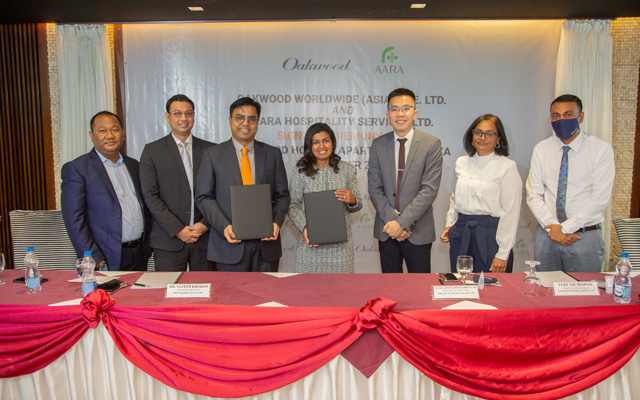
Oakwood will be making its entry into Bangladesh with the signing of Oakwood Hotel & Apartments Dhaka, scheduled to open in April 2022.
Aara Hospitality signed Oakwood on in a ceremony on December 8
Located on Gulshan Avenue within Dhaka’s affluent precinct, Oakwood Hotel & Apartments Dhaka will feature a collection of 89 hotel rooms and serviced apartments, from studios to two-bedroom units.
The property will offer a range of F&B outlets, including a split-level rooftop bar, all-day restaurant, lobby lounge-café and cigar divan bar; as well as meeting and event facilities.
Oakwood Hotel & Apartments Dhaka will add to Oakwood’s enlarging footprint across South Asia in support of its goal to double the global portfolio of managed properties by 2025.
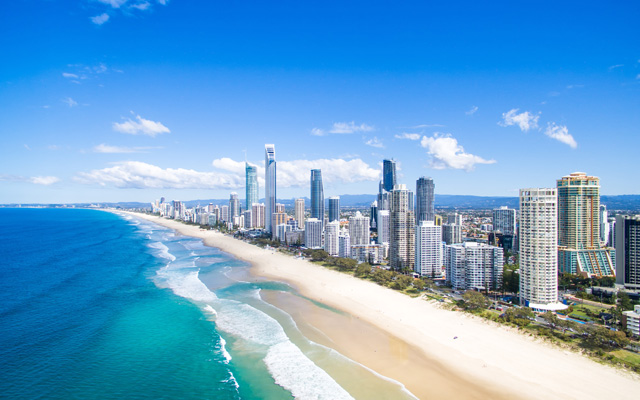
Destination Gold Coast has secured 104 conferences with an estimated economic impact of A$99.3 million (US$70 million) in the 12 months leading up to June 2021, with the level of enquiry and bidding opportunity remaining strong.
Announcing the results at the marketing body’s Annual General Meeting on November 24, Destination Gold Coast CEO Patricia O’Callaghan said the city is looking forward with renewed optimism.
The Gold Coast’s event pipeline between 2022-2030 comprises 144 conferences and meetings
According to O’Callaghan, the Gold Coast is well positioned to lead the visitor economy into recovery with business events set to contribute significantly.
“There is a strong desire to meet and connect in person and we have been highly aware of this consistent sentiment across the industry as this demand will drive growth,” she said.
“Business events are a vital part of our visitor economy, particularly as they support Gold Coast’s economy from Monday to Thursday and during off peak periods.”
“Our future pipeline reflects this with 144 conferences and meetings, worth an estimated A$191 million (US$136 million), committed to meet here between 2022-2030.
“Beyond our world-class infrastructure, natural environment, and extraordinary delegate experiences, we’ve also been quietly building a knowledge economy that will contribute significantly to strengthening our business events sector,” she noted.
Conferences newly confirmed for the Gold Coast include the Royal Australian and New Zealand College of Obstetricians and Gynaecologists in 2022; the 35th Topical Meeting of the International Society of Electrochemistry, 2023; and the Australian Medical Students Association (AMSA) National Convention, 2023.
Industry leaders speaking at the Indonesia MICE Outlook 2022 last week in Bali have expressed optimism in the country’s business events future, with confidence stemming from a schedule of international events as well as strong domestic appetite for local meetings.
The Indonesia MICE Outlook 2022 was organised by the Ministry of Tourism and Creative Economy.
Raty: Strong event line-up for Indonesia come 2022
Raty Ning, chairman of ICCA Indonesia, said 30 international events are scheduled to take place in 2022, and among them are the 2022 G20 Bali summit, the 7th Session of the Global Platform for Disaster Risk Reduction, and an Asian Venture Philanthropy Network meeting.
She expects the G20 summit to spin off even more government-led meetings and events with in-person attendance, while the country continues to benefit from a strong showing of domestic business events.
“The year will be more exciting if the government could provide financial incentives to local associations to (encourage them to) organise events, such as annual scientific meetings and national deliberation,” she added.
Raty hopes government offices will also hold events around the country to fill available spaces and spread out the economic benefit of meetings and events.
Gary Grimmer, CEO, GainingEdge, opined that Indonesia’s recovery, along with the strength of her domestic market, was “in line with the prediction that at the end of 2021 the industry will start to move, and in 2022 it will increase as the regional market recovers”.
However, he expects global meetings to only resume in 2023.
Commenting on 2022 event trends, Grimmer said virtual and hybrid meeting formats will continue to play an important role as they allow organisers to reach larger audiences, allow for an integrated virtual contingency plan, and increase revenue.
“Future options may include multi-channel content to form a larger global event,” he added.
Desaru Coast Destination Resort in Johor, Malaysia has launched MICE Reinvented, a new campaign that aims to inspire new ways of hosting business and social events at the destination.
It puts forth five distinct event pillars: Corporate events, reimagined; Future-proof conference and exhibitions; Wanderlust destination weddings & celebrations; Sports & such and, Nature & nurture.
Desaru Coast promises fully customisable events that will inspire, rejuvenate and reconnect people
Roslina Arbak, managing director and CEO, Desaru Coast Destination Resorts, said in a press release: “Just as the pandemic redesigned the way we live, it has driven us to relook and rethink how events will look like in the future.
“Leveraging our portfolio of assets as an international destination in the world where people seek inspiration, rejuvenation and reconnections, Desaru Coast has reimagined all possible spaces and experiences across the destination to offer a multitude of integrated indoor and outdoor programmes.
“Future (events) at Desaru Coast can be designed with an enchanting mix of indoor and outdoor experiences to include all five-star facilities along with curated activities at the beach, forest, mangroves, local villages, golf courses, ballrooms and conference centre.”
The destination offers four-, five-star international hotel brands with an inventory of close to 800 rooms, indoor event spaces that can accommodate more than 2,300 delegates, two award-winning golf courses, and the region’s largest waterpark.
Desaru Coast has a positive reputation among sporting events. In 2019 it hosted the Desaru International Bike Week, which drew over 45,000 bikers and visitors to the destination.
Come 2022, L’Etape Malaysia will be held in the destination on June 4 and Desaru Coast Ironman on July 24.
With Queensland fast approaching 80 per cent of fully vaccinated residents, the Australian state has decided to reopen its borders to fully vaccinated interstate travellers from Covid-19 hotspots from December 13 at 1.00 – four days ahead of initial schedule.
Queensland premier Annastacia Palaszczuk told local media that “nominating a time and date provides travellers and business with certainty to make their plans”.
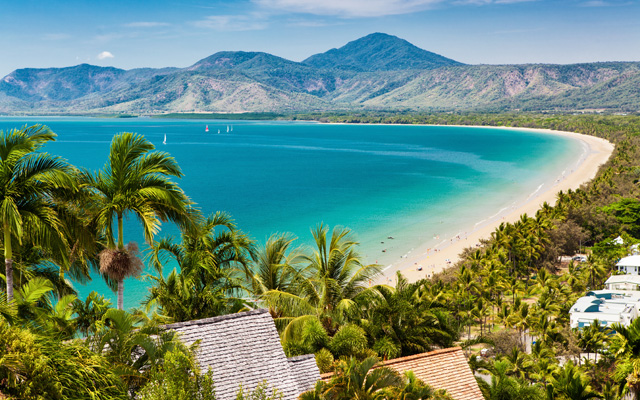
Queensland state will ease border restrictions from December 13; Port Douglas, Queensland pictured
Fully vaccinated interstate travellers can arrive by road or air, and must provide a negative Covid test in the previous 72 hours. They will not need to serve quarantine.
Fully vaccinated International arrivals must provide a negative Covid test within 72 hours of departure for Queensland, and fulfil a test on arrival. These travellers are required to serve a 14-day home or hotel quarantine.
Travellers no longer have to wait two weeks to be considered fully vaccinated; one is enough. However, all travellers from hotspots must get a test on day 5 after their arrival.
Vaccinated border zone residents will also be allowed to move freely across the border without the need for a PCR test.
Unvaccinated residents will continue to face travel restrictions.
“We will live with Covid – but on our terms,” Palaszczuk said.
Only fully vaccinated people will be permitted to enter pubs, clubs, cinemas, festivals and theme parks in Queensland from December 17.
The Tourism Promotions Board (TPB) Philippines is putting together a MICE Ambassadors Programme, tapping Filipino association executives as frontrunners when it comes to securing and bidding for international events.
TPB has indicated it will provide special support through the planning to bidding stages, as well as the actual running of the event. Arnold T Gonzales, TPB’s acting head MICE department, said this was part of the government’s efforts to revitalise business events.
Filipino association executives will be tapped as frontrunners to help secure international events for the Philippines
Gonzales further disclosed – at the 9th Summit of the Philippine Council of Associations and Association Executives (PCAAE) – that bid assistance would vary depending on the magnitude of the bid. Moreover, there is already an existing MICE Plus programme which planners will be able to tap onto for technical and financial assistance.
PCAAE founder and CEO Octavio Peralta pointed out that since the early days of the association, it already had its own TAP-In (TPB Ambassadors Program to Attract International Events to the Philippines) in place.
“In essence, TAP-In is encouraging our members with international affiliation to promote the country as a destination for MICE events,” Peralta noted.
He added that TPB should provide “all-out support to the MICE industry” by being a “total partner”, and not just “a provider of service”.
This means that associations should be able to receive assistance from the bidding process right through the conducting of the event, significant financing help, as well as in-kind support prior, during, and after the event.
Peralta suggested that support could include information on travel, health and safety, destination and venue options, travel visa facilitation, courtesy lanes at the airport, delegate and sponsor generation, as well as post-tourism options.
Groups of 12 or more travellers can explore destinations in a safe bubble made possible by Trafalgar’s customised mini group tours, which come complete with a dedicated On-Road Team – including a travel director and driver – trained in physical distancing, hygiene and medical protocols, as well as destination expertise and local knowledge.
Travellers can pick from over 300 award-winning group tours;Budapest’s 19th-century Chain Bridge pictured
Aimed at Singapore residents looking to take advantage of the Vaccinated Travel Lanes (VTLs), the private trip can be crafted on a wide array of destinations with little or no surcharge on the original itinerary price.
Travellers can choose from over 300 award-winning group tours offered by Trafalgar, covering destinations such as Spain, Ireland and Hungary.
Trafalgar has updated its vaccination policy, requiring all guests to be fully vaccinated for guests’ peace of mind. In addition, the company’s wellbeing director will ensure that the establishments and locations to be visited comply with local health and safety protocols.
In the event of travel advisory changes, Trafalgar also offers free cancellation and booking changes.
London-based MBB-Consulting Partner Group has launched a commercial audit service to help event companies address performance concerns through the expertise of its international team.
The commercial audit service takes a deep-dive analysis of an event business’s current operations, with the objective of identifying practical steps to significantly improve its commercial performance. It will scrutinise various areas of operations, such as sales and team culture, systems and process integration, and financial and price planning. The results can then be referenced and compared to international benchmarks and industry best practice.
The commercial audit service is backed by research and business expertise
The group believes that this service is particularly timely as companies seek to emerge stronger from the disruption caused by the pandemic.
Matthias Baur, one of the founding members of the MBB-Consulting Partner Group, also believes that the events industry has been held back by underperformance.
He added that the service’s “unique blend of incisive research capabilities combined with a deep understanding of the practicalities faced by events businesses” will able the group to deliver “market leading results”.
The service is designed specifically for exhibition organisers and venue owners.
Covid-19’s economic impact on local communities have led to a spike in theft from hotel rooms as well as crime in and around hotel precincts, which were already increasing prior to the pandemic.
Here are nine tips to help business travellers guard against opportunistic offenses.
Having a safe hotel stay requires advance planning and preparation
The surprising item every traveller should pack – and it fits in the smallest part of your suitcase
Crimes could be thwarted with something as simple as a doorstop. Even in the modern era of high-tech surveillance and monitoring, the humble doorstop can still hold its own. When wedged under the door, it
can provide enough of a deterrent to make the thieves reconsider.
Doorstops with an inbuilt alarm – which can be as loud as a fire alarm – can scare off any would-be thief.
Think about those valuables when packing and storing
Travellers should reconsider the need to take expensive items along for the ride, leaving valuable and attractive items at home. If valuables must be brought on the trip, beware of storing valuables in hotel safety boxes, as some can be carried out of the room.
Location, location, location
Enhance one’s security by requesting a room between the third and sixth floor of a hotel, as this minimises the ability for thieves to climb onto balconies and through a window, but puts the guest still within reach of most fire ladders in case of emergency.
In addition, prioritise hotels that require a key/card to access guestroom levels. Do note that levels with hotel bars are usually accessible by the general public, so where possible, ask for a room away from general entry areas.
Be aware of your surroundings
Use one’s powers of observation to keep safe. Pay attention to emergency exits and fire escapes, and note how many steps they are away from one’s door to enable evacuation under heavy smoke, total power loss or a large-scale criminal act targeting the hotel.
At the same time, observe people in the hotel foyer – some may be paying extra attention to guests that they intend to mark out as a potential target of crime.
Pack a ‘go bag’
Get into the habit of packing a ‘go bag’ with essentials such as drinking water, non-perishable food items, a small first-aid kit and important documents. This bag could help one survive until help arrives.
Prevent unwanted visitors
In World Travel Protection’s travel risk training, clients are advised not to state their home address at reception; if one is travelling for work, provide the company’s details instead.
It is also prudent to have the reception staff write down one’s room number instead of speaking it out aloud.
Further, book a room next to the elevators to minimise the risk of being cornered at the end of a long hotel corridor.
Consider cyber security
The World Travel Protection team recommends avoiding hotel Wi-Fi use; instead utilise a Wi-Fi dongle or other hot-spotting device for increased cyber security. Only store on your computer what you need for your trip to minimise data that can potentially be stolen or breached.
Choose a hotel that is suitable for a long-term relationship!
Planning ahead is essential for a safer and more comfortable travel experience, and that includes picking the right accommodation.
Properties with windows that can be opened, and which offer good ventilation are a good bet. Travellers must consider the possibility of contracting the virus while on their trip, which could potentially mean an extended stay at their hotel. In case one has to be isolated for a period, be mindful of booking a room that is comfortable and has space to move.
Be risk aware
Businesses with staff travelling internationally should undertake risk assessments, including on destinations, accommodation and personnel who are travelling.
However, the onus is also on the individual staff member to look after their own safety. Consider offering travel risk training for staff who must travel frequently, so that they can learn to be risk aware and informed, and be able to recognise anything unusual.
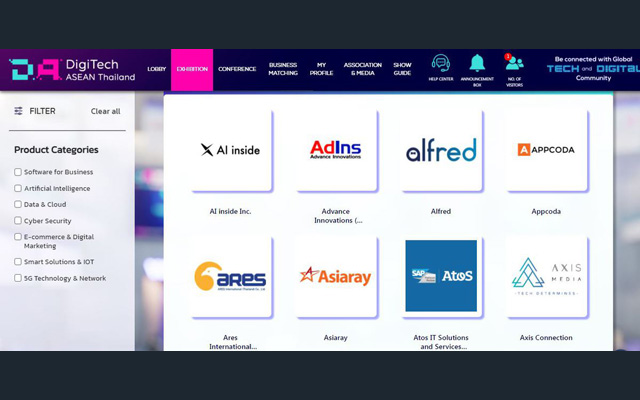
DigiTech ASEAN Thailand featured an online tradeshow, educational webinars, business matching meetings, and more
Event brief
Ongoing Covid-19 restrictions have forced DigiTech ASEAN Thailand, an important digital industry exhibition and business platform organised by IMPACT Exhibition Management Co, to be staged in a fully digital format for the second year in a row.
The edition drew support from many national and international organisations, such as Thailand’s Ministry of Digital Economy and Society, Hong Kong’s Event Technology Association, Japan Network Security Association, and Taiwan Electric & Electronics Manufacturers Association. Altogether, more than 100 tech and digital participating companies from countries such as Thailand, South Korea, Hong Kong, Singapore and Indonesia were in attendance, alongside 3,500 online attendees from 28 countries.
Event highlights
DigiTech ASEAN Thailand 2021 bore the theme, Connecting you with the global tech and digital community, and promised to bring together business and knowledge that help shape the digital future.
The event saw participating companies showcasing their latest business solutions, covering tech profiles such as business software, artificial intelligence, cyber security, e-commerce & digital marketing, data & cloud, smart solutions & IoT and 5G technology & network.
There were also more than 60 webinars with topics touching on the latest industry trends and strategies conducted by industry experts and professionals in English and Thai. Other online activities such as seller-buyer business matching meetings, live video product demonstrations and on-demand video presentations provided attendee engagements.
Challenges
According to show organiser IMPACT, one of the key challenges in putting the event together was the need to “quickly acquire new skill sets, competencies and understanding of technology to create a digital twin of the physical event that can meet the needs of face-to-face activities while at the same time, offer values for customers”.
The perceived value of virtual platforms remained relatively poor as compared to in-person platforms, the spokesperson noted, adding that there was still a human need for physical interactions that technology could not replace.
“Nevertheless, the prolonged pandemic without any full resumption of physical events over the last two years, has somehow hasten the adoption of digital platforms. These digital platforms serve as event marketing alternatives for companies to continue to do business, promote their brands, maintain customer relations, stay connected with industry peers and get updated on market trends,” said the spokesperson.
IMPACT drew on lessons learnt from the first digital edition of DigiTech ASEAN Thailand and were able to work with its technology vendors to offer a user-friendly digital platform that enhanced the business exchange and networking experience for participants and delegates.
The platform also served as an effective alternative market platform for participants to continue with their business activities in the digital sphere, especially in business, knowledge and networking exchanges.
Event DigiTech ASEAN Thailand 2021 Organiser IMPACT Exhibition Management Co., Ltd Date November 24 to 26, 2021 Attendance 100 participating companies from Asia; 3,500 online delegates from 28 countries
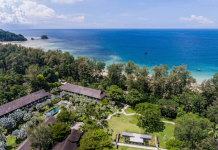
Just 10 minutes from Phuket International Airport on the serene northern coast, this 178-key, Bill Bensley-designed resort offers delegates a quiet, tropical paradise steeped in Phuket’s tin-mining heritage
The newly-opened Ritz-Carlton, Bangkok anchors the One Bangkok development with cosmopolitan elegance. Featuring the city's largest ballroom and a spectacular new penthouse suite, it delivers exceptional hardware and deeply authentic, soulful service for business and leisure travellers alike
Behind the imposing, Brutalist concrete that defines Zurich’s Oerlikon district lies a surprising secret. While its exterior honours the neighbourhood’s industrial roots, stepping inside Mama Shelter reveals a vibrant, neon-soaked world that is a far cry from its rigid shell













Industry leaders speaking at the Indonesia MICE Outlook 2022 last week in Bali have expressed optimism in the country’s business events future, with confidence stemming from a schedule of international events as well as strong domestic appetite for local meetings.
The Indonesia MICE Outlook 2022 was organised by the Ministry of Tourism and Creative Economy.
Raty Ning, chairman of ICCA Indonesia, said 30 international events are scheduled to take place in 2022, and among them are the 2022 G20 Bali summit, the 7th Session of the Global Platform for Disaster Risk Reduction, and an Asian Venture Philanthropy Network meeting.
She expects the G20 summit to spin off even more government-led meetings and events with in-person attendance, while the country continues to benefit from a strong showing of domestic business events.
“The year will be more exciting if the government could provide financial incentives to local associations to (encourage them to) organise events, such as annual scientific meetings and national deliberation,” she added.
Raty hopes government offices will also hold events around the country to fill available spaces and spread out the economic benefit of meetings and events.
Gary Grimmer, CEO, GainingEdge, opined that Indonesia’s recovery, along with the strength of her domestic market, was “in line with the prediction that at the end of 2021 the industry will start to move, and in 2022 it will increase as the regional market recovers”.
However, he expects global meetings to only resume in 2023.
Commenting on 2022 event trends, Grimmer said virtual and hybrid meeting formats will continue to play an important role as they allow organisers to reach larger audiences, allow for an integrated virtual contingency plan, and increase revenue.
“Future options may include multi-channel content to form a larger global event,” he added.