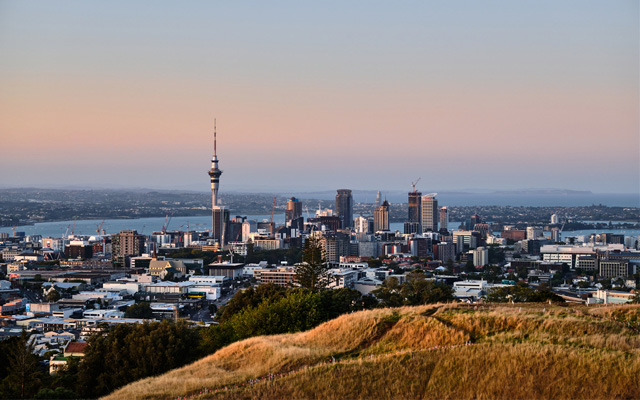
The Back in Business plan a package of initiatives to assist small businesses in the tourism, hospitality and events sectors; Auckland pictured
The New Zealand National Party has released a detailed Back to Business plan to support the ailing tourism, hospitality and events sectors in the wake of Covid-19.
Specifically for the events sector, National’s proposal would target unspent money from the NZ$50 million (US$36 million) Regional Events fund to establish an insurance scheme for major events. This would allow major events, such as festivals and concerts going ahead with confidence, avoiding the significant financial losses incurred by organisers, customers and suppliers.
National’s Back in Business plan comprises initiatives to assist small businesses in the tourism, hospitality and events sectors; Auckland pictured
Business Events Industry Aotearoa (BEIA) has welcomed National’s Back to Business plan which would see the government fund the premium for events industry insurance cover.
BEIA chief executive, Lisa Hopkins, shared that she was “pleased to see National’s wider plan”, which “acknowledges the devastation” the business events industry has felt.
Previously, the Government rejected an industry-led proposal to support the NZ$1.5 million premium cost, either directly or through the Regional Events fund, for a NZ$20 million policy cover.
“We had been working on this proposal with our partners EventCover since the end of last year and were able to negotiate with Lloyds, however, the idea was rejected by the Government.
“The business events sector has lost 78 per cent of its value since Covid. Despite this, many businesses have stayed open, albeit with significantly reduced staff and – for the small businesses – off the back of investments and savings,” she elaborated.
Other proposals targeting the larger tourism industry include letting hospitality businesses extend outdoor seating into public spaces wherever safe and practical for the next six months, and providing dine and discover’ vouchers worth NZ$100 to every fully vaccinated adult (18+), which can be spent at any hospitality, accommodation, or tourism business in the country over the next six months.
“Before Covid, tourism was our largest export earner, worth NZ$41 billion to the New Zealand economy and employing more than 400,000 people.
“Tourism, hospitality and events businesses have been badly affected by Covid-19. If they are to contribute to New Zealand’s rebuild, we need them to survive. National is calling on the Labour Government to adopt our plan and support these important Kiwis and their businesses,” National’s spokesperson for tourism and small business Todd McClay said.
The much-needed investment will help revive business events, and the tourism ecosystem at large
New South Wales (NSW) has announced a massive shot in the arm worth more than A$530 million (US$397 million) that will help revive events across the state, according to Business News Australia.
Many elements of the Covid-19 Economic Recovery Plan will benefit business events.
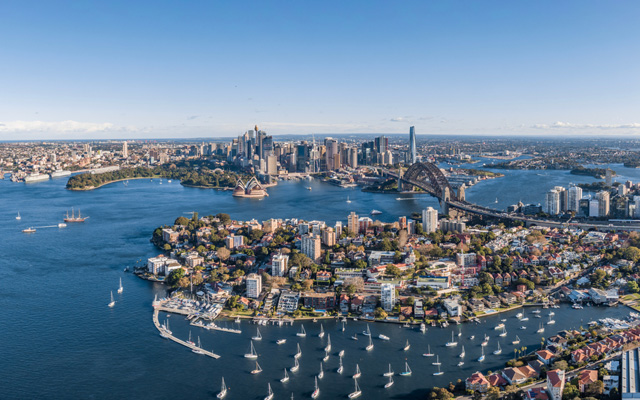
The much-needed investment will help revive business events and the tourism ecosystem at large; Sydney pictured
The A$60 million Aviation Attraction Fund to incentivise international airlines to re-commence flights to Sydney, which will support high-yielding international events and international delegate attendance.
The A$150 million to support the recovery of major event activity across the state including A$50 million for a Regional Events Package to support major events, festivals, agricultural shows and community events across the regions.
The A$250 million for the expanded Stay & Rediscover scheme provides a A$50 voucher to all NSW adults to redeem at accommodation premises across NSW. This supports overnight hotel stays for event attendance.
The A$6 million to bring business events back to Greater Sydney, Newcastle and Wollongong.
The A$50 million will provide immediate support to organisers if events are cancelled or disrupted by any public health order during the 2021-22 summer.
There will also be A$25 million dedicated towards commercial and not-for-profit festivals; as well as A$10 million put towards a Recovery Marketing Campaign.
Business events stakeholders have welcomed the announcement, and have are ready to help rebuild business confidence and incentivise event organisers.
Geoff Donaghy, CEO of ICC Sydney, said the announcement of the funds is “well-received”, and will help “turbocharge the local visitor economy”.
Meanwhile, BESydney CEO Lyn Lewis-Smith said the funding announcement was a great outcome for Sydney’s business events industry.
Lewis-Smith added: “With restrictions continuing to ease, Sydney is coming back to life and the funding will continue the positive momentum that we are starting to see. People are excited about reconnecting with friends and family and the prospect of travel as borders open. We can’t wait to see that same confidence now flow through to business and to welcome our national and global business delegates back here soon.”
BESydney will administer the funding programme in conjunction with Destination NSW, on behalf of the NSW Government. Matched funding will be available by application in rounds, commencing in late November 2021. Events eligible for funding are conferences, conventions, symposia, congresses, seminars, training courses, trade exhibitions attracting a minimum of 100 delegates to a venue for a gathering of at least one day’s duration.
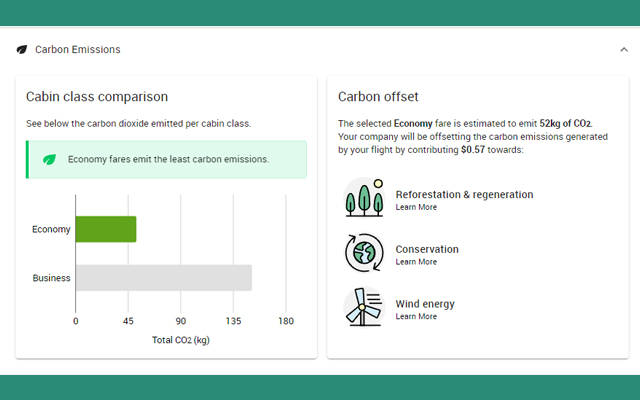
Serko Limited, a company dealing in travel and expense management for business, has launched Mission Zero, an initiative to drive meaningful reduction in the environmental impact of business travel.
The Mission Zero capability in its travel booking system Zeno empowers business travellers to make informed booking choices by displaying the carbon offset data associated with flights within the booking flow, prioritising lower emission rental car options, and providing customers with the ability to offset emissions for a net-zero travel programme through an integrated selection of targeted environmental programmes.
Zeno
1 of 3
Business Class seat
Economy Class seat
Rental cars
With travel contributing around eight per cent of global CO2 emissions, delivering a cleaner travel programme is now a key priority for many travel managers.
Benson Tang, executive director of Corporate Travel Community described the challenge: “In a recent CAPA survey, 74 per cent of travel managers in the Asia Pacific region have told us that sustainability will play an important role in their corporate travel programmes in the next 12 months, and yet for many, it remains difficult for their travellers to make informed decisions when it comes to booking more environmentally friendly options.”
Jo Phipps, Head of Product for Zeno, said, “At Serko, we believe that for a sustainable business travel programme to be realised, individual travellers need to be able to understand how their choice of travel impacts their carbon emissions. Mission Zero visually highlights personalised carbon offset data according to the aircraft and class of travel within the Zeno booking flow so that travellers can make better choices and facilitate the path to a carbon-neutral travel programme.”
Serko has partnered with Tasman Environmental Markets (TEM) to integrate BlueHalo, an end-to-end technology solution that enables travellers and businesses to offset their travel. Through this partnership, Zeno can instantly calculate and offset the emissions of a journey.
Mission Zero will be available to Zeno users globally during 4Q2021 and can be activated by contacting a certified Zeno reseller travel management company.
IWG, a provider of flexible workspaces, has officially opened a new Regus centre in CapitaLand’s PLUS building at 20 Cecil Street, Singapore.
IWG will be bringing 2,044m2 of flexible workspace under the Regus brand to the heart of the CBD. Spanning two floors in the 28-storey building, Regus at PLUS Building will mark the Regus brand’s 16th centre in Singapore, growing IWG’s local portfolio to 25 centres across four brands – Regus, Signature, Spaces, and No.18.
Regus at PLUS Building
1 of 2
Booths
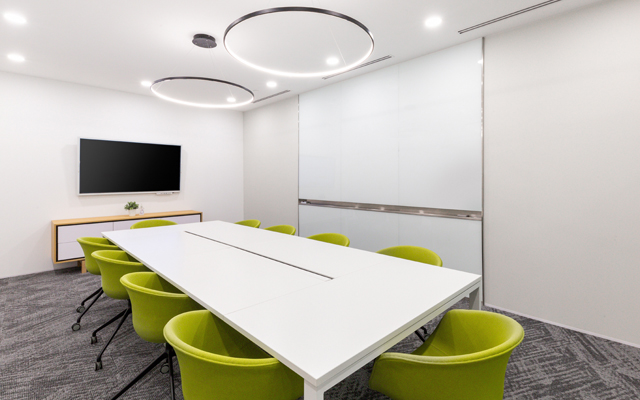
Large Meeting Room
The expansion comes against the backdrop of global economic reopening and the establishment of dedicated travel lanes, as Singapore seeks to maintain its hub status for businesses in the region through a steady shift towards the “new normal”.
Darren Rogers, country manager for IWG in Singapore, revealed: “We saw strong recovery when workplace restrictions were lifted back in mid-August, with IWG centre visits increasing by over 65 per cent in September from the month before. This proves that there is a healthy appetite for a return to office if workers were given the flexibility to choose where to work.”
“As the CBD looks to regain its buzz and more businesses consider offering hybrid work models for their employees, demand will continue to return to these areas. As a business, we are confident that flexible workspaces play a key role in enabling the future of work and will continue to scale up to provide employees, businesses, and landlords with more options”, Rogers added.
Beyond the city-state, IWG has also expanded its footprint in South-east Asia, having recently opened new centres in Indonesia and Malaysia.
There are three new locations in Jakarta – Signature South Quarter, Regus Jakarta JB Tower, and Signature Menara Astra. Over in Malaysia, there are two new openings as part of a franchising deal with Sheng Tai in Regus MetraSquarem and Spaces the Sail Melaka
“South-east Asia is a key region for IWG’s growth. As part of our long-term strategic plan, we believe that these new locations will support the growing demand for hybrid work post-pandemic, and will open up more possibilities in the future for flexible workspaces,” Rogers added.
Uniplan has promoted Judd Christie to managing director, Hong Kong with immediate effect.
In his new role, Christie will lead the growth and development of Uniplan Hong Kong office and continue pushing forward the agency’s transformation process from a live communication to a full-service brand experience agency. He will be reporting directly to Geraldine Chew, CEO, Greater China.
The creative professional possesses over 20 years of experience working across the Asia Pacific region. Since he joined Uniplan in 2018, Judd has achieved great results in leading the team to create unique brand experiences for diversified clients.
With Christie in this new role, the company is currently in the recruitment phase for a new lead for the creative team in Hong Kong.
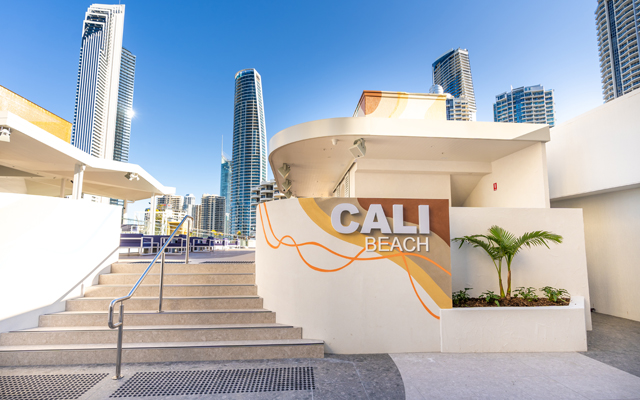
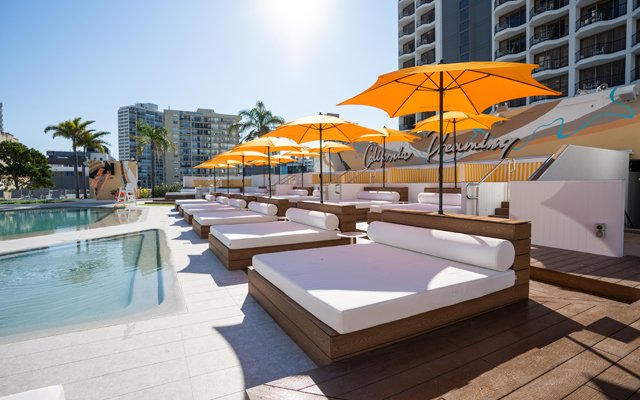
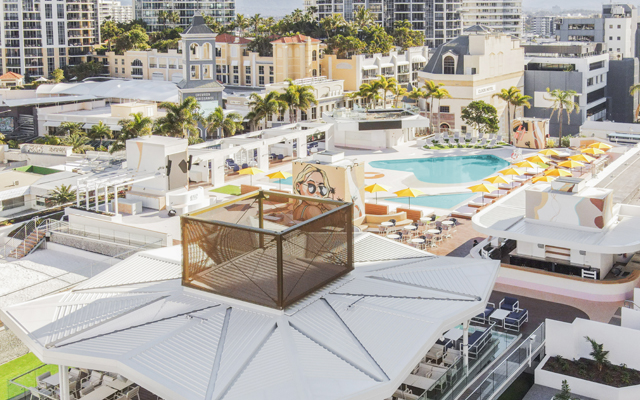
Artesian Hospitality has opened an international mega lifestyle and entertainment rooftop precinct – Cali Beach Club – in Australia’s Gold Coast in October 2021.
Cali Beach Club
1 of 4
Cali Beach Club will be located in the heart of the Gold Coast in Surfers Paradise, on the corner of Surfers Paradise Blvd and Elkhorn Avenue. The brand-new entertainment destination is four stories above street level and boasts an outlook over Surfers Paradise beach and unparallel views of the Surfers Paradise skyline.
The 5,000m2 venue offers several open-air spaces, and fine-dining restaurants, for events. There will also be facilities such as a rooftop sand covered volleyball court, four swimming pools, exercise areas, multiple bars, and a beachside outdoor cinema.
Contact Rachel.m@artesiancorp.com for more information.
Ann Siang House, part of The Unlimited Collection by Oakwood, has reopened with long-stay accommodation for flexible living.
Each of the property’s 16 rooms and studio apartments come fully-furnished with artwork pieces and smart features. Ann Siang House also features an on-site complimentary launderette, and a communal pantry with a kitchenette that is furnished as a lounge to relax in.
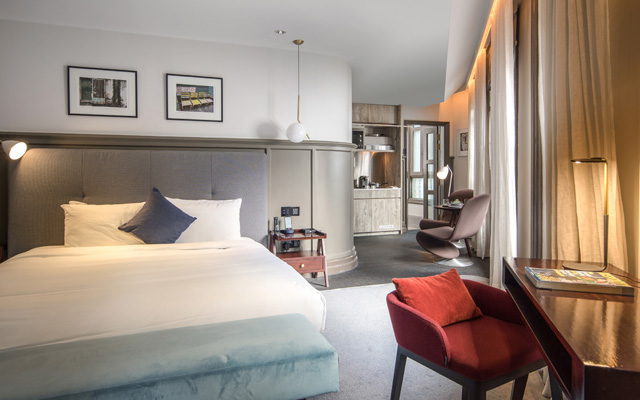
Studio Premier Room with Kitchenette
There are also several culinary offerings in the building. These include The Coconut Club which serves nasi lemak, Blue Label Pizza & Wine, a neighbourhood pizzeria and The Other Roof, a bar known for its tea-finished spirits.
Operational standards, including Oakwood Clean360, will be implemented as part of the group’s mandatory global programme which ensures a safe and secure sanctuary for all guests.
To celebrate its reopening, Ann Siang House is offering up to 30 per cent off Best Flexible Rates for the following packages with a minimum 30 nights’ stay.
For a length of stay of one to three months, the monthly rate is S$3,900 (US$2,899). For four to six months, the monthly rate is S$3,600, and for six months and up, the rate will be S$3,400.
Rates include access to AnyTime Fitness Cantonment; weekly wine-down bottle (House Red/White); S$300 worth of Maxi Coffee Bar vouchers, complimentary Wi-Fi, complimentary launderette, unlimited usage utilities, and complimentary housekeeping once a week.
St. Regis Hotels & Resorts is planning to debut 11 new properties by 2025 within in destinations such as Bermuda, Mexico, Morocco, Aruba, China, the Dominican Republic, Oman and Qatar.
Expanding its footprint in Mexico, St. Regis is expected to debut The St. Regis Kanai Resort in 2022 and The St. Regis Los Cabos Resort in 2023. Located in the Mayan Riviera, The St. Regis Kanai Resort will feature ocean views from every vantage point, with plans that call for 124 guestrooms and suites, as well as 32 villas with private pools.
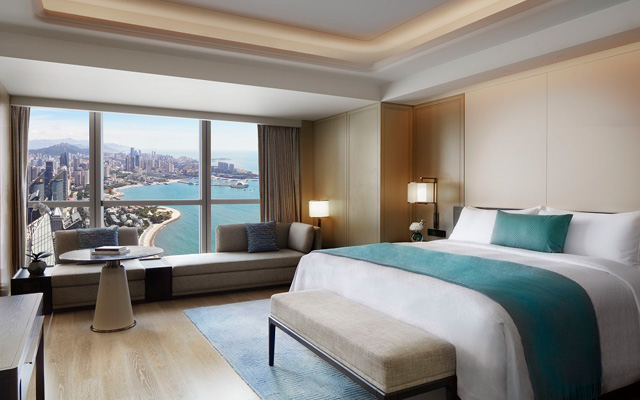
The St. Regis Qingdao
The St. Regis Los Cabos Resort will be located in Quivira, Los Cabos, featuring panoramic coastal views. The resort is expected to offer 120 rooms and 60 residences, as well as a spa, golf course, beach club and three dining experiences.
In the Middle East, the brand plans to grow its presence in Qatar with the early 2022 opening of The St. Regis Marsa Arabia Island, The Pearl, which will feature architecture influenced by the Andalusian and Arabesque style and offer views of the Arabian Gulf.
With a continued focus on the Caribbean in the coming years, in 2024 St. Regis is expected to debut in Aruba with The St. Regis Aruba Palm Beach Resort, as well as in the Dominican Republic with The St. Regis Cap Cana Resort.
The brand also anticipates celebrating its entry into Oman in 2024 with The St. Regis Al Mouj Resort in Muscat. Additionally, St. Regis is expected to open a property in Africa, with the debut of The St. Regis Marrakech Resort slated for 2025.
Most recently, in August 2021, The St. Regis Qingdao debuted, featuring 233 guestrooms designed to pay homage to the destination and welcomes guests to enjoy one of China’s most beautiful coastal cities. Travellers can experience cobbled streets and heritage German architecture, or they can relax at one of the beaches facing the Yellow Sea.
St. Regis currently has 49 open hotels and resorts today, with 29 hotels and resorts in its pipeline, representing expected growth of nearly 60 per cent over the next five years in both urban and leisure destinations.
uring the meeting, stakeholders will be discussing how to reinvigorate the region’s business events industry and reboot inter- and intra-regional business travel.
Strong support and assistance to continue despite tepid take-up
Numerous challenges abound for large-scale events organisers
Smaller, corporate events appear more promising
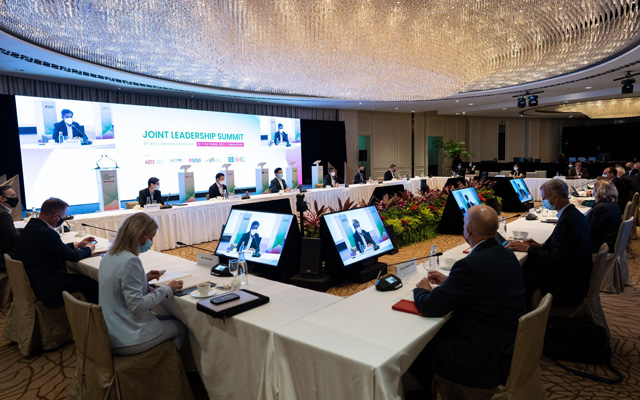
During the meeting, stakeholders discussed how to reinvigorate the region’s business events industry and reboot inter- and intra-regional business travel
More than 15,000 people have attended over 140 business events in Singapore since the launch of the Safe Business Events framework in July 2020. From just 50 attendees, up to 1,000 fully vaccinated participants (predominantly seated, as in conferences) may now attend, or 500 non-seated and moving around (exhibitions).
At the Joint Leadership Summit at Fullerton Hotel from October 5-7, 2021, of the 22 global event organisers, trade association leaders, tourism bureau chiefs and government ministers, 17 came from overseas: the UK, US, Dubai, Netherlands, Switzerland, Philippines and Indonesia.
Karena Bauer, chairperson of the Association of Event Organisers (UK) said: “We are grateful to Singapore Association of Convention & Exhibition Organisers & Suppliers (SACEOS) and Singapore Tourism Board (STB) for enabling this leadership summit to take place”.
Indeed, STB facilitates the entry of short-term international business events travellers on a pilot basis, with health and safety measures in place for such participants.
Poh Chi Chuan, STB’s executive director, exhibitions & conferences, explained: “Under the Ministry of Health’s current guidelines, selected groups of travellers are allowed to enter for essential business, official or work purposes with stepped-down protocols; we manage the risk through strict quotas, and by requiring them to undergo regular Covid-19 tests during their stay, including before departure and upon arrival.”
These travellers must be fully vaccinated with a WHO-approved Emergency Use Listing Procedure list vaccine, and are not required to serve the ‘stay-home notice’ if they are to be in Singapore for less than 14 days upon arriving.
Poh added: “We are taking a risk-calibrated and phased approach to resumption, and upcoming events will be platforms for event organisers to further finetune safety measures and protocols, as well as testbed new innovations to put us on a strong footing for recovery. These include safe itineraries for foreign participants, digital enablers and hybrid event formats, with the necessary safe management measures in place.”
The no-quarantine Vaccinated Travel Lanes (VTLs) from 11 countries – including the US, Canada, UK and several in Europe – supplement the reciprocal green lane with China and air travel pass with the Greater China area. But will they boost attendance at business events?
While some intermediaries and suppliers are hopeful, event organisers are less sanguine, as there are at least eight sizeable physical business events happening in November and December.
Perhaps the reopening came too late, or foreign business events delegates aren’t aware of special arrangements and waivers for selected countries. Some apprehension may be due to the spike in virus infections – Singapore’s seven-day moving average hovers around 3,000 cases – and the high cost of insurance premiums and virus tests.
Moreover, there are few flights and limited flight capacity, and the VTL scheme caps arrivals at 3,000 pax a day. Hotel room rates are also high, perhaps due to staycations, while dining out and attraction capacities are subject to change.
Barely two months before the already-deferred Speciality & Fine Food Asia and co-located shows in December, Montgomery Asia decided to postpone them to June 2022.
“Despite Singapore’s high vaccination rates and the nation transitioning towards an endemic approach, the current measures for tradeshows remain extremely restrictive and without confirmation on whether food and drink sampling will be allowed onsite, we feel that it is only fair to all our partners and participants to defer the shows until 2Q next year,” the PEO said.
Conference & Exhibition Management Services (CEMS) has three upcoming events: Café Asia, Architecture & Building Services (ABS) and Singapore International Jewelry Expo, all at Marina Bay Sands (MBS).
CEMS’ managing director Edward Liu said: “Our tradeshows attract certain categories of trade visitors and buyers. Most businesspeople make plans in advance when they choose to visit trade exhibitions and conferences. We are not seeing inquiries to participate in or visit our events, notwithstanding the recent relaxation of travel restrictions.
“Due to the prolonged period of uncertainties over the Covid-19 situation and staggered reopening in Singapore, most of our past exhibitors and trade visitors have adopted a wait-and-see attitude as they monitor the situation in Singapore and worldwide. Consequently, most of them have decided not to take part in our events for this year.”
Nonetheless, CEMS is transmitting the latest information to past exhibitors and trade visitors from abroad, to shore up business for 2022.
For Industrial Transformation Asia Pacific at Singapore EXPO from November 22-24, organiser Constellar will get the latest updates on safe travel lane arrangements from STB and work with travel partners to offer comprehensive packages to facilitate participants’ needs, such as bookings for Covid-19 tests, accommodation, transfers and optional visits to leisure attractions.
“We aim to maximise meaningful participation, including tours to key Industry 4.0 innovation centres and smart factories, and piloting new formats and initiatives, such as removing zoning for participants at the exhibition hall and automated cleaning solutions at regular timings,” said James Boey, executive director (markets), Constellar.
Corporate events look promising. The Milken Institute Asia Summit will convene at MBS on November 15-16, targeting 250 in-person attendees from around the world. It is a partner event of the Singapore Fintech Festival.
More than 300 delegates from 51 countries are also expected to attend the Bloomberg New Economy Forum at Capella Singapore on November 16-19, including present and past global political and business leaders.
TRM requires that organisations anticipate and assess the potential for events, develop treatments and communicate anticipated risk exposures to their travellers
The new ISO 31030:2021 travel risk management (TRM) guidance for organisations, which was published in September, is being touted as the first truly global standard checklist for corporate travel.
TRM specialists, speaking at last week’s CTC (Corporate Travel Community) Masterclass ISO Standard: 31030 – TRM, urged corporates preparing for the return of business travel to implement the new standards for duty of care among all stakeholders.
TRM requires that organisations anticipate and assess the potential for events, develop treatments and communicate anticipated risk exposures to their travellers
Bob Quick, executive director and founder, Global Secure Accreditation, commented organisations should integrate TRM activities with their respective teams and stakeholders would include risk management, security, human resources, occupational health, legal, procurement, IT, TMCs and their supply chains.
Todd Handcock, president, Asia-Pacific, Collinson Group, said it was critical for businesses to prepare as 3Q vs 2Q survey results showed corporate travel managers (CTM) were more pessimistic about how soon pre-pandemic travel levels would return.
Handcock advised CTMs to take a “holistic approach” and steps taken should include pre-trip risk assessment, vaccinations, providing physical and mental support and gathering post-trip feedback for future trip planning.
Also important, he added, was effective communication, as he noted that 51 per cent of travellers before the pandemic did not know what TRM support from the company was available during a trip.
Agreeing that safety and security support are top priorities, Quick observed: “There is rising anxiety among leisure and business travellers. Confidence (to travel) is now more important than ever.”
To help raise confidence, Quick said all suppliers to be accredited should satisfy ISO 31030 guidance as the “baseline”, while Handcock pointed out that a TRM system had to provide “evidence-based solutions”.
Do not substitute “assumption for assessment” in a world that is increasingly unpredictable, Quick quipped.
Benson Tang, executive director, CTC who moderated the discussion, said a global TRM standard was long overdue, and analysing travel risk threats was “massive, complex and challenging”.
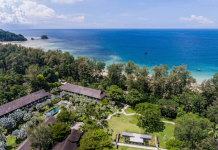
Just 10 minutes from Phuket International Airport on the serene northern coast, this 178-key, Bill Bensley-designed resort offers delegates a quiet, tropical paradise steeped in Phuket’s tin-mining heritage
The newly-opened Ritz-Carlton, Bangkok anchors the One Bangkok development with cosmopolitan elegance. Featuring the city's largest ballroom and a spectacular new penthouse suite, it delivers exceptional hardware and deeply authentic, soulful service for business and leisure travellers alike
Behind the imposing, Brutalist concrete that defines Zurich’s Oerlikon district lies a surprising secret. While its exterior honours the neighbourhood’s industrial roots, stepping inside Mama Shelter reveals a vibrant, neon-soaked world that is a far cry from its rigid shell