The IATA has appointed Willie Walsh as director general, succeeding Alexandre de Juniac.
Walsh was confirmed as IATA’s 8th director general by the 76th IATA Annual General Meeting on November 24, 2020. He joins IATA after a 40-year career in the airline industry.
Walsh retired from the International Airlines Group in September 2020, after serving as its CEO since its inception in 2011. Prior to that, he was CEO of British Airways (2005-2011) and CEO of Aer Lingus (2001-2005). He began his career in aviation at Aer Lingus in 1979 as a cadet pilot.
Walsh is deeply familiar with IATA, having served on the IATA Board of Governors for almost 13 years between 2005 to 2018, including serving as chair (2016-2017). He will work from the association’s executive office in Geneva, Switzerland.
“My goal is to ensure that IATA is a forceful voice supporting the success of global air transport. We will work with supporters and critics alike to deliver on our commitments to an environmentally sustainable airline industry. It’s my job to make sure that governments, which rely on the economic and social benefits our industry generates, also understand the policies we need to deliver those benefits,” said Walsh.
Cairns & Great Barrier Reef is where two of the most biodiverse places on the planet collide in a spectacular natural fusion. A tropical region home to the oldest rainforest, the largest coral reef system and two Indigenous cultures.
Every element of your business event is close by; walk to meetings alongside the Coral Sea, lunch under swaying palm trees, transfer through the oldest rainforests, and dine in the cane fields.
Genuine connections to the community and the environment can be made through activities that include the ancient stories of Traditional Owners and operators who nurture the region’s World Heritage areas.
Lose yourself in spectacular events and embrace our tropical landscape, discover new learnings and allow delegates to reconnect with each other and with themselves.
River Drift Snorkel - World Heritage Rainforest
An evolving destination
Cairns & Great Barrier Reef is an Australian regional area with the business events infrastructure and industry professionalism to successfully compete with major capital cities as a global meeting destination. With a small population base, wide open spaces and one of Australia’s leading regional international airports, our region is highly desirable for conferences, meetings and events.
With events set to return from May, the new-look Cairns Convention Centre sets a new benchmark for international and national conferences with the completion of its multimillion-dollar refurbishment in 2021 and expansion in 2022.
In recent years, major investments in the region have led to the development of new five-star resorts and hotels, revitalised off-site venues and new distinctive experiences, continuing to impress new and returning delegates.
Working alongside two world heritage areas, sustainability continues to be a priority for the destination with a myriad of eco-certified touring and activities. Leading the way is our Port Douglas Daintree region proven as a long-term leader in innovative and sustainable practices, with its renowned Ecotourism accreditation. Local event venues and operators are creating great initiatives that give back to the reef and their community, empowering delegates to leave greater as a human being.
There are endless opportunities to explore the region. Our pristine natural environment and our passionate people deliver memorable and enriching business events; ensuring every delegate leaves empowered through new learnings and enriched with genuine connections.
Cairns & Great Barrier Reef is the natural place to meet, ready and waiting to welcome visitors safely when international borders reopen.
Business Events Cairns & Great Barrier Reef supports meeting planners wishing to bring a business event to our breathtaking location. Visit our website or email businessevents@ttnq.org.au
SITE (Society of Incentive Travel Excellence) Thailand is working towards establishing an Asia Pacific (APAC) cluster, along with three other chapters, to increase partnership and engagement in the region’s incentive sector.
The other chapters are China, India, and Australia-New Zealand, and when combined, will have around 200 members. Globally, there are around 30 chapters formed in 90 countries, with a total of 2,500 members.
Boontawee Jantasuwan proposed the idea of an APAC cluster to better serve the region’s needs
The idea for the APAC cluster came about due to the distance limitations to the US head office and different demands that other regions had.
The brainchild of SITE Thailand chapter’s president Boontawee Jantasuwan, the added benefit of forming a regional chapter meant that the region will be able to hold events such as a SITE APAC conference. In addition, the four chapters would be in a more competitive spot to bid for world-class events not just for the incentive sector, but for the MICE industry as a whole.
According to a 2018 study by Events Industry Council’s Global Economic Impact, incentive travel accounted for around seven per cent of business event activities, and estimates the incentive industry to be worth around US$75 billion globally.
Boontawee further shared that the SITE Thailand chapter is currently working on a new indirect marketing video campaign, which will feature hospitality and service, urban living, and sustainability. It will be released over the next few months.
“This is one of the post-Covid-19 strategies we have planned for. The move will be presented to the international markets, (showing how) Thailand has adopted and dealt with the crisis and is now ready to offer something new for MICE travellers,” he elaborated.
has partnered with some of the leading international industry associations, visionaries and thought leaders to create a truly global four days of education
IBTM Events has pulled the curtains back on a new online event, IBTM Wired, which will take place from June 28 to July 1, 2021.
The event is a permanent addition to IBTM’s global portfolio of B2B events. It will bring professionals from across the world for four days of one-to-one business meetings, networking sessions, and a programme of live and on-demand education sessions curated by sector, skillset, and geographic location.
IBTM has partnered with leading international industry associations, visionaries and thought leaders for the education programme
The event platform, built by Sector Global, will be open 24 hours a day for the event’s duration so that the global community can tailor their schedule to their timezone.
Each day will provide key insights into a region, from industry outlooks to expert opinions that will help professionals discover new opportunities, expand their areas of focus, and get the latest information on each region’s recovery.
The schedule is as follows:
Asia Pacific (June 28) – IBTM has partnered with SACEOS (Singapore Association for Convention & Exhibition Organisers & Suppliers) to create SMF X IBTM Wired, which will see this year’s hybrid Singapore MICE Forum (SMF) integrated into the programme for IBTM Wired with an education programme that focuses on new ways of community engagement, design thinking and innovation.
North and South America (June 29) – The education programme will delve into how to deliver quality experiences and premium service.
Middle East and Africa (June 30) – The education sessions focusing on networking, data and analysis, and energy.
Europe (July 1) – The will explore power and success within learning and development.
IBTM TV, which launched at IBTM World Virtual 2021, will run a programme of live and on-demand education sessions that will provide learning experiences, inspirational ideas and the sharing of best practices. There will even be an IBTM Global World Tour playlist to add to the ambience.
“While there’s a huge demand for face-to-face events and we look forward to their return, it’s clear that there is a long-term place for high-quality online meetings”, said IBTM’s event manager Michael Jones.
“IBTM Wired will tap into the desire for year-round connections and will be a valuable and easily accessible touchpoint for existing and new customers from all over the globe who are looking to do business and network with their peers.”
Looking at the recent increase in possibilities for business travel, how feasible and airtight is the strategy of a business travel bubble?
Various processes and protocols have been implemented to minimise the risk of the virus spreading internally within the bubble and externally, into the community. These facilities are also testbeds for governments and immigration authorities to try out certain processes as they take steps towards the resumption of travel at a larger scale.
While the measures that constitute a business travel bubble are generally well planned and do mitigate risks, there is still a chance of virus transmission. Businesses will still require a robust and flexible travel policy to ensure the health and safety of the travelling workforce, and ensure that business operations remain resilient and productive no matter what threats arise.
Considering the safety measures for some of these bubbles that are already in effect, what foreseeable risks are still present?
Travel bubble measures and border arrangements will continue to undergo constant reviews as the global Covid-19 situation evolves, as evidenced in the changes in travel bubbles like that of Singapore and Hong Kong’s, as well as Singapore’s suspension of Reciprocal Green Lane arrangements with Germany, Malaysia and South Korea. These unexpected situations are likely to cause challenges for both employees and businesses, which will impact business productivity and overall workforce resilience.
In a survey conducted by International SOS in late August, we found that three major concerns that employees have regarding the resumption of travel include getting stuck in a destination country (81 per cent), adhering to varying guidelines on safety and health practices (57 per cent), and safety and hygiene levels in accommodation and transportation (52 per cent).
For a company sending its workforce overseas during this pandemic, why might the benefits of face-to-face meetings outweigh these uncertainties?
While many businesses have shifted to virtual meetings, which have been productive in the short term for some business functions, they are unlikely to replace physical meetings and business travel completely. One of the main reasons is that there is a big difference between a conversation and a relationship. Anyone can have a one-off chat on Zoom, but that is unlikely to convert into a longstanding business relationship or closing a large account.
In these situations where organisations deem it necessary to travel, it is important for businesses to be able to confidently assess the risk-based upon the most up-to-date and verified information, so that they can make an informed decision based upon their own risk-benefit matrix.
This will require regular surveillance of all potential health and security risks through trusted channels and having a plan of action in place to manage any disruptions. We have also been supporting our clients who are facing such situations by providing pre-trip planning and support, on-the-ground assistance when overseas, and safety protocols upon return.
Singapore is slowly working back up to large-scale events of 1,000 attendees or more, including the World Economic Forum. Considering the nation’s stringent measures, contact tracing and existence of bubble facilities, how realistic is this trajectory?
The feasibility of hosting large-scale events largely depends on the progress and success of smaller-scale events. If the protocols and processes for small-scale events prove successful in containing Covid-19 transmission, then it holds promise for other large-scale meetings, conferences and events.
Making this a reality will also require close collaboration between various industry players, to implement solutions that enable safe travel, swift Covid-19 testing and verification, and measures that protect the health and safety of all guests.
What would a robust and holistic travel framework of bubble facilities, and potentially large-scale travel bubbles in Asia, look like?
Travel bubbles and bubble facilities will likely be initiated in countries where transmission is controlled, and public health resources are not stretched. They will be based upon either public or public-private partnership infrastructure, with a layer of regulations implemented by the authorities based upon testing and verified vaccinations.
A robust and holistic business travel framework will need to be supplemented by corporates and would begin by accounting for business needs, varying government regulations and guidelines, on-ground safety protocols, and most importantly, the diverse risk profiles of their employees with regards to health, safety and mental wellbeing.
The rollout of Covid-19 vaccines across various countries will also have an impact on travel policies, as each company will need to ensure that employees have safe and ready access to the vaccines required to resume business travel.
Speaking of vaccines, are we likely to see a return of corporate travel within Asia only, or might there be a possibility for reciprocal longhaul travel?
As the vaccination take-up rate goes up, authorities and governments will certainly be looking at how to safely resume travel, but it will not be an immediate return to how things used to be. The vaccine is however, likely to change quarantine requirements and other border arrangements. For example, Israel has announced deals with Cyprus and Greece to allow vaccinated citizens of the various countries to travel between them without limitations, once flights resume.
The return of corporate travel is also largely dependent on each country’s progress in containing the pandemic, administering vaccines to the population, as well as their considerations to reopen borders and loosen travel restrictions. The amount of trade and economic stakes in opening up of both economies to each other will be the next major consideration within the risk-benefit matrix. These will be the main drivers, rather than geographical proximity for opening up of travel.
In light of this new business travel landscape in the post-Covid-19 world, how would companies have to relook their travel policies?
During trips, we advise organisations to adopt round-the-clock tracking to locate at-risk travellers via real-time updates, to swiftly respond to pressing incidents on the ground, as well as to provide 24/7 access to remote medical and security assistance. These can include remote confidential counselling and telehealth services for anyone who needs help while abroad. Organisations can develop contingency plans and evacuation processes to ensure the safety of their employees and support them whenever and wherever an emergency arises.
Upon return, organisations must ensure that returning employees understand and follow the necessary quarantine and medical screening procedures, in compliance with local authorities’ guidelines. A post-travel assessment will also help to uncover strengths and weaknesses in the travel framework, so that areas of improvement can be identified and worked on to adapt to existing or emerging challenges.
We are also working closely with our clients to review existing travel policies to account for different country-specific vaccination strategies and requirements, and introduce new support measures for the travelling workforce to navigate this new environment. On top of providing existing pre-trip and post-trip preparations, individual travel risk assessments and training programmes, we are also providing constant updates on each country’s vaccination strategy and status, as well as advising for any corresponding change needed to vaccination and travel policies.
To help our clients assess the potential risks of their planned trips, we have developed a Covid-19 Impact Map, which depicts the impact of Covid-19 on health, security and logistics locally. Bearing in mind the layered risks of each location, this map provides access to up-to-date and accurate information to equip organisations with the agility to quickly implement strategies to minimise business impact and protect their workforce.
Considering the greater risks and amount of processes, approvals and paperwork that will come with future corporate travel, how might the role of travel managers become more crucial?
The effect of Covid-19 may impact the way we travel for years to come, and the importance of travel risk management and designing a safe, robust and adaptable travel policy is more critical than ever.
Risk assessment and management will form a large part of the remit of travel managers and HR leaders moving forward. They will likely be required to utilise emerging tools and technologies to keep up with constantly evolving situations, and implement robust and current travel policies.
Travel managers and HR leaders will also need to place more emphasis on the human element. When crafting travel policies and planning for the return of essential business travel, a vital consideration is to manage and assuage the fears of the travelling workforce. These fears are likely to manifest in various ways – employees who are asked to resume travel might fear exposure to the virus while in transit, during meetings, or even staying in hotels.
Others might be fearful of the uncertainties and risks in other countries, which can stem from uneven relaxation of restrictions, international and local transport restrictions, xenophobia, anti-government protests and access to medical care in an unfamiliar place. At the same time, domestic employees might be concerned about their exposure to returning travellers.
To manage these fears, organisations must build a culture that acknowledges the challenges and new realities of business travel and ensure that both domestic and travelling employees feel safe and protected by the organisation.
The World Trade Centre Kuala Lumpur offers boasts of 40,000 square metres of exhibition space
Convention centre heads in Malaysia are reporting poor ahead bookings, with recovery unlikely to occur in 1H2021, despite the lifting of restrictions about a month ago.
Francis Teo, president of the Malaysian Association of Convention and Exhibition Organisers and Suppliers (MACEOS), said the main barrier preventing the resumption of face-to-face events on a national level is the interstate travel ban since January 13.
The World Trade Centre Kuala Lumpur offers 40,000m2 of exhibition space
Teo who is also head, convention centres of Setia City and Setia SPICE in Penang, shared that local organisers still think that most in-person events are limited to 250 people, and have been holding back plans.
However, this limit of 250 has since been revised to allowing the capacity to be 50 per cent of the venue space, for states still under the Conditional Movement Control Order. These states are Selangor, Johor, Penang and Kelantan, as well as the nation’s capital, Kuala Lumpur.
In addition, the Malaysian government’s swift and sudden previous national lockdowns have also not given event organisers any confidence to plan for physical events in the short-term.
Mohd Yusri Junos, CEO of World Trade Centre Kuala Lumpur (WTCKL), agreed. With the interstate travel ban still in play, the venue is working to attract corporate business located around the Klang Valley, and business events from the public sector.
On forward bookings, WTCKL has received bookings for three small events next month, which are related to trading and selling of apparel and consumer items for Muslims, in anticipation of Hari Raya Aidilfitri celebrations in May.
It will also hold a special buffet spread with more than 200 traditional Malay dishes throughout the month of Ramadhan, starting from April 15 to May 10, targeted at the local corporate market and private small groups living and working around the Klang Valley.
The MATTA Fair, a consumer travel fair organised by the Malaysian Association of Tour & Travel Agents; and the Malaysia International Furniture Fair, both of which are usually held at WTCKL, are unlikely to return until next year, opined Mohd Yusri.
Last year, WTCKL lost RM50 million (US$12 million) in revenue due to cancellations, which includes five large-scale international consumer exhibitions from China. He laments that this year will be a loss-making year as well.
But both venue heads remain hopeful for 2022, with vaccination programmes in full swing, which would help borders reopen.
Hong Kong will cut mandatory hotel quarantine to 14 days from 21 for people coming from low-risk areas
Hong Kong will shorten the mandatory quarantine period from 21 days to 14 days for travellers coming from low-risk areas including Singapore, Australia and New Zealand.
Hong Kong (pictured) reduces quarantine, looks to reform travel bubbles
Vaccinated visitors from medium-risk areas will also only need serve a 14-day quarantine, officials said at a briefing on Monday (March 29). Both groups of travellers will be required to undergo an additional seven days of self-observation.
Meanwhile, Hong Kong and Singapore has resumed discussions for the establishment of a two-way travel bubble. According to a South China Morning Post report, the city is also looking to forge similar agreements with Australia, Thailand, Vietnam, Japan and South Korea.
Ever-changing travel restrictions top list of obstacles to safe travel resumption
Duty of care now takes precedence over corporate cost savings
Data-powered solutions can help companies manage complexities
Mounting obstacles to safe travel resumption alongside Covid-19 infection concerns have led companies to refine their travel policies to better reflect the reality of today’s unusual travel landscape, even as travel is not yet possible for all markets.
Among these obstacles, according to two of Asia-Pacific’s top travel management companies (TMCs), are complex and varying travel restrictions around the world, capacity challenges, and difficulty in enforcing Covid-19 vaccination and use of health passports among business travellers.
Joanne Taylor, senior director, account management & consulting, Asia, FCM Travel, said: “With government restrictions, including immigration regulations, border closures as well as quarantine and lockdown conditions, still constantly changing, this becomes a challenge for travellers to monitor regularly, and have certainty on what they need to know or do in various countries. The uncertainty of movement from snap government decisions and existing border closures along with short notice on regulation change is also a big drawback for travellers as they are concerned about getting stranded in a destination.”
Adding to the pain of comprehending and tracking travel restrictions is the fact that these regulations could even vary from one state or region to the next within the same country, said Akshay Kapoor, head of sales, Asia Pacific with CWT.
“That makes it difficult for organisations to get their head around their return to travel plans,” he remarked.
And even when essential travel is allowed or if travellers have the confidence to travel again, Taylor said securing seats for these travellers could be a challenge.
“With cancellation or reduction of various air routes over the past year due to a lack of demand, supply has become greatly constrained as well. Lockdown and post-lockdown announcements bring a different set of challenges to gaining seat access where mass requests consume most of the supply and seat priority is given to those who are stranded in a destination,” she said, adding that transit conditions bring yet another set of complications to the equation.
Taylor: travellers are concerned about getting stranded in a destination due to snap government decisions
Meanwhile, as Covid-19 vaccines and digital health passports are made available to facilitate a safe return to travel, Kapoor said companies must now determine the extent to which they and the travel ecosystem can dictate sensitive and personal choices over the use of these products.
When asked if companies might make it compulsory for frequent travellers in their teams to be vaccinated against Covid-19, Kapoor said it was not something he has seen.
“Companies will naturally want to minimise the risk of an employee contracting the disease while travelling for work and then passing it on to their co-workers upon their return. However, while employers can actively promote their position towards vaccination campaigns and engage staff in a constructive discussion, insisting that employees get vaccinated or sign up for health passports could carry legal risks,” he said.
Duty of care at the core
The current complex travel landscape has highlighted a greater need for duty of care as companies work hard to reassure their travellers and have better control over future travel plans.
Peter Koh, Asia strategic sourcing manager, travel and professional services with Corning, Inc., recalls how a race to procure PPE and other essential health and safety equipment for his frequent travellers had started in February 2020, when news of Covid-19 first broke.
“Many Asian travel managers moved early to prepare themselves (for a changed travel landscape and heightened need for duty of care) because we knew this was going to impact our daily life for a while,” Koh said, alluding to Asia’s experience with the SARS pandemic.
He added that some companies have also established their own health policy to ensure that staff are fit and ready to travel.
According to Kapoor, duty of care to staff, both in terms of physical and mental well-being, has now taken precedence over cost savings.
“Customers do acknowledge that their businesses are suffering or missing growth opportunities due to travel restrictions, but the focus still remains on ensuring safety over any other priority,” Kapoor told TTGmice.
He noted that most clients are prioritising safe reopening of their offices while encouraging remote working arrangements. Resuming in-person meetings in the same city comes next, and eventually the act of bringing back some essential domestic business travel.
“International travel, of course, still remains largely restricted,” said Kapoor.
Taylor confirms that health, security, environment and community (HSEC) objectives are the primary reason for companies to refine their travel policies.
FCM Travel witnessed a surge in requests from companies to adapt or craft addendums to their travel policies when the Covid-19 pandemic first reared its head in early 2020, with changes focused on addressing new health, safety and sanitation requirements, increasing visibility of travellers, and adopting stricter approval processes to ensure greater compliance.
“A large portion of these changes took place between March and June 2020, of which March and April saw the largest volume of uptake for the Asia region. The majority of our customers adapted their travel policies rather than a complete revision from June onwards,” she revealed.
Between then and now, alterations to travel policies have been few, “as travel bubbles and green lane arrangements have not been as easy and successful in stimulating greater business travel volumes”.
Koh: vaccination and use of health passports will lead to more corporate travel policy changes
But with vaccination programmes gaining momentum across major cities around the world, Taylor expects another surge in travel programme refinement later this year.
Koh said travel managers would be keeping close tabs on vaccination progress. He said: “We have many questions about how travel restrictions might change as more people get vaccinated. For example, will vaccinated individuals get to skip mandatory quarantines, especially at destinations they frequent for meetings? What vaccines will be recognised by which governments? We have been posing questions to various embassies but are not getting clear responses yet.”
In addition, Koh expects the rollout of various health passports to also shape travel policy changes, and expresses grave concerns about additional complexities should different health passports be adopted by different governments and airlines.
Help needed
It comes as no surprise that TMCs have observed a spike in client requests for assistance to make sense of these obstacles, and they have responded with data-driven solutions.
FCM Travel developed the Traveller Hub in June 2020, an interactive resource providing extensive up-to-date Covid-19 travel information to help clients keep up with the ever-changing travel requirements and restrictions.
CWT has also introduced a series of data-powered solutions, such as the Return to Travel dashboards that provide latest information on Covid-related risks and travel restrictions; and CWT Travel Essentials search tool that gives travellers easy access to information on applicable restrictions, procedures and travel requirements based on their specific travel itinerary.
Besides needing assistance in visualising post-pandemic travel policies and planning for action needed in the coming months, CWT’s clients are also looking to add suppliers such as PCR testing labs and Covid-19 travel insurance providers into their travel programme.
“They are also thinking about how they can strike the right balance between an efficient and well-scrutinised travel approval processes,” shared Kapoor.
CWT hopes to find that balance through its new ECO framework, launched September 2020 to help companies look beyond compliance and cost management, and build more balanced travel programmes that also aligned with other important objectives. It is believed that through this approach, business travel becomes an avenue through which companies can simultaneously create an engaged and motivated workforce, reduce their environmental impact, and manage costs more effectively.
A China case study
China’s ability to contain the Covid-19 pandemic sooner than other parts of the world, enabling the resumption of domestic travel, has made her the “beacon of hope for global travel”, remarked Kapoor.
Chinese companies have resumed pre-pandemic levels of domestic business travel
A McKinsey & Company report in October 2020 noted that demand for domestic travel had approached pre-pandemic levels by the end of August. ForwardKeys made similar observations, noting that domestic seat capacity had returned to pre-pandemic levels by August 2020 and eight per cent more seats were added in 4Q2020 to cope with rising demand. While Chinese airlines had to slash 23 per cent of seat capacity in February 2021 due to Chinese New Year travel restrictions, they brought back 19 per cent more seats in March 2021 compared to pre-pandemic levels.
Albert Zhong, general manager, China, CWT, confirms that the majority of his clients in China had resumed pre-pandemic levels of domestic business travel by the end of 2020.
While occasional new cases of Covid-19 infections in some cities would impact traffic, Zhong said overall demand for domestic business travel across China is recovering steadily.
Like companies elsewhere in the world, Chinese employers have made duty of care and traveller health and safety their prime focus over the past year.
“We are increasingly seeing Chinese companies requiring employees to secure pre-trip approvals not only from their line managers, but also from the human resource department, so that their trips can be tracked in a timely and efficient manner. In many cases, local governments are also issuing travel advisories, rules and regulations,” shared Zhong.
“As a result, reporting and traveller tracking capabilities have become a key criteria for companies when selecting a TMC to work with,” he added.
Chinese companies have also grown to lean more onto their TMCs for pre-travel information, such as government-imposed travel restrictions, Covid-19 testing and quarantine requirements, as well as hotel and airline operations.
He acknowledges that travel arrangements continue to be complex “due to the sheer unpredictability of the current environment and how quickly things can change”.
As such, every party in the travel ecosystem must “play its role to the best of their expertise”.
“For example, from a TMC’s perspective, we have had to increase our capability to communicate and connect with our clients and their travellers, including providing pre-trip advice, safety and security alerts, and traveller tracking. Last year, CWT in China published hundreds of travel-related news articles and alerts on WeChat for our corporate clients. We also organised a number of webinars, including some with airlines and hotels, to provide industry updates to our customers. All these actions were highly appreciated and recognised by our clients in China.”
Zhong opined that TMCs have to think differently in offering value to clients in such unusual times.
The Novotel Manila Araneta City has welcomed two hires, Maria Manlulu-Garcia as its general manager, and Darwin Labayandoy as resident manager.
Manlulu-Garcia is the very first female general manager for an Accor property in the Philippines. She embarked on her hospitality career in 1992, and began as a front office agent who rose to become rooms director of the Ramanda Portland in the US.
From left: Maria Manlulu-Garcia; and Darwin Labayandoy
She then returned to the Philippines to take up the post of general manager at the Pico De Loro Country Club and Pico Sands Hotel, Batangas. After which, she moved to Indonesia to become Sofitel Bali Nusa Dua’s executive assistant manager, and eventually worked her up to its resident manager in 2016 and hotel manager in 2019.
She will be supported by Darwin Labayandoy, who has been promoted from director of rooms to resident manager at the Novotel Manila Araneta City.
Labayandoy has 25 years of hospitality experience under his belt, and prior to joining Novotel Manila Araneta City, he held key positions at Dusit Hotel Nikko and Sofitel Philippine Plaza Manila.
MICE tech firms demonstrating their solutions to business event planners in Bangkok last week.
The Thailand Convention and Exhibition Bureau (TCEB) unveiled a “MICE Winnovation” project last week, to promote the use of technology to event planners looking to organise, or have organised, MICE events in the near future.
Aside from developing planners’ technology literacy, the initiative aims to reduce the number of postponements and cancellations of already booked events by going virtual or hybrid, should the in-person event is cancelled due to the pandemic or closure of borders.
MICE tech firms demonstrating their solutions to business event planners in Bangkok last week
TCEB’s president Chiruit Isarangkun Na Ayuthaya said this initiative was started as the bureau learnt that MICE operators currently lack the innovation and technology support needed to host virtual or hybrid events.
Under “MICE Winnovation”, four main pillars have been established – a MICE Innovation Catalogue; Technomart Activities; Digital Literacy; and Inno-Voucher.
The MICE Innovation Catalogue is an online platform that brings together innovation and technology service providers under one roof, while Technomart Activities aims to create business opportunities through business matching and presentations from MICE entrepreneurs.
Meanwhile, under the Digital Literacy pillar, TCEB will organise talks and workshops every quarter through 2021, and introduce topics such as digital marketing knowledge. Lastly, Inno-Voucher will provide financial support for MICE entrepreneurs who want to introduce innovation and technology at their events.
Talun Theng, president of the Thai Exhibition Association, called “MICE Winnovation” a necessary move as event planners need to have more technology support and backing in light of the current situation.
This way, Thailand can position itself more competitively for MICE events, and attract international markets to host their business events in the Kingdom, regardless of whether they are virtual, hybrid, or in-person.
According to TCEB, around 70 per cent of MICE events that were supposed to be held in Thailand were cancelled last year. Those that went ahead were done in a virtual or hybrid format.
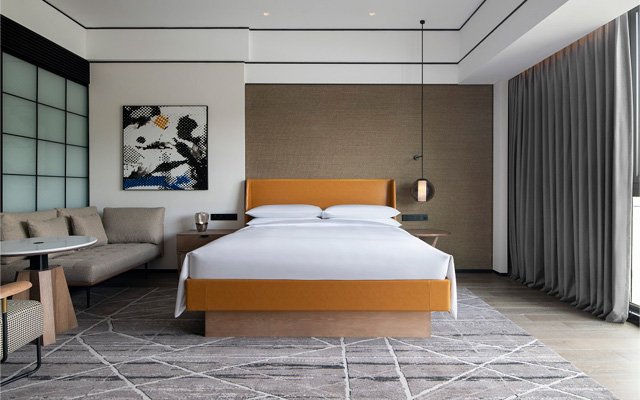
A polished urban retreat designed for business travellers, Hyatt Regency Kuala Lumpur at KL Midtown combines thoughtful design, seamless service, and exceptional facilities.
The five-star property excels in backing its expansive facilities with seamless service and personalised attention, setting the benchmark for luxury in Bangkok.