The Auckland Convention Bureau (ACB) will open applications for the Auckland Business Events Fund from April 1 until April 30, 2021, for business events that take place any time from now until June 30, 2024.
Applications will be assessed based on economic, social and sustainability criteria, with weighting towards the economic benefit that business events bring, replacing the loss of international visitation and assisting to create opportunities for exposure of Auckland’s key sector industries and industry advocates – aided by the procurement of confirmed business events that help to grow Auckland’s profile both nationally and internationally.
The Auckland Business Events Fund will be used to focus on developing, securing and/or enhancing new and existing business events for Auckland
The Auckland Business Events Fund is part of the Government’s NZ$50 million (US$35 million) Regional Events Fund which aims to stimulate domestic tourism by supporting existing events to continue to operate or supporting new events to form. It was designed to stimulate travel between regions through holding events, support the tourism and events sector, and help to replace some of the spending lost from international tourists due to the Covid-19 pandemic.
In 2019, Auckland received NZ$17 million from the government and funds were to be distributed through three key programmes:
Auckland Business Events Fund: business events that drive visitation to Auckland and enhance the city’s reputation as a global business events destination.
Major Programme: events that bring significant benefits from outside Auckland. These events are larger scale, attracting 5,000+ visitors, and often having an international focus. These events are open to the general public.
National Programme: events which bring benefits from outside of Auckland, but mainly from within New Zealand. These events are open to the general public.
Consumers and businesses, including all those in the tourism and hospitality industries, welcomed the news of vaccine rollouts that started in January this year.
Finally, there seems to be some light at the end of the tunnel.
The possibility of travel bubbles has been bolstered by the distribution of Covid-19 vaccines
While it will take time to vaccinate over 70 per cent of a country’s population and for things to return to normal, we’re already hearing optimistic noises from many governments, travel organisations and businesses.
In addition, the International Air Transport Association director general and CEO, Alexandre de Juniac, was quoted on March 11 that “personal and leisure travel will return from the 2H2021″.
Vaccine passports becoming an essential part of travel arrangements The European Commission has been the latest body to propose vaccine passports. While there are concerns about discrimination against the unvaccinated, an internationally recognised official certification for vaccinated travellers would help to lift quarantine restrictions and ease the processes of entering other countries.
In fact, Singapore Airlines began trialling a digital vaccine passport in December 2020, and has plans to integrate it into their mobile app by mid-2021.
During the pandemic, travel operators have acted quickly to label hotels that have complied with Covid-19 countermeasures and get the word out to their customers.
In the coming months, we expect operators to start implementing new measures based on vaccine passports that will be in line with government regulations. The simplest way is to have travellers include their vaccine certification as part of their personal particulars for bookings. These details could then be passed on to partner airlines and hotels to facilitate a smoother, less restricted travel experience.
Green lanes and travel bubbles needed to revive suffering economies Meanwhile, governments should speed up establishing green lanes or travel bubbles with ‘safe’ countries, where travellers are exempt from quarantine. These partnerships will be critical for bringing life back to economies that rely on service-based and labour-based industries.
Thailand, for instance, has seen an 83 per cent drop in foreign tourists. This is a devastating blow that contributed to the Thai economy falling by 6.1 per cent in 2020, its worst performance since the 1997 Asia financial crisis.
The Thai Hotels Association estimates at least a million workers have been laid off from its hospitality sector as hundreds of hotels have closed. Domestic tourism and the implementation of special tourist visas for long stays have done little to reverse the pandemic’s impact on the industry.
Thailand’s special tourist visa permits foreign visitors to stay up to 90 days, including 14 days of quarantine (which is slated to be reduced to 10 days in April), with the option for two extensions. It has attracted only a fraction of the expected 1,200 monthly visitors since its launch in October 2020, likely due to the lengthy quarantine requirement.
If South-east Asia’s second-largest economy is reeling, one can only imagine how its less affluent neighbours, just as dependent on tourism dollars, are faring.
A chance for Asia to become a global events leader With the World Economic Forum Special Annual Meeting 2021 in Singapore and Japan’s Summer Olympics scheduled to take place later this year, all eyes are on Asia to see how these countries are going to pull off such major international gatherings despite pandemic-related limitations.
This is a golden opportunity for the region to establish itself as a global leader. If all goes well, Asia could very well become the centre for high-profile world events in the future.
Timothy Hentschel is co-founder and CEO of HotelPlanner and Meetings.com, a role he has served in since September 2003. HotelPlanner provides group travel technology expertise to over 4.2 million group event planners while servicing US$7 billion in group hotel booking requests in 2017 and an estimated US$10 billion in 2018.
Multi-hub hybrid meetings and conferences continue to grow in popularity, particularly in the association sector, where destinations and different locations collaborate to deliver local content for an event around a wider national or international offering
The Seoul Convention Bureau (SCB) has joined the international Hybrid City Alliance, as well as welcomed new members to its own Seoul MICE Alliance (SMA).
SCB has joined the convention bureaus of Hague, Geneva, Prague, Ottawa, and Durban, all of whom will work together to promote and facilitate the delivery of hybrid and multi-city events. Seoul is the first Asian bureau to join the Hybrid City Alliance.
Multi-hub hybrid meetings and conferences continue to grow in popularity, particularly in the association sector, where destinations and different locations collaborate to deliver local content for an event around a wider national or international offering
The Hybrid City Alliance offers international events organisers a solution when organising multiple city hub events. The city partners in the Alliance are ready to act as one point of contact to streamline and simplify the clients’ interaction with multiple cities regarding one event.
Domestically, the SMA also welcomed new members through an annual recruiting process.
There were 20 applicants, of which 18 were approved. New members include the Fairmont Ambassador Seoul, along with other venues and PCOs. The highest number of applicants was in PCO category, which takes up about nine per cent of SMA.
“As a convention bureau with a strong local alliance, Seoul understands the value of building connections. Becoming a part of the Hybrid City Alliance is such a wonderful opportunity for the convention bureau to be a trusted gateway for Seoul and other cities.
“With this new international alliance, Seoul’s MICE industry is even more prepared to advance the feasible digital solutions which will be a part of industry even after the pandemic,” said SCB’s director, Eun-mi Kim.
The Kuala Lumpur Convention Centre has successfully hosted its first major consumer exhibition, Malaysia International Home Renovation + Interior Design (REX Expo) 2021, two weeks after the Malaysian government allowed the resumption of business events.
This was REX EXPO’s first event since the Covid-19 pandemic started, and only came to fruition after multiple postponements. It has been a regular show at the Centre since 2015.
Entrance to the REX Expo 2021
REX Expo is an expo for homeowners with a wide range of inspiring interior design ideas, and offers the latest trends on display, renovation tips and solutions from the experts, alongside a variety of innovative home-related products.
Jeffrey Yang, creative director of Art of Tree, an exhibitor at the event, shared: “We have exhibited at the Centre before and are very familiar with the Centre’s general safety standards. The additional measures that were in place due to Covid-19 were executed smoothly and efficiently without disrupting our moving-in and set-up.
“There was no long queue for exhibitors or contractors during registration and the security team were extremely strict in ensuring we followed the required procedure and that in itself makes us more confident to be here at the Centre for these three days.”
Another exhibitor, A W Yong, senior sales manager, Beyond Arena, shared: “The Centre is known for its uncompromising requirements on compliance with SOPs even before the Covid-19 pandemic, so, considering the current situation, we knew that the condition to observe and follow the new norm standards would be even more stringent. In fact, that’s the primary deciding factor for us to participate in this year’s REX Expo at the Centre.”
A first-time exhibitor, Joe Tan, natural manager at Cuckoo International, said: “We noticed that there are more visitors here who are serious buyers compared to malls or other commercial venues. We have already made 100 per cent more sales on our first day compared to the other shows we participated in before.”
137 Pillars House is built around the original colonial teak homestead which dates back to the late 1800's
Boutique hotel 137 Pillars House in Chiang Mai is offering corporate groups exclusive use of the entire property when booking a minimum of 15 suites for three or more nights.
Rates start from 13,263 baht (US$428) nett per suite per night and are inclusive of breakfast for two. A minimum of 15 suites for three or more nights is required to qualify for the exclusive use option which is subject to availability and seasonality and valid to December 20, 2021.
137 Pillars House is built around the original colonial teak homestead which dates back to the late 1800s
Set on 8,000m2 of land with a lush tropical landscape, the layout of the property naturally lends itself to abundant personal space and privacy, made even more necessary during this pandemic.
Suites range from 70m2 to 135m2, and include the Louis Leonowens Suites which have private plunge pools, and the David Fleming McFie Suites which have an additional sleeping area and can accommodate a group of up to four.
On-site amenities include a multifunctional events space, 25m-long pool, Jack Bain’s Bar, a restaurant, gym, and Nitra Spa & Wellness. Yoga, taichi, meditation, muay Thai and Thai cooking classes can also be arranged for the group.
Costa Cruises has made two leadership appointments in preparation for the resumption of its cruises and its long-term growth.
Mario Zanetti has been promoted to president of Costa Cruises, taking a role that had been temporarily filled by Michael Thamm, group CEO, Costa Group & Carnival Asia.
From left: Mario Zanetti, Roberto Alberti
In his new position, Zanetti will oversee Costa as a unique brand across the world, including Asia, with the aim of guiding Costa to strengthen its leadership in Europe, South America and Asia, and ensure profitable and sustainable growth in the long-term.
Zanetti started his journey with Costa back in 1999 in the revenue management unit. In 2017, he was named president of Costa Asia; and since July 2020, he has been back in Genoa, as chief commercial officer (CCO) of Costa Cruises Europe.
Meanwhile, Roberto Alberti has been appointed CCO of Costa Cruises, a position previously held by Zanetti. Alberti will be responsible for the overall commercial operations, including sales, revenue management and marketing worldwide, reporting to Zanetti.
With a career in Costa Cruises spanning over 15 years, Alberti worked his way up through various positions in Italy and abroad. In 2016, he joined the CEO Office, reporting to Thamm. After the position of vice president strategic development, in 2019, he was appointed senior vice president and chief strategy officer of the Costa Group, contributing to the definition of a sustainable development plan, the global source market strategy and brand positioning.
Both Zanetti and Alberti will be based in Costa Cruises headquarters in Genoa.
Business-to-business events and live performances in Singapore will be able to have increased capacity limits from next month if pre-event testing is implemented for their attendees.
Pilot business-to-business events approved by the Singapore Tourism Board will be allowed to have up to 750 attendees in zones of 50 attendees, if pre-event testing is implemented. These events currently can have up to 250 attendees in zones of 50.
Singapore is in the controlled process of resuming activities, among them exhibitions and tradeshows
Meanwhile, the capacity limits for live performances will be increased to 750 people if pre-event testing is in place. Events that do not implement testing can have 250 attendees.
Seated spectator sports events are currently being piloted and approved by SportSG. They will also be allowed to have 750 spectators if pre-event testing is put in place. Similarly, those without pre-event testing will be allowed to have up to 250 spectators.
Attendees who have taken both doses of a Covid-19 vaccine at least two weeks before the event will not need to be tested as well.
Meanwhile, the Singapore government is considering broader guidelines for those who have been vaccinated, beyond the exemption from pre-event testing.
opening ceremony, with Geo Connect Asia co-founder Rupert Owen giving the opening address.
Geo Connect Asia (GCA) 2021, South-east Asia’s inaugural geospatial and location intelligence technology conference and Singapore’s first large-scale hybrid event of the year, kicked off today at the Marina Bay Sands Expo & Convention Centre.
There were nearly 1,000 professional visitors on-site and a virtual audience of up to 1,200 international and local attendees.
Geo Connect Asia co-founder Rupert Owen giving the opening address
On-site visitors at GCA 2021 were greeted by a range of innovative features designed to maximise visitor safety while providing an authentic, interactive tradeshow experience.
These include the conversion of ballrooms into exhibition booths to create two Geo Suites, where each Geo Suite featured 16 meeting pods, allowing visitors to conduct private business meetings safely, and minimise intermingling between different cohorts. Meeting pods are fitted with plexiglass to separate the exhibitor and buyer, with microphones on both sides for a better auditory experience.
A host of safety management measures were also in place including automated check-in through facial recognition and temperature-sensing wristbands.
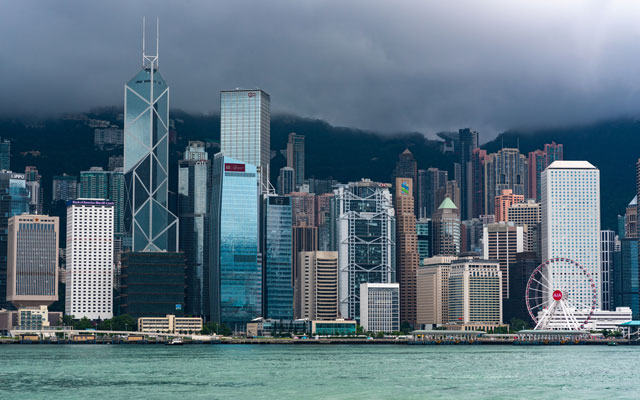
Business travellers to Thailand would benefit from no quarantine, as opposed to a shorter quarantine; Bangkok skyline pictured
Business event professionals in Thailand are giving a lukewarm response to the government’s reduced mandatory quarantine, saying that inbound trips and events to the Kingdom would still be too tedious and pricey.
Sumate Sudasna, managing director of CDM (Conference & Destination Management) Thailand, explained that most foreign business arrivals to Thailand are for short meetings, and so any form of quarantine would be frowned upon.
Business travellers to Thailand would benefit from no quarantine, as opposed to a shorter quarantine; Bangkok skyline pictured
Furthermore, quarantines will also add to their cost.
Sumate believes that reducing the mandatory quarantine period is not an effective plan to win back large groups of international business travellers, much less general tourists.
He told TTGmice that since December 2020, CDM Thailand had facilitated visits from some 10 groups of business travellers, mostly from Japan, South Korea, the US, Australia and the Netherlands, to check in on their factories and line production in the country. Most travellers did not serve quarantines, but all had to obtain pre-arrival approval from Thailand’s Centre for Covid-19 Situation Administration and medical teams. They were also closely monitored throughout their trip in Thailand.
Boontawee Jantasuwan, CEO of Events Travel Asia Group and president of SITE Thailand, opined that even if the quarantine period was shortened by half, it could only attract some incentive groups.
Arriving groups would have to extend their itineraries to accommodate the quarantine, resulting in higher costs. As such, larger events, such as conferences and exhibitions, would likely skip Thailand, Boontawee added.
Industry players believe that Thailand’s business events and business travel sectors would only recover with the absence of mandatory quarantines.
Currently, the Thai government is considering ceasing all quarantine requirements in October, a decision that is subject to zero domestic infections and control over the pandemic.
However, Boontawee expects a six-month lag for international travellers to restart their travel plans to Thailand, which would mean a return in international business events only in mid-2022.
Get Local format of Get Global, a highly successful industry exhibition focussed exclusively on the international market
Business events expo Get Local, will be holding its inaugural event face-to-face, at ICC Sydney from July 29-30, 2021.
Get Local will provide event managers, PCOs, meeting planners and incentive organisers the opportunity to learn more about the domestic offerings across Australia, New Zealand and the Pacific.
Get Local is based on the format of Get Global, an industry exhibition focused exclusively on the international market; screenshot from the Get Local website
The open floor plan of Get Local will encourage trade visitors to plan their own day and connect with the suppliers they want to see. There will be venues, hotels, bureaux, AV, technology and other suppliers to the business events sector across Australasia present.
Meanwhile, the show’s partners include Destination New South Wales (NSW), Hunter Valley, Central Coast and the Orange region.
Gary Bender, co-founder of Get Local, said in a press statement that the domestic industry “needs this event”, and it will be a place to “reconnect and do business which we need more than ever in 2021″.
“The power of person-to-person events is a proven fact. A comprehensive survey, undertaken by Business Events Sydney and the University of Technology, of delegates attending five separate meetings found 91 per cent of delegates agreed that the face-to-face meeting exposed them to new and innovative ideas.
“Businesses need ideas and to innovate, and it can’t continue to be done in isolation,” added Donna Kessler, the other co-founder behind Get Local.
“We know that the recommencement of business events will be crucial in rebuilding and supporting the industry, and the NSW Government is focused on making sure event planners know about the many great locations and venues that regional NSW has to offer,” said NSW minister for jobs, investment, tourism and Western Sydney, Stuart Ayres.
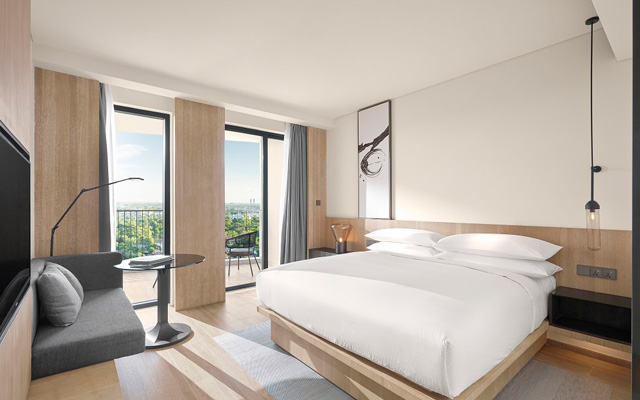
A polished urban retreat designed for business travellers, Hyatt Regency Kuala Lumpur at KL Midtown combines thoughtful design, seamless service, and exceptional facilities.
The five-star property excels in backing its expansive facilities with seamless service and personalised attention, setting the benchmark for luxury in Bangkok.