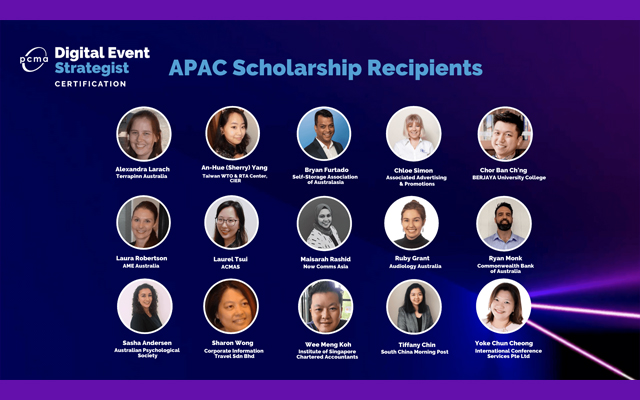
Earlier in September, PCMA announced that the PCMA Foundation was gifting 12 scholarships to the PCMA Digital Events Strategist (DES) Certification, to help support event management professionals in Asia Pacific deliver impactful digital and hybrid events.
But due to the outstanding quality of applications received, the PCMA Foundation has expanded the number of scholarships from 12 to 15, with a value of over US$13,000.
Here are the 15 scholarship recipients of the DES certification:
Alexandra Larach, Terrapinn Australia
An-Hue (Sherry) Yang, Taiwan WTO & RTA Center, Chung-Hua Institution for Economic Research
Bryan Furtado, Self-Storage Association of Australasia
Chloe Simon, Associated Advertising & Promotions
Chor Ban Ch’ng, BERJAYA University College
Laura Robertson, AME Australia
Laurel Tsui, ACAMS
Maisarah Rashid, Now Comms Asia
Ruby Grant, Audiology Australia
Ryan Monk, Commonwealth Bank of Australia
Sasha Andersen, Australian Psychological Society
Sharon Wong, Corporate Information Travel
Wee Meng Koh, Institute of Singapore Chartered Accountants
Wing See Chin, South China Morning Post
Yoke Chun Cheong, International Conference Services
international visitors the added assurance that event organisers, venue operators and suppliers in Singapore have complied with international standards on hygiene and sanitisation, safe distancing and emergency management
Since the rollout of SG SafeEvent Certification in June this year spearheaded by SACEOS (Singapore Association of Convention and Exhibition Organisers and Suppliers), over 80 enterprises have signed up for the certification, with over 40 having been certified.
This comes at a time where the industry moves forward to the next phase of recovery and reopening of events. This certification will also help strengthen Singapore’s position as a leading destination for safe, trusted and innovative business events.
This certification aims to provide visitors with the added assurance that MICE suppliers in Singapore have complied with international standards on hygiene and sanitisation, safe distancing and emergency management
The SG SafeEvent Certification will ensure that enterprises uphold the highest standard of safe management practices to deliver confidence to visitors and organisers in the Conduct, Construct and Compliance of safe events in Singapore.
The Certification is based on the checklist derived from Technical Reference (TR) 84 : 2021 “Safe event management for the MICE and Events industry” developed by the Singapore Standards Council (SSC) and overseen by Enterprise Singapore (ESG).
Assessed independently by a panel of approved certifying bodies, the SG SafeEvent Certification provides a mark of assurance for Venue Operators, Organisers and MICE Suppliers in delivering confidence to their customers and participants.
For the most updated list on certified companies, please click here.
Worklounge, a workspace platform that provides remote working professionals and executives with access to a network of luxury hotel lounges through a monthly subscription model, has made its debut in Thailand.
Worklounge’s network currently comprises 25 lounges across 10 cities – such as Bangkok – across the country. This network affords remote working professionals access to business lounges at properties such as Sofitel Bangkok Sukhumvit, Hyatt Regency Sukhumvit, InterContinental Phuket, and Amari Pattaya.
Worklounge
1 of 6
akyra Thonglor Bangkok
Amari Koh Samui
Hyatt Regency Bangkok
Intercontinental Phuket
Oriental Residence Bangkok
Sofitel Bangkok Sukhumvit
These lounges will feature fast Internet, comfortable seating areas, F&B, and the high-touch service that is expected from a luxury, hospitality brand. Members can access any lounge in the network by flashing their digital membership card on the Worklounge mobile app.
“We are initially launching in Thailand, but have gained great traction within the hotel sector across South-east Asia and are already signing up partner lounges in Vietnam, Indonesia, Singapore, and Hong Kong. Eventually, the goal is to scale the platform regionally and within a
few years, globally,” said Riku Penttinen, Worklounge’s co-founder.
Worklounge co-founders Penttinen and Benjamin Assuied both come from hospitality backgrounds, with experience leading hotel brands in Asia, Europe, and South America. They set up Worklounge to address the growing demand for flexible workspaces.
According to a 2020 McKinsey study, “finance, management, professional services and information sectors have the highest potential for remote work” and this trend is “likely to persist in the wake of the pandemic, mostly for a highly educated, well-paid minority of the workforce”.
Ovolo Hotels has appointed two new general managers for its two Australian properties, Ovolo Woolloomooloo and Ovolo Nishi.
Ovolo Woolloomooloo bridges heritage and modern luxury, allowing guests to indulge in the rich history of the Woolloomooloo wharf complemented by contemporary designs and tech-savvy inclusions.
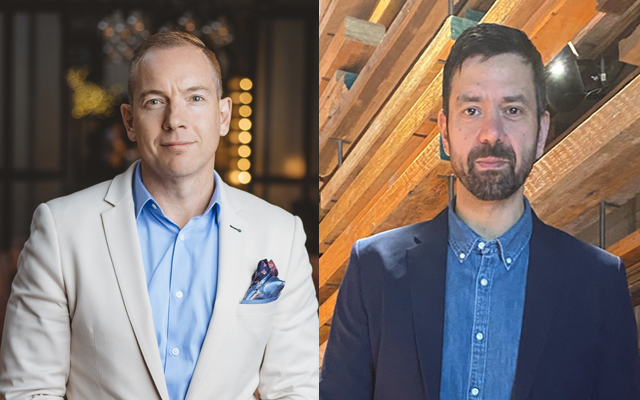
From left: Kieron Hunt; Gabriel Polias
Kieron Hunt has been appointed the general manager of Ovolo Woolloomooloo. Over two decades, Hunt has worked in locations around the world such as London, Dubai, China, and Japan, for hospitality brands such as The Murray, Peninsula Hotels, InterContinental Hotels, Hilton Hotels and Chelsea Football Club.
Down south in Ovolo Nishi, Gabriel Polias joins the property as general manager. His prevoiusly held positions such as hotel manager at luxury brands like the Sofitel, as well as director of operations at the Marriott.
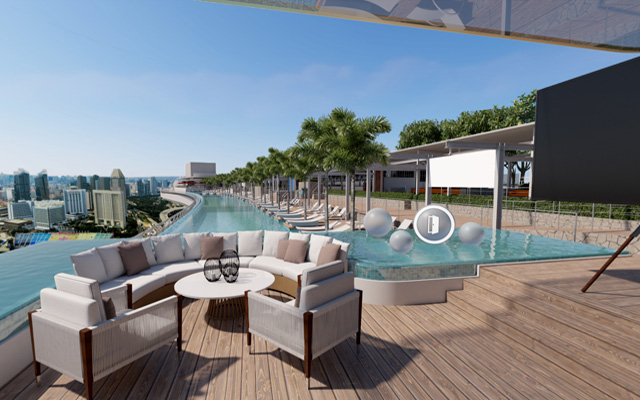
Breakout Room at the Sands SkyPark Observation Deck
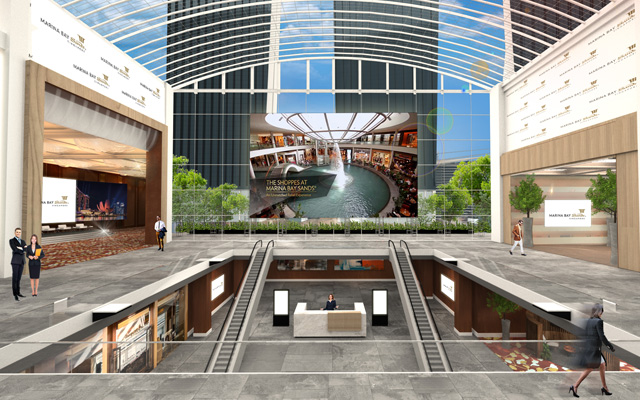
Marina Bay Sands (MBS) has unveiled its new Virtual Meeting Place, a fully customisable platform that allows event organisers to build their virtual venue to replicate their real-life event space.
Virtual Meeting Place
1 of 3
Marina Bay Sands
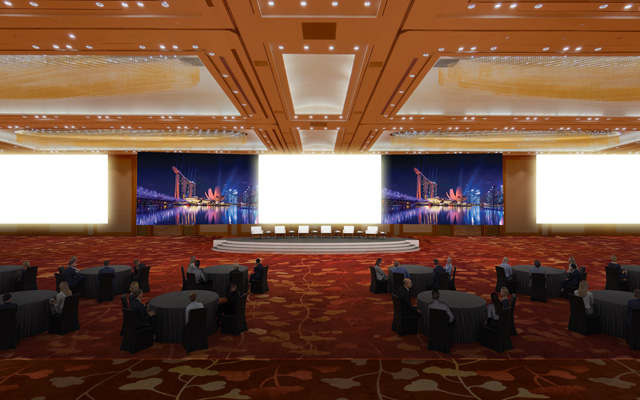
The Plenary
Breakout Room at the Sands SkyPark Observation Deck
The key spaces are:
• The Plenary, which serves as an exhibition space modelled after the ballroom at Sands Expo and Convention Centre, allows major live events to be simultaneously broadcast to the rest of the world.
• The Library, housed at the Hybrid Broadcast Studio, enables attendees to access the events’ most impactful moments at any time on-demand and can grow to become a collection over time.
• Breakout Rooms enabling attendees to form one-on-one and group meetings for knowledge and idea exchanges. Attendees can take their meetings to MBS’ unique meeting spaces such as ArtScience Museum, Sands SkyPark Observation Deck, and many more.
Event planners can also opt to include interactive elements, such as chatbots, quizzes and live polls, and leverage data analytics to track and optimise audience trends and satisfaction.
The Virtual Meeting Place also extends the industry conversations beyond event days, allowing organisers to host scheduled meetings online to keep their communities connected throughout the year.
The experience-driven platform brings together the expertise of MBS and three Singaporean organisations – brand activation agency Pico Art International, virtual event platform GEVME and 3D and interactive solutions provider Sixtrees Viz Comms.
“Hybrid events is the mainstay of the industry but the omnichannel meeting experience will be the future. With more clients placing a premium on creating a shared user experience, we are taking the next step forward to offer them a singular, integrated customer journey.
“The future of meetings in an endemic world will focus on delivering a 365-day, 24/7 user journey – one that offers delegates a seamless experience transitioning between physical and virtual events, as well as providing on-demand content akin to that of online streaming entertainment platforms.
“An extension of the physical venue, the Virtual Meeting Place empowers our clients to capitalise on the O2O2O (Offline-to-Online-to-Offline) opportunities that this platform offers – reinventing the delivery and consumption of information while optimising customer experiences,” said Ong Wee Min, vice president of conventions and exhibitions, MBS.
The unveiling of the Virtual Meeting Place comes at the heels of the launch of its four state-of-the-art Hybrid Broadcast Studios in 2020 that can cater to events of up to 1,300 pax.
Radisson Blu Hotel & Spa, Nashik, in Maharashtra, India, has appointed Gopinath Gopalan as its general manager.
Gopinath has spent over two decades of his hospitality career in achieving milestones for several esteemed marques, having been responsible for overseeing multiple pre-opening hotels, and the repositioning of luxury brands. Luxury hotels he has played pivotal leadership roles in include Park Hyatt Goa, Grand Hyatt Mumbai, The Leela Palace Bangalore, and Oberoi Hotels & Resorts in Mumbai, Udaipur, and New Delhi.
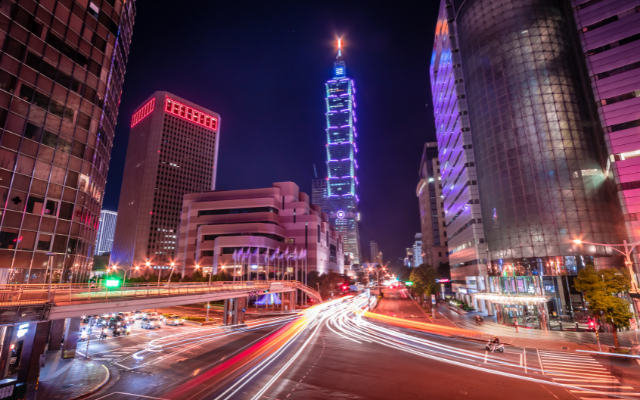
Taipei city: an exceptional place to connect and inspire
As COVID-19 continues to threaten lives around the world, Taiwan’s prowess with managing the crisis reflects the efficiency, adaptability, and resources that make it a leading MICE destination.
Taiwan MICE set to thrive in the post-pandemic era
Taiwan is moving to the next step and providing a safe and financially appealing environment for business events.
The government’s digital transition efforts enable business opportunity exploration through online exhibitions and help businesses reach overseas markets from home. These new trends show that the Taiwan MICE industry is evolving to make the best use of technology.
MEET TAIWAN spurs business recovery
To assist Taiwanese MICE with continuing to expand business opportunities in the post-pandemic era, MEET TAIWAN actively provides assistance and innovative marketing models.
Taiwan Incentive Talk, an online event series, is a new way for Asia planners and exhibitors around the world to connect on an interactive virtual platform. They will discover Taiwan is a strong, evergreen and incentivized destination, which happens to be an increasingly major factor for today’s post-COVID-19 market.
Also there will be the return of MEET TAIWAN’S Asia Super Team competition centered on the theme of Future Land with a US$50,000 incentive travel package going to the winning team. This year, the multinational event has been technically upgraded, featuring virtual and augmented reality digital tech. The interactive game platform is now wholly an online competition, bypassing pandemic restrictions so teams can “experience” some of Taiwan’s best incentive travel activities in a safe environment.
To facilitate the expansion of Taiwanese MICE overseas during the pandemic, the Taiwan Bureau of Foreign Trade pioneered an online exhibition platform to assist exhibitors with communicating with foreign buyers. At the same time, this platform can be integrated with physical exhibitions to bolster access during exhibitions. It provides multiple functions, such as virtual booths, product displays, a meeting system, and can help exhibitors with marketing analysis to explore more business opportunities.
Re-Fresh Taiwan: Building a firm and welcoming link with the world
It is anticipated that the threat of the epidemic will gradually subside. To demonstrate its human-centric approach to the MICE industry, MEET TAIWAN launched its “Re-Fresh Taiwan” initiative to encourage people to combine virus precautions with everyday life and join with global players to reach new achievements in the MICE industry.
Reassured and Safe: Taiwan’s medical-care system and public health capabilities mean that pandemic control measures can be promptly implemented.
Outstanding Service: Business event industry suppliers in Taiwan offer organizers professional and efficient services that are flexible and of a high quality.
Revolutionized Digital Era: Innovation has produced digital exhibitions and the rollout of 5G technology, providing faster and seamless livestreaming of creative moments brought about by AI, virtual reality, and other digital settings across venues.
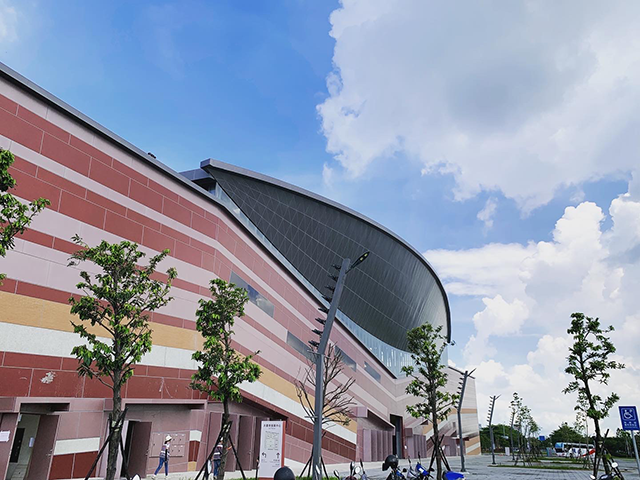
ICC Tainan: a venue for online/offline events to explore the past and the future
MEET TAIWAN looks forward to having delegates from around the world once again gather together in the near future.
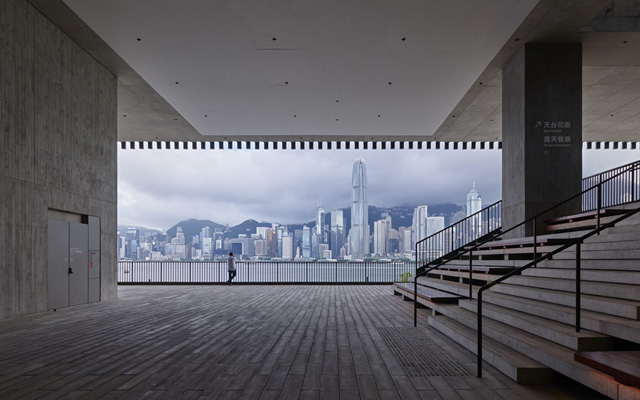
The iconic West Kowloon Cultural District is ready to enliven Hong Kong’s business events scene when M+, Asia’s first global museum of contemporary visual culture, is added to its venue list on November 12, 2021.
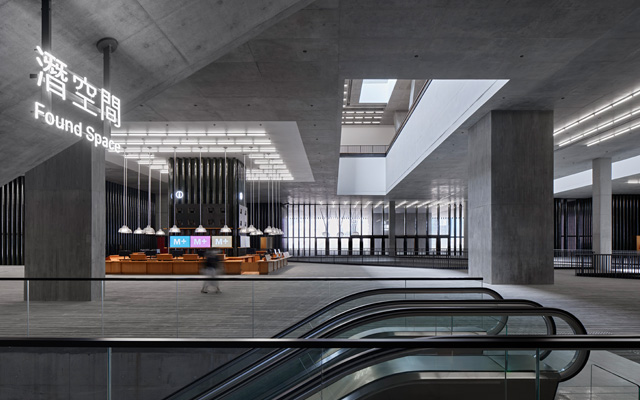
M+ boasts over 20 possible event spaces, which includes three cinemas, an open-air auditorium, and outdoor spaces that open out to views of Victoria Harbour.
M+
1 of 4
Its spokesperson said that the venue will be “targeting MICE groups”, with possible configurations such as a 500-pax conference, or a standing-cocktail event for 1,000 people. Supported by an experienced team, M+ is working closely with the Hong Kong Tourism Board, and is planning to join tradeshows internationally to promote the venue.
The spokesperson added that they have already fielded some enquiries about incentives as well as conferences, and said that M+ “will accept bookings after the museum’s opening, withinone one year of the event date”.
All revenue generated from events at M+ will directly support the museum, its programming and operations and as such Visual Culture in Hong Kong.
Business events stakeholders in Hong Kong have welcomed the announcement of M+’s opening, and are looking forward to the new space, citing it as a potential event space for their clients.
Corporate Travel Management (CTM), head of M.I.C.E, Patrick Lam said: “I foresee many MICE travellers will choose M+ for meetings and conventions. We are expecting to draw traffic from banks, insurance companies and medical groups from mainland China, as well as international corporations because the West Kowloon Cultural District is already an attraction (in itself).”
Lam added that M+’s location, being close to Tsim Sha Tsui and Central, as well as airport, ferry terminal and transport to Shenzhen Border, makes it even more attractive.
Momentous Asia Travel & Events’ general manager, Doris Lam, told TTGmice: “I am interested in its restaurants and F&B venues. Some of them can be turned into a party venue and will be good for incentive groups. There are also small meeting spaces there and may appeal to those who are looking for a non-hotel venue to hold their meetings.”
She added that it was possible some of the locations within M+ could also incorporate street performances.
As for Katerina Tam, International Conference Consultant’s director, she has confirmed that a “culture-related event organised by the Leisure and Cultural Services Department” will be held at M+ next year.
However, as Hong Kong still has not shown any indication of the lifting of travel restrictions from other countries except mainland China in the coming months, she predicts that the main traffic will be Chinese corporates in 2022.
Boracay (pictured) has received the World Travel and Tourism Council Safe Travels Stamp
Boracay is being positioned as a sustainable tropical paradise for business events, and its launching pad will be the hosting of MICECON at the end of the month, stakeholders shared in a Zoom interview with TTGmice.
Cleofe Albiso, chair of the newly-formed Boracay MICE Alliance, said that although Boracay is best known as the country’s top leisure draw for domestic and international tourists, the island is ready for corporate groups, having rested well and spruced up over the past three years.
Boracay (pictured) has received the World Travel and Tourism Council Safe Travels Stamp
Boracay was temporarily closed in 2018 to the general public as part of the government’s efforts to rehabilitate and redevelop the island, before the pandemic hit last year.
“Covid-19 was a clincher. It became another layer of crisis to weather for the entire ecosystem of Boracay. After a long rest, the white beaches are even more beautiful. The locals miss the travellers so the latter will be truly pampered. It’s not just about their livelihoods but also the desire to provide the visitors with the unique experience in Boracay,” Albiso said.
She added that Boracay has previously forayed into business events, and was a burgeoning destination for teambuilding events, alongside small meetings and conferences.
As such, Albiso remains confident that Boracay “is definitely going to sell” when positioned as a tropical paradise for business events. Currently, the alliance is working on incentive packages to attract business events planners and organisers.
Western Visayas new regional director for tourism, Cristine Mansinares, said that MICECON 2021, to be held in Boracay from October 26-29, 2021, will have 25 buyers heading to the island, alongside a virtual component. MICECON will also be a benchmark as to how Boracay conducts business events under the current situation.
Mansinares added that work still needs to be done, such as positioning and branding Boracay as a preferred business events destination, taking into account the need for tourism sustainability, noting that safety guidelines for business events are already in place. The cache of accommodations, from budget to upscale, also bodes well for business events.
Elmar Lina, president of Boracay MICE Alliance, pointed out that the island is able to handle a variety of corporate events with physical distancing factored in. Venues include 1,500 seats at the island’s biggest convention facility, Paradise Garden Convention Center.
Business events capacity will also be boosted by 800 pax next year, with the slated opening of Boracay Convention Center, shared Lina, who is also general manager of Savoy and Belmont hotels in the Boracay Newcoast integrated tourism development.
Boracay MICE Alliance, supported by the Department of Tourism, its marketing arm Tourism Promotions Board and the local government unit, is composed of member hotels, Boracay Travel Agencies Tour Operators Association, Philippine Chamber of Commerce and Industry, Compliance Association of Boracay, Boracay Water Sports Association, Malay College, and other stakeholders.
So far, Boracay and Baguio City are the only two Philippine destinations that have received the World Travel and Tourism Council Safe Travels Stamp, which means they have adopted globally recognised health protocols, Mansinares pointed out.
There are many considerations now when it comes to business travel
Constantly-changing travel restrictions and a lack of a standardised approach to entry requirements have dealt travel managers a tough hand, giving them increased responsibilities when it comes workforce risk management.
For travel managers looking to navigate this sea of uncertainty around travel, representatives of International SOS and Riskline have proposed a checklist, which was shared during an IT&CM Asia 2021 session, A Holistic Look at Workforce Risk Management.
There are many considerations now when it comes to business travel
Get updated frequently
It is wise for travel managers to update their travel policies frequently and stay informed of current regulations on travel restrictions. Proactive monitoring of security triggers is critical now and into the near future, as vaccine rollouts and entry guidelines vary from country to country and can change at a snap.
Keep travellers prepared and informed
Pre-empt employees on what could happen on the ground during their travel assignments, and provide a list of restrictions and regulations in the country they are travelling to.
Rely on authoritative sources
Due to a rise in scams related to vaccine and Covid-19 treatment, travel managers must be critical in their choice of information sources. Rely on government websites for information on vaccinations and specialised websites that have been vetted and corroborated.
Rethink the travel risk management programme
International travel is no doubt more complex than pre-pandemic. Travel managers must now consider factors such as the complexity of the regulatory environment which includes entry requirements and guidelines, legal ramifications of Covid-19 prevention, and the legal dimension of personal privacy and the potential for discrimination.
It is not uncommon to see work trips requiring a higher level of approval, to the point of getting the green light from the company CEO, or board of directors.
With duty of care for employees and travellers more critical than ever, travel managers should consider redesigning, rebuilding or strengthening their travel risk management programme to take in new-normal considerations.
Just 10 minutes from Phuket International Airport on the serene northern coast, this 178-key, Bill Bensley-designed resort offers delegates a quiet, tropical paradise steeped in Phuket’s tin-mining heritage
The newly-opened Ritz-Carlton, Bangkok anchors the One Bangkok development with cosmopolitan elegance. Featuring the city's largest ballroom and a spectacular new penthouse suite, it delivers exceptional hardware and deeply authentic, soulful service for business and leisure travellers alike
Behind the imposing, Brutalist concrete that defines Zurich’s Oerlikon district lies a surprising secret. While its exterior honours the neighbourhood’s industrial roots, stepping inside Mama Shelter reveals a vibrant, neon-soaked world that is a far cry from its rigid shell