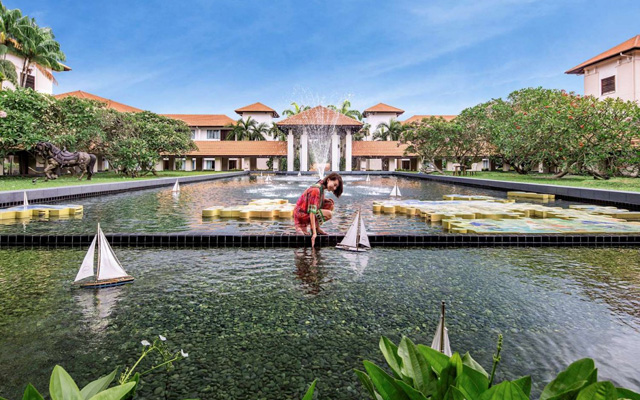
InterContinental Maldives Maamunagau Resort has appointed Coetzer Deysel as general manager.
He will be responsible for driving the resort’s strategic and commercial growth, overseeing operational excellence and will continue to elevate the luxury positioning of IHG’s flagship property in the Maldives.
Deysel brings with him over 17 years of experience in hospitality across leading luxury brands such as Anantara Resorts, The Westin, W Hotels, naked Retreats and Le Meridien in resort destinations such as Mauritius, Maldives, Thailand, China and South Africa.
His most recent role was general manager of Ananatara Iko Mauritius Resort & Villas, where he oversaw the launch of the first Anantara resort in Mauritius.
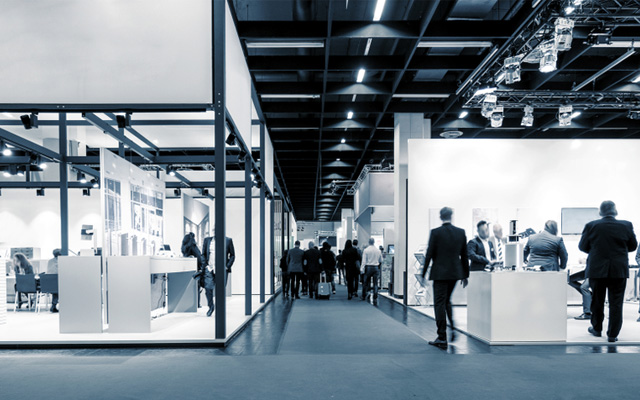
Collaboration and building confidence across all verticals are key to restarting Indonesia’s exhibition industry, shared panellists at the Restarting Indonesia’s Exhibition Industry Webinar on July 1.
Online events do work, in the sense that content and ideas can be shared easily, and it is easier to stay in touch with business contacts, shared Kai Hattendorf, CEO of UFI, but everything else that’s related to trade and transactions still need to be conducted face-to-face. These findings that Hattendorf shared were based on UFI’s polls on 15,000 exhibition attendees around the globe.
Andreas: need to show the government that the exhibitions industry is still up and running, albeit at a slower pace
As such, the UFI chief strongly believes that in-person events will continue to have a strong showing post-pandemic.
However, what Indonesia’s exhibition stakeholders need to do is to convince the government that business events are not mass gatherings. This is because as event organisers, it would be easier to “set up a safe environment”, such as having ample floor space, ensuring minimum capacity, and providing necessary safety measures, noted Hattendorf.
Hosea Andreas Rungkat, chairman of Indonesian Exhibition Companies Association, agreed that it is important to restore the government’s confidence that exhibitions can be conducted safely, as well as convince exhibitors and buyers that attending an event would be safe.
He added: “(Before the pandemic), the government did not pay much attention to the exhibition industry, as they were focused on (leisure) travel. However, after we showed the amount of losses suffered by the industry, the government began to think about how it can help revive it.”
Indonesia’s exhibition industry suffered a total opportunity loss of approximately US$3.1 billion in 2020. These numbers were based on 4.1 million square metres of projected exhibition space available, and is equivalent to US$10.5 billion in direct economic impact.
Andreas also called on all industry stakeholders to cooperate and continue to plan ahead for events, to show that the industry still exists.
Still, one of the good things borne out of the pandemic was how quickly companies learnt to adopt and deploy new event formats such as hybrid events and virtual expos, noted Susan Tricia, co-founder and group CFO of Fireworks Trade Media Group.
All these tech innovations can still be used when exhibitions return, Tricia pointed out.
Meanwhile, Björn Kempe, CEO of Expoasia voiced his confidence in the Indonesian exhibition sector, and indicated that international exhibition companies will still be interested to invest in both Indonesia, and Asia as a whole due to its vast potential.
Norwegian Cruise Line (NCL) has appointed Eamonn Ferrin as vice president of international business.
Ferrin will oversee NCL’s sales efforts outside of the US and Canada and grow the Company’s international footprint by deepening existing travel relationships, reaping new business and further integrating international source markets into the Company’s global business plan. He reports to Todd Hamilton, NCL’s senior vice president of sales.
Eamonn Ferrin
Ferrin joined the Company in January 2019 as vice president and managing director for the UK, Ireland, Israel, South Africa and Middle East. During that time, he expanded the UK’s position as the Miami-based Cruise Line’s leading international market through strategic investments designed to support the travel agent community as part of the Company’s Partners First philosophy. Key efforts included the launch of the incentive programme NCL Freestyle Rewards, a new travel agent portal and resource centre Norwegian Central and a fly-cruise booking platform NCL Air.
Ferrin also increased NCL’s market share in the emerging markets of Israel, South Africa and the Middle East, where the Cruise Line recently increased its presence with the deployment of Norwegian Jade. The ship will make NCL history as the first to offer roundtrip cruises from Cape Town beginning December 2021.
Ferrin is an industry veteran with more than 23 years of travel and hospitality experience. He has worked in a variety of divisional CEO, chief operating officer and managing director roles in the UK, Canada and internationally for brands including Air Canada, Holidaybreak and MyTravel. Outside of NCL, Ferrin serves as a member of the CLIA Executive Committee and the CLIA Steering Group for the UK.
Half of the leading pharmaceutical and biopharma companies surveyed are ready to sponsor in-person events next autumn, according to a study conducted by AIM Group International.
The survey, titled Events in-person, hybrid or digital? Trends and perspectives from the Sponsors, captured the viewpoints from over 200 representatives of pharmaceutical and biopharma companies from across all therapeutic areas.
New event formats are drawing inspiration from different sectors, allowing the event organisers to identify the best solution to obtain the desired results
“We are at a turning point, with the reopening of in-person events from July and the planning of events for next autumn,” explained Patrizia Semprebene Buongiorno, vice president of AIM group international.
“At this juncture, we considered it would be useful to ask corporate decision-makers who sponsor events to understand their attitudes and desires and devise solutions and projects more in line with the expectations of the market. The results of the survey are very interesting and encouraging because they reveal first and foremost that companies continue to believe in the benefits of in-person events and are keen to invest in this tool going forward.”
Here are some of the key findings:
Half of the companies surveyed are ready to sponsor in-person events next autumn, only 16% exclude it as an option, the remaining 37% prefer to decide later.
The budget for events in 2021 will mostly be allocated to in-person or hybrid events (43%) while digital-only events were preferred by one in three companies (35%).
Assuming participation in a hybrid event, the majority would prefer to participate in-person (52%), or both in-person and online (31%), only a small fraction (17%) would choose to attend the event online only.
As for virtual events, a short duration is preferred, 76% chose between six and 12 hours duration.
In the case of virtual events, sponsors definitely prefer to sponsor scientific sessions (82%) or opportunities that give visibility to the brand (82%).
Among the activities to make virtual events more effective, sponsors prefer short e-learning videos published before or after the event (60%), followed by television format scientific sessions with a professional moderator/presenter (50%), then Q&A sessions with key opinion leaders (48%) and also forms of gaming (escape room, quiz, etc.) (38%).
“From the analysis of the responses and from the dialogue that we carried out with company representatives, we clearly noticed a strong trend to favour the return to in-person events, or at least to some sort of hybrid formats. In addition, we noted that enriching virtual aspects of meetings with new engagement tools was also considered important,” explained Gaia Santoro, head of sponsorship unit of AIM Group International.
“With this in mind, we can predict that events next autumn will involve a move towards more sophisticated event features, which we are calling “an augmented event”. This combines some typical advantages of the online platform – such as access anywhere, any day and time and an expansion of the audience – combined with the strengths of in-persons events with an ability to involve delegates, transmit content more effectively and strengthen networking and relationships.”
“The pandemic will act as a gamechanger for the events market, where the experimentation, innovation, flexibility and courage evident during the pandemic, is now paving the way for new formats to evolve, adapting them even more to the specific needs of each target and client. The new formats are also drawing inspiration from different sectors such as TV, gaming, trade fairs, etc.), allowing the event organisers identify the best solution to obtain the desired results, changing not only the format (in-person, virtual or hybrid) but also the duration and schedule planning, the interaction among participants, the communication before, during and after the event.
“In short, we are seeing several positive signs that suggest that, once the pandemic is over, that events will emerge from the crisis stronger and even more effective,” concluded Buongiorno.
Amid the Covid-19 pandemic, Thailand has ramped up local business events capability, boosted its Thailand 4.0 economic development target focusing on the Eastern Economic Corridor (EEC) and launched their latest initiative, reviving international arrivals through Phuket.
The number of international MICE travellers dropped by 62.6 per cent in 2020 from 2019, while revenue decline was 68.2 per cent. Thailand Convention & Exhibition Bureau (TCEB) statistics for 1Q2021 show a 99.9 per cent plunge from full-year 2020 in both travellers and revenue.
Supawan: TCEB’s online platform has taken off, a large step in contributing to Thailand’s MICE recovery
“This year, we’re producing e-learning courses in MICE with various themes such as incentive travel, professional and sustainable event organisation, community development and English for MICE,” said Supawan Teerarat, TCEB’s senior vice president development and innovation.
TCEB implemented Thailand’s first E-MICE marketplace to give business events entrepreneurs and the supply chain more business opportunities through Thai MICE Connect into five regions to meet demand from corporates, associations and government organisations.
There are 16 categories and 59 segments from business events ecosystems and stakeholders. Currently, more than 10,000 suppliers, destinations, venues, organisers and service providers are participating, with viewership exceeding 150,000 in this second year.
“This platform can also help corporates or DMCs to plan their MICE programmes faster. Our Roadshow programme helps entrepreneurs, supply chains and communities from first-tier and second-tier cities to showcase their community for incentive trips, pre- and post-tours for meetings, conferences, exhibitions and festival events. Participants are taught how to promote their services and products and attract buyers,” Supawan added.
On the economic front, aviation and logistics and four other industries were targeted in 2020 through LOG-IN Event located in Pattaya. This year, LOG-IN Next will support all 12 strategic industries under the government’s plan. The expansion is partly due to collaboration with more industry stakeholders.
“Under the new phase, our collaboration for tradeshows in the strategic industries will be extended to other cities in EEC, such as Rayong and Chonburi,” said Nichapa Yoswee, TCEB’s senior vice president – business. “Our targets are existing shows which will be supported to expand their profile and new shows in these industries. They are eligible for extra financial support. Of course, we require overseas PEOs to team up with local Thai partners when bringing in or organising the shows.”
Thailand has also kickstarted inbound tourism with the reopening of Phuket on July 1. Seen as a fillip to corporate meetings and incentive travel, the Phuket sandbox model allows vaccinated visitors from low- and medium-risk countries to stay without quarantine or minimum duration. However, to visit other cities, they must stay in Phuket for at least 14 days. Foreigners must fly direct to and from Phuket with no transit in Bangkok if staying for fewer than 14 days.
If the scheme works, it may be extended to other cities such as Chiang Mai, Krabi, Surat Thani (Phangan, Koh Tao, Samui), Pattaya, Phetchaburi, and Buriram.
However, travel agents contacted said they don’t expect great take-up in the business events segment. They cited the application process and criteria – two weeks to obtain a certificate of entry from Thai embassy, two weeks’ prior stay in a ‘safe’ country, series of tests while in Phuket and quarantine on return home – is too onerous.
Alicia Seah, director of marketing communications at Singapore-based Dynasty Travel, said: “The pandemic has fuelled the desire to travel; however, there are additional cost factors such as mandatory quarantine, PCR tests for Covid-19 and high insurance costs to consider. These factors have deterred travel at this juncture.”
As an active member, CWT will work with GBTA to further augment its customer and supplier needs, as the industry recalibrates for safe and sustainable post-pandemic business travel.
“Now, more than ever, our industry must stand together to serve corporate travellers the world over as the post-pandemic return to travel gains momentum, and I am excited about the potential of our new partnership with GBTA,” said Michelle McKinney Frymire, CWT’s CEO. “We look forward to playing an active role at GBTA events and meetings, and in various joint industry research initiatives.”
“We are delighted that CWT has taken the decision to rejoin GBTA at this crucial time for our industry, as we return to business travel. Collaboration and thought leadership is such an important element of the association, and it’s vital to have representatives from a global TMC such as CWT,” said Suzanne Neufang, CEO of GBTA.
designing its event resourcing with ‘dual purpose’ roles
International Convention Centre Sydney (ICC Sydney) adapted to changes in Sydney’s restrictions by swiftly converting The Royal College of Pathologists Australasia (RCPA) Pathology Update 2021 into a completely virtual event.
“The detailed planning of the conference and exhibition allowed ICC Sydney to transform the event from hybrid to 100 per cent virtual in just 48 hours,” revealed ICC Sydney’s CEO Geoff Donaghy.
ICC Sydney helped to design the event resourcing to have ‘dual purpose’ roles
He added that “the ongoing flow of information to association members, business and all organisations is arguably ever-more important during a crisis”.
The digital event scenario was built into early event plans to activate a seamless transition of the Pathology Update from a hybrid event, complete with keynote speakers, workshops, breakout sessions and exhibition content
All 180 of its presenters were moved from on-site to virtual, which saw an attendance of 1,220 medical and health professionals across the nation. The event also utilised the ICC Sydney Connect platform, and some 30 ICC Sydney team members were also on-site to ensure the smooth running of the event.
acknowledge the responsibility we have to reduce our demand on the planet’s finite resources, minimise our carbon footprint and help meet the United Nation’s Sustainable Development Goals
The Melbourne Convention and Exhibition Centre (MCEC) has unveiled a brand new five-year sustainability strategy, as it works towards its goal of becoming a leading sustainable event destination.
MCEC’s sustainability manager, Samantha Ferrier said in a press statement: “We’re aiming high, with a target to achieve net-zero emissions by 2030. We are working to eliminate problematic and unnecessary single-use plastics, divert 90 per cent of waste from landfills by 2025, and be completely powered by renewable electricity by 2028.
MCEC aims to minimise its carbon footprint and help meet the United Nation’s SDGs
“At the same time, we will contribute towards increasing Victoria’s biodiversity, habitats and ecosystem health by 2025, continue to source sustainably and support OzHarvest to rescue and redistribute food to people in need.”
MCEC has engaged a number of key stakeholders including industry partners, customers and employees to identify sustainability goals which range from mutually beneficial partnerships to responsible procurement. Forming the foundation of MCEC’s Sustainability Strategy are the United Nation Sustainable Development Goals, which are an urgent call for action by all countries to address the world’s most pressing challenges by 2030.
MCEC’s priority objectives include:
Climate Change – Reduce greenhouse gas emissions and take action to minimise MCEC’s effect on climate change.
Waste & Resource Recovery – Embed circular economy principles across all aspects of the business to reduce waste, improve resource efficiency and help Melbourne’s transition to a zero-waste city.
Energy – Continually improve energy efficiency, reduce energy consumption and transition to renewable energy.
Water – Conserve precious water by limiting consumption of potable water, using it efficiently and harvesting rainwater for reuse.
Nature – Contribute to improving and protecting biodiversity and the ecosystem through initiatives that connect employees, visitors and the community with the natural environment.
Infrastructure & Transport – Design and operate all new and existing infrastructure and building upgrades with environmentally sustainable considerations at the forefront.
Procurement – Harness MCEC’s purchasing power as a force for good by prioritising local, ethical and sustainable suppliers. Also, embed socially responsible and circular economy principles into purchasing decisions to drive positive social, environmental and economic impacts for the wider community.
Education, Awareness & Engagement – Inspire MCEC’s people and community to champion sustainability by creating awareness and leading by example.
Equality Recognition & Reconciliation – Acknowledge the Traditional Owners of the land, celebrate cultural diversity, raise public awareness and improve MCEC’s cultural capacity inclusive of maintaining an environment that is free from discrimination and where employees, customers and visitors are treated fairly and with respect.
MCEC CEO, Peter King, stated: “Through the targets in this strategy, we are sending a clear message that we can and will do more to provide better outcomes for our community, our customers and our environment.”
“As an industry, the events sector needs to be accountable for the impact it has on the world around us. This means, in order to make a meaningful shift across the sector, we must all commit to a shared vision of change. Our vision is to lead extraordinary environmental change and amplify our social impact, by forging partnerships and inspiring our people, to leave a positive legacy,” Ferrier concluded.
Centara Grand Mirage Beach Resort Pattaya's Royal Suite
Centara Hotels & Resorts has extended its Work from Hotel at Centara initiative, citing sustained demand from remote workers, as well as families wanting a change of scenery while engaged in online learning.
The long-stay special, applicable for stays of at least a week, starts from 4,550 baht (US$141) for a seven-night stay and 15,000 baht for a one-month stay, inclusive of daily breakfast for two guests in select hotels and resorts. Prices vary depending on the choice of accommodation.
Centara Grand Mirage Beach Resort Pattaya’s Royal Suite
The offer can be booked from now until August 31, 2021, for stays by December 20, 2021. Up to two children stay free when sharing existing bedding with parents, making the offer also suitable for families.
Work from Hotel at Centara is available at select hotels and resorts in urban and resort destinations throughout Thailand, for instance Centara Grand Mirage Beach Resort Pattaya, Centara Sonrisa Residences & Suites Sriracha, and Centara Q Resort Rayong.
For guests’ safety and peace of mind, the Thailand hotel operator has also implemented the Centara Compete Care hygiene and safety programme across all of its properties, developed in adherence to guidelines set by the World Health Organisation, the World Travel and Tourism Council, and Thailand’s health authorities.
The stringent programme was designed in close collaboration with Ecolab, a global leader in water and hygiene technologies, and Swiss firm SGS, the world’s leading inspection, verification, testing and certification company.
Hyatt Hotels has opened the Hyatt Regency Shanghai Songjiang, a district located in the south-west corner of Shanghai.
The 256-room property is located in the heart of the Ecology Business District and faces Wulong Lake, about a 40-minute drive from Shanghai Hongqiao International Airport.
King Room
Event planners will be able to avail over 1,900m2 of meeting space on the third floor of the hotel, comprising a 1,350m2 Regency Ballroom and five multifunctional rooms that can host events of between 60 to 600 guests. Venues are all equipped with advanced technology such as an HD LE screen, as well as allows natural light in. There’s also a scenic lakefront lawn ideal for cocktail parties.
There are also 11 private dining rooms that can hold smaller business gatherings within Xiang Yue Chinese restaurant, one of the on-site eating options serving authentic Jiangsu and Zhejiang cuisines. Other F&B options include the all-day Market Cafe, and the lounge and bar.
Each of the 256 guestrooms, including 18 suites, features smart technology and provides guests with picturesque views of Wulong Lake, gardens or the skyline through floor-to-ceiling windows. Select rooms offer Garden Terraces from which guests can enjoy lake sunsets from, and access to the sixth-floor Regency Club Lounge with its own lakefront terrace.
Other hotel amenities include an outdoor pool, an indoor pool, fitness centre, and yoga studio.
The newly-opened Ritz-Carlton, Bangkok anchors the One Bangkok development with cosmopolitan elegance. Featuring the city's largest ballroom and a spectacular new penthouse suite, it delivers exceptional hardware and deeply authentic, soulful service for business and leisure travellers alike
Behind the imposing, Brutalist concrete that defines Zurich’s Oerlikon district lies a surprising secret. While its exterior honours the neighbourhood’s industrial roots, stepping inside Mama Shelter reveals a vibrant, neon-soaked world that is a far cry from its rigid shell
A polished urban retreat designed for business travellers, Hyatt Regency Kuala Lumpur at KL Midtown combines thoughtful design, seamless service, and exceptional facilities.