Asia/Singapore Thursday, 23rd April 2026
Page 479

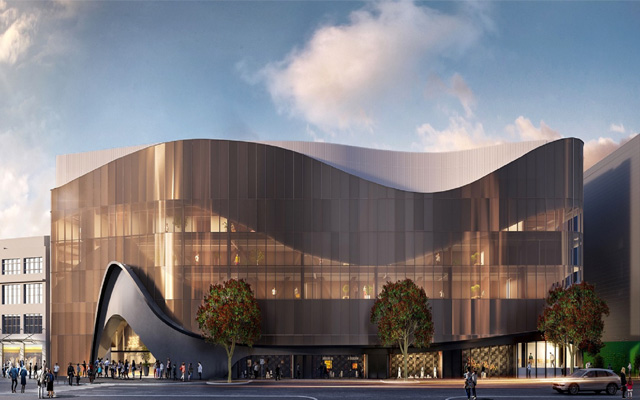
Tākina receives 5-Star Green Star Design certification

0
Tākina is being built with the highest standard of sustainability in mind

Tākina Wellington Convention and Exhibition Centre recently became the first convention centre in New Zealand to achieve the 5-Star Green Star Design certification from the NZ Green Building Council.

The venue, set to open in mid-2023, features sustainable and green innovations such as enhanced thermal insulation and an innovative glazing solution, as well as automatically-controlled LED lighting, air conditioning as well as ventilation.

Tākina is being built with the highest standard of sustainability in mind

When combined, these create a 66 per cent carbon reduction and 60 per cent in energy savings when benchmarked against a comparable new build.

The Tākina Wellington Convention and Exhibition Centre also boasts water-efficient fittings and rainwater harvesting system with 30,000 litres of storage for lavatory flushing. This is estimated to reduce potable water consumption by 30 per cent.

WellingtonNZ general manager David Perks said the venue “presents the best option for business events in New Zealand as firms increasingly look to incorporate sustainability into their decision making”.

The venue is also contributing to Wellington’s “commitment to be a Zero Carbon Capital by 2050”.

Project director Danny McComb pointed out that the project has considered the impacts on the environment as well as the comfort and wellbeing of the people inside it.

“Increasingly conference and event organisers are looking at the values, attitudes and approaches to climate change and sustainability of venues and we expect that this will only increase.”

The multi-storey, 18,000m2, purpose-built convention centre will have 10,000m2 of conference space for a plenary seating up to 1,600 people, a 2,500m2 exhibition floor, two large, flexible plenary halls and meeting rooms, and a gala dinner capacity of 1,400 people.

Learn, adapt, and plan

0

What are your current thoughts about the pandemic and its impact on the exhibitions sector?
It has been a challenging 16 months so far for the South-east Asian market. And I do not see anything improving until the final two months of this year in which shows could be staged domestically in Indonesia, the Philippines, and perhaps in smaller Malaysian cities.

Last year, I was able to pull off five events in Thailand with support from the venue, Thailand Convention & Exhibitions Bureau (TCEB), and exhibitors, but I do not think I have the “magic” to pull it off again this year.

Back then, the Thais were generally less afraid of the virus and more daring to continue exhibiting; also due in part to the government managing to keep the pandemic in check for 2020. I do not see the same thing happening this year due to slower inoculations and the peoples’ fear of the variants in the country.

How did you manage to stage five tradeshows at the height of the pandemic?
The five shows went ahead due to the domestic exhibitors playing a massive role in it. They wanted a physical event to take place and we simply heeded their call. The event was also hybrid to allow the participation of foreign exhibitors and visitors.

To organise a tradeshow during the pandemic, it is important to have support from stakeholders (such as associations and government bodies) and exhibitors alike.

It helps that in Thailand, the MICE industry is recognised by the government as a key pillar and TCEB provided ample support for our shows in the form of incentives and subsidies (both financial and non-financial) to ensure organisers like us were well-equipped and that the tradeshows could commence successfully.

I daresay South-east Asia region’s tourism boards have a lot to learn from TCEB’s creative ideas and useful incentives that have provided assistance to the domestic MICE industry during this pandemic.

How did being agile help you reap massive rewards for the company?
Being able to “bend” accordingly with the fluidity of the pandemic made us one of the trade expo companies that was able to weather the massive storm.

We went back to the drawing board in April 2020 and started exiting the expos business in several countries as nobody wanted to join an exhibition during those confusing times.

Being an SME, we were able to pivot to focus on our clients’ needs on how they would like to connect with their clients during the pandemic. Along with some manpower furloughs and effective trims – our financials were not fantastic in comparison with 2019 – we somewhat manage to pull off an amazing feat of survival!

Till today I am not a staunch believer in virtual events. I used to run an industrial directory, and the concept of the virtual events with online booths bears a strong resemblance to a directory business, which made me ponder whether I wanted to take my clients backwards instead of forwards. This is because we already have Google as a comprehensive search engine, so why am I turning my expo into another search engine?

There are many ways to pivot digitally, but virtual events are definitely not the complete answer.

Closer to home, Singapore’s tradeshows will face an uphill battle due to the lack of a domestic market and tight government reins which makes it a nightmare for tradeshow organisers. But I foresee a brighter 2022 for the Singapore MICE industry as it’ll probably be the only country in South-east Asia to inoculate most of its population, and this would instil more confidence in trade organisers, exhibitors, and potential visitors who would love to be here.

What were some of the challenges you faced when trying to break into the exhibitions market in frontier markets or third-world countries?
When it comes to starting up in any country, the greatest challenges will always be language, cultural barriers, and security. I remember starting up my office in Indonesia back in 2005 – it was our inaugural office – and the language barrier deterred me from being able to better coach my team. It was also tough to get legalities sorted out as everything was in the local language.

Culture-wise, the people in Indonesia are also known to be very polite, and even if they do not understand what you are saying they would still nod their head in agreement. This had a detrimental effect as it was tough to ascertain if a potential client is a real client, and also whether my staff truly understood what I was trying to communicate.

Sometimes, personal security can also be put at risk. I remember once being at a traffic junction in Jakarta and was approached by four bikers who attempted to smash the car windows, however, the driver started horning frantically and the neighbouring cars responded in unison which sort of scared them away.

Being very aware of these elements are key when setting up an office in a third-world country and knowing how to manage them would be integral in your success!

What do you think the South-east Asian exhibitions industry will look like moving forward?
This is a pretty broad question as South-east Asia is massive and its different countries would experience different spurts of growth.

However, one thing I am sure of is that the “Big Boys” of the industry would continue its acquisition spree post-pandemic. Mid-size companies would be working on more joint ventures to grow their portfolios in order to compete with the “Big Boys”. I also see the “Big Boys” working with mid-size companies to expand their portfolio further.

As for smaller event organisers, I reckon the pandemic is a massive challenge for them and many of them have already shuttered. I think that small and new event companies developing new tradeshows would find it incredibly challenging in the post-pandemic world.

What do you think about the survivability of the industry?
With all the negativity and lockdowns engulfing us during these turbulent times, many had thought that our industry would be gone forever! But if you look on the bright side, events in China, the US, Middle East and Europe are getting back on track post-vaccination.

This shows that we will always be relevant – regardless of what virtual platforms are saying – and face-to-face meetings are always the preferred mode of business.

Here’s my one piece of advice: Learn from 2020, Adapt with 2021 and start planning for 2022!

CWT signs partnership on sustainable aviation fuel with Delta

0
Both companies have resolved their commitment to be responsible businesses

Travel management platform CWT has partnered with Delta to purchase enough sustainable aviation fuel (SAF) to cover the projected fuel usage from all of CWT’s travellers on Delta on June 5, also known as World Environment Day.

The agreement underscores CWT’s commitment to environmental stewardship, a core part of its strategy, culture and consulting activities as a U.N Global Compact signatory since 2012.

Both companies have resolved their commitment to being responsible businesses

The agreement is also part of Delta’s Flight to Net Zero initiative that encompasses the company’s industry-leading global carbon neutral goal. It also represents new initiatives, products and standards that will advance clean air travel and accelerate the reduction of carbon emissions.

“Our strong sustainability partnership with CWT helps to drive the industry forward to a more environmentally-sound future, and underscores a conceptual alignment within the travel industry to proactively find solutions for the carbon footprint created by travel,” said Steve Sear, Delta’s executive vice president of global sales.

Recently, AMEX GBT also teamed up with Shell on a separate sustainable travel fuel push.

Philippines to invest in upskilling, reskilling tourism workforce

0
Retraining the tourism workforce in the Philippines has become even more crucial amid Covid

Developing skilled local tourism professionals through the education system is at the core of the Philippine Department of Tourism’s (DOT) five-year industry manpower development plan.

DOT secretary Bernadette Romulo-Puyat virtually launched The Philippine Tourism Human Capital Development Plan (PTHCD) for 2021-2025, designed to ensure the steady supply of trained manpower and to address challenges facing tourism human capital development.

Retraining the tourism workforce in the Philippines has become even more crucial amid Covid

“We aim to develop competent, world-class Filipino tourism professionals through a harmonised education system and strong tourism industry linkages and collaboration. Together, these factors will lead us toward attaining sustainable and inclusive national socio-economic development,” Romulo-Puyat said.

The Republic Act 9593, also known as the Tourism Act of 2009, mandates the DOT to draft an industry manpower development plan every five years. PTHCD is the continuation of the Philippine Tourism Human Resource Development Strategy and Action Plan for 2015-2020.

In the previous months, DOT conducted a national consultation, situational analysis, and focus group discussions across the country with participants from different tourism industry sub-sectors, local government units, government agencies and the academe.

The discussions covered Education Tourism as a tourism product offering, industry linkages and partnerships, research and innovation, standards review and development, implementation of the ASEAN Mutual Recognition Arrangements for Tourism Professionals, and other programmes.

Romulo-Puyat added: “In view of the challenges and opportunities brought about by the Covid-19 pandemic, this updated PTHCD comes at a most critical time. The retooling, reskilling, and upskilling of the tourism workforce will all be crucial as the industry prepares to reopen and recover, and will be among the most important steps in our journey towards the better normal.”

Ungerboeck and EventBooking joins forces

0
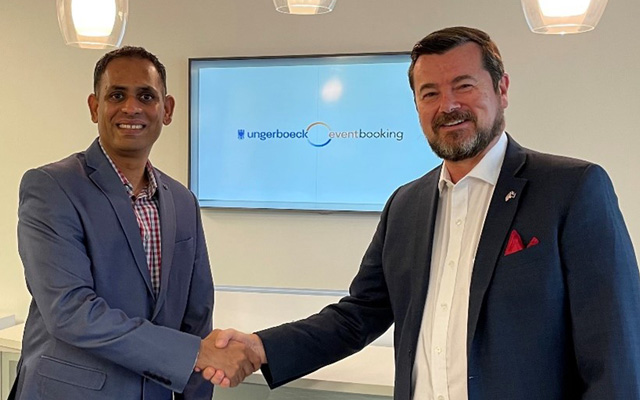
From left: Ungerboeck's Manish Chandak, and EventBooking's Steve Mackenzie

Ungerboeck and EventBooking, two software providers of event and venue management tools, have agreed to a merger.

In a press statement, the companies shared that the merger is backed by Boston-based private equity firm Cove Hill Partners.

From left: Ungerboeck’s Manish Chandak, and EventBooking’s Steve Mackenzie

Combined, both companies have over 50 years of experience in events. Manish Chandak of Ungerboeck will serve as president and CEO, while Steve Mackenzie of EventBooking will serve as executive vice president.

Ungerboeck provides event and venue management software to over 50,000 users in over 50 countries around the world, while Event Booking is a Software as a Service company that specialises in online booking and venue management for arenas, stadiums, convention centres, across 24 countries and over 1,000 venues.

“We want to create new possibilities, and we’ll be better positioned to focus on client needs, both known and potential,” Chandak said.

“Our differences make this endeavour extremely valuable, but both organisations share a vision for putting their clients first. That vision and commitment won’t change. We’ll learn from each other and continue learning from those we serve, finding better ways to transform their businesses and simplify their day-to-day lives.”

From left: Ungerboeck’s Manish Chandak, and EventBooking’s Steve Mackenzie

Grand Hyatt returns to South Korea’s Jeju island

0

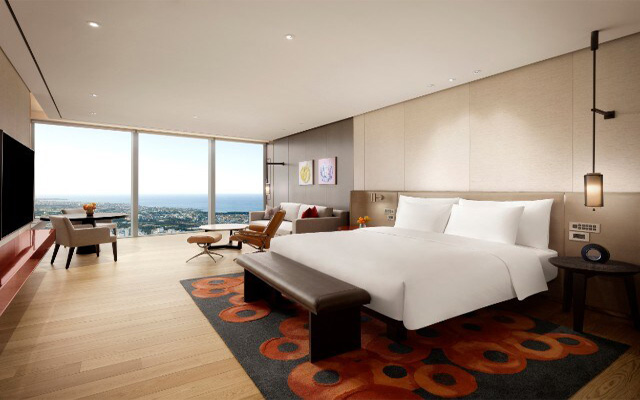
Hyatt Hotels has opened the 1,600-room Grand Hyatt Jeju in South Korea, billed as the largest Hyatt hotel in Asia-Pacific.

Part of the new Jeju Dream Tower, this opening also marks the return of a Hyatt hotel into Jeju, an island on the southern end of the Korean Peninsula.

There are eight meetings and event spaces on-site, and individual spaces start from 80m2, going up to 346m2 (a combination of three spaces). The 260m2 Presidential Suite is also ideal for private events and intimate C-suite meetings, and features two bedrooms, separate living and dining areas, a massage room, and sauna steam room, as well as dedicated butler service.

Meanwhile, the other living spaces start at 65m2, and boast floor-to-ceiling windows that open out to views of Halla Mountain – the highest mountain in South Korea, the sea and the city. All come furnished with a 75-inch flatscreen TV and three-seater sofa.

Facilities include the Grand Club which suite guests have access to; the Korean Jjimjil Spa complete with red clay, cypress, ice and salt speciality therapy rooms; an indoor pool; and a 24-hour fitness centre. There is also a 4,290m2 infinity pool deck which features a heated infinity pool, private cabanas, a hot tub, a kids’ pool and a poolside bar.

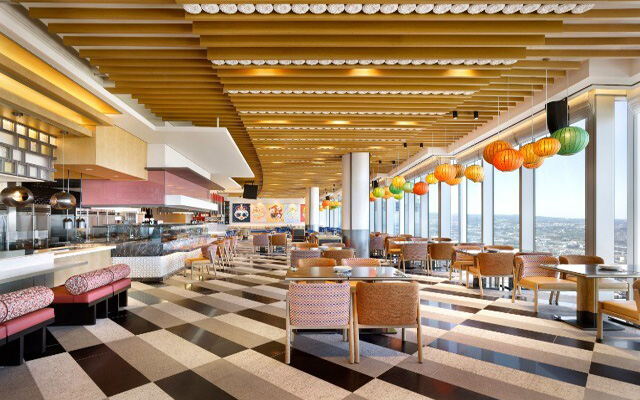
Grand Hyatt Jeju also offers a wide selection of cuisines under one roof, thanks to its 14 restaurants and bars. Global cuisine choices include a Steak House, and a Japanese izakaya named Yumeyama; while Korean options include a farm-to-table Jeju Hot Pot, Noknamu Korean BBQ dining restaurant, and Pocha which offers authentic Korean street food culture alongside lofty views from the 38th floor.

The property is a 10-minute drive from Jeju International Airport, 15-minute drive from the port and cruise terminals, and within walking distance from shopping and culinary hotspots such as Jeju Dongmun Market and Nuwemaru Street.

Staying the course

0

For the past year or so, Singapore was perched on the brink of business events recovery, with the successful staging of several large-scale hybrid events and the launch of the Connect@Singapore controlled inbound and meetings initiative.

Improved pandemic controls allowed community restrictions to be cautiously lifted, individuals to return to their workplaces, business meetings to be conducted under Safe Management Measures (SMMs), and new event wins to be celebrated, such as the inaugural Global Esports Games scheduled for December 2021.

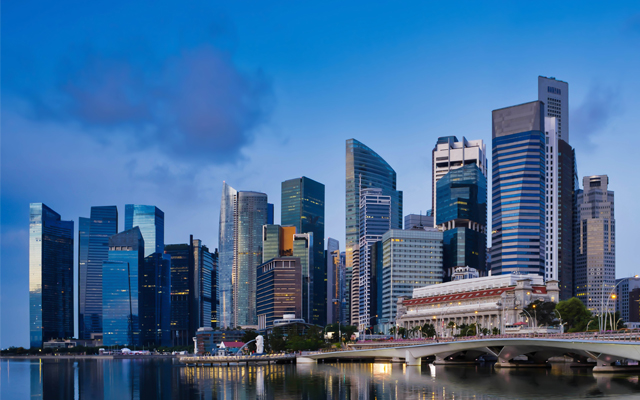
Singapore is prioritising the safety and well-being of all events stakeholders as well as the local community when a B2B event is held; Singapore’s Central Business District pictured

However, at press time in late-May, Singapore stepped back into a partial lockdown due to a spike in community cases, including unlinked infections. The current Phase 2: Heightened Alert restrictions differ from last year’s tough lockdown, as business events are still allowed to proceed but with capacity reduced to 100. Pre-event testing is also compulsory for meetings with more than 50 people.

The precarious state led several high profile international meetings to either cancel or postpone their upcoming plans in Singapore. These impacted events include the World Economic Forum and the Shangri-La Dialogue, both of which have been cancelled; and the 7th Architecture & Building Services 2021, which has been moved from June to November.

Large-scale hybrid events on trial
Despite the setback, Singapore Tourism Board (STB) is persisting with the phased reopening of the country’s business events industry.

Edward Koh, STB’s executive director, conventions, meetings & incentive travel, said the “calibrated manner” of reopening will “prevent new clusters from forming and reduce transmission risk”.

The careful stance taken by STB includes “rigorous protocols and innovative solutions for the end-to-end visitor journey”, with measures constantly reviewed and enhanced through various pilot events, such as TravelRevive in 2020 and Geo Connect Asia 2021. Findings and data from these events are helping STB to refine SMMs and best practices for future events.

For example, meeting pods, which enabled one-to-one meetings between exhibitors, representatives and attendees during TravelRevive in November 2020, were well-received. Larger pods were then piloted at Geo Connect Asia 2021. These were double in size to facilitate more productive discussions among four people, with two representatives from each company.

He pointed out that the resumption of more business events depends on the success of the pilot events, and the ability and readiness of event owners and organisers to apply SMMs effectively. These SMMs have to span an attendee’s entire journey, before, during and after the event.

“We will also continue to actively work with stakeholders and the Singapore Association of Convention and Exhibition Organisers and Suppliers, to develop robust SMMs and best practices to guide the industry and support a successful recovery,” said Koh.

Helping hands
Besides laying the groundwork for the safe resumption of business events, STB also facilitates events take-off with grants through the Business Events in Singapore scheme and extra support services through the Singapore MICE Advantage Programme.

While Koh said tourism revenue will inevitably shrink this year, the “fundamentals that make Singapore a key MICE hub and attractive location for business and leisure events remain unchanged”. This will put Singapore in a “good position” to emerge stronger after the pandemic ends.

Another positive step is the national vaccination programme, where the government’s target is to vaccinate the local population by end-2021.

Meanwhile, Koh pointed out that digital transformation is extremely crucial for the industry, and that includes hybrid events that have become the norm.

To support businesses in their digital journey, STB’s Business Improvement Fund will help business event owners pivot, upskill and build up technology capabilities. The fund encourages technology innovation and adoption, as well as the redesign of business model and processes in the tourism sector to improve productivity and competitiveness.

William Lim, director of operations, MICE Depot, told TTGmice that his company has benefitted from the Business Improvement Fund. “It accelerated our digital technology adoption and development of our digital solutions. It supported the development of immersive digital experiences for our customers. We will continue to embrace change and stay flexible to evolve quickly in this rapidly changing environment and will continue to adopt new technologies to address our customers and attendees’ needs,” detailed Lim.

However, STB’s focus on the digitalisation of the business events industry has met with disapproval from Kenny Yong, founder and group CEO of Fireworks Trade Media.

Yong pointed out that not every event organiser benefits from digitalisation and the shift to hybrid online/in-person events.

“Every bonafide organiser knows that you can’t monetise digital expos as much as you can from a physical event,” Yong remarked.

“I think STB could do more to map out ways to allow more attendees (at in-person events) and (have) more certainty in rules and regulations pertaining to shows. We are facing massive challenges (in informing) our exhibitors that footfalls would be limited in compliance with local laws and (that we are) not certain when shows could be staged. (This is) detrimental to shows in 2020 and 2021.”

Peeking into the future of events

0

The spirit of innovation has truly thrived amid this pandemic. We have seen major convention and exhibition centres in our region leading the charge towards venue and event digitisation, bringing onboard infrastructure that facilitates quality livestreaming and broadcasting. Along the way, hotels have joined in to offer livestreaming and broadcasting facilities, eager to be seen as a worthy supporter of increasingly popular hybrid online/in-person business events.

Venue managers that have gone on this path will soon realise that the only way to move is forward because with every online or hybrid event attendees experience, their expectations for quality content will rise. This puts pressure on event producers and planners to come up with novel ways to keep content and engagement interesting. In turn, event producers and planners will come to rely more heavily on partners that can help them easily turn ideas into reality, perhaps through the right equipment or with a collaborative mindset.

Far-sighted, savvy venues have continued to evolve and improve their digital and hybrid event offerings. They are finding audiovisual and broadcasting solutions from specialists that once catered only to television productions. No surprises there, as many event producers and planners have likened producing an online or hybrid business event today to delivering a major live performance.

Innovation is not only booming on the hardware front. The number of event software vendors across the world has expanded by 400 per cent in the past year, according to a global mapping study conducted by marketing specialist, Hoosh. You can read about this on TTGmice.com.

It is natural to feel that the familiar past of pre-pandemic days are more comforting than the unknown future, but the technology changes we are witnessing today are giving us a peek into a more exciting business events landscape to come, especially for conferences, meetings and product launches that could benefit from some creativity.

The combination of innovative event venues, new specialised apps to answer known and yet-unknown online and hybrid event needs, increased investments in event technology, and the consolidation of established event software players will ultimately benefit event producers and planners as well as attendees.

Perth chalks up two conference wins

0
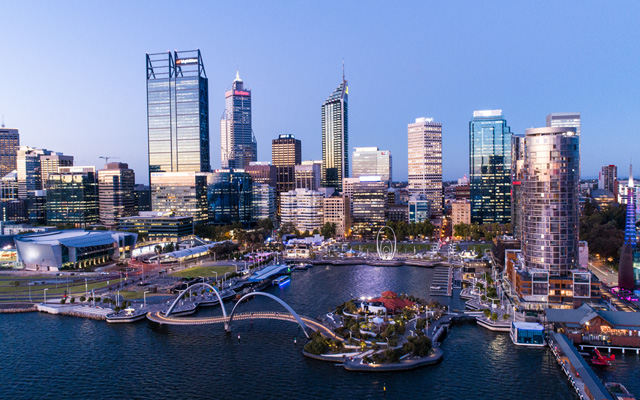
Business events are an important part of the Western Australian economy, bringing high yielding visitors to the State; Perth pictured

Business Events Perth has recently secured two separate bids to host Australia’s largest life sciences conference, AusBiotech, next year; and the International Congress on Neuromuscular Diseases in 2024.

Business Events Perth chief executive Gareth Martin said AusBiotech 2022 is expected to attract over 1,000 researchers, developers, start-ups, investors, innovators, universities, and corporates to Perth. Slated to be held in October 2022, the congress will also bring new commercial opportunities to Western Australia’s thriving biotechnology industry.

Business events are an important part of the Western Australian economy, bringing high-yielding visitors to the State; Perth pictured

“Western Australia’s life science industry is one of the fastest-growing in Australia, with the total economic contribution estimated to be A$29.7 billion (US$23 billion) last year,” Martin said.

Running in conjunction with the conference will be the Australia Biotech Invest & Partnering event, which will provide opportunities for local companies and professional service providers to connect with key stakeholders and investors.

There are currently around 40 biotechnology and pharmaceutical companies and more than 50 medtech and digital health companies based in Western Australia, along with 22 research institutions and almost 65 services and support organisations.

Business Events Perth partnered with the Western Australian Department of Jobs, Tourism, Science and Innovation and the City of Perth to secure the event.

Next up in 2024, the International Congress on Neuromuscular Diseases will return to Perth for the first time in over 50 years.

The International Congress on Neuromuscular Diseases is one of the leading global conferences on neuromuscular diseases, attracting thousands of delegates from around the world.

The event was first held in Perth in 1971, following the ground-breaking research by Western Australian Emeritus Professor Byron Kakulas AO who showed that degenerated muscle could regenerate in quokkas.

This research eventually led to United States Food and Drug Administration approved treatments developed by the Perron Institute for Neurological and Translational Science for Duchenne muscular dystrophy, with application to other diseases.

Tourism Australia supported the bid to bring this event back to Australia through the Business Events Bid Fund Program.

Tourism Australia’s managing director, Phillipa Harrison, said in a statement: “Securing these types of events, particularly with the long lead time involved, will ensure that Australia remains front of mind among global decision makers and continues to attract high-value business events in the future.”

To secure the conference Business Events Perth worked with the local conference organising committee, which features prominent neurological scientists from the Perron Institute and PCOs Arinex.

STB offers up to 70 per cent support to attend SMF X IBTM Wired

0
IBTM has partnered with leading international industry associations, visionaries and thought leaders for the education programme

The Singapore Tourism Board is offering support of up to 70 per cent to employees of Singapore registered companies in the MICE sector who would like to attend IBTM Wired, set to take place from June 28 to July 1, 2021.

The Tip-It (Training Industry Professionals in Tourism) grant is open to all Singapore citizens or permanent residents of Singapore who are employees of Singapore-registered companies in the MICE sector.

IBTM has partnered with leading international industry associations, visionaries and thought leaders for the education programme

The grant supports up to 70 per cent of course fees and 70 per cent of absentee payroll, capped at S$7.50/hr (US$5.70/hour) The deadline for applications is June 4, and application forms can be downloaded here.

IBTM Wired features a packed conference schedule with over 30 topical education sessions and four high-profile keynote speakers designed to give events professionals the key tools they need for the next chapter in meetings and events.

The event includes online access to the SMF (Singapore MICE Forum) x IBTM Wired conference, in partnership with SACEOS (Singapore Association for Convention & Exhibition Organisers & Suppliers), which takes place on June 28.

In addition to the education programme, visitors can use the ‘walk up’ video meetings function at the event to request forge new business connections with suppliers, venues and destinations from around the globe.

Reviews

The Ritz-Carlton, Bangkok

The newly-opened Ritz-Carlton, Bangkok anchors the One Bangkok development with cosmopolitan elegance. Featuring the city's largest ballroom and a spectacular new penthouse suite, it delivers exceptional hardware and deeply authentic, soulful service for business and leisure travellers alike

Mama Shelter Zurich

Behind the imposing, Brutalist concrete that defines Zurich’s Oerlikon district lies a surprising secret. While its exterior honours the neighbourhood’s industrial roots, stepping inside Mama Shelter reveals a vibrant, neon-soaked world that is a far cry from its rigid shell

Hyatt Regency Kuala Lumpur at KL Midtown

A polished urban retreat designed for business travellers, Hyatt Regency Kuala Lumpur at KL Midtown combines thoughtful design, seamless service, and exceptional facilities.