Raffles Hotels & Resorts continues to grow its global footprint, with the planned opening of flagship properties in Dubai, Bahrain and Macau later this year.
Set to open its doors in 4Q2021, Raffles the Palm Dubai will be the first Raffles resort on the Palm Jumeirah – the world’s largest man-made island and archipelago. Located across 100,000m2 of landscape on the West Crescent, the 389-key property will feature eight bar and restaurant concepts.
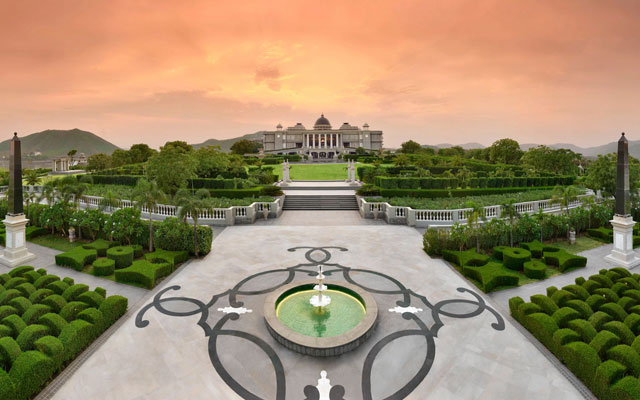
Raffles Udaipur in India
Raffles Al Areen Palace, Bahrain is located near the island’s protected wildlife park and reserve, and will offer 78 opulent pool villas, and a spa. A collection of one- and two-bedroom villas will feature living and dining areas, an office, and master bedrooms with ensuite bathrooms.
Located on Galaxy Macau’s east promenade, Raffles at Galaxy Macau is an architectural landmark featuring a glass airbridge that connects the two towers on every floor. The property will be home to 450 suites, with some featuring private pools and gardens.
Then in 2022, Raffles will debut flagship locations in Doha and Jeddah.
A cultural tribute to Qatar’s heritage, the Iconic Towers in Lusail, a representation of Qatar’s national seal, will be home to the new Raffles Doha. A property with 132 suites and 49 apartments, the combo hotel will feature entertainment and recreational facilities, boutique shopping, movie theatres, restaurants and a cigar lounge, as well as meeting spaces.
Inspired by the rich history of Saudi Arabia and Jeddah’s old town architecture, Raffles Jeddah will have 181 guestrooms – including a wedding suite and penthouse suite – and 188 branded residences. Alongside six restaurants and lounges, there will be a library, spa and fitness club. The hotel’s meeting facilities include a 1,500m2 ballroom overlooking the corniche and 1,000m2 of conference rooms.
Elsewhere, Raffles Udaipur, India’s first Raffles hotel, opened recently on August 2, 2021, on an 8.4ha private island in Udai Sagar Lake. Surrounded by spectacular hills and a view of the 400-year-old temple in the background, the property has 101 rooms, each with a private pool.
Zen state of mind
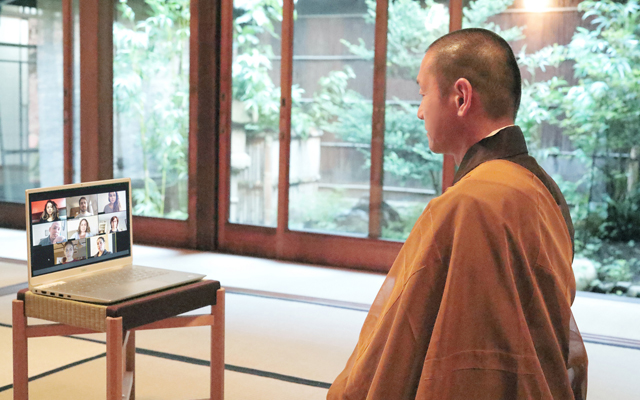
Remote teams from around the world can gather virtually together at Maikoya, a traditional tea house in the heart of Kyoto, for a livestreamed online zazen – a seated meditation that is the primary practice of the Zen Buddhist tradition.
The 60-minute experience begins with a short informative session that provides guidance on posture as well as an introduction to the philosophy and history of Zen meditation, and the practice’s connection to Japanese culture.
A 45-minute meditation follows with the use of a Japanese “singing bowl” known as rin. Instructors guide participants through this entire process, leading them on a journey of acceptance, letting go and mindfulness.
At the end is a short exploratory session where participants can ask questions about any aspect of zazen or consider their thoughts on the experience. Companies could even use this time as an opportunity for team members to reflect, share or offer feedback.
The online retreat will feature well as an ice-breaker to a more intense teambuilding session, or as a stand-alone wellness exercise for teams.
Cost: 10,000 yen (US$90) per pax Contact: kyoto@mai-ko.com
Better blooms
Maikoya also offers online ikebana, the Japanese art of flower arrangements. It is a popular way to learn not only one of Japan’s ancient arts but also a little about Japanese culture and history.
This one-hour session is led by a geisha who will outline ikebana culture as well as a methodology suitable for beginners. She will explain simple rules for participants to make a basic, but authentic ikebana artwork.
After receiving their tutorial, participants can begin to bring their flowers to life. Step-by-step guidance is provided.
This activity features well as a break-time activity in between online meetings, or as a relaxing conclusion to an intense teambuilding session.
Cost: 5,000 yen per pax Contact: kyoto@mai-ko.com
Impactful work
The newly-launched Impact Online works 17 Sustainable Development Goals (SDG) 2030 into a programme that encourages participants to appreciate their own strengths and the diversity of skills of others in their team while learning how they can contribute to a sustainable future for all.
Conducted by Team Building Asia, the programme requires teams to select from a suite of tasks related to challenges such as no poverty, zero hunger, life on land, life below water, and climate action. Team members complete tasks and submit their attempts to gain points and ascend the leaderboard.
Collaboration is key, as the director and other participants possess different bits of information that they must share and work together in order to solve challenges.
Challenges range from mental, creative and active. New tasks and levels are unlocked as the game progresses.
Gameplay takes an hour, and it is followed by discussions among teams on actionable items to do individually and as an organisation to be more sustainable.
Impact Online offers three difficulty levels – easy, medium and difficult. It functions well as a main teambuilding activity.
Participants needs to download an app as well as have a computer for the video call. The activity is suitable for groups of eight and more.
Cost: Available at enquiry Contact: stuart.harris@teambuildingasia.com
Smells like team spirit
An expansion of Asian Trail’s 2020 bestselling online activity, The Investigation Affair, the new Online Investigator calls on teams to compete against time to sniff out clues, discover evidence and solve cases in order to become leading detectives.
The game begins with an introduction to the Crime Academy, and participants will need to solve team puzzles, interact with other teams, complete tasked pictures or videos, and conduct research to progress through more than 25 cases.
Unified solutions will be input via a web-app to score points. Live-scoring allows participants to track their performance as well as that of other teams.
Online Investigator has no capacity limits, although it is recommended that each team takes no more than six people.
Online Investigator functions well as a main teambuilding activity. It trains planning, problem-solving and communication skills while bringing remote team members together for some fun.
Cost: Available at enquiry Contact: menging@asiantrails.com.kh
Multi-pronged quest
Conducted by Asia Ability, Quickfire Interactive is a high-energy, app-based game of mental, physical and creative challenges that can be customised to reflect corporate identity and convey organisational goals as well as specific learning experiences.
To begin, teams are formed and their quest is to complete as many challenges as possible within a given time frame. Challenges come in various difficulty levels and forms, such as photos, videos, single-answer and multiple choice questions, and logic puzzles. As time elapses, the pace and risk levels build, creating an atmosphere of fun and urgency. The final results are shown through a presentation of the best team-generated photos.
Quickfire Interactive emphasises the vital role of every team member in achieving group success, while the challenges encourage innovative thinking, effective communication skills, and collective strategy.
Participants will need to download the custom-built Quickfire app on their phone or tablet and join the activity on a video conference platform.
Gameplay is suitable for groups of eight to 1,000 and can be conducted as a single 90-minute or two-hour remote event. It can also be broken up into smaller sessions throughout a conference or meeting.
Through Asia Ability’s partnership with B1G1 Business for Good, Quickfire Interactive can also integrate CSR elements to allow teams to generate positive impacts towards pre-selected good causes as they progress through tasks.
Cost: Available at enquiry. Contact: ask@asiaability.com
Acceleration in digitalisation will see future events being delivered through various other forms of technology
Big Tech are crafting technology to disrupt events
VR, AI and AR will enable more immersive, interactive and experiential events
Cost and courage to take leap forward are obstacles
When integrating technology into the customer experience, the most important thing will still be understanding customers and their business needs
While the future of the business events industry is undoubtedly human, the sector needs to be ready to integrate different types of new technology that can enhance attendees’ experience in events going forward.
This is according to Ayesha Khanna, co-founder and CEO of ADDO AI (an artificial intelligence solutions firm and incubator) who was the closing keynoter at the recent hybrid SMF IBTM Wired event held in Singapore.
Aside from presenting a futuristic outlook of hybrid reality with man-machine powered events and social robots alleviating Zoom fatigue when humans meet in digital spaces, Khanna said Big Tech – like Apple, Facebook and Google – was developing technologies that would disrupt events by making experiences more interactive, personalised and dynamic. These were aimed at millennials and the next generation of digital natives – the alphas.
Event spaces with virtual reality (VR) headsets could create a social presence with avatars, sound projections and haptic gloves to make virtual attendees feel like they were in a real meeting. This was getting close, Khanna said.
She added that augmented reality (AR) has already successfully delivered specially curated art tours when travel was restricted, and could, for example, transform a customised experience for someone attending a car launch, she added.
While meeting planners and event organisers do not have to be technologists, Khanna advised that they needed to know about the developments to make decisions to help them know the customer – how he or she is feeling, for example – to create a better experience.
Non-human influencers, Khanna pointed out, were also growing by the day. The young and vivacious Lu, created by a magazine company, for example, has 25 million followers on social media. Khanna added that these non-human influencers were creating a new era of continual engagement and were cheaper to sign up “than big speakers”.
Technology is not omnipotent
Event technology solutions have no doubt been pushed to the forefront during the pandemic and GlobalSign.in founder CEO Veemal Gungadin, who is also founder and CEO of event technology platform GEVME, said he had seen a 50 per cent jump in meeting technology spend, while total budgets did not increase.
But is the industry ready to take the next step, embrace emerging technological solutions to create new realms of customer experience beyond green screen magic and 3D movie thrills? Will AI, VR and AR be less sexy once face-to-face and high-touch interaction can resume, and is the industry excited by the possibilities?
According to Oscar Cerezales, chief strategy officer, MCI Group, technology is important, but it is only an enabler.
Cerezales said: “Technology without design is useless, and there is no correlation between great events and great technology used. However, there is a correlation between great events with great design – UX or user-based with neuroscience, design thinking, etc.”
What the industry needs to learn from Big Tech, he pointed out, is “how to scale up, how to grow-build-stick-monetise communities and how to develop platform business models”.
To Cerezales, it is a phased process – first, a simple pivot from offline to online; second, adding design to the experiences; third, acceptance that it is not about an event but a year-long campaign with multiple touchpoints with their audience, be it corporate customers or association members and the public.
“This process requires courage, a testing and prototyping mindset, plus a learning and collaborative ecosystem. Finally, everyone has to learn about the what and how of modern outsourcing needs,” he pointed out.
Focus on need, partnership and ROI
The AI, AR and VR future of events, according to Kenny Goh, founder, miceNeurol, an event technology partner and event planner, is “frightening and confusing to the industry” preoccupied now with “bottomline issues”.
Moving forward, Goh advocates the setting up of a partnership model where the four main stakeholders – event technology company, production house, venue and content owner – approach a hybrid or virtual event on a “cost-share” basis with the Singapore Tourism Board or Singapore Exhibition and Convention Bureau as the catalyst.
PCO and turnkey agency Ace:Daytons Direct is a frontrunner in using AI to create virtual platforms and data in matchmaking, according to managing director Nancy Tan.
Tan said: “But emerging technology, production, satellite and equipment costs have to be affordable for clients and so far, demand among our primarily medical association clients is not a lot, only if it is a necessity and if adoption would result in higher ROI.”
“It is different if you are a gaming event or conference. Then, AI and VR are a must,” Tan opined, adding that such technology would add value to a high-end product launch.
“It is good to have but to ‘hype up’ an event comes at a price”, Tan commented, noting that AI has been around since 1950 and the first VR headset was developed in 1968.
Gungadin agreed there had been “no impetus” for the industry to “reimagine” events with the sort of technology due to the cost and “if it’s not broken, why fix it” mindset.
However, he said there was a need now to reimagine the experience for those on-site, as well as to create a distinct experience for those online.
For him, the next big trend is leveraging big data to better understand the customer, to create a better customer experience and to deliver a 365-day user journey – the omnichannel, and it is already happening.
Mid-August opening planned for Krabi and Phang Nga as part of Thailand’s plan to gradually reopen destinations to international travellers; aerial shot of Phra Nang Beach in Thailand pictured
The Tourism Authority of Thailand (TAT) has confirmed that plans to reopen Krabi and Phang Nga to fully vaccinated international tourists are set to start within this month.
Krabi and Phang Nga are scheduled to reopen selected areas under a 7+7 model. This will allow foreign tourists under the Sandbox programme to reduce the mandatory stay in Phuket from 14 to seven days, after which another seven nights can be spent in Krabi (Ko Phi Phi, Ko Ngai, and Railay Beach), and Phang Nga (Khao Lak and Ko Yao).
Mid-August opening planned for Krabi and Phang Nga as part of Thailand’s plan to gradually reopen destinations to international travellers; an aerial shot of Phra Nang Beach in Thailand pictured
The 7+7 model aims to provide international tourists with more options to visit multiple destinations during their trip to Thailand. Krabi and Phang Nga are ideal for this given their proximity to and ease of access from Phuket.
At the same time, TAT also reiterated that both the Phuket Sandbox and Samui Plus programmes are going ahead as usual.
Thanakorn Wangboonkongchana, spokesperson of the Centre for Economic Situation Administration, said Thailand’s prime minister Prayut Chan-o-cha had been keeping a close watch on the Phuket Sandbox and Samui Plus programmes, and voiced confidence that the country’s reopening plan could proceed in a way that ensures the health and safety of both the tourists and local people.
TAT said that the new Covid-19 cases in Phuket were mostly detected among locals, construction camp workers and domestic travellers; with only a small number of cases found among international arrivals.
From July 1 until August 1, Phuket recorded 14,910 international arrivals under the Sandbox programme. Of these, 34 tested positive for Covid-19 and had been sent for medical treatment. To contain local transmission, Phuket has stepped up screening measures on domestic travellers, effective from August 3-16.
Phuket, Krabi, and Phang Nga are declared among the 11 Controlled Areas or orange zone provinces in Thailand’s expansion of the Covid-19 restrictions from August 3-31.
Meanwhile, the recently-reported 54 new cases on Koh Samui from a restaurant cluster has been brought under control, TAT said, adding that none of the infections were related to foreign tourists under the Samui Plus scheme or those who continued their journey from the Phuket Sandbox programme.
From July 15 to August 1, Surat Thani recorded 137 international arrivals under the Samui Plus programme, with one person testing positive for Covid-19. In addition, there were 211 tourists from the Phuket Sandbox programme. Surat Thani has since stepped up virus control measures.
The research shows that exhibitors and visitors believe exhibitions can help them save time and money, while reducing travel to multiple locations and the related carbon footprint
UFI has released a new report on the status of sustainability in the exhibition industry, including results from surveys conducted by UFI research partner Explori.
Even though the Covid-19 pandemic has severely hit the economy, the fundamentals remain, and sustainability is a strong priority for exhibitions and their participants.
The research shows that exhibitors and visitors believe exhibitions can help them save time and money, while reducing travel to multiple locations and the related carbon footprint
For 86% of exhibitors and 87% of visitors, travelling to an exhibition helps save time, while for 84% of exhibitors and 83% of visitors it helps save money. For 67% of exhibitors and 64% of visitors, travelling to an exhibition, where they can do multiple things under one roof and avoid separate flights to other locations, helps to reduce their carbon footprint.
In parallel, the majority consider the environmental impact of the tradeshow sector to be important to them, and they believe that improving this environmental impact will become increasingly more important to the sector’s long-term success.
Across all segments (organisers, venues and service providers) there is a feeling that the rate of transition towards sustainability is around halfway between “only starting the transition” and “very advanced”, and, in general, exhibition participants also rate the efforts of the industry as “average”, in this regard.
These are the other findings detailed in the report.
Before Covid-19, what were the expectations from exhibition participants?
73% of exhibitors and visitors either agreed or strongly agreed that it is important for a tradeshow to display a strong commitment to sustainability.
34% of exhibitors and 36% of visitors said they would not attend a trade show that does not have a responsible approach to sustainability.
And what is the perception of the efforts to date?
73% of exhibitors say that their company is taking steps towards improving sustainability.
On average, all segments (organisers, venues and service providers) of the industry believe the rate of transition towards sustainability to be halfway between “only starting the transition” and “very advanced”.
Exhibition participants rate the efforts of the industry as “average”, generally speaking; 24% of exhibitors and 16% of visitors consider them to be “very poor” or “poor”, while 26% of exhibitors and 30% of visitors see them as “good” or “excellent”.
How is Covid-19 affecting the situation?
Investments from the exhibition industry for programmes related to sustainability haven’t been as affected as others. In June 2020, while 85% of companies had stopped or decreased their overall level of investments, that was the case for “only” 54% of companies for investments for programmes related to sustainability, and there was “no” or “limited impact” for activities related to sustainability for 51% of them.
89% of companies from the exhibition industry believe public investments to be necessary (43% “for a significant share” and 46% “as essential and necessary for most of the investments”).
Most importantly, “fundamentals remain” for exhibition participants. In 2021, 86% of exhibitors and 87% of visitors say that travelling to an exhibition helps them save time, while 84% of exhibitors and 83% of visitors say it helps save money. Meanwhile, 67% of exhibitors and 64% of visitors believe that travelling to an exhibition, where they can do multiple things under one roof and avoid separate flights to other places, helps them reduce their carbon footprint.
Having said that, lower proportions of participants – although still a majority – believe that the tradeshow sector’s environmental impact remains important to them (51% of exhibitors and 52% of visitors) while 58% of both exhibitors and visitors consider that improving this environmental impact will become increasingly more important to the sector’s long-term success.
In terms of environmental impact, what are the priorities and how can they be achieved?
Significant differences can be seen when comparing the views of participants and of the industry (and the type of activity within the industry) when it comes to identifying the key areas of material impact: plastic and food come first for participants, while travel and booths come first for the industry.
Exhibition participants prioritise three domains of action to make the tradeshow industry environmentally sustainable: “reduce the costs of sustainable materials/products/services available for use”, “develop new technologies or processes for problems such as waste, carbon emissions, etc.” and “develop education about sustainable events at all levels of the value chain (including visitors and exhibitors)”.
77% of exhibitors and 65% of visitors believe that “organisations that organise and set-up events” are responsible for helping the tradeshow industry improve its environmental impact. This responsibility also relies on exhibiting companies for 53% of exhibitors and 54% of visitors.
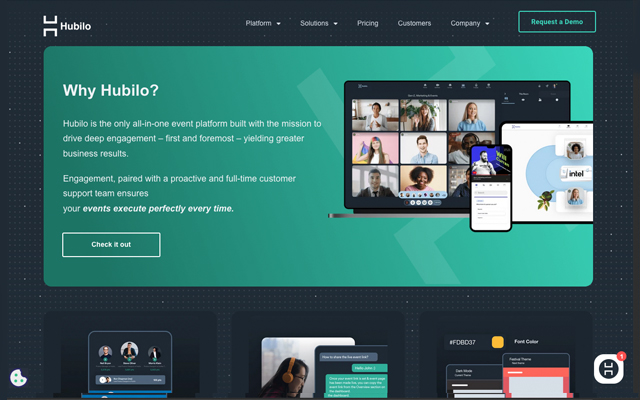
The partnership leverages the collective expertise of both organisations to help businesses sharpen their competitive edge through immersive event experiences. Photo: Screenshot of Hubilo's webpage
Hubilo Technologies, a virtual and hybrid event platform, has partnered with Constellar Venues (Constellar) to elevate hybrid event experiences in the Asia Pacific (APAC) region.
The partnership leverages Constellar’s partner networks in the APAC region, insight-generation capabilities, market knowledge, and established expertise in the hybrid event space. Hubilo’s virtual and hybrid events platform with its engagement features, will further offer data analytics and capabilities that can generate new opportunities for businesses and event organisers to effectively deliver maximum return on investment (ROI).
The partnership leverages the collective expertise of both organisations. Photo: Screenshot of Hubilo’s webpage
Both entities aim to pave the way forward for hybrid events of the future by delivering unparalleled event management services, digital project management, user experience design, testing and onboarding services, technological support, and other specialised services.
As the events industry moves towards hybrid engagement models in a post-pandemic world – according to Allied Market Research – the industry’s size was valued at US$1,135 billion in 2019 and is expected to reach US$1,553 billion by 2028, registering a CAGR of 11.2 per cent from 2021 to 2028; the Asia Pacific region will exhibit the highest CAGR of 13.3 per cent during 2021-2028.
Vaibhav Jain, CEO and founder, Hubilo, said in a statement: “Unlike so many other business buzz phrases that come and go, digital transformation, especially in the event management space, is fundamental to business success.”
Hubilo recently unveiled an improved version of its platform, with additional engagement features placing greater emphasis on attendee experience and streamlined and minimalist navigation. It also comes with enhanced sponsored interaction capabilities such as networking lounges and demo rooms equipped with virtual booth chats, polls, and Q&As for sponsors and exhibitors that allow for seamless interaction between attendees.
Hubilo’s entire event can also be streamed through a mobile app, similarly to using a laptop. This is inclusive of all activities, entering a session or an exhibitor’s booth, securing a seat in the networking lounge, participating in the polls, games, Q&As, or engaging with a fellow attendee. In a hybrid format, the app will act as an enabler to connect offline and online attendees.
Aloysius Arlando, chief executive (Venues), Constellar Holdings, added: “As Singapore returns to Phase 2 (Heightened Alert) and countries the world over impose varying degrees of restrictions to combat the pandemic, virtual and hybrid events like what Hubilo and Constellar offer will be key to restarting MICE events & travel and in helping to sustain economic growth in the region.”
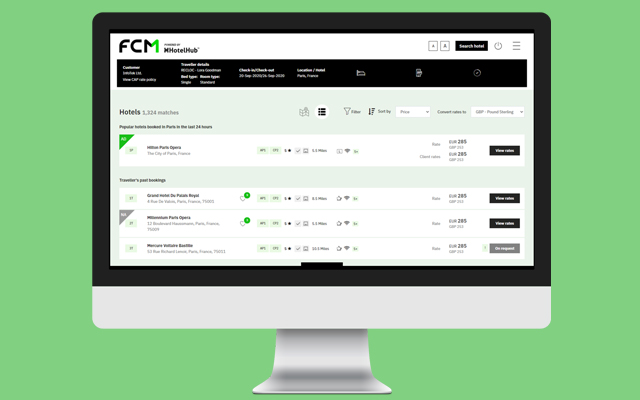
The Flight Centre Travel Group was looking for an omnichannel approach to their hotel booking needs for its corporate brands
FCM has partnered with HotelHub, a hotel technology solution provider for travel management companies (TMCs), to provide a global hotel booking and distribution solution for its travellers.
The HotelHub platform aggregates hotel content from multiple GDS and non-GDS sources and includes an intuitive tool for agents that fully automates the hotel booking workflow and includes an application programming interface (API) integrated with the industry’s online booking tools. This ensures all hotel bookings, regardless of how they are booked, are manageable within the HotelHub platform.
The Flight Centre Travel Group was looking for an omnichannel approach to their hotel booking needs for its corporate brands
Yon Abad, vice president corporate suppliers and distribution at Flight Centre Travel Group, said in a statement: “HotelHub’s independent, flexible and modern technology, and its scalability and highly customisable content, will be central to our hotel strategy.”
Abad added: “Leveraging HotelHub’s platform to distribute our extensive and vetted content will enable us to offer globally a best-in-class hotel product and solutions to our corporate customers. This will allow them to meet their objectives of cost control, compliance and duty of care for this category. The ability to drive our highly customised content to the agent desktop or direct to the client through API will greatly improve efficiency and elevate our customer service levels.”
HotelHub will be available to FCM Asia’s agents through their agent booking tools, as well as to clients via traveller self-booking tools including FCM’s online booking tools and apps.
The Ministry of Tourism, Arts and Culture Sarawak and the Board of Directors of Business Events Sarawak (BESarawak) have confirmed Amelia Roziman’s appointment as BESarawak’s new CEO.
In this role, Amelia has been tasked with honing Sarawak’s business events industry towards defining a higher purpose of developing, bidding, and hosting business events.
She has more than 20 years of experience in branding and marketing and 15 years of experience in business events.
Amelia was one of the pioneer members of BESarawak when it was formed in 2006, where she started as a sales coordinator and ascended the corporate ladder.
The St. Regis Qingdao has opened within the Haitian Center in Qingdao, making it the first Marriott International luxury brand hotel in the north-eastern Shangdong region.
Occupying the 58th to 78th floors of the 369-meter-tall Haitian Center, there are 233 guestrooms in total, including 30 luxury suites with ocean views.
Event planners can avail 2,000m2 of dedicated space, which includes the 900m2 Astor Ballroom which can hold up to 480 people banquet-style, or be split into three smaller ballrooms upon request. There are also five smaller spaces for more intimate functions or C-suite meetings.
Facilities on-site include the St. Regis Spa with five treatment rooms, a fitness centre, and indoor swimming pool. There are also five dining outlets on-site, such as the Cantonese restaurant Yan Ting, classic New York steakhouse-esque The Carvery, and all-day dining space Social.
Anantara Iko Mauritius Resort & Villas has appointed a new general manager, Pascal Bertrand.
Bertrand brings over 35 years of luxury hospitality experience from around the globe, having worked with international hotel brands globally.
The French national got a taste for the hotelier life when he started his career in F&B, as sous-chef for Eleven Maple Street Restaurant in Florida. He continued his career in F&B by joining The Ritz Carlton in Atlanta as assistant banqueting manager, followed by The Ritz Carlton Cancun and The Ritz Carlton in Florida.
He progressed through the ranks of hotel operations before taking his first general manager position at the Legends Hotel Mauritius, in 2010.
Just 10 minutes from Phuket International Airport on the serene northern coast, this 178-key, Bill Bensley-designed resort offers delegates a quiet, tropical paradise steeped in Phuket’s tin-mining heritage
The newly-opened Ritz-Carlton, Bangkok anchors the One Bangkok development with cosmopolitan elegance. Featuring the city's largest ballroom and a spectacular new penthouse suite, it delivers exceptional hardware and deeply authentic, soulful service for business and leisure travellers alike
Behind the imposing, Brutalist concrete that defines Zurich’s Oerlikon district lies a surprising secret. While its exterior honours the neighbourhood’s industrial roots, stepping inside Mama Shelter reveals a vibrant, neon-soaked world that is a far cry from its rigid shell