


Hong Kong green-lights plan to cut quarantine for vaccinated travellers
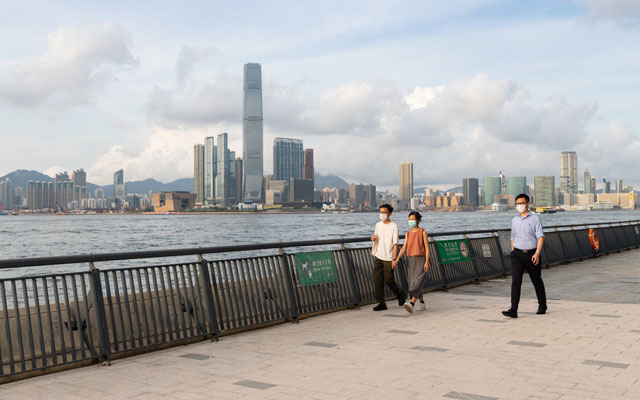
Fully vaccinated travellers from most places to Hong Kong will need only serve a seven-day quarantine at a designated hotel as long as they pass an antibody test, Bloomberg reported, citing people familiar with the matter.
According to the report, the plan will not include travellers coming from high-risk locations like Japan, the UK and the US. Currently, travel from some countries like India deemed extremely high-risk is still barred.
The timeline for the policy has not been determined and will hinge on when the testing facilities are ready, said the sources.
The report further quoted the sources as saying that authorities are now trialling various antibody tests which will detect if a person has been vaccinated or has recovered from Covid-19.
Currently, Hong Kong has one of the world’s strictest border policies. Travellers entering Hong Kong are required to quarantine in a designated hotel for up to 21 days, even if they’re fully vaccinated.
A positive outlook for Asia
Are there any observations of the Chinese longhaul traveller that will come in handy when developing South-east Asian arrivals for Switzerland?
One important take-away is that, in an ever-changing environment, you have to embrace change and adapt for survival. China approved outbound travel to Switzerland in 2004, and in 2019 it became our third top foreign source market. To tap this potential, our marketing strategy has constantly evolved – channels have gone digital and media have gone social.
Along the way, the travel trade has consolidated and, most importantly, our customers have changed from group to individual travellers and their destination pursuits have shifted from attraction discovery to deep experiences.
Since entering South-east Asia in 2012, the number of overnights has doubled. The region is now Switzerland’s top 10 foreign source markets.
Switzerland is now a well-established destination. To pursue growth, we have to diversify our customers by identifying high-potential niche segments for which Switzerland has a unique proposition.
Switzerland has always been considered to be a friendly destination for the Chinese. How does Switzerland fare in terms of friendliness for South-east Asian travellers, which are so diverse in demographics?
The legendary Swiss hospitality was, since the beginning of modern tourism, a decisive factor for choosing Switzerland as a travel destination. Guests want to feel heartily welcomed. Our customers want to see the beautiful sights and have an immersive experience with the culture and people of the country they visit.
Such soft factors seem to be especially important for guests from South-east Asia. In a recent study, many guests choose “warm-hearted people”, “family-friendliness” and “pleasant atmosphere” as the main reason to travel to Switzerland.
Travel confidence is improving on the back of a global vaccine roll-out. How does this impact Switzerland Tourism’s destination marketing for longhaul Asian markets?
Incentive travel planners will promote destinations that are clean and safe. This means Switzerland needs to showcase our proven track record of having successful tourism safety concepts, and to communicate that the population is vaccinated and travel in Switzerland is safe and possible again.
We will showcase this through familiarisation trips, several workshops in South-east Asia hosted together with the embassies, promotions with the media, and communications with corporate clients and travel planners.
Is Switzerland Tourism stepping up on South-east Asian MICE trade engagements this year to prepare them for a resumption in longhaul travel and events?
Yes, we have maintained several activities to keep MICE trade partners informed and ready for the time when travel is possible again. We have conducted several hybrid events to showcase Switzerland and they have resulted in additional business in our pipeline.
For 2H2021, we have prepared a whole bouquet of activities for incentive planners, but we will not reveal too much just yet.
For South-east Asian incentive planners looking for something fresh in Switzerland, what top three ideas would you recommend?
Well, that depends on the season. Incentive planners can experience nature differently in Switzerland throughout the year.
In Spring or Summer, I would recommend that groups take our newly renovated steamboat, Stadt Luzern, down lake Lucerne and enjoy visions of cherry blossoms.
Autumn is the best time to appreciate the grape harvest in the vineyard terraces of UNESCO World Heritage Centre, Lavaux.
Come winter, make a beeline for the Jungfrau region for a ski experience. Incentive winners can also touch the snow at the Top of Europe, which the Jungfraujoch railway station is known, as it sits at 3,454m above sea level and is the highest point in the continent.
Trade webinar to spark survival ideas for Indonesia’s SME exhibition companies
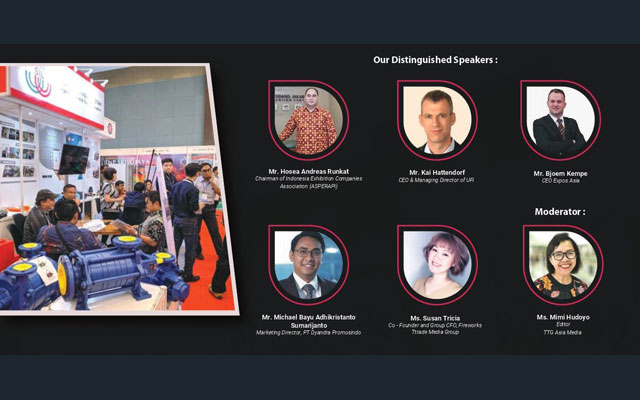
Five exhibitions industry leaders will come together on July 1 to debate the future of Indonesia’s exhibitions industry and share solutions for small- and medium-sized event organisers to bounce back from the pandemic-induced business downturn.
The online panel discussion, titled Restarting Indonesia’s Exhibitions Industry, is initiated by Fireworks Trade Media Group, an independently owned small- and medium-sized enterprise (SME) exhibitions company, and hosted by the Indonesia Exhibition Companies Association (ASPERAPI) in partnership with Expos Asia and Jublia.
The audience will hear from ASPERAPI chairman Hosea Andreas Runkat, Expos Asia CEO Bjoern Kempe, UFI CEO Kai Hattendorf, Dyandra Promosindo marketing director Michael Bayu Adhikristanto Sumarijanto and Fireworks Trade Media Group co-founder and group CFO Susan Tricia. TTG Asia Media’s editor for Indonesia, Mimi Hudoyo will lead the panel as moderator.
Sharing the motivation behind the creation of the webinar, Kenny Yong, founder and group CEO of Fireworks Trade Media Group, said: “(We) noticed that the challenges facing SMEs during the pandemic were more intense –compared to what listed exhibition companies experience – due to limited finances and minimal pivoting opportunities attributed to the lack of know-how.
“Therefore, we initiated this event to help bring confidence back to the exhibitions industry in Indonesia, and provide some valuable insights for SME organisers in helping them recuperate and bounce back in 2022.”
Yong said attendees would be able to acquire a deeper understanding of the current state of the Indonesia exhibitions industry, what 2022 could hold for them, how shows could be staged in Indonesia during these difficult times, and what venues and organisers would need to form a tight bond to ensure the longevity of the exhibitions industry.
Restarting Indonesia’s Exhibitions Industry is free to attend, and will run from 15.00 Jakarta time on Zoom.
Registration is now open.
Mapping out a recovery strategy

China seems to be functioning relatively well, driven by a huge domestic market. What is the pace of recovery like for the domestic business events industry?
So far so good. About 80 per cent of our domestic travel and MICE industry has recovered. While new technology for hybrid meetings and exhibitions are more commonplace and organisers have started to create more attractive and vivid hybrid events, people still prefer face-to-face meetings. Currently, it is difficult to organise large meetings, due to the stricter control of event sizes due to Covid-19.
Meanwhile, exhibitions are running at around 50 per cent their usual size, with other exhibitions being conducted online.
We want foreign exhibitors and sellers to return to China for face-to-face meetings, but they are unable to enter China at this present time. This is one of the challenges that is hindering the recovery of international exhibitions and meetings.
About 700 million Chinese have been vaccinated so far and the government is aiming to have 80 per cent of the population vaccinated by the end of 2021. This is because China has to make sure that we can open our doors to foreigners, as we will be hosting major events such as the Winter Olympics in Beijing, Asian Games in Hangzhou, and FISU World University Games in Chengdu in 2022.
What changes have you noticed in the business events sector?
Many Chinese corporate incentive programmes that used to go to Thailand, Malaysia, Japan, Korea and Europe, have had to turn to domestic destinations. Larger incentive groups of 6,000 to 7,000 have been seen heading to Macau and Sanya.
Currently, a number of cities and small towns in China have come up with special policies that support meetings and conventions, including monetary grants or in kind, varied tour offerings, and new events technology.
I think Chongqing, Xiamen, Chengdu, Hangzhou, Suzhou, Guizhou, Kuming, Hainan and Macau are destinations that would appeal to domestic corporate groups during this time.
China remains the largest global source of leisure tourists second only to the US, and international travel from China is expected to return to the pre-Covid-19 levels by 2023. What about outbound business events?
Previously, during the economic slowdown, leisure travel in China was expected to recover ahead of business travel. However, now that the economy has recovered, it looks like business travel will recover to pre-pandemic levels first, then leisure travel. And once outbound leisure tourism has recovered, outbound corporate incentive travel can then recover.
Previously, leisure travel used to bounce back quicker than business travel, but due to the instability and long-term nature of the pandemic, coupled with the dire need for economic recovery, business travel is expected to recover ahead of leisure travel this time around.
I think we will see a gradual recovery in outbound business events by end of this year or next year. But this is also dependent on the opening of borders and how countries can effectively control the virus, and whether insurance companies are able to provide the right coverage for safe international travel to resume.
While it is business as usual in China, if Chinese businessmen are unable to travel abroad, their investments abroad will also cease. And we all know how the transnational flow of business travel is important to economic recovery.
How can overseas destinations tap into China’s outbound business events and adapt to the globally-changing landscape?
According to the World Health Organization, Covid-19 will be around for years, but borders cannot be shut forever or the world economy will never recover.
On the destinations’ end, governments, convention bureaus, and tourism organisations have to work out the best way for international travel to safely resume. This may include developing a unified SOP (standard operating procedures) that will protect inbound corporate and business events travellers, such as appointing hotels and DMCs to provide dedicated services for this group of travellers.
On the travellers’ end, they need to be responsible for their own testing and making sure they test negative, and get themselves vaccinated. Corporate travel managers and travel management companies would also need to work with insurance companies to ensure that there is product that would appropriately cover a corporate traveller’s needs. There’s no such product in the market now, which makes it even harder for corporate incentives to take place.
To hear more of what Yao has to say, tune in to the virtual IT&CM China session happening from June 22-24, 2021. Yao will be speaking at two sessions, and the programme for the event can be found here.
Rise of vaccination tours stir corporate interest
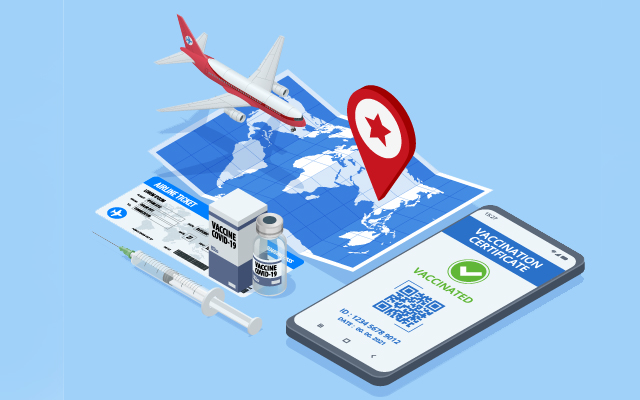
Private vaccination tours launched recently by Indonesian and Thai outbound specialists have attracted the attention of employers keen to send their top executives for a jab overseas, and skip lengthy vaccination waitlists at home.
Suthiphong Pheunphiphop, president of both Glory Travel (Thailand) and the Thai Travel Agents Association, told TTGmice that big companies in Thailand have started to ask for overseas vaccination trips for their management staff and executives, and the higher cost of travel today bears little deterrence.
“The cost of travel to some destinations has doubled today, mainly from pricier airfares and longer travel period, compared to pre-pandemic times,” remarked Suthiphong.
“If Thailand fails to achieve vaccination targets over the next three to four months as planned, more business leaders and executives will be sent abroad to get vaccinated,” added Suthiphong.
Suthiphong noted that more countries – such as Germany, the United Arab Emirates, the UK and France – are opening up to “walk-in visitors” who are in search of Covid-19 vaccines. Some states in the US are also welcoming, while Russia and Maldives have earlier indicated their welcome for vaccine seekers.
In late-April, Bangkok-based See You Again Co travel company created a vaccination tour package to take private groups and individual travellers to Serbia for the Covid-19 vaccination, in response to eager expressions of interest from its regular customers.
According to Netnapa Kaewsangtham, executive director of See You Again Co, these vaccination tours will commence as soon as the hospitals in Serbia are ready.
While Thai corporate interest in vaccination tours is mounting, Netnapa said such trips to other destinations may be more difficult to arrange due to medical visa requirements, as well as necessary approvals from relevant authorities.
Indonesian outbound operators that have crafted vaccination vacations to the US are also predicting difficulties in fulfilling corporate interest.
Many operators told TTGmice that the programmes are only suitable for individual travellers. The US vaccination programme stipulates that foreign passport holders must arrive in the US and complete their own registration, and travel agencies are not allowed to reserve vaccines on behalf of their clients.
Furthermore, legal issues are likely to complicate corporate vaccination tour arrangements, warned Agustinus Pake Seko, president director of Bayu Buana Travel Services. “We have yet to learn of the Indonesian government’s response to citizens seeking vaccines overseas on their own,” he said.
Another obstacle to corporate vaccine tours is the lengthy stay needed to fulfil gaps between the first and second shots.
Yento Chen, CEO of Destination Tour, said Johnson & Johnson vaccines could work for corporate incentive groups, as only one shot is required and the tour would need just six days. However, he noted that news has surfaced about the possible cessation of Johnson & Johnson vaccine production.
Tours involving the two-jab Pfizer vaccine would require clients to stay at least 24 nights in the US. This would be too expensive for corporates and few employers will sit well with staff being gone for a month, opined Chen. – Additional reporting by Kurniawan Ulung
KTO to host four-in-one travel expo
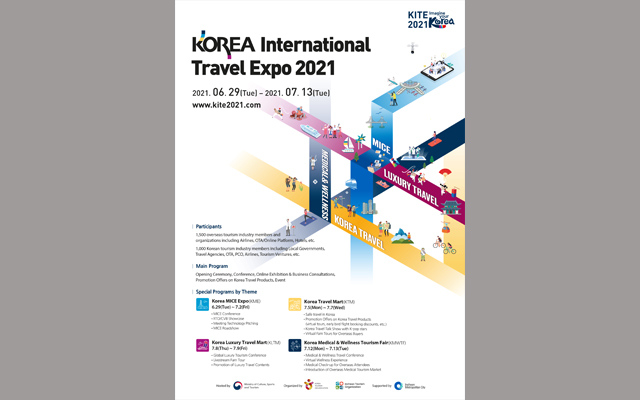
The Korea Tourism Organization will be holding a new, hybrid travel expo from June 29 to July 13, 2021, bringing four tourism events under one umbrella for the first time.
The Korea International Travel Expo (KITE 2021) will kick off on June 29 with an opening ceremony at the Paradise City Hotel in Incheon. The programme line-up will include keynote speeches by Berlin Tourism and Congress CEO Burkhard Kieker and Singapore Tourism Board assistant chief executive Chang Chee Pey, a performance by Korean longboarder Ko Hyojoo as well as a night-time drone show.
The event will kick off with the Korea MICE Expo from June 29 to July 2, featuring a roadshow, CVB showcase, and an exhibition on meeting technologies.
This will be followed by the Korea Travel Mart from July 5-7. Highlights include discounted Korean products, early-bird flight ticket prices to South Korea, a live travel talk show with a K-pop star, and an online fam tour for overseas buyers.
Taking place from July 8-9, the Korea Luxury Travel Mart will feature a tourism conference, as well as a virtual fam tour showcasing luxury tourism and related products.
Wrapping up the expo will be the Korea Medical Wellness Tourism Fair from July 12-13, featuring a conference, virtual wellness programme, and medical consultations for overseas delegates.
Delegates can expect to obtain the latest information on South Korean tourism in relation to the four sectors, engage in one-on-one video business consultations with Korean sellers through a new online platform, and gain insight into post-Covid-19 tourism in South Korea. Over 1,500 domestic and overseas buyers, as well as thousands of visitors, are expected to attend.
Business events recovery to start locally: PCMA
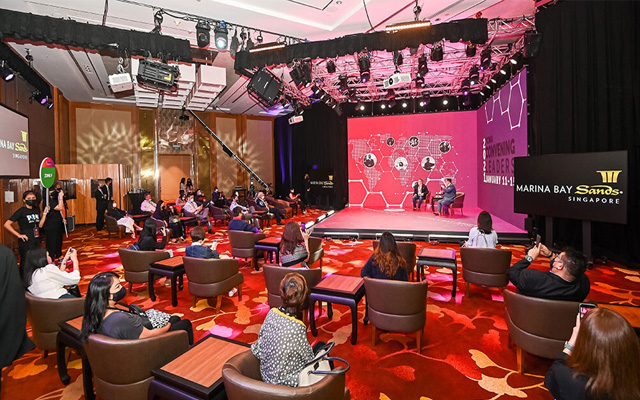
Nearly one-third of business events professionals doing business in Australia, New Zealand, and South-east Asia said that they are unable to estimate in-person registration numbers for an event this year until they get closer to its planned date, while more than one-third are making the go/no-go decision on an in-person event in 2021 within two months of the event date.
These were some of the findings from the most recent PCMA APAC Dashboard Survey conducted from April 13-26, of 184 respondents.
Respondents to the survey were both business event professionals (66%) and suppliers (34%), who do the majority of their business in Australia and New Zealand (38%), followed by South-east Asia (36%). The largest percentage work in professional services (32%), followed by independent planners and agencies representing clients in a variety of industries (27%).
On how they were feeling at this point, one-third said their mood was hopeful, 16% are feeling inspired and creative, and 15% said they were determined, sort of a middle ground. A collective 36% expressed a less positive outlook, saying they were doing their best to get by, anxious about the future, or exhausted and burned out.
Around half of respondents (52%) said they are focusing their reskilling efforts on designing live experiences in post-Covid-19 physical environments, slightly down from 55% of respondents who identified this as an important new skill in a PCMA APAC survey conducted last July. And only 57% of respondents said that they are focused on designing digital event experiences, compared to 74% of planner respondents to the 2020 survey.
A possible interpretation of this data point may be that respondents to the recent survey have become more proficient in digital event design in the nine months between the two surveys, and/or they are focusing more of their efforts on convening small face-to-face events safely.
In fact, 82% of respondents were planning an in-person event this year, with the largest contingent (44%) scheduling events for 4Q2021.
They do expect their in-person events, however, to look very different than in pre-Covid times. Sixty per cent estimate that the rise in the use of digital-event technology will have a high or extensive impact on face-to-face attendance at 2021 events, slightly higher than predictions in last year’s survey — slightly more than half of planners said they anticipated a high or extensive impact this year. Looking ahead to 2022, only 39% foresee a high or extensive impact on attendance, with the largest percentage (44%) planning their 2022 events for the first quarter.
And while only 15% of respondents described their mood as determined, pulling off their events with anticipated quick turnarounds will certainly require grit. More than one-third said they are making the go/no-go decision on planning an in-person event within two months of the event date, the shortest window offered among the survey options.
That the post-Covid-19 environment remains fluid and uncertain is also backed up by respondents’ estimates for in-person registration numbers: Nearly one-third say they were unable to estimate until they got closer to the event date. Of those hazarding a guess, 46% expected declines of up to 50% or more in attendance for their 2021 in-person event vs the same event held in pre-pandemic times. The largest percentage — 46 % — do not anticipate any overseas delegates attending these events. In mid-May, government officials confirmed that Australia will remain closed to the rest of the world until mid-2022.
The most popular scenario for the recovery of face-to-face meetings, chosen by 36% of respondents, is that smaller local and regional events will thrive before national and international groups gather.
While 30% of participants expect that people will travel to regional and domestic events in 3Q2021 and 4Q2021, 28% acknowledged that despite a pent-up demand for in-person events, organisations will avoid assuming risks associated with business travel, and 23% cited budget cuts, the economy, and job insecurity as playing a key role in limiting attendance.
Respondents are pursuing several different models of hybrid events — they are almost evenly split between holding a simultaneous in-person event with streaming video and a separate online programme for a virtual audience (37%) and the same offering but without separate online content for digital participants (38%). The vast majority (79%) see interaction between the in-person and digital audiences as an important aspect of a hybrid event.
That event professionals are pursuing a hybrid approach to their events is also evidenced by the fact that nearly 70% of survey participants are making broadcasting facilities a criterion for future events in their site-selection process, with 74% prioritising broadcast quality virtual event and studio spaces and 68% looking for facility staff with experience in running digital events. Of course, costs are a deciding factor as well, cited by 70% of respondents.
Finally, events professionals’ resourcefulness comes through in their responses to the question, How has your event/s business model changed? In almost equal percentages, survey respondents said they had become less reliant on face-to-face event registrations and/or sponsors (49%) and had changed the frequency of their events (48%). Thirty per cent have adopted a hub-and-spoke model with regional gatherings and a virtual audience and 31% have found ways to monetise the digital audience by becoming more data driven.
The full report can be found here.
EEAA pilots work health and safety programme
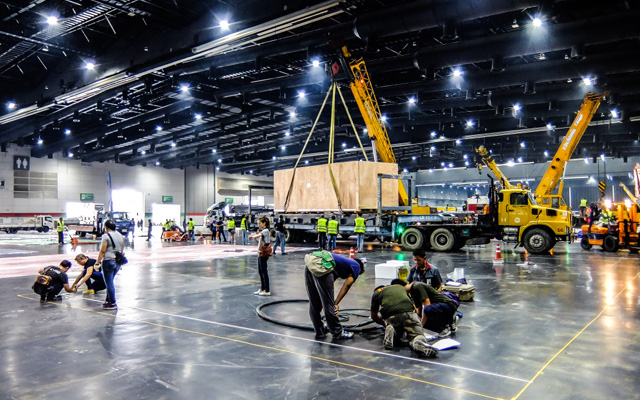
The Exhibition and Event Association of Australasia (EEAA) has rolled out a pilot programme to provide Risk and Safety training and consultancy services through Beaspoke Safety, a specialist risk and safety consultancy.
Provision of services include:
- Event Management Plans, Venue Plans & Onsite Reviews
- Exhibition manuals
- COVIDSafe planning and plans
- Gap analysis (audit) of existing documentation
- Risk Assessments and Risk Management Plans
- Health and Safety Policies and Procedures
- Safe Work Method Statements
- Job Safety Analysis
- Emergency and Evacuation plans
- Staff and volunteer management; Contractor inductions
- Training on Risk Management, COVIDSafe protocols and plans, and Manual handling
This is the next step in EEAA’s comprehensive risk and safety management programme, following the release of the Safe Operating Framework in 2020, a national guide for Organisers and Suppliers ensuring the COVIDSafe operation of exhibitions and events.
EEAA chief executive, Claudia Sagripanti said in a press statement: “The EEAA is continually revising its risk and safety management program in light of legislation and COVIDSafe practices, and continues to invest in ongoing education and professional development to further promote safety within the industry. We are delighted to launch this pilot in 2021 with Beaspoke Safety for the provision of WH&S services to EEAA members at a preferential rate, and to maintain the focus on safety and risk management.“
Beaspoke Safety’s director and principal consultant, Bea Tomlin, added: “We are not just about creating a set of documents that sit on a shelf gathering dust, we create true and real documentation that represents an organisation’s work practices that are workable and achievable. Our ultimate goal is for the individual land the team to develop a risk mindset,
so it becomes part of the everyday process of the business.”
EEAA members interested in accessing this service need to contact the EEAA office, and will deal with Beaspoke Safety directly for the provision of services.
Sabre taps Gopass Global to mitigate travel risks

Sabre Corporation has partnered with travel risk management platform Gopass Global to help deliver its Covid-19 biosecurity risk analytics capabilities to the travel industry.
Gopass Global solutions leverages advanced analytics to deliver a single view of all of the biosecurity risk elements of a trip, thereby boosting traveller confidence.

Under the deal, travel agents across the globe now have access to Gopass travel risk management capabilities via the Sabre Developer Partner platform. By integrating with Sabre’s shopping APIs, Gopass populates a quantifiable risk score onto each travel option and displays the information to agents, who are then able to better advise their customers.
Powered by machine learning and artificial intelligence, Gopass Travel Risk Optimizer provides travellers with an end-to-end analysis of all aspects of travel and their risk exposure in the cycle of travel. Gopass Global data also looks at country conditions such as infection rates, government policies and data reliability. Putting this all together, agents can obtain a risk score out of ten per flight itinerary, enabling them to clearly identify the lowest risk rates overall.
“For the travel industry to open up, recover and grow, it is vital that we are able to reduce and mitigate the risk of travel so we can instil renewed confidence in travel for both the leisure and corporate traveller,” said Mark Radford, CEO, Gopass Global.
“It’s clear leisure travellers want to know about potential travel risks so they can avoid or mitigate them. But this is especially critical for corporate travel as we learn to live with this pandemic. Companies need to ensure they are taking their duty of care to employees seriously when it comes to travel. It’s essential, therefore, that travel agents, and ultimately travellers, have all of the critical information they need at their fingertips when planning their trip to make the decisions that are right for them.”
Reviews

The Ritz-Carlton, Bangkok
The newly-opened Ritz-Carlton, Bangkok anchors the One Bangkok development with cosmopolitan elegance. Featuring the city's largest ballroom and a spectacular new penthouse suite, it delivers exceptional hardware and deeply authentic, soulful service for business and leisure travellers alike

Mama Shelter Zurich
Behind the imposing, Brutalist concrete that defines Zurich’s Oerlikon district lies a surprising secret. While its exterior honours the neighbourhood’s industrial roots, stepping inside Mama Shelter reveals a vibrant, neon-soaked world that is a far cry from its rigid shell

Hyatt Regency Kuala Lumpur at KL Midtown
A polished urban retreat designed for business travellers, Hyatt Regency Kuala Lumpur at KL Midtown combines thoughtful design, seamless service, and exceptional facilities.


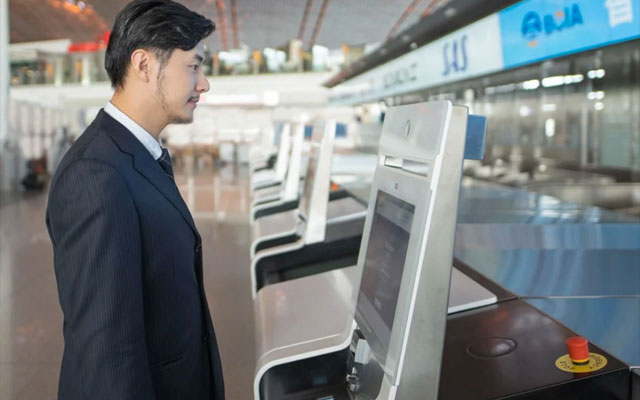
Frequent flyer programme customers of Star Alliance member airlines will soon be able to use their biometric identity at any participating airport following a new agreement between the alliance, NEC Corporation and SITA.
Connecting to SITA‘s Smart Path solution, the Star Alliance biometrics platform will be able to use SITA’s shared airport infrastructure already available in more than 460 airports.
Together with SITA and NEC’s global presence, which was strengthened through a July 2021 partnership, multiple biometric projects can be delivered in parallel, speeding up the availability of biometric passenger processing to Star Alliance’s member airlines globally.
A further advantage is the integration of NEC I:Delight platform, which allows passengers who have opted to use the service to be identified quickly and with a high degree of accuracy, even on the move. The I:Delight platform is also able to recognise passengers even when wearing a mask, an increasingly important feature for travel during the current pandemic. The platform is already in use by Star Alliance member airlines at several airports in Europe.
Uniquely, passengers using Star Alliance’s biometrics platform enroll only once. Passengers can pass through biometrically enabled touchpoints across multiple member airlines and participating airports using just their face as their boarding pass. This speeds up the passage through the airport while making each step completely touchless, supporting important health and hygiene safety measures in times of Covid-19 and delivering on Star Alliance’s vision of a seamless customer experience.
Jeffrey Goh, CEO, Star Alliance, said: “This agreement is instrumental in bringing further scale to our biometrics service, with the inherent benefits of speed and meeting customer expectations for a more touchless and hygienically safer experience across all of our member airlines. Biometrics is a key element of that experience and our strategy of leading the way in digitalising the passenger journey.”
Barbara Dalibard, CEO, SITA, said: “Passengers have long welcomed the advantages of control and speed automation brings to the passenger journey; a trend that has been accelerated by Covid-19. With this agreement the benefits of biometric identity will be extended from a single airline or journey to a vast network of airlines. That is truly unique and demonstrates the benefits digital identity can bring to the passenger.”