



What does recovery look like for the Asia Pacific (APAC) events industry?
Our latest global survey, the “Global Barometer” forecasts above average growth in the exhibition industry in APAC for 2021. Globally, we expect exhibition revenues to grow by 106 per cent in 2021 compared to 2020. For APAC, we expect 121 per cent growth.
Compared to 2019, this will be a return to around 60 per cent of revenues compared to 2019 for APAC, slightly ahead of the global average of 58 per cent.
There is a general consensus that, in major parts of the world, the industry can reach pre-pandemic levels again by 2024 – pending further pandemic developments.
Right now, governments and stakeholders need to understand the systemic role that exhibitions and business events have to play in the post-pandemic recovery. As organised meetings, tradeshows are not generic mass gatherings – they can be managed safely in everyone’s interests, and events professionals are well versed in doing that, based on global guidance and good practices that organisations like UFI have developed.
Governments can activate exhibitions and business events as the fastest of fast tracks for economic recovery – as the industry builds and operates the marketplaces and meeting places that every industry, every sector needs to recover from the impact of the pandemic.
What should the various countries do to get their government’s help to build confidence in the exhibitions industry again?
Vaccinations and testing are key elements. We need globally harmonised procedures on how to document these – the European Union’s Digital Vaccination Certificate is such an initiative. It reopens travel across the continent and makes it easy for citizens to show their vaccination status as they enter events.
In addition, as stated above, it is key that the local/regional/national health authorities clear exhibitions and business events, agreeing on proven health & safety frameworks. Two examples for those are the “UFI Global Framework for reopening exhibitions” and the “All Secure Standard”. These have been the blueprint for national regulations in countries like Italy, the UK, or Spain.
How much has the pandemic changed a customer’s value and expectations of exhibitions?
If anything, it has proven and reiterated the value of meeting face to face. In our “Global Recovery Insights” research done with Explori, 86 per cent of both visitors and exhibitors at digital trade shows declare that the face-to-face format is superior compared to a digital-only event.
As show floors reopen around the world, we see especially small and medium enterprises return to the shows with urgency. For them, this is the dominant sales channel, and accordingly, their key expectations are focused around the “trade” in “tradeshow”.
What are some major trends expected to shape the exhibitions industry over the next five years?
Initially, we expect that a lot of focus will be on the traditional core function of the tradeshow – to be the place where business is done, where orders are written, where deals are signed.
Beyond that, the pandemic has accelerated developments that we have seen pre-2020: A regionalisation from one global show into a portfolio of regional shows under the same brand around the world; a growing number of digital products and services to support the attendees at the physical event a lot of investments into sustainability and low carbon to carbon-neutral events productions.
A new emphasis will be put on connecting the physical tradeshows and business events with year-long offers to support the business success of the communities that a trade show is serving – a lot of this will be digital, but also through focused local and regional events throughout the year.
What are some of UFI’s initiatives that are helping with industry recovery?
We continue to operate and update a designated Covid-19 web presence at www.ufi.org/coronavirus. We were the first MICE industry association to do so, to our knowledge. The page is constantly being updated with new material once it becomes available.
In addition, we have repurposed the UFI Blog to carry announcements and core messages from UFI member associations around the world, as well as case studies around events that are taking place and their production.
Through the European Exhibition Industry Alliance (EEIA), we drive ongoing advocacy work in Brussels. In the US, UFI joined the newly formed Exhibitions & Conferences Alliance (ECA), which is setting up an office in Washington, DC, to likewise provide ongoing advocacy work for the industry on a daily basis.
Core UFI activities and materials on the issue include:
Research:
• Global Assessment of Covid-19’s economic impact on tradeshows and exhibitions, globally and by region for the full year 2020
• Good Practice Guide: Addressing Covid-19 Requirements for Re-Opening Business Events (Third edition in March 2021)
• Good Practice Guide: Convention/Exhibition Centers as Temporary Vaccination Centres
• Case studies on shows taking place
Advocacy:
• UFI Global Framework for the Reopening of Exhibitions and B2B events
• Global market reopening tracker
• Overview of the different Government Support Programmes for the industry by region
• Position Papers with EEIA (Europe) and ECA (USA)
What prospects do you see in the mid-to-long term for the business events industry?
In the short term, as the industry restarts, we need to ensure that supply chains remain intact, and that the ecosystem of skilled service providers of the industry can be reactivated well. Re-skilling and upskilling will be key here.
Mid- to long-term, we expect the sector to not only return to pre-Covid levels, but to significantly grow beyond it. Future growth will be driven by the new value we create and the benefits we provide in between our face-to-face events for the communities and industries that we serve.
We will also evolve as an industry around the challenge to combat climate change – bringing people together to work together and to trade together is the most energy-efficient way compared to decentralised travel and countless one-to-one meetings, or to energy-intensive digital processes.



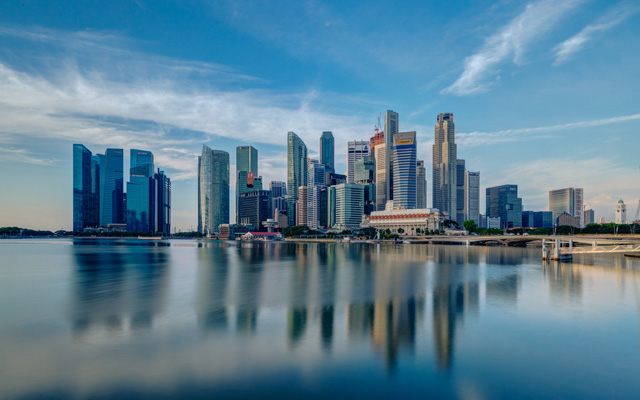






In-person business events and live performances will scaled down and event size caps will be reduced from July 22 until August 18, as Singapore further tightens movement restrictions in response to a surge in Covid-19 community cases.
For live performances and business events, up to 100 persons may be allowed with pre-event testing, and up to 50 persons without testing. For spectator and participatory sports events, up to 100 persons may be allowed with testing. Testing would not be required if there are 50 persons or less.
The latest requirements include suspension of dining-in at F&B establishments, reduction in group sizes for social gatherings from five to two, and reduction in operating capacity at attractions and museums to 25 per cent from the current 50 per cent,
In announcing the updated Phase 2 (Heightened Alert) measures, the Ministry of Health (MOH) said a review would be done two weeks after implementation, and measures would be adjusted further based on the infection situation at that time.
The Covid-19 multi-ministerial task force decided not to differentiate the measures for those who are fully vaccinated, but will consider doing so when vaccination rates are higher or when the situation has stabilised, a Channel NewsAsia report quoted task force co-chair Gan Kim Yong as having said during a press conference on Tuesday.
The multi-ministry task force had earlier announced a tightening of community measures under Phase 3 (Heightened Alert) from July 19 to August 8, in response to growing Covid-19 clusters at KTV lounges and nightclubs. Since then, more clusters linked to a wholesale fish market and hawker food centres have emerged.
MOH said that unlike the KTV cluster, the current wave of infection affects a wider spectrum of the population including many seniors.
“At the current rate of transmission, it is likely that infection cases will rise sharply, and many people in the community will catch the virus. While close to 50 per cent of the population have completed their vaccination regimen, there remains a number of vulnerable individuals, such as our seniors, who have yet to take up vaccination,” the ministry said.
“Unvaccinated individuals are at higher risk of being infected, and higher risk of being seriously ill if infected. Hence, in the meantime, we must act decisively to contain the current outbreak and minimise the risk of our hospital capacity being overwhelmed, while we race ahead to vaccinate those who have not completed or started their vaccination.”
According to MOH, Singapore remains on track to having two-thirds of its population complete the vaccination regimen by National Day on August 9.