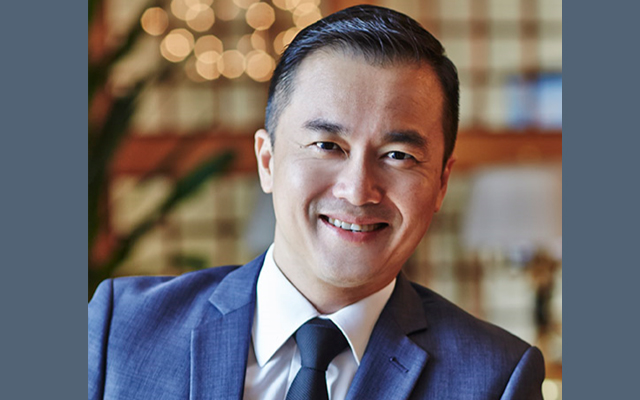
The Travel Corporation (TTC) has appointed Nicholas Lim as its new Asia CEO, effective August 16, 2021.
In this role, Lim will report to Gavin Tollman, TCC president, and will focus on the transformation of TTC’s distribution of key brands. He will work with each of the global brand executives to execute the brand strategies and set the direction to fuel further growth for the region, in particular, the luxury travel market for international outbound leisure travel.
Lim is no stranger to TTC having headed TTC Asia as managing director from 2018 to 2020, and before that, as president (Asia) for Trafalgar from 2011 to 2018. Prior to his appointment as CEO of TTC, Lim was general manager of Norwegian Cruise Lines in Asia.
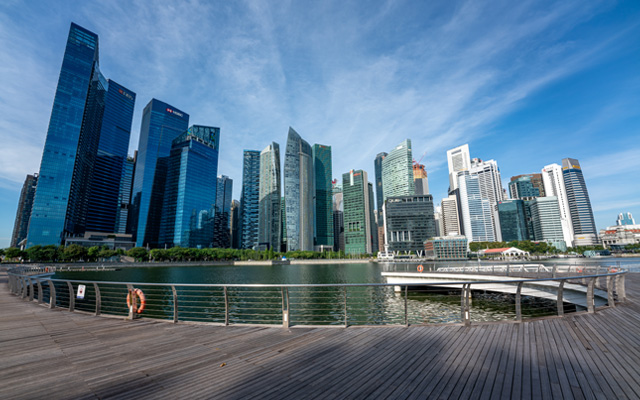
Fully-vaccinated Singapore residents will begin to enjoy greater social freedom from August 10, as the city-state moves into the first phase of her four-step transition to becoming a Covid-19-resilient nation.
Fully vaccinated individuals will be allowed to gather in groups of five, up from the current two. This applies to F&B settings. They can also take part in live performances and events, which will be allowed to host up to 500 fully vaccinated individuals.
Singapore relaxes restrictions on residents and travellers as national vaccination rate climbs
Singapore will continue to ease restrictions, with permitted event capacity expanding to 1,000 fully vaccinated individuals come August 19 if conditions remain good.
According to health minister Ong Ye Kung, who is one of the chairs of Singapore’s Covid-19 multi-ministry task force, this initial phase will run from August 10 till early-September, when 80 per cent of the Singapore population is likely to be fully vaccinated. With a higher rate of vaccination, Singapore’s economy will be further opened up, with more social activities allowed and travel made possible, he said.
The task force also announced plans to offer greater quarantine flexibility for fully vaccinated travellers from Australia, Austria, Canada, Germany, Italy, Norway, South Korea and Switzerland.
From August 20, travellers from these eight countries will be allowed to serve their 14-day stay-home notice (SHN) at their own places of residence instead of a dedicated facility.
To qualify for this scheme, travellers must have remained in the approved countries for the last 21 consecutive days before leaving for Singapore, and must either be staying alone or with other fully vaccinated household members who are under SHN for the same duration and with the same travel history.
All travellers must show proof of approval to serve SHN at their place of residence when they arrive in Singapore. They will be required to wear an electronic monitoring device to ensure compliance, and legal action will be taken against those who breach SHN requirements or make false declarations, said the Ministry.
Travellers who opt for this scheme will have to utilise and pay for specially designated transport services to and from their place of residence.
These latest measures are expanded from an ongoing allowance for travellers from New Zealand, Brunei, mainland China, Hong Kong, Macau and Taiwan to serve SHN at their place of residence.
Ong also revealed plans to establish travel lanes with selected countries, where frequent Covid-19 tests will replace quarantines.
Wellington – New Zealand’s capital city – has published a new, comprehensive Business Events Guide created by Business Events Wellington.
The guide provides meeting and conference planners with up-to-date information about Wellington’s amazing array of venues, event services and accommodation options, as well attractions and incentive activities.
The cover of the new MICE guide
It’s designed to help with every step of the planning process, including a detailed city map, information on getting to and around the capital, and a list of must-do experiences that will ensure an event is unforgettable.
WellingtonNZ general manager David Perks said despite the challenging year for the business events industry, it was encouraging to see 22 per cent of all business events that took place in New Zealand were in Wellington.
“That market share figure shot up to 27 per cent between January and March this year. We expect to see further growth so having an easy-to-use guide for businesses, associations and event planners will make planning an event in the city a breeze.”
World Dining, one of Almond Hospitality Group’s affiliated companies, has signed an exclusive catering service agreement with Peng Huoth Group to manage and operate its catering services at the soon-to-open PH Grand Hall.
World Dining will provide and cater local and international cuisines, including but not limited to Yi Sang’s Cantonese roast duck and Kulen pig, Kanji’s premium beef and sashimi, Sevensea’s lobster sashimi, Uy Kuyteav and Kroeung Garden’s signature Khmer dishes and World Dining’s mix of Singaporean, Vietnamese, Italian and French cuisines.
A rendering of the PH Grand Hall in Cambodia
The signing ceremony took place last week between World Dining and Almond Hospitality Group’s CEO Luu Meng and Peng Huoth Group’s chairman, Oknha Thay Chea Huoth.
PH Grand Hall is situated along National Road No 1, Sangkat Nirouth, Khan Chbar Ampov within the 400ha The Grand Star Platinum development. The building, set to be the country’s largest convention hall, has been designed with a combination of Khmer and European architectural styles, and will focus on hosting events of more than 3,000 people.
Scheduled to open in early 2022, the space features column-free meeting spaces, decked with state-of-the-art and modern audiovisual equipment. There will also be a fully-fitted commercial kitchen to cater to a wide variety of cuisines.
PH Grand Hall also marks Peng Huoth Group’s first foray into the business events sector.
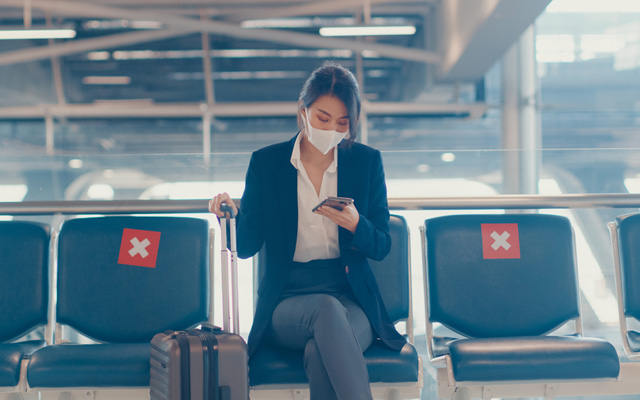
As organisations prepare for a safe return to business travel, ISO 31030 sets an international benchmark for companies to create and review their TRM programmes
Since the beginning of the pandemic, travel on both a business and leisure front has proven challenging due to the diverse and rapidly changing rules, regulations and border closures imposed by governments across the world.
With vaccination programmes gradually beginning to be rolled out in the region, talk of new travel bubbles, and a gradual relaxation of travel restrictions from certain markets – for instance Hong Kong reducing quarantine requirements from 21 days to seven or 14 days for fully vaccinated travellers from certain locations – leisure and business travellers alike are starting to prepare for a return to travel.
As organisations prepare for a safe return to business travel, ISO 31030 is an international benchmark for companies to create and review their travel risks management programmes
In fact, a recent survey of Collinson’s Priority Pass members revealed that 77 per cent of those journeying in Asia Pacific expect to travel more over the next 12 months.
Yet even when travel returns, Covid-19 will have changed the landscape for the foreseeable future – creating a heightened risk agenda. From an increase in fraud and scams to ever-changing travel restrictions and resulting travel complications, Covid-related complications are inevitable.
Businesses must therefore continue to ensure that their Travel Risk Management (TRM) programme is robust and fit for purpose, taking into account both pre-pandemic ‘normal’ travel-related risks, and those which are new and unique to the pandemic era.
This is why the advent of a new international standard, ISO 31030 Travel Risk Management Standard, could not have come at a better time. TRM is firmly on the C-suite agenda, to the extent that travel requests often require board-level approval.
As organisations prepare for a safe return to business travel, ISO 31030 sets an international benchmark for companies to create and review their TRM programmes – helping them to not be blinkered by Covid, and ensuring Duty of Care requirements are being met, at a time when the new risk agenda is more challenging than ever before.
Taking a holistic approach to risk ISO 31030 reinforces the importance of organisations taking a more holistic ‘before, during and after’ approach to business travel.
Unfortunately, the changes brought about by the pandemic have meant that many of the solutions used in the past may no longer be appropriate.
For example, destinations that were previously deemed to have good quality infrastructure, which traditionally presented a ‘lower risk’ to travel, may now present new considerations because of the additional strain being placed on the market’s medical infrastructure, and the reduction of medical support and resources due to Covid-19.
The solutions:
Ahead of a trip, an organisation’s travel manager should provide the employee with a checklist of requirements for the journey, from risk assessment forms to tests and vaccination support. An updated emergency evacuation plan should be in place for each destination on the trip, with proximity to the nearest clinic and airstrip included. Contingency plans are essential in pre-planning, to allow for any unexpected turn of events.
During the journey, companies must continue to monitor all of the points mentioned above, to ensure a swift response in the event of unexpected changes. For long-term business secondments, a constant review of the medical care available is also needed, taking into account medications which could be in short supply, or not available in that country, and regular psychological health checks – such as counselling – are also key to reassuring employees in their working environment.
Afterwards, organisations should continue to ensure that employees have access to tools that support their physical and mental wellbeing. Detailed post-trip reports from the employee can provide key learnings on elements such as the effectiveness of the assistance programme and feedback regarding transport and accommodation, which could help with future planning.
Focus on the specific requirements of your organisation and its travelling employees Every organisation and itinerary is different. The needs and details associated with each one therefore have to be considered accordingly, with appropriate planning and permissions in place.
It’s vital to understand what is needed for your employees – and to remember that the pandemic poses a greater threat to certain individuals with pre-existing medical conditions.
The solutions:
Due diligence is required for each trip, which should be assessed on its own merits, and must ensure that the right measures have been considered for a safe and seamless journey, based on the needs of each individual employee.
The best TRM programmes will not presume to be a ‘one-size-fits-all’ solution. Given the variance in destinations, TRM programmes must be able to adapt accordingly, in order to meet the needs of both the employee and the company. Travel managers should ensure that they leverage third-party expertise to help with the more complex aspects of TRM, and that both the organisation and the individual have all the up-to-the-minute information and support they need.
Empower your people Employees that need to travel for work should be able to do so with confidence, knowing that their company is providing them full support.
A survey we conducted of business travellers prior to the pandemic revealed that while half of them knew their employer had invested in some form of travel programme to support them on the road, 51 per cent of those weren’t sure what it actually meant or entailed. Of those who knew they had this support, only a fifth actually felt confident using those services in the event of something going wrong while abroad.
The solutions:
Tracking solutions, combining itinerary and geo-location tracking, should be part of a robust TRM programme, to ensure employees receive critical support should an unexpected event or emergency occur. Finding the right balance between protecting employees’ privacy and ensuring they have essential protection is essential. Companies must ask permission before putting tracking measures in place and make it clear that in the case of geo-location, employees are not being monitored 24/7.
Employee privacy can also be adhered to on the health front, by enlisting the services of a third-party medical provider to evaluate their medical history. In doing so, details on any pre-existing medical conditions remain private, while the employee is granted the protection they deserve ahead of a business trip.
Actively involving employees in a robust travel risk management programme is key to success. Communication is an essential part of this, allowing the employee to understand the support mechanisms in place, so they can be better equipped to deal with travel in the COVID-19 era and handle issues that may arise on a business trip – from lost luggage to a major medical emergency.
Getting business travel back on track will require a strong focus on employee wellbeing. In addition to having adequate support, employees must also clearly understand what resources are available, so they have the confidence they need to feel safe to travel.
Although it may take a while, business travel will no doubt return to Asia-Pacifc, whether in part or in full; and when it does, companies need to be ready.
Covid-19 has underlined the importance of health and safety in the workplace; this should also be extended to travelling employees. With the imminent arrival of the new ISO 31030 TRM standard, now is the time for companies to make sure their travel risk management programmes are up to standard.
Todd Handcock is president Asia Pacific at Collinson, a provider of traveller experiences including medical and security assistance, and travel medical services.
He has over 25 years’ experience in managing complex businesses, supporting regional and global travel and hospitality, banking and retail clients.
Prior to joining Collinson, Handcock held senior leadership roles with Kognitiv Corporation, Williams Lea Tag and BT Global Services.
25th Annual Scientific Meeting of the Malaysian Society of Paediatric Haemotology and Oncology
1 of 4
Event Brief
The Malaysian Society of Paediatric Haematology and Oncology (MASPHO) has been hosting its annual scientific meeting for the past 24 years, where attendance usually hovered around 120 to 150 delegates.
Kuching was originally the venue for the 25th Annual Scientific Meeting, which was supposed to be held in October 2020. However, due to the rising number of cases, as well as the government’s prohibition of organised public gatherings, including face-to face meetings, the organising committee postponed the meeting to 2021.
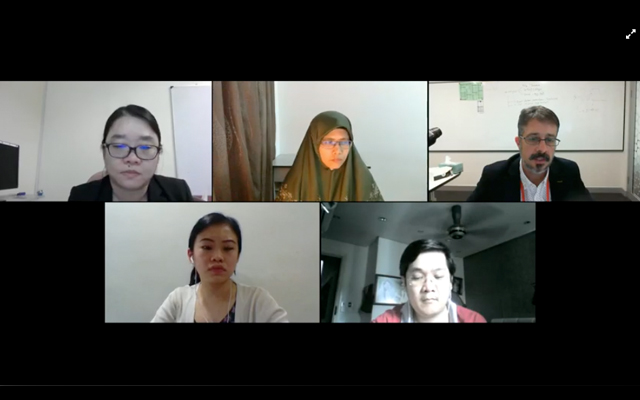
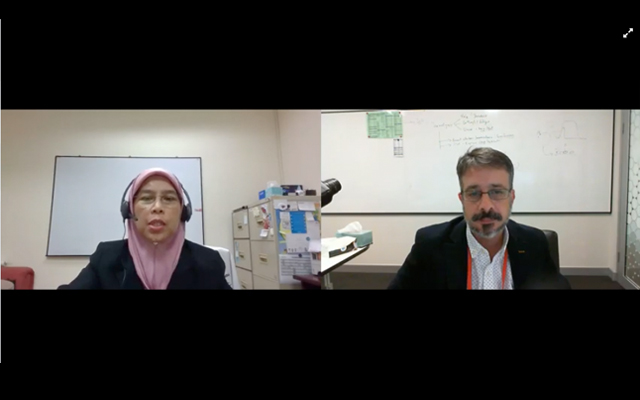
In 4Q2020, and unsure of when face-to-face meetings can take place again, the Society tasked PCO Conference People to convert the meeting to a fully virtual affair in June 2021.
Ronald Lim, co-founder and event producer at Conference People, said: “We had a short lead time of approximately six months to organise the virtual event. We were confident of pulling this off as we previously organised several online meetings, but this would be our first online medical congress.
“For the task at hand, we had to choose a suitable virtual event platform to meet the requirements of our client, restructure the sponsorship packages, plan the engagement to make the event more interactive and rework the scientific programme to work better in virtual settings.”
Event highlights
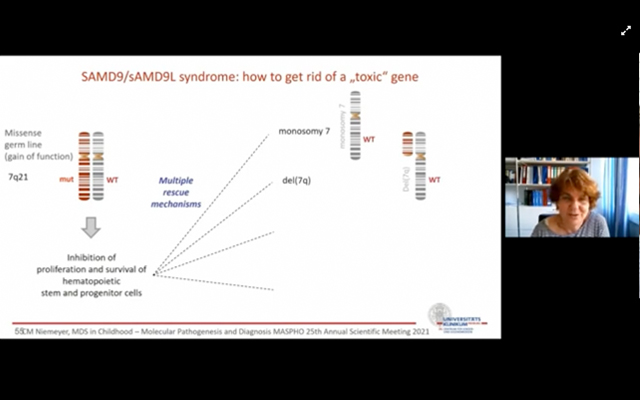
The two-day virtual event comprised 31 sessions and attracted 360 registered attendees, five international speakers, 12 national speakers and nine corporate sponsors.
Topics covered the latest advances in Myelodysplastic syndromes, Juvenile myelomonocytic leukaemia – which is a rare form of blood cancer – and inherited bone marrow failure syndromes in children.
The virtual platform provided doctors, nurses, health alliances and medical students a platform to share and exchange knowledge, as well as learn from international experts about the treatment options for these rare diseases. There were also real-world patient discussions.
“Participants were also encouraged to participate in the sessions by asking questions during the live Q&As and connect with other participants. They were incentivised with points that could later be redeemed for rewards,” Lim added.
Nurses who deal with cancer in children were also provided educational support through a nursing masterclass which dealt with topics related to nursing care and mental wellness.
Holding a virtual meeting had its benefits, and Lim pointed out this “enabled the organiser and sponsors to reduce costs on logistics for international speakers, and significantly reduced the carbon emission that would be associated with an in-person meeting”.
He added that 80 per cent of registered attendees showed up at the virtual meeting, while the rest who were unable to attend due to work commitments accessed the platform later to watch the conversations on-demand.
Challenges
Coming up with the registration fee price was a main challenge, shared Lim. “In a physical meeting, the fee would cover the cost of F&B and venue. But this is out of the equation in a virtual event.”
In the end, MASPHO decided to give a small reduction on each category of attendees.
Lim added: “At the beginning, registration was poor. It picked up only in the last three weeks prior to the event. We advised our client not to reduce the fee further as it would affect the fees of their future events.”
Another challenge Lim’s team faced was getting sponsors onboard, as most of the sponsors were not very comfortable with a virtual exhibition stand. As such, Conference People focued more on sponsored scientific lectures and a delegate hosting programme where sponsors would pay for the registration fee for some of the delegates.
A third challenge was event execution. Due to the lockdown in Malaysia at the time, only essential businesses were allowed to operate from offices. Unfortunately, conference and event management was not one of the listed essential businesses. Thus, Conference People and the organising committee had to execute the virtual event from their homes.
To ensure the event ran successfully, Conference People sent out tutorial videos to the speakers beforehand. Lim elaborated: “We wanted to ensure they could log on to the platform seamlessly and “look great” during their sessions. Two dedicated technical support staff were assigned to help participants who had issues navigating the event platform or attending the sessions.
Recalling the event, Lim shared: “Trust and communication are very crucial in making any event a success. There were small technical hiccups along the way, and these will be learning lessons for us in holding future virtual events.”
Event MASPHO 25th Annual Scientific Meeting 2021 Organiser Malaysian Society of Paediatric Haematology and Oncology Date June 26 & 27, 2021 Attendance 360
Raffles Hotels & Resorts continues to grow its global footprint, with the planned opening of flagship properties in Dubai, Bahrain and Macau later this year.
Set to open its doors in 4Q2021, Raffles the Palm Dubai will be the first Raffles resort on the Palm Jumeirah – the world’s largest man-made island and archipelago. Located across 100,000m2 of landscape on the West Crescent, the 389-key property will feature eight bar and restaurant concepts.
Raffles Udaipur in India
Raffles Al Areen Palace, Bahrain is located near the island’s protected wildlife park and reserve, and will offer 78 opulent pool villas, and a spa. A collection of one- and two-bedroom villas will feature living and dining areas, an office, and master bedrooms with ensuite bathrooms.
Located on Galaxy Macau’s east promenade, Raffles at Galaxy Macau is an architectural landmark featuring a glass airbridge that connects the two towers on every floor. The property will be home to 450 suites, with some featuring private pools and gardens.
Then in 2022, Raffles will debut flagship locations in Doha and Jeddah.
A cultural tribute to Qatar’s heritage, the Iconic Towers in Lusail, a representation of Qatar’s national seal, will be home to the new Raffles Doha. A property with 132 suites and 49 apartments, the combo hotel will feature entertainment and recreational facilities, boutique shopping, movie theatres, restaurants and a cigar lounge, as well as meeting spaces.
Inspired by the rich history of Saudi Arabia and Jeddah’s old town architecture, Raffles Jeddah will have 181 guestrooms – including a wedding suite and penthouse suite – and 188 branded residences. Alongside six restaurants and lounges, there will be a library, spa and fitness club. The hotel’s meeting facilities include a 1,500m2 ballroom overlooking the corniche and 1,000m2 of conference rooms.
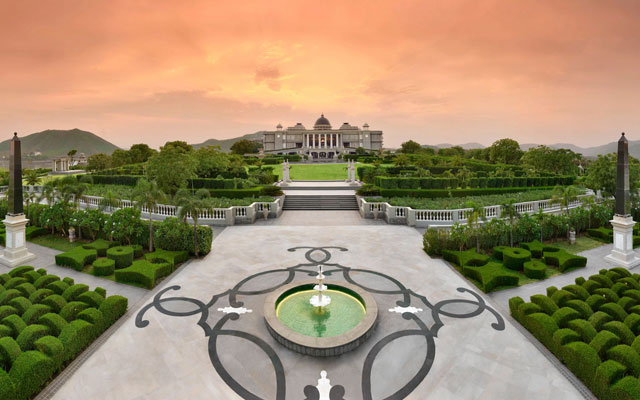
Elsewhere, Raffles Udaipur, India’s first Raffles hotel, opened recently on August 2, 2021, on an 8.4ha private island in Udai Sagar Lake. Surrounded by spectacular hills and a view of the 400-year-old temple in the background, the property has 101 rooms, each with a private pool.
Zen state of mind
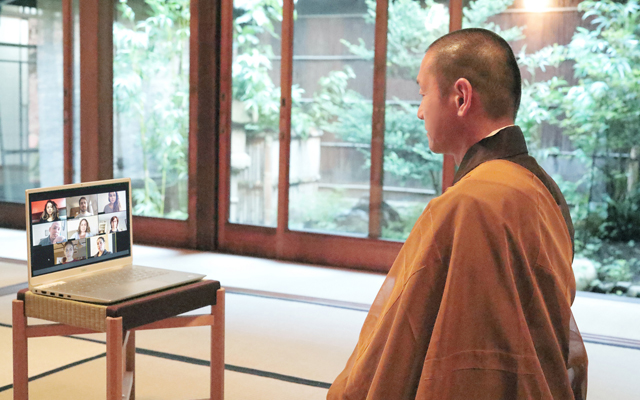
Remote teams from around the world can gather virtually together at Maikoya, a traditional tea house in the heart of Kyoto, for a livestreamed online zazen – a seated meditation that is the primary practice of the Zen Buddhist tradition.
The 60-minute experience begins with a short informative session that provides guidance on posture as well as an introduction to the philosophy and history of Zen meditation, and the practice’s connection to Japanese culture.
A 45-minute meditation follows with the use of a Japanese “singing bowl” known as rin. Instructors guide participants through this entire process, leading them on a journey of acceptance, letting go and mindfulness.
At the end is a short exploratory session where participants can ask questions about any aspect of zazen or consider their thoughts on the experience. Companies could even use this time as an opportunity for team members to reflect, share or offer feedback.
The online retreat will feature well as an ice-breaker to a more intense teambuilding session, or as a stand-alone wellness exercise for teams.
Cost: 10,000 yen (US$90) per pax Contact: kyoto@mai-ko.com
Better blooms
Maikoya also offers online ikebana, the Japanese art of flower arrangements. It is a popular way to learn not only one of Japan’s ancient arts but also a little about Japanese culture and history.
This one-hour session is led by a geisha who will outline ikebana culture as well as a methodology suitable for beginners. She will explain simple rules for participants to make a basic, but authentic ikebana artwork.
After receiving their tutorial, participants can begin to bring their flowers to life. Step-by-step guidance is provided.
This activity features well as a break-time activity in between online meetings, or as a relaxing conclusion to an intense teambuilding session.
Cost: 5,000 yen per pax Contact: kyoto@mai-ko.com
Impactful work
The newly-launched Impact Online works 17 Sustainable Development Goals (SDG) 2030 into a programme that encourages participants to appreciate their own strengths and the diversity of skills of others in their team while learning how they can contribute to a sustainable future for all.
Conducted by Team Building Asia, the programme requires teams to select from a suite of tasks related to challenges such as no poverty, zero hunger, life on land, life below water, and climate action. Team members complete tasks and submit their attempts to gain points and ascend the leaderboard.
Collaboration is key, as the director and other participants possess different bits of information that they must share and work together in order to solve challenges.
Challenges range from mental, creative and active. New tasks and levels are unlocked as the game progresses.
Gameplay takes an hour, and it is followed by discussions among teams on actionable items to do individually and as an organisation to be more sustainable.
Impact Online offers three difficulty levels – easy, medium and difficult. It functions well as a main teambuilding activity.
Participants needs to download an app as well as have a computer for the video call. The activity is suitable for groups of eight and more.
Cost: Available at enquiry Contact: stuart.harris@teambuildingasia.com
Smells like team spirit
An expansion of Asian Trail’s 2020 bestselling online activity, The Investigation Affair, the new Online Investigator calls on teams to compete against time to sniff out clues, discover evidence and solve cases in order to become leading detectives.
The game begins with an introduction to the Crime Academy, and participants will need to solve team puzzles, interact with other teams, complete tasked pictures or videos, and conduct research to progress through more than 25 cases.
Unified solutions will be input via a web-app to score points. Live-scoring allows participants to track their performance as well as that of other teams.
Online Investigator has no capacity limits, although it is recommended that each team takes no more than six people.
Online Investigator functions well as a main teambuilding activity. It trains planning, problem-solving and communication skills while bringing remote team members together for some fun.
Cost: Available at enquiry Contact: menging@asiantrails.com.kh
Multi-pronged quest
Conducted by Asia Ability, Quickfire Interactive is a high-energy, app-based game of mental, physical and creative challenges that can be customised to reflect corporate identity and convey organisational goals as well as specific learning experiences.
To begin, teams are formed and their quest is to complete as many challenges as possible within a given time frame. Challenges come in various difficulty levels and forms, such as photos, videos, single-answer and multiple choice questions, and logic puzzles. As time elapses, the pace and risk levels build, creating an atmosphere of fun and urgency. The final results are shown through a presentation of the best team-generated photos.
Quickfire Interactive emphasises the vital role of every team member in achieving group success, while the challenges encourage innovative thinking, effective communication skills, and collective strategy.
Participants will need to download the custom-built Quickfire app on their phone or tablet and join the activity on a video conference platform.
Gameplay is suitable for groups of eight to 1,000 and can be conducted as a single 90-minute or two-hour remote event. It can also be broken up into smaller sessions throughout a conference or meeting.
Through Asia Ability’s partnership with B1G1 Business for Good, Quickfire Interactive can also integrate CSR elements to allow teams to generate positive impacts towards pre-selected good causes as they progress through tasks.
Cost: Available at enquiry. Contact: ask@asiaability.com
Acceleration in digitalisation will see future events being delivered through various other forms of technology
Big Tech are crafting technology to disrupt events
VR, AI and AR will enable more immersive, interactive and experiential events
Cost and courage to take leap forward are obstacles
When integrating technology into the customer experience, the most important thing will still be understanding customers and their business needs
While the future of the business events industry is undoubtedly human, the sector needs to be ready to integrate different types of new technology that can enhance attendees’ experience in events going forward.
This is according to Ayesha Khanna, co-founder and CEO of ADDO AI (an artificial intelligence solutions firm and incubator) who was the closing keynoter at the recent hybrid SMF IBTM Wired event held in Singapore.
Aside from presenting a futuristic outlook of hybrid reality with man-machine powered events and social robots alleviating Zoom fatigue when humans meet in digital spaces, Khanna said Big Tech – like Apple, Facebook and Google – was developing technologies that would disrupt events by making experiences more interactive, personalised and dynamic. These were aimed at millennials and the next generation of digital natives – the alphas.
Event spaces with virtual reality (VR) headsets could create a social presence with avatars, sound projections and haptic gloves to make virtual attendees feel like they were in a real meeting. This was getting close, Khanna said.
She added that augmented reality (AR) has already successfully delivered specially curated art tours when travel was restricted, and could, for example, transform a customised experience for someone attending a car launch, she added.
While meeting planners and event organisers do not have to be technologists, Khanna advised that they needed to know about the developments to make decisions to help them know the customer – how he or she is feeling, for example – to create a better experience.
Non-human influencers, Khanna pointed out, were also growing by the day. The young and vivacious Lu, created by a magazine company, for example, has 25 million followers on social media. Khanna added that these non-human influencers were creating a new era of continual engagement and were cheaper to sign up “than big speakers”.
Technology is not omnipotent
Event technology solutions have no doubt been pushed to the forefront during the pandemic and GlobalSign.in founder CEO Veemal Gungadin, who is also founder and CEO of event technology platform GEVME, said he had seen a 50 per cent jump in meeting technology spend, while total budgets did not increase.
But is the industry ready to take the next step, embrace emerging technological solutions to create new realms of customer experience beyond green screen magic and 3D movie thrills? Will AI, VR and AR be less sexy once face-to-face and high-touch interaction can resume, and is the industry excited by the possibilities?
According to Oscar Cerezales, chief strategy officer, MCI Group, technology is important, but it is only an enabler.
Cerezales said: “Technology without design is useless, and there is no correlation between great events and great technology used. However, there is a correlation between great events with great design – UX or user-based with neuroscience, design thinking, etc.”
What the industry needs to learn from Big Tech, he pointed out, is “how to scale up, how to grow-build-stick-monetise communities and how to develop platform business models”.
To Cerezales, it is a phased process – first, a simple pivot from offline to online; second, adding design to the experiences; third, acceptance that it is not about an event but a year-long campaign with multiple touchpoints with their audience, be it corporate customers or association members and the public.
“This process requires courage, a testing and prototyping mindset, plus a learning and collaborative ecosystem. Finally, everyone has to learn about the what and how of modern outsourcing needs,” he pointed out.
Focus on need, partnership and ROI
The AI, AR and VR future of events, according to Kenny Goh, founder, miceNeurol, an event technology partner and event planner, is “frightening and confusing to the industry” preoccupied now with “bottomline issues”.
Moving forward, Goh advocates the setting up of a partnership model where the four main stakeholders – event technology company, production house, venue and content owner – approach a hybrid or virtual event on a “cost-share” basis with the Singapore Tourism Board or Singapore Exhibition and Convention Bureau as the catalyst.
PCO and turnkey agency Ace:Daytons Direct is a frontrunner in using AI to create virtual platforms and data in matchmaking, according to managing director Nancy Tan.
Tan said: “But emerging technology, production, satellite and equipment costs have to be affordable for clients and so far, demand among our primarily medical association clients is not a lot, only if it is a necessity and if adoption would result in higher ROI.”
“It is different if you are a gaming event or conference. Then, AI and VR are a must,” Tan opined, adding that such technology would add value to a high-end product launch.
“It is good to have but to ‘hype up’ an event comes at a price”, Tan commented, noting that AI has been around since 1950 and the first VR headset was developed in 1968.
Gungadin agreed there had been “no impetus” for the industry to “reimagine” events with the sort of technology due to the cost and “if it’s not broken, why fix it” mindset.
However, he said there was a need now to reimagine the experience for those on-site, as well as to create a distinct experience for those online.
For him, the next big trend is leveraging big data to better understand the customer, to create a better customer experience and to deliver a 365-day user journey – the omnichannel, and it is already happening.
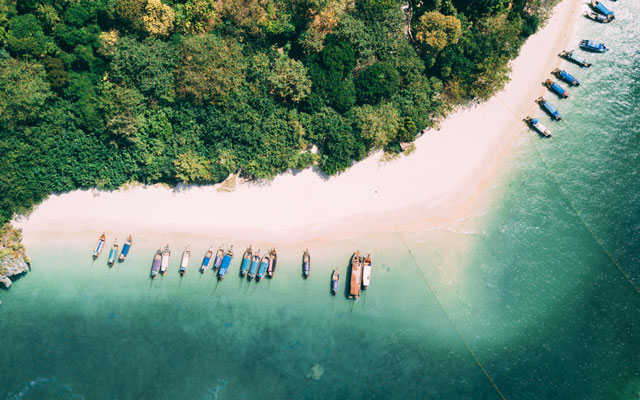
Mid-August opening planned for Krabi and Phang Nga as part of Thailand’s plan to gradually reopen destinations to international travellers; aerial shot of Phra Nang Beach in Thailand pictured
The Tourism Authority of Thailand (TAT) has confirmed that plans to reopen Krabi and Phang Nga to fully vaccinated international tourists are set to start within this month.
Krabi and Phang Nga are scheduled to reopen selected areas under a 7+7 model. This will allow foreign tourists under the Sandbox programme to reduce the mandatory stay in Phuket from 14 to seven days, after which another seven nights can be spent in Krabi (Ko Phi Phi, Ko Ngai, and Railay Beach), and Phang Nga (Khao Lak and Ko Yao).
Mid-August opening planned for Krabi and Phang Nga as part of Thailand’s plan to gradually reopen destinations to international travellers; an aerial shot of Phra Nang Beach in Thailand pictured
The 7+7 model aims to provide international tourists with more options to visit multiple destinations during their trip to Thailand. Krabi and Phang Nga are ideal for this given their proximity to and ease of access from Phuket.
At the same time, TAT also reiterated that both the Phuket Sandbox and Samui Plus programmes are going ahead as usual.
Thanakorn Wangboonkongchana, spokesperson of the Centre for Economic Situation Administration, said Thailand’s prime minister Prayut Chan-o-cha had been keeping a close watch on the Phuket Sandbox and Samui Plus programmes, and voiced confidence that the country’s reopening plan could proceed in a way that ensures the health and safety of both the tourists and local people.
TAT said that the new Covid-19 cases in Phuket were mostly detected among locals, construction camp workers and domestic travellers; with only a small number of cases found among international arrivals.
From July 1 until August 1, Phuket recorded 14,910 international arrivals under the Sandbox programme. Of these, 34 tested positive for Covid-19 and had been sent for medical treatment. To contain local transmission, Phuket has stepped up screening measures on domestic travellers, effective from August 3-16.
Phuket, Krabi, and Phang Nga are declared among the 11 Controlled Areas or orange zone provinces in Thailand’s expansion of the Covid-19 restrictions from August 3-31.
Meanwhile, the recently-reported 54 new cases on Koh Samui from a restaurant cluster has been brought under control, TAT said, adding that none of the infections were related to foreign tourists under the Samui Plus scheme or those who continued their journey from the Phuket Sandbox programme.
From July 15 to August 1, Surat Thani recorded 137 international arrivals under the Samui Plus programme, with one person testing positive for Covid-19. In addition, there were 211 tourists from the Phuket Sandbox programme. Surat Thani has since stepped up virus control measures.
Just 10 minutes from Phuket International Airport on the serene northern coast, this 178-key, Bill Bensley-designed resort offers delegates a quiet, tropical paradise steeped in Phuket’s tin-mining heritage
The newly-opened Ritz-Carlton, Bangkok anchors the One Bangkok development with cosmopolitan elegance. Featuring the city's largest ballroom and a spectacular new penthouse suite, it delivers exceptional hardware and deeply authentic, soulful service for business and leisure travellers alike
Behind the imposing, Brutalist concrete that defines Zurich’s Oerlikon district lies a surprising secret. While its exterior honours the neighbourhood’s industrial roots, stepping inside Mama Shelter reveals a vibrant, neon-soaked world that is a far cry from its rigid shell





 Todd Handcock is president Asia Pacific at Collinson, a provider of traveller experiences including medical and security assistance, and travel medical services.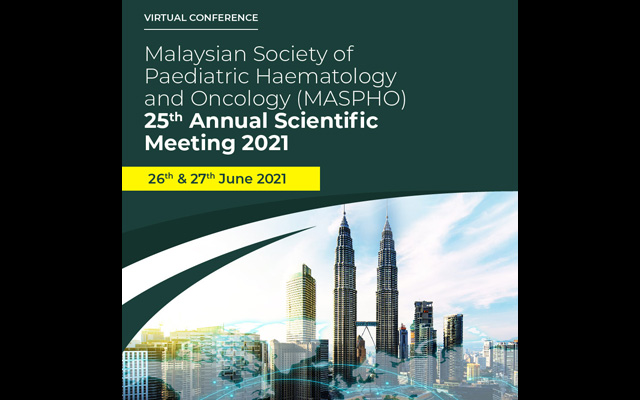







Fully-vaccinated Singapore residents will begin to enjoy greater social freedom from August 10, as the city-state moves into the first phase of her four-step transition to becoming a Covid-19-resilient nation.
Fully vaccinated individuals will be allowed to gather in groups of five, up from the current two. This applies to F&B settings. They can also take part in live performances and events, which will be allowed to host up to 500 fully vaccinated individuals.
Singapore will continue to ease restrictions, with permitted event capacity expanding to 1,000 fully vaccinated individuals come August 19 if conditions remain good.
According to health minister Ong Ye Kung, who is one of the chairs of Singapore’s Covid-19 multi-ministry task force, this initial phase will run from August 10 till early-September, when 80 per cent of the Singapore population is likely to be fully vaccinated. With a higher rate of vaccination, Singapore’s economy will be further opened up, with more social activities allowed and travel made possible, he said.
The task force also announced plans to offer greater quarantine flexibility for fully vaccinated travellers from Australia, Austria, Canada, Germany, Italy, Norway, South Korea and Switzerland.
From August 20, travellers from these eight countries will be allowed to serve their 14-day stay-home notice (SHN) at their own places of residence instead of a dedicated facility.
To qualify for this scheme, travellers must have remained in the approved countries for the last 21 consecutive days before leaving for Singapore, and must either be staying alone or with other fully vaccinated household members who are under SHN for the same duration and with the same travel history.
All travellers must show proof of approval to serve SHN at their place of residence when they arrive in Singapore. They will be required to wear an electronic monitoring device to ensure compliance, and legal action will be taken against those who breach SHN requirements or make false declarations, said the Ministry.
Travellers who opt for this scheme will have to utilise and pay for specially designated transport services to and from their place of residence.
These latest measures are expanded from an ongoing allowance for travellers from New Zealand, Brunei, mainland China, Hong Kong, Macau and Taiwan to serve SHN at their place of residence.
Ong also revealed plans to establish travel lanes with selected countries, where frequent Covid-19 tests will replace quarantines.