



Every paradigm shift creates new buzzwords – and for the post-pandemic business events industry, they’re ‘hybrid’ and ‘integrated’. One needs only to glance at the flurry of industry articles from the last few months to know that these types of events are looming in marketing and event professionals’ minds as they look forward to Covid-19 receding and their work ramping up again.
The problem is, their meanings seem too often conflated. Is an offline event with a livestream ‘hybrid’, or ‘integrated’? How about an event that includes distinct programmes of both offline and online elements?
Events like those just described may be common, and perhaps could be called ‘hybrid’ – but they are certainly not ‘integrated’, as they each comprise two separate audience experiences, not one. It is an important distinction to make, because ‘integrated’ is where the industry and market are actually headed.
Confused? Let’s break it down to show just what integrated means, and what to aim for in an integrated event.
Defining the challenge
Events are supposed to engage audiences, and they do that by immersing them in experiences that impress them with messages. If the experience can be personalised – through interaction and/or customisation – it becomes more relevant and impactful to the individual. It becomes ‘sticky’.
Achieving this is relatively straightforward at an in-person event, where audience members can engage in the message and brand face-to-face through their choice of touchpoints. But importantly, all these ‘personalisation’ choices are part of a single shared experience.
For obvious reasons, the pandemic drove many brands and event professionals to attempt to recreate the above online. However, many of the most valued aspects of in-person events simply don’t translate to online formats. Those attending online events may not even have the same intentions or priorities as offline event attendees.
But as the pandemic also taught us, online events have a value all their own. Their audience reach is potentially unlimited, as is the endurance of their online presence. They also present a whole range of new avenues for brands to connect with different audiences.
As the pandemic recedes, brands will want events that are effective in engaging both audiences – online and offline – with a single, shared experience. Making this intersection of platforms and audiences seem seamless and natural is one of the biggest challenges faced by event professionals, but it is the essence of integration.
Experiences – different but equal and shareable
This analogy may explain it almost perfectly. Think of the two audiences at an integrated event as the petrol and electric motors in a hybrid car. Both work differently and have their own needs and characteristics, but when brought together, they create one integrated driving experience.
In an integrated event, then, two distinct audiences are not forced together into shared experiences that suit neither; instead, each is offered their own optimised means of engagement – different, but equal in impact and value. While this may sound like the makings of two parallel events, it isn’t: the key to integration is to enable the two audiences to cross over and interact in each other’s worlds.
Example: The NBA brings an online audience courtside
Facing the challenge of playing to empty stadiums during Covid-19, the NBA used 17ft video screens, Microsoft Teams’ ‘Together’ mode and a new app to create an engaging experience for players and online fans alike.
Fans using the app could not only watch games in real-time on their mobile devices, but be seen on the courtside screens by the players. The app’s ‘tap to cheer’ button enabled fans to respond to the game action – and generate cheers in the game venue to which players could react. Using the app’s ‘Together’ mode – usually used for video meetings – fans could interact with each other against a common backdrop as well.
Korean boyband BTS employed a similar strategy for their MAP OF THE SOUL ON:E concert. Features like live chat enabled interaction between online fans, who were themselves displayed on massive screens surrounding the physical stage. Fans could also wave virtual versions of official BTS placards and glowsticks.
Content – diverse and interactive
Anyone who can remember sitting through interminable university lectures will understand that even the richest, most intriguing content can be undermined by dull, uninspired delivery. This is even more true at online events, as audience members are free to leave, switch off or just zone out at any time.
So how do you keep them watching? The key is to ensure that can do more than just watch. Deliver the content as a dialogue that gives the audience options in how they engage and react. Peppering the delivery with live polls, surveys and quizzes can help emphasise content whilst entertaining and motivating the audience. These gamified elements can even yield valuable audience data and generate leads. Like other elements of an integrated event, the gamification should be optimised for both audiences – while offering opportunities for cross-over.
Example: Gamifying the digital entertainment leadership forum
Pico’s scratch-built virtual platform for this event helped to keep the online experience as engaging as it was informative. Visitors could view the exhibition’s start-up booths and click them for access to company videos and websites, or arrange one-on-one live chats with company reps. The platform also allowed for networking between visitors, and even featured mini-games and challenges that encouraged participants to explore further whilst earning their way to various prizes.
Make it personal – online and offline
Creating scope for personalisation at an offline or an online event takes imagination and hard work; at an integrated event, it’s even more challenging.
Again, the key is to avoid the temptation of creating a single, standard strategy for both audience groups. Instead, exploit the characteristics of both worlds to create different but equitable activities that flow into a shared experience.
Example: Customised avatars attend Hydeout
Though not an integrated event, the Hydeout virtual concert offers some idea of how online audiences can approach events in a personal way. Users can not only customise their avatars with unique outfits and dance moves, but can party with other avatars with the ‘HydeTribe’ while watching the concert.
Conclusion
The integrated approach promises a whole new kind of event experience in which the true venue is neither physical nor virtual, but in a confluence of both – an immersive zone in which audience members can slip fluidly from online to offline, interacting with brands, content and each other.
For brands and other clients, it truly offers the best of both worlds: the immediacy and immersiveness of an in-person event, and the potentially vast audience found online, unlimited by time or place.
 Gregory Crandall is the senior vice president, global activation team with Pico Group.
Crandall’s professional life began in the Silicon Valley, where he spent 15 years specialising in content and event services. Relocating to Asia for 20 years, he founded his own agency, worked with the Pico Group and led several media companies. In 2017, Gregory rejoined Pico to spearhead Pico+ Hong Kong.
Since 2020, he has been entrusted with overseeing the group’s global activation team focusing on sports marketing, IP creation, World Expo and Olympics projects, brand festivalisation, project management and design of museums. In this role, he drives solutions ranging from data analytics, business intelligence, audience tracking, social media, to e-Commerce, in-store and interactive technologies, face recognition, virtual events, virtual reality, augmented reality, artificial intelligence, and theme park design and operations.



 Todd Handcock is president Asia Pacific at Collinson, a provider of traveller experiences including medical and security assistance, and travel medical services.





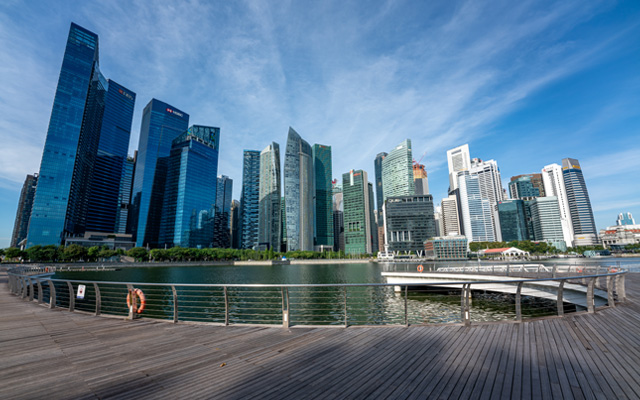
Fully-vaccinated Singapore residents will begin to enjoy greater social freedom from August 10, as the city-state moves into the first phase of her four-step transition to becoming a Covid-19-resilient nation.
Fully vaccinated individuals will be allowed to gather in groups of five, up from the current two. This applies to F&B settings. They can also take part in live performances and events, which will be allowed to host up to 500 fully vaccinated individuals.
Singapore will continue to ease restrictions, with permitted event capacity expanding to 1,000 fully vaccinated individuals come August 19 if conditions remain good.
According to health minister Ong Ye Kung, who is one of the chairs of Singapore’s Covid-19 multi-ministry task force, this initial phase will run from August 10 till early-September, when 80 per cent of the Singapore population is likely to be fully vaccinated. With a higher rate of vaccination, Singapore’s economy will be further opened up, with more social activities allowed and travel made possible, he said.
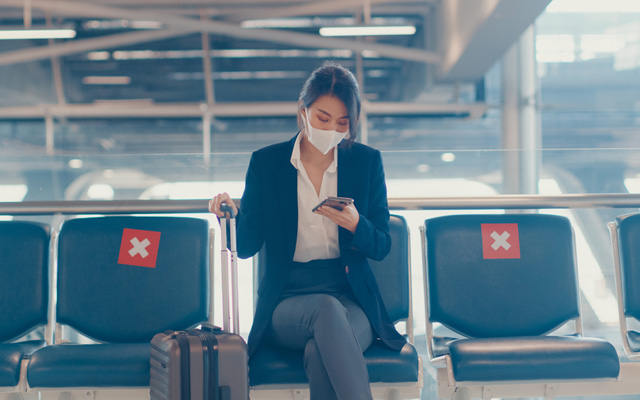
The task force also announced plans to offer greater quarantine flexibility for fully vaccinated travellers from Australia, Austria, Canada, Germany, Italy, Norway, South Korea and Switzerland.
From August 20, travellers from these eight countries will be allowed to serve their 14-day stay-home notice (SHN) at their own places of residence instead of a dedicated facility.
To qualify for this scheme, travellers must have remained in the approved countries for the last 21 consecutive days before leaving for Singapore, and must either be staying alone or with other fully vaccinated household members who are under SHN for the same duration and with the same travel history.
All travellers must show proof of approval to serve SHN at their place of residence when they arrive in Singapore. They will be required to wear an electronic monitoring device to ensure compliance, and legal action will be taken against those who breach SHN requirements or make false declarations, said the Ministry.
Travellers who opt for this scheme will have to utilise and pay for specially designated transport services to and from their place of residence.
These latest measures are expanded from an ongoing allowance for travellers from New Zealand, Brunei, mainland China, Hong Kong, Macau and Taiwan to serve SHN at their place of residence.
Ong also revealed plans to establish travel lanes with selected countries, where frequent Covid-19 tests will replace quarantines.