While there was a year-on-year drop in
respondents seeing live events as very /
extremely important, the overall sentiment
towards offline events remains resilient
The Pico Group has released fresh industry research to reveal what has fundamentally changed in event experiential marketing, how well equipped are professionals to deal with challenges, and where brands are seeing success and room to improve.
As expected, respondents rated virtual/online events more highly in 2021 than they did the year before: 71% deemed them ‘very’ or ‘extremely’ important, a year-on-year increase of 26 percentage points.
While there was a year-on-year drop in respondents seeing live events as very/extremely important, the overall sentiment towards offline events remains resilient
In addition, over 90% said they have held or are considering hybrid events, while just 32% said offline or live events were ‘very’ or ‘extremely’ important (2020: 45%).
Entitled One Year On: How has the pandemic changed event and experiential marketing?, the industry research was conducted during February and March 2021. The new findings follow up on earlier client research the Group released in 2020, which investigated how brands and marketers were reacting to Covid-19.
Respondents for this latest survey included executives (11%), directors (31%), managers (46%) and other titles (12%) from a wide variety of industries across Asia Pacific (65%), Europe (19%), North America (13%) and the Middle East/North Africa (3%). The results show a clear sea-change in current market sentiment toward the post-pandemic era.
“The heightened level of tactical importance for virtual and hybrid events revealed by the 2021 survey makes it obvious that those formats will further establish themselves as the norm in the short term. Indeed, considering the pace of economic recovery and vaccination in much of the world, physical events are almost certain to remain the exception rather than the rule for many markets,” said Tyronne O’Callaghan, vice president, strategy, global activation, Pico.
“However, we believe the perceived value of offline events is still strong because of the uniqueness of what they offer to audiences. Their intimacy, sensory stimulation and emotion are hard to recreate digitally. When we quizzed respondents about critical success factors for virtual events, over 70% said ‘interactivity’ and ‘personalisation’,” O’Callaghan added.
For more insights, download the full Pico Group Industry Research report here.
New tech companies are being created but they are not able to sell indirectly so they can't get their products into the hands of people who want it
‘Do not waste a good crisis’ has become something of a mantra for many of us over the last year. Are corporate tech providers wasting this crisis? No, I don’t think they are, but there is one area I believe they are not giving the attention it deserves – indirect distribution and the growth an indirect partner channel can achieve.
You may be thinking ‘well, he would say that, wouldn’t he’ and you are quite right. We are a value-added reseller (VAR) of travel tech and we wouldn’t be doing what we do if we didn’t believe in it, but sometimes the benefit of such intermediaries is lost at both ends of the relationship – supplier, buyer (the TMC) and, ultimately, the buyer’s clients.
New tech companies are being created but they are not able to sell indirectly so they can’t get their products into the hands of people who want it
Let’s consider some non-travel examples where the role of VARs is better established.
Look at how the likes of Cisco, SAP, Zoho etc and how they distribute their tech. What did they work out a long time ago? ‘We cannot be everything to everyone’. How do we reduce support overhead, drive growth and deliver innovation?
What they did was look at their clients and prospects and segment them. They worked out that if they own a specific segment of customers, and then partner with others to sell and support their products, they can achieve these goals.
Now that change in thinking was not without cost. They had to invest in their tech stack to allow others to work in it. They had to create, train, and support a new indirect sales and marketing channel. This took forethought and a change in accepted technology distribution methodology. There was a substantial amount of risk associated with this new idea.
The challenging work and innovation paid off for these businesses, their clients and partners, and a new business practice was born – the value-added reseller.
But what does that mean for corporate travel tech?
The major suppliers in our sector, such as SAP Concur, Cornerstone and until recently Amadeus, have unwittingly created an elite club of users and clients, as they have dramatically reduced their indirect sales partners to the point where they are not taking on any new TMC reseller partners.
New entrants like TapTrip, Zenmer and Troovo have come in to fill the gap created by TMCs not getting access to their clients’ preferred solution, but they too have fallen into the same trap.
They build their products without thinking about future distribution. They invariably do not have a solution that allows for indirect distribution. Search for VARs that support corporate travel tech – you won’t find many.
What should these technology companies be doing now? They need to be looking at how they can get their products into the hands of the people who want them. The likes of SAP (though not SAP Concur), Oracle, Microsoft and many other IT and software companies have been using VARs or channel partners for many years. SAP and Microsoft invest heavily in these indirect sales channels.
So what does it all mean for travel managers?
As a travel manager, you want your service provider to have access to your preferred technology. Given the current situation with technology distribution, you may have access to tech at your current TMC, but you have chosen to move and your new TMC cannot get access to the tech, as the primary supplier is not taking on new partners. What do you do? Stay where you are? Move to another TMC who has the tech? Try to do a direct deal?
The current situation is not level, there is a limited choice of who has access to what tech across TMCs, especially across the smaller business travel agencies. Ideally, all primary suppliers should make sure their product is where their customers are. Customers should not be forced to change the supplier because the supplier cannot get access to the tech.
How should tech suppliers address VAR opportunities?
Research and talk to tech companies in other industries about using VARs to drive growth and share of market;
Invest in their tech to create a true reseller product;
Segment their clients and prospects to get a clear understanding where direct or indirect relationships work best for them and their clients;
Create a channel partnership team, that includes relationship management and marketing support
The three-year ROI on this new strategy comfortably beats the cost of the lost opportunity by not doing it at all.
No change in direct is without its challenges. Many tech companies are not ready to lose control because of the opportunistic tendencies of their sales teams. Meanwhile, resellers can be seen as being negative to the business and devaluing the direct offering, rather than adding value to the products and services of the primary supplier.
Two of the key advantages of creating and supporting a partner channel, however, are that VARs have an intimate knowledge of the market and can penetrate different segments with ease compared to the primary producer. Secondly, this sales channel gives the direct sale teams the opportunity to focus on larger accounts.
Tech companies have clients who want their product, so they need to make it easy for them to get access to it. If you are building tech solutions for our sector and are in the early stage of your plans, ignore the indirect channel at your peril.
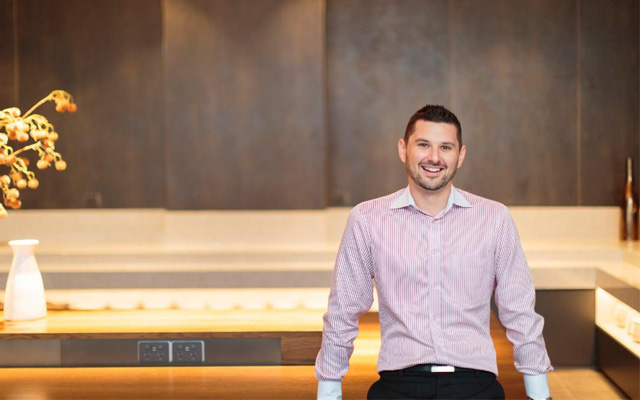
Gavin Smith is the director of Element, a travel technology company that helps TMCs gain access to cutting-edge travel technology. A former manager at SAP Concur, Smith has vast experience across various functions within TMCs. He has worked with TMCs of all sizes supporting their goals to deliver technology and payments to their clients.
Dorsett Hospitality International has appointed Michael Foster as the general manager for Dorsett Gold Coast – the group’s debut hotel in Australia, set to open in 4Q2021.
In his new role, Foster will be leading the direction for the hotel’s pre-opening, including the building of a dedicated team.
Foster has over 15 years of hospitality and management experience, including pre-opening, overall hotel operations, and sales and marketing. He was previously the general manager of Holiday Inn Express Brisbane Central and has held several senior roles for other hotels brand
Tourism Australia doubles down on efforts to get domestic travellers to explore their own backyard
Business Events Australia will receive more funding for its Bid Fund Program, as well as release a new video series showcasing Australian innovation, in a move to drive demand for future international business.
Tourism Australia has voiced its commitment to the Bid Fund Program, and will provide an additional A$3 million (US$2.3 million) to cover new pledges and confirmed bids for an additional 12 months through FY21/22.
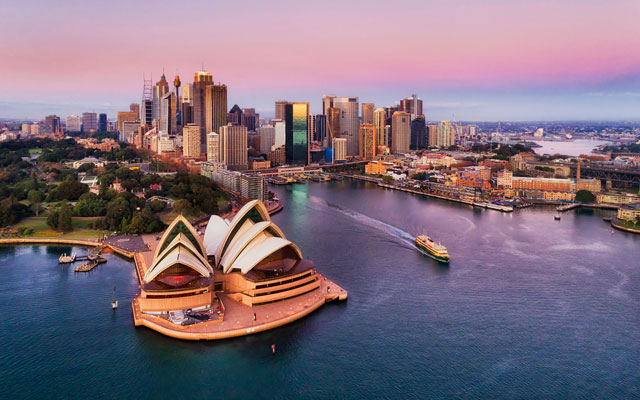
Efforts are being made to ensure Australia is well placed to attract more international events when travel resumes; Sydney pictured
The Bid Fund Program is designed to increase the conversion of bids for new international business events by offering financial support at the critical bidding stage. Since the programme launched in 2018, 40 events have been won worth approximately A$411 million in economic value to Australia, representing a conversion rate of 58 per cent.
Tourism Australia’s managing director Phillipa Harrison said: “With Covid-19 restrictions lifting and consumer confidence rising, this programme will continue to assist those bidding against international competitors for events and continue to position Australia as a leading business events destination.”
Tourism Australia encourages interested parties to visit and apply through the Business Events Australia website. Applications are currently open and close on June 30, 2022.
Meanwhile, the latest instalment of Business Events Australia’s Australia Innovates content initiative has been launched as a video series, showcasing innovation throughout Australia that continues to transform industries and deliver world-firsts.
The documentary-style video series is available on the Business Events website and showcases six Australians pursuing research, discovery, invention, innovation and intervention across several knowledge sectors including artificial intelligence, health, nanotechnology, environmental restoration and advanced manufacturing.
“Our Australia Innovates videos series highlights Australia’s expertise across a wide range of fields, positioning us as a world-leading association meetings destination where delegates can experience innovation firsthand,” Harrison pointed out.
In addition, Australia’s federal minister for trade, tourism and investment Dan Tehan said the business events sector contributed A$36 billion to the Australian economy before Covid-19.
“Because Australia’s economic and health response to Covid-19 has been among the best in the world, Australia is well placed to attract more international events when travel resumes. As part of our plan, we will also showcase Australian innovation to event planners in US, UK and Europe to secure more international events.
“Our additional support to attract international business events to Australia complements our A$50 million Business Events Grants Program that supports local businesses to attend local business events, conventions, tradeshows and conferences and the A$1.2 billion aviation and tourism support package designed to turbocharge domestic tourism spending.”
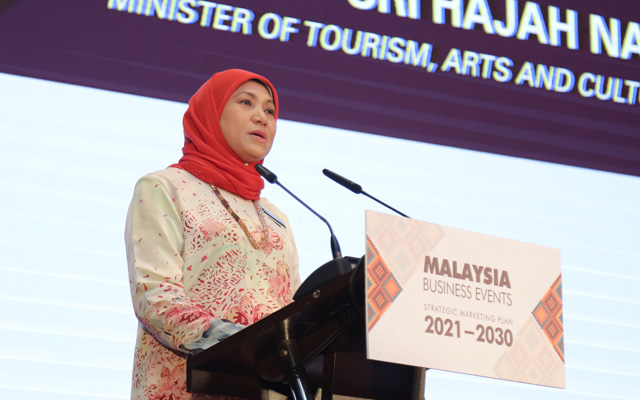
Nancy Shukri, minister of tourism, arts and culture, revealing more details about the 10-year plan at the press conference
The Malaysia Convention & Exhibition Bureau (MyCEB) recently launched its 10-year Strategic Marketing Plan 2021-2030, with the aim of positioning Malaysia as one of the world’s preferred business events and international sporting events destinations.
In line with the aspirations of Malaysia’s Ministry of Tourism, Arts and Culture, the plan will focus on developing sustainable tourism, as well as attracting high-yield business event travellers to the country.
Nancy Shukri, minister of tourism, arts and culture, revealing more details about the 10-year plan at the press conference
The plan further emphasises three strategic axes to expand performance, namely optimisation, foresight and competitiveness. These strategic anchors will be applied in implementing, planning and monitoring all initiatives collaboratively with the industry.
MyCEB is targeting three per cent business event delegates from the total number of foreign tourist arrivals into Malaysia, while creating an estimated 25,833 total employment in the business events industry by 2030. Malaysia also aims to be among Asia’s top five business events powerhouses by 2030.
Nancy Shukri, minister of tourism, arts and culture, pointed out these steps will help to ensure the country’s competitiveness, as well as develop an inclusive and sustainable tourism sector that is prepared and resilient in dealing with future challenges.
Once borders reopen, Malaysia also plans to tap more aggressively into Asia Pacific’s business events markets such as China, India, Korea, Taiwan, Australia and New Zealand. The idea is to entice organisers to hold their events for a longer duration by enriching business event offerings and delegate experiences.
In addition, MyCEB’s research has shown that the exhibition sector in Malaysia generates the largest economic impact, when compared with other business events segment. To further leverage on the exhibition component, one such plan is to package it with other MICE segments to further harness competitiveness.
MyCEB’s CEO, Abdul Khani Daud, stated: “The strategic marketing plan signals the business event sector and government’s commitment to work together by identifying new strategies and opportunities for expansion and building on our current presence in existing markets.”
Abdul Khani added at the press conference that MyCEB also has plans to vie for signature events such as the World Expo. If successful, Malaysia will be the first South-east Asian country to host the event.
Noella Ferns has been appointed as head of sales, Asia Pacific, by British Airways.
Based in Hong Kong, she will be responsible for all sales and commercial activity for the region, covering mainland China, Japan, Hong Kong, Singapore, Malaysia, Thailand and Australia.
She was previously the airlines executive vice president for Greater China and the Philippines, where she drove the airline’s commercial and external communications strategy in key Chinese markets including Beijing and Shanghai.
In total, Ferns has over 30 years’ experience at British Airways across senior management, sales and airport operations in Sydney, Hong Kong and Beijing.
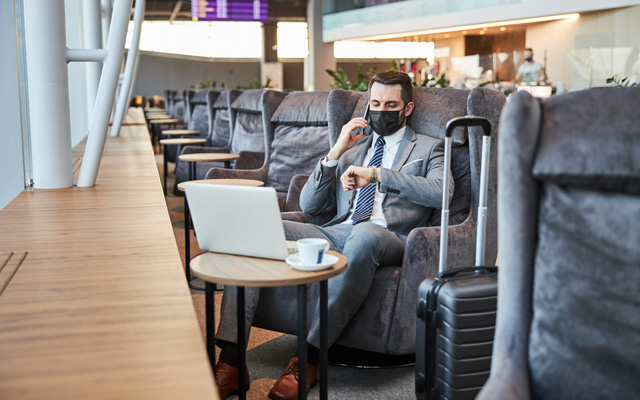
One-third of respondents said not being able to travel for business had made their company less productive
New research conducted by Collinson – a global company in traveller experiences and medical assistance – from a total of 18,500 travellers in 2019 and 12,607 travellers in 2020, has revealed how significant the lack of cross-border travel has been in the region and globally.
Globally, a third of business travellers stated that the lack of travel has made their company less productive, and 28% say they have felt unable to do their job effectively. Four in five global business travellers (81%), in spite of video conferencing technology, have seen their job affected by a lack of cross-border business travel, and a third of respondents state that not seeing clients face-to-face has negatively affected the way they do business.
One-third of respondents said not being able to travel for business had made their company less productive
Zoning in on Asia Pacific, one in three business travellers in China say not seeing clients and prospects face-to-face has negatively impacted the way they do business. In Hong Kong, over a quarter of business travellers are seeing the adverse effects of not travelling. This is further echoed in Singapore, with 25% saying not seeing clients and prospects face to face has negatively impacted their business, and not travelling has ultimately made them less productive.
The survey results demonstrate that while the majority of business meetings are now conducted via video call, there is a growing need and desire amongst a large number of business travellers to recommence travel. But it’s important to note that they will be looking to their employers for the right provision of support and assistance solutions before taking to the skies again – those that protect not just their physical, but also mental health.
Before the pandemic, one in three (35%) business travellers raised concerns about the impact of business travel on their mental health, while a quarter (23%) said it increased their stress levels. Collinson’s research post-Covid outbreak indicates that these feelings have intensified since the onset of the pandemic, and that these areas will now be more critical for businesses and the travel sector to focus on. In fact, almost three quarters (73%) of travellers worldwide say they’ll be prioritising their mental wellbeing more when they travel in future than they did before the pandemic.
While apprehensions surrounding mental wellbeing and stress are a top priority for global travellers, issues around quarantine rules remain a significant concern for passengers in Asia. The need to quarantine tops Hong Kong travellers’ list of concerns for post-pandemic travel, with 57% primarily hesitant to travel due to the need to quarantine on arrival or return. These concerns are shared with 49% of travellers from China and a further 71% of travellers from Singapore.
As businesses consider restarting cross-border business travel, the challenge remains in making sure employees don’t feel it comes at a cost to their health and wellbeing. Post-pandemic, corporate wellbeing initiatives will be high on the agenda of companies globally. Employees that need to travel for work should be able to do so with confidence, knowing that their company is providing them full support.
More than half (51%) of business travellers interviewed in our pre-COVID survey said their employer expected them to prioritise keeping the cost of travel low over their wellbeing. Add to this that only half of business travellers pre-pandemic knew their employer had invested in some form of travel risk management (TRM) programme to assist them on the road, some 51% of those weren’t sure what it meant or entailed. Of those who knew this was available to them, only a fifth felt confident using the services in the event of something going wrong abroad.
Getting business travel back on the road is going to require a strong focus on ensuring that employees’ wellbeing is prioritised and that there is not just adequate support in place, but that employees clearly understand what is available.
David Evans, joint CEO of Collinson, said: “The research shows a tension between the importance of business travel, which employees say allows them to do their job better and makes businesses more productive, and caring for them while travelling. In order to make business travellers feel comfortable travelling again, it won’t just be a question of Covid-19 measures such as testing and vaccinations.
“Communication is key, and as such, employers and their medical assistance and TRM service partners need to take a holistic approach regarding traveller wellbeing. This can include propositions directly addressing travel stress concerns such as access to lounge or working together with TRM solutions providers to explain exactly what’s on offer through these programmes and how employees can access these services.”
Virtual events have developed a lot in the last year – what has been your biggest learning about running a successful virtual event?
It was definitely a steep learning curve last year with just about three months for us to figure out how we were going to approach this new dimension of virtual events.
Our main goal was to stay true to our meetings-centric approach, which is a cornerstone for our in-person events. It became obvious that the motivations and factors to make this successful is hugely different in a virtual environment when delegates are participating out of different time zones, with varying levels of digital tools and tech know-how.
Unlike in-person events, the tech component is often a defining factor in a delegate’s virtual event experience. A simple issue of not being able to connect to the platform or not being able to be heard during a meeting due to incorrect settings can erode all event planning efforts.
Our biggest takeaway was thus the importance of working with reliable tech partners who were ready to journey with us through the process to implement our vision virtually, and support our valued delegates to optimise their tech experience at the event.
In which ways do you think the industry’s experience over the last year will improve the way business events and exhibitions are run in the long term?
Covid-19 has opened the industry’s minds and eyes to re-thinking the possibilities of event concepts and formats that we had never fully explored before. While many are looking to the return of in-person events, a virtual/hybrid component is likely to be an enabler for events to involve more of their audiences and provide flexibility to how delegates engage with the show based on their schedules and preferences. It still remains to be seen how sustainable this approach will be and in what ways in-person or hybrid events will continue to transform, but I think this has created a lot of anticipation as to what events should and can now deliver once borders are reopened, and capacity restrictions are gradually eased.
What were the biggest surprises for you running IT&CM and CTW China virtually last year?
The amount of support that the event received exceeded our expectations, especially in the meetings aspect where we had concerns about the level of no-shows. For virtual events, such rates are notoriously indicated to be around 40 to 50 per cent of registered numbers. We, however, achieved a 90 per cent completion of all appointments that were pre-scheduled, which is an exceptionally high commitment rate by the delegates. The quality of meetings was also rated extremely positively by exhibitors, which proved that with the right set-up and approach, virtual events can be just as effective as physical events.
What new feature or upgrade for the 2021 virtual event are you most excited about?
The new 2.5D exhibition feature is going to be a first for the show. The initial visuals have come out really well and I think this will deliver a more vibrant-looking show floor, and provide greater branding value to our exhibitors.
We’ve also made most of our popular event content available on-demand this year, with all content being released on the first day of the show, so delegates can dive right in to enjoy the content at their convenience.
The show features an enhanced buyer incentive scheme this year that encourages buyers to earn even more guaranteed cash rewards, lucky red packets and accumulate points to win prizes. From what we have observed, this is perhaps the most attractive incentive scheme offered thus far by any other similar industry event.
What’s one piece of advice you would give to IT&CM and CTW China 2021 exhibitors to help them get the most out of the show?
Come on-board early, and leverage on all the pre-event exposure and publicity that we’re according confirmed exhibitors (at no charge at all!) as part of our extensive event marketing campaign.
Do you anticipate any major changes in the number or type of exhibitors and buyers at this year’s event, compared to last year?
We are humbling our expectations and hope that the show will continue to retain the same level of support that we did last year. That said, this year’s event is packed with upgrades and new features and we hope that this will appeal to new and even more participants. With travel resumption now in sight, compared to last year, we may also see more businesses who are ready to leverage on our event to start pre-planning and re-honing their connections.
In your opinion, what is the best-case international travel scenario we can expect for late June, when IT&CM and CTW China 2021 go live?
We think that real changes in terms of travel would only be realised in 4Q of this year at the earliest. At this point, destinations are still grappling with their vaccination challenges, of which resolution is going to be key for outbound travel to resume. Most hope to complete vaccinating their population by year-end with several falling behind on their schedule. Travelling thus far is still limited to travel bubbles, and some are now pilot testing policies to do with shortening or eliminating quarantine requirements, while most others have yet to announce any confirmation on re-opening their borders.
When it’s possible to travel internationally again, where’s the first place you plan to go?
I can’t wait to travel. Before the COVID-19 pandemic, I was making about 25 trips a year. I do not have a specific destination in mind right now but it would be one that is within an eight-hour flight time from Singapore. Thus, my first few trips would likely be within the Asia-Pacific region before I start venturing longhaul. As to the destination, it all depends on the opportunity presented at that time – such as airline or destination promotions – while taking into consideration the appeal, safety and security of the destination.
This interview was first published by Dragon Trail International here.
Although technology has been a great driver in past years, the pandemic has changed that
While travel technology can help to simplify corporate travel programmes, complexities created by the Covid-19 pandemic in the last year or so have forced corporate travel managers (CTMs) to go low-tech.
Florence Robert, regional senior travel and operations manager, Asia-Pacific, Ericsson, said it was “a slight setback for a lot of travel managers who were pushing for online adoption”, adding that the technology is only “starting to come, but it was not there”.
Although technology has been a great driver in past years, the pandemic has changed that
Like other CTMs who made the move, Ericsson blocked its online booking tool because it was “not able to cope to the level of security and checks that we needed to have in place” during the pandemic, according to Robert who spoke at the April CAPA Live CTC Master Class.
Robert acknowledged TMCs have started to provide tools to address corporate pandemic needs, but they were “still a work in progress”, explaining that booking a PCR test was still being managed offline by the TMC.
SAP Concur’s TripIt constantly updates information on Covid-19 travel requirements, while Egencia Travel Advisor was created to provide a list of detailed restrictions and requirements to help employees and their travel managers decide if a trip should go ahead.
Dionne Yuen, senior global sales manager, added Egencia had also launched a live chatbot mobile app for travellers to contact an agent round the clock “to cover any gap” in a manual booking as “we can never eliminate the human touch because it does provide a different possibility”.
Moderator Kurt Knackstedt, CEO, Troovo, opined one part of the argument in managing a complex situation was to make the channels simpler and to “take away multiple channels online, offline, email, mobile, etc, and just go offline “back to calling an agent and getting advice”.
However, SAP Concur’s Paul Dear, senior director supplier management (EMEA), countered that even though complexity in the current environment and fragmentation of channels and travel restrictions had increased substantially over the last 12 to 18 months, it remained necessary to maintain all booking channels – instead of reducing them – to enable CTMs to capture data for a clear understanding of their solutions.
Being a boutique city can be sometimes be interpreted as code for a small city trying to stand out. But it is perhaps a sign of our times that it is exactly Adelaide’s boutique credentials that are stacking the odds in her favour.
As one of Australia’s smallest cities and a second-tier destination, Adelaide’s size and geographical layout have helped keep all her charms intact with few lockdowns and a mostly Covid-free environment.
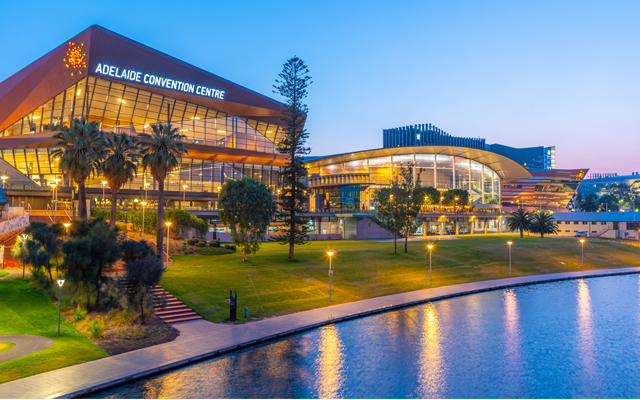
The Adelaide Convention Centre boasts 20,000m2 of conference, exhibition and event space
And she is fiercely trying to keep it that way to encourage a reboot of the events industry with new products ready to entice the upper-end of the market. These include five-star hotels, function spaces and experiences, all of which were presented at the showcase event Destination South Australia (DSA) held February 10-13, 2021.
Among these were the Crowne Plaza, the luxurious Oval Hotel, and Eos by Skycity, which is Adelaide’s long-anticipated integrated entertainment complex. Also in the pipeline is a new Sofitel, Hyatt and Westin.
Safety first
The folks at the Adelaide Convention Bureau (ACB) are well aware that none of the above are selling points without a solid reputation for safety and hygiene in a Covid-conscious world.
“So back in June, we met with 10 of our members to develop a Safe SA campaign,” said Damien Kitto, CEO of ACB.
“It was all about developing an end-to-end solution and process where, from your arrival at the airport to your transport to hotels, venues and your trip home, everyone would operate on the same processes and procedures…to deliver that safe and healthy experience,” he explained.
“We’re the only capital city in Australia that has taken that approach and our campaign is one reason why I’m sure the ACB has managed to lead Australia for business events. We’re really proud that 85 per cent of events for 2020 have been rescheduled to either this year or next, which is a phenomenal effort,” he continued.
The campaign was followed by a local pilot event in October with about 200 participants to instil confidence for events in the sector. And there are definite signs the strategy is working.
“While Covid-19 has certainly impacted (our) business levels, we’ve been fortunate that the South Australian experience has been vastly different from other places around the world,” said Simon Burgess, general manager, Adelaide Convention Centre (ACC).
“We recently welcomed almost 10,000 delegates across five events during a single week. This included our annual Cellar Door Fest, an F&B consumer exhibition which drew 7,500 visitors; an industry tradeshow; plus conferences in the agriculture and financial sectors,” he continued.
Burgess admits that while ACC has a “healthy number of events on the books” until June 2021 from local and national events, he does not expect all of them to materialise and there is still a need to think on their feet.
Hosting the 38th International Symposium on Combustion in January for example, meant the event was quickly modified into a hybrid meeting and ultimately, in the 10 days leading up to the event, moved to a fully online format supported by the ACC’s new Technology Production Suite. The Suite features event pre-visualisation and virtual walk-throughs – especially useful for remote guests.
Adelaide is confident its offerings will appeal to corporate groups from Asia; Rundle Mall in Adelaide’s CBD pictured
Power in small, frequent events
Moving forward, the ACB is keen to see international border restrictions lifted for the bigger prize of a “long economic tail” that only comes from global events like the International Astronautical Congress, which it hosted for the first time in 2017 and is bidding for again for 2024.
“We had almost 4,500 people from around the world (in 2017) and that was an incredible test which we passed with flying colours,” said Kitto.
“From that particular event, the Australian space agency, a Cooperative Research Centre and the development of a mission control or ecosystem of industry around defence and space were announced. So it’s about how we can develop for the future growth of Adelaide and international events are critically important for how trade and investment, and the exchange of information takes place. That’s why we’re desperate for international business to come back.”
Kitto said the strategy for Asia has had to change too. “It’s changed because everyone’s changed. I think the opportunity, particularly for corporate incentives is that we are a new destination with fresh products and experiences.
“We all appreciate that large events in the short- to medium-term probably aren’t going to take place. But small, frequent waves of corporate incentive guests coming from China or across Asia is an absolute high probability and I think Adelaide is positioned really well (for those),” he mused.
New data from DSA seems to underscore Kitto’s confidence. Barring any cancellations, almost A$40 million (US$30.4 million) in business was won from events with less than 30 delegates in attendance. Surveys also showed 94 per cent of attendees were now more likely to consider Adelaide for their events.
“Adelaide is very accessible for meetings and conferences,” said DSA attendee Mia Yip, head of events at the Australian Property Institute. “Competitive prices make it a great opportunity to really get creative with your event theming, catering and delegate experience.”
The newly-opened Ritz-Carlton, Bangkok anchors the One Bangkok development with cosmopolitan elegance. Featuring the city's largest ballroom and a spectacular new penthouse suite, it delivers exceptional hardware and deeply authentic, soulful service for business and leisure travellers alike
Behind the imposing, Brutalist concrete that defines Zurich’s Oerlikon district lies a surprising secret. While its exterior honours the neighbourhood’s industrial roots, stepping inside Mama Shelter reveals a vibrant, neon-soaked world that is a far cry from its rigid shell
A polished urban retreat designed for business travellers, Hyatt Regency Kuala Lumpur at KL Midtown combines thoughtful design, seamless service, and exceptional facilities.





 Gavin Smith is the director of Element, a travel technology company that helps TMCs gain access to cutting-edge travel technology. A former manager at SAP Concur, Smith has vast experience across various functions within TMCs. He has worked with TMCs of all sizes supporting their goals to deliver technology and payments to their clients.