Asia/Singapore Wednesday, 3rd June 2026
Page 5

New Zealand steps up pipeline strategy with Future Bid Champions programme

0
Ryan: look at doing different things such as the Future Bid Champions Programme because we want to continue to grow our business events sector

Tourism New Zealand (TNZ) rolled out a Future Bid Champions programme this year, an upstream pipeline initiative designed to empower local mid-career academics in securing high-profile international conferences.

To counter recent university and scientific institute funding cuts that limited academic travel, TNZ has teamed up with regional convention bureaus to launch a targeted financial support initiative. By funding international travel for mid-career researchers, the programme bypasses strict association bidding eligibility rules – requiring attendance at prior global meetings – and fast-tracks another batch of local bid champions.
Ryan: look at doing different things such as the Future Bid Champions Programme because we want to continue to grow our business events sector; photo by Rachel AJ Lee

The pilot cohort in Wellington, consisting of four academics, has already delivered immediate returns by putting four active international bids on the table, TNZ’s global manager for business events, Penelope Ryan, told TTGmice on the sidelines of IMEX Frankfurt.

Following this success, Wellington is preparing a second round of funding grants, while Christchurch is preparing to deploy its first group. Although establishing the framework in Auckland has faced minor delays due to university-specific challenges, TNZ is actively working to get the largest city’s programme off the ground.

Ryan highlighted that the initiative creates a win-win scenario for tertiary institutions, as hosting an international conference significantly elevates an institution’s global academic ranking.

The new bid pipeline strategy aligns with the opening of New Zealand International Convention Centre (NZICC) in Auckland. “NZICC can hold conferences of up to 4,000 people, which is a step-change from what we’ve been able to cater to previously,” Ryan stated.

In comparison, Te Pae Christchurch Convention Centre can hold up to 3,000 delegates, while Tākina Wellington Convention & Exhibition Centre is ideal for smaller events of around 1,000 delegates.

When asked about the general sentiment on the ground in light of the current geopolitical climate, Ryan shared: “(Business events) is a very resilient industry, and we have learnt through Covid the value of face-to-face meetings. We continue to see delegates coming to New Zealand (for conferences and incentives), and while the numbers may be slightly smaller than the forecast, it is a very small amount at this point.”

This is because Australia remains New Zealand’s primary source market for business events, she stressed. Although in recent months, TNZ has been fielding a rising number of inquiries out of South-east Asia, which is opportune as the tourism board is looking at growing in the region.

“These incentive groups were originally eyeing Europe but are now opting for New Zealand due to its reputation for safety,” said Ryan.

Ryan relayed how during a TNZ buyer event in Malaysia, she received feedback saying that New Zealand is considered a really expensive destination, and that Europe was cheaper to take incentives to.

However, she countered: “Flights to get to New Zealand may be more expensive (from Malaysia), but once you’re on the ground, ground costs are actually not more expensive. It’s a perception we need to change that coming to New Zealand is not more expensive, and buyers should look at the total costs as opposed to the cost per person.”
Association meetings frequency, economic value on the rise: ICCA study

0
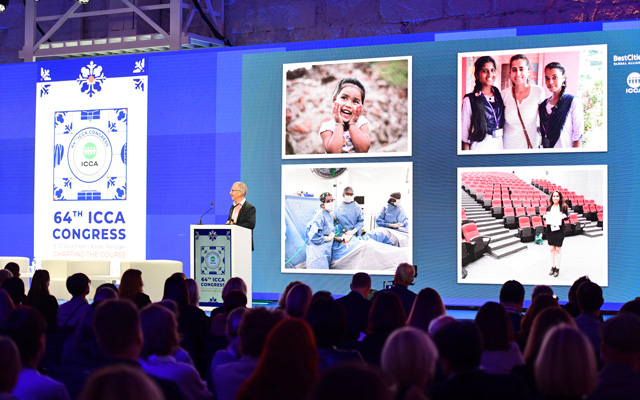
64th ICCA Congress in Porto

ICCA’s 2025 ICCA GlobeWatch report – which studies global meetings and events performance – has identified a transformed landscape where the number of meetings has increased, new meeting segments have been created, more congresses are being hosted in smaller, emerging cities.

Key findings from 2025 ICCA GlobeWatch were shared at a press conference during IMEX 2026 in Frankfurt on May 19.

64th ICCA Congress in Porto

The report, which tracked global meetings and events performance in 2025, notes 1,339 more international and regional association meetings last year over 2024, with the bulk of gatherings being held in Europe (53 per cent), followed by Asia-Pacific (22 per cent), North America (10 per cent), Latin America (nine per cent), Africa (four per cent), and the Middle East (two per cent).

Most gatherings in 2025 were related to medical sciences, technology, and science. Safety & security (208 meetings in 2025) and library & information (168 meetings in 2025) rebounded strongly despite their smaller base, with each growing nearly 3.9 times from their 2021 lows, ahead of larger sectors such as industry (3.5 times) and economics (3.6 times). ICCA said this reflected intensifying institutional focus on information governance and risk management.

In terms of meeting sizes, congresses with fewer than 1,000 participants were the majority. Those involving 50 to 249 participants represented the largest share of total global meeting volume, at 60.4 per cent; those with 250 to 999 attendees made up 31.8 per cent.

However, ICCA notes that large congresses involving upwards of 1,000 attendees proved the most impactful for the host destination, despite accounting for just 2.8 per cent of global meeting volume. They generated almost 52 per cent of total estimated spending.

The scope of regions participating in associations’ global knowledge exchange is also broadening, find ICCA researchers.

In Europe, second-tier and emerging destinations, such as Vilnius (Lithuania), Reykjavik (Iceland), and Porto (Portugal), are rapidly gaining ground with sharper upward movements, while top-tier cities like Lisbon (Portugal), Paris (France), Copenhagen (Denmark), and Berlin (Germany) continue to consolidate their leadership.

In Asia-Pacific, 14 countries and territories as well as 14 cities are now ranked among the world’s Top 50, accounting for nearly 30 per cent of the global total and underscoring the region’s growing weight and competitiveness.

Non-mainstream congress cities like China’s Hangzhou and Xi’an, South Korea’s Daejeon and Goyang, Japan’s Nagoya and Fukui, and more now stand alongside popular Asian capital cities.

Accessibility from an expanding aviation network, sector depth, and sustained investment, along with meetings that are aligned with economic activities and long-term development priorities are credited for the strong growth and spread of Asia-Pacific’s association meeting activities beyond major cities.

Across North America, top tier cities in the US, Canada and Mexico are joined by many other sister cities on the global ranking, indicating strong regional competition for association meetings. In Canada, for example, 32 cities are on the global ranking. While Toronto, Montréal, and Vancouver lead nationally, Calgary, Banff, and Edmonton together account for nearly a fifth of Canada’s total delegate volume.

In the Middle East, more destinations are updating their infrastructure and building market knowledge, ready to compete with top performers Dubai and Abu Dhabi.

Commenting on the importance of the spread of association meetings across countries and into smaller cities, ICCA CEO Senthil Gopinath told TTGmice: “Association meetings are a catalyst for local economic growth. They also help to drive whole industries and lift societies in emerging and developing cities.”

He added that it was “very common” for second- and third-tier cities in larger countries to get their share of international and regional association meetings. Small and emerging destinations have an opportunity to compete, even if they did not have their own convention bureau.

“Furthermore, in our report that there are many meetings that utilise smaller venues, such as hotel function rooms. And since mid-sized meetings are the largest contributor to total meeting volume, they can be held anywhere, not just the large capital cities,” Gopinath stated.

Venue investments as a meetings catalyst
ICCA has added a new venue analysis to the annual report. Data shows that 36 per cent of meetings are held on university grounds, followed by hotel venues (28 per cent), convention and exhibition centres (27 per cent), and other venues (nine per cent).

However, the report underscores convention and exhibition centres as the anchor of any destination serious about pursuing association congresses. These facilities contribute to lasting relationships with international association decision-makers, and many operate their city’s ambassador programme directly, connecting and supporting local academic and professional champions with international bid opportunities.

ICCA notes that cities like Barcelona, Dubai, Seoul, and Vancouver have made generational investments in their convention facilities because the returns are proven. Purpose-built venues attract more meetings, longer delegate stays, and greater economic returns across all sectors in the city.

Consequently, public-private investment in convention infrastructure is accelerating worldwide. ICCA tracks 78 convention and exhibition centre projects across 36 countries – these are worth a combined investment of more than US$30 billion.

GCCEC surpasses sustainability milestones

0
Bottle collection programme

The Gold Coast Convention and Exhibition Centre (GCCEC) is tracking ahead of its five-year sustainability plan, reporting significant waste diversion and carbon reduction results at the end of year two.

By embedding a structured management plan across all operations, the venue has successfully diverted nearly 93 tonnes of food organics to commercial composting, removing over 195 tonnes of carbon dioxide emissions from the atmosphere.

Bottle collection programme

These achievements have earned the venue EarthCheck Regional Leader status for waste recycling. Alongside its EarthCheck Master recertification, which marks 17 years of continuous benchmarking, the Centre has integrated a new environment, health, and safety platform to refine data tracking and resource efficiency.

A standout success is the venue’s 10c container programme, which recycled more than 150,000 bottles in the past year alone. This initiative not only supports landfill diversion but also contributes to charitable donations, highlighting the Centre’s focus on community engagement.

Looking ahead, GCCEC continues to expand its 2024 to 2028 Sustainability Strategy, focusing on responsible event delivery and further operational improvements to maintain its trajectory toward long-term environmental targets.

IHG’s voco Scenia Bay Nha Trang woos planners with summer perks, double rewards

0
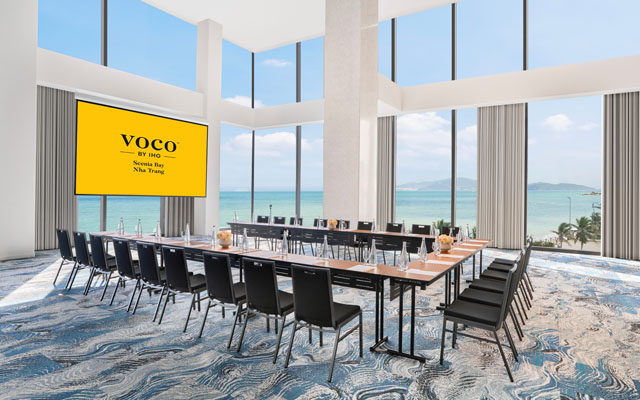
Grand Ballroom

Planners looking to elevate their next corporate getaway can tap the 2026 Summer MICE Offer at the oceanfront voco Scenia Bay Nha Trang by IHG.

Located 40 minutes from Cam Ranh International Airport, this property balances beach vibes with serious business amenities, making it suitable for incentive travel and multi-day corporate programmes.

Grand Ballroom

For events with 50 guests or more, planners unlock a suite of perks, including complimentary rooms, bonus delegate packages, dining upgrades, and inclusive beverage packages for gala dinners. Larger-scale events also enjoy exclusive AV and LED privileges, alongside 2X IHG Business Rewards Points on all qualifying bookings.

The 250-room property stands out with a guaranteed 100 per cent ocean-view room offering across all categories, where lead-in rooms start at 37m². For the main event, the hotel features naturally lit meeting rooms, grand foyers, and an ocean-facing ballroom with 7.5m-high ceilings that accommodates up to 360 guests.

Beyond the boardroom, planners can utilise rooftop spaces and dynamic dining venues for networking and curated social programmes.

Japan intensifies push to direct incentive trips deeper through the country

0

Japan Convention Bureau is drumming up attention on more of its destinations for international incentive travel programmes, with the hope of bringing reward winners a more diversified experience and driving tourism earnings to more local communities.

One of its latest initiative is a refresh of its website content, which presents sample itineraries to various Japanese regions.

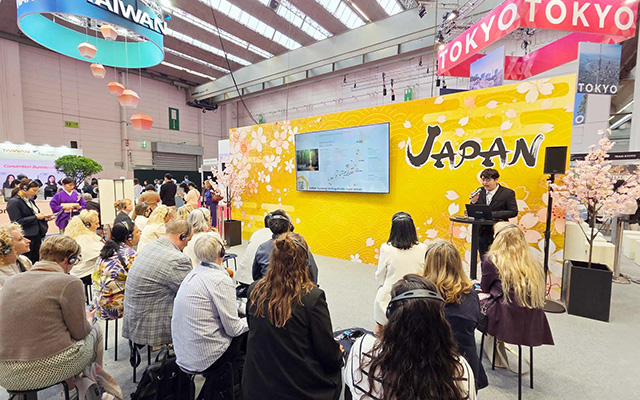
Japan Convention Bureau is keen to showcase more of its destinations to incentive travel designers; photo by Karen Yue

Ayako Itagaki, director of Japan Convention Bureau, shared with TTGmice that the new set of sample itineraries inspire incentive trips to Hokkaido, where natural attractions dominate; to the Seto Inland Sea, where scenic islands and charming coastal locations take centre stage; to north-eastern Japan, where the prefectures of Miyagi and Yamagata unveil samurai heritage, spiritual landscapes, and delicate local cuisine; and more.

Additionally, to convey the vast possibilities of destination discoveries to more incentive travel planners across Asia-Pacific, Japan Convention Bureau is leading an eight-city roadshow starting this August. The series will call at cities such as Bangkok, Singapore, Seoul and Manila.

Itagaki said planning for this roadshow is still underway, but the intention is to feature “hidden gems and local charming areas” that are ready to welcome corporate events.

Japan Convention Bureau is also hoping to raise awareness of more destinations and off-the-beaten-track experiences through its participation at IMEX 2026 this week. Chiba, Sendai, Yokohama and Kobe are represented at the Japan pavilion, along with Unique Venues of Japan, which offers one-stop support for event planners in search of memorable locations.

But with Japan fast becoming a familiar destination for leisure – it achieved a record-breaking 42.7 million international visitors in 2025, Itagaki acknowledged that additional support must be given to help incentive travel planners craft more creative programmes that top achievers could not access on their own as regular travellers.

She said Japan Convention Bureau is compiling a collection of 40 to 50 exclusive experiences available across Japan and providing useful connections between incentive travel planners and local operators to bring ideas to life.

To differentiate from leisure travel experiences, Kaori Saito, general manager at Hankyu Travel International, said incentive travel programmes should find a creative edge by utilising unique venues, featuring special restaurants, and weaving in local events. While additional journeys may be needed to bring top achievers deeper into Japan, she said chartering special thematic trains could turn the commute into a memorable experience.

Oliver Schwartz leads as GM at Parmelia Hilton Perth

0

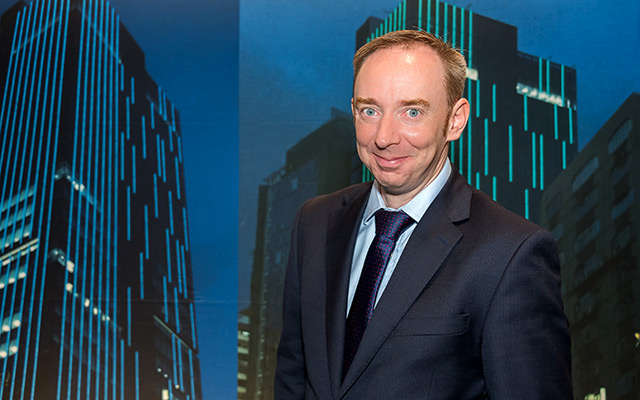
Parmelia Hilton Perth has appointed Oliver Schwartz as general manager, leading the property into its next phase.

He joins from DoubleTree by Hilton Melbourne Flinders Street, where he was hotel manager.

With 17 years of experience, he has held senior roles with Hilton in Beijing and across luxury hotels in London, spanning both operational and commercial leadership.
voco Amritsar appoints new leadership team

0

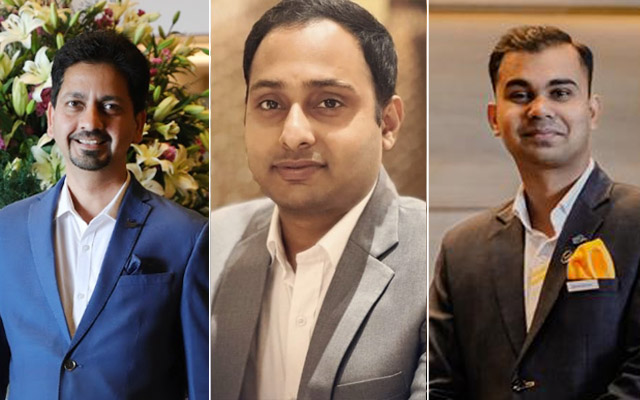
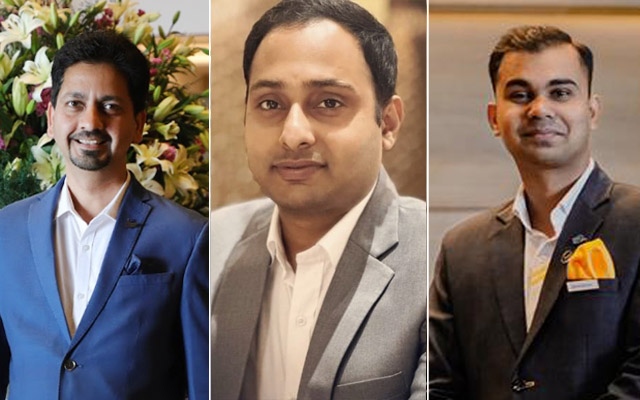
voco Amritsar has appointed Sunit Rana as director of sales and Roshan as director of finance and business support, leading its commercial and financial strategy.

Rana brings 19 years of experience across brands including IHG Hotels & Resorts, The Leela Palaces Hotels and Resorts, Radisson Hotel Group and Hyatt Hotels Corporation. Roshan joins from IHCL Goa and has previously worked with Hilton and Marriott International.

From left: Sunit Rana, Roshan and Shivendra Singh

The hotel has also appointed Shivendra Singh as director of human resources, overseeing people strategy and talent development.

Other leadership appointments include Saurabh Singh as executive housekeeper, Narendra Yadav as chief engineer, Radhika Chhetri as front office manager and Faizan Malik as security manager.

Passing the torch

0

What does this 10-year chairmanship mean to you?
It has been both an honour and a privilege to serve as the chairman of HKECIA for the past 10 years.

I am deeply grateful to the members who placed their faith in me and elected me to this position five times. I hope that, over the years, I have repaid their trust by working diligently to ensure that the business of supporting the exhibition and convention industry in Hong Kong has continued as smoothly as possible, weathering local and global challenges to the best of our ability.

This has been one of the professional highlights of my career. Despite the various challenges that have arisen, I must say that I have thoroughly enjoyed contributing to the conversation and discovering creative solutions to overcome these obstacles.

Looking back, how do you see the evolution of the exhibition industry in Hong Kong, and in what ways has HKECIA remained relevant to its members and the wider industry?
HKECIA serves as the most powerful unified voice for the convention and exhibition industry. During the pandemic, I was approached by several prominent players from related sectors representing live events, as they lacked a similar organisation with a direct line of communication to the government to address complex operational issues. This experience underscored for me the significance and strength of having an established Association that can advocate for our industry and ensure best practices are communicated to all stakeholders.

What key challenges are event organisers currently facing in Hong Kong, and how is HKECIA helping members tackle them?
One of the most interesting aspects of working for the Association is that the challenges we face are constantly evolving. During my tenure as chairman, we have encountered trade wars and tariffs, social unrest, a global pandemic, and numerous smaller disputes among industry stakeholders.

In some respects, the Association’s role is to act as a mediator in these disagreements; in others, it is to advocate to the government for increased support or legislative changes to ensure the smooth continuation of conventions and exhibitions. During the pandemic, several other executive committee members and I devoted significant time to working with the government to articulate the potentially devastating impact of closing venues, and the absence of in-person events for extended periods.

We successfully obtained unparalleled support and financial assistance as we began to reopen. We also navigated challenges such as ensuring that individuals could attend live events in a safe and manageable manner, safeguarding public health while allowing business interactions to continue.

Striking this balance was undoubtedly difficult, but through persistent dialogue, we were able to achieve the outcomes necessary for our survival. In particular, the venue subsidy schemes over the years have been instrumental in helping the industry re-establish itself.

Sustainability and digital transformation are major trends in the events sector. How is HKECIA addressing these issues to keep members competitive?
Sustainability and digital transformation are undeniably significant trends, and the HKECIA has taken a proactive approach to ensure we remain at the forefront of these developments.

A few years ago, we established a sustainability subcommittee as part of our executive committee. Over the past five years, I have witnessed substantial improvements in exhibition construction, leading to a much more sustainable industry. Waste has been reduced significantly, with both organisers and venues moving away from unsustainable practices.

We are currently in a phase where most organisers and venues have a solid understanding of how to enhance their sustainability. The focus is now shifting towards exhibitors, whom we need to guide on a journey to modify their habits rather than simply building booths the way they always have. This will take time, but we are progressing in the right direction.

Last year, we also launched a new subcommittee for technology and innovation. We are living through an incredibly fast-changing era marked by the rise of artificial intelligence. It is essential for our members to understand what best practice entails in this context. With this new subcommittee in place, we expect to see a significant increase in technology-driven content at our HKECIA annual conferences and seminars.

What lessons have you learned about guiding an industry association through both growth and crisis?
It is a challenging question, as I have learned a great deal while navigating the complex issues I mentioned.

One key theme all our members should remember is the importance of partnerships. Organisers, venues, contractors, and technology partners all rely on one another; none of us can thrive in isolation. Understanding this interdependence and finding ways to collaborate more effectively to solve problems is vital.

This gives me great encouragement, particularly during challenging times. All stakeholders in our industry strive to support one another, and in my experience, very few industries collaborate as effectively as the exhibition industry.

What do you see as the biggest opportunities for Hong Kong’s exhibition and convention industry in the next decade?
Hong Kong has repeatedly demonstrated its status as one of the most significant meeting places in the world.

The fundamental factors underpinning our success remain intact, with dedicated individuals in both the government and private sectors working to ensure this continues. I believe the outlook for the next decade and beyond is promising. While challenges will always arise, Hong Kong’s resilience and its ability to bring people together will ultimately ensure it continues to deliver excellence.

What’s next for you?
This is an election year for HKECIA, and I have already informed the ExCo that I will not be standing for re-election as chairman. I hope to work closely with my successors to ensure a smooth handover.

Having served more than three terms, and in the opinion of the ExCo having made extraordinary contributions to the Association’s mission, it has been confirmed that I will be appointed as honorary life president of HKECIA. From this position, I look forward to supporting the new chairman and the Association’s ongoing work.

SAP Concur, Amex GBT and SkyLink lead charge toward unified AI ecosystem

0
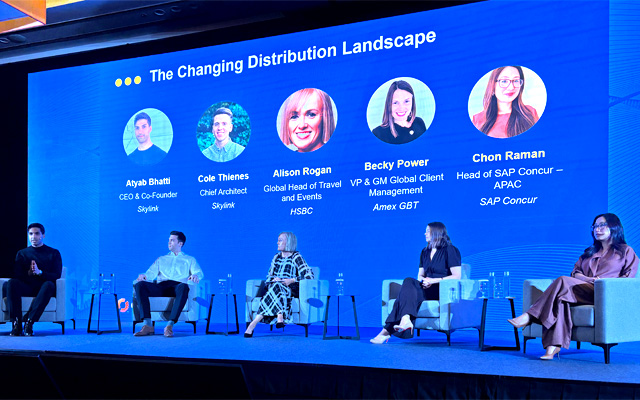
From left: Skylink’s Atyab Bhatti and Cole Thienes; HSBC’s Alison Rogan (moderator); AMEX GBT’s Becky Power; and SAP Concur’s Chon Raman

With established corporate travel vendors investing in AI and forming strategic alliances, joined by AI-native travel start-ups, a user-experience priority is finally becoming reality as the industry embarks on building a future-ready tech ecosystem.

Complete – by SAP Concur and Amex GBT – a next-gen, AI-powered platform, now combines travel booking, expense management, and servicing into a single, seamless experience; while SkyLink, an AI-native corporate travel platform, described as a pocket-sized travel agent and acquired by Amadeus in February 2026, is set to accelerate the deployment of AI-driven conversational technology in travel, transforming how enterprises plan, book, and manage travel.

From left: Skylink’s Atyab Bhatti and Cole Thienes; HSBC’s Alison Rogan (moderator); AMEX GBT’s Becky Power; and SAP Concur’s Chon Raman; photo by Caroline Boey

Panellists at The Changing Distribution Landscape – Building a Future-Ready Tech Stack at last week’s GBTA APAC conference, spoke enthusiastically about a better, more user-friendly experience and richer content.

Chon Raman, head of SAP Concur, APAC, assured buyers that “the next-gen travel and expense solution will reduce friction in booking travel, servicing, and visibility in the entire travel programme”.

Becky Power, vice president and general manager, client management, Amex GBT, said travellers on the road are looking for one app, and this will be rolled out in waves in Asia-Pacific.

Power added: “With agentic AI, the travel assistance for travel changes becomes a unified AI chat… and with the Amex GBT and SAP Concur strategic alliance, which deeply integrates Egencia with Concur Expense, the time it takes to search and book will fall below three minutes.”

Speaking on the power of SkyLink, Atyab Bhatti, CEO and co-founder, claims a booking time of just “99 seconds”.

Chief architect, Cole Thienes, described Asia-Pacific and countries such as Singapore, Malaysia, Indonesia and Vietnam as heavy AI adopters; and with nine out of 10 individuals using AI, SkyLink’s aim is to reduce “the surfaces” travellers interact with to create “a single plane of glass that is quick and easy to use”.

Bhatti continued: “SkyLink can absorb the complexity and is natural to the user.”

Moderator Alison Rogan, global head of travel and events, HSBC, and GBTA Board vice president, said buyers are looking for “an end-to-end solution, not silos”, and “want streamlined access to content and to be able to repurpose PAs to do other things”.

The session ended with eight, 90-second Venture Connect travel tech start-up pitches, where Travelin.Ai was the winner.

Associations urged to deliver stronger value to retain members

0

Associations must move beyond traditional networking roles and deliver stronger value propositions to attract, engage and retain members in an increasingly competitive landscape.

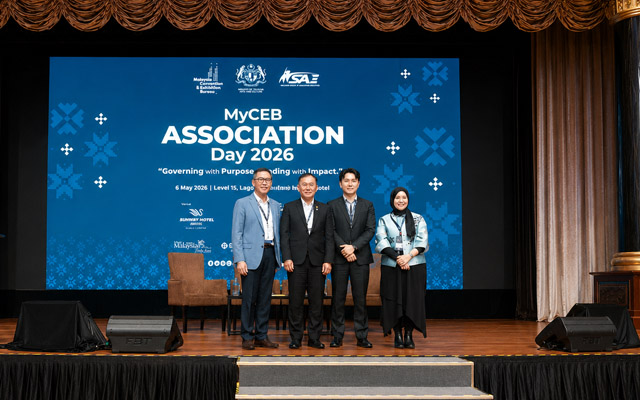
This was highlighted by speakers at the panel session entitled Membership matters: Turning Acquisition, engagement, and retention into growth at the recent Association Day 2026 conference organised by the Malaysia Convention & Exhibition Bureau.

From left: Malaysian Society of Association Executives’ Sunnny Chee (moderator); Selangor Freight Forwarders and Logistics association’s Alvin Chua; Malaysian Dental Association’s Chong Zhen Feng; and Malaysian Institute of Interior Designers’ Norshafina Ibrahim

One of the panellists, Alvin Chua, president of Selangor Freight Forwarders and Logistics association, shared how the association had evolved from a 12-member organisation in 1973 to close to 800 companies today.

He said the association’s growth was built on its ability to provide practical value to members through education, policy representation and industry advocacy.

Chua elaborated: “We provide strategic navigation. Members rely on the association to help them navigate changing customs regulations, environmental, social and governance mandates, and international logistics requirements. Companies join the association because they want a stronger voice in shaping industry policies.”

Another panellist, Chong Zhen Feng, president of the Malaysian Dental Association, acknowledged that retaining members remains a challenge for professional associations worldwide, even for long-established bodies.

He noted that younger professionals today expect tangible benefits and immediate value from associations.

To strengthen member engagement, the association has expanded its offerings beyond professional development programmes to include mediation support for patient disputes, partnerships with airlines and insurance companies, and preferential conference rates for members.

Chong added the association has shifted towards more personalised member engagement to improve renewals and retention.

“Instead of just sending emails, we ask our team to reach out personally through phone calls and messages. A lot of the time, it converts and they continue to remain members,” he said.

Meanwhile, Norshafina Ibrahim, president of the Malaysian Institute of Interior Designers, revealed that the institute has more than 4,000 members, the majority of whom are students, making the transition from student membership to professional membership particularly important.

To address this, the institute introduced a seed programme, which works closely with universities to absorb graduating students into the association while subsidising their admission and subscription fees during the early years of their careers.

“We understand that this is a very critical stage of their life. Financial pressures and changing priorities often discourage graduates from joining professional bodies,” she shared.

Sunny Chee, council member, Malaysian Society of Association Executives, observed that while membership numbers are often viewed as a measure of an association’s success, the real challenge lies in giving members “a reason to belong”.

He emphasised that recruitment, engagement and retention should not be viewed as separate functions, but as interconnected elements that contribute to the long-term growth of an association.

“When associations understand their purpose and deliver meaningful value, growth becomes a natural outcome,” he concluded.

Reviews

The Slate Phuket

Just 10 minutes from Phuket International Airport on the serene northern coast, this 178-key, Bill Bensley-designed resort offers delegates a quiet, tropical paradise steeped in Phuket’s tin-mining heritage

The Ritz-Carlton, Bangkok

The newly-opened Ritz-Carlton, Bangkok anchors the One Bangkok development with cosmopolitan elegance. Featuring the city's largest ballroom and a spectacular new penthouse suite, it delivers exceptional hardware and deeply authentic, soulful service for business and leisure travellers alike

Mama Shelter Zurich

Behind the imposing, Brutalist concrete that defines Zurich’s Oerlikon district lies a surprising secret. While its exterior honours the neighbourhood’s industrial roots, stepping inside Mama Shelter reveals a vibrant, neon-soaked world that is a far cry from its rigid shell