Asia/Singapore Wednesday, 3rd June 2026
Page 6

Invisible policies, experience curators to reshape corporate travel: GBTA panellists

0
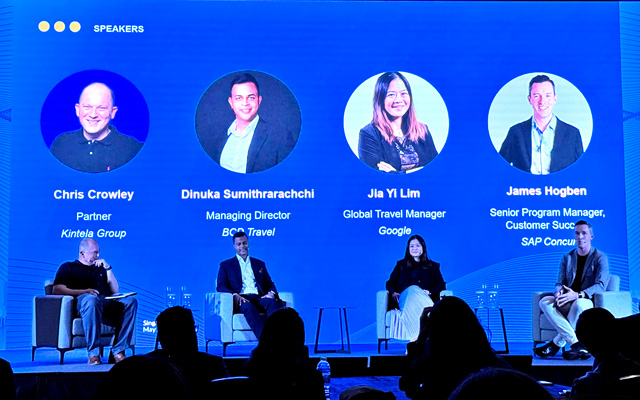
From left: Kintela Group’s Chris Crowley (moderator); BCD Travel’s Dinuka Sumithrarachchi; Google’s Lim Jia Yi; and SAP Concur’s James Hogben

As the workforce undergoes a generational handover, the architecture of corporate travel is being dismantled, and the role of the travel manager will evolve into an experience curator, say industry leaders on The Travel Manager 3.0: The Architecture of Future-Ready Programs and Outcomes panel at the GBTA APAC Conference in Singapore last week.

As agentic AI takes over the high-volume, repetitive tasks of booking changes and expense reconciliation, travel managers can reclaim the bandwidth to focus on the human element.
From left: Kintela Group’s Chris Crowley (moderator); BCD Travel’s Dinuka Sumithrarachchi; Google’s Lim Jia Yi; and SAP Concur’s James Hogben; photo by Rachel AJ Lee

James Hogben, senior programme manager at SAP Concur, indicated that the industry is moving toward “curated experiences”. He cited examples of travel managers using automated data to understand specific traveller personas – identifying, for instance, whether a traveller prioritises a high-quality coffee experience over a hotel gym. By focusing on these nuances, travel managers are no longer just delivering a service; they are designing journeys that drive better business outcomes and talent retention.

With Millennials and Gen Z expected to comprise 75 per cent of the global workforce by 2030, the days of asking employees to consult a dense policy document are also numbered, as these digital natives expect corporate tools to be as intuitive as the consumer apps they use daily.

As such, Lim Jia Yi, global travel manager at Google, argued that the most successful future programmes will feature an “invisible policy”. Rather than being a standalone document, regulations will be baked directly into the user interface.

“The options that surface are already tailored and required for the policy. By making compliance the default setting, travel managers can ensure a frictionless experience where the traveller stays in-programme because it is the easiest path, not because they are being policed,” Lim explained.

As booking channels become more fragmented across apps and chat, the point of control is also migrating. Historically, travel managers regulated programmes at the inventory level – limiting what a traveller could see – but control appears to be moving towards payment and treasury.

Panellists suggested that future regulation will happen through the expense and payment journey rather than the search methodology. By focusing on how money flows and using real-time data from automated expense systems, companies can offer travellers more choice and flexibility while maintaining a rigid, automated grip on the company’s budget and duty of care.

Dinuka Sumithrarachchi, managing director at BCD Travel, also talked about how the baseline of the industry has shifted. “The conversations that we have nowadays with our clients revolve a lot more around what kind of strategic value a travel programme can bring to the table,” he said, adding that success in 2030 will belong to those who can “strike that balance between technology and human capital”.

The overarching consensus from the panel is that the future travel manager will be defined by their ability to manage human capital rather than transactions.

“We get to define what it means to be a travel manager. Tasks we don’t like can be replaced by automation, leaving us to build stronger connections and relationships with our partners and our travellers,” stated Lim.

Cairns secures 6th World Ecoacoustics Congress for 2026

0
Wet Tropics Rainforest in Tropical North Queensland

Cairns will host the 6th World Ecoacoustics Congress from August 17 to 20, 2026, marking only the second time the event has been held in Australia.

Organised by the International Society of Ecoacoustics in partnership with James Cook University, the congress will convene global researchers and engineers at the Cairns Convention Centre to study the relationship between sound and environmental change.

Wet Tropics Rainforest in Tropical North Queensland

Paul Roe, dean, research, at James Cook University, said Cairns offered an exceptional setting for a global gathering focused on listening to the environment.

“Cairns is a natural fit for the World Ecoacoustics Congress because it gives delegates access to one of the most acoustically and ecologically diverse regions in the world. From rainforest soundscapes to reef environments, this is a place where ecoacoustics can help us better understand ecosystem health, biodiversity and the impacts of environmental change.”

The 2026 programme is also set to highlight the evolution of the field, including collaborative projects that integrate ecoacoustics with First Nations land and sea management.

Beyond the scientific sessions, the event is designed to immerse delegates in the local environment, with organisers encouraging visitors to extend their stays to explore Tropical North Queensland.

Business Events Cairns & Great Barrier Reef General Manager – Partnerships & Events Tara Bennett said: “The World Ecoacoustics Congress is exactly the kind of international meeting that aligns with Cairns’ strengths in science, sustainability and nature-based experiences…”

This 2026 edition follows Brisbane in 2018 and Madrid in 2024.

Bangkok Land transforms former hotel into an innovation hub for new ventures

0
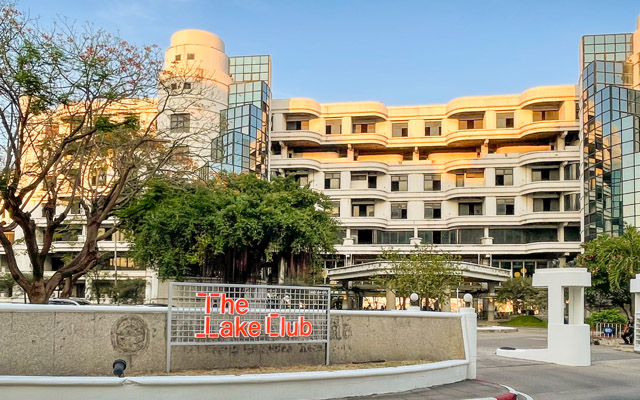
The Lake Club

Bangkok Land Co., the operator of IMPACT Muang Thong Thani, reimagines the former Eastin Lakeside Hotel as The Lake Club, a multidisciplinary hub designed to serve as a community destination and an experimental “business laboratory”.

Located along the Muang Thong Thani lakeside near the Pink Line monorail, the development shifts away from traditional hospitality toward a mixed-use model. The venue now integrates arts, culture, retail, and dining, alongside a dedicated space for classic and luxury car enthusiasts.

The Lake Club

Beyond its role as a social hub, The Lake Club functions as a testing ground for IMPACT’s future concepts. New ventures – such as the Culinova Lab menu testing site, The Collective creative showcase, and various niche coffee and craft beer outlets – allow the group to pilot and refine ideas in a real-world environment before scaling them across the broader IMPACT ecosystem.

The upper levels of the landmark building feature exhibition halls and art galleries, providing a platform for local creative expression. This transformation is part of a wider strategy to re-envision Muang Thong Thani as a transit-oriented smart city, blending commerce with lifestyle-driven urban spaces.

Future plans for the site include the introduction of vintage markets and pet-friendly programming, further establishing the lakeside precinct as a permanent fixture for both residents and international visitors.

Cinnamon Lakeside Colombo names hotel manager

0

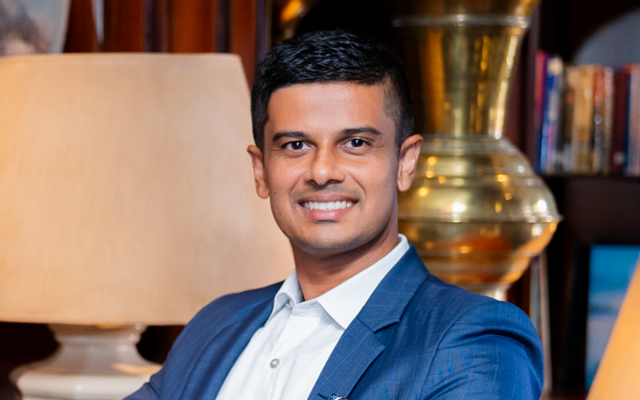
Cinnamon Lakeside Colombo has appointed Ashan Peiris as hotel manager, strengthening its leadership team.

He joins from within Cinnamon Hotels & Resorts, where he most recently served as director of brand development. With experience across operations, brand strategy and resort management, he has held roles at Cinnamon Red Colombo, Cinnamon Grand Colombo and Cinnamon Bentota Beach.


1926 Heritage Hotel welcomes new GM

0

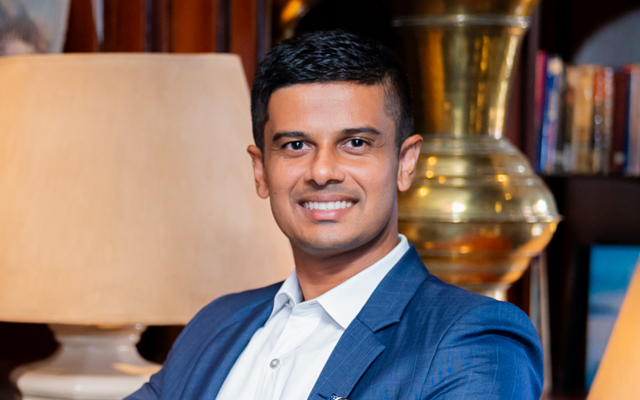
1926 Heritage Hotel has named Angelina Lazuardi as general manager, overseeing the property’s overall strategy, operations and performance.

She brings over 17 years of experience, most recently holding leadership roles with Kempinski, Marriott and The Parisian Macao, with a focus on operational and commercial performance.

Vast majority of SE-Asia business travellers seek a unified platform for transport and meals: GBTA study

0
Nine in 10 business travellers (93%) desire a single, unified platform to manage ground transportation and meal-related expenses across South-east Asia

A new study by the Global Business Travel Association (GBTA) and Grab For Business reveals that companies in South-east Asia can significantly improve the business travel experience by aligning their business travel programmes with employees’ actual behaviours and reducing expense claims friction for them.

Based on a survey of 1,200 business travellers across Indonesia, Malaysia, the Philippines, Singapore, Thailand, and Vietnam, the study found ground transportation has emerged as a clear example of a travel policy gap.

Nine in 10 business travellers (93%) desire a single, unified platform to manage ground transportation and meal-related expenses across South-east Asia

More than eight in 10 (83%) respondents use ground-transport options outside company policy or approved vendors. And while 95% of business travellers use ride-hailing, only 58% say their companies formally manage it.

As a result, companies often lose visibility and control over business travel costs, while employees experience stress and uncertainty about whether their ground transportation expenses will be approved.

“South-east Asia represents some of the world’s fastest-growing business travel markets, and this research shines a light on the critical programme gaps and real-world traveller needs shaping the region today – especially around safety, expense challenges, and technology expectations,” said Suzanne Neufang, CEO at GBTA.

“This research highlights a transformative opportunity for companies to improve their travel programmes,” said Valerie Khoo, regional head, Grab For Business. “Off-policy bookings are a signal of a larger issue: misalignment between approvals and real-world traveller needs. There are many enterprise-friendly technologies that can help to address these gaps, for example by streamlining ground transportation booking and expense processes with digital tools, companies can enhance efficiency, policy compliance, and traveller safety and wellbeing.”

Ground transportation: A critical moment fraught with stress
Ground transportation is critical to the success of the business trip, as the respondents use them in high-stakes moments – nearly 78% rely on it for airport-to-hotel transfers, 71% use it to reach offices or client sites, and 70% use it for early morning trips to the airport.

Yet it is also a top stressor during work trips with nearly one-third (32%) citing navigating transportation in unfamiliar places as the most stressful aspect of business trips; followed by keeping up with receipts and expenses (25%); and staying within company rules and policies (14%).

Nearly half (44%) associate ground transportation during business trips with at least one negative emotion, including feeling rushed, stressed, or uncertain.

Common pain points around ground transportation include: lack of availability during early or late hours (54%); long wait times for a car (53%); and unclear pricing (44%).

The survey results point to the fact that there is room for companies to relieve employees’ concerns about logistical friction – including by putting in place clearer ground transportation policies that align with ground realities and seamless claims procedures – so that employees can focus on tasks that improve productivity and drive business outcomes.

Safety is a top decision-driver for business travellers
The study also shows that safety is the most important factor for travellers when selecting methods of ground transportation, with 75% rating it as “extremely important”.

The most valued safety features include: professional or verified drivers and clear driver/vehicle information (both 57%); emergency support tools and live trip sharing (both 54%); and in-app tracking (53%).

Companies, therefore, ought to keep these concerns in mind, when surfacing ground transportation options in their travel programme.

Ride-hailing emerged as top option, but is under-integrated
Nearly all respondents (95%) say they make use of ride-hailing “at least sometimes”, while 88% say ride-hailing apps are their usual method of choice for booking business trip ground transportation.

Business travellers cite convenience (55%); availability and safety and reliability (both 45%); and ease of use in unfamiliar places and price transparency (both 42%), as reasons they prefer to use ride-hailing on work trips.

Yet despite its prevalence, ride hailing is often not formally integrated into corporate travel programmes. Based on the findings, companies should consider formally integrating trusted ride-hailing platforms, which allow them to regain control over spending, ensure safety standards, and provide a tool their teams already use and prefer.

Business travellers’ desire for a unified platform
The administrative burden of travel is also significant. Nearly half of travellers (46%) spend more than 20 minutes submitting expenses per trip, while 57% delay the expense submission process or describe it as a chore, which signals room for enhancing travel claims efficiency.

In terms of meal preferences during business travel, a significant number of travellers say they prioritise saving time (75%) over staying within budget (25%).

Overall, 93% of respondents find the idea of a single platform for managing ground transportation and meal-related expenses across Southeast Asia appealing, pointing to a broader desire to reduce fragmentation.

What companies can do in support of business travel
Business travellers value the benefits provided by ride-hailing partnerships, which include: automatic expense integrations (89% find “very” or “extremely valuable”); one place where they can see all of their ground and meal spending (89%); pre-set policy controls (87%); and centralised payment (86%) in their company’s travel programme.

Such improvements have the potential to make a difference to employees’ business travel experience – and may, in turn, improve company productivity and employees’ safety, efficiency and well-being.

For more information and to download the full study, click here.

PATA confirms new chair and executive board

0

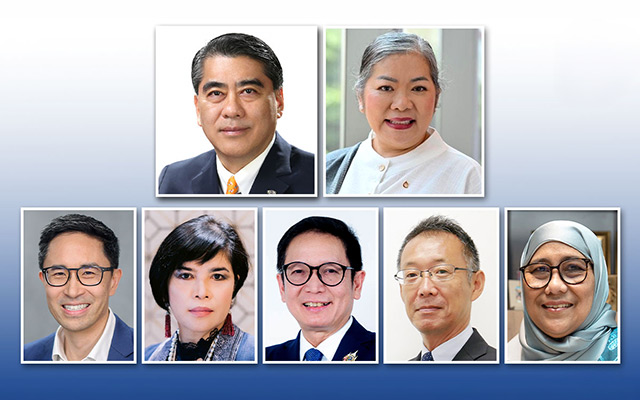
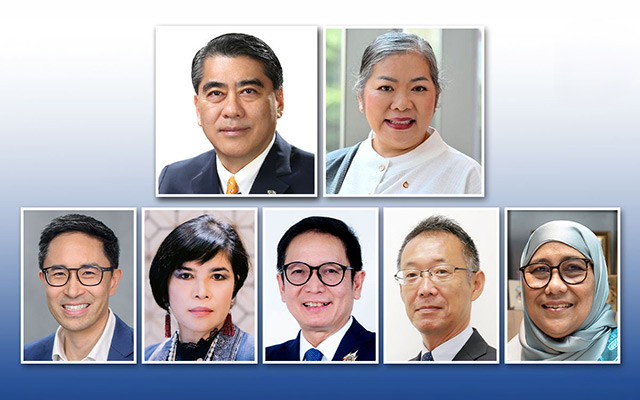
PATA has elected Henry Oh of Global Tours as chair of the association, following ratification at the annual general meeting on May 12.

Ben Montgomery of Centara Hotels & Resorts has been appointed vice chair.

Top row from left: Henry Oh and Ben Montgomery; bottom row from left: Jackson Pek, Maria Paz Alberto, Siripakorn Cheawsamoot, Shuichi Kameyama and Sharzede Salleh Askor

Four new members have also been ratified to the executive board: Jackson Pek of Amadeus; Maria Paz Alberto of Ark Travel Express; Siripakorn Cheawsamoot of the Designated Areas for Sustainable Tourism Administration; and Shuichi Kameyama of JTB Tourism Research & Consulting Co.. They join Sharzede Salleh Askor of Sarawak Tourism Board, who remains on the board.

Jakarta to host inaugural IBEM and SEABEF this July

0
The event was promoted to Indonesian stakeholders at Hotel Mercure Jakarta Gatot Subroto

Indonesia will launch the inaugural Indonesia Business Event Mart (IBEM) and the Southeast Asia Business Events Forum (SEABEF) in two months to bolster Jakarta’s standing as a regional hub for business events.

Organised by E&C Productions and TTG Events with the support of the Indonesian Ministry of Tourism, the dual event is scheduled for July 28 to 31 at the Jakarta International Convention Center.

The event was promoted to Indonesian stakeholders at Hotel Mercure Jakarta Gatot Subroto

The marketplace expects to host 250 international buyers and 200 sellers, providing a targeted platform for venue hotels and event solution providers to connect with key decision-makers.

While IBEM focuses on commercial business matching, the concurrent SEABEF will serve as a leadership forum for policymakers and industry associations to discuss the shifting trends and challenges within the South-east Asian business events sector.

To showcase Jakarta’s diverse tourism appeal, Dinas Pariwisata dan Ekonomi Kreatif DKI (Jakarta Tourism and Creative Economy Office) will arrange for a curated post-show island-hopping tour for media and buyers, featuring destinations such as Onrust and Macan Islands.

Succession planning critical to association sustainability

0
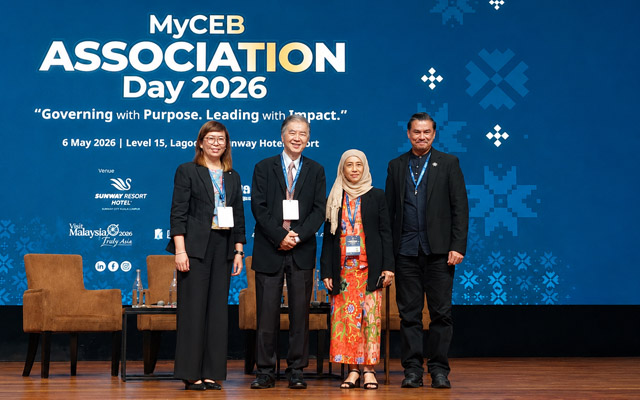
From left: Malaysian Society of Association Executives’ Tiffany Chung (moderator); Malaysian Institute of Chemistry’s Soon Ting Kueh; Malaysian Association of Clinical Biochemists' Raja Elina Raja Aziddin; and Malaysian Institute of Architects' Adrianta Aziz

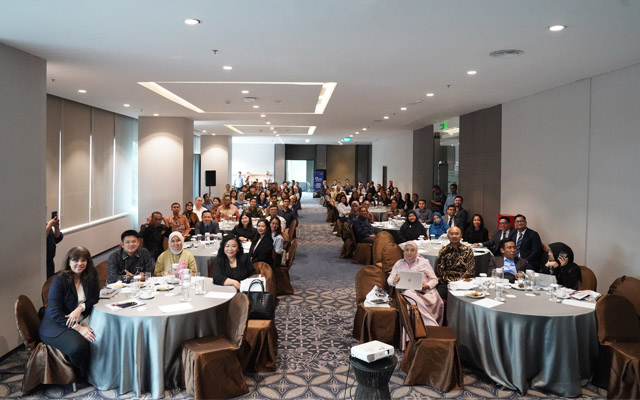
Association leaders in Malaysia stressed the urgent need for stronger succession planning and leadership development during a panel session titled Succession Matters: Building the Next Generation of Association Leaders at the recent Association Day 2026 organised by the Malaysia Convention & Exhibition Bureau.

Tiffany Chung, council member of the Malaysian Society of Association Executives highlighted a gap after only a handful of participants indicated that their associations had formal succession plans in place.

From left: Malaysian Society of Association Executives’ Tiffany Chung (moderator); Malaysian Institute of Chemistry’s Soon Ting Kueh; Malaysian Association of Clinical Biochemists’ Raja Elina Raja Aziddin; and Malaysian Institute of Architects’ Adrianta Aziz

She stressed that succession planning should go beyond leadership replacement, and focus on ensuring long-term organisational resilience and sustainability.

There are ways to go about doing this. For example, Soon Ting Kueh, president of the Malaysian Institute of Chemistry, shared how the institute has been nurturing future leaders through its Young Chemists Network, an initiative introduced in 2018 for members below the age of 45.

“Through the programme, younger members are encouraged to organise activities, participate in committees and gain leadership exposure within the association. We are training them to take over as future leaders of the association,” he said.

Another panellist, Raja Elina Raja Aziddin, president of the Malaysian Association of Clinical Biochemists, emphasised the importance of creating an environment where younger members feel empowered to contribute ideas and take ownership of projects.

These younger members, she shared, are already leading digital transformation initiatives, including the development of software systems to manage memberships and events.

“We empower younger members to believe that their voices matter and that they have the power to shape the future of the profession. True leaders are not defined by titles, but by their willingness to step forward, contribute ideas and take responsibility,” Aziddin said.

Also in the panel was Adrianta Aziz, immediate past president of the Malaysian Institute of Architects, who highlighted the importance of mentorship and values-driven leadership within the architectural profession.

He said younger architects are continuously guided and mentored by senior practitioners throughout their professional journey, adding that leadership is built through teamwork, humility and service to society.

Venues must evolve from silent landlords to strategic partners

0
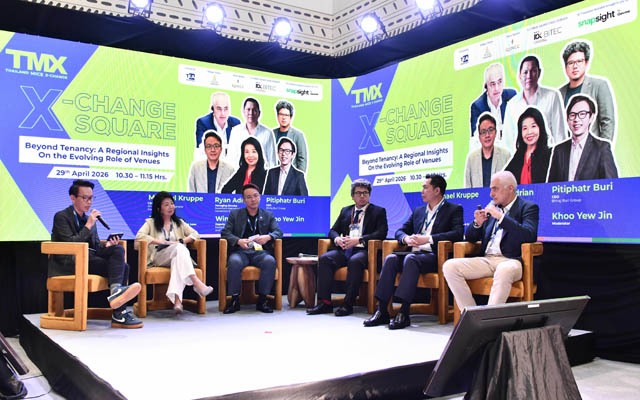
From left: Constellar’s Khoo Yew Jin; Malaysia International Trade and Exhibition Centre (MITEC)’s Winnee Lim; Resorts World Sentosa (RWS)’s Janz Ng; Bhiraj Buri Group’s Pitiphatr Buri; Nusantara International Convention Exhibition (NICE)’s Ryan Adrian; and Shanghai New International Expo Center (SNIEC)’s Michael Kruppe; photo by Thai Exhibition Association

Surviving today’s shifting economic landscape requires venues to step far beyond the role of silent landlords, according to industry leaders at two panel discussions at Thailand MICE Week 2026.

According to industry experts on the The Future of MICE: Global Trends & Leadership Insights panel, venues are now actively stepping up to unlock government collaborations and vital funding.

From left: Constellar’s Khoo Yew Jin; Malaysia International Trade and Exhibition Centre (MITEC)’s Winnee Lim; Resorts World Sentosa (RWS)’s Janz Ng; Bhiraj Buri Group’s Pitiphatr Buri; Nusantara International Convention Exhibition (NICE)’s Ryan Adrian; and Shanghai New International Expo Center (SNIEC)’s Michael Kruppe; photo by Thai Exhibition Association

Prakash Ramajillu, general manager at Koelnmesse, noted that new host countries often fail when organisers operate in isolation. He emphasised that for an event to be a success, there must be active collaboration between the venue, the government, and the tourism board.

In Hong Kong, this collaborative ecosystem has yielded tangible commercial results.

AsiaWorld-Expo’s (AWE) CEO Enid Low highlighted the impact of a recent three-year, 100 per cent rental subsidy scheme for exhibitions – launched by the government during Covid – that helped the venue secure 13 new exhibitions last year.

However, Low added that the venue wanted the events to be sustainable and around for the long-run, not just during the subsidy period.

To ensure long-term viability, AWE connects organisers with local associations, contractors, and alternative government funding streams – such as grants from the Commercial, Cultural or Sports Bureaus – tailored to the event’s specific scope and objectives.

Over on the Beyond Tenancy panel, Ryan Adrian, managing director of Nusantara International Convention Exhibition in Indonesia, noted that his commercial staff are now officially positioned as sales and relationship managers.

Transitioning from an operational to a collaborative mindset is essential because we need to work hand-in-hand to support everyone. In these challenging times, NICE prioritises the relationship aspect of our roles because, ultimately, it is a relationship-driven business, Adrian explained.

Janz Ng, senior director of partnership & sales at Singapore’s Resorts World Sentosa, echoed this sentiment, stating that commercial teams must view organisers not as customers, but as “client partners” working toward shared business outcomes.

“It’s a mindset shift where I’m not just earning revenue from you; I’m presenting you with partnership opportunities. Additionally, the MICE spaces we have is not just the convention space. All the MICE spaces under my purview includes any possible space within the attractions, within the hotels, and even the restaurants,” Ng said.

Pitipatr Buri, CEO of Bhiraj Buri Group in Thailand, concluded: “In the past, the role of the venues and organisers had a very clear line. For us, it was being a silent operator.

“But now it is more about how we can help the organisers by using past databases and providing much better predictability on current shows. Stronger partnership is the key that will lead to better navigation of uncertainties.”

Reviews

The Slate Phuket

Just 10 minutes from Phuket International Airport on the serene northern coast, this 178-key, Bill Bensley-designed resort offers delegates a quiet, tropical paradise steeped in Phuket’s tin-mining heritage

The Ritz-Carlton, Bangkok

The newly-opened Ritz-Carlton, Bangkok anchors the One Bangkok development with cosmopolitan elegance. Featuring the city's largest ballroom and a spectacular new penthouse suite, it delivers exceptional hardware and deeply authentic, soulful service for business and leisure travellers alike

Mama Shelter Zurich

Behind the imposing, Brutalist concrete that defines Zurich’s Oerlikon district lies a surprising secret. While its exterior honours the neighbourhood’s industrial roots, stepping inside Mama Shelter reveals a vibrant, neon-soaked world that is a far cry from its rigid shell