Asia/Singapore Monday, 15th June 2026
Page 504

SG-HK travel bubble set for mid-May launch

0
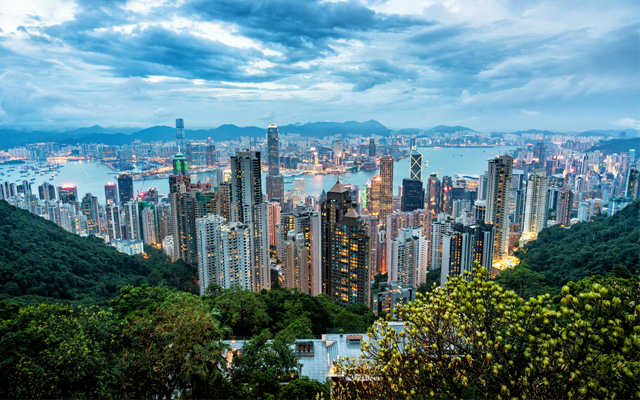
Singapore and Hong Kong are finalising details of the air travel bubble

The much-delayed travel bubble between Singapore and Hong Kong is on track for a mid-May launch, despite the latter having confirmed the first Covid-19 infection with a mutant strain in the community.

According to a report by the South China Morning Post, insider sources have revealed that details on the travel bubble are set to be released in the coming days. The report also quoted a source as saying that both sides are keen for the plan to materialise as soon as possible.

Singapore and Hong Kong are finalising details of the air travel bubble

The development follows Singapore’s announcement that the stay-home notice period (SHN) for travellers from Hong Kong will be reduced from 14 days to seven days from Thursday (April 22), and they will be allowed to serve their SHN at their place of residence.

Travellers will also be required to take a Covid-19 PCR test upon arrival and another PCR test before the end of their seven-day SHN.

Hong Kong will also shorten the self-isolation period for fully vaccinated visitors from Singapore, requiring them to serve only a seven-day quarantine at a designated hotel, instead of 14, from as early as end-April or early May. Additionally, Singaporean travellers who have not been vaccinated will need only quarantine for 14 days at a designated hotel, as compared to 21 days previously.

Hong Kong travellers who wish to join the travel bubble scheme will have to be fully vaccinated. However, Singapore will not impose the same vaccination requirement for incoming travellers from Hong Kong.

Joanna Flint joins Mandarin Oriental group as CCO

0

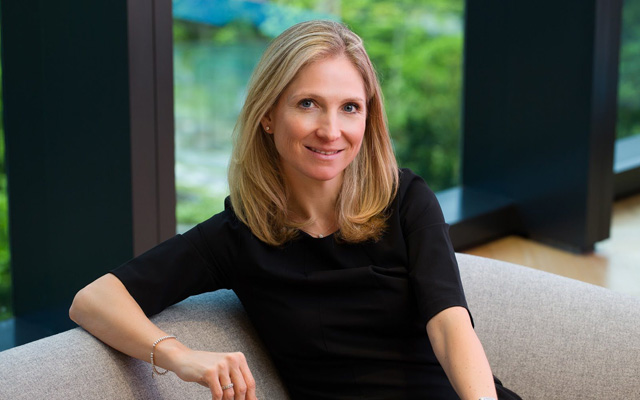
Mandarin Oriental Hotel Group has appointed Joanna Flint to the newly-created role of chief commercial officer.

In this new role, she will oversee the development and execution of the Group’s commercial strategy while also taking executive responsibility for all aspects of Mandarin Oriental’s customer experience.

These responsibilities were originally assigned to chief marketing officer, Jill Kluge, who will retire from Mandarin Oriental in September 2021.

Prior to joining Mandarin Oriental, Fint spent 12 years at Google in general management and sales leadership roles, most recently as managing director – global partner Business, with responsibility for industry go-to-market and commercialisation for Google’s media and technology partners in Asia Pacific.

Before Google, she was principal consultant at Ogilvy Asia Pacific. This followed a decade in the travel industry-leading global eCommerce, CRM and customer service transformation programmes for Singapore Airlines and British Airways.

FEH ploughs ahead with regional expansion

0
FEH to open second Village property in Yokohama, Japan

Far East Hospitality (FEH) will continue with its regional expansion plans, which includes two upcoming properties in Japan and Singapore, as well as a partnership with Artotel Group to boost its presence in Indonesia.

Slated for opening in June this year, Far East Village Hotel Yokohama will be FEH’s and the Village brand’s second property in Japan, following the opening of Far East Village Hotel Ariake last July.

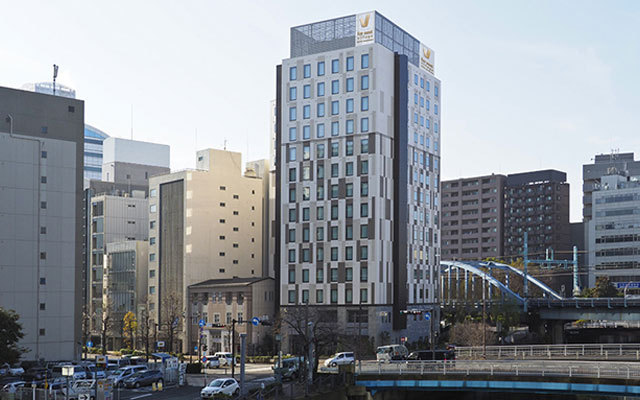
FEH is set to open its second Village property in Yokohama, Japan

The 277-key property will be managed by FEH under a hotel management agreement with Far East Organization. Situated in the heart of downtown Yokohama, the property targets business travellers. It is a five-minute drive to the CBD and a three-minute walk to Sakuragicho and Kannai stations.

On home ground, the hospitality group will also be expanding into the resort and spa category with the opening of Oasia Resort Sentosa in 2H2021.

The 191-key property will consist of Suites, Wellness Premier Rooms, and Deluxe Rooms, and will be the fourth property on Sentosa island managed and operated by FEH. Guests will be able to partake in wellness activities such as spa treatments, fitness routines, and mind-body practices; as well as connect with nature. Wellness journals, self-care checklists, and access to a collection of guided meditation audio will also be made available to guests during their stay.

In addition, FEH has entered into a partnership with Indonesia’s hospitality and lifestyle company Artotel Group to collaborate across operations, branding, and training, as well as support business growth across markets.

As part of the agreement, both FEH and Artotel Group will be represented as an “Affiliate Brand” on the respective parties’ distribution channels and ecosystem. FEH will also work with Artotel Group to enhance its presence in Indonesia and gain meaningful market share. Both parties will also conduct training exchanges to share industry best practices and increase internal knowledge and expertise across markets.

On the path of gradual recovery

0

Adelaide hosted Australia’s first destination showcase for national delegates this year in February. Why was it important to do it despite the risks of sudden Covid-sensitive interstate border closures?
The challenge has been to showcase what’s new in Adelaide and demonstrate our ability to host events safely. On the day before the start of Destination South Australia (DSA), our borders were closed at midnight to Victoria because of new cases at the time. We love our Melburnian colleagues, but that’s the fragility of the environment and this is where you need to be nimble, flexible and ready for anything. The planning of DSA was months in the making and there were so many contingency plans in place for the unexpected, and that showed on the eve of the event. Fortunately, our Melbourne guests came when they did but yeah, that could have all been different 24 hours later (when South Australia temporarily shut the borders to Victoria).

What did Adelaide want to show delegates?
Our supply chain has increased in recent years so the infrastructure and investment along the Adelaide riverbank by the state government has been significant. Also, private investment is now starting to take place.

In the last four months or so we’ve had a new Crowne Plaza open, EOS by SkyCity which is very upmarket – part of a A$300 million (US$231.5 million) redevelopment through the SkyCity casino makeover which is well suited to the Asian market – and we’ve also got the Adelaide Oval Hotel that is the first and only hotel aligned to a sporting stadium in Australia, and one of only a handful in the world.

Looking ahead, there’s a new Sofitel that will open in the next six months, a new Hyatt, and a Westin. So the infrastructure growth has been quite significant and the key driver behind that is business travel, but behind these, business events. And being a small city that’s open, clean, green and free to move around is going to be really important. I think we’re really well-positioned for the future that will see the rise of boutique cities to grow and secure a lot more business events in the future.

The uncertainties with sudden border closures though have repeatedly thrown a spanner in the recovery plans. What has the last year been like for you?
The way that Adelaide Convention Bureau (ACB) has approached it hasn’t been about one person but it’s been about a team and I’m very proud of how this team has adapted to be more flexible and nimble. Our approach was very tailored and made personal to our members, clients and event planners, both domestically and internationally. We pulled back in other ways, in advertising or implementing big campaigns because of resource constraints. But it was all about helping, supporting and trying to do as much as we could.

We’re really proud of the effort, which resulted in a postponement of 85 per cent of the business that was due to take place in 2020 to 21 through to 23. That’s an incredibly high postponement rate and some other destinations are probably half of that. Again, I think it’s as simple as being really personalised and understanding of the environment, helping and caring. At the end of the day, we’re all in the game of business events, and unless we support one another and work together, it’s going to be really difficult to reboot the industry.

What other measures have you adopted to encourage business events returning to Adelaide?
Back in June, we developed a Safe SA campaign. We brought together around 10 of our members and created an end-to-end solution. When you arrive at the airport, you would get into your transport, go to your hotel, and a venue such as the Adelaide Convention Centre. (But regardless of which step of the journey you are at) everyone would be operating to the same processes and procedures.

In October, we ran a pilot Covid event to instil confidence and show that if you can do the three things of tracing, hygiene and social distancing, there’s no reason why business events can’t be presented. Healthy and safe events are critically important because it doesn’t matter if you’ve got the biggest convention centre or the biggest hotel in the world, unless you operate in a healthy and safe way, that means nothing.

With that, we feel that we’re in a really good position for Adelaide to move forward and secure business but that’s come with a lot of hard work and we feel incredibly for our members because the economic impact has been significant.

But DSA was all about rebooting business events in Adelaide and on behalf of Australia, as it was the first business exchange event of the year in the country. There may not have been as many people on the floor (because of travel difficulties) but we had a few joining online using hybrid technology and the word on the street is that there’s pent-up demand and enthusiasm from buyers. We believe the industry is now at a point of being very cautious but cautiously optimistic. People can’t continue to hold off making their decisions. It wouldn’t surprise me if we converted more business than ever.

In many cities, the events and tourism industry has been at odds with the state government over meeting rules and border restrictions. Has that also been the case in Adelaide?
We’ve developed a very close relationship with the (state’s) health department. They attended our pilot event in October, and looked at our exhibition and plenary setup. That was a pinnacle moment for us at ACB. They quickly saw that when you do have a controlled gathering of professional people, all those three practices of tracing, hygiene and social distancing can easily take place. I think one of the challenges for the Australian event industry, and particularly business events, is that we’ve been (categorised together with) festival events and major events. They are completely different operations compared to what a business is.

We’re now working with Health SA to develop a guideline or template for the business events sector to work towards. That’s coming from the top of government and their support to get the economic (recovery) process back up and running and can only be applauded. We’re hoping that within a couple of weeks or months, we’ll be able to share a new package of information that is endorsed by the state government’s health authority.

In terms of leadership at an innovation point, no one else in Australia has been able to develop that with their authority. So we’re really pleased with where that will potentially end up, to be able to basically guarantee a healthy and safe event.

What would it mean to you to have the international borders open?
International borders are critically important when the environment’s right and I think the federal government is approaching that very sensibly at the moment. We’re expecting the reopening of borders won’t happen until early 2022. We were due to host 15 or 18 international events this year including some corporate incentives out of Asia. Fortunately, we’ve been able to postpone. It’s critically important for economic recovery for Adelaide that those international events do take place.

We’ve been working very closely with the Department of Premier and Cabinet. And we’ve strategically aligned our bidding opportunities and strategy if you like, to the state government’s economic priorities, which also overlap and are consistent with the City of Adelaide as well. It’s not just a case of visitors coming into the destination and spending money. While that’s absolutely critically important for economics, we’re working and focusing more and more on the economic tail.

You’ve only got to look at the legacy that evolved from our hosting the International Astronautical Congress in 2017. That led to the development of the Australian Space Agency and a Research CRC programme, developing a mission control and an ecosystem of industry around that which has been critically important. It’s about local leaders mixing with global leaders. That’s how trade and investment, and transactions take place. And that’s why we’re desperate for international business to come back.

Has your strategy, to attract the Asian market back into Australia when the borders do re-open, changed?
The strategy has changed because everyone’s changed, because of the impacts of Covid. We were very fortunate to have success in the Chinese corporate incentive market. We were working very closely with Business Events Australia and secured two very large groups .. one was 3,000, the other 5,000. Unfortunately, they didn’t materialise because they were due to take place last year. And with international travel down those events were cancelled.

I think the opportunity, particularly for corporate incentives for Adelaide is that we are a new and fresh destination, there are new products and experiences. But again, our Covid record is going to be critically important. From 2022 to 2023 onwards I think we would see, small, more frequent waves of corporate incentive guests coming from China or across Asia as an absolute high probability. Large events in the short- to medium-term probably aren’t going to take place.

It sounds like you’re very optimistic about the Chinese market when some have been wondering about the relationship between China and Australia, which has become a little challenging of late. Your reading is that there will be no impact for business events here?
It’s difficult and not right for me to talk about the politics of the relationship but I certainly see the intent of the federal government to improve relations and China as an economic trade partner is critically important to Australia. Certainly, our individual engagements with clients and meeting planners in China are very positive and warm, and welcoming. So, yeah, we’re aware of that in the backdrop, but it’s out of our control.

Again, we focus on very strong, personalised communication to promote the incredible things you can do here in Adelaide as part of an Australian experience. It is what the clients are looking to hear about. The (lack of five-star hotels) has probably been a challenging point for Adelaide in the past but with the new and refurbished stock coming online, I think we’re in a really good position.

Those groups will stay in the city and they’re only an hour from the Barossa Valley and (a short distance to) the seafood capitals of Australia. So for all of those benefits, we’ve got a lot to offer. And everyone knows the Asian market is resilient, it bounces back very quickly and moves very quickly. So we’re ready for that and I’m hoping we can host a lot of groups from 2022 onwards.

This industry has always been super competitive. Do you expect competition between destinations in the new environment will get easier or harder?
Absolutely, without a doubt, harder. Competition was already increasing between destinations, not only within Australia but around the world for the last decade or so, recognising the value of business events, high-yield, high-spending visitors, and also the economic tail that I spoke of from hosting a business event.

So destinations were already cashed up. There’s incredible infrastructure across Asia and the Middle East, in particular, (has been) winning a lot of international business that was already tough to win. With international events not existing for two years, that competition is will absolutely go through the roof. Those destinations that already had a big kitbag of resources are probably going to double or triple that to ensure that they can win their business back really quickly and swiftly.

From an Australian perspective, we’re in a great position because of our Covid safety record and we’re a very unique product with a lot of great growth industries that the world can learn from. I’m sure we’ll win business but that competition will be so much more challenging and difficult moving forward. For each jurisdiction in Australia, it’s going to be critically important that they secure even more support from their state governments through their city councils.

Because unless the resources are available in a bid funding and infrastructure supply sense, it’s going to be really challenging for Adelaide and Australia as a whole to do business. I look at the domestic market and my colleagues that have in the past, totally focused on international business. They’ve of course had to pivot back to the domestic market because international business just doesn’t exist. Even in the domestic market, the competition has increased significantly as well. But again, Adelaide is a proud destination with a lot to offer and we’re up for the challenge.

When you said you’ve changed your strategy for Asia, how will it be different? Normally you would be in-market, travelling overseas to be part of exhibitions and fairs. Many people have more or less Zoomed out as well, so there are not that many options.
You raise a really good point. It’s incredibly challenging. We don’t have in-market resources in Asia or China. We were about to, before Covid struck and we’ve obviously pulled back. I’m going to give credit to Business Events Australia that (are helping) destinations like us that don’t have resources in-market. They’ve tried to keep us linked to the local market in China and across Asia, to keep that communication going and keep Adelaide and South Australia top of mind. But again, I think the opportunity will bounce back and we’ll certainly make the most of that.

But that bounce-back will be gradual and won’t be a 100 per cent recovery in 2022. All the research, particularly through the aviation sector, says it could be as far away as 2024. Which is a long way away for a return to full economic impact and benefit for a destination. We don’t (even) know what’s happening tomorrow or the next week or the next month. You’ve just got to take it with baby steps and do the very best that you can with what you’ve got in front of you.

What else is on your mind?
(Also on my mind is that) the next pinnacle point for our industry is the end of JobKeeper (Australia’s Covid wage support scheme which ended March 31), which could be a challenge.

I think we’re at a point as an industry that we need to present one voice (to the federal government). We have the Business Events Council of Australia and I’m on the board of the Association of Australian Convention Bureaux. We also have Meetings and Events Australia (and others) but I think all of these associations need to come together from a strategic sense, to communicate with and brief the government, rather than the sort of ad hoc random approach that’s happening at the moment.

I think the time is right as members, the industry, products and suppliers are probably fed up with paying four or five different subscriptions. We need to come together as one organisation because we need the support from government especially with the end of JobKeeper – putting many of our products and suppliers at risk – and we can only achieve that through one voice. And if Australia can’t present a full supply of products and services, it’s going to be really difficult to win that international business back.


Anantara Chiang Mai Resort revamps multipurpose space

0
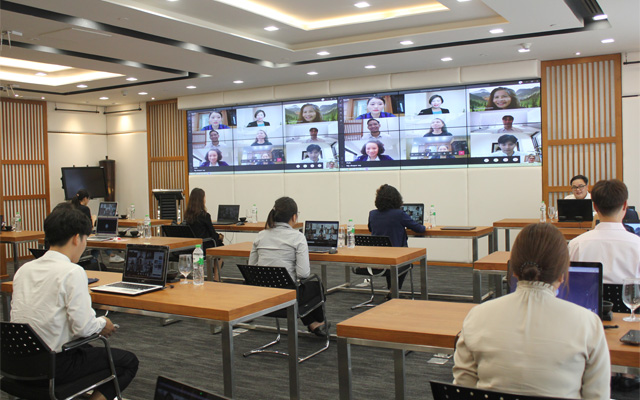
A meeting in progress in the function room

The Anantara Chiang Mai Resort in Chiang Mai has recently revamped and expanded its multipurpose Anantara Function Room.

The 114m2 venue has been outfitted with 12 wireless video wall screens which can be connected using a computer or mobile device, as well as touchscreen monitors. There is also a separate control room where organisers can seamlessly arrange to play videos or other media from. It can host up to 75 participants theatre-style, 36 executives for a boardroom meeting, or 48 guests for a banquet.

A meeting in progress in the function room

Business and multilingual secretarial services, along with coffee breaks and luncheons can also be arranged.

Other meeting venues at the Anantara Chiang Mai Resort include the Rooftop Terrace that can host sunset cocktail receptions or a sit-down banquet for 60; The Service 1921 Lawn which can hold 120 guests banquet-style; or the restaurant’s waterfront deck that can be exclusively booked for up to 86 guests.

71% deem virtual/online events very or extremely important: Pico

0
While there was a year-on-year drop in respondents seeing live events as very / extremely important, the overall sentiment towards offline events remains resilient

The Pico Group has released fresh industry research to reveal what has fundamentally changed in event experiential marketing, how well equipped are professionals to deal with challenges, and where brands are seeing success and room to improve.

As expected, respondents rated virtual/online events more highly in 2021 than they did the year before: 71% deemed them ‘very’ or ‘extremely’ important, a year-on-year increase of 26 percentage points.

While there was a year-on-year drop in respondents seeing live events as very/extremely important, the overall sentiment towards offline events remains resilient

In addition, over 90% said they have held or are considering hybrid events, while just 32% said offline or live events were ‘very’ or ‘extremely’ important (2020: 45%).

Entitled One Year On: How has the pandemic changed event and experiential marketing?​, the industry research was conducted during February and March 2021. The new findings follow up on earlier client research the Group released in 2020, which investigated how brands and marketers were reacting to Covid-19.

Respondents for this latest survey included executives (11%), directors (31%), managers (46%) and other titles (12%) from a wide variety of industries across Asia Pacific (65%), Europe (19%), North America (13%) and the Middle East/North Africa (3%). The results show a clear sea-change in current market sentiment toward the post-pandemic era.

“The heightened level of tactical importance for virtual and hybrid events revealed by the 2021 survey makes it obvious that those formats will further establish themselves as the norm in the short term. Indeed, considering the pace of economic recovery and vaccination in much of the world, physical events are almost certain to remain the exception rather than the rule for many markets,” said Tyronne O’Callaghan, vice president, strategy, global activation, Pico.

“However, we believe the perceived value of offline events is still strong because of the uniqueness of what they offer to audiences. Their intimacy, sensory stimulation and emotion are hard to recreate digitally. When we quizzed respondents about critical success factors for virtual events, over 70% said ‘interactivity’ and ‘personalisation’,” O’Callaghan added.

For more insights, download the full Pico Group Industry Research report here.

Will the current crisis change corporate travel technology distribution?

0
New tech companies are being created but they are not able to sell indirectly so they can't get their products into the hands of people who want it

‘Do not waste a good crisis’ has become something of a mantra for many of us over the last year. Are corporate tech providers wasting this crisis? No, I don’t think they are, but there is one area I believe they are not giving the attention it deserves – indirect distribution and the growth an indirect partner channel can achieve.

You may be thinking ‘well, he would say that, wouldn’t he’ and you are quite right. We are a value-added reseller (VAR) of travel tech and we wouldn’t be doing what we do if we didn’t believe in it, but sometimes the benefit of such intermediaries is lost at both ends of the relationship – supplier, buyer (the TMC) and, ultimately, the buyer’s clients.

New tech companies are being created but they are not able to sell indirectly so they can’t get their products into the hands of people who want it

Let’s consider some non-travel examples where the role of VARs is better established.

Look at how the likes of Cisco, SAP, Zoho etc and how they distribute their tech. What did they work out a long time ago? ‘We cannot be everything to everyone’. How do we reduce support overhead, drive growth and deliver innovation?

What they did was look at their clients and prospects and segment them. They worked out that if they own a specific segment of customers, and then partner with others to sell and support their products, they can achieve these goals.

Now that change in thinking was not without cost. They had to invest in their tech stack to allow others to work in it. They had to create, train, and support a new indirect sales and marketing channel. This took forethought and a change in accepted technology distribution methodology. There was a substantial amount of risk associated with this new idea.

The challenging work and innovation paid off for these businesses, their clients and partners, and a new business practice was born – the value-added reseller.

But what does that mean for corporate travel tech?
The major suppliers in our sector, such as SAP Concur, Cornerstone and until recently Amadeus, have unwittingly created an elite club of users and clients, as they have dramatically reduced their indirect sales partners to the point where they are not taking on any new TMC reseller partners.

New entrants like TapTrip, Zenmer and Troovo have come in to fill the gap created by TMCs not getting access to their clients’ preferred solution, but they too have fallen into the same trap.

They build their products without thinking about future distribution. They invariably do not have a solution that allows for indirect distribution. Search for VARs that support corporate travel tech – you won’t find many.

What should these technology companies be doing now? They need to be looking at how they can get their products into the hands of the people who want them. The likes of SAP (though not SAP Concur), Oracle, Microsoft and many other IT and software companies have been using VARs or channel partners for many years. SAP and Microsoft invest heavily in these indirect sales channels.

So what does it all mean for travel managers?
As a travel manager, you want your service provider to have access to your preferred technology. Given the current situation with technology distribution, you may have access to tech at your current TMC, but you have chosen to move and your new TMC cannot get access to the tech, as the primary supplier is not taking on new partners. What do you do? Stay where you are? Move to another TMC who has the tech? Try to do a direct deal?

The current situation is not level, there is a limited choice of who has access to what tech across TMCs, especially across the smaller business travel agencies. Ideally, all primary suppliers should make sure their product is where their customers are. Customers should not be forced to change the supplier because the supplier cannot get access to the tech.

How should tech suppliers address VAR opportunities?

  • Research and talk to tech companies in other industries about using VARs to drive growth and share of market;
  • Invest in their tech to create a true reseller product;
  • Segment their clients and prospects to get a clear understanding where direct or indirect relationships work best for them and their clients;
  • Create a channel partnership team, that includes relationship management and marketing support
  • The three-year ROI on this new strategy comfortably beats the cost of the lost opportunity by not doing it at all.

No change in direct is without its challenges. Many tech companies are not ready to lose control because of the opportunistic tendencies of their sales teams. Meanwhile, resellers can be seen as being negative to the business and devaluing the direct offering, rather than adding value to the products and services of the primary supplier.

Two of the key advantages of creating and supporting a partner channel, however, are that VARs have an intimate knowledge of the market and can penetrate different segments with ease compared to the primary producer. Secondly, this sales channel gives the direct sale teams the opportunity to focus on larger accounts.

Tech companies have clients who want their product, so they need to make it easy for them to get access to it. If you are building tech solutions for our sector and are in the early stage of your plans, ignore the indirect channel at your peril.


Gavin Smith is the director of Element, a travel technology company that helps TMCs gain access to cutting-edge travel technology. A former manager at SAP Concur, Smith has vast experience across various functions within TMCs. He has worked with TMCs of all sizes supporting their goals to deliver technology and payments to their clients.
New GM joins Dorsett Gold Coast

0

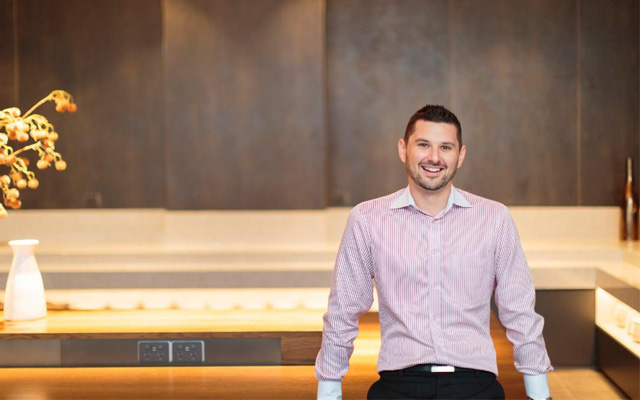
Dorsett Hospitality International has appointed Michael Foster as the general manager for Dorsett Gold Coast – the group’s debut hotel in Australia, set to open in 4Q2021.

In his new role, Foster will be leading the direction for the hotel’s pre-opening, including the building of a dedicated team.

Foster has over 15 years of hospitality and management experience, including pre-opening, overall hotel operations, and sales and marketing. He was previously the general manager of Holiday Inn Express Brisbane Central and has held several senior roles for other hotels brand

Business Events Australia further bolsters business events sector

0
Tourism Australia doubles down on efforts to get domestic travellers to explore their own backyard

Business Events Australia will receive more funding for its Bid Fund Program, as well as release a new video series showcasing Australian innovation, in a move to drive demand for future international business.

Tourism Australia has voiced its commitment to the Bid Fund Program, and will provide an additional A$3 million (US$2.3 million) to cover new pledges and confirmed bids for an additional 12 months through FY21/22.

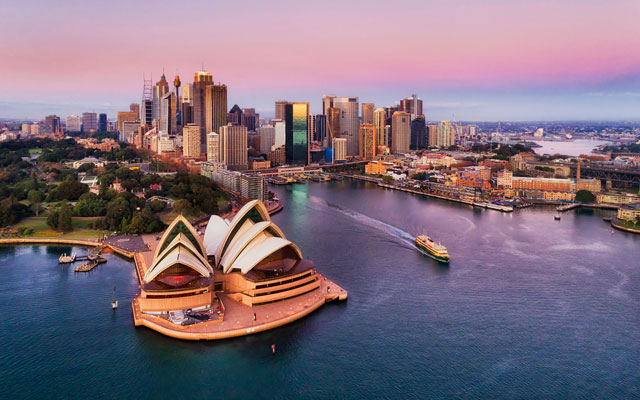
Efforts are being made to ensure Australia is well placed to attract more international events when travel resumes; Sydney pictured

The Bid Fund Program is designed to increase the conversion of bids for new international business events by offering financial support at the critical bidding stage. Since the programme launched in 2018, 40 events have been won worth approximately A$411 million in economic value to Australia, representing a conversion rate of 58 per cent.

Tourism Australia’s managing director Phillipa Harrison said: “With Covid-19 restrictions lifting and consumer confidence rising, this programme will continue to assist those bidding against international competitors for events and continue to position Australia as a leading business events destination.”

Tourism Australia encourages interested parties to visit and apply through the Business Events Australia website. Applications are currently open and close on June 30, 2022.

Meanwhile, the latest instalment of Business Events Australia’s Australia Innovates content initiative has been launched as a video series, showcasing innovation throughout Australia that continues to transform industries and deliver world-firsts.

The documentary-style video series is available on the Business Events website and showcases six Australians pursuing research, discovery, invention, innovation and intervention across several knowledge sectors including artificial intelligence, health, nanotechnology, environmental restoration and advanced manufacturing.

“Our Australia Innovates videos series highlights Australia’s expertise across a wide range of fields, positioning us as a world-leading association meetings destination where delegates can experience innovation firsthand,” Harrison pointed out.

In addition, Australia’s federal minister for trade, tourism and investment Dan Tehan said the business events sector contributed A$36 billion to the Australian economy before Covid-19.

“Because Australia’s economic and health response to Covid-19 has been among the best in the world, Australia is well placed to attract more international events when travel resumes. As part of our plan, we will also showcase Australian innovation to event planners in US, UK and Europe to secure more international events.

“Our additional support to attract international business events to Australia complements our A$50 million Business Events Grants Program that supports local businesses to attend local business events, conventions, tradeshows and conferences and the A$1.2 billion aviation and tourism support package designed to turbocharge domestic tourism spending.”

MyCEB unveils 10-year plan for business events industry

0
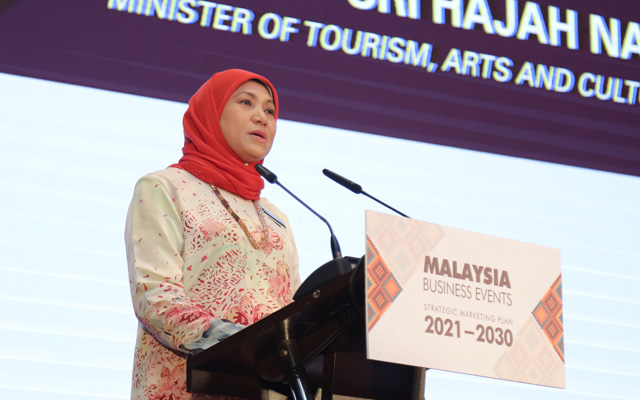
Nancy Shukri, minister of tourism, arts and culture, revealing more details about the 10-year plan at the press conference

The Malaysia Convention & Exhibition Bureau (MyCEB) recently launched its 10-year Strategic Marketing Plan 2021-2030, with the aim of positioning Malaysia as one of the world’s preferred business events and international sporting events destinations.

In line with the aspirations of Malaysia’s Ministry of Tourism, Arts and Culture, the plan will focus on developing sustainable tourism, as well as attracting high-yield business event travellers to the country.

Nancy Shukri, minister of tourism, arts and culture, revealing more details about the 10-year plan at the press conference

The plan further emphasises three strategic axes to expand performance, namely optimisation, foresight and competitiveness. These strategic anchors will be applied in implementing, planning and monitoring all initiatives collaboratively with the industry.

MyCEB is targeting three per cent business event delegates from the total number of foreign tourist arrivals into Malaysia, while creating an estimated 25,833 total employment in the business events industry by 2030. Malaysia also aims to be among Asia’s top five business events powerhouses by 2030.

Nancy Shukri, minister of tourism, arts and culture, pointed out these steps will help to ensure the country’s competitiveness, as well as develop an inclusive and sustainable tourism sector that is prepared and resilient in dealing with future challenges.

Once borders reopen, Malaysia also plans to tap more aggressively into Asia Pacific’s business events markets such as China, India, Korea, Taiwan, Australia and New Zealand. The idea is to entice organisers to hold their events for a longer duration by enriching business event offerings and delegate experiences.

In addition, MyCEB’s research has shown that the exhibition sector in Malaysia generates the largest economic impact, when compared with other business events segment. To further leverage on the exhibition component, one such plan is to package it with other MICE segments to further harness competitiveness.

MyCEB’s CEO, Abdul Khani Daud, stated: “The strategic marketing plan signals the business event sector and government’s commitment to work together by identifying new strategies and opportunities for expansion and building on our current presence in existing markets.”

Abdul Khani added at the press conference that MyCEB also has plans to vie for signature events such as the World Expo. If successful, Malaysia will be the first South-east Asian country to host the event.

Reviews

The Slate Phuket

Just 10 minutes from Phuket International Airport on the serene northern coast, this 178-key, Bill Bensley-designed resort offers delegates a quiet, tropical paradise steeped in Phuket’s tin-mining heritage

The Ritz-Carlton, Bangkok

The newly-opened Ritz-Carlton, Bangkok anchors the One Bangkok development with cosmopolitan elegance. Featuring the city's largest ballroom and a spectacular new penthouse suite, it delivers exceptional hardware and deeply authentic, soulful service for business and leisure travellers alike

Mama Shelter Zurich

Behind the imposing, Brutalist concrete that defines Zurich’s Oerlikon district lies a surprising secret. While its exterior honours the neighbourhood’s industrial roots, stepping inside Mama Shelter reveals a vibrant, neon-soaked world that is a far cry from its rigid shell