Asia/Singapore Monday, 13th April 2026
Page 509

More virtual room to grow

0
A screenshot of Philconstruct's lobby

Hot idea
Ensure that the moderators are seasoned professionals, as they would be able to fill the silence in the event of a connection problem

A screenshot of Philconstruct’s lobby

Event brief
As physical events were still not allowed in November, Philippine Constructors Association (PCA) agreed to a virtual show for 2020 with the proviso that it be futuristic, in keeping with its image of looking ahead into the future in tandem with the country’s build, build, build programme.

Global Link-MP’s COO, Jing Lagandaon, said Event Xtra was chosen as the platform provider as they found the software interactive, sleek, and was easy to navigate right from the get-go. Moreover, other platforms did not allow visitors to converse with exhibitors, which was a key component.

Global-Link MP’s in-house designers developed a 3D design technology where the virtual venue – from the lobby and exhibition halls to the products and a help desk – was made to be as lifelike as possible. This also helped to showcase the construction equipment and machinery as closely to the real deal.

Event highlights
Being a virtual show helped to solve travel concerns like security, and the added costs of plane tickets and hotels. It featured a mix of local companies, as well as some of the show’s regular foreign exhibitors from countries such as Australia, New Singapore, and Germany.

In addition, stakeholders from all across the Philippines, and the world, could tune in without leaving their homes, but still provide the same opportunity to network with top-level professionals and stakeholders from the construction and HVAC (heating, ventilation, and air conditioning) industry.

Another bonus of a virtual setup was that Event Xtra could provide data analytics easily, and had a list of those who came to the exhibition booths for exhibitors to follow up with.

Philconstruct also featured an online edition of Technoforum, the show’s knowledge-sharing forum which welcomed notable speakers from all over the world.

Challenges
The most major challenge was transforming Philconstruct – a mega international exhibition that physically took up two separate venues in Metro Manila – into a virtual tradeshow.

Lagandaon shared that organising a virtual event is akin to starting a new business or concept, as they had to approach every single exhibitor and explain the idea via Zoom.

“We were not able to convince everyone (to join us virtually, but) those who we are able to convince realised that it works,” she said. “We have also transformed the way we do things and the sales mindset.”

One of the challenges in holding a virtual event was Internet connectivity, which in the Philippines is notoriously slow and unstable. As a result, 80 per cent of the Technoforum was pre-recorded.

One of the live presentations, unfortunately, ran into connection problems. It was fortunate that the moderator was a past PCA president, and being knowledgeable in his craft, he managed to fill the 20 minutes of dead air until the speaker was able to reconnect.

“We have been talking about digitisation for the construction industry for the past year or so. Doing this virtual edition of Philconstruct is just another way of showing the industry that there are more ways to do business now. Of course, we hope we can once again do the physical shows but we believe virtual is here to stay,” shared Ronaldo Elepano, the show’s overall event chairman.

For 2021, Philconstruct has announced it’ll be organising both virtual and physical shows.

Event Philconstruct VX (Philippine International Construction Equipment, Building Materials, Interior & Exterior Products Exhibition and Technology Forum)
Organiser Global Link-MP for Philippine Constructors Association
Dates November 5-11, 2020
Attendance 13,700 visitors and 147 exhibitors from around the world

Japan temporarily suspends green lane travel arrangements

0
Japan halts entry from all countries to stop spread of COVID-19 variants

The Japanese government has suspended its green lane travel arrangements with other countries, until the country’s state of emergency is lifted.

This affects the Singapore-Japan Reciprocal Green Lane (RGL). During this time, travellers will also not be able to apply to travel from Japan to Singapore given the reciprocal nature of the RGL, said Singapore’s Ministry of Foreign Affairs (MFA) in a media statement.

Japan halts entry from all countries to stop the spread of Covid-19 variants; Narita International Airport pictured

Travellers who have already received approval to enter Singapore under the RGL can continue to do so, but are advised to check the latest immigration regulations upon their return to Japan. Singapore work-pass holders from Japan may continue to use the Work Pass Holder General Lane for entry into Singapore.

All travellers entering Singapore will be subject to prevailing health requirements.

This comes as Japan temporarily bans the entry of all non-resident foreign nationals into the country amid a surge of Covid-19 infections.

As of mid-January, the Japanese government extended the state of emergency covering Tokyo and its three neighbouring prefectures of Chiba, Kanagawa and Saitama to include Osaka, Kyoto and Hyogo, Aichi, Gifu, Tochigi and Fukuoka prefectures. Under the declaration, residents in those areas are being asked to avoid all non-essential outings.

The number of infections nationwide has hovered around 6,000 for the past several days, with the most rapid increase seen in urban areas. The detection of a new, more contagious variant of the coronavirus in four travellers who arrived in Japan from Brazil earlier in January has also added to the concern.

Singapore-based CEMS optimistic about turnout for its 2021 events

0
MBS will play host

With Singapore’s phase three reopening and a vaccination rollout, Singapore-based Conference & Exhibition Management Services (CEMS) is bullish that it can target a 70 per cent subscription rate for its signature events – both virtually and in-person at Sands Expo and Convention Centre.

Edward Liu, group managing director of the 40-year-old regional and international organiser, commented Singapore’s comprehensive plan to vaccinate everyone who wants it by 3Q2021 or end-2021 was a “complete game-changer”.

MBS will play host to more hybrid events this year

He added the relocation of the Davos-based World Economic Forum 2021 in Singapore, from May 25-28, 2021, expected to attract thousands of business and government leaders and media from around the world, was a very clear signal the city is ready to host international conferences and exhibitions, and reinforces the readiness and strength of the MICE industry.

Liu continued: “We are seeing more positive responses from prospects compared to the last six months of 2020, and we are quite prepared to step up more aggressive marketing plans to take on more participants,” adding CEMS is introducing “a virtual element” to support its live events.

“This is to cater to foreign exhibitors due to restrictions in their own countries, in particular Italy, for the Singapore International Jewellery Expo (SIJE) which traditionally fields 40 to 50 sellers showcasing millions of dollars worth of exhibits.

“You cannot do business long distance. But under the circumstances, those who cannot come can work with our established partner (global leader in business and security services) Brink’s to help set up and secure the exhibits.”

SIJE 2021, held from July 8-11, is targeting 200 exhibitors from 25 countries, with a good number from Hong Kong, Thailand and Japan, and 70 per cent of its traditional 10,000 trade visitors and the public, Liu noted, mindful that it is not yet normal times with restrictions in place.

CEMS is eyeing 1,000 pre-registered or walk-in delegates daily at Architecture and Building Services 2021, held from June 30 to July 2, versus 2,000 pre-Covid. Meanwhile, its four-in-one trade-focused Café Asia/Sweets and Bakes Asia/International Coffee and Tea Industry/Restaurant Asia is expected to yield 222 exhibitors from 27 countries and more than 6,000 participants.

From handshakes to virtual ‘hellos’

0
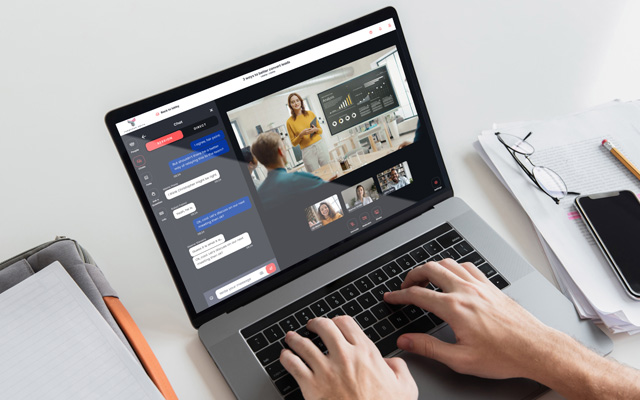
the trend for global virtual events and how this has resulted in a huge strain on existing IT infrastructures

In-person company and industry conferences have certainly taken a hit as a result of the Covid-19 pandemic. As a sector that is dependent on bringing international audiences together in a physical space, the pandemic has forced many to rethink their business models.

However, the good news is foundational unified communications and collaboration (UCC) and content delivery technologies already existed to make the transition from in-person to online conferences.

Nonetheless, the shift from in-person to online events has not always been seamless. The digital infrastructure for these types of virtual venues requires the need to scale communication backbones quickly to support what is turning out to be a new reality for business conferences.

The trend for global virtual events has resulted in a huge strain on existing IT infrastructures

Virtual events are exploding as is their digital infrastructures
The global virtual events market size was valued by Grand View Research at US$77.98 billion in 2019 and is expected to grow at a compound annual growth rate (CAGR) of 23.2 per cent from 2020 to 2027.

For example, the fifth edition of the Singapore FinTech Festival (SFF) last year reportedly attracted more than 3.5 million session views on the online event platform and social media. Offering a hybrid experience, the latest edition of SFF was able to facilitate more business and virtual meetings that were conducted through the event’s technology platform, compared to previous years.

As virtual conference platforms experience unprecedented growth, it puts a huge strain on existing IT infrastructures. Virtual events can now extend over multiple days, and sometimes weeks, and feature different types of online interactions such as live presentations, streaming video, social media, break-out rooms, chat sessions, polls, virtual reality to hold onto attendees’ attention.

In an IDC Virtual Events Survey, published in May 2020, virtual event attendees ranked how they would like to be engaged during a virtual event. No surprise, the more interactive engagement methods, such as chatting with the speakers and participants, downloading presentations, polling and community discussions ranked the highest. It is also not a surprise that these are highly digital interactions.

As a result, the amount of additional bandwidth required to successfully deliver the various digital aspects of virtual events without any performance hiccups is constantly increasing. For example, high-definition (HD) video for a large virtual event needs a huge amount of bandwidth.

YouTube recommends that 13 Mb/s is used to stream 1080p HD content with other devices streaming on the same network. Multiply that by thousands of virtual conference participants trying to access that same video and if the video streaming technology is poor or fails during a live online-conference, then you’ll probably never virtually see those attendees again.

There are two types of online business events that require the same IT infrastructure modernisation and optimisation to succeed:

• Private corporate conferences need internal virtual private networks (VPNs) to be literally up-to-speed to securely interconnect thousands of distributed participants. For these types of events, network bandwidth capacity, resiliency and security are critical factors.

• Public vendor or industry events, where there is a “rolling thunder” of multiple activities over days or weeks, with participants from all over the world coming in over the public Internet, have the same requirements as private corporate conferences. However, these online venues require scalable IP peering among multiple internet service providers to boost bandwidth capacity for UCC, digital media providers and content delivery networks.

To keep private or public virtual event attendees engaged and happy, enterprises and online conference platform providers need to dynamically turn up the network, redundancy and security capabilities of their infrastructures to meet the burgeoning demand.

New year, new realities
According to the Global Interconnection Index (GXI) Vol. 4, an annual market study by Equinix, 70 per cent of new value created over the next decade will be based on digitally enabled business models. With Singapore ranked as the top Asia-Pacific meeting city on the annual International Congress and Convention Association (ICCA)’s global rankings for 18 consecutive years, business meetings and events – physical or virtual – will always be important for connections, driving business growth and economies forward.

Since October 1, 2020, event organisers can apply to pilot MICE (Meetings, Incentives, Conferences and Exhibitions) events in Singapore, subject to attendance caps and the necessary approvals from the authorities. There are also robust Safe Management Measures (SMM) in place which event organisers are expected to strictly implement and enforce.

The year 2021 will be the year of transition as we welcome the golden age of events – a mix of physical, virtual, and hybrid events. With this in mind, we expect enterprises and online conference platform providers to leverage interconnection services to access thousands of network, cloud and content providers to successfully host virtual conferences for tens of thousands of participants per event, without a hitch.


Yee May Leong is Equinix’s managing director of South Asia. In this Singapore-based role, Leong leads the company’s business strategy in Singapore and Indonesia.

She joined Equinix in May 2019 with over 30 years of experience in the Information and Communications Technology (ICT) sector, holding senior management positions in technology companies including IBM, Lotus, F5 Networks and Orange Business Services, where she spearheaded the companies’ market growth and industry leadership in the Asia-Pacific region.

Attractions community to meet in Shanghai instead of Macau

0

IAAPA, the global association for the attractions industry, has decided to shift its annual exposition and conference to the Shanghai New International Expo Centre, from August 10 to 13, 2021.

The IAAPA Expo Asia 2021 was initially planned for Macau in June.

IAAPA Expo Asia 2021 will now be held in Shanghai this August

IAAPA explained that the relocation and date change were in response to the continued impact of the global pandemic.

Hal McEvoy, president and CEO, IAAPA, said: “IAAPA’s role has always been to help members meet, do business, and learn from each other. It is more important than ever we provide such opportunities in a safe manner, at the right time, in the right location.

“After careful review and with significant input from our team, members, exhibitors, and the IAAPA Board of Directors, the decision has been made to relocate IAAPA Expo Asia 2021 to Shanghai, China. Given the continued uncertainties impacting travel – international and domestic – we believe the relocation and event date change will provide more opportunity for exhibitors and attendees to participate.”

Plans are underway to ensure a smooth transition to the new venue.

This year’s event will kick off with a conference day followed by three days of tradeshow, additional education programmes, exclusive special events and more.

McEvoy said the event would abide by safety guidelines and operational procedures recommended by global and health authorities as well as event industry experts.

Hyatt opens first hotel in Cambodian capital

0

The Hyatt Regency Phnom Penh has opened in Doun Penh, making it the first Hyatt hotel in the Cambodian capital, and the debut of the Hyatt Regency brand in the country.

Event planners will be able to make use of the hotel’s 1,400m2 of meeting space. The Regency Ballroom which can accommodate up to 490 people, boasts floor-to-ceiling windows as well as the only built-in full-color LED screen in the city. There are also nine meeting suites, ranging from a boardroom for 14 to a reception space for 200 guests. Additionally, The Poolhouse features an outdoor barbecue area and an open terrace, accommodating up to 70 guests.

In total, the 14-storey hotel offers 247 guestrooms, including 43 residential-style suites. Lead-in rooms start from 30.5m2, going all the way to the 101m2 Royal Suite. Guests staying on level 10 and above can also access the Regency Club Lounge.

A range of recreational facilities is available for business guests to unwind after a long day, such as the Jivapita spa, 22-meter outdoor infinity pool, 24-hour gym, a Himalayan salt room and a steam room.

There are also five F&B venues on-site, ranging from the all-day dining Market Café Restaurant & Lounge, to the FiveFive Rooftop Restaurant & Bar, an open-plan dining setting on the rooftop that boasts live DJ performances.

Margaret Paul helms Pan Pacific Singapore

0

Margaret Paul has been appointed as general manager of Pan Pacific Singapore.

Prior to joining Pan Pacific Singapore, Paul was the managing director of Emerald Palace Kempinski, Dubai and Kempinski Hotel Residences Palm Jumeirah.

In total, the hotelier worked for 16 years with the Jumeirah Group both in London and Dubai, progressing to the role of general manager of the iconic Burj Al Arab and prior to that, was general manager of Madinat Jumeirah overseeing four hotels.

PCMA invests in members’ employability throughout crisis

0

Recognising that upskilling and reskilling have become critical conditions for business events professionals to get through the current downturn and well into the altered future of corporate gatherings in a post-Covid-19 world, Professional Convention Management Association (PCMA) has expanded its support for members’ education.

In an interview with TTGmice, Sherrif Karamat, president and CEO of PCMA, revealed that the association of 7,000 global business events strategists has provided almost US$1 million in scholarships to help members in 2020.

PCMA’s Sherrif Karamat says the crisis is resulting in innovative solutions and capability expansion among business events strategists

That effort will continue this year through a commitment by chairman Stuart Ruff-Lyon to provide complimentary membership as well as free access to all PCMA online and offline events to members who have been displaced as a result of the travel and tourism crisis that has also impacted the business events industry.

“We also have various communities online that support and mentor (displaced members) so that they can get back into the workforce,” added Karamat.

Since the disruption of business events in early 2020, PCMA has held more than 150 community conversations around the world, mostly for small, targeted groups of 40 to 50 people, but also some larger ones for 300. Karamat said these conversations brought people together to address critical concerns and help them navigate “this challenging period that none of us, no matter what region we are from, has ever experienced in our lifetime”.

Karamat regarded the growing need for upskilling and reskilling as an opportunity presented by the crisis, as industry professionals will now acquire new capabilities to operate in an omni-channel environment – a reality of business events today as they evolve into online and offline hybrid formats to remain accessible to a global audience that is hampered by travel restrictions.

Noting that crises force one to innovate and work at solutions, Karamat said another opportunity borne from the pandemic was the creation of different business models that are operable even when scale and profitability are different.

When asked what the different geographical regions could learn from each other to revive business events, Karamat said the world could reference Asia-Pacific, which “is coming out from this crisis faster than the rest of the world”.

“(We need) solutions that are local before they (are customised and adapted to) become national, regional and international,” he said.

He also underlined the need for more research on the demand side, as better understanding of business events demand will enable it to grow and in turn benefit the suppliers.

While he expects the business events industry to “continue to be challenged in 2021”, he also believes that the vaccine programmes will bring hope for tomorrow.

Second waves, infection spikes, slam brakes on Asia’s MICE recovery

0
MICE players need to start experimenting and futureproofing through hybridisation and digitalisation just as

Optimism on corporate travel recovery in early 2021 has been muted, as infection surges, new Covid-19 mutations, and border restrictions continue to have a stranglehold on the Asia-Pacific MICE industry.

We take a look at how industry stakeholders across three countries – Malaysia, Thailand, and Japan – are weathering the fallout from the prevailing global crisis.

MICE stakeholders have been dealt another blow, making the road to recovery even longer

MALAYSIA
Business events in Malaysia have once more fallen casualty to the rising number of Covid-19 infections in the country, with the federal government calling for a temporary cease of in-person meetings from January 13-26.

However, this is subject to further risk assessments to determine if an extension is needed before the two-week period ends on January 26.

Francis Teo, president, Malaysian Association of Convention and Exhibition Organisers and Suppliers, said that stricter measures were necessary.

He said: “It is better to take action now, in January, which is a traditionally quiet period for business events. We hope this action will enable the business events industry in Malaysia to recover sooner.”

However, Teo pointed out that many industry players are struggling to stay afloat, and expressed concern as to how long these companies could hold out.

As such, Teo urged: “We seek the government’s consideration to extend our proposed wage subsidy structure of 50 per cent for employees with the inclusion of those earning RM6,000 (US$1,483) and below to sustain non-essential industries’ operations and workforce during these trying times.”

He also urged the government to allow production crews in a dedicated studio to be able to work, so as to provide technical support and continue delivering virtual events in MCO-affected areas while observing strict procedures.

And while Mona Abdul Manap, founder and CEO at Place Borneo Business Events, notes that business events could still be done virtually, she felt the impact would not be as great as in-person events.

Currently, Mona is undecided whether to carry on with her inaugural Gardenscapes Sarawak, a gardening and farming expo, scheduled to be held in late February.

She added that the sudden lockdown decision made by the Malaysian government does not bode well for the business events industry as “event organisers will lose confidence in the destination”.

While the long-term outlook remains unclear, Mona retains hope, and will continue to bid for international conventions from 2024 onwards, certain that by then, “this pandemic would have subsided and things would have normalised”. – S Puvaneswary

THAILAND
Amid the throes of a fresh Covid-19 outbreak – spawned in early December 2020 by migrant workers slipping illegally between the northern Thai-Myanmar border, and local gambling dens in Rayong – the Thai MICE industry has been hit with a slew of postponements.

At this point, the Thai government is doing its best to avoid a full country lockdown, and is working to get the situation under control by end-January.

Meanwhile, alternative measures include locking down only the hardest-hit provinces (currently, Samut Sakhon, Chonburi, Rayong, Chanthaburi and Trat), while 23 other provinces including Bangkok are considered “highly controlled areas,” with at-risk venues forced to close.

Exhibition halls, convention centres and hotel meeting facilities in “highly controlled areas” are allowed to remain open, but under strict disease control measures.

Although there have been no formal announcements from the Thai government regarding new restrictions on conferences and in-person events, the public sentiment on health and safety has already curtailed many events.

Sumate Sudasna, managing director at CDM – Conference & Destination Management and president of the Thailand Incentive and Convention Association, said: “Public sentiment on health and safety is so strong that any move (the government) makes is sure to be criticised and, most of the time, overblown.”

While acknowledging that a second lockdown would be a further blow to the local MICE industry, he stressed that “a hard-line (stance) to handle the spread is the right thing to do”.

Loy Joon How, general manager of ‎IMPACT Exhibition and Convention Centre, stated that a lot hangs on how well the government can curb the second wave.

“During the first wave in early 2020, it took about three months for our industry to see a gradual recovery. We will have to wait and see in a month or two if the current outbreak situation improves or not,” he said.

“(A second lockdown) would hurt the Thai MICE industry. However, it is imperative that these actions be taken so that they can help the industry recover. It is a bitter pill for the industry to swallow, but things can only get worse before it gets better,” Loy elaborated.

Meanwhile, Max Boontawee Jantasuwan, founder of Events Travel Asia, pointed out that the domestic incentive travel market has also been impacted by the current situation.

“We were going to pitch a few projects with international clients based in Thailand. Even though we haven’t reached a lockdown phase, the projects including all the presentations – which were for events next quarter – have been put on hold,” he lamented. – Anne Somanas

JAPAN
Japan’s business events industry is coming under further strain with the tightening of measures to bring Covid-19 under control in the country.

The number of infections nationwide has hovered around 6,000 for the past several days, with the most rapid increase seen in urban areas. The detection of a new, more contagious variant of the coronavirus in four travellers who arrived in Japan in recent days has added to the concern.

The government has extended the state of emergency covering Tokyo and its three neighbouring prefectures of Chiba, Kanagawa and Saitama to include Osaka, Kyoto and Hyogo, Aichi, Gifu, Tochigi and Fukuoka prefectures. Under the declaration, residents in those areas are being asked to avoid all non-essential outings.

The state of emergency, which is in place until February 7, is a further blow to the hard-hit hotel and restaurant industry, particularly in the prefectures under the declaration.

A Tokyo hotel that spoke on condition of anonymity said they have received a significant number of cancellations. Furthermore, they have received no new bookings for enkai parties (Japanese work parties) or receptions since the government’s announcement and do not expect to receive any until at least after February 7.

Still, some facilities are receiving bookings for the latter part of 2021. A restaurant who declined to be named said they are receiving bookings for corporate group lunches and dinners in the summer, autumn and winter. The spokesperson said they believe this is because customers feel more confident about being able to hold events later in the year.

Those who rely on the international MICE market, meanwhile, have been largely unaffected by the tightening of infection countermeasures.

Jarrod Stenhouse, CIS, managing director of destination management company Destination Asia Japan, said “the majority of our main source countries are doing much worse than Japan in containing the virus so overseas clients still look favourably towards Japan, especially when they compare the numbers here to their own country.” – Kathryn Wortley

Corporate travel managers offer cautious optimism for industry’s future

0
Business travel has a long, multi-year recovery ahead

Corporate travel managers have reacted with “cautious optimism” to the global rollout of Covid-19 vaccinations, saying little has changed and they will continue to face challenges in 2021 and 2022.

Florence Robert, regional travel manager Asia-Pacific, Ericsson, commented: “There are no changes for the time being and we have no intention to make any changes until the situation is clearer.

Business travel has a long, multi-year recovery ahead

“Many countries have not yet started vaccinations. Those that have are still far from having 70 per cent of the population vaccinated.

“Also, no country has announced a mandate to be vaccinated for travel to their country either and this won’t happen until the majority of countries are materially able to comply. Perhaps we may see some changes in 2H2021, but we are still very far from it.”

Jane Sim, commodity manager ASEAN, Siemens, added approval was still restricted to essential travel, while domestic trips were taking place for projects in Malaysia, Thailand and Vietnam.

Sim noted: “Airline schedules continue to change based on market conditions and since 2020 we have had to explore other transport options. If there are cost and time savings, my colleagues in China are moving to replace air with high-speed rail.”

A Shanghai-based buyer in charge of the global travel programme at a European retail giant, added: “For the first time in 2020, ground transportation – car rentals and rail – more than doubled compared to air, even though domestic lift steadily climbed back to around 50 per cent of pre-Covid between June and November last year.”

With duty of care being paramount last year, he said the company put aside cost savings to help stranded employees and their families repatriate and some times paid as much as four times for air tickets.

With overall travel demand depressed, the company managed to stay within budget, was watchful of ticket prices and cut the number of partners for its hotel programme in 2020 by 20 per cent, he added.

For 2021, Sim said Siemens had increased the cost savings target by two per cent because business recovery was patchy and business targets remained conservative.

Meanwhile, a regional travel manager in the pharmaceuticals sector shared it was foregoing rebates to ensure vendor teams providing services were not affected and that Covid-19 protocol standards implemented, some of which are hard to audit, are maintained.

Reviews

The Ritz-Carlton, Bangkok

The newly-opened Ritz-Carlton, Bangkok anchors the One Bangkok development with cosmopolitan elegance. Featuring the city's largest ballroom and a spectacular new penthouse suite, it delivers exceptional hardware and deeply authentic, soulful service for business and leisure travellers alike

Mama Shelter Zurich

Behind the imposing, Brutalist concrete that defines Zurich’s Oerlikon district lies a surprising secret. While its exterior honours the neighbourhood’s industrial roots, stepping inside Mama Shelter reveals a vibrant, neon-soaked world that is a far cry from its rigid shell

Hyatt Regency Kuala Lumpur at KL Midtown

A polished urban retreat designed for business travellers, Hyatt Regency Kuala Lumpur at KL Midtown combines thoughtful design, seamless service, and exceptional facilities.